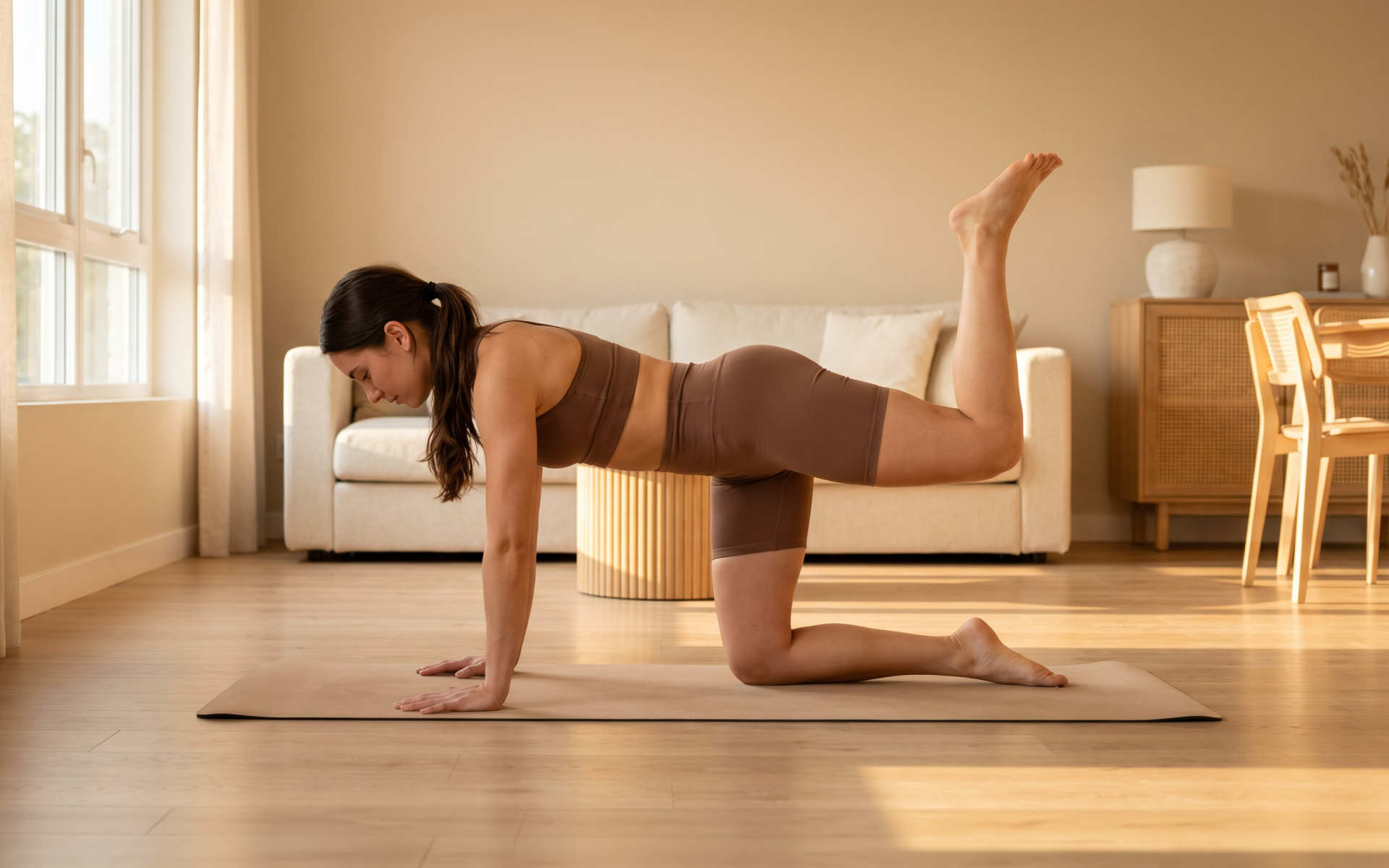
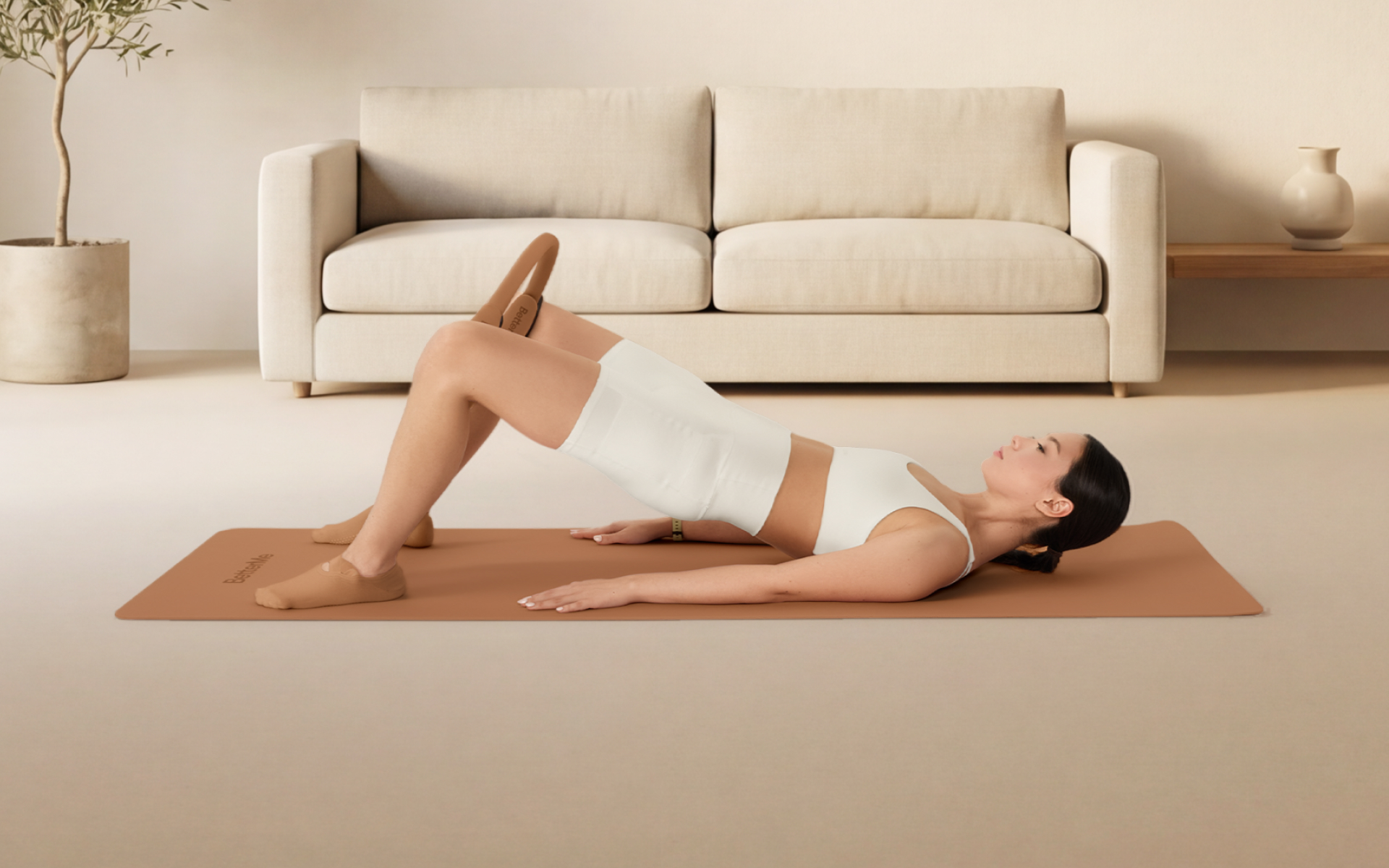
Leg exercises at home can help you work the major muscle groups in the lower body using bodyweight movements, resistance bands, dumbbells, or other forms of resistance. A well-rounded routine may include squats, lunges, hip hinges, bridges, and calf raises to focus on the glutes, quadriceps, hamstrings, and calves.
Beginners can start with simple bodyweight variations, while more experienced exercisers can gradually increase the repetitions, sets, resistance, or time under tension. Focus on consistent practice, controlled technique, and gradual progression based on your current fitness level.
Strong legs are important for more than just sport or exercise—they help support everyday movements such as walking, climbing stairs, lifting, and maintaining balance, ultimately helping improve your overall daily life and functional capacity. The good news is that you don’t need a gym to build lower-body strength. With a consistent routine, you can effectively strengthen your glutes, quadriceps, hamstrings, and calves in the comfort of your own home.
This guide covers everything you need to know about at-home leg workouts, including beginner-friendly exercises, a simple workout plan, progression tips, and answers to common questions to help you get started.
Which Muscles Should At-Home Leg Exercises Target?
The major muscles in the lower body include (1):
- Glutes: The gluteus maximus, gluteus medius, and gluteus minimus, which are responsible for hip extension, hip abduction, and pelvic stability.
- Quadriceps: Located at the front of the thigh, the quadriceps consist of the rectus femoris, vastus lateralis, vastus medialis, and vastus intermedius. Together, they straighten the knee and help with hip flexion during movements like squats and lunges.
- Hamstrings: Located at the back of the thigh, the hamstrings include the biceps femoris, semitendinosus, and semimembranosus. They bend the knee and extend the hip during movements such as deadlifts, bridges, and running.
- Calves: The calf muscles are made up of the gastrocnemius and soleus, which work together to point the toes downward (plantarflexion) and support walking, running, and jumping.
You can target all of these muscles by performing bodyweight movements at home, and if you have resistance bands or weights such as kettlebells or dumbbells, you can also gradually add those into your sessions for additional resistance.
What Is a 20-Minute Leg Workout You Can Do at Home?
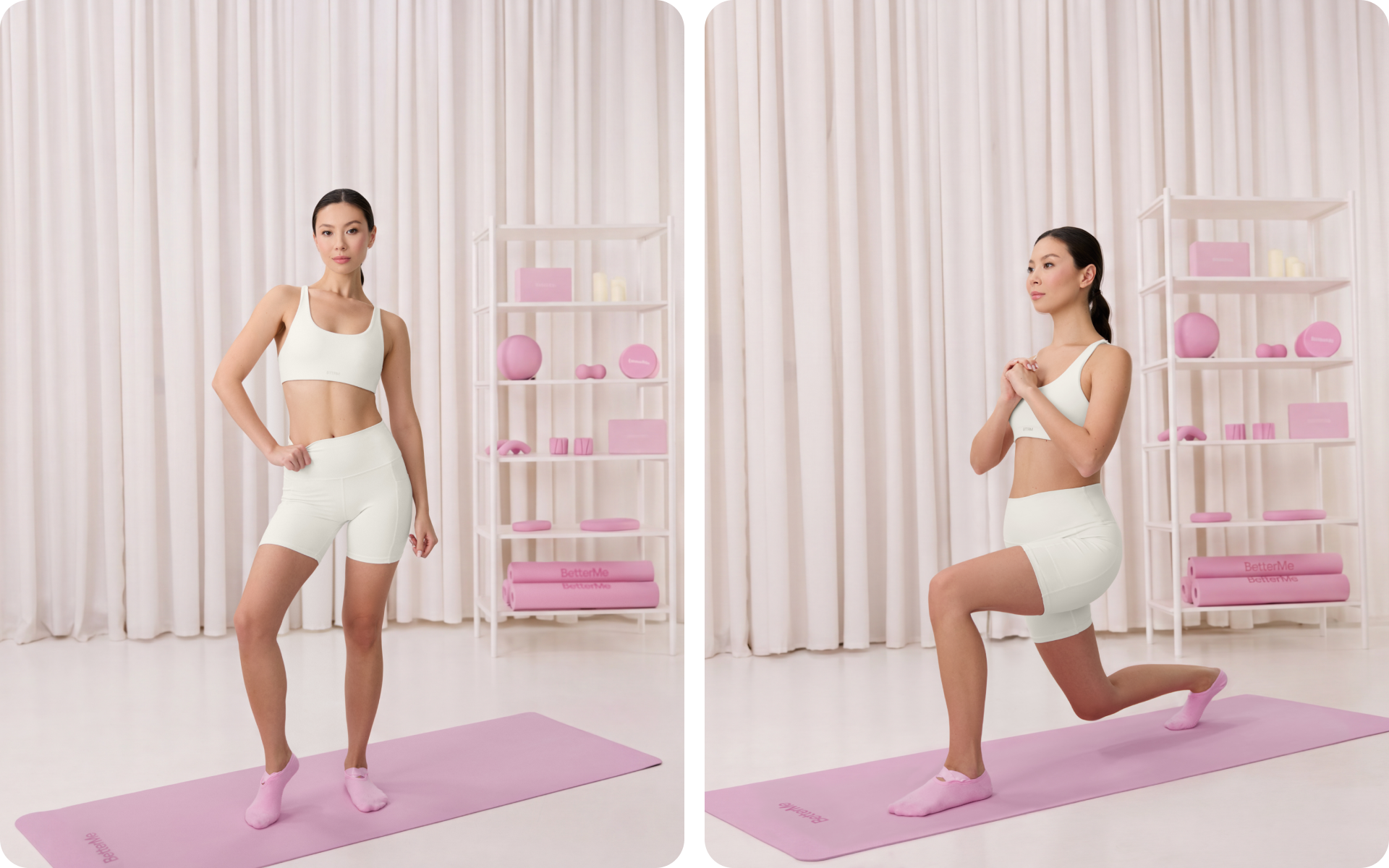
This 20-minute at-home leg workout targets your quadriceps, glutes, hamstrings, and calves using only your body weight. It can also work as a simple leg workout for men who want a clear lower-body routine they can follow at home. Each exercise can be modified to suit beginners through to advanced exercisers (2,3).
Warm-Up (5-8 minutes)
Perform 2 rounds of the following:
- World’s greatest stretch × 6-8 repetitions each side
- Inchworm × 6-8 repetitions
- 90/90 hip openers × 6-8 repetitions each side
- Bodyweight squats × 8-10 repetitions
Workout
- Tempo squat: 3 sets × 8-12 repetitions
(Lower for 3 seconds before standing back up) - Paused Cossack squat: 3 sets × 6-8 repetitions each side
(Pause for 2 seconds at the bottom of each repetition) - Bodyweight good morning: 3 sets × 10-15 repetitions
- Glute bridge: 3 sets × 10-15 repetitions
- Calf raise: 3 sets × 12-20 repetitions
Beginner
- Perform 3 sets of each exercise
- Rest for 60-90 seconds between sets
- Focus on slow, controlled movements and proper technique
Intermediate
- Perform 3-4 sets of each exercise
- Increase the repetitions where appropriate or slow the lowering phase of each movement to increase the challenge
Advanced
- Perform 4-5 sets of each exercise
- Add external resistance where available, such as holding a dumbbell or kettlebell during squats or glute bridges
- Increase the difficulty by adding pauses, slowing the tempo, or progressing to more challenging single-leg variations where appropriate
Read more: 6 Exercises for Thighs: A Beginner’s Guide to Growing Leg Muscles
Progression Tips
As the exercises become easier, continue progressing by:
- Increasing the number of repetitions
- Increasing the number of sets
- Slowing the tempo, particularly during the lowering phase
- Adding pauses at the most challenging part of the movement
- Reducing rest time between sets while maintaining good technique
- Adding external resistance if you have access to dumbbells or kettlebells
Aim to finish each set feeling challenged while still maintaining good technique.
Focus on controlled, pain-free movement throughout each exercise. If you experience pain (other than normal muscle fatigue), stop the exercise and seek advice from a qualified healthcare professional (2,3).
Movement Tips
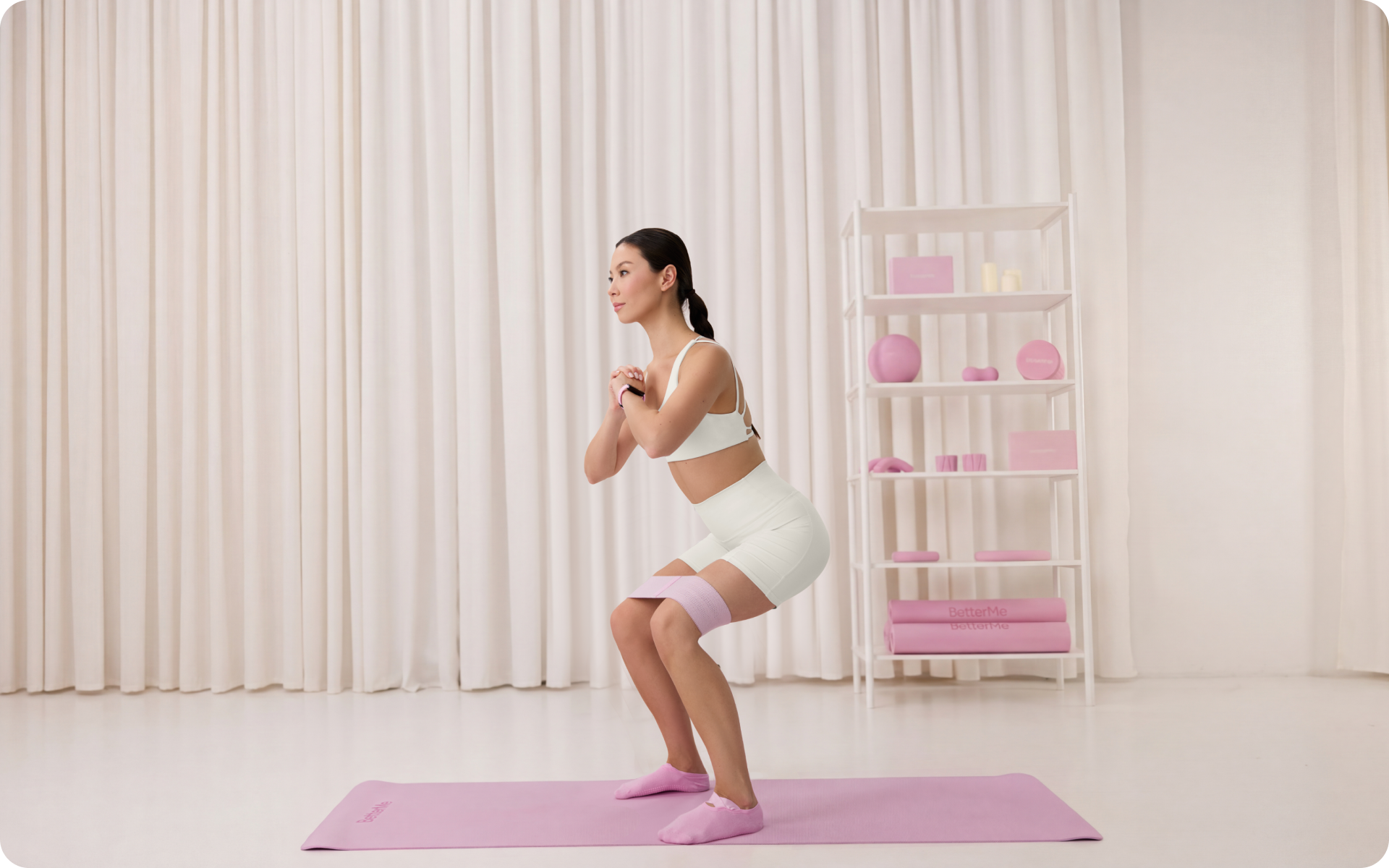
Tempo Squat
- Stand with your feet shoulder-width apart
- Sit your hips back and bend your knees as you lower over 3 seconds
- Keep your chest lifted and knees tracking over your toes
- Push through your heels to return to standing
Paused Cossack Squat
- Stand with your feet wider than shoulder-width apart
- Shift your weight to one side, bending one knee while keeping the opposite leg straight
- Pause for 2 seconds at the bottom
- Push through your foot to return to the starting position before repeating on the other side
Bodyweight Good Morning
- Stand with your feet hip-width apart and your hands across your chest or behind your head
- Keep a slight bend in your knees
- Hinge at your hips while keeping your back flat until your torso is almost parallel to the floor
- Squeeze your glutes to return to standing
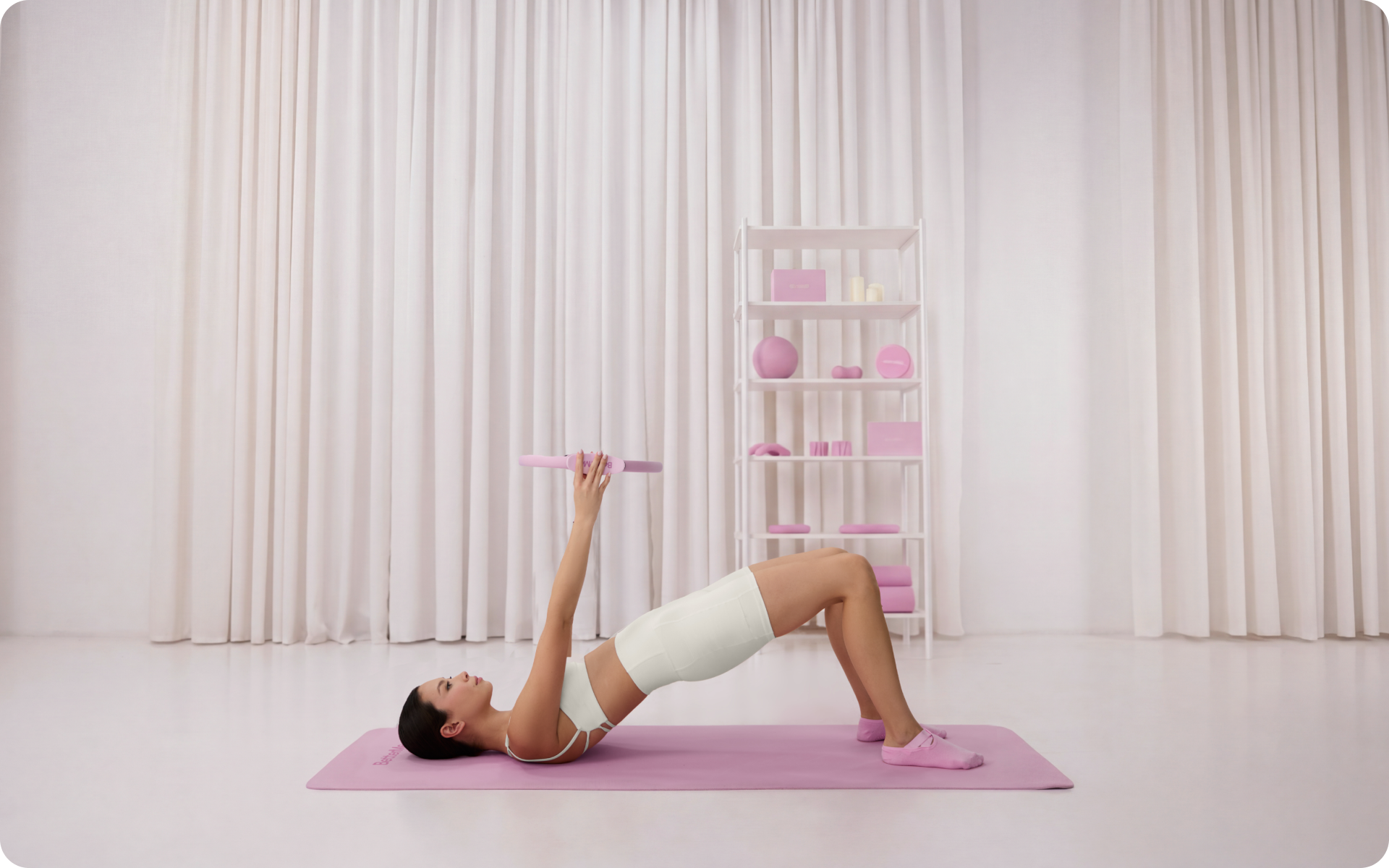
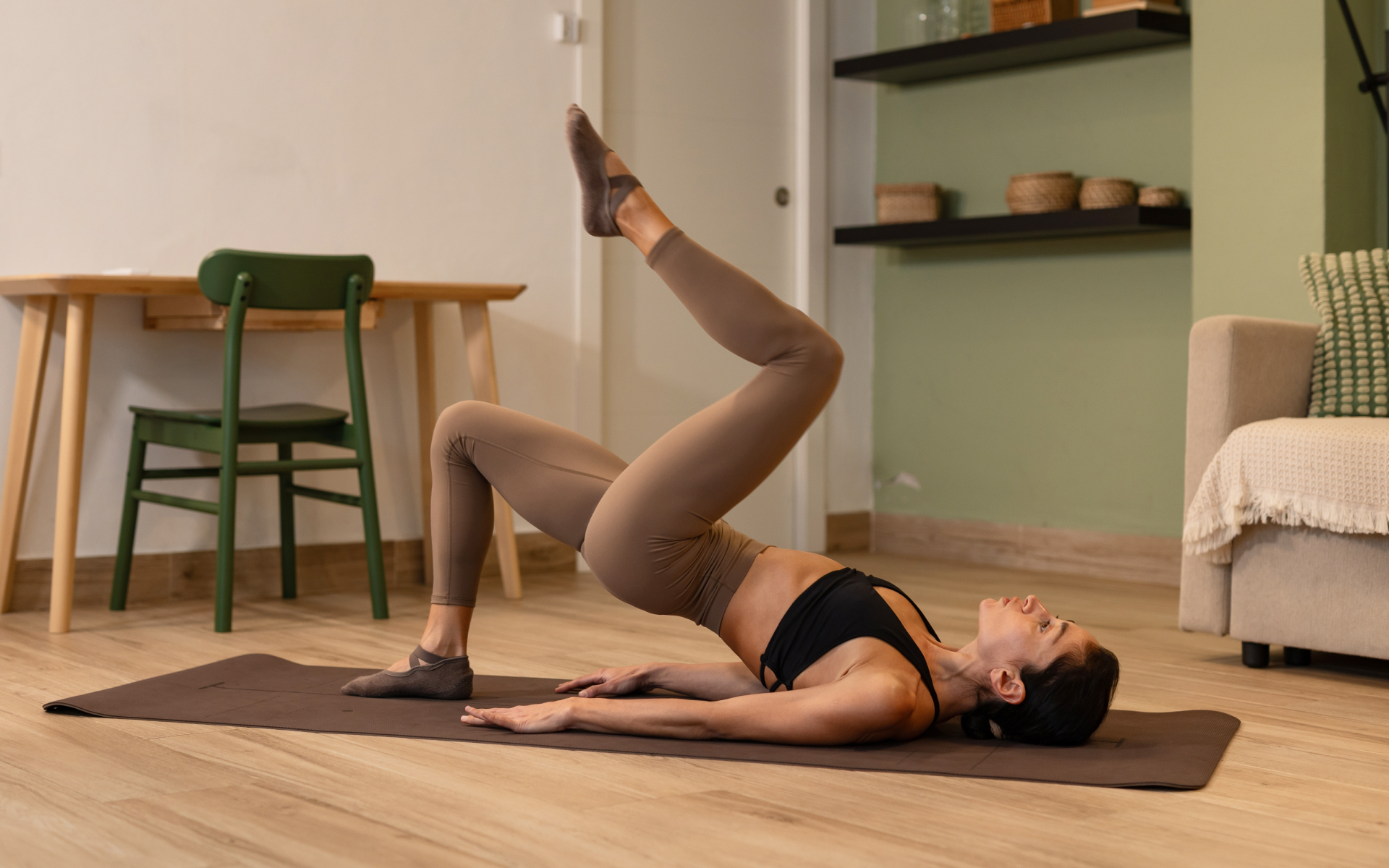
Glute Bridge
- Lie on your back with your knees bent and your feet flat on the floor
- Tighten your core and squeeze your glutes
- Lift your hips until your body forms a straight line from your shoulders to your knees
- Lower with control and repeat
Calf Raise
- Stand tall with your feet hip-width apart
- Push through the balls of your feet to lift your heels as high as possible
- Pause briefly at the top
- Lower your heels slowly back to the floor before repeating
Which Leg Exercises Can You Do at Home with Dumbbells?
Adding dumbbells is one of the simplest ways to make leg workouts with dumbbells at home more challenging while still keeping the routine practical. Here are some of the best lower-body exercises you can perform using a pair of dumbbells.
Compound Exercises
- Goblet squat
- Dumbbell deadlift
- Romanian deadlift (RDL)
- Cossack squat
- Lateral lunge
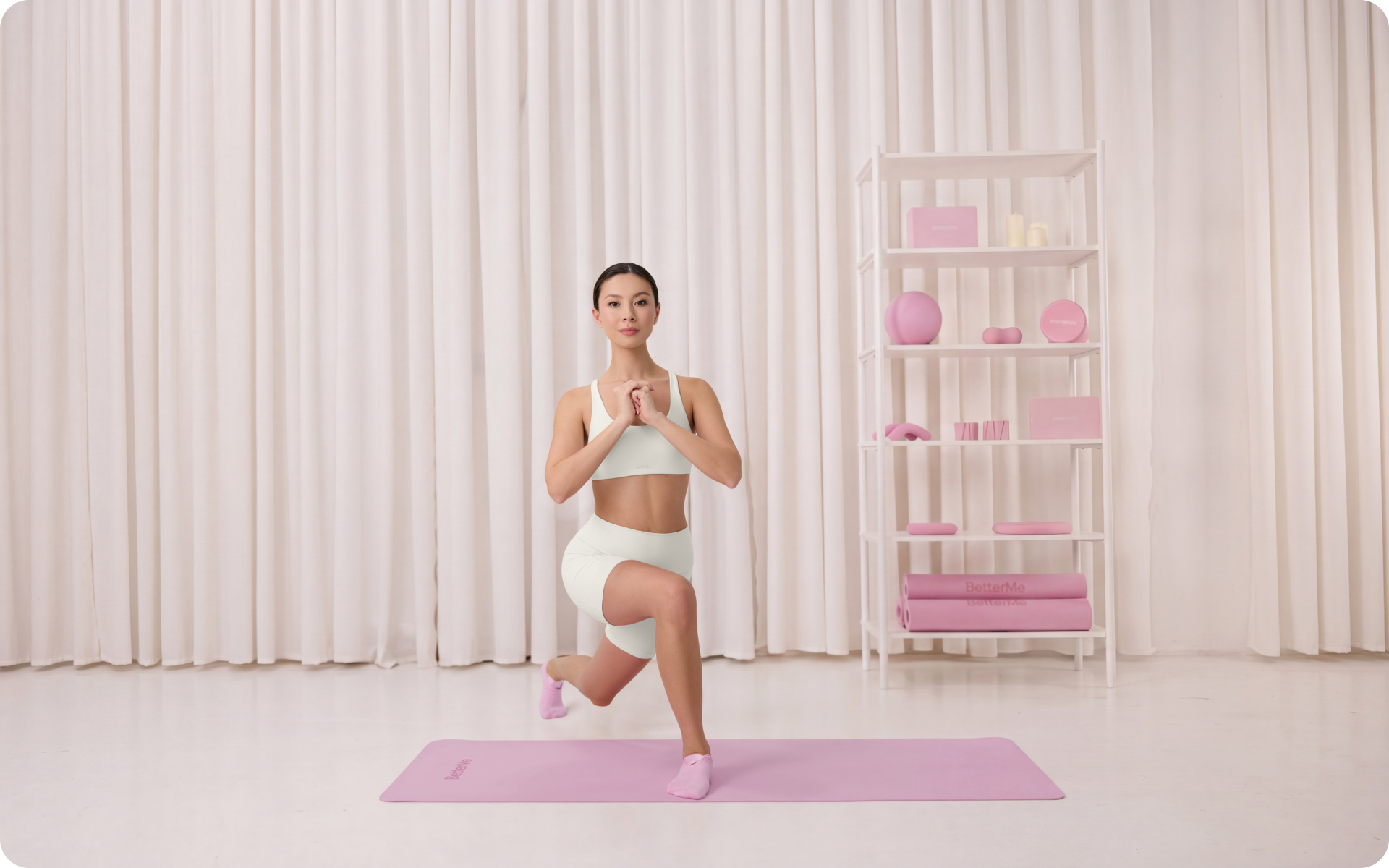
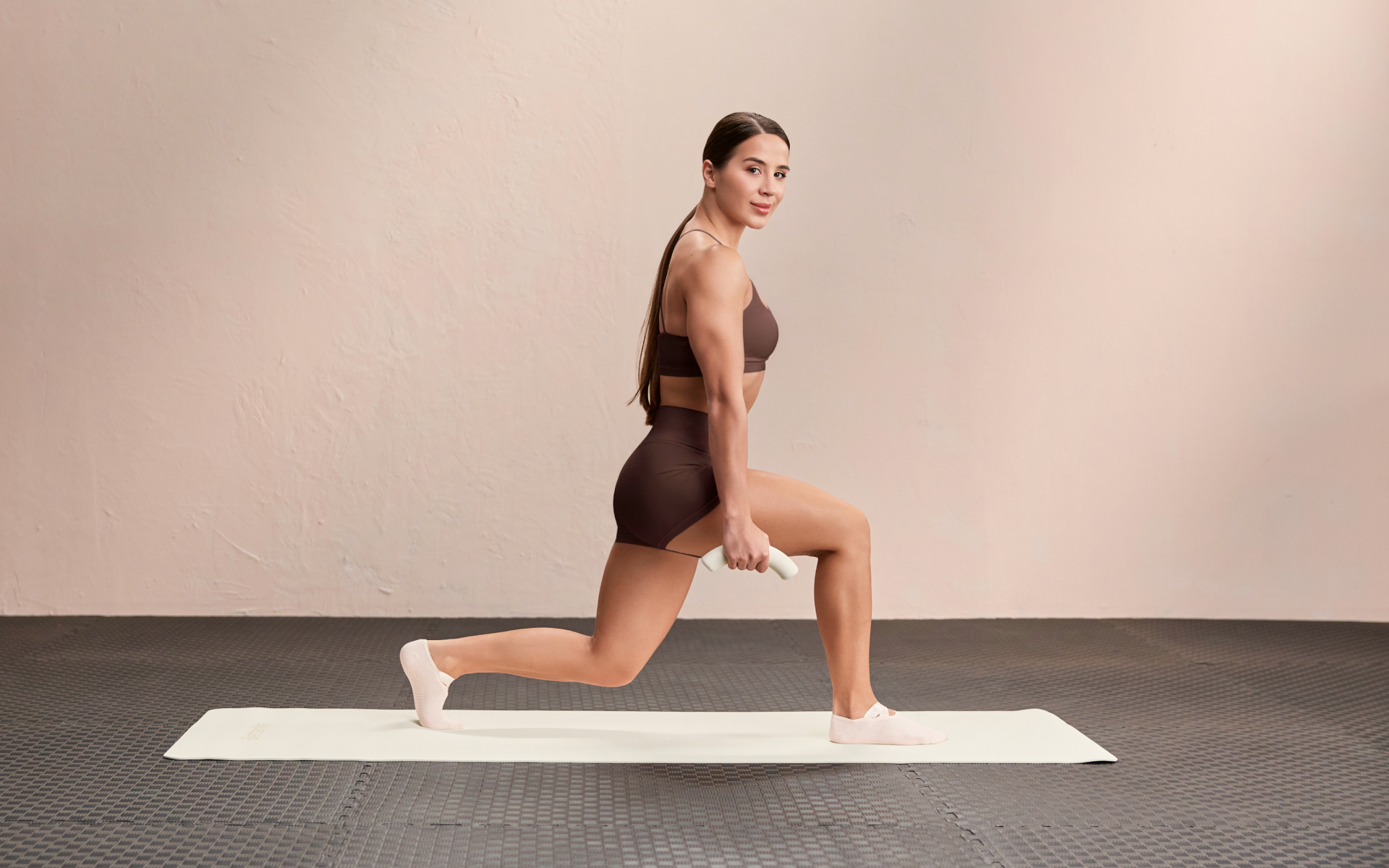
- Reverse lunge
- Forward lunge
- Split squat
- Bulgarian split squat
- Step-up
Glute-Focused Exercises
- Glute bridge
- Single-leg glute bridge
- Dumbbell hip thrust (using a bench, couch, or sturdy chair)
Calf Exercises
- Standing calf raise
- Single-leg calf raise
- Seated calf raise
Workouts, weight management tools, and recipe ideas come together in the BetterMe: Health Coaching app, giving you practical support for building a more consistent wellness routine.
Which At-Home Leg Exercises Can You Do with Resistance Bands?
Resistance bands are a versatile and affordable way to increase resistance, improve muscle activation, and build lower-body strength at home. Here are some of the best lower-body exercises you can perform using resistance bands.
Compound Exercises
- Banded squat
- Banded Romanian deadlift (RDL)
- Banded good morning
- Banded reverse lunge
- Banded forward lunge
- Banded lateral lunge
- Banded split squat
- Banded Bulgarian split squat
- Banded step-up
Glute-Focused Exercises
- Banded glute bridge
- Banded single-leg glute bridge
- Banded hip thrust
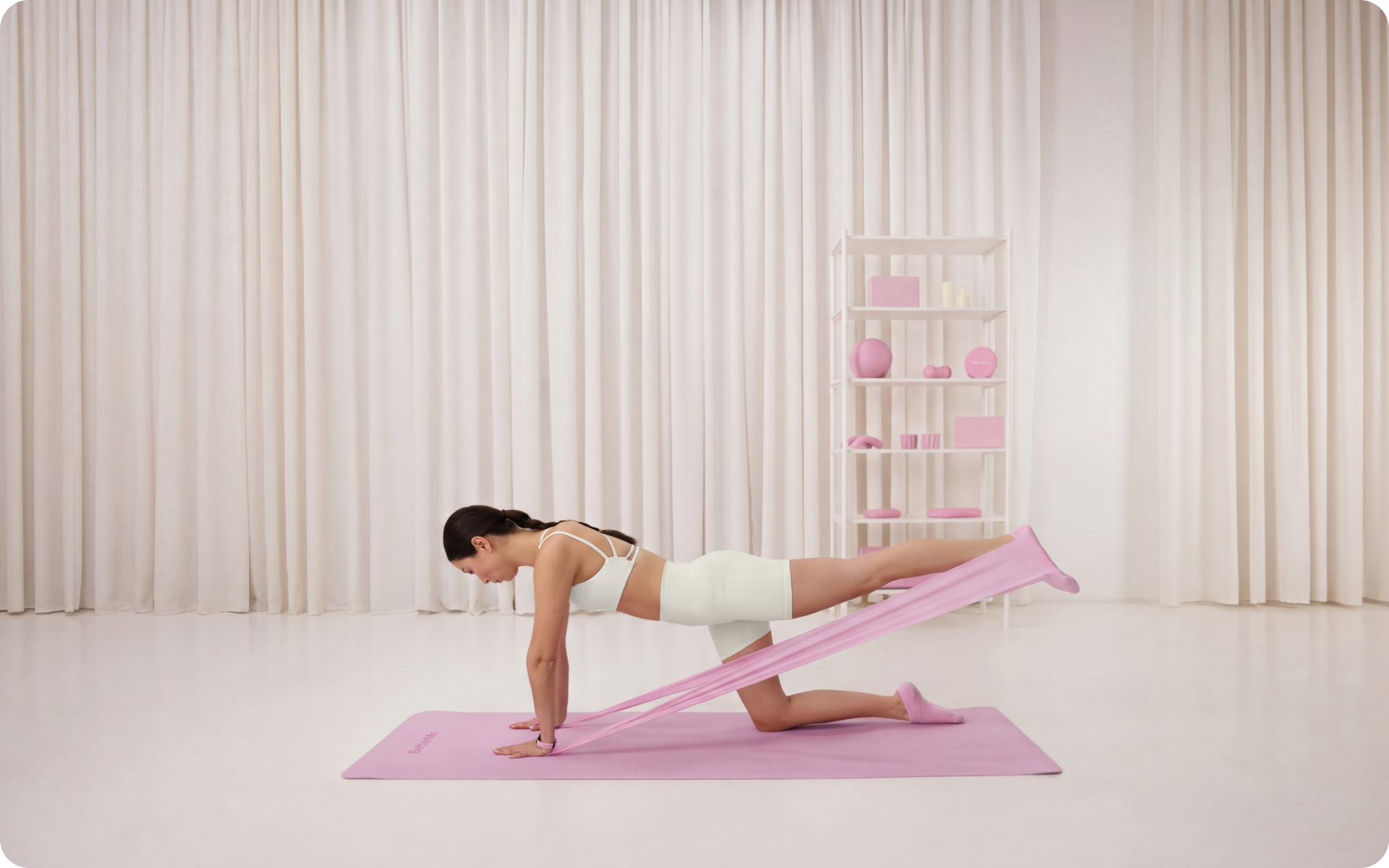
- Standing hip abduction
- Standing hip extension
- Lateral band walk
- Monster walk
- Clamshell
Calf Exercises
- Banded standing calf raise
- Banded single-leg calf raise
- Banded seated calf raise
How Can Beginners Modify At-Home Leg Exercises?
At-home leg exercises are an excellent option for beginners. Starting with bodyweight exercises allows you to build strength, improve balance and coordination, and develop confidence before adding external resistance (2,3).
When you’re first starting out, focus on learning proper technique and moving through a comfortable range of motion. This helps establish a strong foundation, improves movement quality, and allows your muscles, joints, and connective tissues to gradually adapt to exercise.
Simple Modifications for Beginners
- Reduce the range of motion: Only lower as far as you can while maintaining good technique.
- Decrease the number of repetitions: Start with 6-8 repetitions per set and gradually increase over time.
- Perform fewer sets: Begin with 1-2 sets before progressing to 3 or more.
- Slow the movement down: Perform each repetition with control to improve technique and balance.
- Use support for balance: Hold onto a wall, chair, or countertop during exercises such as squats, lunges, or single-leg movements.
- Increase your rest periods: Rest for 60-90 seconds, or longer if needed, between sets.
- Choose easier exercise variations. For example, perform a glute bridge instead of a single-leg glute bridge, or a split squat instead of a Bulgarian split squat.
- Progress gradually: Once you can complete all repetitions with good technique, increase the repetitions, sets, or resistance before progressing to a more challenging variation.
Remember, consistency is more important than intensity when you’re starting out. Focus on mastering the movements first, and your strength and confidence can improve over time.
Read more: Leg Day Workout for Women: Exercises, Tips, and FAQs
How Can You Make Home Leg Exercises More Challenging?
As your strength and fitness improve, it’s important to continue challenging your muscles to support ongoing progress. This is known as progressive overload, and it’s one of the key principles of building strength and muscle.
Simple ways to make your at-home leg workouts more challenging include:
- Increase the number of repetitions: Perform more repetitions while maintaining good technique.
- Increase the number of sets: Add an extra working set to increase your overall training volume.
- Slow the tempo: Increase the time your muscles spend under tension by slowing the lowering phase of each exercise.
- Add pauses: Hold the most challenging part of the movement for 2-3 seconds before returning to the starting position.
- Reduce your rest time: Gradually decrease the amount of rest between sets while maintaining good form.
- Progress to a more challenging variation: For example, progress from a glute bridge to a single-leg glute bridge, or from a split squat to a Bulgarian split squat.
- Add external resistance: Use dumbbells, kettlebells, or resistance bands if available to further increase the challenge.
Aim to progress gradually over time while maintaining good technique. Small, consistent increases in difficulty are often more effective than making large changes all at once.
How Often Should You Train Your Legs at Home?
For most people, training the legs 2-3 times per week is an effective and sustainable approach. If you’re new to resistance training, two sessions per week is a great starting point (4). As your strength, fitness, and recovery improve, you can gradually increase your training frequency or overall training volume if your goals require it.
You should aim to leave at least 48 hours between challenging lower-body workouts to allow for adequate recovery. Remember that progress comes from balancing consistent training with sufficient rest, good nutrition, and quality sleep.
What Common At-Home Leg Workout Mistakes Should You Avoid?
Avoiding mistakes can help you get better results while reducing your risk of injury.
Here are some common mistakes to avoid (5)
- Doing too much too soon: Gradually increase your training volume and intensity to give your body time to adapt.
- Progressing to high-impact exercises too early: Lay a foundation of strength, balance, and movement control before introducing jumping or plyometric exercises.
- Using a limited range of motion: Perform each exercise through a comfortable range of motion while maintaining good technique.
- Rushing through repetitions: Move with control rather than relying on momentum.
- Using poor technique: Prioritise proper form over completing more repetitions or using heavier resistance.
- Not resting enough between sets: Allow sufficient recovery so you can maintain good technique and exercise quality throughout your workout.
- Skipping your warm-up: Preparing your muscles and joints before training can improve performance and reduce injury risk.
- Ignoring pain: Muscle fatigue is normal, but stop exercising if you experience sharp or persistent pain and seek advice from a qualified healthcare professional if needed.
Remember that consistency and good technique are far more important than completing the hardest workout possible. Pilates for legs is another avenue you can explore for simple home workouts.
Whether you want to refresh your fitness routine, explore lower-calorie recipe ideas, or bring more structure to your wellness habits, BetterMe: Health Coaching app offers tools that can support your next step. Explore the app and find an approach that works for your lifestyle.
FAQs
Can you build leg muscle by exercising at home?
Yes, you can build leg muscle at home by performing resistance exercises consistently and progressively increasing the challenge over time. Using bodyweight, resistance bands, or dumbbells while training close to muscular fatigue can effectively improve strength and support muscle growth.
Can household items be used instead of dumbbells?
Yes. If you don’t have dumbbells, household items such as backpacks filled with books, water bottles, or shopping bags can be used to add resistance. Choose items that are stable, comfortable to hold, and allow you to maintain good exercise technique.
Do you need to warm up before a home leg workout?
Yes. A warm-up helps prepare your muscles, joints, and nervous system for exercise. Spending 5-10 minutes performing light cardio and dynamic movements can improve movement quality, increase mobility, and reduce the risk of injury during your workout.
Can you train your legs at home without doing squats?
Absolutely. While squats are an effective lower-body exercise, they’re not essential. Lunges, glute bridges, Romanian deadlifts, step-ups, calf raises, and hip hinge exercises can all strengthen your glutes, quadriceps, hamstrings, and calves without performing squats.
Can walking replace a home leg-strengthening workout?
Walking can support cardiovascular fitness and lower-body endurance, but it typically provides less resistance than dedicated strength training for building maximal strength or muscle. Combining regular walking with strength training is one approach to supporting overall lower-body fitness.
What leg exercises can you do without getting on the floor?
Many effective leg exercises can be performed standing, including squats, lunges, split squats, Romanian deadlifts, good mornings, calf raises, lateral lunges, and Cossack squats. These exercises strengthen the major lower-body muscles without requiring you to lie on the floor.
The Bottom Line
Building stronger legs doesn’t require a gym or expensive equipment. By performing a variety of lower-body exercises consistently, progressing the challenge over time, and allowing adequate recovery, you can improve your strength, stability, and overall fitness from home. Start with a routine that matches your current fitness level, focus on good technique, and remember that small, consistent improvements can support long-term progress.
DISCLAIMER:
This article is intended for general informational purposes only and does not serve to address individual circumstances. It is not a substitute for professional advice or help and should not be relied on for making any kind of decision-making. Any action taken as a direct or indirect result of the information in this article is entirely at your own risk and is your sole responsibility.
BetterMe, its content staff, and its medical advisors accept no responsibility for inaccuracies, errors, misstatements, inconsistencies, or omissions and specifically disclaim any liability, loss or risk, personal, professional or otherwise, which may be incurred as a consequence, directly or indirectly, of the use and/or application of any content.
You should always seek the advice of your physician or other qualified health provider with any questions you may have regarding a medical condition or your specific situation. Never disregard professional medical advice or delay seeking it because of BetterMe content. If you suspect or think you may have a medical emergency, call your doctor.
SOURCES:
- Anatomy, Bony Pelvis and Lower Limb: Leg Bones (2023, nih.gov)
- American College of Sports Medicine Position Stand. Resistance Training Prescription for Muscle Function, Hypertrophy, and Physical Performance in Healthy Adults: An Overview of Reviews (2026, nih.gov)
- Essentials of Strength Training and Conditioning (5th ed.) (2022, nsca.com)
- Strength and Hypertrophy Adaptations Between Low- vs. High-Load Resistance Training: A Systematic Review and Meta-analysis (2017, nih.gov)
- The mechanisms of muscle hypertrophy and their application to resistance training (2020, nih.gov)
 Reviewed by
 Reviewed by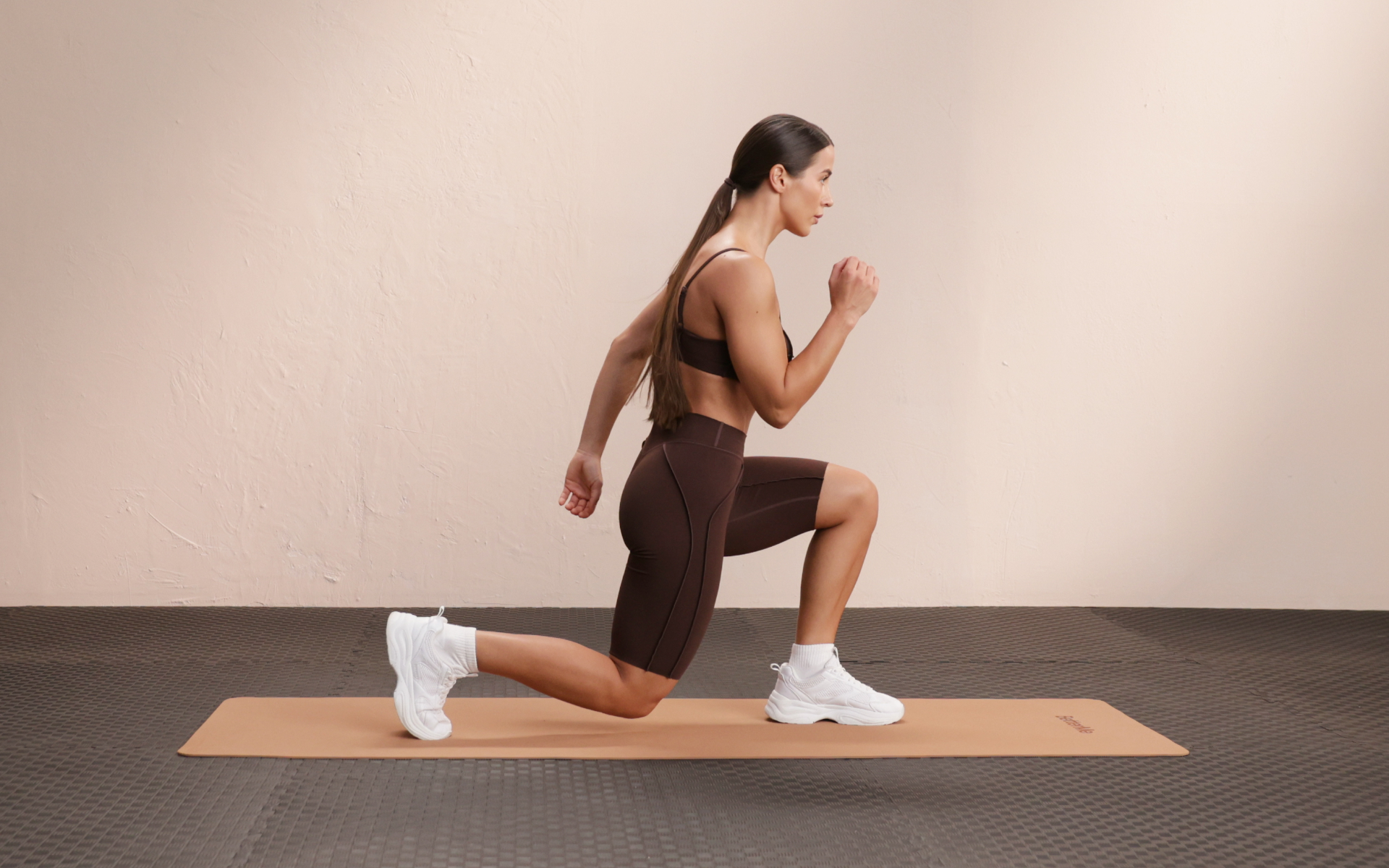
 Reviewed by