
Intermittent fasting for women over 40 changes when meals are eaten. Adult trials have found broadly similar weight outcomes with fasting and continuous energy restriction (1). Before changing meal times, consider how they fit your medication, appetite, and daily routine. A meal-planning guide can help you organize the meals you already eat.
Every fast is a personal experience. Your dietary preferences, body composition, and activity level all influence your fasting journey. It’s advisable to consult with a healthcare provider before embarking on a fasting regimen.
Following exercise and diet plans is the key in your fitness journey and greatly impacts results. In 4 weeks users can typically expect to lose not more than 1-2 lbs per week. Individual results may vary.
Key takeaways
The decision depends on your circumstances and whether an eating pattern supports adequate nutrition.
- Fasting studies do not establish a universal schedule for women over 40 (1).
- Perimenopause and menopause are distinct life stages, not interchangeable labels for everyone in this age group (2).
- Current evidence does not establish fasting as a way to balance female hormones (3).
- Water and plain black coffee can fit ordinary dietary fasting schedules (4).
- Food quality and adequate intake still matter inside any eating window (5).
- Regular meals remain a reasonable option when fasting does not suit you (1).

What is intermittent fasting?
Intermittent fasting describes eating patterns that alternate periods of eating with periods of little or no energy intake. It describes timing; it does not specify the nutritional quality of meals (6).
Time-restricted eating limits food to a daily window. Other approaches alternate lower-intake days with days of usual eating. These methods should not be treated as equivalent simply because they share the word fasting.
For example, 16:8 describes a sixteen-hour fasting period and an eight-hour eating window. That definition is not a recommendation for women over 40. A schedule studied in selected adults may be inappropriate for someone with different medical needs.
The same eating window can contain varied meals or an inadequate diet. Before choosing times, ask whether you can reliably eat enough and take medicines as directed.

Does intermittent fasting help with weight management?
Intermittent fasting can produce weight loss in some adults, but it does not consistently outperform continuous energy restriction. A 2025 review compared 99 randomized trials involving different fasting approaches (1).
Alternate-day fasting showed a small average advantage over continuous restriction in the overall analysis. This does not establish a superior approach for every woman or prove that time-restricted eating has the same effect. The longer-duration comparisons also limit claims of a lasting advantage.
Study averages cannot predict an individual’s result. Participants differ in age, health, adherence, and starting weight. A short intervention also cannot answer every question about maintaining changes over years.
If weight management is appropriate, choose an approach that supports nutrition and daily life. A plan that creates persistent hunger, missed family meals, or difficulty taking medication deserves reconsideration.
A scale reading is only one outcome. Strength, energy, food intake, and your relationship with eating matter when deciding whether to continue.

How are perimenopause and menopause relevant?
Perimenopause is the transition leading to menopause, when menstrual patterns and symptoms may change. Menopause is generally identified after twelve consecutive months without a menstrual period. Clinicians usually rule out other causes of absent periods first (2).
Being over 40 does not establish your menopausal status. Some women still have regular cycles; others are in transition or have reached menopause. Surgery and certain treatments can also affect that timing.
Changes in sleep, symptoms, and routine can make eating plans harder to manage. These concerns deserve attention in their own right. They should not automatically be attributed to a failure to fast correctly.
Seek clinical advice for symptoms or menstrual changes that concern you. An eating schedule should not replace assessment of persistent symptoms or unexplained changes in health.

Can fasting balance hormones or relieve menopause symptoms?
The available evidence does not justify promising hormone balance or menopause symptom relief from fasting. Measuring hormone concentrations in a study is different from demonstrating an effective treatment (3).
A secondary analysis of an eight-week study examined hormone measurements in 23 premenopausal and postmenopausal women with obesity. Several measured hormones remained unchanged, while DHEA decreased. Perimenopausal women were excluded, which limits direct application to the menopause transition (3).
These findings do not show that fasting restores a preferred hormonal state. They also do not establish relief from hot flashes, improved fertility, or a suitable schedule for everyone.
If symptom relief is your main goal, discuss that goal directly with a qualified clinician. A nutrition plan can support everyday intake while appropriate symptom management is considered.
Who should seek advice before changing meal timing?
People with diabetes, medicines linked to meals, or health conditions affecting nutrition should seek individual advice before fasting. Diabetes medicines may require careful clinical review because fasting can cause low or high blood glucose and dehydration (4).
Do not change prescribed medicine on your own to fit a fasting window. Follow any fasting-specific medication instructions from your care team. Instructions to take a medicine with food remain relevant even when a diet website recommends delaying breakfast.
Discuss eating patterns with your care team during pregnancy or breastfeeding, or if you have low weight or unintended loss. A current or previous eating disorder also warrants individual advice. A restrictive schedule may conflict with nutritional or recovery needs.
Practical access matters too. Someone who cannot reliably obtain enough food should not be encouraged to extend periods without eating. Likewise, a demanding shift or caregiving schedule may make a narrow window difficult to use.
Bring a medication list and an outline of your usual meals to the discussion. That gives the clinician something concrete to review.
BetterMe will keep you laser-focused on your weight loss journey! Nutrient-packed meal plans, fat-blasting workouts, galvanizing challenges and much more. Try using the app and see for yourself!
How can you compare eating patterns?
Compare patterns by their effect on meals, medicines, symptoms, and social life. Longer fasting periods are not automatically more useful, and an age-based chart cannot determine your personal needs (6).
The table describes common patterns and questions to consider. It does not prescribe a fasting duration.
|
Pattern |
What it means |
A practical question |
|---|---|---|
|
Regular meals |
Meals spread through your usual waking day |
Does this support energy and medication instructions? |
|
Time-restricted eating |
Food limited to a daily window |
Can you fit adequate meals into the available time? |
|
Intermittent lower-intake days |
Some days involve substantial restriction |
Could lower intake conflict with health or activity needs? |
|
Prolonged fasting |
Extended periods without food |
What medical risks and nutritional concerns require assessment? |
You do not need to move through these patterns as levels of difficulty. Regular eating is not a preliminary stage that must eventually be replaced.
For context on later life, see the discussion of fasting after 65. Age-related nutrition considerations require their own assessment.
What should meals include?
Meals should provide varied foods and adequate nutrients, regardless of their timing. Useful components include protein foods, vegetables or fruit, grains or other starchy foods, and appropriate sources of calcium (5).
A meal does not need a special fasting recipe. Familiar foods often make it easier to shop, prepare meals, and notice whether your intake is adequate.
Build meals around available foods
Start with a protein food and add produce and a grain or starchy food. For example, lentils with rice and vegetables or fish with potatoes and greens can provide a practical meal structure.
These are combinations to adapt, not fixed portions or a prescribed calorie plan. Appetite, activity, preferences, and medical advice influence how much you need.
Include calcium and vitamin D sources
Calcium and vitamin D deserve attention as part of a varied diet. The calcium recommendation is 1,000 milligrams daily for women aged 19 to 50. It increases to 1,200 milligrams from age 51 (7).
Vitamin D guidance lists 15 micrograms, or 600 IU, daily for adults through age 70. These reference amounts describe total intake, not an instruction to take that amount as a supplement (8).
Food sources and existing supplements should be reviewed together. A narrower eating window does not remove the need to meet nutrient requirements.
Plan plant-based choices deliberately
A vegan pattern needs reliable vitamin B12 sources from fortified foods or supplements. Calcium, vitamin D, iodine, and iron also require attention (9).
Our vegan meal-plan guide offers food combinations. The same meals can be eaten on a regular schedule without fasting.
What could a flexible day of eating look like?
A flexible day can use familiar meals without imposing a fasting target. The example below illustrates food variety; it is not a calculated nutrition prescription.
|
Meal opportunity |
Example |
An alternative |
|---|---|---|
|
First meal |
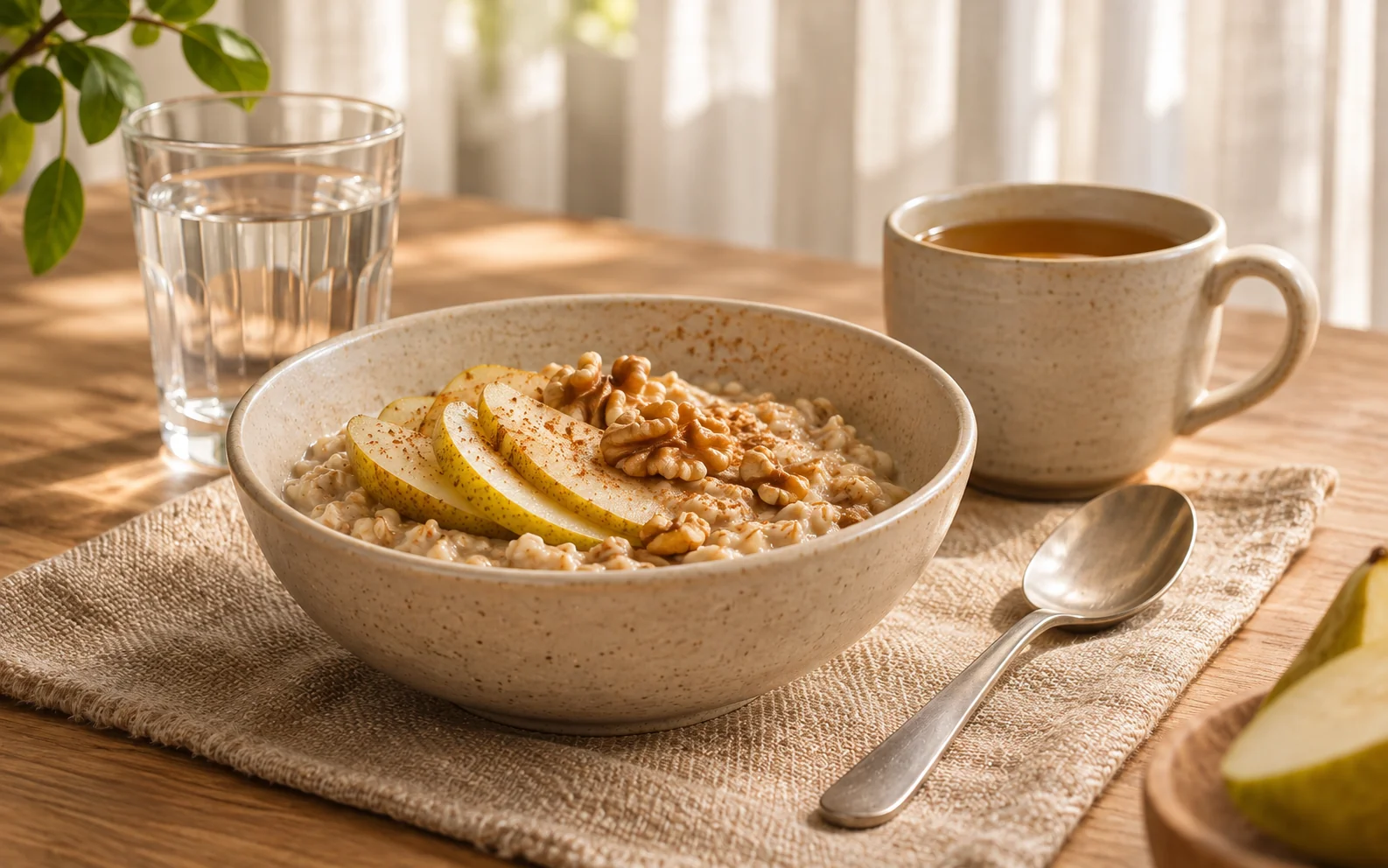
Oats with milk or fortified soy drink, fruit, and nuts |
Eggs or tofu with toast and vegetables |
|
Middle meal |
Lentil and grain salad with vegetables |
A bean wrap with salad |
|
Later meal |
Fish, potatoes, and cooked greens |
Tofu, rice, and mixed vegetables |
|
Snack if needed |
Yogurt and fruit |
Fortified soy yogurt or hummus with bread |
Adjust portions and food choices to your needs. Reconsider a window that repeatedly removes a meal you rely on. Changing the timing or returning to regular meals may help (1).
Plan around real constraints. A packed lunch, frozen vegetables, or leftovers may help when work makes cooking difficult. There is no need to prepare every meal from scratch.
A clinician or registered dietitian can assess intake when medical conditions or a limited food range create difficulties.

How do activity and rest fit into the plan?
Activity should fit your capacity and rest needs rather than serve as a way to compensate for eating. Public-health guidance for adults includes at least 150 minutes of moderate activity weekly and muscle-strengthening activity for all major muscle groups on at least two days (10).
Those are general public-health targets, not a starting workout prescription for everyone. Adapt the activity and progression to your experience and health.
Do not assume exercising without food produces a better long-term result. If delayed meals make your usual activity harder, reconsider the timing and discuss persistent symptoms with a clinician.
The workout challenge guide describes ways to organize activity without treating daily exhaustion as success. A routine that leaves room for rest is easier to assess than one that changes everything at once.

How can you tell whether a routine is working for you?
A useful routine allows adequate meals, fits medication instructions, and supports everyday function. Review these practical outcomes instead of judging success only by hours without food.
Consider keeping brief notes on meal opportunities, hunger, energy, symptoms, and rest after exercise. You do not need to count every calorie to notice that a schedule repeatedly prevents lunch or disrupts family dinners.
Dizziness, weakness, difficulty concentrating, or worsening food preoccupation are reasons to stop a self-directed fasting routine and seek advice. If you have diabetes, follow your clinical plan for symptoms or glucose readings that need action (4).
A plan may also be unsuitable without causing dramatic symptoms. Ongoing frustration, poor meal variety, or frequent compensatory eating can be enough reason to choose another approach.
FAQs
Does black coffee break a fast?
Some dietary fasting approaches permit plain black coffee. Medical tests and procedures require their own instructions about food, fluids, and medicines; follow the directions from your care team (4).
Adding milk, sugar, or oil provides energy. More importantly, coffee should not be used to suppress hunger when you need food or to override symptoms.
Is a three-day water fast a useful shortcut?
A three-day water fast is not a routine weight-management recommendation in this guide. Rapid scale changes do not establish lasting body-fat changes. Extended restriction can conflict with medication and nutrition needs (6) (4).
Discuss the underlying goal with a clinician rather than selecting a prolonged fast from an online schedule.
Can fasting make you look younger?
Evidence about fasting and biological aging does not establish that it makes people look younger. Animal findings and proposed cellular mechanisms cannot be converted into promises about human appearance or longevity (6).
What can I record before changing meal times?
Write down your usual meals and medicines that require food. Those details can help you discuss whether a schedule fits your daily needs.
The bottom line
Intermittent fasting is one way to organize eating, with important limits to the evidence. Research does not support it as a way to manage menopause symptoms. Women over 40 should prioritize adequate nutrition, appropriate medical care, and a workable routine over a particular fasting clock.
DISCLAIMER:
This article is intended for general informational purposes only and does not serve to address individual circumstances. It is not a substitute for professional advice or help and should not be relied on for making any kind of decision-making. Any action taken as a direct or indirect result of the information in this article is entirely at your own risk and is your sole responsibility.
BetterMe, its content staff, and its medical advisors accept no responsibility for inaccuracies, errors, misstatements, inconsistencies, or omissions and specifically disclaim any liability, loss or risk, personal, professional or otherwise, which may be incurred as a consequence, directly or indirectly, of the use and/or application of any content.
You should always seek the advice of your physician or other qualified health provider with any questions you may have regarding a medical condition or your specific situation. Never disregard professional medical advice or delay seeking it because of BetterMe content. If you suspect or think you may have a medical emergency, call your doctor.
SOURCES:
- Intermittent fasting strategies and their effects on body weight and other cardiometabolic risk factors: systematic review and network meta-analysis of randomised clinical trials (2025, bmj.com)
- What Is Menopause? (2024, nia.nih.gov)
- Effect of time-restricted eating on sex hormone levels in premenopausal and postmenopausal females (2023, pubmed.ncbi.nlm.nih.gov)
- Fasting Safely with Diabetes (2020, niddk.nih.gov)
- Healthy Eating As You Age: Know Your Food Groups (2022, nia.nih.gov)
- Calorie restriction and fasting diets: What do we know? (2018, nia.nih.gov)
- Calcium – Health Professional Fact Sheet (2026, ods.od.nih.gov)
- Vitamin D – Health Professional Fact Sheet (2025, ods.od.nih.gov)
- The vegan diet (2026, nhs.uk)
- Adult Activity: An Overview (2023, cdc.gov)

 By