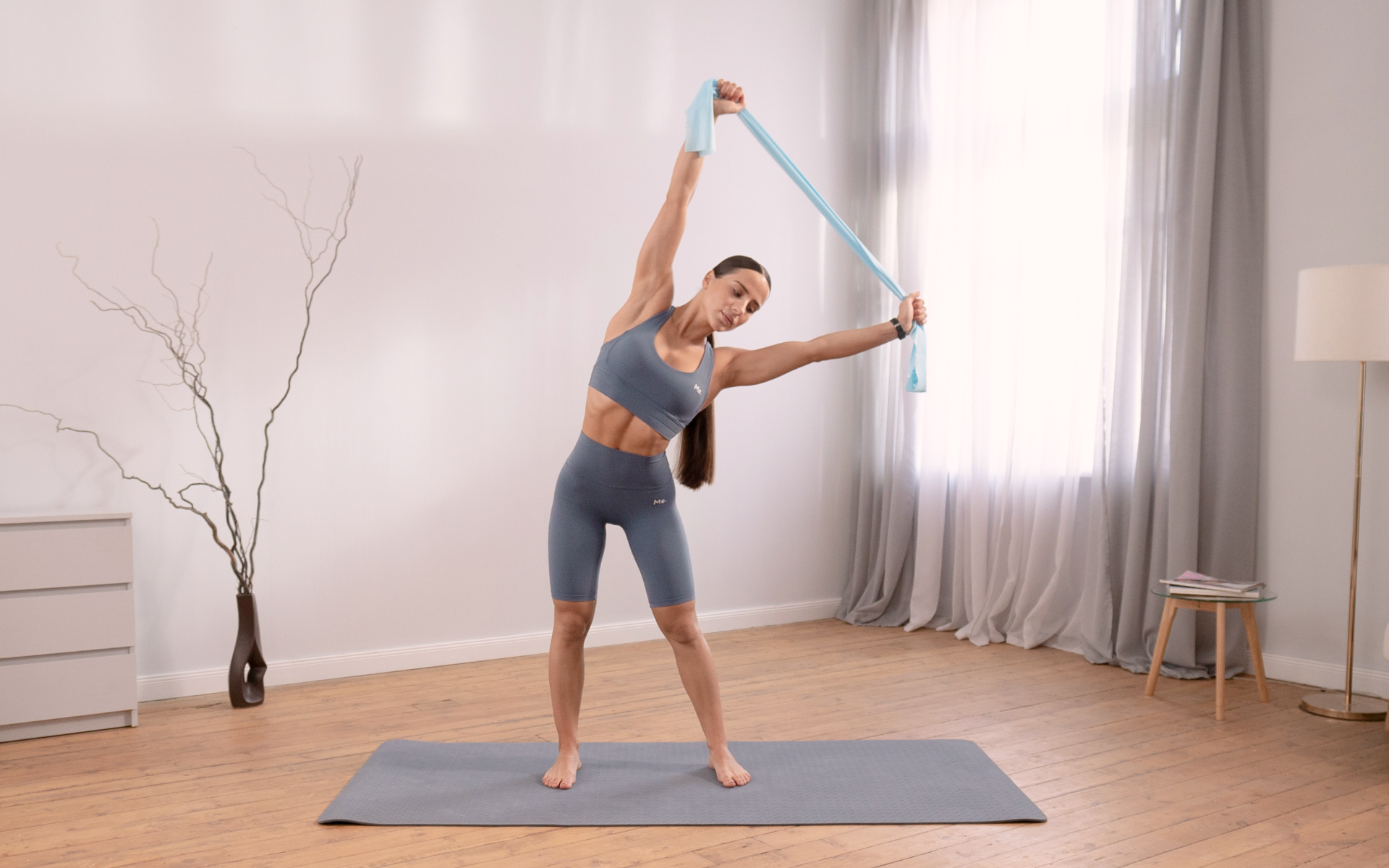
A small study estimated about 50 calories for seven minutes of bodyweight exercise, based on measured oxygen use (1, 2). A 7-minute workout adds activity when you are short on time; it does not guarantee weight loss.
This article is for general information only and isn’t medical advice. If you’re pregnant or managing a medical condition, check with a doctor before starting a new workout.
If you have joint, muscle, or spine-related concerns, please consult your physician before starting this workout.
Following exercise and diet plans is the key in your fitness journey and greatly impacts results. In 4 weeks users can typically expect to lose not more than 1-2 lbs per week. Individual results may vary.
Key takeaways
A seven-minute bodyweight workout burns a modest number of calories, but it can add useful activity to a busy week.
- A seven-minute workout’s calorie total varies with body size, exercise selection, pace, and rest periods.
- In one small lab study, 14 active adults used about 1.44 liters of oxygen per minute during the workout, which works out to roughly 50 calories over seven minutes (1, 2).
- Larger bodies and harder effort tend to burn more calories in the same time.
- Adults are encouraged to get 150 to 300 minutes of moderate activity weekly, and short bouts count toward that total (3).
- Weight change depends mostly on eating patterns and total weekly movement, so one short workout is unlikely to drive weight loss on its own.
- The sample home routine uses a timer and easier movement options; choose variations you can perform with control.
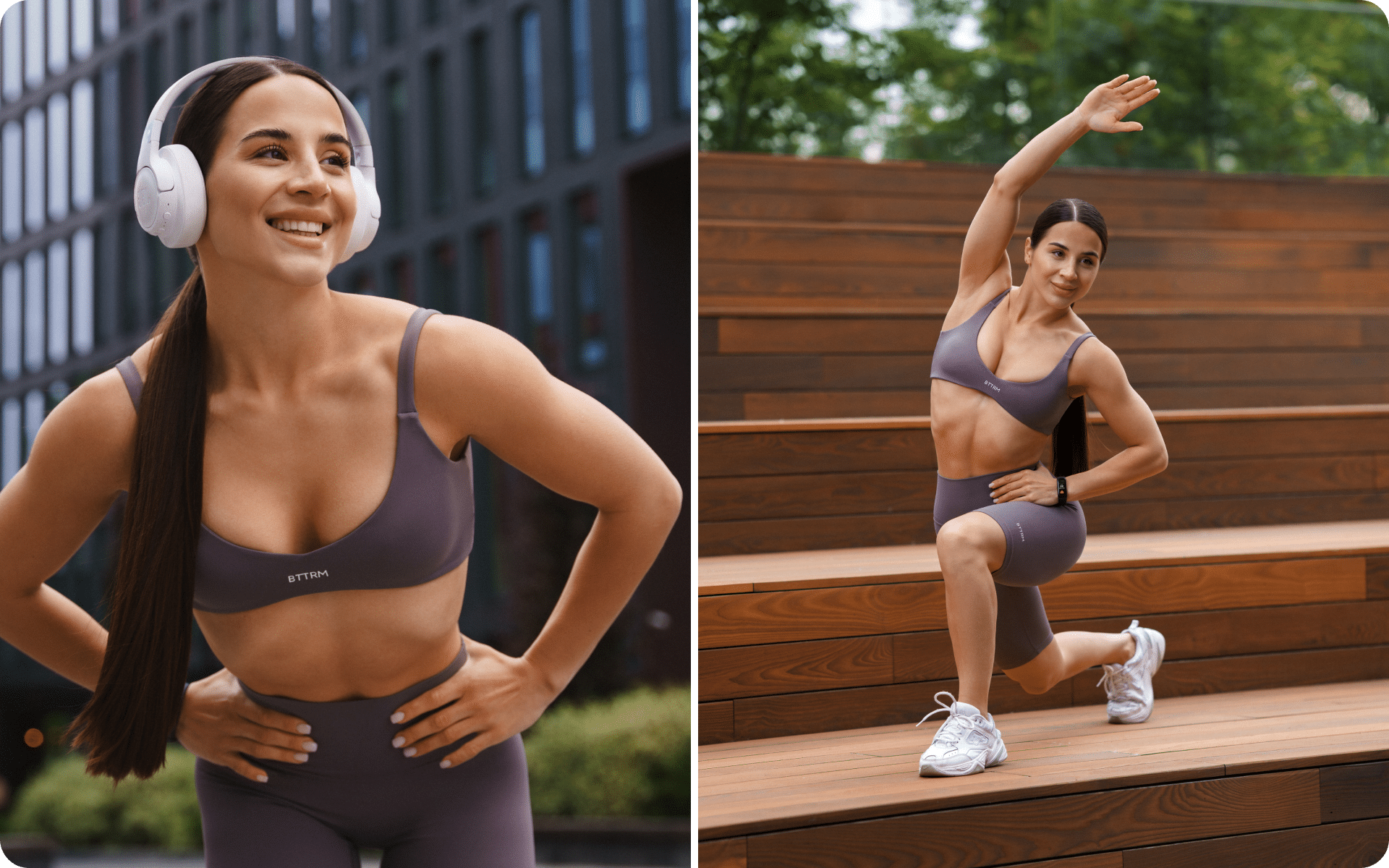
How many calories does a 7-minute workout burn?
About 50 calories is a study-based illustration, not a prediction for everyone (1, 2). Energy use depends on factors including (4):
- Body weight: larger bodies use more energy to move.
- Muscle mass: more muscle tends to use slightly more energy.
- Exercise choice: full-body moves use more energy than arm circles.
- Effort: working at 8 out of 10 burns more than working at 4 out of 10.
The small laboratory study reported average oxygen use of about 1.44 liters per minute. Using approximately 5 calories per liter gives an illustrative calculation of about 50 calories over seven minutes (1, 2).
Read more: Resistance Band Butt Workout: 13 Effective Moves To Build Muscle
What exercises are included in a 7-minute workout?
A 7 minute workout is a short circuit of timed movements.
The usual protocol mixes four types of movement so one area rests while another works:
- Cardio: fast footwork gets you breathing harder.
- Lower body: squats, lunges, and step-ups train legs and butt muscles.
- Upper body: push ups and dips train chest, shoulders, and arms.
- Core: crunches, planks, and side planks train the midsection.
| Move | Easier option | What it trains |
|---|---|---|
| Jumping jacks | Step jacks, one foot at a time | Cardio fitness, legs |
| Wall sit | Sit higher on the wall for 15 seconds | Thighs |
| Push-up | Wall push-up | Chest, shoulders, arms |
| Crunch | Dead bug with arms only | Abdominals |
| Step-up onto a chair | Use a low step | Legs, glutes |
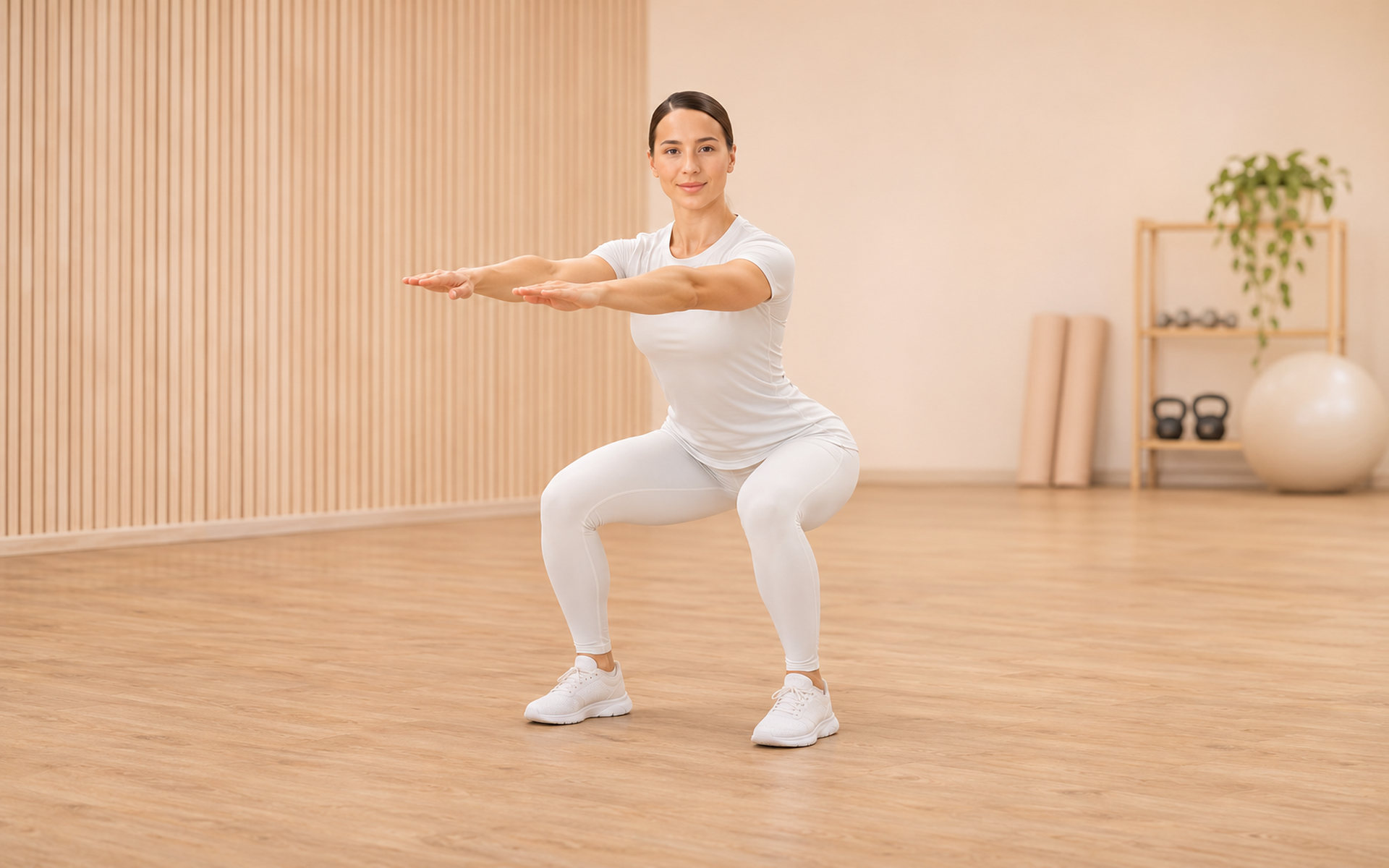
| Squat | Chair squat | Legs, hips |
| Triceps dips on a chair | Bend knees and keep feet close | Back of the arms |
| Plank | Counter plank | Trunk, shoulders |
| High knees | Brisk march | Cardio fitness, hips |
| Lunge | Hold a wall for balance | Legs, balance |
| Side plank | Knee-down side plank | Sides of the trunk |
Add a 1 to 2 minute warmup of easy marching before you start, and finish with slow walking and gentle stretches.
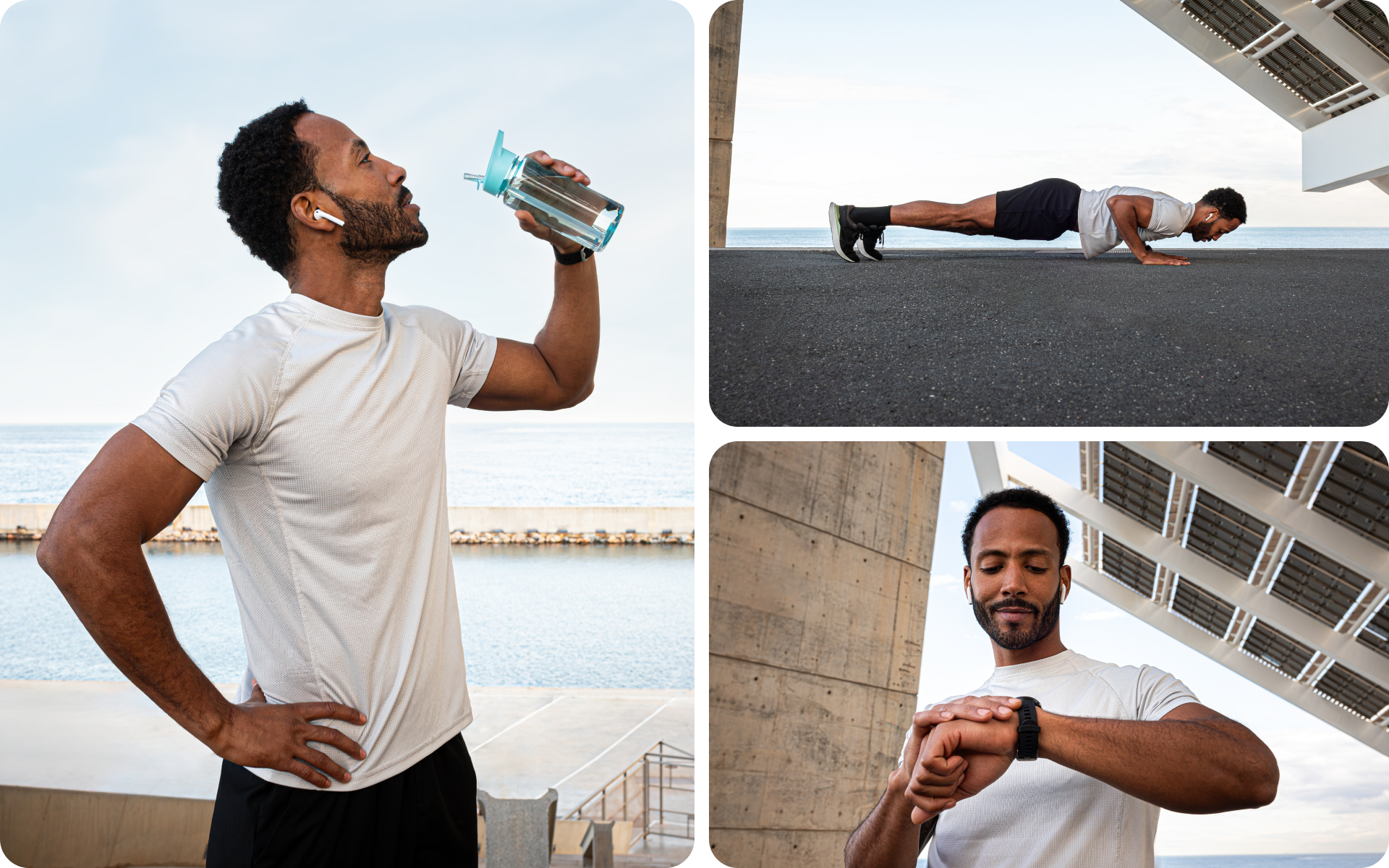
Is a 7-minute workout HIIT, and how does intensity affect calorie burn?
It can be, depending on your pace, since HIIT alternates harder efforts with recovery. Harder effort tends to raise the calorie burn because your body uses more energy each minute. You can rate effort on a 1 to 10 scale called rating of perceived exertion, where 1 feels like resting and 10 feels like your maximum (5).
| Effort level | How it feels | Rating (out of 10) | What the rating tells you |
|---|---|---|---|
| Light | You can chat or sing freely | 3 to 4 | Feels relatively easy |
| Moderate | You can talk, but not sing | 5 to 6 | Feels moderately demanding |
| Vigorous | You can say only a few words | 7 to 8 | Feels demanding |
Hard intervals may also cause a small extra burn after you stop, often called afterburn. A systematic review suggests this extra energy use is modest (6).
Is a 7-minute workout suitable for beginners?
Yes, it can suit many beginners because it takes little time and every move can be scaled.
- As a beginner starting point, try two or three days a week, with a rest day between, then adjust to your recovery.
- Aim for about 5 to 6 out of 10 effort.
- Use the easier option for any move that feels shaky.
- Add activity gradually when the current routine feels manageable and you recover comfortably.
Women over 40 and older adults can use the same structure, swapping jumping for marching and using a wall or sturdy chair for support. Research on interval training in older adults has explored many formats, including gentler ones (7). Check with a doctor or a qualified trainer first if you have an ongoing condition.
Can a 7-minute workout help you lose weight?
A short workout can contribute to overall activity, but it does not predict weight loss on its own. Weight change depends on energy intake and expenditure over time (4).
A tracker-based study linked brief vigorous activity with lower mortality risk (8). This observational finding does not prove that a seven-minute circuit causes that benefit or produces weight loss.
How do brief workout calories compare with longer workouts?
At a similar average intensity, more active minutes generally require more energy.
| Total time | Rounds | Calorie estimate | What it may suit |
|---|---|---|---|
| 7 min | 1 | Varies with pace and rest | Busy days, building a habit |
| 14 min | 2 | Varies with pace and rest | A fuller workout on lighter days |
| 21 min | 3 | Varies with pace and rest | Building endurance over weeks |
| 28 min | 4 | Varies with pace and rest | Longer workouts on free days |
Workouts, weight management tools, and recipe ideas come together in the BetterMe: Health Coaching app, giving you practical support for building a more consistent wellness routine.
What exercises burn 700 calories?
Burning about 700 calories usually takes an hour or more of steady, vigorous activity, such as running at about 6 mph for a 70 kg (154 lb) adult. Based on standard activity energy values, this works out roughly as follows (9):
- Running, 6 mph: about 60 to 65 minutes
- Cycling, 12 to 14 mph: about 70 to 85 minutes
- Brisk walking, 3.5 to 4 mph: about 2 hours
How can you make a short workout harder?
Change one variable at a time, like rest length or move difficulty, so progress stays steady and your form stays controlled.
| Change | Starting point | Harder version |
|---|---|---|
| Transition time | 12 seconds | 8 seconds |
| Work time | 30 seconds | 40 seconds |
| Sets | 1 | 2 |
| Push-up variation | Wall push-up | Knee push-up |
| Leg variation | Sit-to-stand | Slow 3-second lower |
Move up once you finish every move at about 6 out of 10 effort for 2 workouts in a row. To elevate the challenge further, try our Tabata-style workout, a 4-minute format of 20 seconds of hard work and 10 seconds of rest, repeated 8 times.
Read more: 7-Day Workout Plan For Weight Loss To Try Today!
A full body workout at home in 7 minutes
This seven minute workout uses 10 bodyweight moves for 30 seconds each, with nine 12-second transitions. That totals 6 minutes 48 seconds, rounded to about 7 minutes; warming up and cooling down take additional time.
| Order | Move | Easier option |
|---|---|---|
| 1 | March in place | Slower pace |
| 2 | Sit-to-stand from a chair | Use a higher chair |
| 3 | Wall push-up | Step closer to the wall |
| 4 | Supported split stance | Smaller step back |
| 5 | Counter plank | Wall plank |
| 6 | Glute bridge | Lift hips halfway |
| 7 | High-knee march | Lower lift |
| 8 | Dead bug | Move arms only |
| 9 | Wall hold | Sit higher; hold 15 seconds |
| 10 | Side bridge on knees | Hold 15 seconds per side, or lean on a wall |
If floor work isn’t for you, our 7 Minute Standing Workout keeps every move on your feet, and our 7 Minute Chair Workout adds seated support.
How to choose workout videos for different fitness levels
Preview workout videos before following along, whether in a workout app or on a video platform. Look for demonstrations from the side as well as the front, visible work and rest intervals, and low impact alternatives such as marching instead of jumping.
How do 7 minute workouts fit your fitness goals?
Start with a schedule you can repeat and adjust it to effort and recovery. Seven minutes a day totals 49 minutes a week; even if all of it is moderate activity, that is below the general 150-minute weekly guideline (3).
Whether you want to refresh your fitness routine, explore lower-calorie recipe ideas, or bring more structure to your wellness habits, BetterMe: Health Coaching app offers tools that can support your next step. Explore the app and find an approach that works for your lifestyle.
FAQs
Is 7 minutes of exercise enough?
It can count toward weekly activity and build a habit, but it is a small share of the guidelines. Adults are encouraged to get 150 to 300 minutes of moderate activity per week, and short bouts count (3).
Can you do it every day?
Daily activity may fit your routine, but a hard circuit does not need to be repeated every day. Alternate demanding sessions with easier movement and reduce the workload if soreness or fatigue affects your form.
Why did I gain 10 lbs after working out?
A rapid, unexplained 10 lb weight gain should be discussed with a healthcare professional; exercise alone does not identify its cause.
How long does it take to walk 10,000 steps, and how many calories does it burn?
At about 100 steps per minute, a pace linked with moderate intensity in adults (10), 10,000 steps takes roughly 100 minutes. Calories burned vary with body weight and pace.
Which exercise is most anti-aging?
No single activity is established as the most anti-aging. Guidelines for older adults recommend a mix of aerobic activity, muscle strengthening, and balance work to support physical function (11).
The bottom line
A seven-minute workout can help you fit movement into a busy day. Start with movements and an effort level that suit your current ability, and allow time to recover.
DISCLAIMER:
This article is intended for general informational purposes only and does not serve to address individual circumstances. It is not a substitute for professional advice or help and should not be relied on for making any kind of decision-making. Any action taken as a direct or indirect result of the information in this article is entirely at your own risk and is your sole responsibility.
BetterMe, its content staff, and its medical advisors accept no responsibility for inaccuracies, errors, misstatements, inconsistencies, or omissions and specifically disclaim any liability, loss or risk, personal, professional or otherwise, which may be incurred as a consequence, directly or indirectly, of the use and/or application of any content.
You should always seek the advice of your physician or other qualified health provider with any questions you may have regarding a medical condition or your specific situation. Never disregard professional medical advice or delay seeking it because of BetterMe content. If you suspect or think you may have a medical emergency, call your doctor.
SOURCES:
The list covers a lab study of the 7-minute workout, activity guidelines, energy expenditure reviews, and effort scales.
- Acute Responses to the 7-Minute Workout (2017, pubmed.ncbi.nlm.nih.gov)
- Obesity history, physical exam, laboratory, body composition, and energy expenditure: An Obesity Medicine Association (OMA) Clinical Practice Statement (CPS) 2022 (2022, sciencedirect.com)
- What Counts as Physical Activity for Adults (2023, cdc.gov)
- Factors Affecting Energy Expenditure and Requirements (2023, ncbi.nlm.nih.gov)
- An Examination and Critique of Subjective Methods to Determine Exercise Intensity: The Talk Test, Feeling Scale, and Rating of Perceived Exertion (2022, link.springer.com)
- Magnitude and duration of excess of post-exercise oxygen consumption between high-intensity interval and moderate-intensity continuous exercise: A systematic review (2021, pubmed.ncbi.nlm.nih.gov)
- The effectiveness of a high-intensity interval exercise on cardiometabolic health and quality of life in older adults: a systematic review and meta-analysis (2025, link.springer.com)
- Vigorous intermittent lifestyle physical activity (VILPA) and mortality risk among US adults: a wearables-based national cohort study (2026, pmc.ncbi.nlm.nih.gov)
- 2024 Adult Compendium of Physical Activities: A third update of the energy costs of human activities (2024, sciencedirect.com)
- How many steps/day are enough? For adults (2011, pubmed.ncbi.nlm.nih.gov)
- WHO Guidelines on Physical Activity and Sedentary Behaviour: Recommendations (2020, ncbi.nlm.nih.gov)
 Reviewed by
 Reviewed by
 Reviewed by