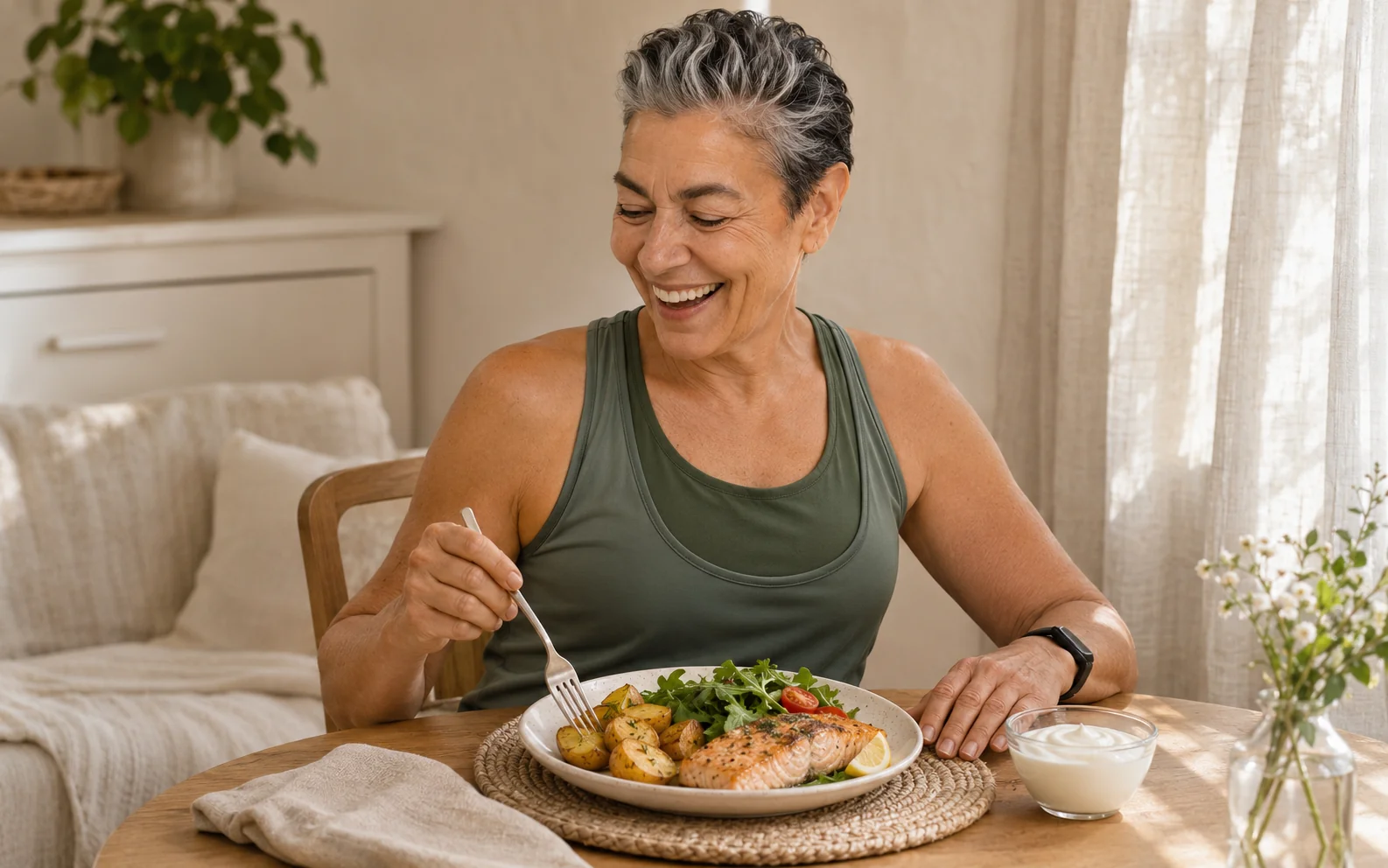
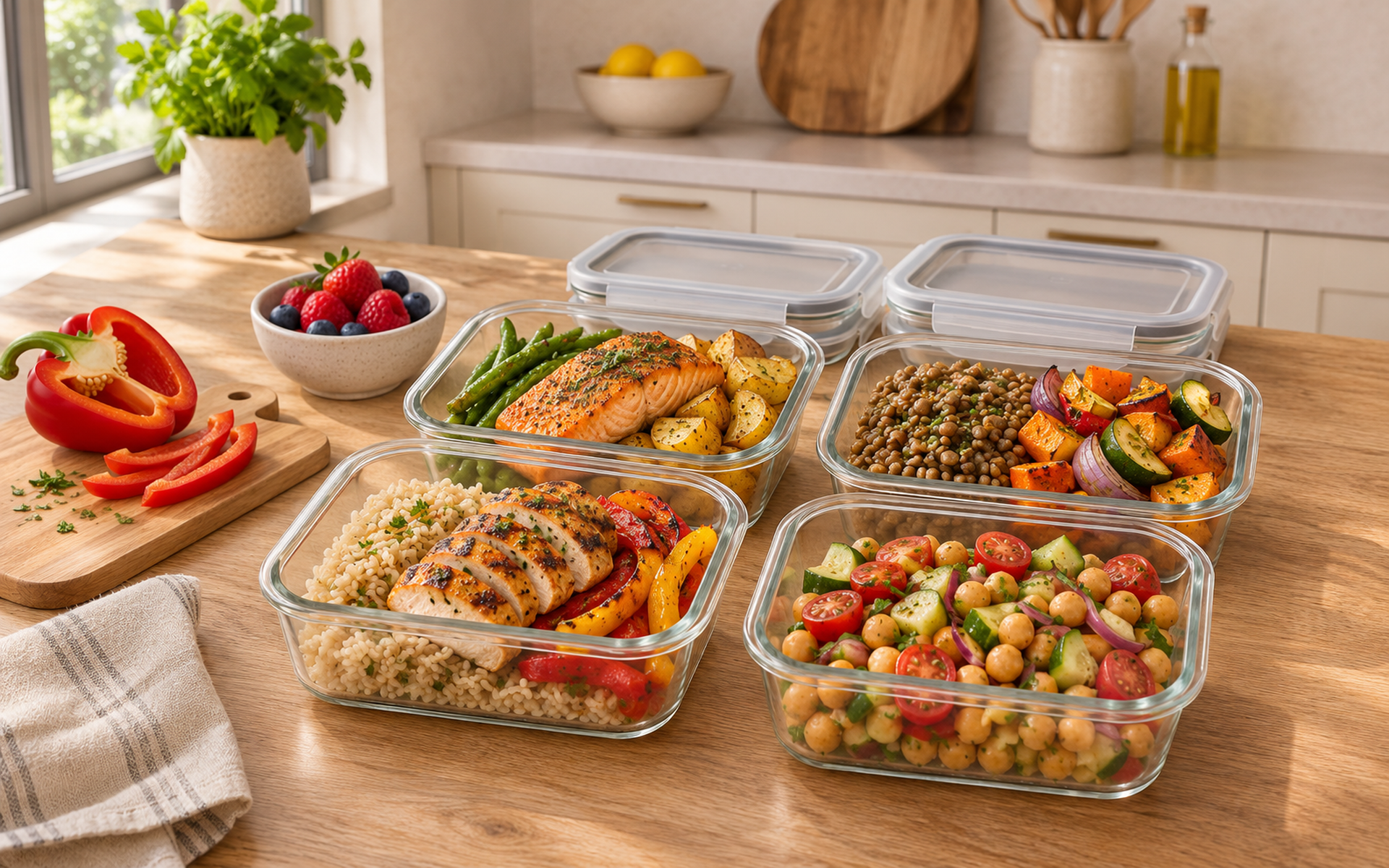
A diet for women over 60 should provide enough food, varied nutrients, and a routine that fits daily life. Weight loss is not automatically the right goal. Start with meals you can enjoy and prepare consistently. These simple meal-planning ideas can help turn nutrition priorities into ordinary food choices (1).
If you have joint, muscle, or spine-related concerns, please consult your physician before starting this workout.
Following exercise and diet plans is the key in your fitness journey and greatly impacts results. In 4 weeks users can typically expect to lose not more than 1-2 lbs per week. Individual results may vary.
Key takeaways
Food adequacy, practical access, and individual health needs matter more than a diet label.
- Protein foods, produce, grains, and suitable dairy or fortified alternatives contribute different nutrients (1).
- Women aged 51 and older have a calcium recommended intake of 1,200 mg daily (2).
- Vitamin D reference intake increases from 15 mcg to 20 mcg after age 70 (3).
- Weight-reducing diets are not appropriate for every older adult (4).
- Menopause can change health needs; discuss bothersome symptoms with a clinician (5).
- Activity planning can include strength and aerobic work, with balance activities emphasized after 65 (6) (7).
What eating pattern makes sense after 60?
An eating pattern should supply adequate nutrition and fit your preferences, health, budget, and cooking arrangements. No single diet label accounts for all those factors.
A varied pattern can include vegetables, fruit, whole grains, protein foods, and dairy or suitable fortified alternatives. Unsaturated oils, nuts, and seeds can also fit (1).
Mediterranean-style meals are one way to organize these foods. You can use beans, vegetables, whole grains, olive oil, and fish where appropriate. You do not need imported ingredients or an unfamiliar menu.
A vegetarian or vegan pattern can also be planned, with attention to nutrients such as B12 and calcium (8). The label alone does not establish adequacy.
Choose a pattern you can put into practice. If shopping or cooking is difficult, solve that barrier before adding elaborate meal rules.

Does turning 60 mean you need to eat less?
No. Calorie needs vary with body size, activity, and health, and age alone does not identify the appropriate intake (9).
Some people need less energy than earlier in life, while others struggle to eat enough. A person recovering from illness may have different priorities from someone pursuing clinician-guided weight management.
Avoid assuming that a smaller appetite guarantees adequate nutrition. Missed meals and restricted food variety can leave gaps (4).
A dietitian can review your current meals and weight history. The goal might be maintenance, improved intake, or a monitored weight-management plan. Each requires a different approach.
A standard low-calorie menu should not replace this assessment. Nutrition guidance for older adults cautions against unnecessary dietary restrictions (4).
BetterMe Well-Being Coach app helps you achieve your body goals with ease and efficiency by helping to choose proper meal plans and effective workouts. Start using our app and you will see good results in a short time.
Which nutrients deserve attention?
Protein, calcium, vitamin D, and B12 often deserve a review alongside overall food intake. They do not replace the need for a varied diet.
How can you include protein?
Include protein-containing foods you enjoy across meals. Examples include eggs, yogurt, fish, poultry, tofu, beans, and lentils (1).
Older-adult guidance discusses at least one gram of protein per kilogram daily, adjusted to health and other circumstances (4). That reference is not a universal prescription for every woman over 60.
Kidney disease and other conditions can change recommendations. Ask your clinician or dietitian before adopting a high-protein target.
For a practical breakfast, combine oats with yogurt or a suitable alternative. At lunch, add beans, tofu, fish, or another protein food to the meal.
How much calcium and vitamin D are recommended?
Women aged 51 and older have a calcium recommended intake of 1,200 mg daily. Vitamin D intake is 15 mcg through age 70 and 20 mcg afterward (2) (3).
|
Nutrient |
Ages 61 to 70 |
Ages 71 and older |
|---|---|---|
|
Calcium |
1,200 mg daily |
1,200 mg daily |
|
Vitamin D |
15 mcg (600 IU) daily |
20 mcg (800 IU) daily |
|
Vitamin B12 |
2.4 mcg daily |
2.4 mcg daily |
The table describes total intake from food, drinks, and supplements. It does not prescribe those amounts as supplement doses (2) (3) (10).
Calcium sources include dairy foods, fortified alternatives, calcium-set tofu, and canned fish with edible bones. Vitamin D occurs in fatty fish and some fortified foods (2) (3).
Check labels because products differ. A clinician can review whether supplementation is appropriate rather than assuming every woman needs the same combination.
Why does vitamin B12 matter?
Vitamin B12 contributes to nerve function and red blood cell formation. Some older adults have difficulty absorbing food-bound B12 (10).
Animal foods and fortified products can provide B12. People following vegan diets need reliable fortified foods or a suitable supplement plan (10).
The vitamin guide for older adults explains food sources and supplement cautions. Persistent tiredness or other symptoms deserve assessment rather than automatic supplementation.
How can you make meals varied without complicated recipes?
Use familiar foods in combinations that cover several food groups. Repeat meals when useful and change individual ingredients for variety.
|
Meal |
Sample combination |
Alternative |
|---|---|---|
|
Breakfast |
Oats, yogurt, berries, and nuts |
Toast, cooked eggs, and fruit |
|
Lunch |
Lentil soup, bread, and vegetables |
Chicken or tofu rice bowl |
|
Snack |
Fruit with yogurt or nut butter |
A suitable fortified drink and crackers |
|
Dinner |
Fish, potatoes, and cooked vegetables |
Bean chili with rice |
|
Additional food if needed |
A small familiar meal or snack |
Adjust to appetite and your plan |
This sample is not calorie calculated. Portions should fit nutritional needs and any prescribed restrictions.
Canned beans, frozen vegetables, and prepared grains can reduce preparation. Nutritional value depends on the food and ingredients, not simply whether it comes in a package (1).
For a softer texture, choose cooked vegetables, oatmeal, or suitable soups. New chewing or swallowing difficulties should be assessed instead of managed only by avoiding foods.
Try high-fiber food options to vary grains, beans, fruit, and vegetables. Make changes according to tolerance and medical advice.
How should you approach hydration?
Make drinks available throughout the day, while following any prescribed fluid restriction. Needs vary, and a universal number of glasses does not account for every situation (4).
Food also contributes fluid. Soup, yogurt, and fruit can form part of overall intake. Reduced eating may therefore affect both nutrition and hydration.
If getting drinks is difficult, consider where you spend time and keep suitable drinks within reach. Ask for help when mobility or memory affects intake.
Do not use water as a substitute for a missed meal. Drinking more does not fix every cause of fatigue or hunger.
What changes around menopause?
Menopause involves the end of menstrual periods after the menopausal transition. The transition can include changes in symptoms and health needs, which vary considerably (5).
Women over 60 do not all share the same health history. Some have had early menopause, surgery, or other circumstances affecting care.
A varied diet can meet nutritional needs. Discuss bothersome menopause symptoms with a qualified clinician.
Similarly, abdominal changes should not automatically be labeled a hormone problem. Health assessment should consider the full situation.
A change in eating habits may be useful, but it cannot replace evaluation of new symptoms. Avoid plans promising to reverse menopause-related changes through restriction.
BetterMe is your fast-track ticket to long-lasting weight loss! Tailor your fitness journey and maximize your results with just a couple of swipes!
When might weight loss be appropriate?
Weight loss may be considered when a clinician identifies likely benefits that outweigh nutritional and functional risks. It is not a requirement for every woman over 60 (4).
Clinical guidance for older adults reserves weight-reducing diets for obesity with weight-related health problems, combined with exercise (4). The assessment also considers nutritional status.
BMI can contribute information but does not fully describe muscle, body composition, or function (9). A clothing size cannot diagnose health either.
If weight loss is appropriate, ask how meals, activity, and follow-up will be arranged. Avoid a plan that simply removes food without considering adequacy.
If weight is dropping unintentionally, seek assessment (9). Do not treat an unexplained change as success because you once wanted a lower weight.
Which activities fit alongside nutrition?
Choose aerobic and strengthening activities that match your ability and health. For adults aged 65 and older, balance activities also belong in the routine (7).
General adult guidance recommends 150 minutes of moderate aerobic activity weekly, or an equivalent vigorous combination. Muscle-strengthening activity is recommended on at least two days (6).
These are general targets, not a starting prescription. You can build activity from your current level and ask for appropriate adaptations.
A supervised trial in older adults with obesity found that combining aerobic and resistance exercise improved function during weight loss. Resistance-containing groups also lost less lean mass than the aerobic-only group (11).
The study does not establish that every home routine produces the same outcome. It supports discussing exercise as part of a monitored plan.
Choose activities you can perform consistently. A useful routine might include walking and strength practice, adapted when necessary. The particular exercises and progression should fit the person.

How can you make the routine easier to maintain?
Identify the practical barrier before changing the menu. Lack of food, limited cooking equipment, low appetite, and an unrealistic schedule require different solutions.
If you often skip lunch, prepare a lunch option before the day begins. If food spoils, buy smaller quantities or freeze appropriate portions. If cooking is tiring, use convenient components.
A simple checklist can help:
- Choose a breakfast you can repeat.
- Keep a protein food available for lunch.
- Plan vegetables or fruit you enjoy.
- Check calcium-containing options.
- Review drinks and prescribed restrictions.
- Ask for help with unresolved eating difficulties.
The checklist organizes meals; it is not a nutrient assessment. A dietitian can review details when intake is limited or requirements are complex.
Include social preferences too. Sharing meals, eating familiar foods, and retaining enjoyable routines may matter to whether a plan is practical.
Frequently Asked Questions
Is a particular clothing size a health target?
No. Clothing sizes vary between products and do not assess nutrition or health. Discuss relevant clinical measures instead of using a size label.
Should I stop eating carbohydrates?
A blanket carbohydrate ban is unnecessary for a varied eating pattern. Whole grains, beans, fruit, and dairy foods can contribute nutrients (1). Specific medical advice may differ.
Can I use a dairy-free diet?
Yes, with suitable replacements. Check protein and fortification because plant drinks vary (8). Calcium and vitamin D still need attention.
What information helps with a supplement review?
Bring the labels of products you take and examples of fortified foods you eat. Your clinician can use them to review total intake, absorption concerns, and medicines (10) (2).
The bottom line
Build a diet around adequate meals, useful food variety, and practical routines. Review protein, calcium, vitamin D, and B12 without assuming identical needs. Discuss weight concerns and symptoms with your care team before adding restrictions.
DISCLAIMER:
This article is intended for general informational purposes only and does not serve to address individual circumstances. It is not a substitute for professional advice or help and should not be relied on for making any kind of decision-making. Any action taken as a direct or indirect result of the information in this article is entirely at your own risk and is your sole responsibility.
BetterMe, its content staff, and its medical advisors accept no responsibility for inaccuracies, errors, misstatements, inconsistencies, or omissions and specifically disclaim any liability, loss or risk, personal, professional or otherwise, which may be incurred as a consequence, directly or indirectly, of the use and/or application of any content.
You should always seek the advice of your physician or other qualified health provider with any questions you may have regarding a medical condition or your specific situation. Never disregard professional medical advice or delay seeking it because of BetterMe content. If you suspect or think you may have a medical emergency, call your doctor.
SOURCES:
- Healthy Eating As You Age: Know Your Food Groups (2022, nia.nih.gov)
- Calcium – Health Professional Fact Sheet (2026, ods.od.nih.gov)
- Vitamin D – Health Professional Fact Sheet (2025, ods.od.nih.gov)
- ESPEN practical guideline: Clinical nutrition and hydration in geriatrics (2022, espen.org)
- What Is Menopause? (2024, nia.nih.gov)
- Adult Activity: An Overview (2023, cdc.gov)
- Older Adult Activity: An Overview (2025, cdc.gov)
- The vegan diet (2026, nhs.uk)
- Maintaining a Healthy Weight (2022, nia.nih.gov)
- Vitamin B12 – Health Professional Fact Sheet (2025, ods.od.nih.gov)
- Aerobic or Resistance Exercise, or Both, in Dieting Obese Older Adults (2017, pubmed.ncbi.nlm.nih.gov)


 Reviewed by

 By

 Reviewed by