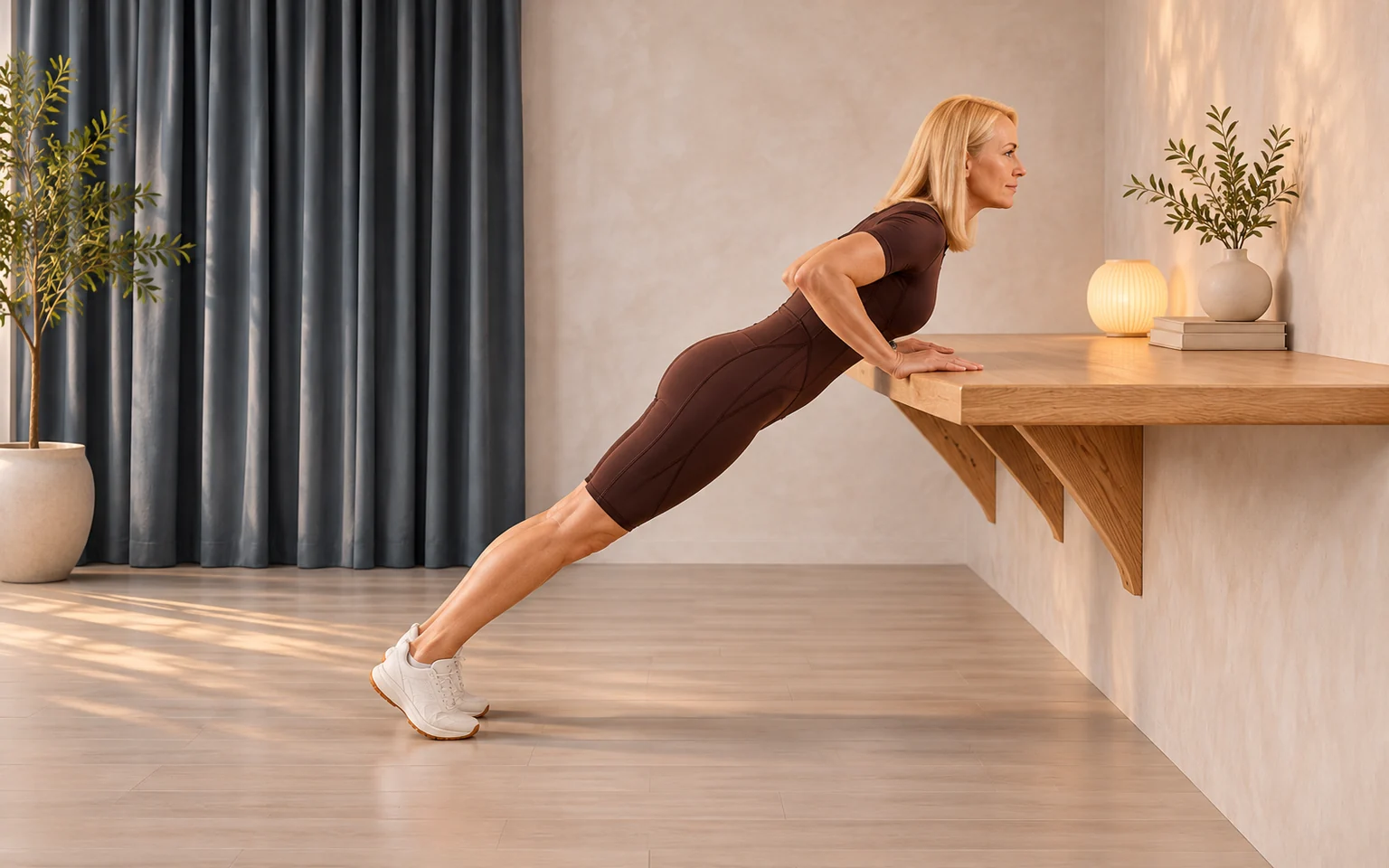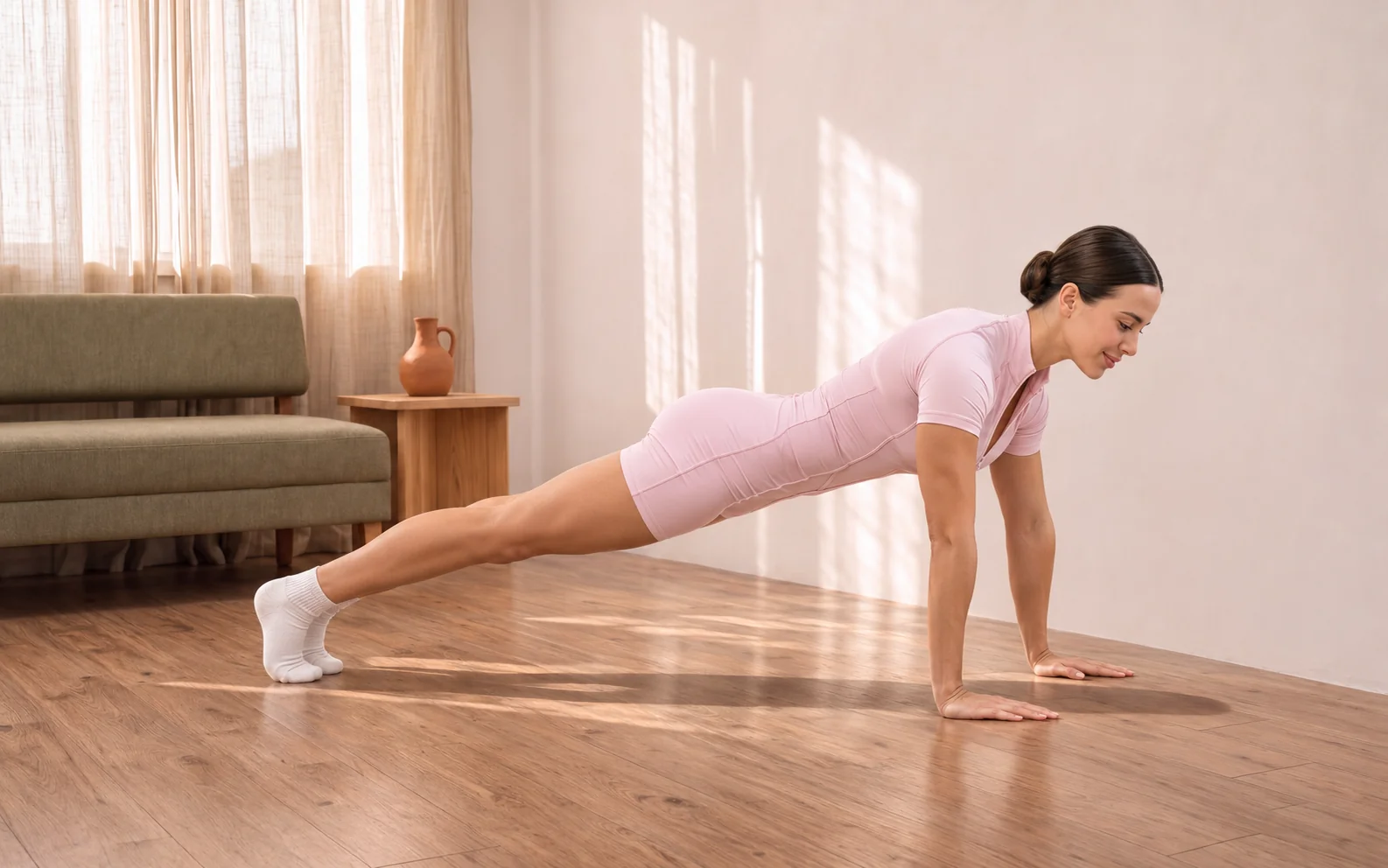
Chest calisthenics exercises include push-ups and bar dips. Hand position and body angle change how a push-up feels. Choose a variation that lets you move with control and record your sets and repetitions. For a session that also trains shoulders and triceps, see this calisthenics push workout.
Key takeaways
These points summarize how chest calisthenics exercises build the chest and what to expect.
> * In 18 young men assigned to two groups, matched-load push-ups and bench presses at 40% of bench-press maximum produced similar chest-thickness gains over eight weeks (1).
> * Four weeks of progressive push-up variations raised bench press strength in moderately trained men, like bench pressing did (2).
> * Chest muscle activity was higher with hands at shoulder width or narrower than with very wide hands (3).
> * Feet-elevated push-ups put more force through the hands than standard push-ups; knee and hands-elevated push-ups put less (4).
> * Suspension push-ups raised trunk muscle work in one study, but chest activity stayed similar to standard push-ups (5).
> * A 2026 review of reviews linked 10 or more weekly sets per muscle with greater muscle growth (6).
> * In 15 healthy men doing bar dips to fatigue, peak chest and triceps activity rose near the end of the set (7).
Can you build a chest with calisthenics?
Yes, calisthenics can build the chest if each set is challenging and the difficulty keeps rising. Chest muscles respond to load and effort, and a push-up is a loaded press with your body as the weight.
In one study, 18 men aged 19 to 22 were randomized to push-ups or bench press. The push-up position was adjusted to match a bench press at 40% of each participant’s one-repetition maximum. After eight weeks, both groups gained chest and triceps thickness (1). In a separate four-week trial, moderately trained men doing progressive push-ups or bench presses gained bench-press strength, without a measurable change in muscle thickness (2).
A third study added elastic band resistance to push-ups at a 6-repetition maximum. Trained students gained similar strength to a bench press group over 5 weeks (8).
If standard push-ups become easy, try a different body angle or a manageable increase in resistance. A slower repetition is another way to practice control.
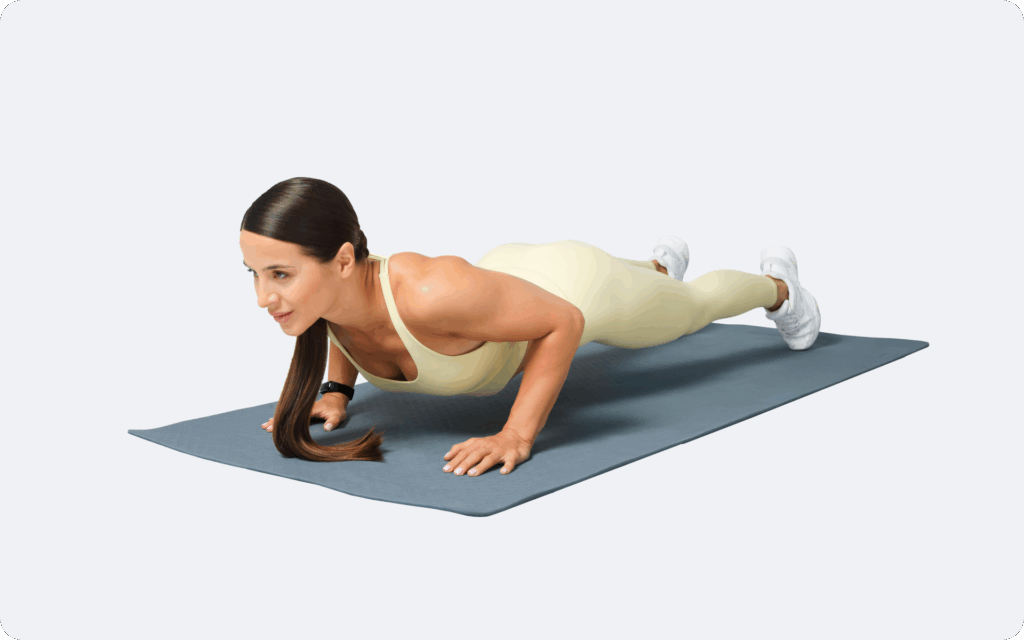
How does hand width affect chest activity in a push-up?
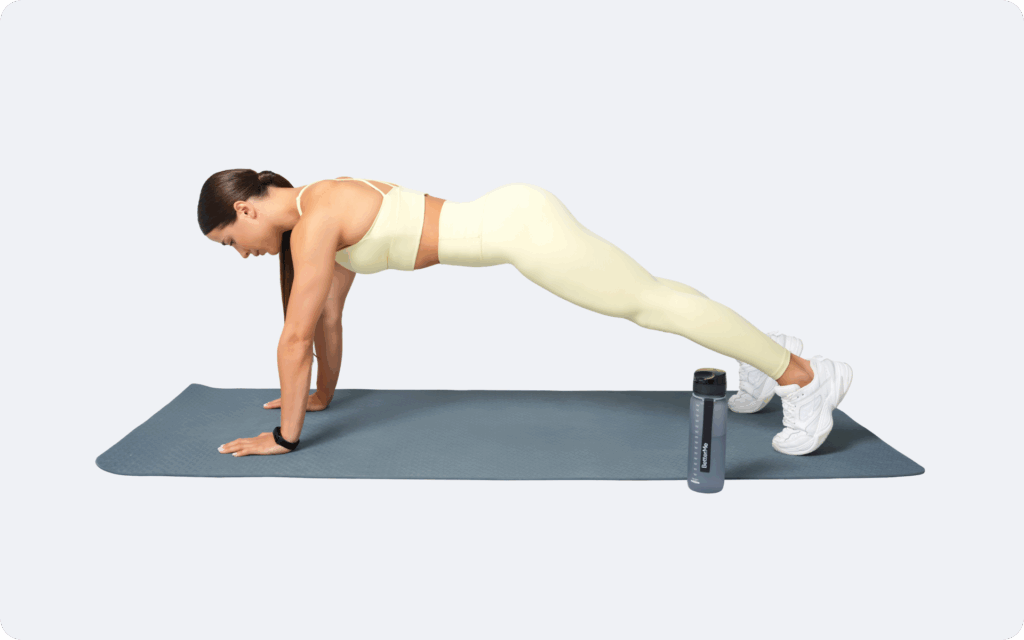
A standard push-up with hands near shoulder width is a practical base chest exercise for many people. In a study of 12 men, chest activity was higher at shoulder width or narrower. Hands at 150% of shoulder width produced less chest activity (3). Very wide hands shifted more work to the serratus anterior, a muscle along the ribs.
A scoping review of 30 push-up studies found the triceps and chest most active in four push-up types (9):
> * Unstable surface push-ups
> * Suspension push-ups
> * Incline push-ups with hands on a ball
> * Standard push-ups
Unstable-surface push-ups had the highest overall muscle activity in the review (9). In a separate study, suspension increased abdominal muscle activity without greater chest activity than a standard push-up (5). These measurements describe activity during the exercise and do not establish a long-term growth advantage.
In 15 healthy men performing bar dips, chest and triceps activity increased near the end of a set taken to fatigue (7). Use purpose-built, secured dip bars rated for your total load. If these are unavailable, choose a floor push-up.
How does push-up angle change the force through your hands?
Body angle changes how much of your weight your hands support. Raising your feet increases the load. Raising your hands or dropping to your knees lowers it. One force-plate study measured this in 23 recreationally fit adults (4).
|
Push-up variation |
Load compared with a standard push-up |
Typical use |
|---|---|---|
|
Hands on a 60 cm box |
Lower |
First step for beginners |
|
Knee push-up |
Lower |
Building toward full push-ups |
|
Standard push-up |
Reference |
Base exercise |
|
Feet on a 30 cm box |
Higher |
First harder variation |
|
Feet on a 60 cm box |
Higher |
Higher hand force in the study |
Use the table to pick a level where you can do 6 to 15 controlled reps. Move to the next row when your top rep count feels steady for two sessions.
Which chest calisthenics variations should you learn?
Useful chest calisthenics exercises include incline, standard, feet-elevated, archer, and pseudo planche push-ups, plus dips. Choose two or three at your level and add harder versions over weeks. Your upper body calisthenics routine can then add pulling and shoulder work.
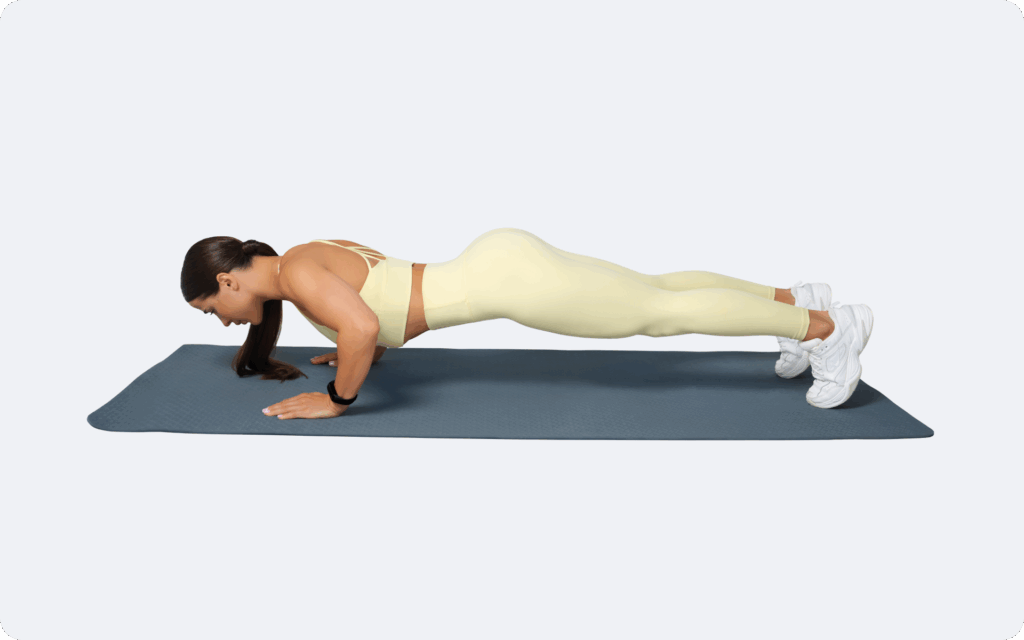
Feet-elevated push-up
Elevating your feet increased the peak force through the hands in the tested push-ups (4). The study measured force, not which part of the chest grew or worked harder.
> 1. Use a secured exercise platform rated for your weight. Start with a low elevation and keep both feet stable.
> 2. Set your hands just outside shoulder width on the floor.
> 3. Brace your core so your body forms a straight line.
> 4. Lower your chest toward the floor for 2 to 3 seconds.
> 5. Press back up until your arms are straight.
Archer push-up
The archer push-up moves more load onto one arm while the other arm assists.
> 1. Start in a push-up with hands wider than your shoulders.
> 2. Bend one elbow and lower toward that hand.
> 3. Keep the other arm almost straight as a support.
> 4. Press back to the center.
> 5. Repeat on the other side.
Pseudo planche push-up
The pseudo planche push-up places your shoulders ahead of your hands. Shoulders and chest work harder at the same body weight.
> 1. Set your hands beside your lower ribs, fingers turned slightly out.
> 2. Lean forward until your shoulders pass your hands.
> 3. Lower with elbows close to your sides.
> 4. Press up while keeping the forward lean.
Ring or suspension push-up
Ring push-ups add instability. Expect your core and shoulder control to work harder.
> 1. Use a suspension system rated for your total load and install it on a compatible, rated anchor according to the equipment instructions. Set the handles at a height you can control.
> 2. Hold the handles under your shoulders.
> 3. Lower slowly while keeping the rings close to your body.
> 4. Press back up without letting the rings drift apart.
Bar dip
The bar dip loads the chest and triceps through a deep pressing range.
> 1. Use purpose-built, secured parallel bars rated for your body weight and any added load.
> 2. Lean your torso slightly forward to bring in more chest.
> 3. Bend your elbows and lower only through a comfortable range you can control. Stop if your shoulders hurt.
> 4. Press back up to straight arms.
Slow push-up with pause
The slow push-up makes each rep last longer at the same body angle.
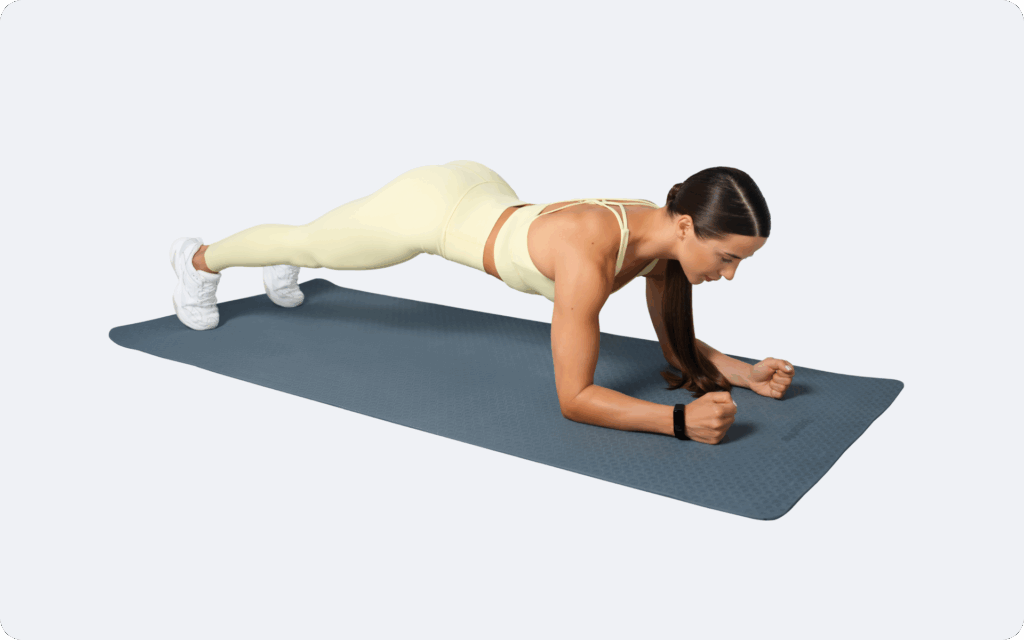
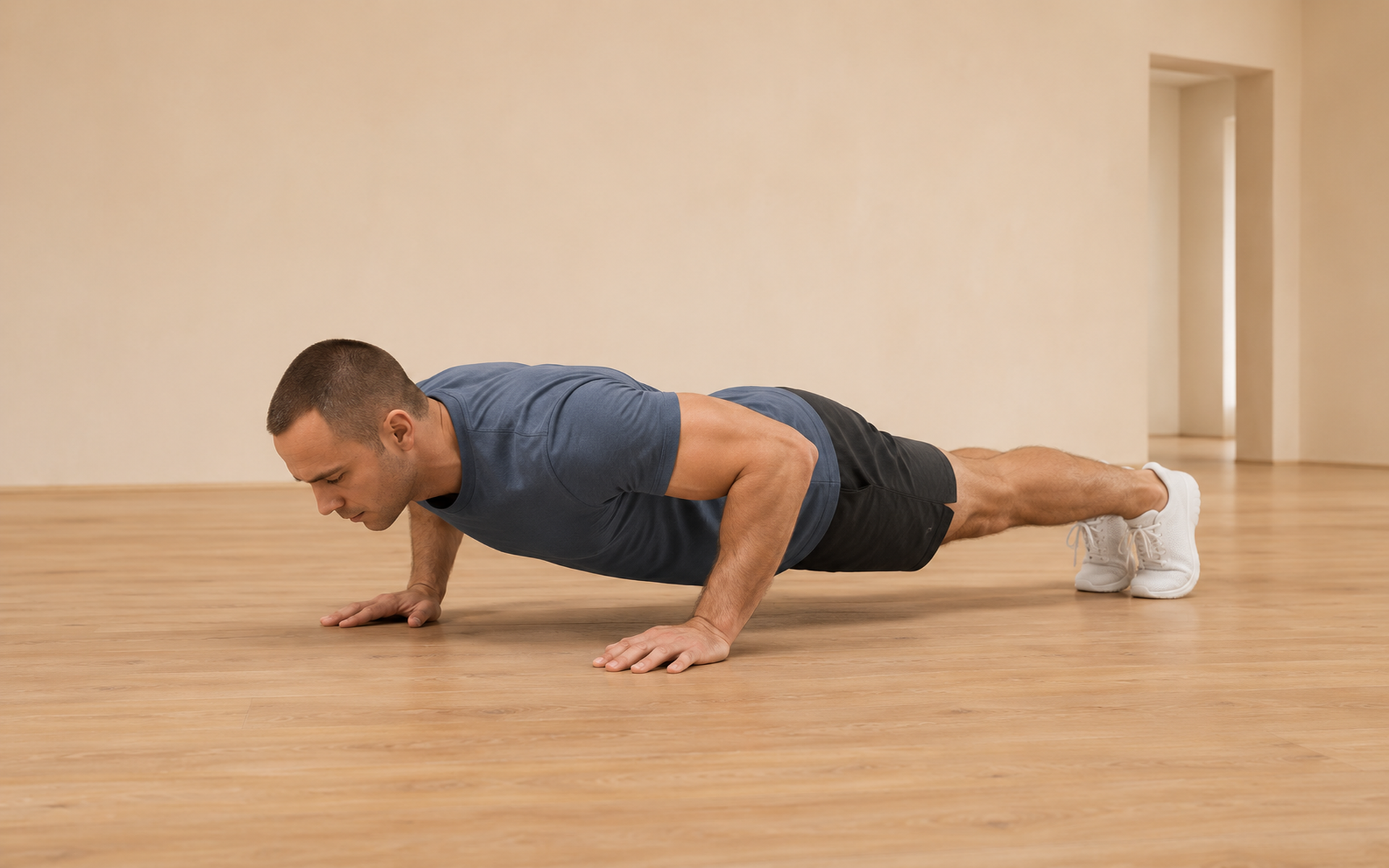
> 1. Take a standard push-up position.
> 2. Lower for 3 to 5 seconds.
> 3. Pause for 1 second just above the floor.
> 4. Press up at a steady speed.
How do you progress chest calisthenics from beginner to advanced?
You progress chest calisthenics by moving through harder variations once your reps stay steady. A simple ladder keeps the effort high without jumping too far at once.
> 1. Start with wall push-ups using a fixed wall, or place your hands on a secured, load-rated exercise platform.
> 2. If you can control the current version, use a lower secured exercise platform or move to the floor.
> 3. Move to knee push-ups or standard push-ups on the floor.
> 4. Add slow lowering and a 1-second pause at the bottom.
> 5. Raise your feet only on a secured platform rated for the load. Choose an elevation that lets you maintain form.
> 6. Add archer push-ups or pseudo planche push-ups.
> 7. Add dips if you have parallel bars and comfortable shoulders.
Stay on each step until you can do 12 to 15 clean reps for 2 or 3 sets. Then move one step forward and expect your reps to drop. A drop to 6 or 8 reps is normal after a harder variation.
Shoulder or wrist discomfort is a reason to step back a level. Raise your hands, shorten the range, or use push-up handles to keep wrists straight. Stop the exercise and seek advice if discomfort continues.
How many sets do you need for chest growth?
Higher weekly training volume, including 10 or more sets per muscle, was associated with greater muscle growth across trials in healthy adults (6). Ten sets across two sessions is the example below. Choose less volume if it suits your experience and recovery.
The review did not find a consistent effect of time under tension or training to momentary fatigue on outcomes (6). Use a slower lowering phase if it helps you control the movement.
Four chest exercises can be enough for one chest session. Weekly hard sets matter more than the exercise count.
How can you split ten chest sets across two sessions?
This weekly example has five sets in each session. Choose an easier variation if you cannot control the listed repetitions, and allow recovery time between sessions.
|
Session and exercise |
Sets |
Reps or time |
Rest |
|---|---|---|---|
|
Session A: feet-elevated push-up |
3 |
8 to 12 |
90 seconds |
|
Session A: archer push-up |
2 |
5 to 8 per side |
90 seconds |
|
Session B: slow push-up with pause |
3 |
6 to 10 |
90 seconds |
|
Session B: bar dip or close-grip floor push-up |
2 |
6 to 12 |
90 seconds |
Session A has three sets of feet-elevated push-ups and two sets of archer push-ups. Session B has three slow push-up sets and two dip or floor push-up sets. Together these give ten chest-focused sets for the week. A women’s calisthenics plan shows how to fit other movements around your sessions.
Progress one variable at a time. Add a rep, raise your feet, slow the lowering phase, or move to a harder exercise.
How long does it take to build your chest with calisthenics?
In a four-week trial of moderately trained men, both groups improved bench-press strength, but neither had a measurable change in chest thickness (2). A separate eight-week trial in young men found increased chest thickness with push-ups or bench presses at matched loads (1). Those endpoints do not establish when you will see an individual change.
Record the exercise version, sets, and repetitions you can perform with control. Compare them over time using a similar range of motion.
Frequently Asked Questions
What if I do not have dip bars?
For the second session in the table, use the close-grip floor push-up in place of dips. Adjust to a kneeling or wall version if the floor press is too demanding.
Are dips better than push-ups?
No, dips are not clearly better. Dips add a different stimulus to a chest plan. Dips load the chest and triceps through a deeper range at full body weight (7). Push-ups are easier to scale, so many plans use both.
Is it harder to build muscle with calisthenics?
Progression can be easier to measure with weight plates. In trained university students, banded push-ups and bench presses matched at a six-repetition maximum produced similar strength gains over five weeks (8). A different trial in young men found chest-thickness gains with matched-load push-ups (1). Our calisthenics workout for strength guide covers strength-focused planning.
What should I record when comparing two chest sessions?
Note your hand spacing, foot or hand elevation, sets, repetitions, and rest time. Comparing the same setup makes it easier to tell whether you completed more work with the same form.
The bottom line
Choose a pressing setup you can repeat and log it. In the sample week, five chest-focused sets per session add up to ten across two sessions. Adjust the work to your experience and recovery. BetterMe offers calisthenics workouts if you prefer a guided plan.
DISCLAIMER:
This article is intended for general informational purposes only and does not serve to address individual circumstances. It is not a substitute for professional advice or help and should not be relied on for making any kind of decision-making. Any action taken as a direct or indirect result of the information in this article is entirely at your own risk and is your sole responsibility.
BetterMe, its content staff, and its medical advisors accept no responsibility for inaccuracies, errors, misstatements, inconsistencies, or omissions and specifically disclaim any liability, loss or risk, personal, professional or otherwise, which may be incurred as a consequence, directly or indirectly, of the use and/or application of any content.
You should always seek the advice of your physician or other qualified health provider with any questions you may have regarding a medical condition or your specific situation. Never disregard professional medical advice or delay seeking it because of BetterMe content. If you suspect or think you may have a medical emergency, call your doctor.
SOURCES:
- Low-load bench press and push-up induce similar muscle hypertrophy and strength gain (2017, nih.gov)
- Effect of Progressive Calisthenic Push-up Training on Muscle Strength and Thickness (2018, nih.gov)
- Effect of the push-up exercise at different palmar width on muscle activities (2016, nih.gov)
- Kinetic analysis of several variations of push-ups (2011, nih.gov)
- Recruitment of Shoulder Prime Movers and Torso Stabilizers During Push-Up Exercises Using a Suspension Training System (2020, nih.gov)
- American College of Sports Medicine Position Stand. Resistance Training Prescription for Muscle Function, Hypertrophy, and Physical Performance in Healthy Adults: An Overview of Reviews (2026, nih.gov)
- Fatigue Increases Muscle Activations but Does Not Change Maximal Joint Angles during the Bar Dip (2022, nih.gov)
- Bench press and push-up at comparable levels of muscle activity results in similar strength gains (2015, nih.gov)
- Shoulder electromyography activity during push-up variations: a scoping review (2021, nih.gov)
 Reviewed by
 Reviewed by
 By

 By