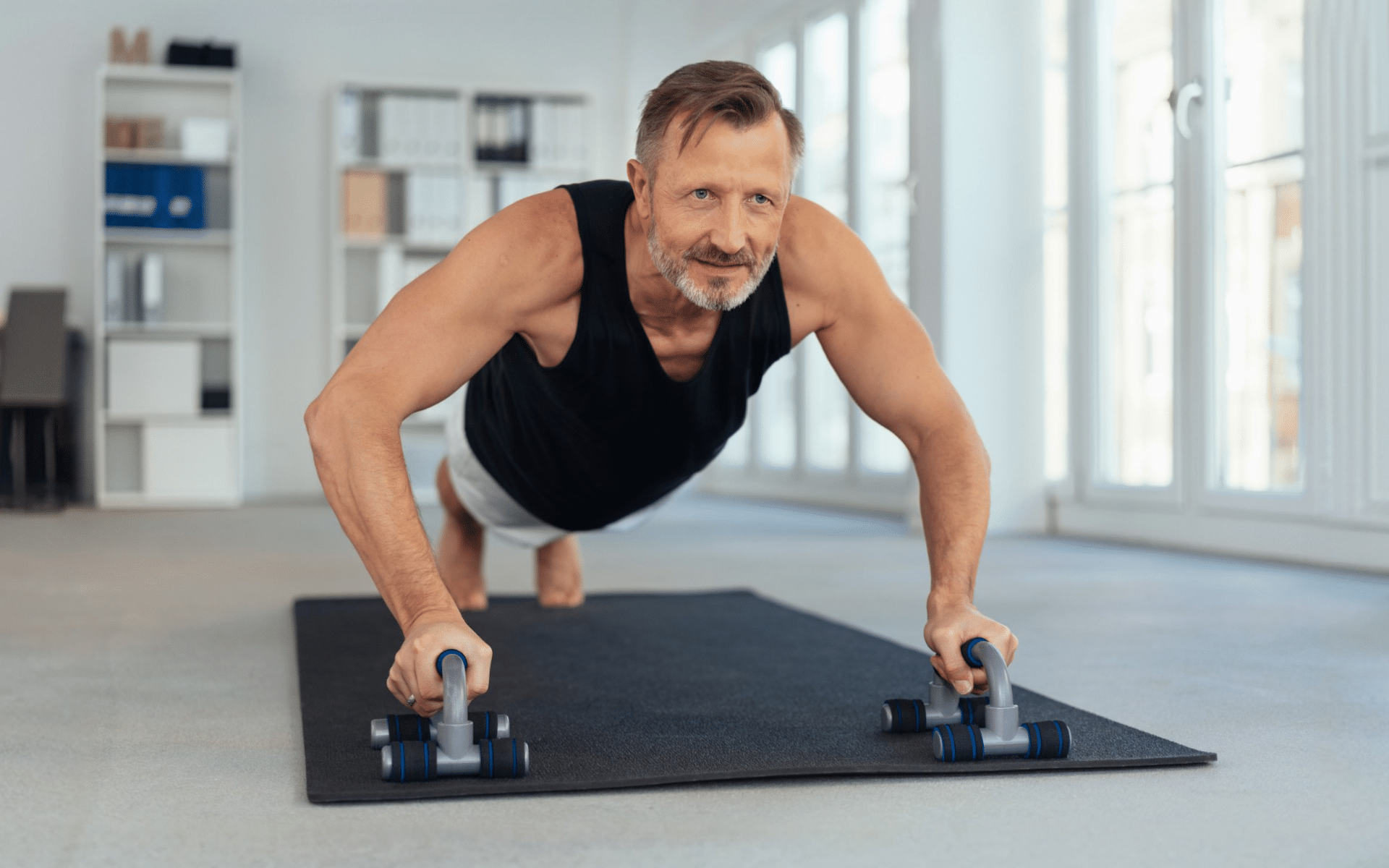

Starting a calisthenics workout for men means choosing manageable pushing, pulling, leg, and core exercises, practicing them on a repeatable schedule, and increasing difficulty gradually. This guide provides a sample three-day starter routine, explains rest and progression, and separates beginner practice from optional explosive exercises for experienced trainees.
Calisthenics uses your own body weight as resistance. Your starting point depends on your experience and available equipment. Use the weekly calisthenics plan for men to compare two-session and three-session formats before choosing a schedule.
Following exercise and diet plans is the key in your fitness journey and greatly impacts results. In 4 weeks users can typically expect to lose not more than 1-2 lbs per week. Individual results may vary.
Key takeaways
- A beginner can start with incline push-ups, supported squats, assisted pulls, and short plank holds.
- The sample starter routine uses three nonconsecutive training days, with a two-day option when needed.
- Adult activity guidance includes muscle-strengthening work on at least two days per week. (1)
- Push-up training improved upper-body strength in one small four-week trial; the study did not demonstrate a significant muscle-thickness increase. (2)
- Add repetitions or change a variation gradually, rather than increasing every training variable together.
- Explosive movements are optional progressions, not requirements for a beginner routine.
- A workout method does not guarantee a particular body shape or speed of results.
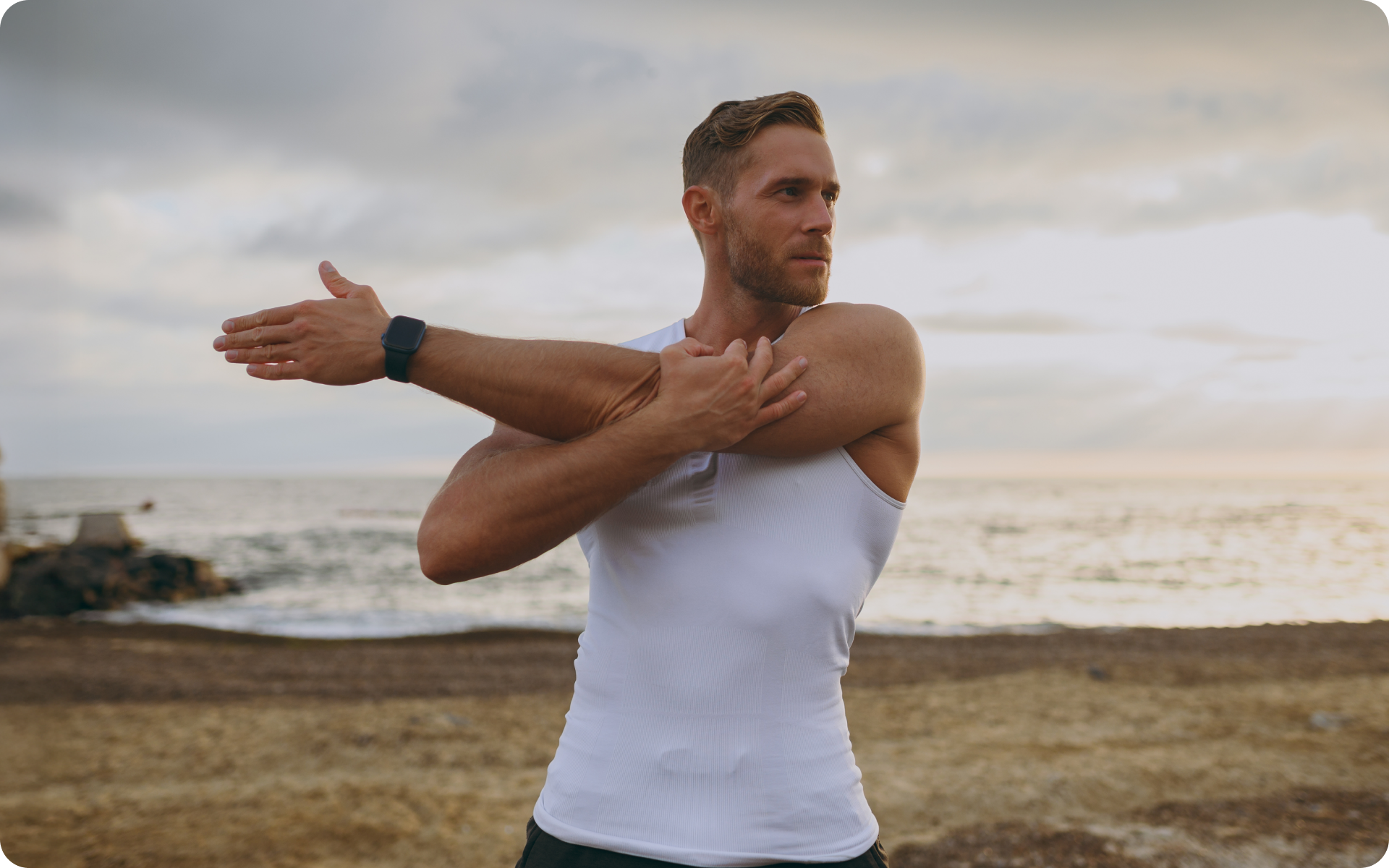
What are suitable calisthenics workouts for men?
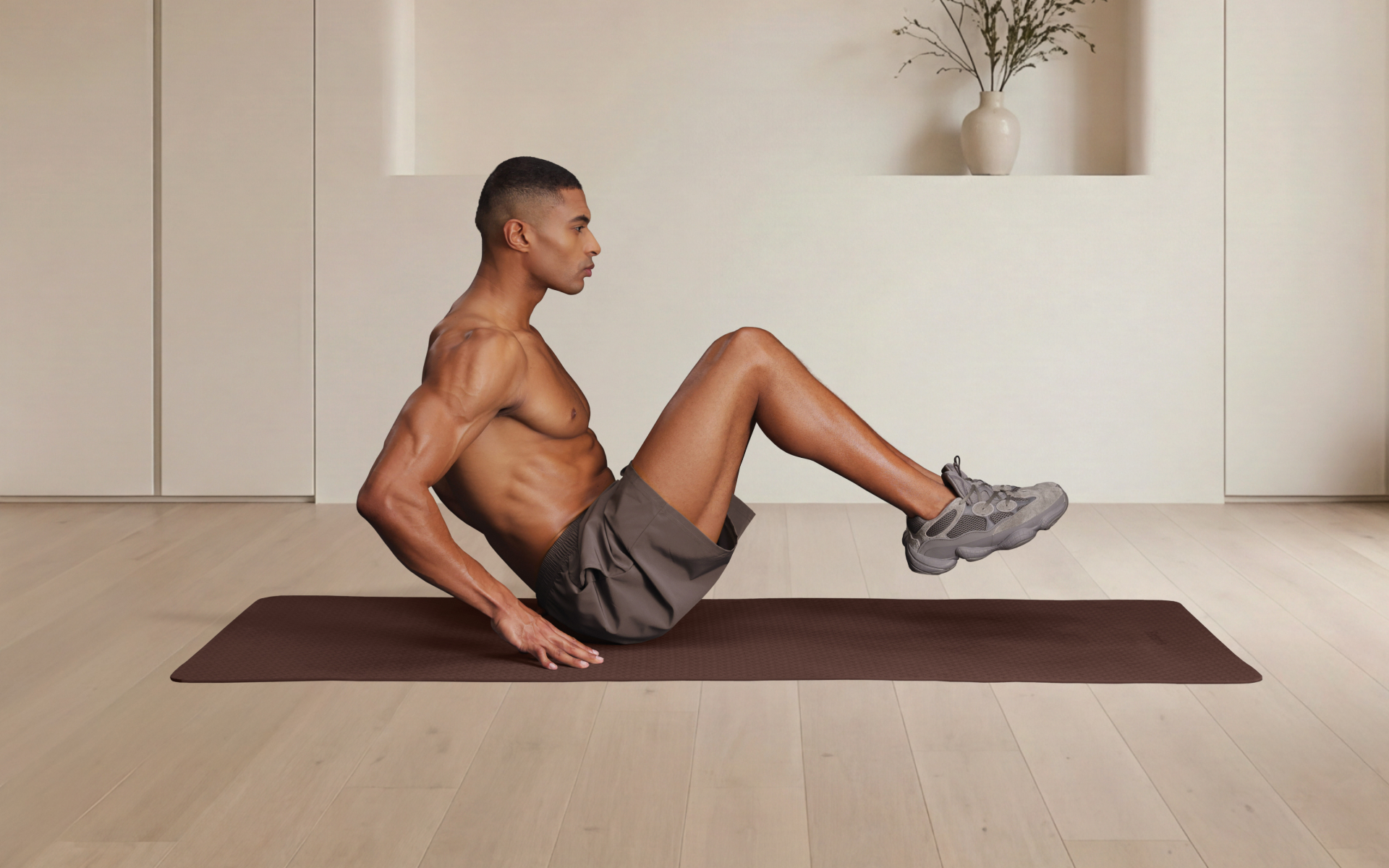
Suitable workouts combine movements you can control with a workload you can repeat. A balanced starting routine includes a push, a pull, lower-body work, and core practice. A small trial of progressive push-ups found upper-body strength gains, but it did not test every exercise or this complete routine. (2)
For those short on time or equipment, calisthenics workouts for men at home can be a practical option. Simple moves like push-ups, squats, planks, and lunges target major muscle groups without free weights. Pull-ups and rows need a properly installed bar or another rated, anchored setup.
Step 1: choose your starting variations
- Practice a wall or incline push-up to find a pressing variation you can control.
- Practice a supported squat through a comfortable range.
- Practice an assisted pull-up or a more upright row using rated equipment.
- Practice a knee-supported plank while breathing normally.
The eight-exercise calisthenics routine provides more movement instructions. You do not need to complete a full pull-up before you can begin training.
Step 2: use a repeatable schedule
Train on Monday, Wednesday, and Friday, or choose any three nonconsecutive days. Start with two days if three sessions are difficult to sustain. The table is a sample workload, not a universal requirement.
| Session | Exercises | Starting sets and reps |
|---|---|---|
| A | Incline push-up; assisted row; squat; plank | 2 sets of 6 to 10; 5 to 8; 8 to 12 reps; 15 to 30-sec holds |
| B | Assisted pull-up or row; glute bridge; reverse lunge; side plank | 2 sets of 5 to 8; 8 to 12; 5 to 8 reps per leg; 10 to 20-sec holds per side |
| C | Incline push-up; assisted row; squat; glute bridge | 2 sets of 6 to 10; 5 to 8; 8 to 12; 8 to 12 reps |
Warm up for five to eight minutes before the exercises. Complete each exercise’s sets before moving to the next. Rest 90 to 120 secs between pushing or pulling sets and 60 to 90 secs between lower-body or core sets; take longer if needed.
Use a supported split squat in place of a reverse lunge if balance is difficult. If no rated pulling setup is available, arrange access to one rather than using a household table. A no-equipment floor session does not duplicate the pulling work.
BetterMe offers a variety of workouts, recipes, challenges, and support tools to help you stay more consistent with your wellness routine. Explore the app to find features that fit your goals, preferences, and schedule.
Step 3: keep effort manageable
Finish a repetition set while you could still perform about two or three additional controlled repetitions. Finish a plank before your hips sag or your breathing becomes strained. These are practical effort cues, not a requirement to test your maximum.
Tips for Progress: First, focus on maintaining a clean form rather than chasing high reps.
Record your exercise variation, completed repetitions, and rest. Keep the dose the same until it is repeatable; you do not need to push close to failure on the last set.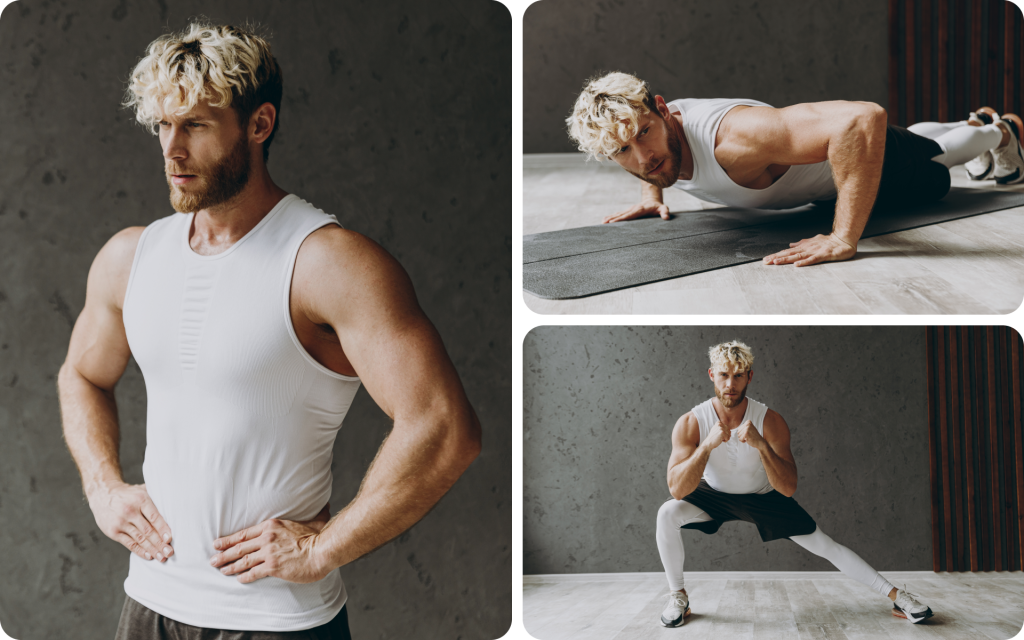
Step 4: progress one variable
| Starting point | Next small change | Condition |
|---|---|---|
| Lower end of a rep range | Add one rep to a set | Technique stays controlled |
| Top of the rep range | Try a slightly harder variation | All sets are repeatable |
| Short plank hold | Add five secs | Position and breathing remain steady |
| Unmanageable workload | Use an easier version or remove a set | Fatigue changes form |
Research on leg-extension training found gains from adding repetitions or load, but it does not establish an automatic weekly progression rate for calisthenics. (3) The bodyweight strength guide offers exercise ladders you can use at your own pace.
Why do some calisthenics athletes look lean?
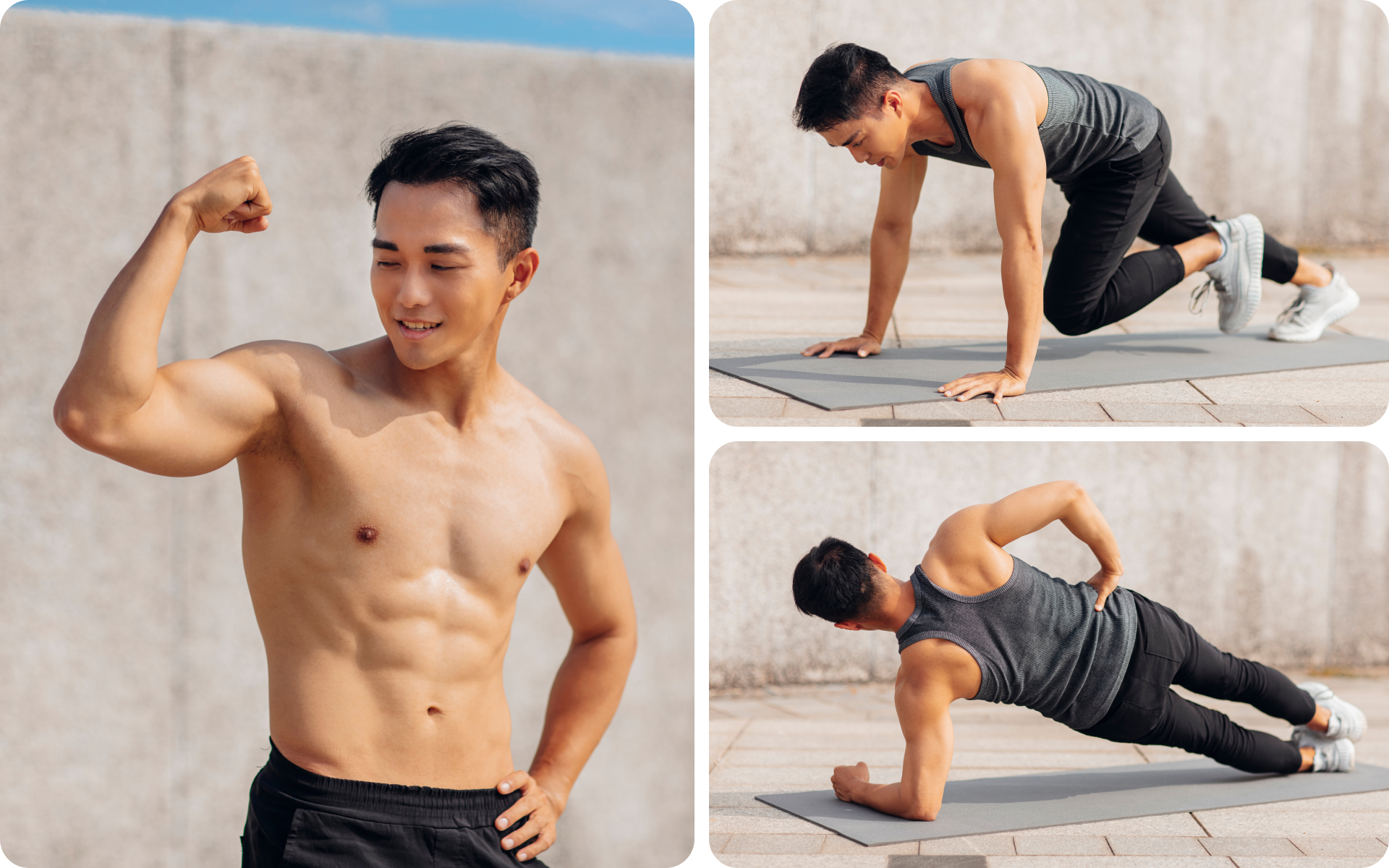
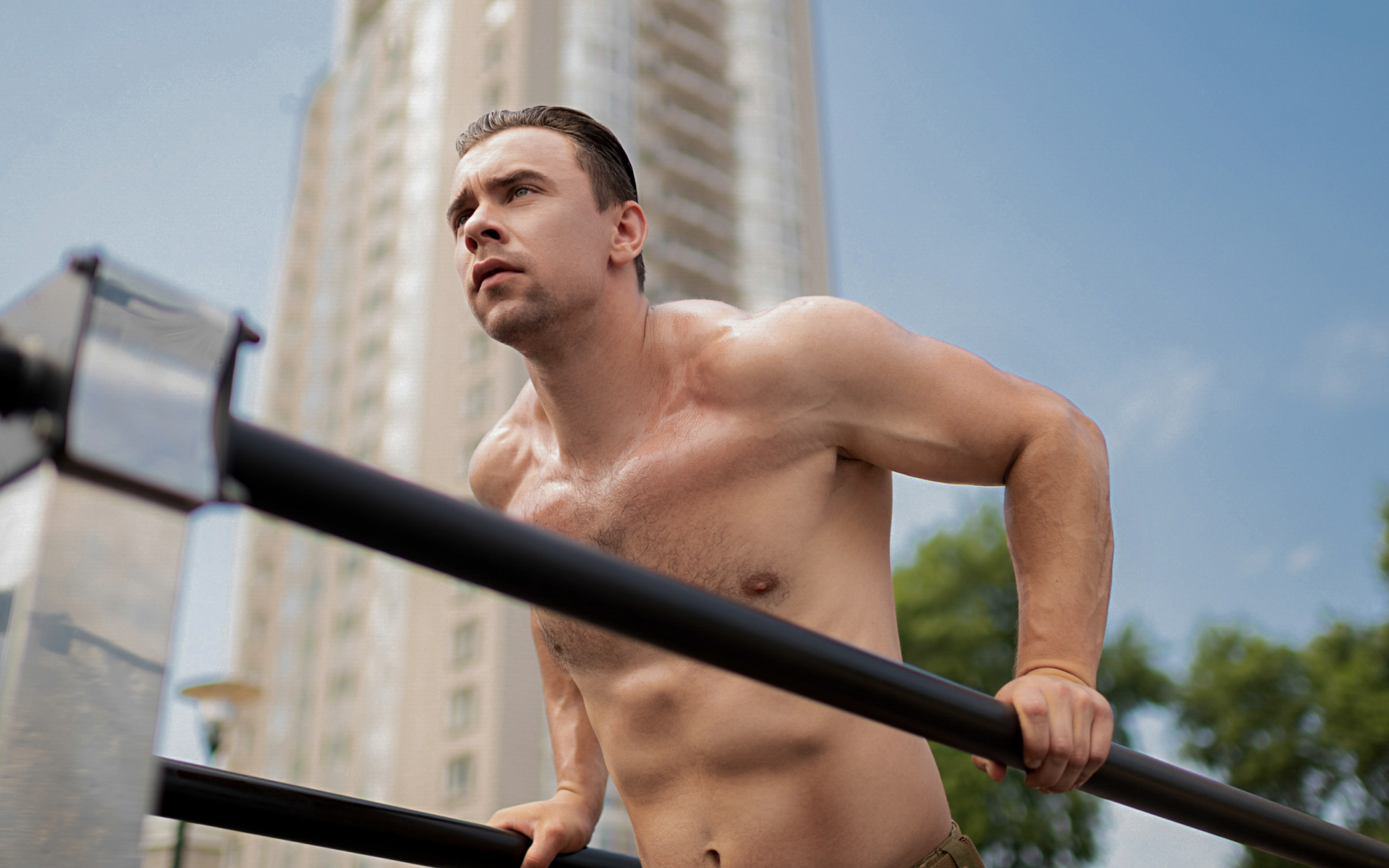
Appearance reflects many factors, including training history, food intake, body composition, and genetics. Photographs of advanced athletes do not show the full range of people who practice calisthenics and do not predict a beginner’s results.
Relative strength means strength in relation to body weight. Some bodyweight skills are demanding because you must move a large share of your weight, but you do not need a specific appearance to start. Assistance and exercise angles can change the load.
Read more: Beginner Calisthenics Moves: A Complete Guide to Getting Started
Can calisthenics change your physique?
Calisthenics can contribute to resistance-training goals, but it does not guarantee a lean or defined physique. Track performance goals, such as more controlled repetitions or less assistance, alongside any appearance goals.
You do not need to pursue soreness to make progress. One study in ten young men associated muscle growth with repeated protein-synthesis responses after early muscle damage had diminished. (4) Use rest days rather than adding demanding sessions whenever you feel motivated.
What gives faster results, gym training or calisthenics?
Neither method guarantees faster results for everyone. External weights make load changes convenient, while bodyweight exercises can be adjusted through leverage, assistance, and repetitions. The exercise, workload, consistency, and goal determine whether a method fits your needs.
| Feature | Weight-based training | Calisthenics |
|---|---|---|
| Load adjustment | Add or remove external load | Change support, leverage, or variation |
| Equipment | Weights or machines | Floor space plus pulling equipment where needed |
| Practice demands | Learn each lifting technique | Learn body position and movement control |
| Progress tracking | Load, reps, and sets | Variation, assistance, reps, and sets |
What are some explosive calisthenics exercises for men?
Explosive exercises use rapid force production and are optional for people who already control the basic movements. They are not part of the starter schedule. Consider qualified coaching before adding jumping or ballistic pulling work.
Clap push-ups
- Start in a standard push-up position.
- Lower your chest toward the floor.
- Push up explosively so your hands leave the ground.
- Clap your hands quickly before landing back in push-up position.
Use ordinary controlled push-ups if you cannot manage the takeoff and landing. Do not add clapping merely to make a beginner session feel harder.
Jump squats
- Stand with feet shoulder-width apart.
- Lower into a comfortable squat.
- Drive upward into a small controlled jump.
- Land softly and reset before the next repetition.
Burpees with a jump
- Start standing with feet shoulder-width apart.
- Place your hands on the floor.
- Step or jump your feet back into a plank.
- Return your feet toward your hands.
- Stand up before adding an optional controlled jump.
Tuck jumps
- Stand tall with feet hip-width apart.
- Bend your knees slightly and jump straight up.
- Tuck your knees toward your chest while in the air.
- Land lightly and reset before the next jump.
Explosive pull-ups
Use a correctly installed pull-up bar and seek coaching before ballistic pulling. Controlled assisted or regular pull-ups remain appropriate alternatives; explosive repetitions are not necessary for the starter plan.

Box jumps
- Stand facing a platform rated for jumping.
- Bend your knees and swing your arms back.
- Jump onto the platform with a controlled landing.
- Step down carefully and reset.
Jumping lunges
- Start in a lunge position with one foot forward and the other back.
- Lower into a comfortable range.
- Jump to switch legs only if you can control the landing.
- Reset before repeating.
Use reverse lunges or supported split squats as nonjumping alternatives. An exercise’s difficulty is not evidence that it will produce quicker appearance changes.
Read more: Calisthenics Workout for Back: 8 Exercises for a Strong and Powerful Back
How long should a calisthenics workout be?
A starter session can take about 25 to 40 minutes, including a warm-up and rest, depending on the selected exercises. This is a planning estimate. Add time when you need longer breaks rather than rushing your repetitions.
Use a comfortable, controlled range. A review favored full-range resistance training for strength and lower-limb muscle growth, but the finding is not a reason to force a position beyond your current ability. (5)
For shorter sessions, try the timed morning routine. A shorter session can be useful practice without being a replacement for every part of a full program.
What should I eat during calisthenics?
Regular meals containing a variety of foods can support a training routine. There is no single calorie target for all men, and this guide does not set an individual diet prescription.
- Proteins: Chicken, turkey, eggs, fish, tofu, beans, Greek yogurt
- Carbs: Brown rice, quinoa, oats, whole-grain bread, sweet potatoes
- Fats: Avocados, nuts, seeds, olive oil, fatty fish
- Fruits: Bananas, berries, apples, oranges
- Vegetables: Spinach, broccoli, kale, carrots
- Pre-Workout Snacks: Banana with peanut butter, oats with berries, protein shake
- Post-Workout Meals: Chicken with rice, eggs with whole-grain toast, salmon with quinoa
Choose foods and portions that fit your preferences and needs. A review found benefits from additional protein during resistance training, but it did not establish that every trainee needs a supplement. (6)
You can explore BetterMe’s calisthenics quiz to view the available options.
There is no single calisthenics body type. People with different builds can practice bodyweight exercises, and their appearance depends on more than the workout method. Start by controlling a manageable squat, push-up variation, and plank position. Assisted pulling can be practiced alongside them when suitable equipment is available. Yes, you can combine them within one training plan. Account for overlapping muscle work and leave time to rest between demanding sessions. Begin with the exercise or skill that is your main priority for the session. Keep enough energy for controlled technique, and avoid treating the second method as unlimited extra work.Frequently asked questions
What does a calisthenics body look like?
What is the first skill you should learn in calisthenics?
Can I mix calisthenics and weightlifting?
Should I do calisthenics or weights first?
The bottom line
Start with manageable movements, a repeatable schedule, and clear rest periods. Progress by changing one variable at a time, and keep explosive skills separate from beginner practice. Consistency can support your training goals, while individual strength and appearance results vary.
Disclaimer
This article is intended for general informational purposes only and does not serve to address individual circumstances. It is not a substitute for professional advice or help and should not be relied on for making any kind of decision-making. Any action taken as a direct or indirect result of the information in this article is entirely at your own risk and is your sole responsibility.
BetterMe, its content staff, and its medical advisors accept no responsibility for inaccuracies, errors, misstatements, inconsistencies, or omissions and specifically disclaim any liability, loss or risk, personal, professional or otherwise, which may be incurred as a consequence, directly or indirectly, of the use and/or application of any content.
You should always seek the advice of your physician or other qualified health provider with any questions you may have regarding a medical condition or your specific situation. Never disregard professional medical advice or delay seeking it because of BetterMe content. If you suspect or think you may have a medical emergency, call your doctor.
Sources
- Adult Activity: An Overview (2023, cdc.gov)
- Effect of Progressive Calisthenic Push-up Training on Muscle Strength and Thickness (2018, pubmed.ncbi.nlm.nih.gov)
- Effects of Resistance Training Overload Progression Protocols on Strength and Muscle Mass (2024, pubmed.ncbi.nlm.nih.gov)
- Resistance training-induced changes in integrated myofibrillar protein synthesis are related to hypertrophy only after attenuation of muscle damage (2016, pmc.ncbi.nlm.nih.gov)
- Effects of range of motion on resistance training adaptations: A systematic review and meta-analysis (2021, pubmed.ncbi.nlm.nih.gov)
- A systematic review, meta-analysis and meta-regression of the effect of protein supplementation on resistance training-induced gains in muscle mass and strength in healthy adults (2018, pmc.ncbi.nlm.nih.gov)
 By
 Reviewed by
 Reviewed by
 Reviewed by