A military calisthenics workout plan is a structured routine that relies on bodyweight exercises to build strength and endurance. It typically includes functional movements like push-ups, squats, lunges, and core exercises. This approach requires minimal equipment and focuses on high-repetition sets to challenge your muscles. It is a friendly way for beginners to start exercising, as it can be done almost anywhere. Many people find it a practical choice for building a consistent fitness habit without needing a gym membership.
Bodyweight training offers a practical way to stay active. Whether you are traveling, working from home, or simply prefer to exercise in your living room, this approach can easily fit your schedule. A military calisthenics beginner workout plan uses basic movements to challenge your muscles. It requires very little equipment, which makes it an excellent choice for anyone looking to build a consistent routine.
You do not need to be a seasoned athlete to start. These exercises can be modified to suit different bodies and fitness levels. By focusing on steady progress, a military workout program can help you feel more energetic. Keep reading to learn more about the benefits, routines, and simple steps to start your own military calisthenics workout routine today.
What Is Military Calisthenics?
Military calisthenics refers to a form of physical training that uses bodyweight exercises.
It generally refers to bodyweight training commonly used in military physical training, such as (1):
- Push-ups
- Pull-ups
- Sit-ups or core work
- Squats
- Lunges
- Burpees
- Mountain climbers
- Jumping jacks
- Running drills
Although some people associate military-style training with weighted movements such as the overhead press, a bodyweight routine is different. For example, the military press muscles worked typically include the shoulders, triceps, and upper chest, while calisthenics uses movements like push-ups, planks, and rows to train similar upper-body areas without weights.
What makes it feel “military” is usually:
- High-rep, disciplined structure
- Minimal equipment
- Endurance + functional strength focus
- Group or circuit-based training
- Sometimes a boot-camp style intensity
So while it’s not always a formal technical term, people do use it to describe military-style bodyweight workouts.
Many people enjoy this type of training because it is highly adaptable. It can serve as an effective military calisthenics workout plan for men and women alike. The movements are universal and can be modified for any fitness level. Because it requires little to no equipment, it is a very convenient option.
Some research suggests that consistent bodyweight training may support healthy body composition (2). It may also enhance one’s performance in daily activities, as many of the exercises mimic fundamental movement patterns. Most importantly, a convenient workout can help you develop a steady, balanced approach to fitness.
What Is a Good Military Calisthenics Workout Plan?
A good military calisthenics workout routine covers all the major muscle groups. It should include a balance of upper body, lower body, and core exercises. This ensures that you develop strength evenly across your body.
For beginners, it is often best to start with a three-day weekly schedule. This allows for adequate rest and recovery between sessions. A well-rounded routine will typically alternate between pushing movements, pulling movements, and leg exercises.
Consistency is more important than extreme intensity. A good plan gives you room to learn the proper form for each movement. You should focus on controlling your body and breathing steadily.
Below is an example of a beginner-friendly weekly routine. It is designed to be gentle for most people.
| Day | Focus Area | Exercises | Sets & Reps |
|---|---|---|---|
| Monday | Full Body (Push & Legs) | Push-ups, Squats, Lunges, Plank | 3 sets of 8–12 reps (30-sec plank) |
| Tuesday | Rest or Light Activity | Walking, Gentle Stretching | 15–30 minutes |
| Wednesday | Full Body (Pull & Core) | Bodyweight Rows, Glute Bridges, Crunches | 3 sets of 8–12 reps |
| Thursday | Rest or Light Activity | Walking, Gentle Stretching | 15–30 minutes |
| Friday | Full Body Circuit | Jumping Jacks, Push-ups, Squats, Burpees (modified) | 3 rounds, 10 reps each |
| Weekend | Active Recovery | Hiking, Swimming, or Yoga | As desired |
Whether you’re a workout beast or just a beginner making your first foray into the world of fitness and dieting – BetterMe has a lot to offer to both newbies and experts! Install the app and experience the versatility first-hand!
Push-ups
Push-ups are a classic military exercise that targets the chest, shoulders, and triceps. They also require core stability.
- Start in a high plank position with your hands slightly wider than shoulder-width apart.
- Keep your body in a straight line from your head to your heels.
- Lower your body by bending your elbows until your chest is close to the floor.
- Push back up to the starting position.
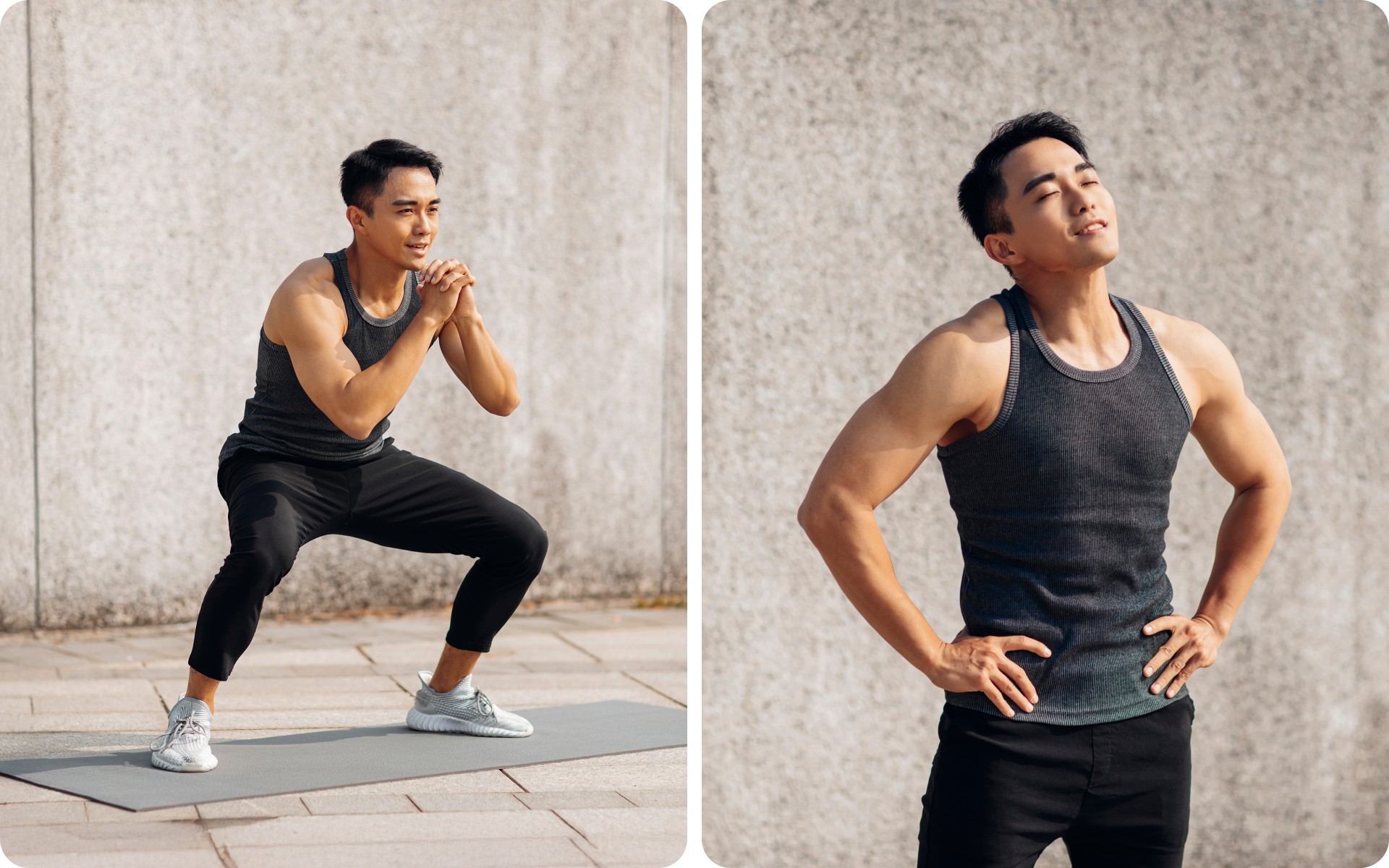
Squats
Squats are a foundational lower-body movement. They engage the quads, hamstrings, and glutes.
- Stand with your feet shoulder-width apart.
- Keep your chest up and your back straight.
- Bend your knees and push your hips back, as if sitting in a chair.
- Lower yourself until your thighs are parallel to the floor, then return to standing.
Lunges
Lunges help build unilateral leg strength and improve balance. They are excellent for overall leg development.
- Stand tall with your feet together.
- Step one foot forward and lower your hips until both knees are bent at a 90-degree angle.
- Keep your front knee aligned over your ankle.
- Push off your front foot to return to the starting position, then switch legs.
Plank
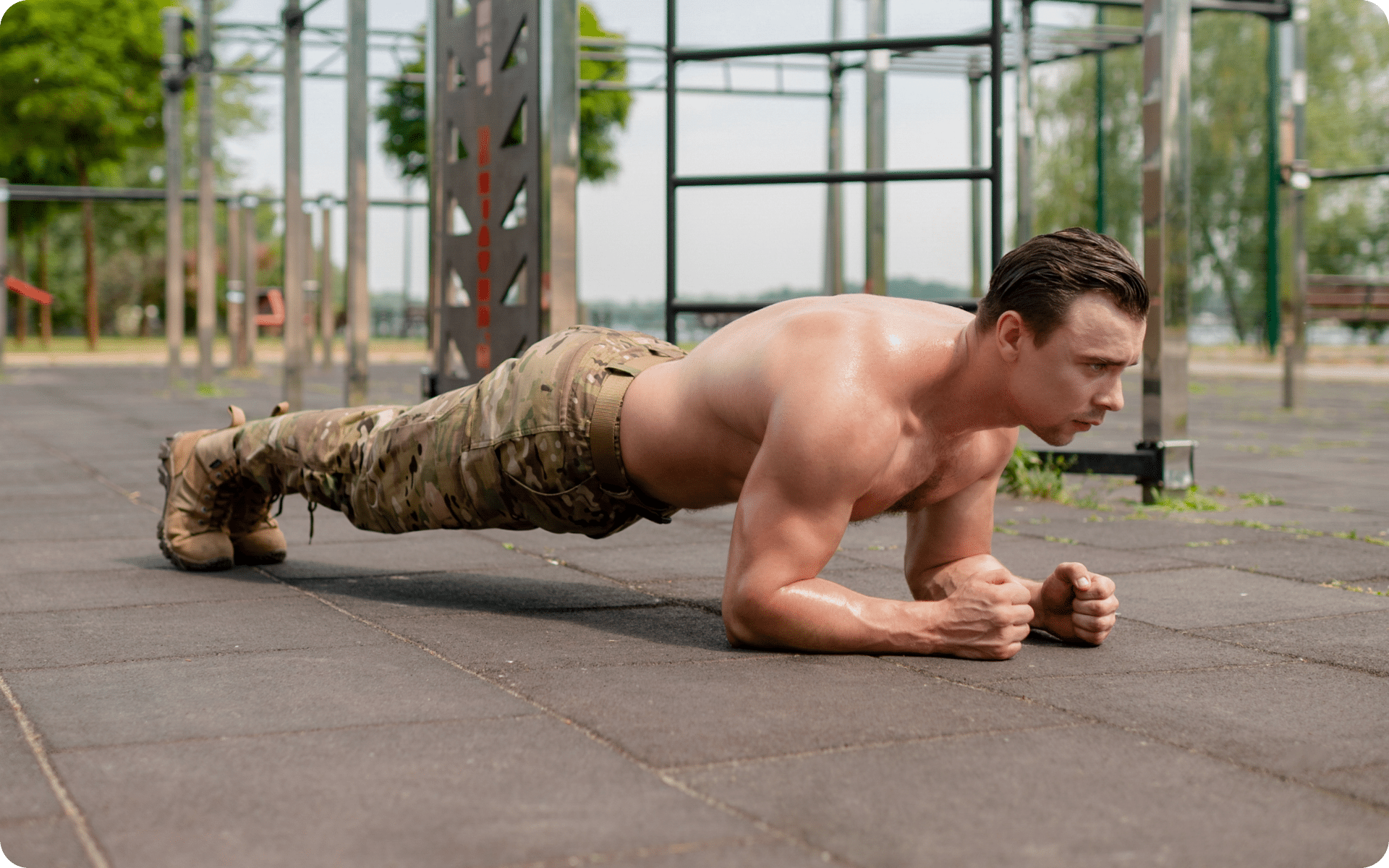
The plank is a static hold that builds core strength. It is a very attainable way to challenge your abdominal muscles.
- Start on the floor resting on your forearms and toes.
- Keep your elbows directly under your shoulders.
- Maintain a straight line from your head to your heels.
- Hold this position while breathing deeply and evenly.
Bodyweight Rows
Rows are crucial for back strength and posture. If you do not have a bar, you can use a sturdy table or resistance bands.
- Position yourself under a low, sturdy bar or table.
- Grab the bar with an overhand grip, slightly wider than shoulder-width.
- Keep your body straight and your heels on the floor.
- Pull your chest up toward the bar, squeezing your shoulder blades together, then lower back down.
Glute Bridges
Glute bridges gently target the posterior chain. They are a low-impact way to support lower back and hip stability.
- Lie on your back with your knees bent and feet flat on the floor.
- Keep your arms by your sides.
- Press through your heels and lift your hips toward the ceiling.
- Squeeze your glutes at the top, then slowly lower your hips back down.
Read more: Beginner Military Calisthenics: Your Simple Guide to Start
Crunches
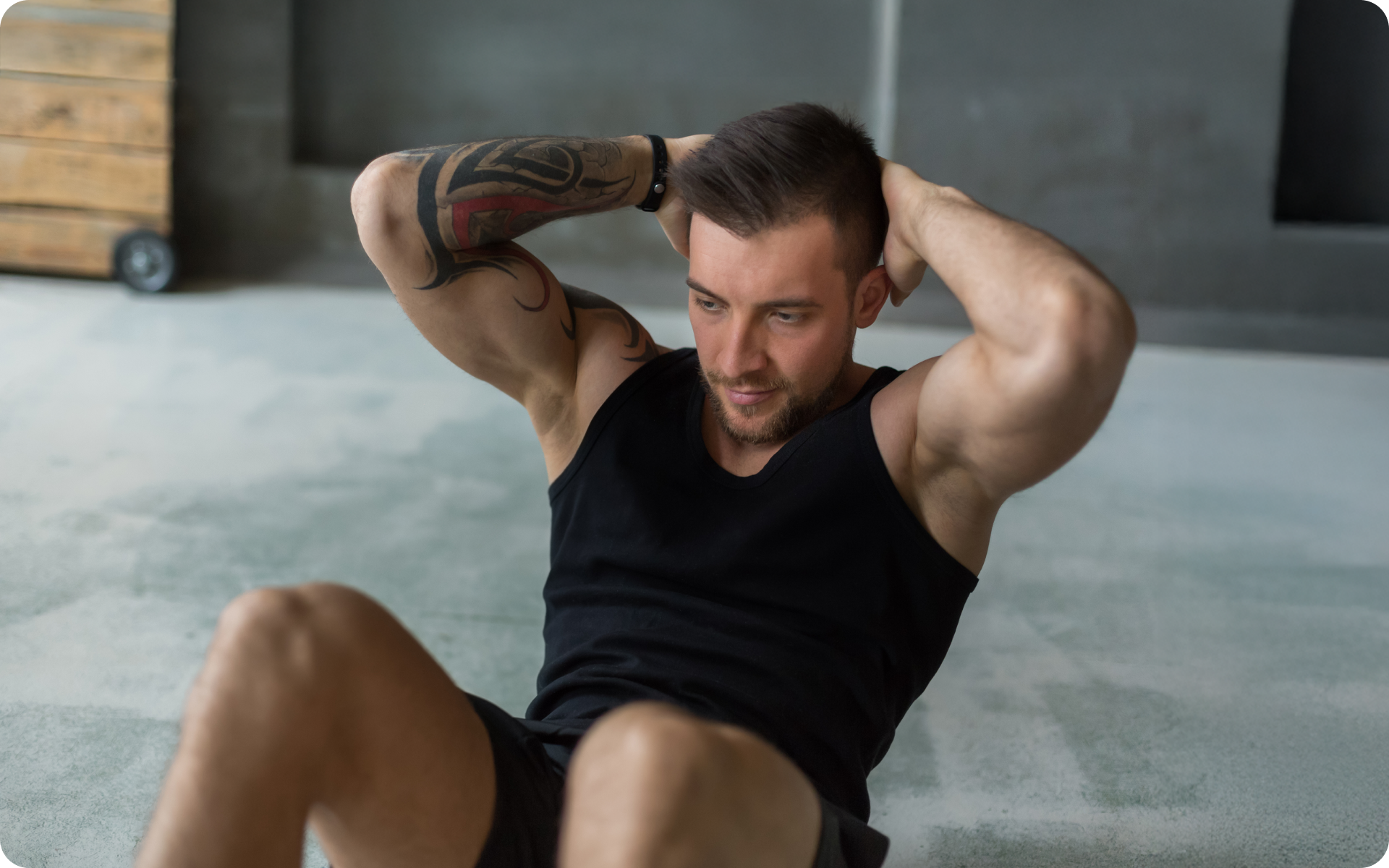
Crunches focus directly on the abdominal muscles. They are a classic component of any military workout program.
- Lie on your back with your knees bent and feet flat.
- Place your hands lightly behind your ears.
- Engage your core and lift your upper back off the floor.
- Slowly lower back down with control.
Jumping Jacks
Jumping jacks provide a quick cardiovascular challenge. They help elevate your heart rate and warm up your body.
- Stand tall with your feet together and arms by your sides.
- Jump up, spreading your feet wide and bringing your arms above your head.
- Jump again to return to the starting position.
- Repeat this movement continuously.
Burpees (Modified)
Burpees combine a squat, plank, and jump. A modified version is easy on the body and beginner-friendly.
- Start in a standing position.
- Squat down and place your hands on the floor.
- Step your feet back one at a time into a plank position.
- Step your feet back in and stand up tall.
How Do I Start Military Calisthenics?
Starting a military calisthenics routine is quite simple. Because you do not need heavy weights or machines, you can begin at home today. The key is to start small and build up your capacity over time.
First, define a clear space in your home. You only need enough room to lie down and extend your arms. A comfortable mat can make floor exercises more pleasant, but it is not strictly necessary.
Next, focus on mastering the basic forms. Follow these easy steps to get started:
- Warm up with 5–10 minutes of light cardio, such as walking in place.
- Choose 3–4 basic exercises from the plan above.
- Perform 1–2 sets of each exercise, focusing entirely on your form.
- Rest for 60 seconds between sets to let your muscles recover.
- Cool down with some gentle stretching.
It is normal to feel some muscle fatigue when starting a new routine. Listen to your body and rest when you need to. Consistency is the most important factor for long-term progress.
How Can You Modify a Military Calisthenics Workout for Your Fitness Level?
One of the best things about a military calisthenics routine is its flexibility. You can easily adjust the difficulty of almost every exercise. This makes it an ideal choice for different bodies/levels.
If a movement feels too challenging, you can change your leverage. For example, doing push-ups against a wall is much lighter than doing them on the floor. If a movement is too easy, you can increase the range of motion or slow down the tempo.
Military calisthenics for women and men rely on the same scaling principles. The goal is to find a variation that allows you to complete your reps with good form. You should feel challenged, but not exhausted to the point of losing your balance.
Below is a table comparing how you can modify exercises based on your experience level.
| Exercise | Beginner Modification | Intermediate (Standard) | Advanced Modification |
|---|---|---|---|
| Push-ups | Wall push-ups or knee push-ups | Standard floor push-ups | Decline push-ups (feet elevated) |
| Squats | Chair squats (sit and stand) | Standard bodyweight squats | Jump squats or pistol (one-leg) squats |
| Plank | Knee plank | Forearm plank on toes | Plank with shoulder taps |
| Pull-ups | Doorway rows or band-assisted | Standard pull-ups | Wide-grip or L-sit pull-ups |
Adjusting the movements helps you maintain a lasting, customized routine.
Intense sweat sessions, working weight loss tips, lip-smacking recipes come in one package with the BetterMe Well-Being Coach app—all at your fingertips, start transforming your life now!
Will Military Calisthenics Build Muscle?
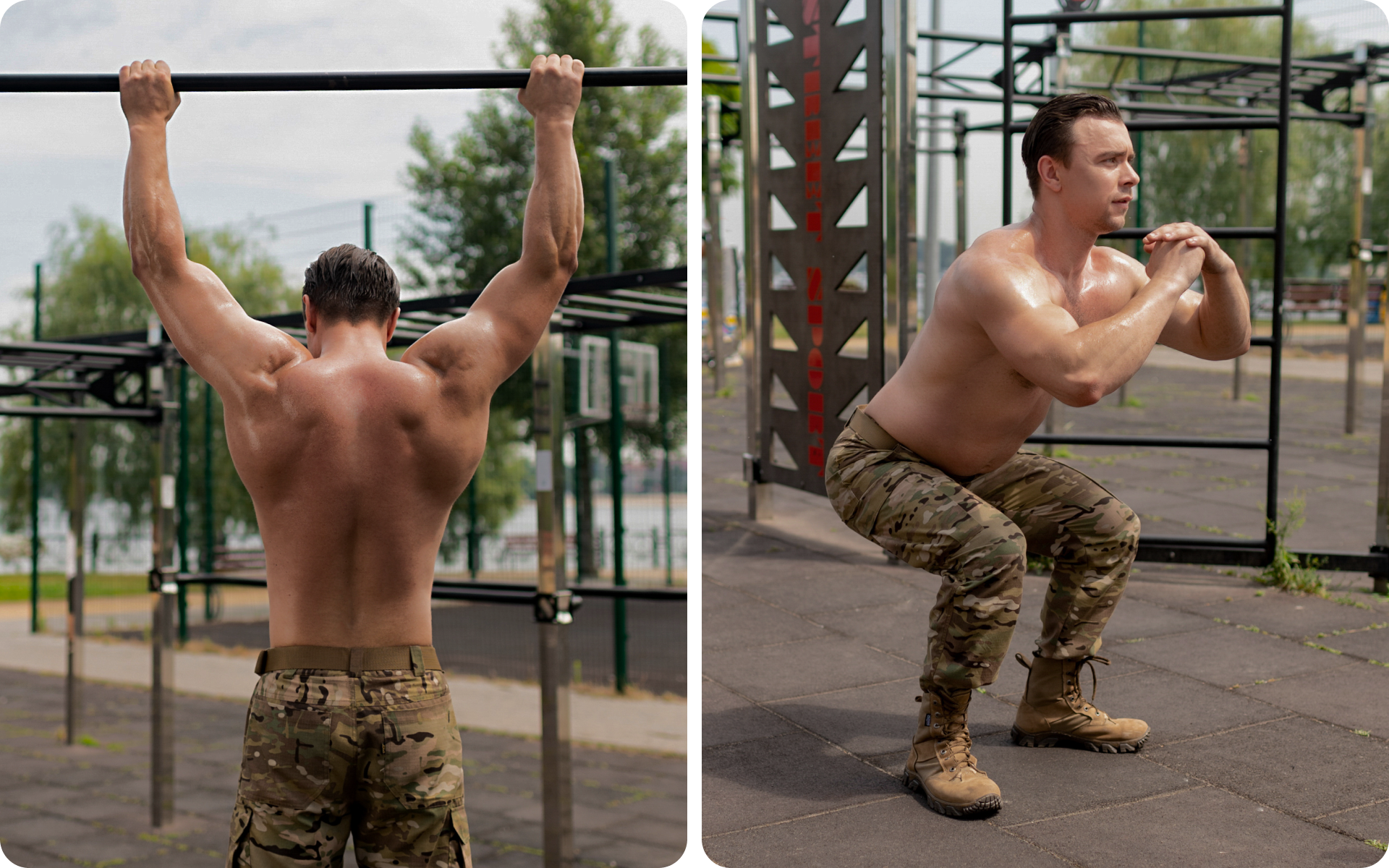
Yes, military calisthenics can support muscle growth. While weightlifting uses external loads, calisthenics uses your body weight to create resistance (3). When you challenge your muscles consistently, they adapt and grow stronger (4).
Some research suggests that bodyweight training can stimulate muscle hypertrophy, especially for beginners (5). To continue building muscle over time, you must practice progressive overload. This means gradually making the exercises more difficult (6).
You can progress by adding more repetitions, doing more sets, or choosing harder exercise variations. For example, once you can easily do 15 standard push-ups, you might try elevating your feet. This shifts more weight onto your upper body.
A thoughtful approach to nutrition also plays a role in supporting muscle development. Eating enough protein helps your body repair and build tissue after a workout.
How Long Do Military Calisthenics Take to Work?
The timeline for seeing changes from a military calisthenics workout plan depends on several factors. These include your starting fitness level, how often you exercise, and your nutritional habits. Many people notice that they feel more energetic and coordinated within the first two to three weeks.
Visible changes in muscle tone and body composition usually take a bit longer. For most people, consistent training may yield noticeable physical results in about 8 to 12 weeks. This requires sticking to your routine and gradually increasing the difficulty of your workouts.
Please remember that individual outcomes vary. Everyone’s body responds differently to physical activity. Some people may progress quickly, while others may take a more gradual journey. The most important thing is to focus on how you feel and celebrate small improvements in your strength.
Read more: Military Calisthenics Workouts for Men: Everything You Need for Success
What Should You Eat Before a Military Calisthenics Workout?
Proper nutrition can help you get the most out of your military calisthenics routine. Eating the right foods before you exercise gives your body the energy it needs to perform well. A balanced pre-workout snack can help you feel strong and focused (7).
Some people also search for a 7-day military diet plan when starting this type of workout, but diet and exercise should be approached separately. A short-term diet plan is not required for military calisthenics; instead, focus on balanced meals that provide enough carbohydrates, protein, and fluids to support your training.
Ideally, you want to consume a mix of carbohydrates and protein about one to two hours before your workout. Carbohydrates provide readily available energy for your muscles (8). Protein helps prime your body for muscle repair and recovery (9).
Some popular, gentle pre-workout options include:
- A banana with a small scoop of peanut butter
- A slice of whole-grain toast with a hard-boiled egg
- A small bowl of oatmeal with berries
- A cup of Greek yogurt
It is best to avoid very heavy or high-fat meals right before exercising. These can cause digestive discomfort while you move. Staying hydrated by drinking water throughout the day is also incredibly important for optimal performance (10).

Frequently Asked Questions
Is military calisthenics a good workout?
Yes, military calisthenics is a very effective and beginner-friendly workout. It uses your body weight to build strength, endurance, and cardiovascular fitness without requiring expensive equipment. The routines focus on functional movements that translate well into everyday life (11). Because the exercises are highly adaptable, they can be scaled to suit almost any fitness level. Many people find that this style of training provides a well-rounded approach to overall wellness.
Can beginners do military workouts?
Absolutely, beginners can easily start a military workout program. The exercises involve basic human movements like squatting, pushing, and pulling, which can be modified to be gentle on the body. For instance, a beginner can perform push-ups against a wall instead of on the floor. Starting slowly allows you to build a foundation of strength and learn proper form. It is a very user-friendly way to begin a fitness journey.
Are military calisthenics better than the gym?
Neither option is inherently better; it depends entirely on your personal preferences and goals. Military calisthenics offers unparalleled convenience, as you can do the routines anywhere without paying for a membership. It is excellent for building functional bodyweight strength and endurance. The gym, however, provides access to heavy weights and machines, which can make it easier to isolate specific muscles. Many people choose bodyweight training because it easily fits into a busy lifestyle.
Why do the military use calisthenics?
The military uses calisthenics because it is a highly practical and scalable way to train large groups of people. It requires zero equipment, meaning soldiers can maintain their fitness in the field or on a base. This type of training builds the functional strength and muscular endurance necessary for demanding physical tasks. It also fosters discipline and mental toughness through high-repetition sets.
Is calisthenics better than weightlifting?
Calisthenics is not necessarily better than weightlifting, as both have unique benefits. Calisthenics is fantastic for improving body control, relative strength, and mobility using minimal equipment. Weightlifting is often more straightforward for maximizing sheer muscle size and absolute strength, as you can easily add incremental weight to a barbell (3). The best choice is the one that you enjoy and can stick with consistently.
Does 15 minutes of military calisthenics work?
Yes, a focused 15-minute routine can provide a meaningful challenge to your muscles and heart. Short, consistent bouts of exercise can help improve your daily energy levels and support your overall wellness (12). By keeping your rest periods brief, you can increase the cardiovascular demand of the workout. While longer sessions may be needed for advanced goals, 15 minutes is a wonderful, practical starting point for busy individuals.
The Bottom Line
A military calisthenics workout plan is a straightforward, equipment-free way to build strength and support your overall wellness. By focusing on fundamental movements like push-ups and squats, you can create a customized routine that fits perfectly into your busy life. Start small, listen to your body, and enjoy the process of becoming stronger day by day.
DISCLAIMER:
This article is intended for general informational purposes only and does not serve to address individual circumstances. It is not a substitute for professional advice or help and should not be relied on for making any kind of decision-making. Any action taken as a direct or indirect result of the information in this article is entirely at your own risk and is your sole responsibility.
BetterMe, its content staff, and its medical advisors accept no responsibility for inaccuracies, errors, misstatements, inconsistencies, or omissions and specifically disclaim any liability, loss or risk, personal, professional or otherwise, which may be incurred as a consequence, directly or indirectly, of the use and/or application of any content.
You should always seek the advice of your physician or other qualified health provider with any questions you may have regarding a medical condition or your specific situation. Never disregard professional medical advice or delay seeking it because of BetterMe content. If you suspect or think you may have a medical emergency, call your doctor.
SOURCES:
- Calisthenics (2022, ebsco.com)
- Impact of an 8-week high-intensity bodyweight interval training on body composition and blood lipid metabolism in young women with overweight (2025, frontiersin.org)
- No Time to Lift? Designing Time-Efficient Training Programs for Strength and Hypertrophy: A Narrative Review (2021, link.springer.com)
- Anabolic signals and muscle hypertrophy – Significance for strength training in sports medicine (2025, sciencedirect.com)
- Bodyweight Training for Muscular Strength & Endurance (2022, researchgate.net)
- Improving muscle size with Weider’s principle of progressive overload in non-performance athletes (2021, researchgate.net)
- 5 nutrition tips to maximize workouts – Mayo Clinic Health System (2025, mayoclinichealthsystem.org)
- The Effect of Carbohydrate Intake on Strength and Resistance Training Performance: A Systematic Review (2022, mdpi.com)
- The effect of protein intake on athletic performance: a systematic review and meta-analysis (2024, frontiersin.org)
- Hydration to Maximize Performance and Recovery: Knowledge, Attitudes, and Behaviors Among Collegiate Track and Field Throwers (2021, pmc.ncbi.nlm.nih.gov)
- Calisthenics: An effective, low-frills way to stay fit (2024, health.harvard.edu)
- Micro-Workouts for Mental Health: Immediate Psychological Benefits of Short-Duration Exercise (2016, researchgate.net)


 Reviewed by
 Reviewed by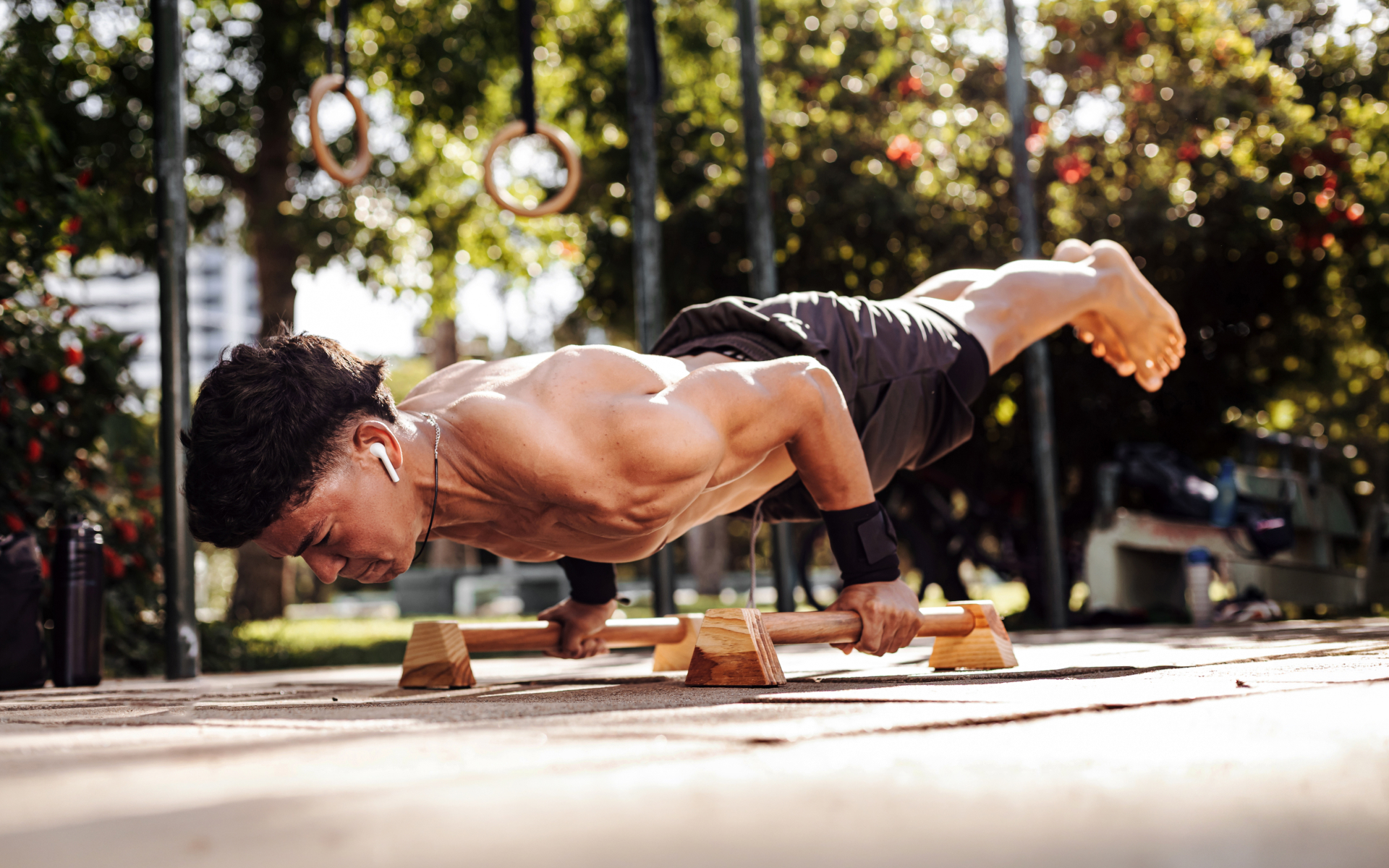
 By
By