
A calisthenics transformation describes changes developed through repeated bodyweight training, such as strength, skill, and training habits. No routine promises a particular physique or timeline. A calisthenics weekly routine helps turn a broad goal into manageable sessions. Clear records show which aspects of your own performance are changing.
Key takeaways
These points summarize how to set realistic calisthenics goals and track progress.
- Calisthenics uses body weight as resistance, with easier and harder versions available for many movements.
- Bodyweight resistance training can develop strength without requiring complex methods for every adult (1).
- A small trial in sedentary young women found increased muscle thickness after progressive bodyweight training (2).
- Before-and-after images do not establish what caused a change or predict another person’s result.
- General adult guidance includes both aerobic activity and strength work for all major muscle groups (3).
- Choose a repeatable performance goal and use the same exercise setup when comparing progress.
What does a calisthenics transformation mean?
A calisthenics transformation can mean a change in what you can do, how consistently you train, or your body measurements. The term has no single required endpoint. Define the change that matters to you before choosing a program.
You may want to perform a controlled push-up, practice a squat with less assistance, or attend two weekly sessions. Those goals lead to different measurements. A goal about attendance needs a calendar record, while a movement goal needs a consistent setup.
Calisthenics includes simple and advanced movements. Wall push-ups and supported squats belong in the same broad category as pull-ups and handstands. You do not need to begin with the hardest visible version.
Women also do not need a particular silhouette to demonstrate progress. Increased strength can matter without a change in clothing size or visible definition. Keep the training goal separate from assumptions about how a body should look.
What changes can bodyweight training support?
Bodyweight resistance training can support strength development when the movements provide an appropriate challenge (1). Familiar exercises may need adjustment as your ability changes. The adjustment can involve repetitions, leverage, assistance, or suitable additional resistance.
Muscle size can change as well. A study of 13 sedentary young women compared progressive bodyweight training with barbell squats over six weeks. Both groups increased measured muscle thickness (2).
The small trial does not establish a promised change for every reader. Its measurements also do not predict a specific photograph or body shape. Individual results vary.
Avoid assuming that every outcome improves automatically. A routine dominated by push-ups may leave pulling practice limited. A strength routine with long rests may not provide much sustained aerobic activity.
For a focused discussion of expectations, read calisthenics workout results. Separate measurable exercise performance from claims about a complete body change. That distinction makes progress easier to interpret.
How should you interpret before-and-after stories?
Treat a before-and-after story as an individual’s account, not a prediction of your own response. Images may omit training history, other exercise, diet changes, or the actual time between photographs. Presentation conditions also affect the comparison.
Lighting, posing, distance, and camera settings can change how a body looks. A photograph cannot establish the precise amount of muscle gained. A single account cannot show that one routine caused every reported change.
Ask whether the account identifies the program, duration, and other relevant changes. Be cautious when a result is presented without those details. You can appreciate someone’s achievement without adopting it as your required timeline.
For your own records, photographs are optional. Keep them private unless you choose to share them. Performance notes may answer your training questions more directly.

How do you choose a useful starting goal?
Choose one or two goals that describe a specific action or exercise task. Keep the starting amount manageable. Review the goal after you have enough practice to understand the movement.
|
Broad intention |
More specific starting goal |
Record to keep |
|---|---|---|
|
Become more consistent |
Reserve two weekly practice appointments |
Planned and completed sessions |
|
Improve pushing ability |
Practice a manageable push-up version |
Support height and controlled repetitions |
|
Improve lower-body control |
Repeat a supported squat |
Assistance and movement range |
|
Learn pulling |
Establish a suitable row setup |
Equipment and completed repetitions |
|
Build trunk endurance |
Practice a supported plank |
Position and controlled hold duration |
The examples are planning choices, not promises of improvement. Choose the task that matches your interest and circumstances. A qualified trainer can help when the starting exercise is unclear.
Avoid setting another person’s repetition total as your baseline. Your movement range and equipment may differ. Record your own starting point before choosing the next step.
Want a structured routine? Take the BetterMe quiz to get a customized calisthenics workout plan.
What should a starting routine contain?
A starting routine should cover suitable pushing, pulling, lower-body, and trunk movements. Begin with versions you can repeat with control. General adult activity guidance includes muscle strengthening at least twice weekly (3).
The following menu is a sample, with amounts that can be reduced. Use separated strength days, such as Monday and Thursday. Add comfortable aerobic activity on other days according to your current capacity.
|
Exercise |
Starting version |
Sample amount |
|---|---|---|
|
Squat |
Stable-chair sit-to-stand |
One or two sets of 5 to 8 |
|
Push-up |
Wall or fixed-surface incline |
One or two sets of 5 to 8 |
|
Row |
Suitable band or supported bodyweight setup |
One or two sets of 6 to 10 |
|
Hip movement |
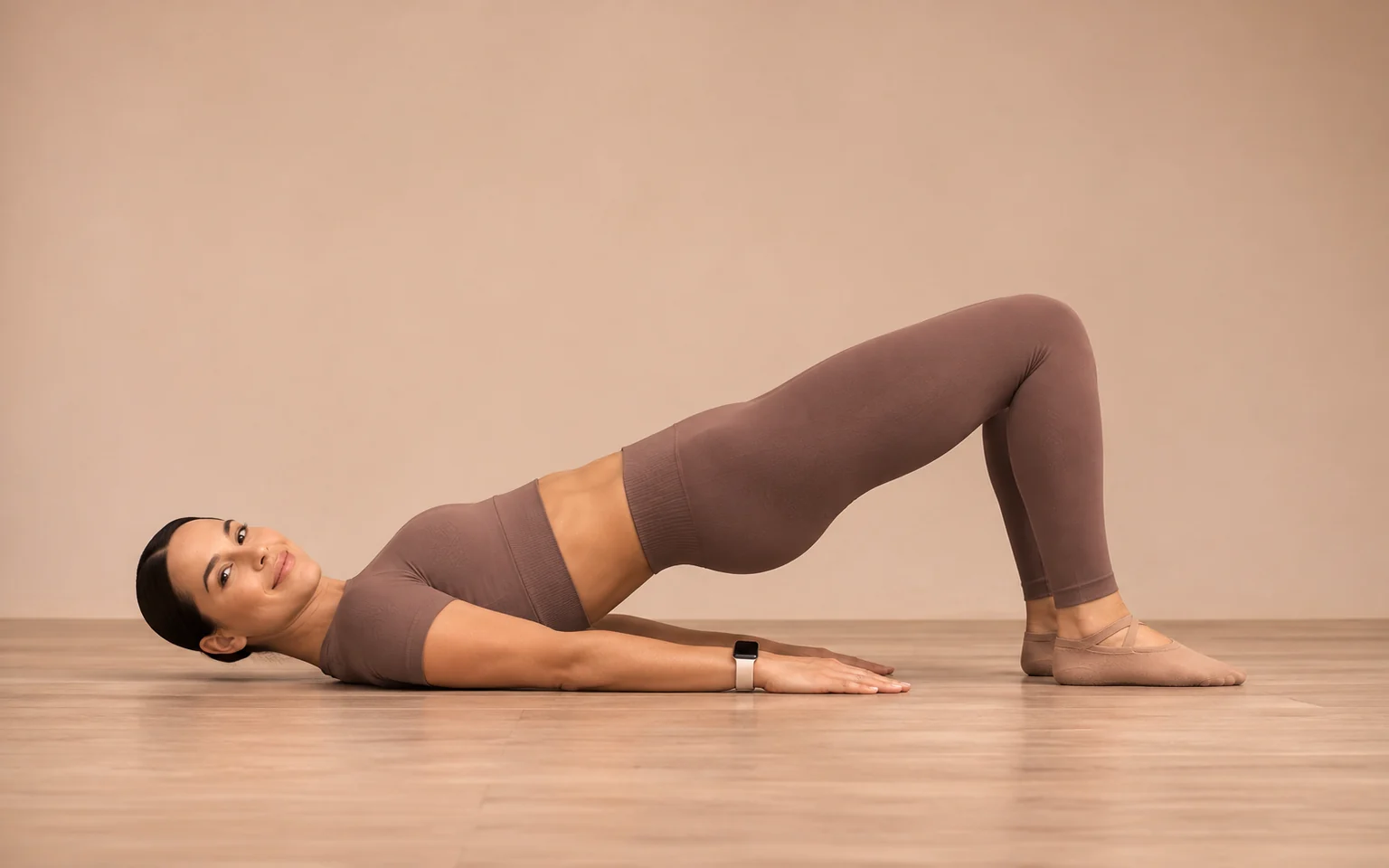
Glute bridge |
One or two sets of 6 to 10 |
|
Plank |
Wall or knees-supported version |
One or two holds of 10 to 20 seconds |
Public home-strength guidance includes sit-to-stands and wall press-ups. A stable chair without wheels is recommended for chair-based exercise (4). Check that the chair cannot slide on the floor.
Use purpose-built equipment for rows. Check anchors and attachments according to the manufacturer’s instructions. A household table or loose door attachment should not be assumed suitable for supporting your body.
A beginner calisthenics plan at home provides more exercise detail. Keep your initial menu small enough to learn. Adding many unfamiliar movements can make the record difficult to interpret.
How can you progress toward more demanding exercises?
Progress when a familiar exercise becomes controlled and repeatable at the planned amount. Make one modest adjustment at a time. The adjustment should serve your training goal rather than simply make the workout look advanced.
- Choose a movement that has become consistently manageable.
- Record the current version and completed amount.
- Select one change, such as an additional repetition.
- Practice the adjusted version at a later session.
- Review whether your control and ability to repeat the work remain suitable.
Moving from a wall push-up to a lower incline changes the resistance task. Reduce the repetition target if needed. Keep the new support height recorded so future comparisons remain fair.
Advanced movements are optional goals. Handstand push-ups, muscle-ups, and pistol squats require specific preparation. A qualified coach can help identify prerequisites and an appropriate practice environment.
General training guidance does not require complex methods or complete muscular failure for many adults (1). You can continue improving familiar movements without adding an advanced skill. Choose the training you want to practice consistently.

Is calisthenics enough for a complete activity routine?
Calisthenics can provide the strength component, but a complete activity routine also needs appropriate aerobic movement. Adult guidance recommends 150 moderate aerobic minutes or 75 vigorous minutes each week (3). Build toward those amounts gradually.
A bodyweight circuit may raise your breathing rate, depending on its design and effort. Rest periods and easy technique practice do not automatically count as moderate aerobic activity. Record aerobic minutes separately when possible.
Walking, cycling, or another activity you enjoy can complement strength sessions. Choose the activity according to your preferences and capacity. You do not need to make every session highly demanding.
Weights can also be used alongside calisthenics. The tools provide different ways to adjust resistance. A mixed routine remains a valid choice when it fits your goals and equipment.
What role do food and sleep play?
Food and sleep help make a repeatable training schedule possible. General sports-nutrition guidance places adequate eating and fluid intake ahead of supplements (5). A longer exercise plan does not automatically require a special product.
Plan regular meals that fit your preferences and activity. Protein-containing foods contribute to muscle maintenance and repair, while carbohydrate foods provide exercise fuel (5). Individual requirements depend on circumstances that a general article cannot determine.
Avoid adopting a restrictive diet to imitate someone else’s photograph. A registered dietitian can help with individual nutrition goals. Keep food planning practical enough to maintain alongside training.
Adults aged 18 to 60 are advised to get at least seven hours of sleep nightly (6). Keep your usual sleep opportunity in mind when arranging early or late sessions. Discuss persistent sleep problems with a healthcare professional.
What should you change when progress stalls?
Identify the specific difficulty before adding more exercise. Check attendance, exercise setup, and whether the planned workload still fits your week. Several different problems can look like a stalled repetition count.
If sessions are frequently missed, simplify the calendar. If the exercise setup changes each time, standardize it before judging the trend. If the movement has become comfortable, choose one small progression.
When fatigue or other signs increase, reduce demanding work and seek individual advice when needed. Stop an exercise that causes discomfort beyond normal effort. A training goal should not delay appropriate medical assessment.
Use an 8-week calisthenics program to create a defined review period. Keep a record of interruptions and adaptations. The final review should reflect what you actually practiced.

FAQs
Do visible abdominal muscles prove a routine is effective?
No, visible abdominal definition does not establish the quality of a routine or a person’s overall fitness. Appearance is only one observation. Review the exercises, progression, and outcomes relevant to your own goal.
Can I begin with only twenty minutes available?
Yes, you can plan a smaller amount of work within twenty minutes. Include preparation and rest instead of rushing a longer routine. Expand the appointment only when doing so serves a useful purpose.
Is joining a gym required later?
No, joining a gym is optional. Your equipment needs depend on the movements and resistance you want to use. A suitable home setup or community facility may also meet those needs.
The bottom line
Define the abilities or habits you want to change before choosing a training plan. Start with manageable movements, keep a useful record, and adjust one variable when appropriate. Let your own performance guide the next step instead of adopting another person’s appearance or timeline.
DISCLAIMER:
This article is intended for general informational purposes only and does not serve to address individual circumstances. It is not a substitute for professional advice or help and should not be relied on for making any kind of decision-making. Any action taken as a direct or indirect result of the information in this article is entirely at your own risk and is your sole responsibility.
BetterMe, its content staff, and its medical advisors accept no responsibility for inaccuracies, errors, misstatements, inconsistencies, or omissions and specifically disclaim any liability, loss or risk, personal, professional or otherwise, which may be incurred as a consequence, directly or indirectly, of the use and/or application of any content.
You should always seek the advice of your physician or other qualified health provider with any questions you may have regarding a medical condition or your specific situation. Never disregard professional medical advice or delay seeking it because of BetterMe content. If you suspect or think you may have a medical emergency, call your doctor.
SOURCES:
- ACSM Unveils Landmark 2026 Resistance Training Guidelines: First Update in 17 Years (2026, acsm.org)
- Effects of progressive body-weight versus barbell back squat training on strength, hypertrophy and body fat among sedentary young women (2023, nature.com)
- Adult Activity: An Overview (2023, cdc.gov)
- Strength exercises (2024, nhs.uk)
- Dietary Supplements for Exercise and Athletic Performance (2024, ods.od.nih.gov)
- About Sleep (2024, cdc.gov)
 Reviewed by
 Reviewed by