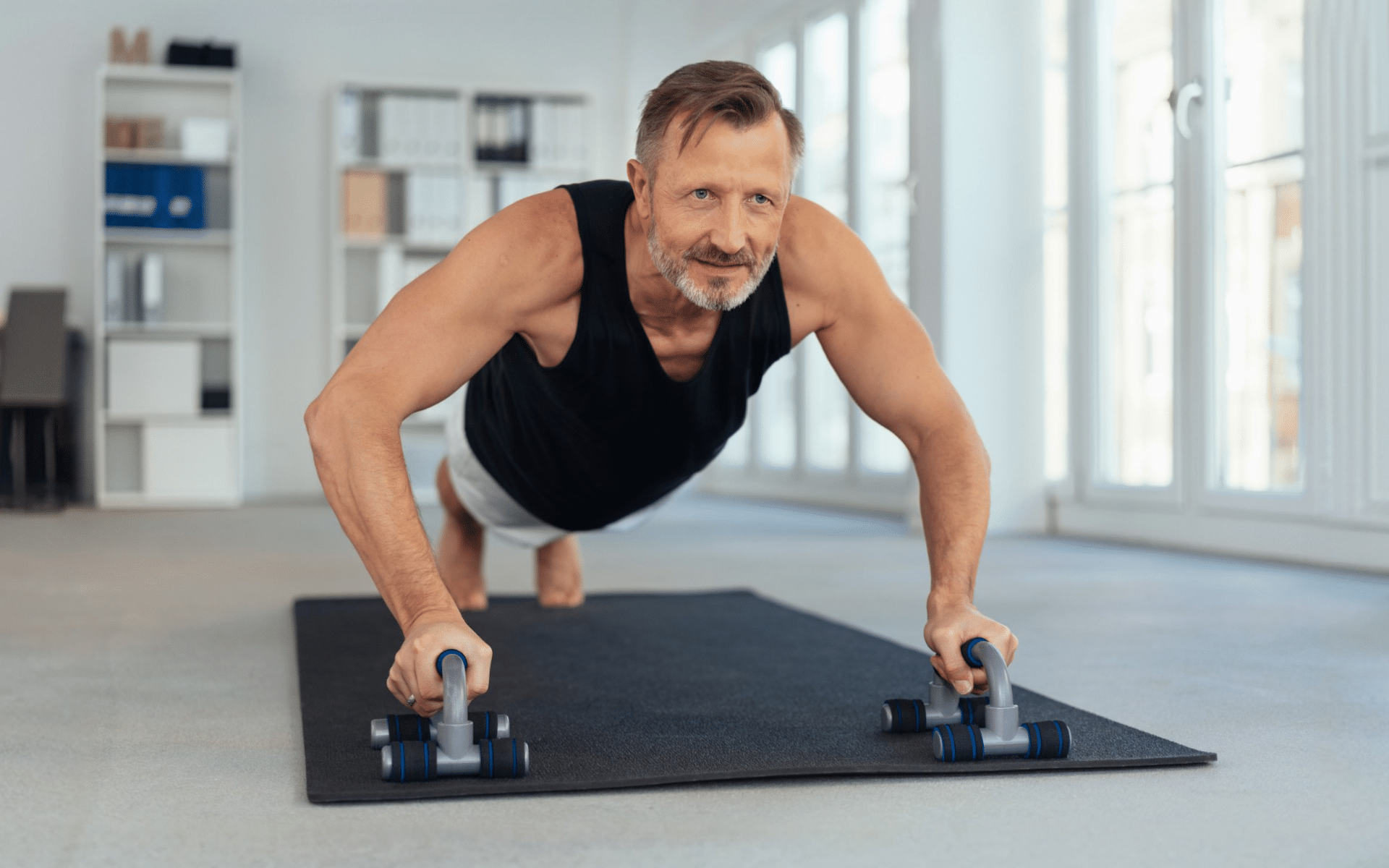
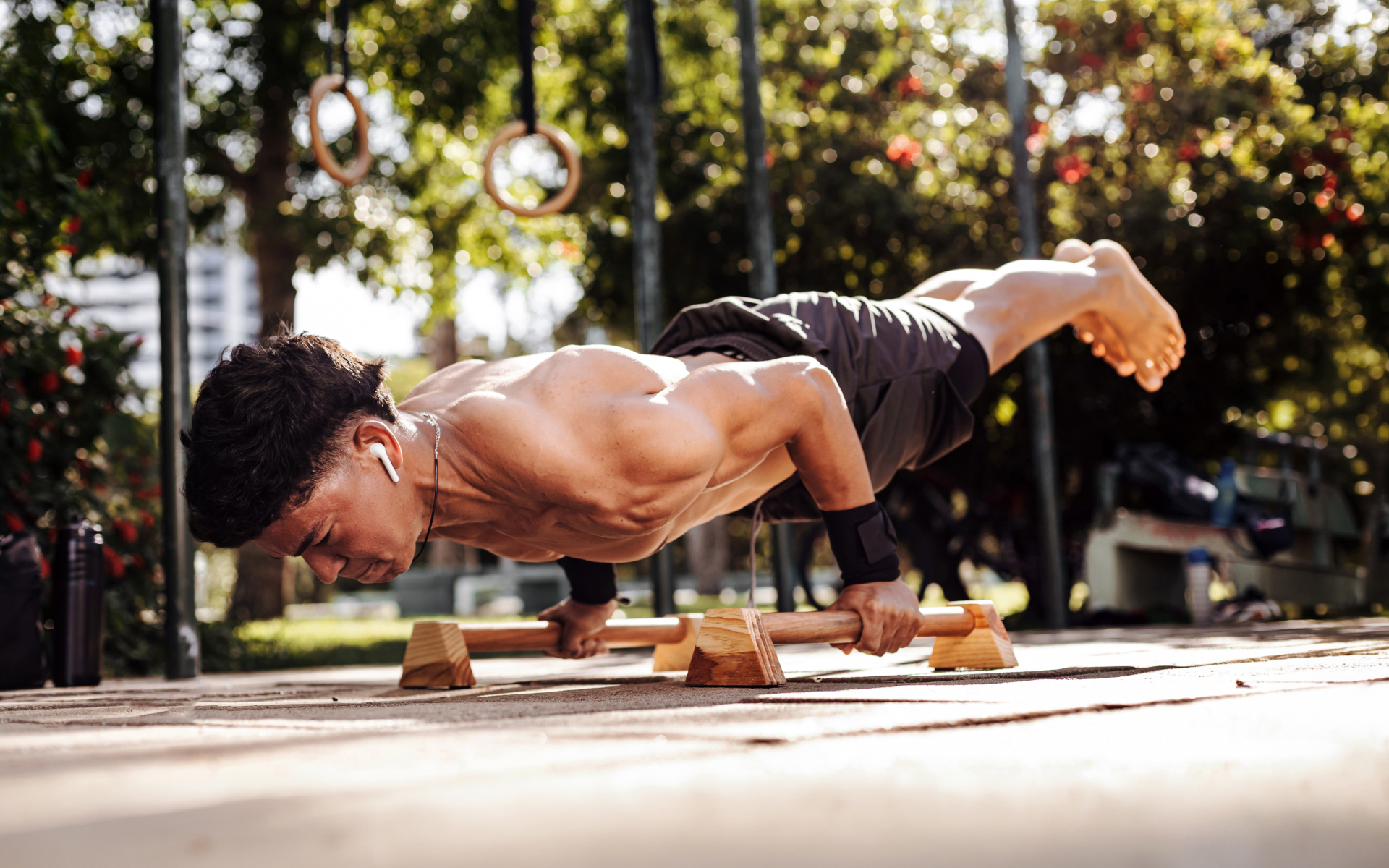
A military calisthenics workout for men can begin with a small circuit of push-ups, squats, lunges, bridges, and planks. Start with one round and easier versions, rest between sets, and repeat controlled movements before adding difficulty. This is military-inspired general fitness, not an official preparation program or guarantee of readiness.
Learn the movements with the beginner military calisthenics guide.
Key takeaways
- This sample circuit has five bodyweight movements with one round as the initial option.
- Repetition targets are 6-10 for push-ups, squats, and bridges, with 4-6 lunges per leg and a 10-20 second plank.
- Rest 60-90 seconds between sets, or longer when needed.
- Two nonconsecutive circuit days are a sample starting schedule, with a third optional.
- One small eight-week study found strength and muscle-size gains from adjusted push-up training in young men (1).
- An official military fitness page includes push-ups and planks alongside running and loaded tasks (2).
What is a military-inspired calisthenics workout for men?
A military-inspired workout for men uses bodyweight exercises in a structured session, with the workload chosen for general fitness. An official military fitness page includes push-ups and planks alongside running and loaded tasks (2). The five-movement session here does not cover all those tasks. Requirements vary by service, role, and program; follow the relevant official guidance if you are preparing for an actual test.
Choose a pushing movement, a squat or lunge, and a trunk-control movement. Pulling exercises can be added only with purpose-built equipment installed and used as directed. Do not improvise rows under a household table or use a door handle as an anchor.
What does a beginner session look like?
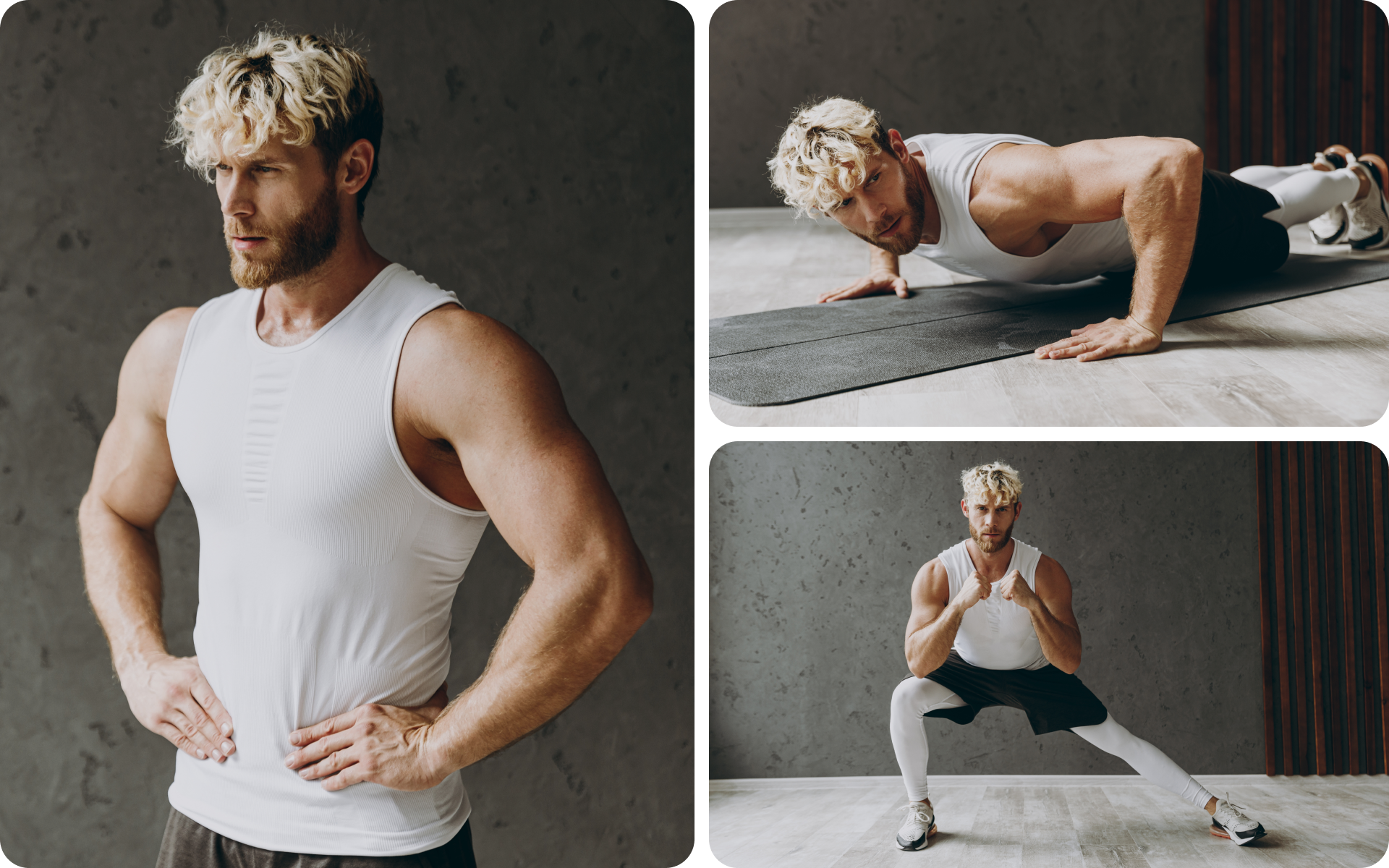
Use one round first, then a second only if the movements remain controlled. This sample circuit contains five exercises; its targets are practical suggestions, not official military standards.
|
Exercise |
Initial target |
Rest after set |
Easier choice |
|---|---|---|---|
|
Wall or floor push-up |
6-10 reps |
60-90 seconds or longer |
Stand closer to wall |
|
Bodyweight squat |
6-10 reps |
60-90 seconds or longer |
Stable chair sit-to-stand |
|
Reverse lunge |
4-6 per leg |
60-90 seconds or longer |
Short supported step |
|
Glute bridge |
6-10 reps |
60-90 seconds or longer |
Smaller lift |
|
Plank |
10-20 seconds |
60-90 seconds or longer |
Knees down or standing wall plank |
Begin with 5-10 minutes of easy marching, shoulder circles, and gentle practice repetitions, and finish with 5-10 minutes of gradually slower movement (3). Allow roughly 20-35 minutes for preparation, one round, rest, and a finish; actual time varies. Stop a set before technique deteriorates, and stop the exercise if it causes discomfort.
For a weekly schedule, use our beginner military calisthenics workout plan.
How do you perform the main exercises?
Learn the starting position and choose the version you can control.
Push-up
- Place your hands a little wider than shoulder-width apart on the floor.
- Keep your body in a straight line from your head to your heels.
- Lower your chest toward the floor with control.
- Press back up to the starting position.
Easier option: Place your hands on a solid wall and stand at a comfortable incline. Do not use a chair or table that could move or tip.
Bodyweight squat
- Stand with your feet about shoulder-width apart.
- Push your hips back as if sitting into a chair.
- Lower through a comfortable range.
- Press through your feet to stand tall again.
Easier option: Use a stable chair as a depth reference for a sit-to-stand. Squat depth and stance affect muscular demands (4); a fixed depth is not required for every reader.
Reverse lunge
- Stand tall with your feet hip-width apart.
- Step one foot back.
- Bend both knees through a comfortable range.
- Push through your front foot to return to standing.
Easier option: Keep one hand lightly against a solid wall and use a shorter step. Keep the front knee tracking in the direction of the toes.
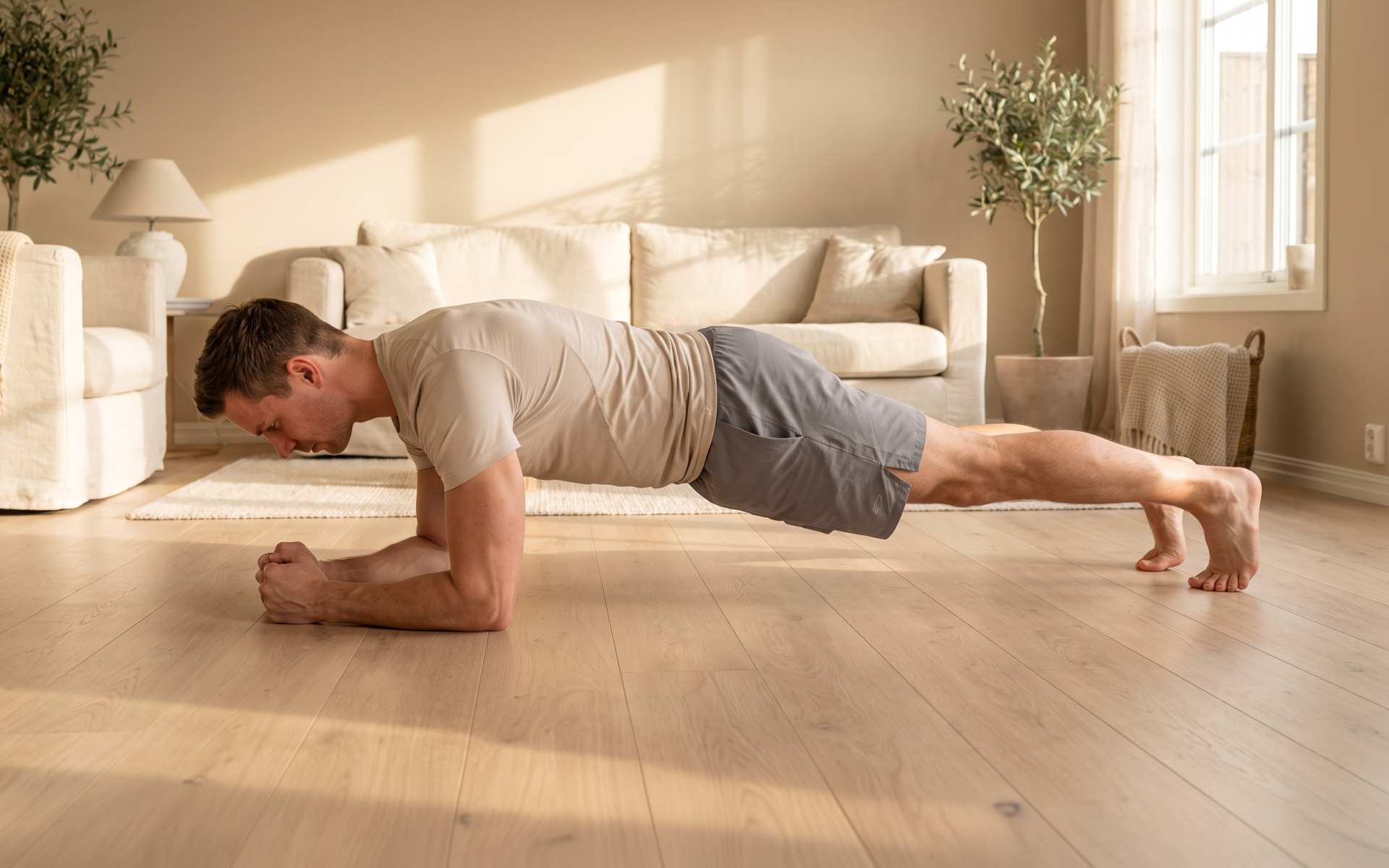
Plank
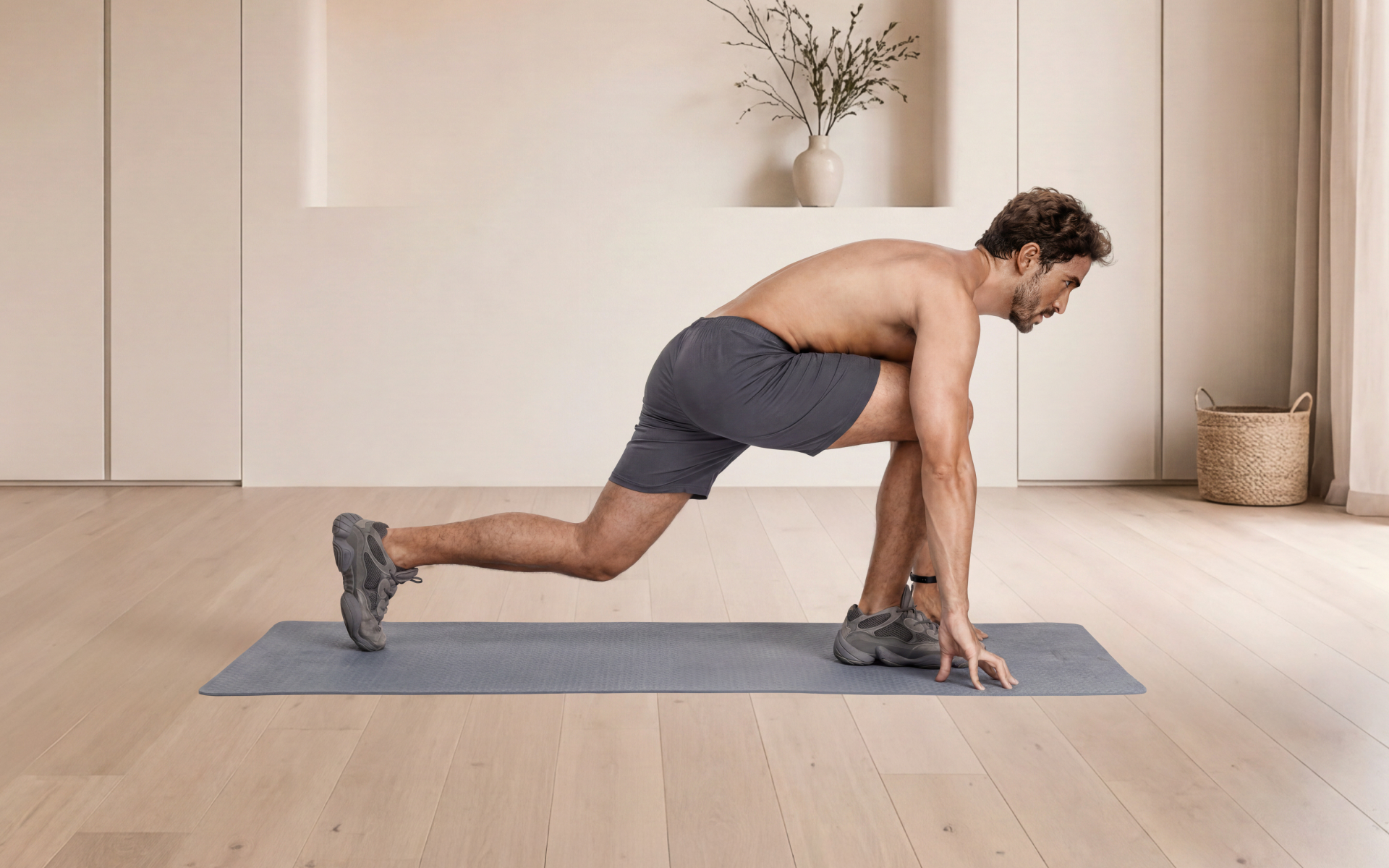
- Rest on your forearms and toes.
- Keep your body in one straight line.
- Hold your chosen position while breathing steadily.
- Lower your knees to finish.
Easier option: Keep knees down from the start, or use a standing wall plank with hands on the wall and feet on the floor.
Glute bridge
- Lie on your back with knees bent and feet flat on the floor.
- Lift your hips through a comfortable range.
- Pause without arching your back.
- Lower your hips slowly.
Easier option: Use a smaller lift or keep hips down for a gentle pelvic tilt.
How do you adjust the circuit to your ability?
Adjust the variation before trying to copy a high repetition target. Start simple. Focus on mastering technique before increasing intensity.
|
Starting experience |
Circuit choice |
Next decision |
|---|---|---|
|
New to exercise |
One round, wall push-ups, shallow squats |
Repeat the same targets |
|
Familiar with basic movements |
One or two rounds at listed targets |
Add 1-2 reps to one exercise when ready |
|
Already training regularly |
A harder variation of one movement |
Keep total volume manageable while learning it |
These are options, not qualifications based on age or sex.
A review of resistance training found that higher volume and training to failure can increase rest demands, with substantial variation between people (5). Start with a workload you can repeat, leave a gap between more demanding sessions, and use lighter days or rest when needed. Finishing every set at exhaustion is not a beginner requirement.
Intense sweat sessions, working weight loss tips, lip-smacking recipes come in one package with the BetterMe Well-Being Coach app—all at your fingertips, start transforming your life now!
How do you organize practice without rushing between exercises?
Use straight sets when you want more time to learn an exercise. Complete a set of one movement, rest, and repeat that movement if another set is appropriate. Then move to the next exercise. The circuit table is an exercise menu, and its order does not require continuous movement or a countdown.
A broader exercise selection can include hinge, squat, push, pull, and carry patterns. Keep that broader context while using the starter session. A bridge offers a floor-based hip movement, and a squat or lunge provides a standing leg exercise. The five-movement example has no pulling or carry station, so it does not cover every training pattern.
Add pulling work only when suitable equipment and instruction are available. A carry also needs an external load, space, and an appropriate technique. A trainer can help choose exercises for a broader program if those movement categories matter to your goal.
Set up each station before starting. Leave enough room to step backward for the lunge and to lie down for the bridge. Put any timer within view so you can finish a hold without turning your head. Stand up slowly between floor and standing exercises, with additional time for transitions when needed.
What can you change after a missed session?
Move the next practice to a workable day while preserving space between demanding sessions. Do not combine both missed and scheduled workloads into one circuit. If your week is busy, choose a smaller exercise selection and keep the same technique and rest standards.
When returning after a longer break, begin with versions you already know. Your previous repetition record is information, not a requirement. Finish a manageable session, record how it went, and decide on the next workload afterward. Ask for qualified guidance if a movement repeatedly causes discomfort or your circumstances have changed.

How can you add cardio and track progress?
Add suitable aerobic activity separately rather than treating every circuit minute as cardio. For aerobic activity, moderate effort generally means you can talk but not sing, while vigorous effort leaves only a few words before a breath (6). A slow march may be light activity; the movement name alone does not establish intensity.
A small eight-week study in 18 young men found strength and muscle-size gains from an adjusted push-up program performed twice weekly (1). It supports the possibility of improvement with appropriately challenging bodyweight work, but it does not establish results for this exact circuit or every reader. Individual results vary.
General adult activity guidance includes at least 150 minutes of moderate aerobic activity weekly and muscle-strengthening work on at least two days (7). A short circuit may be one part of that routine; its duration alone does not establish its intensity or whether every major muscle group is trained.
Log repetitions, exercise version, rests, and whether the final repetitions stayed controlled. Progress may mean the same workload feels more manageable, even before you add anything. Our military workouts at home guide offers indoor cardio and small-space options.
Do you need a military diet to follow the workout?
You do not need a restrictive military diet to follow this circuit. Ordinary meals can support an exercise routine. Include foods you enjoy across a varied eating pattern, with protein-containing foods such as beans, eggs, fish, tofu, or dairy where they fit your preferences.
A meta-analysis found that protein supplementation modestly increased strength and muscle gains during resistance training programs lasting at least six weeks (8). It did not establish a required supplement or meal plan for this home circuit. Ask a qualified professional for individual nutrition guidance instead of using an online calorie target.
For the broader movement overview and scope, read our military calisthenics workout overview.
Frequently Asked Questions
Can men build strength with military-inspired calisthenics?
Appropriately challenging bodyweight work can support strength improvements, although results vary. The small push-up study cited here did not test this exact circuit or guarantee an outcome for every man.
How many push-ups should a beginner do?
The sample target is 6-10 controlled repetitions in a version that fits your ability, with fewer when needed. You do not need to copy claims about hundreds of daily repetitions in elite training.
Should I train military calisthenics every day?
Start with two nonconsecutive circuit days and keep the gaps between demanding sessions. Add a third only when your current workload and rest feel manageable.
Does this prepare me for a military fitness test?
It is general fitness guidance and does not guarantee readiness for a military test. Use the relevant official standards and qualified preparation guidance for that purpose.
The bottom line
Choose exercise versions you can control, complete one round, and keep enough rest to repeat the session. Log your actual workload, then make one small change only when you feel ready.
DISCLAIMER:
This article is intended for general informational purposes only and does not serve to address individual circumstances. It is not a substitute for professional advice or help and should not be relied on for making any kind of decision-making. Any action taken as a direct or indirect result of the information in this article is entirely at your own risk and is your sole responsibility.
BetterMe, its content staff, and its medical advisors accept no responsibility for inaccuracies, errors, misstatements, inconsistencies, or omissions and specifically disclaim any liability, loss or risk, personal, professional or otherwise, which may be incurred as a consequence, directly or indirectly, of the use and/or application of any content.
You should always seek the advice of your physician or other qualified health provider with any questions you may have regarding a medical condition or your specific situation. Never disregard professional medical advice or delay seeking it because of BetterMe content. If you suspect or think you may have a medical emergency, call your doctor.
SOURCES:
- Low-load bench press and push-up induce similar muscle hypertrophy and strength gain (2017, pmc.ncbi.nlm.nih.gov)
- Army Fitness Test (2025, army.mil)
- Warm Up, Cool Down (2024, heart.org)
- A Biomechanical Review of the Squat Exercise: Implications for Clinical Practice (2024, pmc.ncbi.nlm.nih.gov)
- The Importance of Recovery in Resistance Training Microcycle Construction (2024, pmc.ncbi.nlm.nih.gov)
- How to Measure Physical Activity Intensity (2025, cdc.gov)
- Adult Activity: An Overview (2023, cdc.gov)
- A systematic review, meta-analysis and meta-regression of the effect of protein supplementation on resistance training-induced gains in muscle mass and strength in healthy adults (2018, pmc.ncbi.nlm.nih.gov)
 Reviewed by
 Reviewed by
 Reviewed by

 Reviewed by