
A military calisthenics workout can use bodyweight movements to practice strength and muscular endurance. Start with pushing, squatting, lunging, and trunk-control exercises, with pulling work only when suitable equipment is available. This overview explains movement targets and general fitness scope, without presenting a home circuit as complete official military preparation.
For a first-session walkthrough, use our beginner military calisthenics guide.
Key takeaways
- This overview compares six movement categories with adjustable starting targets.
- A short starter selection can use one set of four chosen movements with rest between them.
- Pulling exercises need purpose-built equipment used as directed; household furniture is not an exercise anchor.
- A weighted walk adds training load and is not automatically a rest day.
- One official military fitness test includes push-ups and planks alongside running and loaded tasks (1).
- General adult guidance includes aerobic activity and strengthening on at least two days (2).
What is a military calisthenics workout?
A military calisthenics workout uses bodyweight exercises in a structured fitness session. Common movement patterns include pushing, pulling when equipment is available, squatting or lunging, and trunk control. The term is often used for general workouts inspired by military training, but it does not identify one universal official program.
An official military fitness page includes push-ups and planks alongside running and loaded tasks (1). Loaded tasks and running fall outside this bodyweight movement overview. Requirements vary by service, role, and program; follow the relevant official guidance if you are preparing for an actual test.
This article is general fitness guidance, with no guarantee of military readiness. Choose exercise versions by your current ability rather than trying to copy elite training volumes.

Does official military fitness include more than calisthenics?
One official military fitness test can include loaded strength and aerobic tasks alongside bodyweight movements. The official page cited here lists a deadlift, hand-release push-up, sprint-drag-carry, plank, and two-mile run (1). A home calisthenics circuit does not reproduce that entire range.
Avoid assigning an exercise to a service branch simply because its name sounds military. Push-ups, squats, burpees, and planks are general exercise movements; a routine should state its actual scope. Use the beginner military-inspired workout plan for a general weekly calendar.
Which movement categories belong in a general session?
Choose manageable movements across several categories, with pulling work added only when appropriate equipment is available. This overview compares six categories; the starting targets are suggestions, not official test standards.
|
Category |
Example |
Initial target |
Starting option |
|---|---|---|---|
|
Push |
Push-up |
1 set of 6-10 reps |
Wall push-up |
|
Pull |
Purpose-built band row or pull-up apparatus |
Instructor-selected load and reps |
Use equipment as directed; omit without suitable setup |
|
Squat |
Bodyweight squat |
1 set of 6-10 reps |
Stable chair sit-to-stand |
|
Lunge |
Reverse lunge |
1 set of 4-6 per leg |
Short supported step |
|
Trunk control |
Plank |
1 hold of 10-20 seconds |
Knees down or standing wall plank |
|
Aerobic activity |
Suitable walking or marching |
Short manageable bouts |
Adjust pace using the talk test |
A floor-only routine without pulling equipment may not sufficiently challenge every major muscle group. Do not substitute rows under an ordinary table or improvised door anchors. Learn movement setup with our beginner military calisthenics instructions.
Intense sweat sessions, working weight loss tips, lip-smacking recipes come in one package with the BetterMe Well-Being Coach app—all at your fingertips, start transforming your life now!
How can you turn the movement menu into a session?
Use preparation, a small exercise selection, rests, and a gradual finish. Pick a push-up version, squat, lunge or bridge, and plank. Complete one set first and rest 60-90 seconds between sets, or longer when needed.
|
Session block |
Sample activity |
Time window |
|---|---|---|
|
Preparation |
Easy marching, arm circles, and gentle practice reps |
5-10 minutes |
|
Main practice |
Four chosen movements with rest |
About 10-15 minutes for one short pass |
|
Finish |
Gradually slower walking and comfortable movement |
5-10 minutes |
The preparation and finish reflect general guidance for gradual warm-up and cool-down around demanding activity (3). Actual session time depends on rests and setup. Stop a movement if it causes discomfort rather than pressing through the target.
Our military calisthenics session for men gives a five-exercise version, and the military workouts at home guide offers indoor options.
How do you perform a push-up and squat?
Learn the basic position before increasing speed or repetitions.
Push-up
- Place your hands slightly wider than shoulder-width apart on the floor.
- Hold a comfortable line from your head to your heels.
- Lower your chest with control.
- Press back to the starting position.
Easier option: Use a solid wall with feet on the floor and stand closer to reduce the load.
Squat
- Stand with feet about shoulder-width apart.
- Push your hips back as your knees bend.
- Lower through a comfortable range.
- Press through your feet to stand.
Easier option: Use a stable chair as a sit-to-stand reference. A biomechanical review explains that stance, depth, and body position change squat demands (4); a single required depth is not appropriate for everyone.

Can calisthenics build strength and muscle?
Appropriately challenging bodyweight work can support strength and muscle gains, but outcomes vary. A small eight-week study in 18 young men found strength and muscle-size gains from an adjusted push-up program performed twice weekly (5). The cited study did not test this circuit; individual results vary.
General adult activity guidance includes at least 150 minutes of moderate aerobic activity weekly and muscle-strengthening work on at least two days (2). A short circuit may be one part of that routine; its duration alone does not establish its intensity or whether every major muscle group is trained.
For aerobic activity, moderate effort generally allows talking but not singing, while vigorous effort allows only a few words between breaths (6). Circuit speed alone does not prove a specific intensity, and a slow practice session is not automatically an aerobic workout.
How do you choose exercises for a session?
Choose movements you can set up and repeat with control. Common options include push-ups, pull-ups, squats, lunges, burpees, flutter kicks, and planks. These movements have different demands, so they do not all need to appear in one beginner session. A short selection gives you time to learn positions and take adequate rests.
For pushing practice, start with the wall or floor version already described. Hand position and body angle change how the movement feels. Keep your chosen setup consistent while learning it. Switching between narrow, wide, and standard push-ups during every set makes it harder to judge whether that particular version is becoming manageable.
Pull-ups require a purpose-built apparatus and the ability to use it as directed. Get instruction before attempting unfamiliar assisted versions. A band row is another equipment-dependent option; check the band and manufacturer-approved attachment before use. If that setup is unavailable, omit the pull rather than using an ordinary table or door as exercise equipment.
Squats and lunges can stay grounded. Jump squats and jumping lunges add a landing task that this starter session does not require. Learn the standing movement first. For the lunge, use a shorter step or suitable support when needed, and return to a stable stance before starting the next repetition.
Burpees combine several position changes. If floor transitions are awkward, retain the separate squat and plank already in your plan. Flutter kicks also require a floor position and repeated leg movement. They are optional. Choose the trunk exercise you can perform without losing the intended position.
How can you record a useful starting point?
Write down the exercise version, repetitions or hold time, and actual rests after your first session. Include setup details, such as wall distance or the chair used. Those details make the next practice comparable. A longer plank on a different incline is not the same workload as a longer hold in the original position.
Record where you shortened a set and why. For example, note that the last squat became rushed or the plank position changed. Use that observation to choose a smaller target next time. The log is a planning aid.
BetterMe will shake off your mental funk, rid you of your energy-zapping habits, and help you sculpt the body of your dreams. Intrigued? Hurry up and change your life for the better!
How should you progress and rest?
Increase one variable only after your current workload feels repeatable. Add one or two repetitions to one movement, add one set to one exercise, or choose a slightly harder version. Keep enough rest to preserve control.
A review of resistance training found that higher volume and training to failure can increase rest demands, with substantial variation between people (7). Start with a workload you can repeat, leave a gap between more demanding sessions, and use lighter days or rest when needed. Finishing every set at exhaustion is not a beginner requirement.
A sample week can use two nonconsecutive strength days, optional aerobic activity, and rest. A weighted walk is additional training, not automatically a rest day. Daily maximum-effort sessions and advanced moves are not necessary starting requirements.
Do you need a military diet for this workout?
No, this workout does not require a military diet. Ordinary meals can support the routine. Include foods you enjoy across a varied eating pattern, with protein-containing foods such as beans, eggs, fish, tofu, or dairy where they fit your preferences.
A meta-analysis found that protein supplementation modestly increased strength and muscle gains during resistance training programs lasting at least six weeks (8). It did not establish a required supplement or meal plan for this home circuit. Ask a qualified professional for individual nutrition guidance.
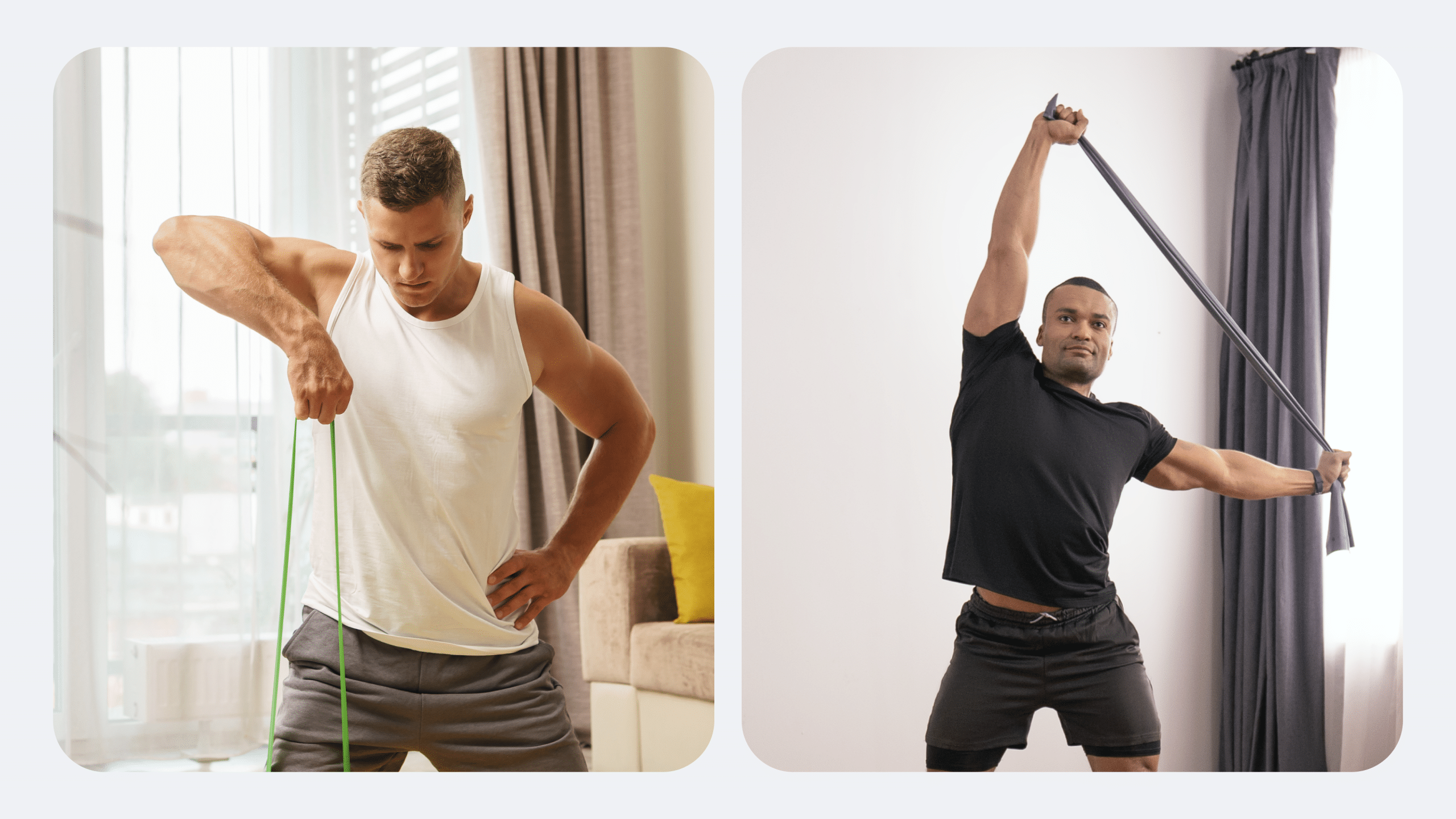
General examples include push-ups, squats, lunges, planks, and pulling exercises with suitable equipment. Actual military programs vary, and no universal exercise list applies to every role. Calisthenics can challenge muscles, but a particular appearance is not guaranteed. Individual results depend on training, eating patterns, rest, and other factors. Beginners can use wall push-ups, shallow squats, and short modified planks. Keep the workload manageable rather than copying elite selection volumes. A weighted walk adds training load and should be counted as activity. If the plan calls for rest, choose rest or genuinely lighter movement instead of assuming a loaded walk fulfills that role.Frequently Asked Questions
What exercises are in military calisthenics?
Can calisthenics change how muscles look?
Can beginners do a military-inspired workout?
Is a weighted walk a rest day?
The bottom line
Use the movement categories to choose a small, repeatable session with appropriate rest. Add equipment or harder variations only when the setup and technique are suitable, and keep official preparation separate from this general fitness example.
DISCLAIMER:
This article is intended for general informational purposes only and does not serve to address individual circumstances. It is not a substitute for professional advice or help and should not be relied on for making any kind of decision-making. Any action taken as a direct or indirect result of the information in this article is entirely at your own risk and is your sole responsibility.
BetterMe, its content staff, and its medical advisors accept no responsibility for inaccuracies, errors, misstatements, inconsistencies, or omissions and specifically disclaim any liability, loss or risk, personal, professional or otherwise, which may be incurred as a consequence, directly or indirectly, of the use and/or application of any content.
You should always seek the advice of your physician or other qualified health provider with any questions you may have regarding a medical condition or your specific situation. Never disregard professional medical advice or delay seeking it because of BetterMe content. If you suspect or think you may have a medical emergency, call your doctor.
SOURCES:
- Army Fitness Test (2025, army.mil)
- Adult Activity: An Overview (2023, cdc.gov)
- Warm Up, Cool Down (2024, heart.org)
- A Biomechanical Review of the Squat Exercise: Implications for Clinical Practice (2024, pmc.ncbi.nlm.nih.gov)
- Low-load bench press and push-up induce similar muscle hypertrophy and strength gain (2017, pmc.ncbi.nlm.nih.gov)
- How to Measure Physical Activity Intensity (2025, cdc.gov)
- The Importance of Recovery in Resistance Training Microcycle Construction (2024, pmc.ncbi.nlm.nih.gov)
- A systematic review, meta-analysis and meta-regression of the effect of protein supplementation on resistance training-induced gains in muscle mass and strength in healthy adults (2018, pmc.ncbi.nlm.nih.gov)
 Reviewed by
 Reviewed by
 Reviewed by