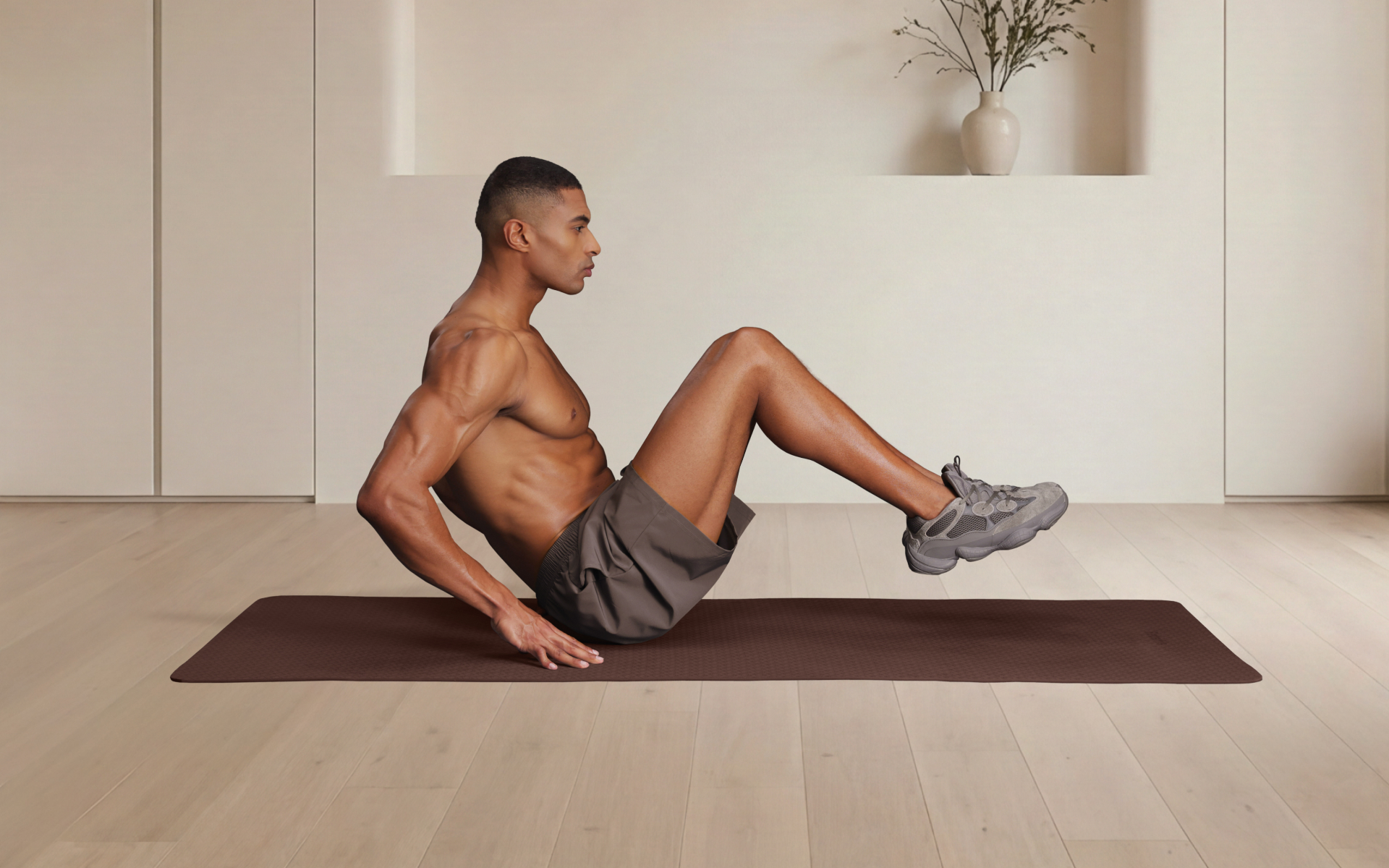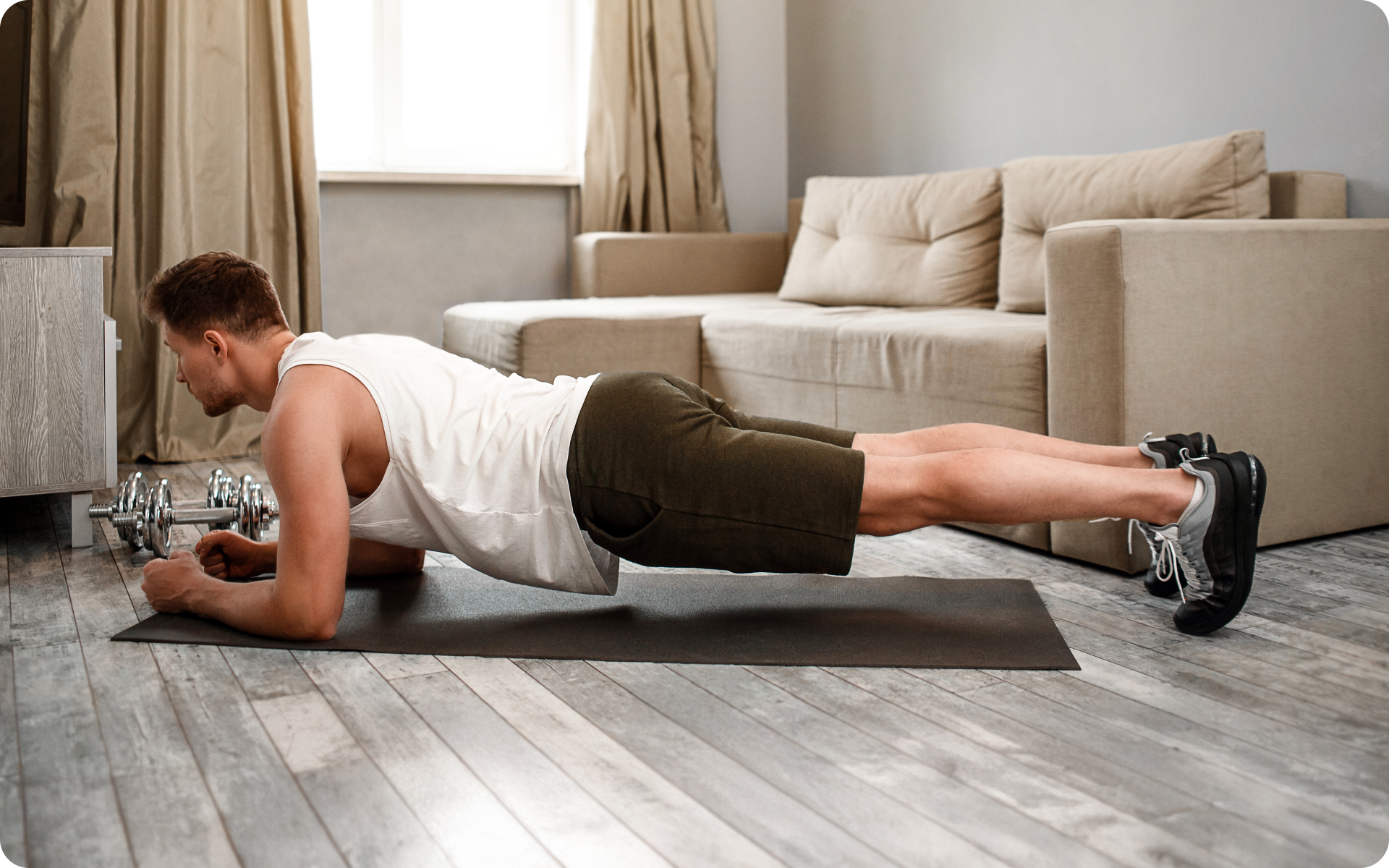
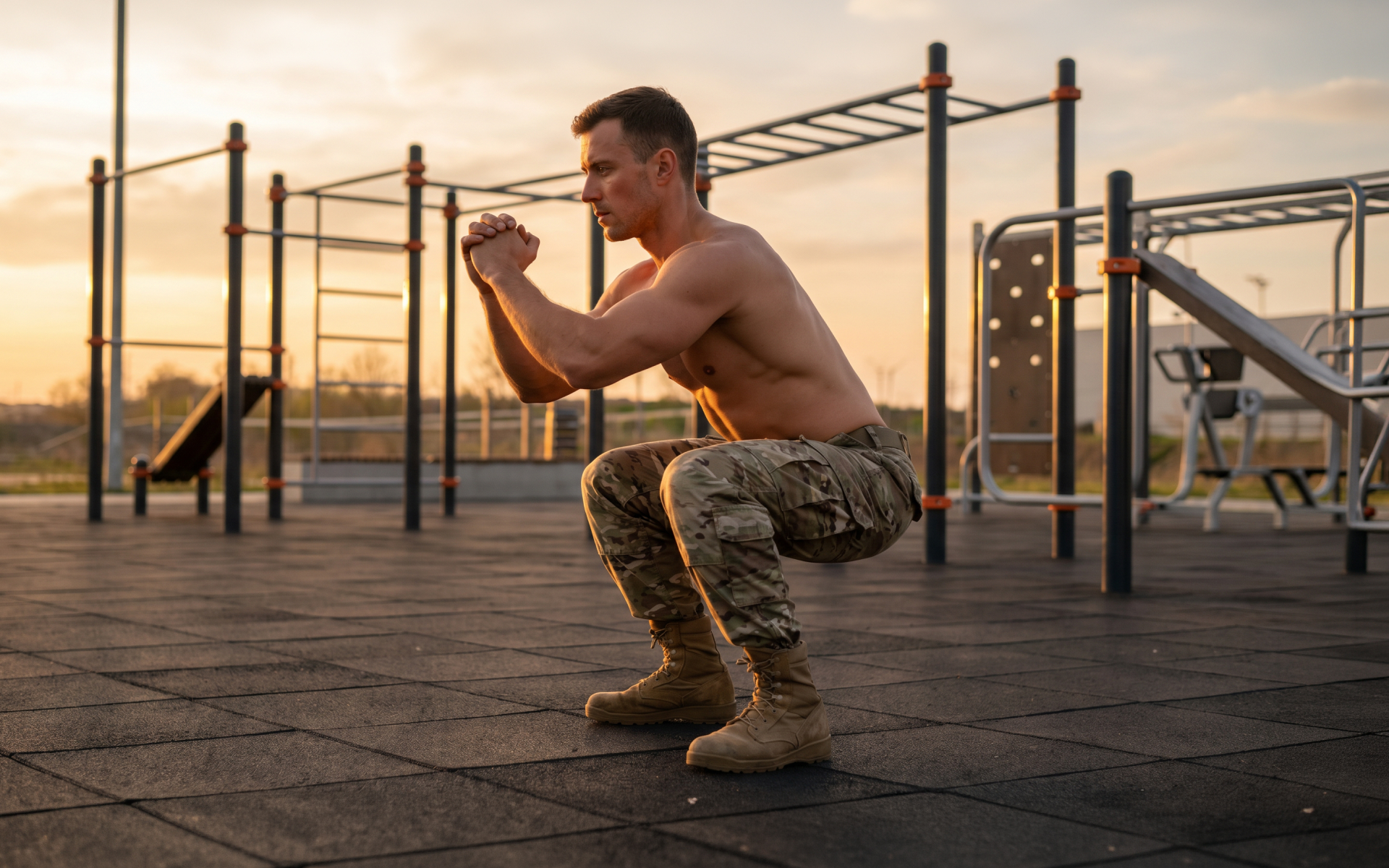
A military workout is a training routine that is inspired by military fitness standards. It blends bodyweight strength, cardio, and core moves into fast-paced circuits. The goal is overall fitness, work capacity, and steady effort, not perfection. This style suits many beginners, as it needs little or no equipment. Beginner military calisthenics can be a practical starting point because it relies on simple bodyweight movements that are easy to scale.
A military workout borrows ideas from boot-camp-style training and adapts them for everyday people. Think push-ups, squats, running, and planks, often grouped into rounds.
This guide is for beginners who want a simple, structured way to build full-body fitness at home or outdoors. It explains what these workouts train, which moves to try, and how to build a weekly plan that you can adjust. You’ll also find a beginner routine, modifications, and answers to common questions.
This is a military-inspired fitness guide for general readers. It’s not an official training manual. If you have any health concerns, consider checking with a qualified professional first before attempting intense exercise.
Are you ready to explore? Let’s break it down step by step.
Key Takeaways
- A beginner military-style workout blends bodyweight strength, cardio, and core moves into circuits aimed at overall fitness and work capacity rather than perfection.
- One pass of a beginner circuit can include 10 to 12 squats, 8 to 12 push-ups, 20 walking lunge steps, and a 30-second plank.
- The circuit is repeated for 3 to 5 rounds, with 30 to 60 seconds of rest between exercises and 1 to 2 minutes between rounds.
- Sessions last 20 to 40 minutes including warm-up and cool-down, and a home workout needs only a space about the size of a yoga mat.
- Beginners can train 3 times a week with at least 1 to 2 lighter or rest days (6).
- An effort of about 6 to 8 out of 10 is a common target for beginner military-style circuits.
- Over 8 to 12 weeks, progress can come from adding 1 to 2 reps per round each week, moving from 3 to 4 rounds, or trimming rest from 60 to 45 seconds (4).
What Does a Military-Style Workout Train?
A military-style workout trains your whole body for endurance, strength, stamina, and coordination. It focuses on functional movement, meaning exercises that mirror real-life actions such as lifting, carrying, and running.
Most of these workouts blend several fitness types into one session. Here’s what a military training workout tends to develop:
- Muscular endurance: The ability of your muscles to keep working (1), such as doing 15-20 push-ups in a row.
- Cardiovascular fitness: The ability of your heart and lungs to sustain effort (2), such as jogging for 10-20 minutes.
- Core stability: The midsection muscles that support posture (3), trained with planks held for 20-60 seconds.
- Coordination and agility: Smooth, controlled movement during drills such as shuttle runs or burpees.
The main idea is performing well while tired. For many people, the results that matter most come from a few simple habits that include:
- Consistency: Showing up 3-4 days per week.
- Effort: Working at a level that feels challenging, around a 7-8 out of 10.
- Progression: Adding small amounts over time, such as 1-2 extra reps each week.
You don’t need fancy gear. Your own body weight covers most of the work. That makes this style beginner-friendly and flexible for different fitness levels.
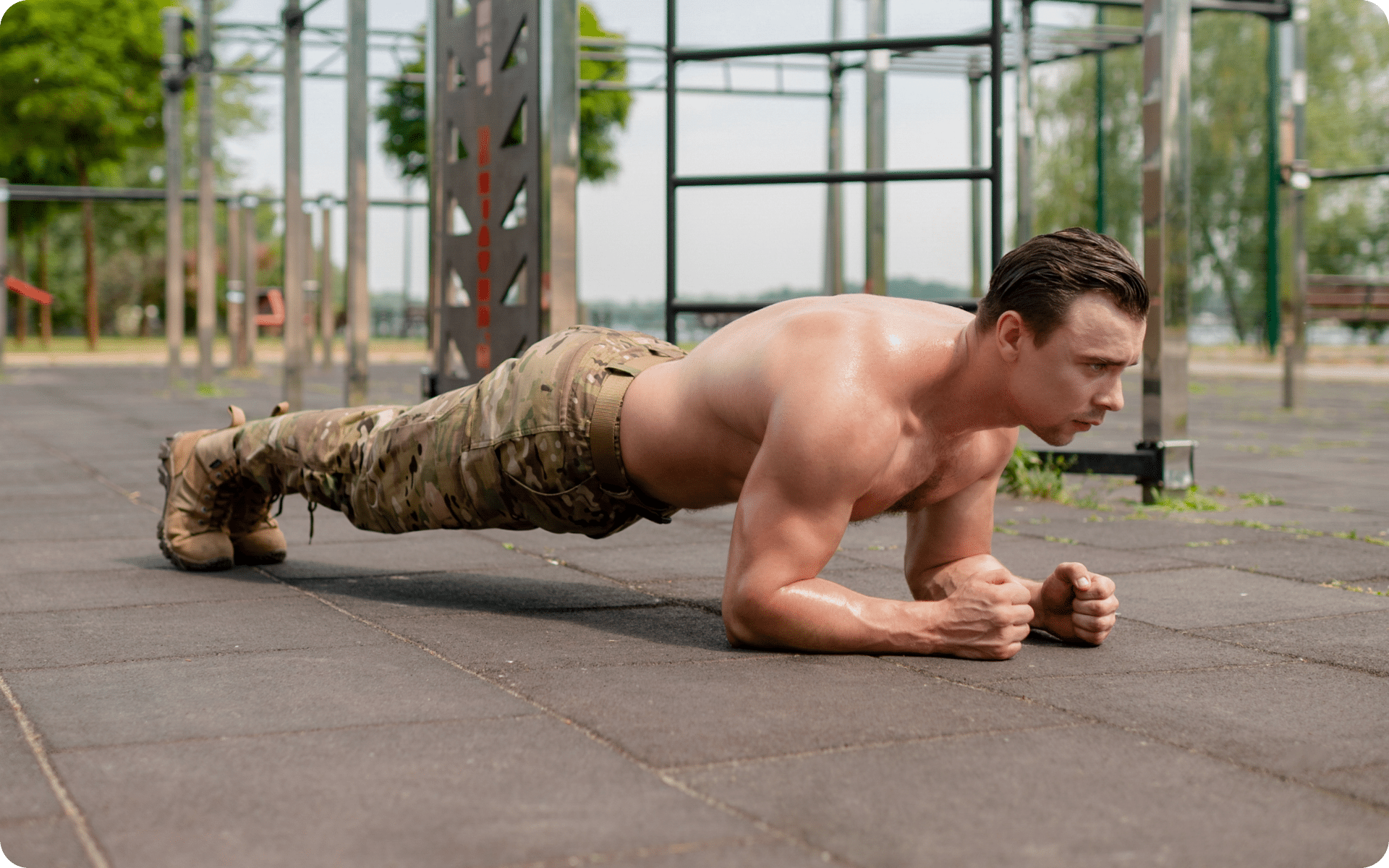
Which Exercises Are Common in Military Workouts?
Common military workout exercises use your body weight and simple, repeatable movement patterns. They cover pushing, pulling, squatting, core work, and running.
These moves are popular because they need little equipment and scale easily. Below is a comparison of common movements, what they train, a beginner starting point, and an easier option.
| Movement | What it trains | Beginner volume | Easier option |
|---|---|---|---|
| Push-ups | Chest, shoulders, arms | 3 sets of 5-8 reps | Knee or wall push-ups |
| Bodyweight squats | Legs and glutes | 3 sets of 10-12 reps | Chair-assisted squats |
| Walking lunges | Legs, balance | 2 sets of 10 steps total | Stationary lunges with support |
| Plank | Core stability | 3 holds of 15-20 seconds | Knees-down plank |
| Sit-ups | Core, hip flexors | 2 sets of 8-10 reps | Crunches with smaller range |
| Jogging or marching | Cardio, endurance | 5-10 minutes total | Brisk walking |
| Burpees | Full body, cardio | 2 sets of 4-6 reps | Step-back burpees, no jump |
You can mix and match these. A full-body military workout usually combines an upper-body push, a lower-body move, a core hold, and some cardio.
Whether you’re a workout beast or just a beginner making your first foray into the world of fitness and dieting – BetterMe has a lot to offer to both newbies and experts! Install the app and experience the versatility first-hand!
What Is a Beginner-Friendly Military Workout Routine?
A beginner-friendly military workout routine uses simple moves, short circuits, and built-in rest. This military calisthenics workout keeps the focus on controlled bodyweight strength, steady cardio, and repeatable progress. The plan below takes about 30-45 minutes, including a warm-up.
Aim for 3-5 rounds of the circuit.
Rest for 30-60 seconds between exercises and 1-2 minutes between rounds.
| Exercise | Sets | Reps or time | Rest |
|---|---|---|---|
| Bodyweight squats | 3 | 10-12 reps | 30-60 seconds |
| Knee or full push-ups | 3 | 8-12 reps | 30-60 seconds |
| Walking lunges | 3 | 20 steps total | 30-60 seconds |
| Plank hold | 3 | 30 seconds | 30-60 seconds |
| Run/skip/jumping jacks | 3 | 200 meters/20 skips/20 jacks | 30-60 seconds |
Some people may notice changes in stamina or strength after several weeks of regular practice. Individual outcomes vary, and they depend on your starting point, effort, and recovery.
Bodyweight Squats
- Stand with your feet about shoulder-width apart.
- Push your hips back as if sitting into a chair.
- Lower until your thighs are near parallel to the floor, keeping your chest up.
- Press through your heels to stand back up.
Knee or Full Push-ups
- Start in a plank position, your hands under your shoulders.
- Drop to your knees for the easier version.
- Lower your chest toward the floor with your elbows at about 45 degrees.
- Press back up to the start, keeping your body in a straight line.
Walking Lunges
- Stand tall with your feet hip-width apart.
- Step forward with one leg and lower your back knee toward the floor.
- Keep your front knee over your ankle, not past your toes.
- Push up and step forward with the other leg.
Plank Hold
- Rest on your forearms and toes, your elbows under your shoulders.
- Keep your body in a straight line from your head to your heels.
- Squeeze your core and avoid letting your hips sag.
- Hold for the set time, breathing steadily.
Running/Skipping/Jumping Jacks
- Choose a clear space or a treadmill.
- Keep a steady, comfortable pace you can sustain.
- Use the “talk test”—you should be able to talk but not sing.
- Land softly and keep your arms relaxed.

How Can You Do a Military Workout at Home?
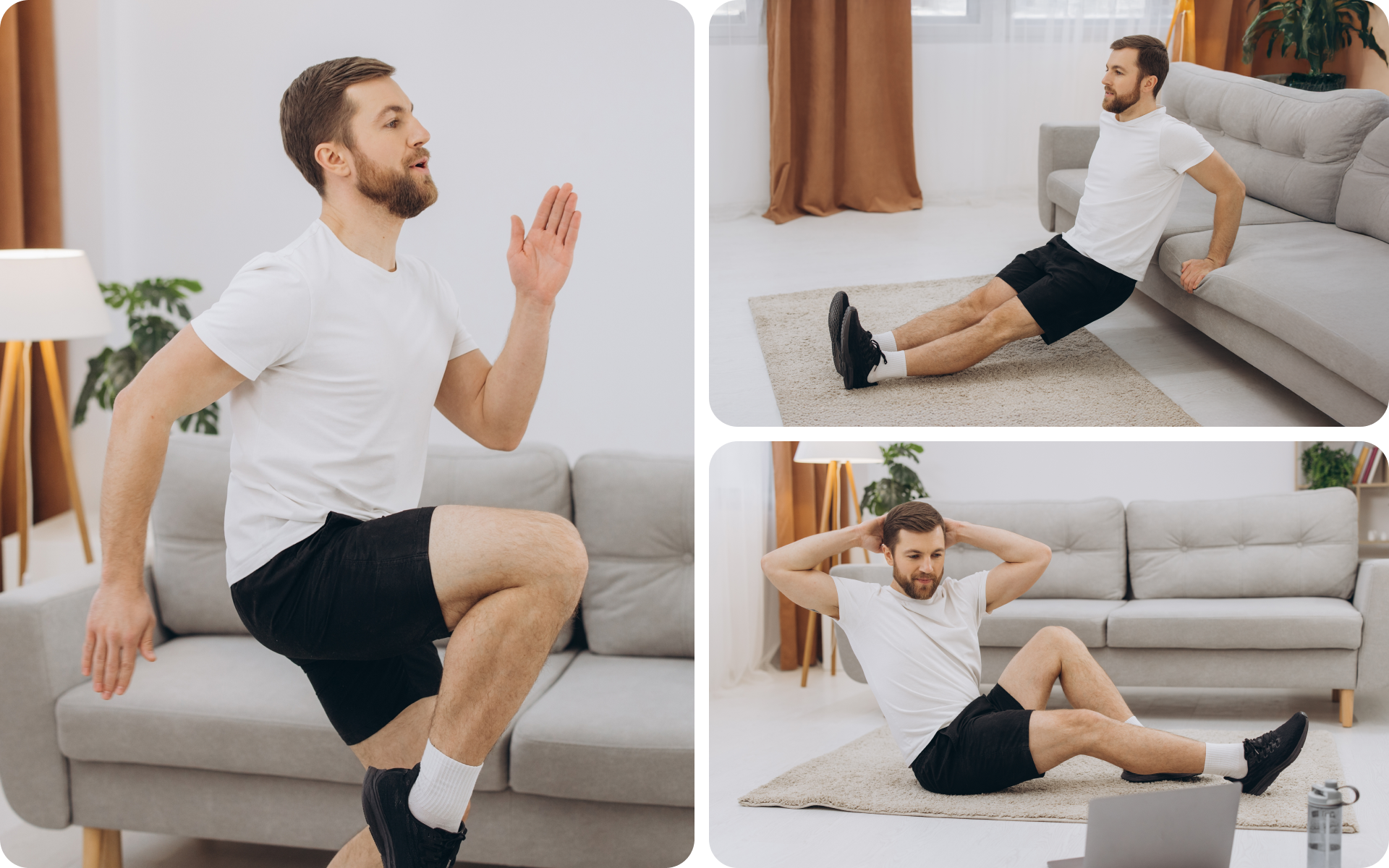
You can do a military workout at home with just your body weight and a small clear space—no equipment is needed for most moves.
Set up takes only a minute. Here’s a simple approach:
- Clear a space about the size of a yoga mat.
- Warm up for 3-5 minutes with light marching and arm circles.
- Pick 4-5 moves from the beginner table above.
- Run 2-3 circuits with short rest between exercises.
- Cool down for 3-5 minutes with gentle stretches.
To add cardio indoors, try marching in place, step-ups on a sturdy step, or jumping jacks. A daily military workout at home can be as short as 15-20 minutes when time is tight.
Keep your space clear of obstacles, and choose a non-slip surface. Grippy socks or training shoes can help with footing.
For more home-friendly ideas, you may enjoy our collection of military calisthenics workouts for men.
How Can You Structure a Weekly Military Workout Plan?
A balanced weekly military workout plan mixes strength, cardio, and rest across 3-5 days. This spread gives your muscles time to recover while keeping you consistent.
Below is a sample weekly layout you can adjust to your schedule.
| Day | Focus | Session length | Example format |
|---|---|---|---|
| Monday | Full-body strength | 25-30 minutes | 3 circuits of squats, push-ups, lunges, plank |
| Tuesday | Cardio | 20-30 minutes | Jog or march intervals, 1 minute on, 1 minute easy |
| Wednesday | Rest or light walk | 10-20 minutes | Easy walk plus gentle stretching |
| Thursday | Core and endurance | 20-25 minutes | Planks, sit-ups, step-ups, carries |
| Friday | Full-body circuit | 25-30 minutes | 3-4 rounds mixing strength and cardio |
| Saturday | Active recovery | 20-30 minutes | Walk, hike, or light mobility work |
| Sunday | Rest | — | Full recovery day |
A military conditioning workout week like this aims for 3-4 training days plus 1-2 lighter days. General activity guidance points to 150-300 minutes of moderate movement per week, and this plan helps you reach that range (5).
Feel free to shift days around your life. Consistency over the week matters more than the exact schedule.
Read more: Military Calisthenics Workout Plan for Beginners: A Complete Guide
How Can You Modify a Military Workout for Your Fitness Level?
You can modify a military fitness workout by adjusting the moves, reps, rest, and pace. Every exercise has an easier and a harder version.
The goal is steady effort, around a 6-8 out of 10, without forcing reps that feel uncomfortable. Here are simple ways to scale.
Bodyweight Squats
Make it easier: Use a chair for support, reduce the depth of the squat, or lower the reps.
Keep it moderate: Use the suggested beginner reps and focus on controlled movement, steady breathing, and keeping your feet flat on the floor.
Make it harder: Add 2-3 reps per set, slow down the lowering phase, pause briefly at the bottom, or add another round.
Knee or Full Push-Ups
Make it easier: Start with knee push-ups or incline push-ups against a wall, bench, or sturdy surface. Reduce the reps to 4-6 per set if needed.
Keep it moderate: Use the beginner rep range and choose the variation that lets you keep your body aligned from your head to your knees or heels.
Make it harder: Progress from knee push-ups to full push-ups, add 2–3 reps per set, slow down the lowering phase, or shorten your rest time.
Walking Lunges
Make it easier: Do stationary lunges instead of walking lunges, hold onto a wall or chair for balance, or reduce the depth of each lunge.
Keep it moderate: Use the suggested reps and move slowly enough to keep your front knee controlled and your torso upright.
Make it harder: Add more reps, slow down each step, reduce rest time, or add another round.
Plank Hold
Make it easier: Hold the plank for a shorter time, drop to your knees, or rest longer between rounds.
Keep it moderate: Hold the plank for the suggested time while keeping your hips steady and your body in a straight line.
Make it harder: Add 5-10 seconds per round, reduce rest time, or try shoulder taps from a plank position.
Run, Skip, or Jumping Jacks
Make it easier: Walk briskly, march in place, or do low-impact step jacks instead of jumping jacks.
Keep it moderate: Choose one cardio option and keep a steady pace that raises your heart rate without making you lose control of your breathing.
Make it harder: Increase the time, add short faster intervals, or reduce rest between rounds.
Listen to your body and adjust as you go. If a move causes discomfort, switch to a gentler version or skip it. Different bodies need different starting points, and that’s completely normal.
Intense sweat sessions, working weight loss tips, lip-smacking recipes come in one package with the BetterMe Well-Being Coach app—all at your fingertips, start transforming your life now!

How Can You Progress a Military Workout Over Time?
You progress a military workout by gradually adding small challenges each week. This idea is called progressive overload, which simply means making training a little harder over time (4).
Small steps work well. Here are practical ways to build:
- Add reps: Increase by 1-2 reps per set each week.
- Add rounds: Move from 3 circuits to 4 after a few weeks.
- Add time: Extend a plank from 20 seconds to 30 seconds.
- Shorten rest: Trim rest from 60 seconds to 45 seconds.
- Add cardio minutes: Build your jog from 10 to 15 minutes.
Pick one change at a time, not all at once. A common approach is to increase one variable every 1-2 weeks.
Many people see steady gains over 8-12 weeks of regular military exercise routine practice. Individual outcomes vary based on effort, sleep, and recovery.
What Are the Most Common Military Workout Mistakes?
The most common military workout mistakes involve doing too much, too soon, and skipping recovery. These can make workouts harder to sustain and may increase discomfort.
Watch for these patterns:
- Starting too hard: Jumping to 50 push-ups on day one instead of 3 sets of 5-8.
- Skipping warm-ups: Going straight into intense moves without 3-5 minutes of prep.
- Ignoring rest days: Training 7 days a week with no recovery.
- Sloppy form: Letting hips sag in planks or knees cave in squats.
- Chasing speed over control: Rushing reps and losing good technique.
A simple fix is to slow down and prioritize quality. A well-held 20-second plank beats a shaky 60-second one.
Rest is part of the plan, not a break from it. Aim for at least 1-2 rest or light days each week.
Read more: Military Calisthenics Workouts for Men: Everything You Need for Success
What Should You Consider Before Starting Military-Style Training?
Before starting military-style training, consider your current fitness level, any existing discomfort, and how much time you have. A quick self-check helps you pick a sensible starting point.
Think through these points:
- Your starting fitness: Begin with 2-3 short sessions per week if you’re new to exercise.
- Time available: Even 15-20 minutes a few times a week can work.
- Recovery needs: Plan for rest days and 7-9 hours of sleep when possible.
- Footwear and space: Use supportive shoes and a clear, non-slip area.
- Comfort signals: Stop if you feel sharp discomfort, and switch to an easier move.
If you have any concerns about starting intense exercise or have had previous discomfort with similar movements, consider speaking with a qualified professional first. This guide shares general, educational information, not personal advice.
Start small and build. A gentle, repeatable routine tends to beat an intense one you can’t sustain.

Frequently Asked Questions
How long should a military-style workout last?
A military-style workout usually lasts 20-40 minutes, including warm-up and cool-down. Beginners can start at the shorter end, around 20-25 minutes, and build up over time. Quality matters more than length. A focused 20-minute session with good form often beats a long, rushed one. Adjust the duration to fit your energy and schedule.
How often should beginners do military workouts?
Beginners often do well with 3 sessions per week, spaced out with rest days between. This gives your muscles time to recover while keeping you consistent (6). As your fitness builds, you might add a fourth day after 4-6 weeks. Listen to your body, and keep at least 1-2 lighter or rest days each week.
Do military workouts build muscle?
Military workouts can support muscle growth, particularly for beginners who use bodyweight moves (7). To build muscle, aim to work each major muscle group at least twice a week with challenging effort. Adding reps, rounds, or resistance over time helps. Results vary by person, and progress also depends on sleep, nutrition, and recovery.
Are military workouts mainly cardio or strength training?
Military workouts blend both cardio and strength training in one session. A typical circuit might pair push-ups and squats with jogging or marching. This mix builds endurance and muscular strength together. You can lean more toward cardio or strength by adjusting how many running drills versus resistance moves you include.
Is running required in a military-style workout?
Running is common, but not required in a military-style workout. You can swap jogging for brisk walking, marching in place, step-ups, or jumping jacks. These options still raise your heart rate and build endurance. Choose the cardio option that fits your body, space, and comfort level.
Are military workouts suitable for women?
Military workouts are suitable for people of all genders, including women. The same moves, such as squats, push-ups, planks, and jogging, work for different bodies and fitness levels. You can scale every exercise up or down to match your starting point. Focus on consistency and gradual progress rather than comparing yourself to anyone else.
The Bottom Line
A military workout offers a simple, flexible way to build full-body fitness using bodyweight moves, short circuits, and steady effort. Start with 3 sessions a week, focus on good form, and add small challenges over time. Pick the moves that feel right for you, adjust as you go, and enjoy building a routine you can stick with.
DISCLAIMER:
This article is intended for general informational purposes only and does not serve to address individual circumstances. It is not a substitute for professional advice or help and should not be relied on for making any kind of decision-making. Any action taken as a direct or indirect result of the information in this article is entirely at your own risk and is your sole responsibility.
BetterMe, its content staff, and its medical advisors accept no responsibility for inaccuracies, errors, misstatements, inconsistencies, or omissions and specifically disclaim any liability, loss or risk, personal, professional or otherwise, which may be incurred as a consequence, directly or indirectly, of the use and/or application of any content.
You should always seek the advice of your physician or other qualified health provider with any questions you may have regarding a medical condition or your specific situation. Never disregard professional medical advice or delay seeking it because of BetterMe content. If you suspect or think you may have a medical emergency, call your doctor.
SOURCES:
- Muscular Endurance (2020, sciencedirect.com)
- Cardiovascular Fitness (n.d., sciencedirect.com)
- Core Stability (2023, sciencedirect.com)
- Effects of Resistance Training Overload Progression Protocols on Strength and Muscle Mass (2024, pubmed.ncbi.nlm.nih.gov)
- Physical activity guidelines 2020: comprehensive and inclusive recommendations to activate populations (2020, thelancet.com)
- Resistance training by the numbers (2021, health.harvard.edu)
- The Impact Of Ten Weeks Of Bodyweight Training On The Level Of Physical Fitness And Selected Parameters Of Body Composition In Women Aged 21-23 Years (2015, researchgate.net)

 By
By 
 Reviewed by