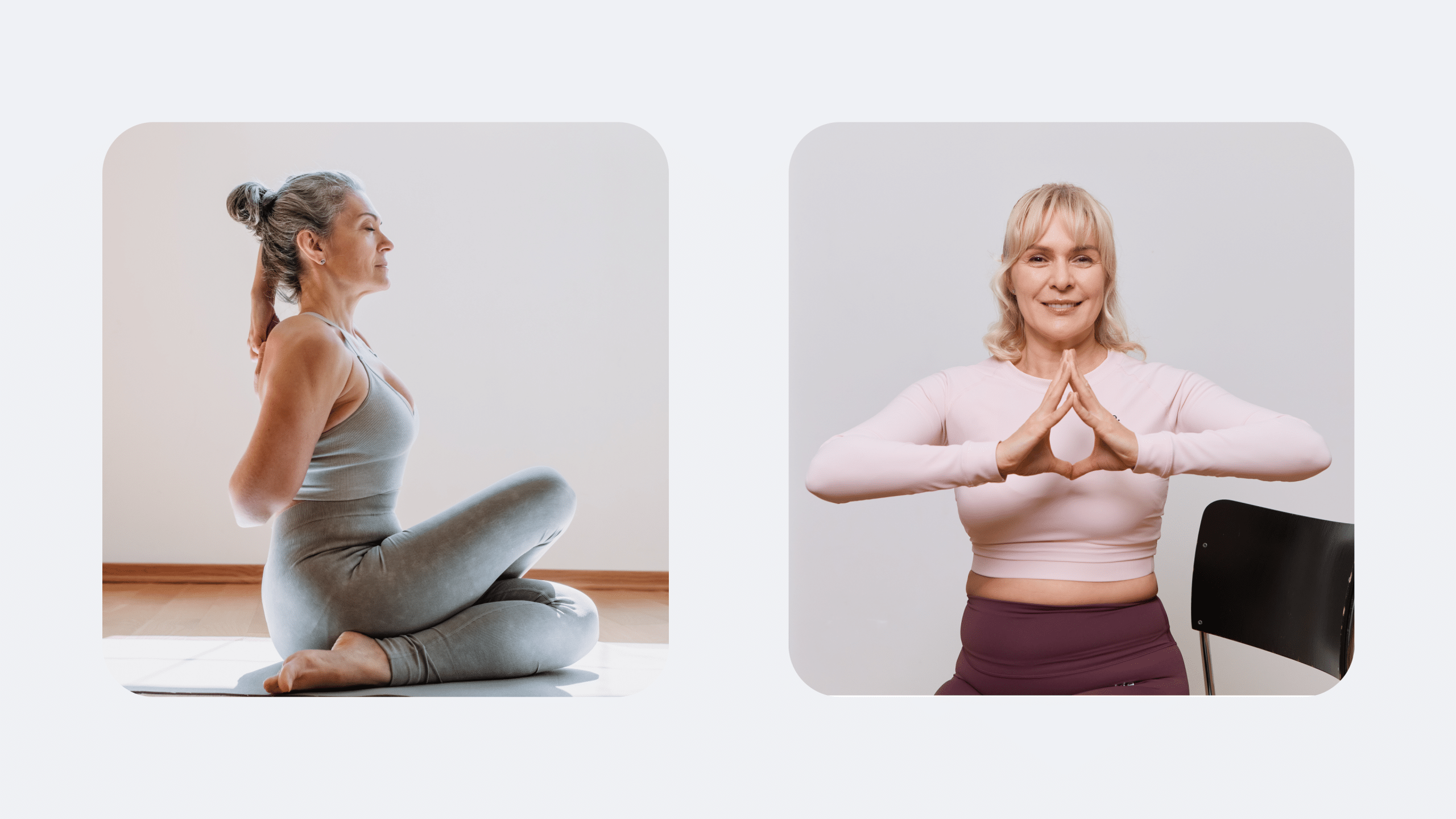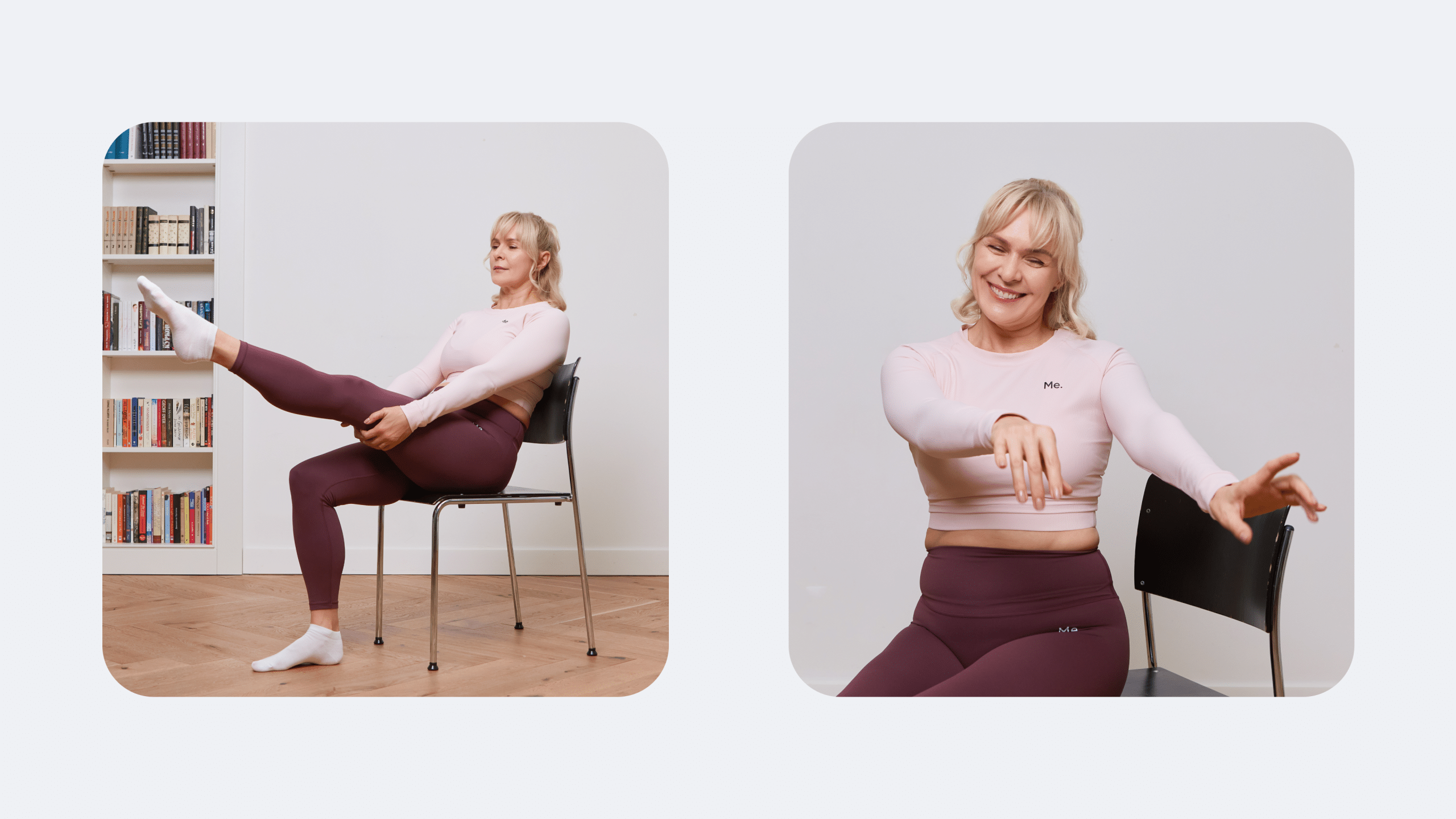
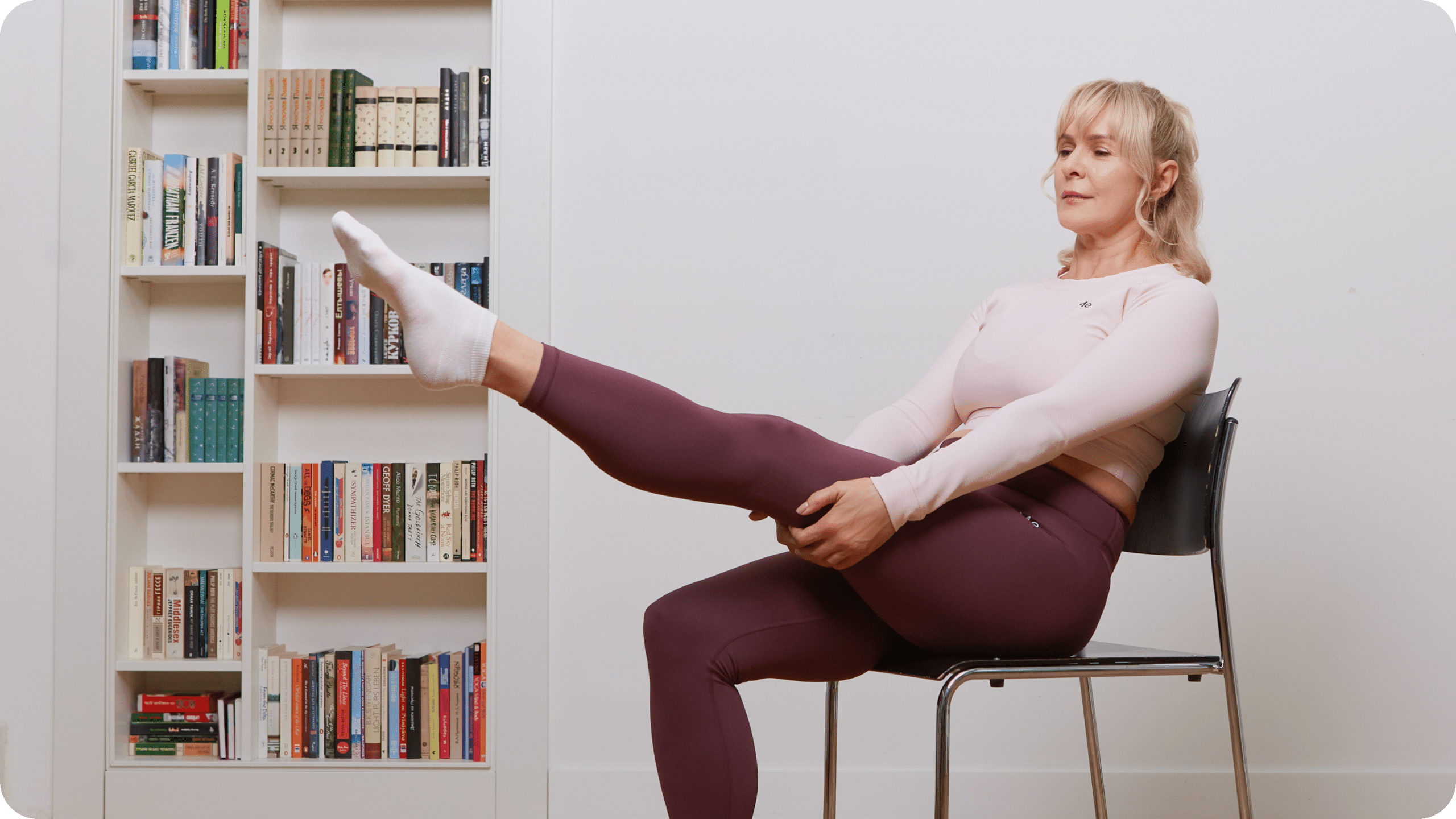
A chair yoga workout plan organizes seated poses into repeatable sessions across the week. This sample offers three practice days and an optional shorter session. Use a stable chair and supported feet, then choose familiar movements and a duration that leaves time for pauses.
If you have joint, muscle, or spine-related concerns, please consult your physician before starting this workout.
For the movement order, use our chair yoga sequence for seniors.
Key takeaways
- Chair yoga adapts poses to seated practice or uses chair support for selected standing movements.
- A solid chair without wheels and supported feet are practical setup choices (1).
- The sample week offers three main seated sessions and an optional shorter Saturday practice.
- Five-, ten-, and twenty-minute options use familiar movements rather than mandatory harder poses.
- General yoga guidance supports instruction and individual modifications (2).
- Adults 65 and older are advised to combine aerobic, strengthening, and balance activity; this seated plan does not automatically meet every category (3).
Who is this chair-yoga plan for?
This plan is for older women and other adults who want a seated movement routine without floor transitions. It may suit a preference for chair support, but it does not establish suitability for every medical circumstance or movement limitation.
Age 50, 60, or 65 alone does not determine the range you should use. Ask a qualified instructor about unfamiliar poses, and discuss individual concerns with your clinician. Yoga practices may need modifications or omissions (2).
For an entry guide that discusses ability rather than a senior label, see our chair yoga for women over 50.
Betterme will keep you laser-focused on your weight loss journey! Nutrient-packed meal plans, fat-blasting workouts, galvanizing challenges and much more. Try using the app and see for yourself!
How should you set up?
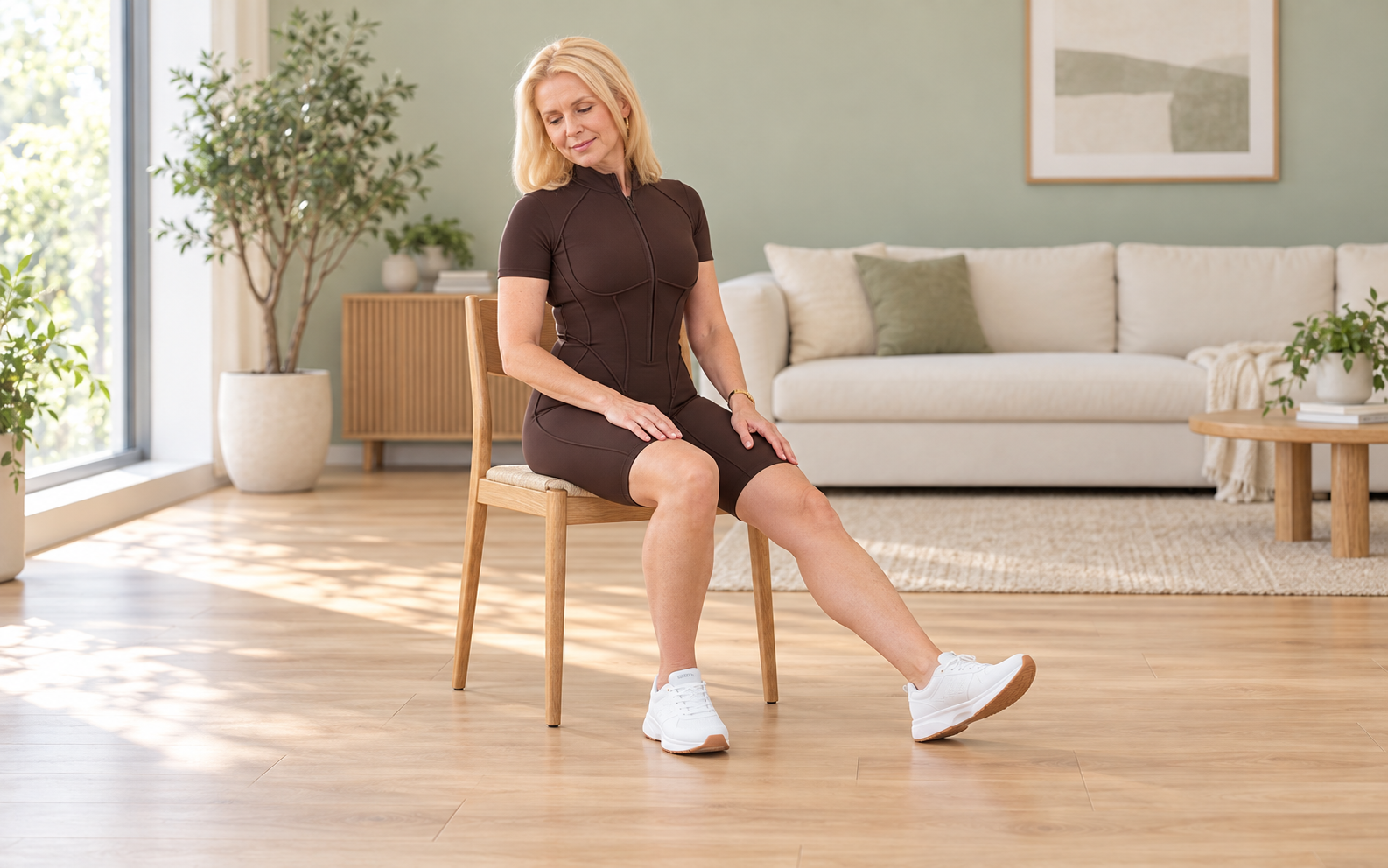
Set up a solid, nonslip chair with no wheels and enough space around it. Sit with your feet supported, and choose a chair height that allows a comfortable knee position. Public seated-exercise guidance recommends a stable chair and gradual movement progression (1).
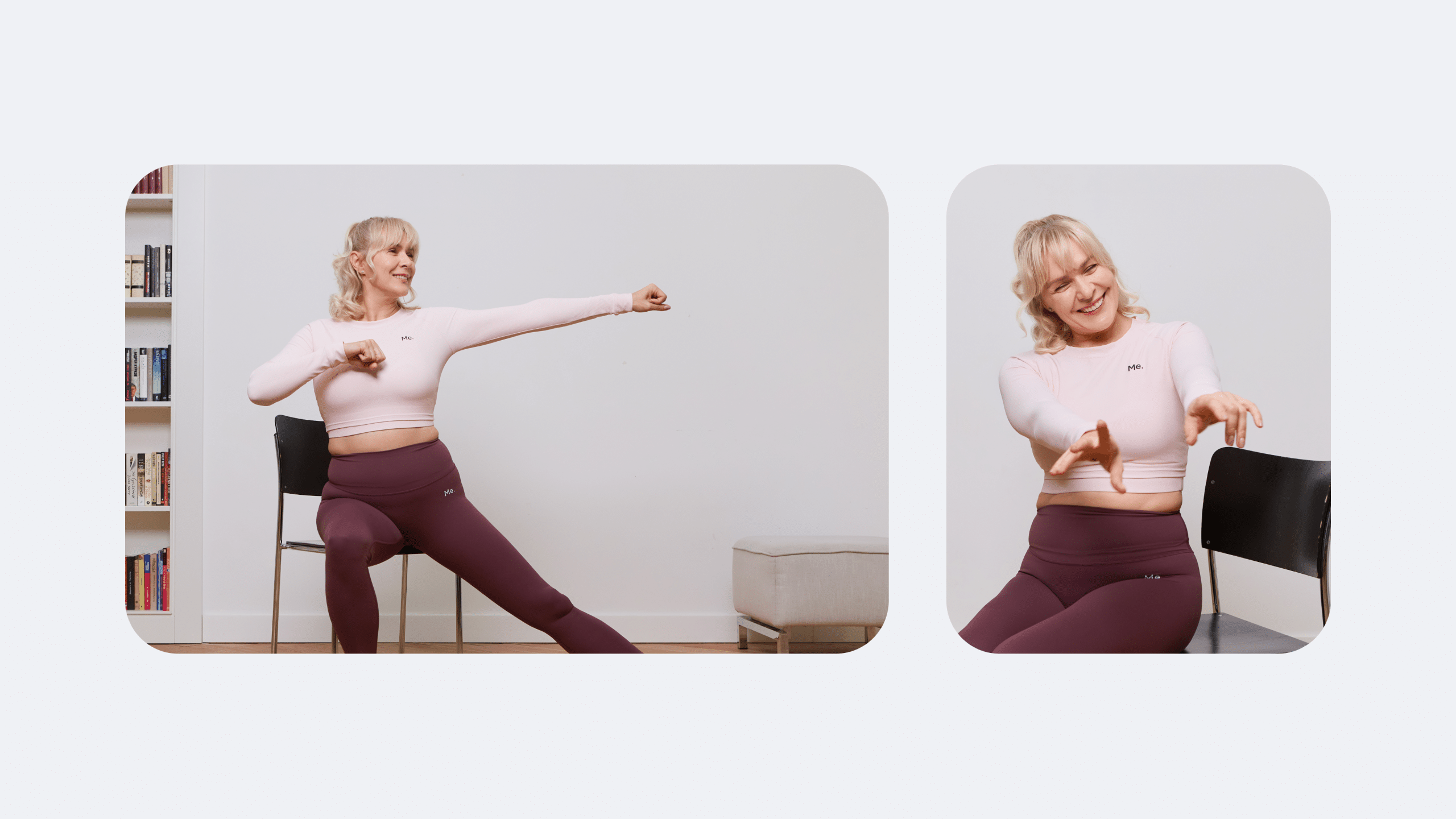
Keep the routine seated unless a supported standing movement has been selected for you. Don’t lean hard on a chair that can tip. Use the backrest when needed rather than forcing a tall unsupported posture for the full session.
What does a weekly chair-yoga plan look like?
The sample week offers three main practice days, an optional short Saturday session, and time for rest or other suitable activity. Adjust the days and durations to your capacity.
|
Day |
Optional practice |
Duration choice |
|---|---|---|
|
Monday |
Seated mountain, shoulder movement, and cat-cow |
5 to 10 minutes |
|
Tuesday |
Rest or other suitable activity |
Flexible |
|
Wednesday |
Seated mountain, side reach, and gentle twist |
5 to 10 minutes |
|
Thursday |
Rest or other suitable activity |
Flexible |
|
Friday |
Familiar seated sequence |
10 to 20 minutes |
|
Saturday |
Optional short familiar practice |
Up to 5 minutes |
|
Sunday |
Rest or review your preferred movements |
Flexible |
There is no need to add Saturday or make up a missed session. Our chair yoga guide for women over 60 provides another seated starting format.
Which movements should you use?
Use a small group of familiar movements that fit your range and current guidance. The following menu keeps the practice seated.
|
Movement |
Practical cue |
Easier choice |
|---|---|---|
|
Seated mountain |
Feet supported; shoulders relaxed |
Use backrest |
|
Upward salute |
Reach only as high as comfortable |
Hands near chest |
|
Seated cat-cow |
Small torso movement |
Stay nearly upright |
|
Gentle twist |
No pulling with hands |
Small upper-chest turn |
|
Side reach |
Both sitting bones supported |
Keep reaching arm low |
|
Seated eagle arms |
Relax shoulders |
Give yourself a light hug |
|
Hip opening |
No forced leg crossing |
Keep both feet grounded |
|
Relaxed breathing |
No forced count |
Normal supported sitting |
Seated mountain
- Sit with your feet supported for seated mountain.
- Lengthen your torso gently during seated mountain.
- Rest your hands during seated mountain.
Seated cat-cow
- Place your hands on your thighs for seated cat-cow.
- Open your chest slightly during seated cat-cow.
- Return through a gentle rounded position during seated cat-cow.
Gentle twist
- Ground both feet for the gentle seated twist.
- Turn your upper torso a little during the gentle twist.
- Return from the gentle twist without pulling on the chair.
Side reach
- Sit in a stable position for the seated side reach.
- Lift one arm through a comfortable seated side-reach range.
- Return upright from the seated side reach.
For instructions on additional options, use our chair yoga pose library.
How do you choose session length?
Choose a session length that leaves room for slow movement and pauses. If you have more time, repeat familiar poses or allow longer transitions rather than automatically increasing range.
|
Time available |
Example structure |
|---|---|
|
5 minutes |
Mountain, shoulder movement, and relaxed breathing |
|
10 minutes |
Add cat-cow and a gentle twist |
|
20 minutes |
Use the familiar menu with pauses; no need to add harder poses |
Begin with the shorter option. Add a few minutes after repeated manageable sessions, or shorten the practice when tired. Duration is a planning choice, not a guaranteed outcome threshold.
How can you make the weekly plan usable at home or at work?
Choose the practice days that fit your routine, then prepare the space for those sessions. Practice may happen at home or during a desk break. A desk chair with wheels or a swivel base is different from the solid chair used in this example, so it should not be used without a suitable setup.
Move to an appropriate seat if necessary and clear space for the selected arm movements. Check that the floor is free of loose objects. Keep a phone, water, and any video controls within easy reach before starting. Reaching far for them during a twist or fold adds an unplanned movement.
How can you choose a session menu?
Begin with seated mountain and add movements you already know. The menu includes arm reaches, cat-cow, twists, side reaches, eagle arms, hip opening, and relaxed breathing. Choose a smaller group when that fits your time and range.
For a work break, a self-hug and small shoulder movement may fit better than a leg-crossing pose. The practice can end in supported sitting. A longer home window may allow more transitions and pauses without making the poses deeper.
Keep the hip-opening option separate from a requirement to cross the legs. Both feet can stay supported. If reaching to position a foot is awkward, choose another movement rather than pulling the leg into a figure-four shape.
What does repeating a menu mean?
Repeat the same chair setup, pose versions, and a similar comfortable range. You can use fewer repetitions or a shorter section when needed. A repeat is useful for learning what the practice actually involves; it does not need a new challenge every time.
Write the pose selection and actual session length if you want a record. Note when extra pauses or an alternative were used. A longer session can simply include more rest. The total time is not proof of aerobic intensity or a specific effect.
How do you choose changes after the first week?
Choose a change that addresses a practical difficulty. If you repeatedly run out of time, use the shorter menu. If chair arms obstruct a reach, ask about another stable seat or a different movement. If an exercise is uncomfortable, stop and seek guidance instead of using a longer hold.
Adding another day is optional. The sample Saturday practice can remain rest, and a missed Friday does not need to move into the weekend. Keep frequency tied to the actual demands of the routine and your circumstances.
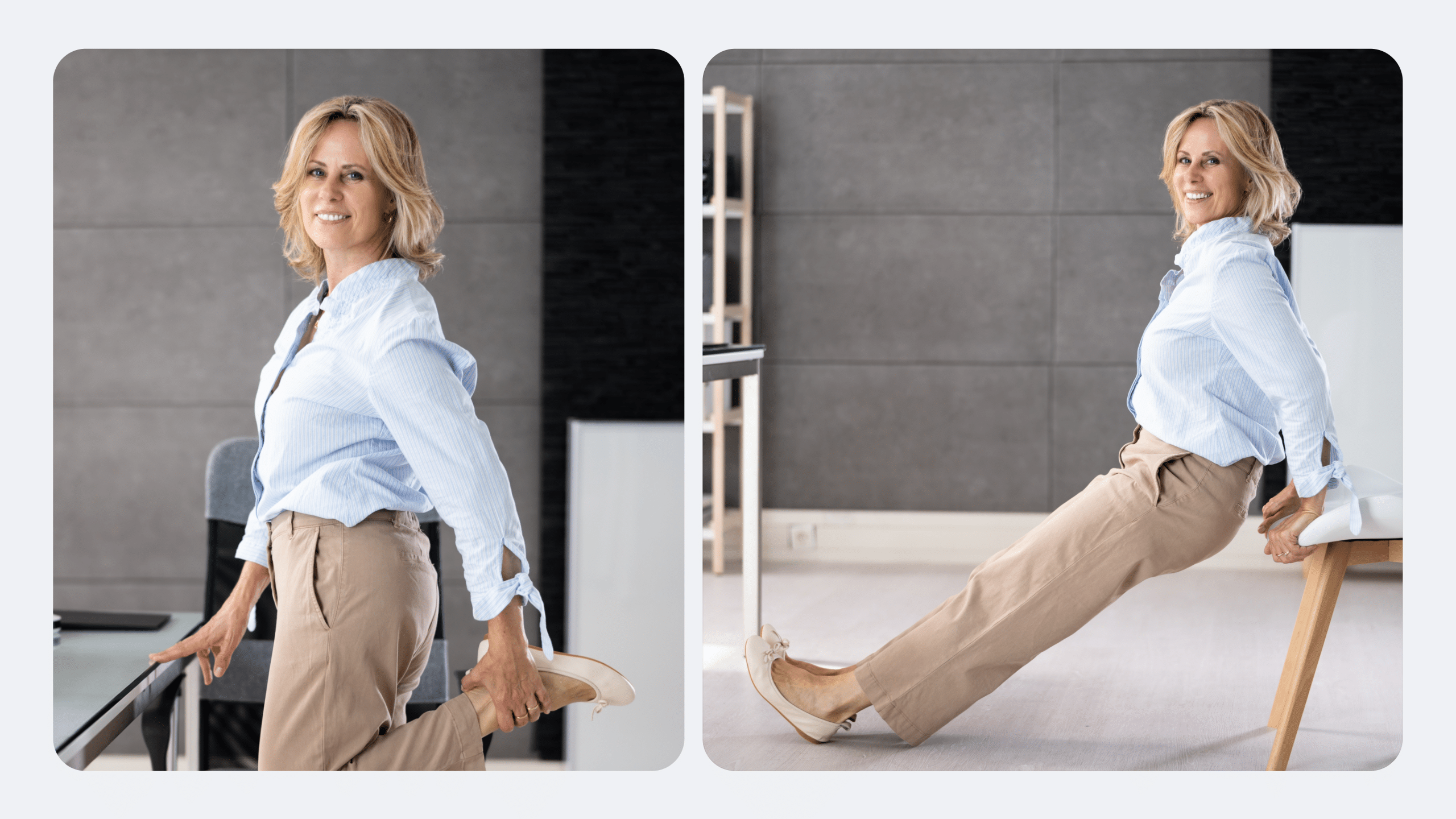
Standing movements are a separate choice. A chair-supported downward dog is a separate standing variation and is not required in this seated plan. Ask an instructor about stable support and the specific position before trying a standing variation. A chair that supports sitting may tip when pressed from another angle.
How should you compare class styles?
Check the class’s movements, pace, and support choices. Yoga and Pilates can both range from gentle to demanding. A title that mentions seniors or beginners does not tell you whether it includes floor transfers, long holds, or rapid changes.
Ask whether you can pause, remain seated, and omit a pose. If using a video, preview the sequence first. You should not need to follow every frame to make the session count. Clear alternatives and time to understand them matter.
Check the current class description, teaching format, and access terms before choosing a subscription. The sample plan can also be followed with the written instructions and appropriate individual guidance.
What can the weekly review tell you?
A weekly review helps you identify which days, movements, and durations were manageable. Ask a qualified teacher about technique and your clinician about ongoing medical concerns.
Use the review to choose the next week’s familiar menu, a shorter version, or rest. Include other appropriate activity separately when planning aerobic, strength, or standing-balance goals. A seated yoga week can remain one part of that wider routine.
BetterMe app will kick you out of the mental funk, shake off your extra weight, rid you off your energy-zapping habits, and help you sculpt the body of your dreams. Intrigued? Hurry up and change your life for the better!
How hard should chair yoga feel?
This sample is intended to remain gentle and manageable, without straining to hold a position. A feeling of effort is different from discomfort. Stop a movement that becomes uncomfortable and seek guidance when concerns persist.
For aerobic activity, moderate intensity commonly allows talking but not singing (4). A slow seated session may stay below that threshold. General older-adult guidance still includes aerobic, strengthening, and balance activity according to ability (3). Separate strength and flexibility exercise resources provide other movement choices when appropriate (5, 6).
Is chair yoga effective for weight loss?
This plan does not promise weight loss or changes in a particular body area. Yoga intensity varies, and body-composition changes depend on factors beyond a seated sequence. Choose an activity goal such as learning the routine or making movement more consistent instead of expecting a fixed appearance result.
Two or three manageable sessions is an optional starting structure. Adjust the frequency to your capacity and the demands of the practice rather than treating it as a universal rule. Some poses can be demanding, but this gentle seated plan is not automatically a complete strength routine. The actual resistance and muscle effort determine what the activity covers. No, this plan can remain fully seated. Supported standing poses are separate options, not a required next step.FAQs
How many days a week should you do chair yoga?
Does chair yoga count as strength training?
Do you need to stand during chair yoga?
The bottom line
Choose the practice days you can fit into your week, then keep a short record of the movements and time you used. Repeat a manageable session before adding more, and plan other activity according to your goals and capacity.
DISCLAIMER:
This article is intended for general informational purposes only and does not serve to address individual circumstances. It is not a substitute for professional advice or help and should not be relied on for making any kind of decision-making. Any action taken as a direct or indirect result of the information in this article is entirely at your own risk and is your sole responsibility.
BetterMe, its content staff, and its medical advisors accept no responsibility for inaccuracies, errors, misstatements, inconsistencies, or omissions and specifically disclaim any liability, loss or risk, personal, professional or otherwise, which may be incurred as a consequence, directly or indirectly, of the use and/or application of any content.
You should always seek the advice of your physician or other qualified health provider with any questions you may have regarding a medical condition or your specific situation. Never disregard professional medical advice or delay seeking it because of BetterMe content. If you suspect or think you may have a medical emergency, call your doctor.
SOURCES:
- Sitting exercises (2024, nhs.uk)
- Yoga: Effectiveness and Safety (2023, nccih.nih.gov)
- Older Adult Activity: An Overview (2025, cdc.gov)
- How to Measure Physical Activity Intensity (2025, cdc.gov)
- Strength exercises (2024, nhs.uk)
- Flexibility exercises (2023, nhs.uk)

 Reviewed by
 Reviewed by
 Reviewed by