Chair yoga for women over 60 uses seated poses or a chair for support. Start with a stable seat, supported feet, and comfortable movement ranges. The ten-minute sample below stays seated, with shorter options and a separate standing variation to consider with an instructor.
If you have joint, muscle, or spine-related concerns, please consult your physician before starting this workout.
For a timed format, see our chair yoga sequence for seniors.
Key takeaways
- Chair yoga can use seated poses, supported standing poses, or a mixture.
- A solid chair without wheels and feet supported on the floor are practical setup choices (1).
- The sample routine provides ten minutes of seated practice, including transitions and pauses.
- Age alone does not determine your movement range or whether standing poses suit you.
- Yoga practices may need modifying or avoiding according to individual needs (2).
- Adults 65 and older are advised to include aerobic, strengthening, and balance activity; gentle chair yoga does not automatically cover all three (3).
How do you set up for chair yoga?
Set up with a solid chair that does not roll or slide, and place it on a nonslip surface. Sit with your feet supported and enough room to move your arms comfortably. Public sitting-exercise guidance recommends a stable chair without wheels and a comfortable seated position (1).
Avoid a chair that tips when you lean or one that obstructs your planned movements. Keep water nearby, wear comfortable clothing, and use a qualified instructor for unfamiliar poses. A chair adds support but does not eliminate the possibility of strain.
What is a simple seated routine?
The ten-minute sample moves from upright sitting through gentle upper-body movements and finishes with relaxed breathing. Adjust the times to allow comfortable transitions and pauses.
|
Time |
Movement |
Easier option |
|---|---|---|
|
0 to 2 minutes |
Seated mountain and relaxed breathing |
Use the backrest |
|
2 to 3 minutes |
Upward salute with a comfortable reach |
Keep hands near shoulder level |
|
3 to 5 minutes |
Small-range seated cat-cow |
Keep the torso nearly still |
|
5 to 6 minutes |
Gentle chair twist; both directions |
Turn only the upper chest slightly |
|
6 to 8 minutes |
Seated hip opening if appropriate |
Keep both feet on the floor |
|
8 to 10 minutes |
Seated mountain and relaxed breathing |
Rest your arms on your thighs |
Seated mountain
- Sit with your feet supported for seated mountain.
- Lengthen your torso gently during seated mountain.
- Breathe normally during seated mountain.
Upward salute
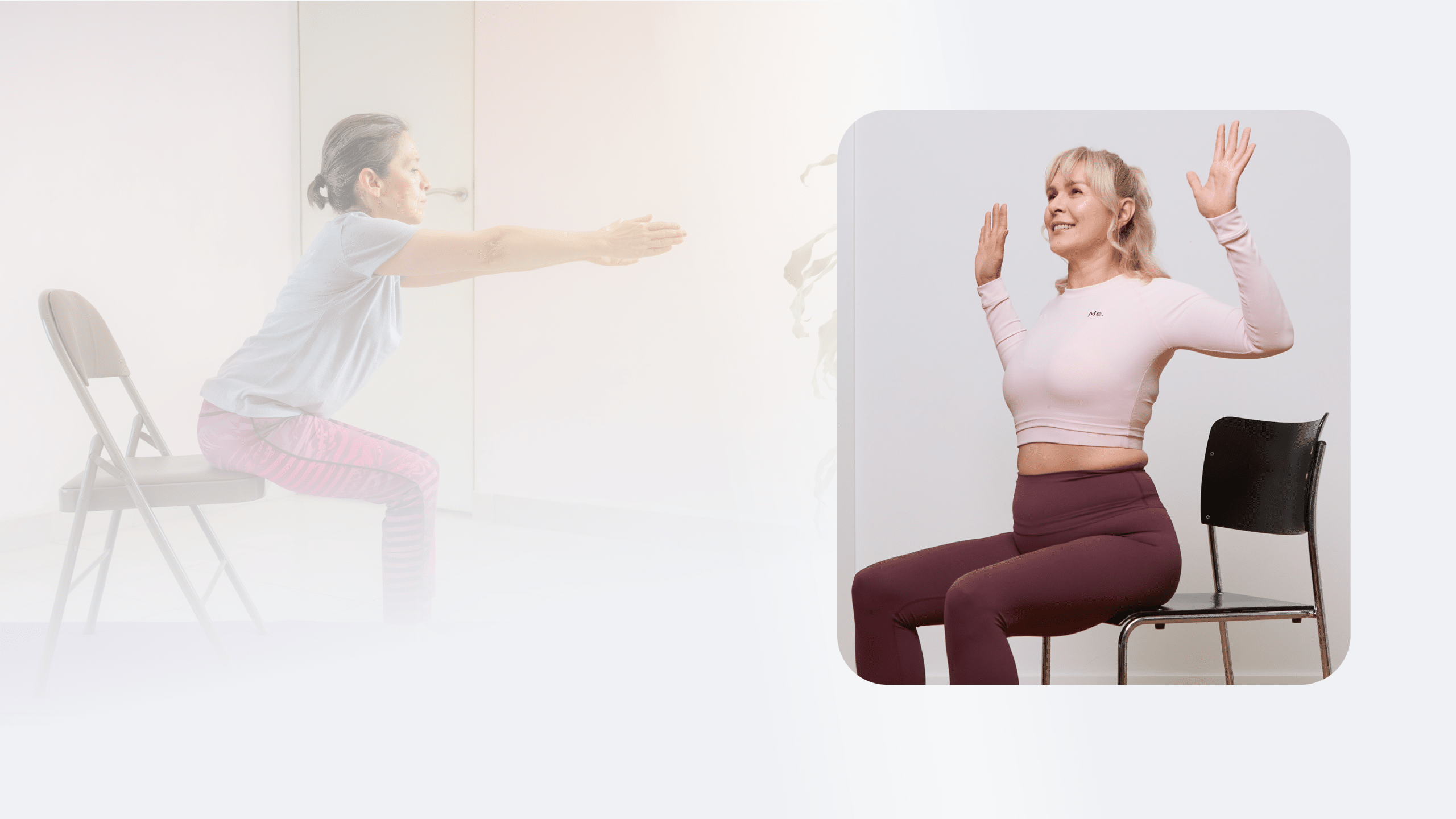
- Sit in a stable position for the upward salute.
- Lift your arms only as high as comfortable during the upward salute.
- Lower your arms from the upward salute slowly.
Seated cat-cow
- Rest your hands on your thighs for seated cat-cow.
- Make a small chest-opening movement during seated cat-cow.
- Return through a gentle rounded position during seated cat-cow.
Chair twist
- Sit with both feet grounded for the chair twist.
- Turn your upper torso a little during the chair twist without pulling on the chair.
- Return from the chair twist before changing sides.
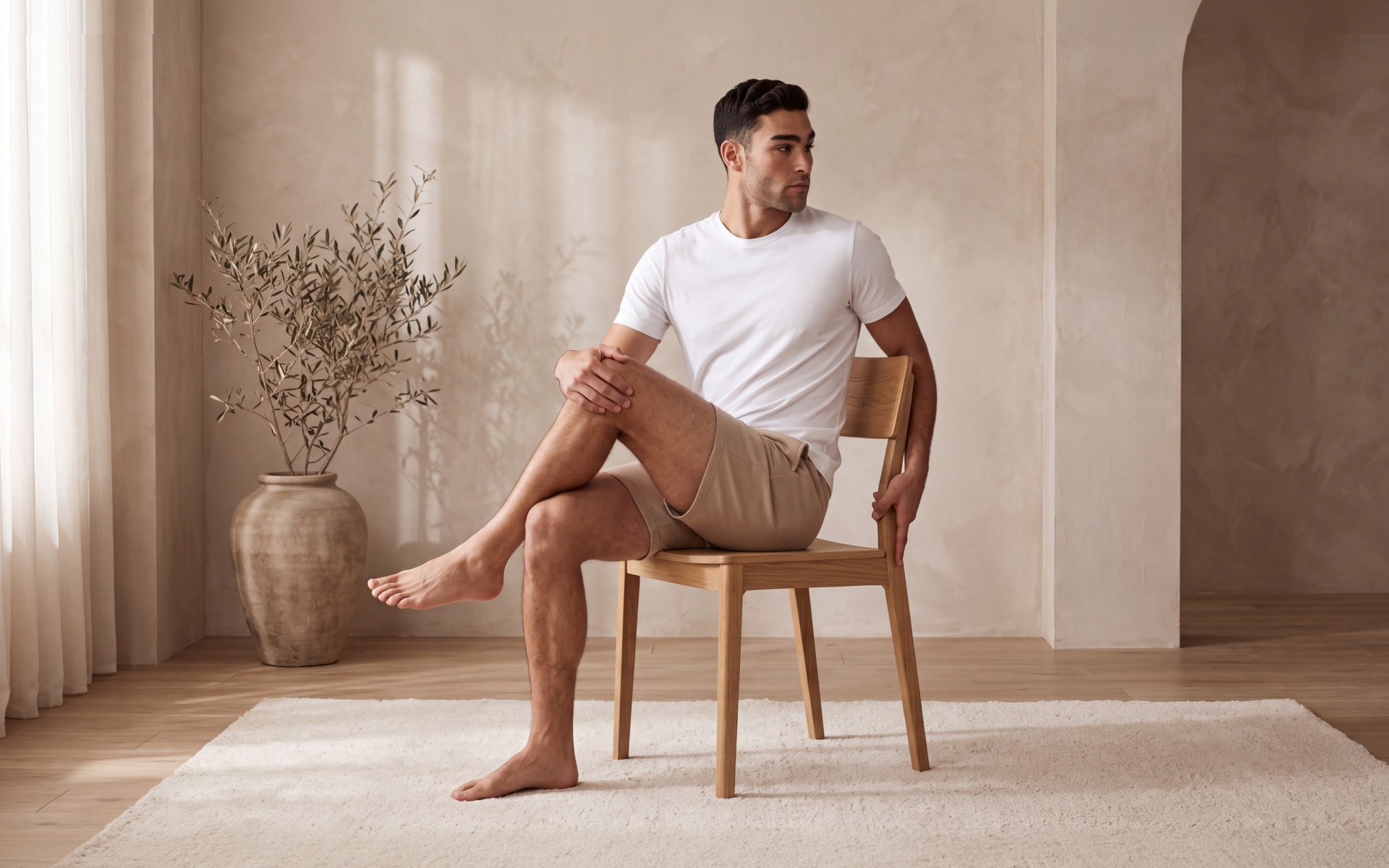
Seated hip opening
- Sit with your feet supported for the hip-opening option.
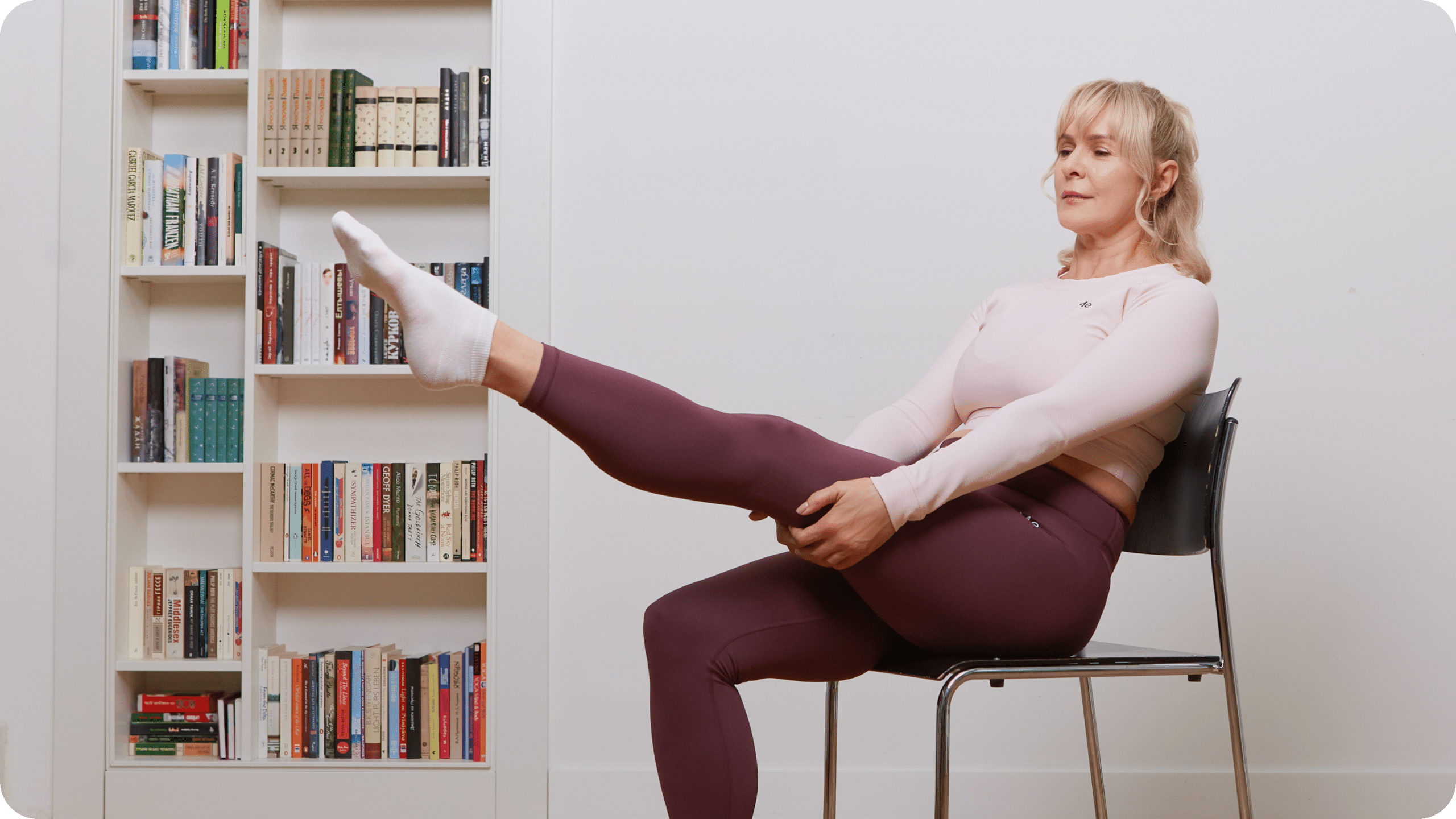
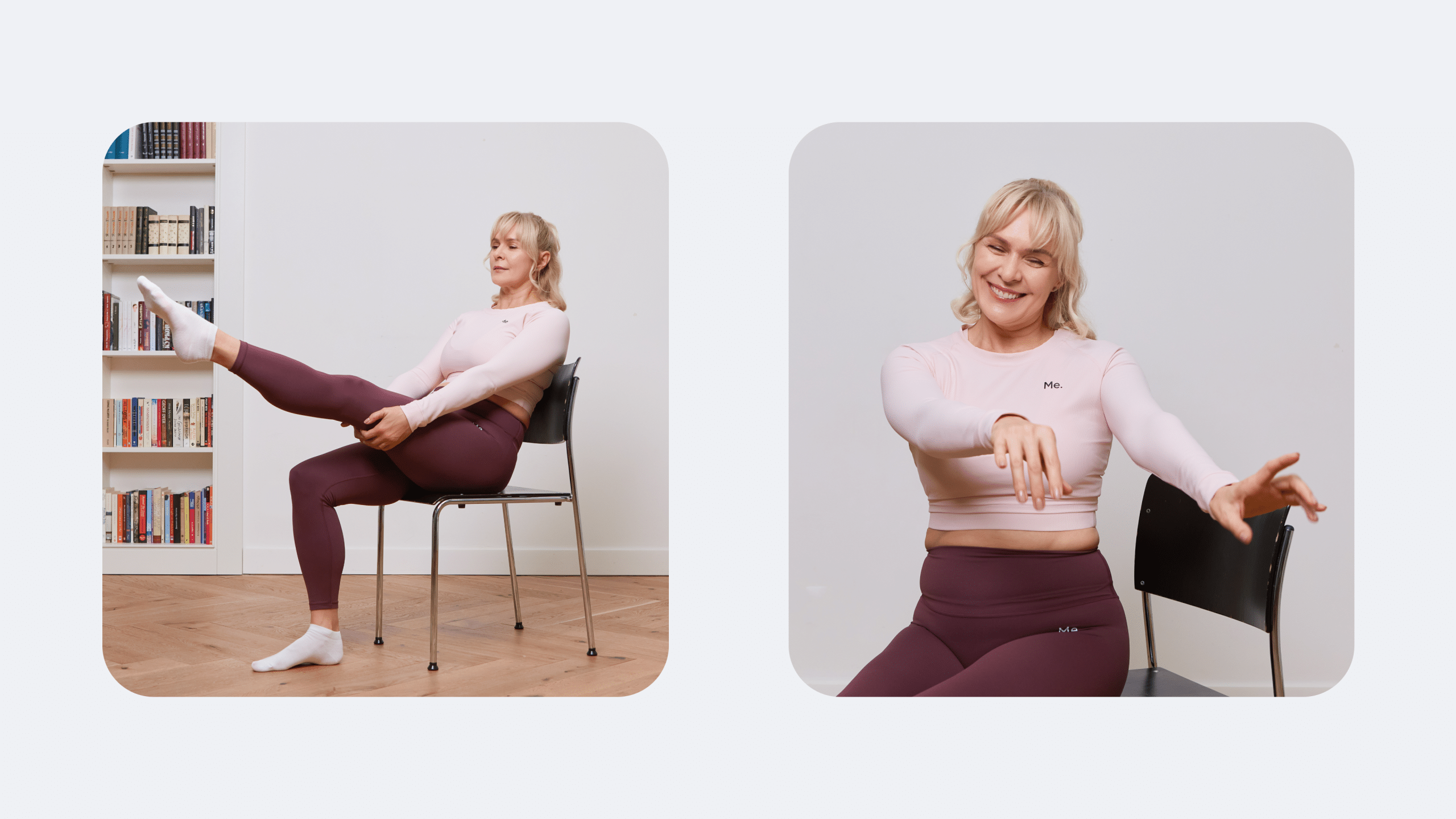
- Place one ankle over the opposite lower leg only if the position is comfortable.
- Return the foot from the hip-opening position slowly.
A figure-four pigeon position is optional, not a goal to force. Keep both feet down and make a small knee movement instead if crossing the leg doesn’t suit you.
Our chair yoga pose library for seniors provides additional choices.
Reasons why BetterMe is a safe bet: a wide range of calorie-blasting workouts, finger-licking recipes, 24/7 support, challenges that’ll keep you on your best game, and that just scratches the surface! Start using our app and watch the magic happen.
Should you include standing poses?
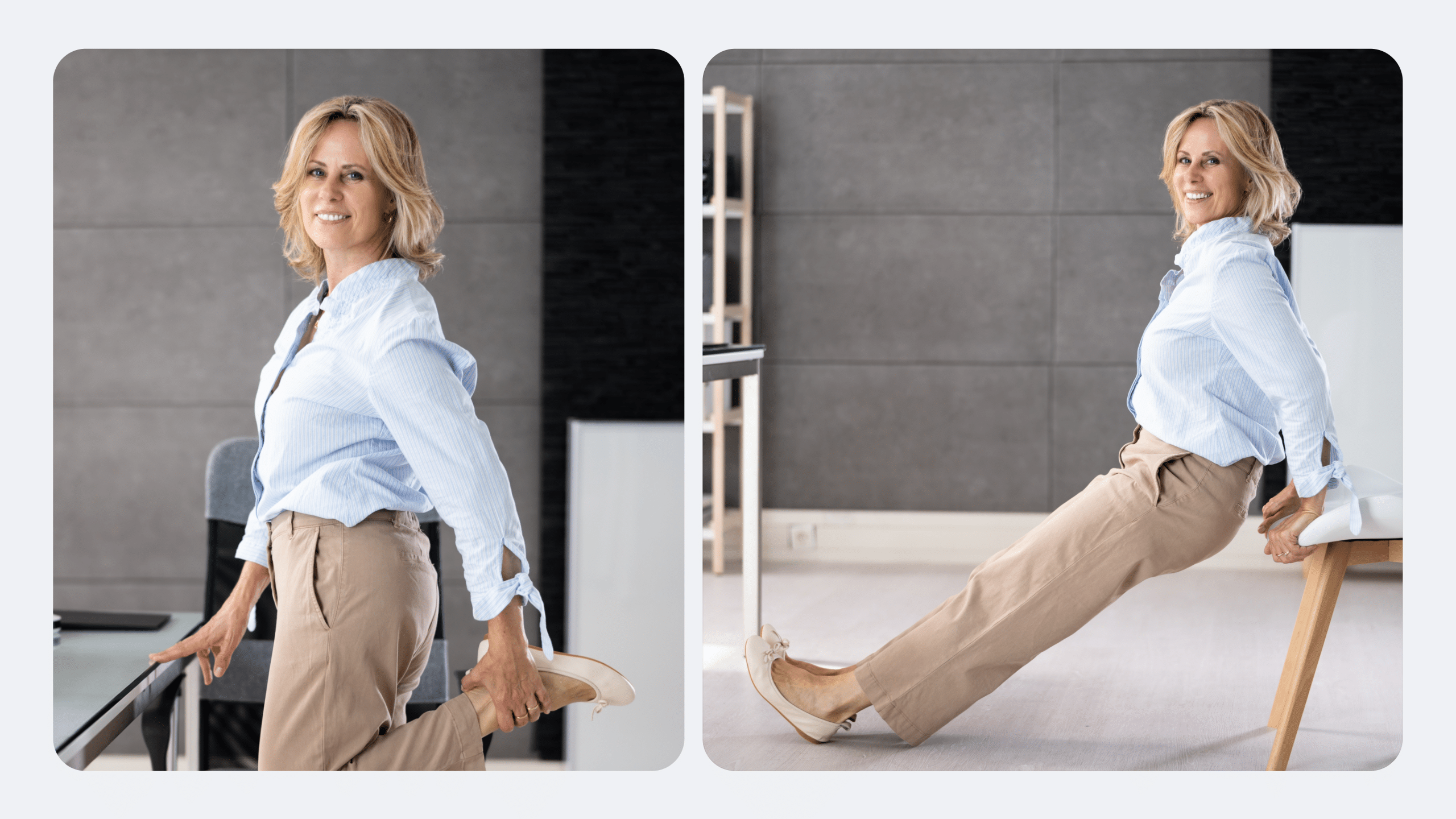
Include standing poses only if standing and the chosen support suit your current capacity. A supported downward-facing dog variation is optional and separate from the seated sequence.
Supported downward-facing dog
- Place your hands on a stable high support for the supported dog variation.
- Move your hips backward during the supported dog variation through a comfortable range.
- Return upright from the supported dog variation slowly.
A stable countertop may be more suitable than a chair that moves under pressure. Keep the routine seated if standing support is uncertain, and ask an instructor about an alternative. Our chair yoga workout plan keeps seated and standing choices distinct.
How can you make the six movement options more comfortable?
Check the position and support before changing the range. Pose options include upward salute, mountain, cat-cow, pigeon, a supported downward dog, and a twist. This guide keeps the core sequence seated and standing support optional. You can retain fewer movements when that fits your guidance.
Supported sitting and arm reach
Find a seat where your feet can remain supported. Use the backrest when needed rather than holding a rigid upright position throughout. The hands can rest on the thighs between active movements. If the chair has arms, check whether they obstruct the reach you intend to use.
For upward salute, raise the arms through the range that is comfortable, then lower them slowly. They can remain near chest or shoulder height. An overhead position is one version rather than a shape every woman over 60 needs to reach.
Small torso movements
For cat-cow, start with hands resting on the thighs. Make a small chest-opening movement and return through gentle rounding. The head can stay in a comfortable range. Looking at the ceiling or pulling the chin far inward is unnecessary.
For the twist, keep both feet grounded and turn only as far as appropriate. Let the hands rest lightly rather than pulling on the opposite thigh. Return to the middle before changing direction. Do not keep turning deeper while holding the position.
Hip-opening alternatives
A figure-four position requires lifting and crossing a leg. If that movement is awkward, keep the foot down. Do not use the hands to press the raised knee toward the floor or pull the ankle higher.
With guidance from an instructor, you can try a small outward knee movement while keeping both feet supported. Omit the movement if it does not fit your individual guidance.
Optional standing support
The supported downward-dog idea includes standing, hinging, and pressing into a surface. Those are different demands from seated movement. Ask about a stable support at a suitable height before using it. An ordinary chair may not be appropriate under that pressure.
Keep the return to upright part of the movement. Step and stand in an unhurried way taught to you. If the setup is uncertain, leave the standing variation out and continue the seated menu. There is no requirement to progress to a floor version.
How can you fit the practice into a wider week?
Choose when the seated practice is workable and keep the first selection familiar. The ten-minute example includes transitions and pauses, so it is not a ten-minute stretch hold. Shortening a section is allowed.
On days when you have more time, repeat comfortable movements or take longer pauses. A longer session does not need a harder variation. You can also keep the same duration and use another appropriate activity separately.
If your goal includes standing balance or strength, choose those activities explicitly. Do not assume that sitting in a chair meets every category. Ask a qualified professional about an appropriate selection when you are unsure.
What should you look for in a demonstration?
Look for clear starting and finishing positions, normal breathing, and alternatives that you can understand. A video may use a different chair or movement range. Pause it when you need time and keep your own chosen version.
Check the actual class demands before choosing between yoga and Pilates. Either can include floor work, resistance, long holds, or quicker transitions. The name alone does not tell you which will fit your circumstances.
Ask about modifications for any movements that concern you. Discuss ongoing pain or other medical concerns with your clinician before choosing a class (2).
A useful record can name the chair used, the pose versions, and any pauses. Review whether the practice was repeatable before adding range or another day. Age is part of your context, but it does not set a universal session length or exercise limit.
What benefits can you reasonably expect?
Chair yoga gives you time to practice seated movements and comfortable breathing. Yoga research covers different styles and populations, so results from one program may not apply to this short sample routine (2).
Use practical goals such as learning the sequence or making a movement session easier to repeat. If you want additional strengthening, basic chair-supported strength exercises provide a separate option when appropriate (4). Gentle flexibility work is also a separate practice that can be adapted to your range (5).
How often should a woman over 60 do chair yoga?
Try two or three short sessions a week as an adjustable starting example. Choose fewer sessions or a shorter practice if that fits your capacity.
For adults 65 and older, general guidance includes aerobic activity, strength work on at least two days, and balance activity (3). A slow chair-yoga session may not count as moderate aerobic work; moderate effort commonly allows talking but not singing (6). Women aged 60 to 64 are not automatically covered by the age-65 guideline simply because they read this article.
How should you choose a class or app?
Check the demonstrations, pace, support options, and pause controls before choosing a class or app. Preview the actual movements and ask how they can be adapted to your needs.
If you prefer an age-adjacent entry guide, our chair yoga for women over 50 discusses why ability matters more than the birthday threshold.
BetterMe app will provide you with a host of fat-frying fitness routines that’ll scare the extra pounds away and turn your body into a masterpiece! Get your life moving in the right direction with BetterMe!
FAQs
Does chair yoga count as exercise?
Yes, it is a form of physical activity. Whether it counts toward aerobic or strengthening goals depends on the actual workload, not the chair label.
Can you do chair yoga every day?
A brief familiar practice may fit some people’s days, while others prefer rest days. Reduce the workload or frequency if the practice becomes tiring or uncomfortable.
Is every chair-yoga pose suitable for women over 60?
No, age alone does not establish suitability. Ask a qualified instructor or clinician about poses that exceed your range or current guidance (2).
The bottom line
Begin with the seated sample and record which pose versions feel manageable. Use those notes to choose your next session, adjusting duration or support as needed. Ask for instruction before adding an unfamiliar standing variation.
DISCLAIMER:
This article is intended for general informational purposes only and does not serve to address individual circumstances. It is not a substitute for professional advice or help and should not be relied on for making any kind of decision-making. Any action taken as a direct or indirect result of the information in this article is entirely at your own risk and is your sole responsibility.
BetterMe, its content staff, and its medical advisors accept no responsibility for inaccuracies, errors, misstatements, inconsistencies, or omissions and specifically disclaim any liability, loss or risk, personal, professional or otherwise, which may be incurred as a consequence, directly or indirectly, of the use and/or application of any content.
You should always seek the advice of your physician or other qualified health provider with any questions you may have regarding a medical condition or your specific situation. Never disregard professional medical advice or delay seeking it because of BetterMe content. If you suspect or think you may have a medical emergency, call your doctor.
SOURCES:
- Sitting exercises (2024, nhs.uk)
- Yoga: Effectiveness and Safety (2023, nccih.nih.gov)
- Older Adult Activity: An Overview (2025, cdc.gov)
- Strength exercises (2024, nhs.uk)
- Flexibility exercises (2023, nhs.uk)
- How to Measure Physical Activity Intensity (2025, cdc.gov)
 Reviewed by
 Reviewed by
 Reviewed by