
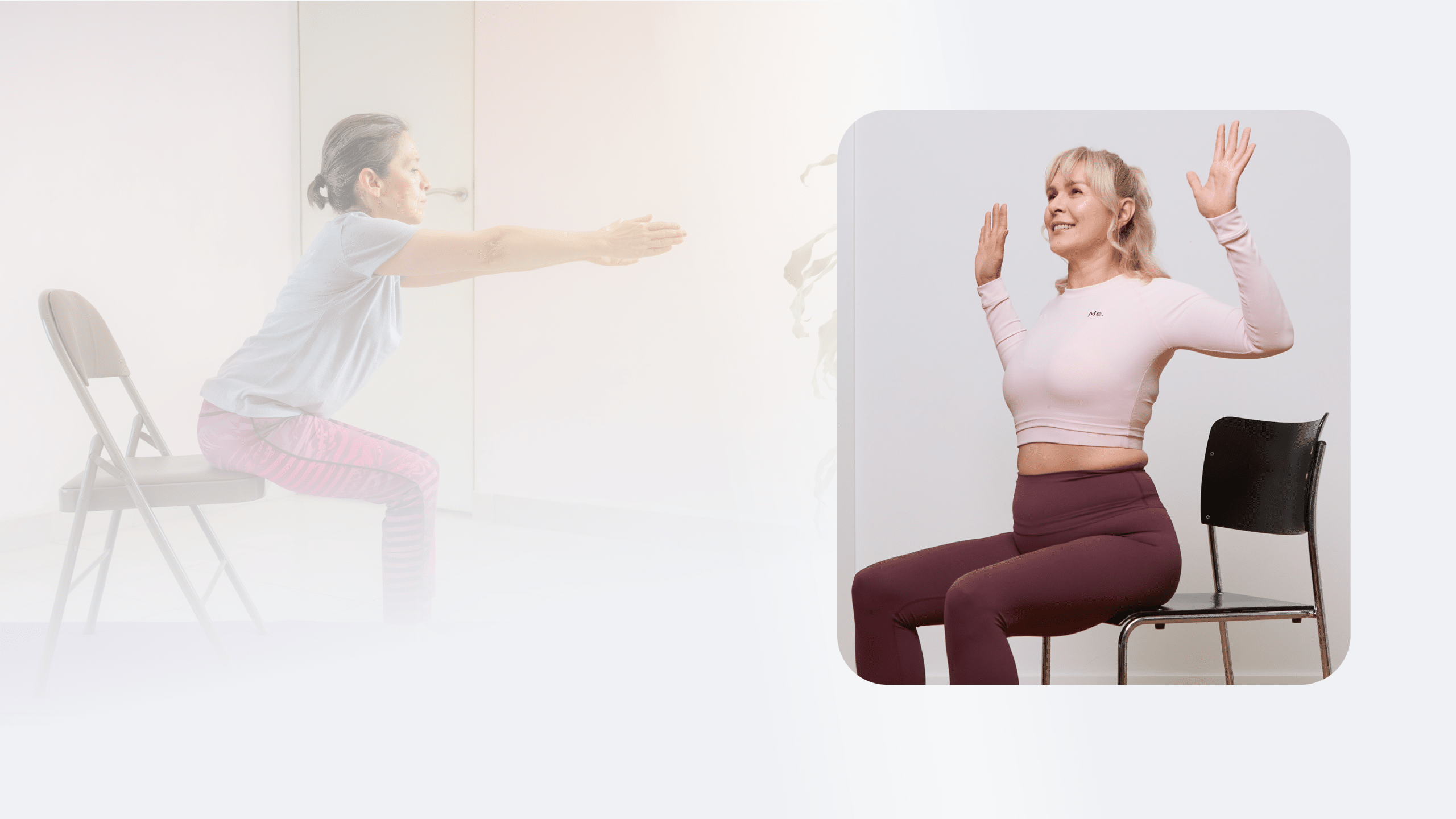
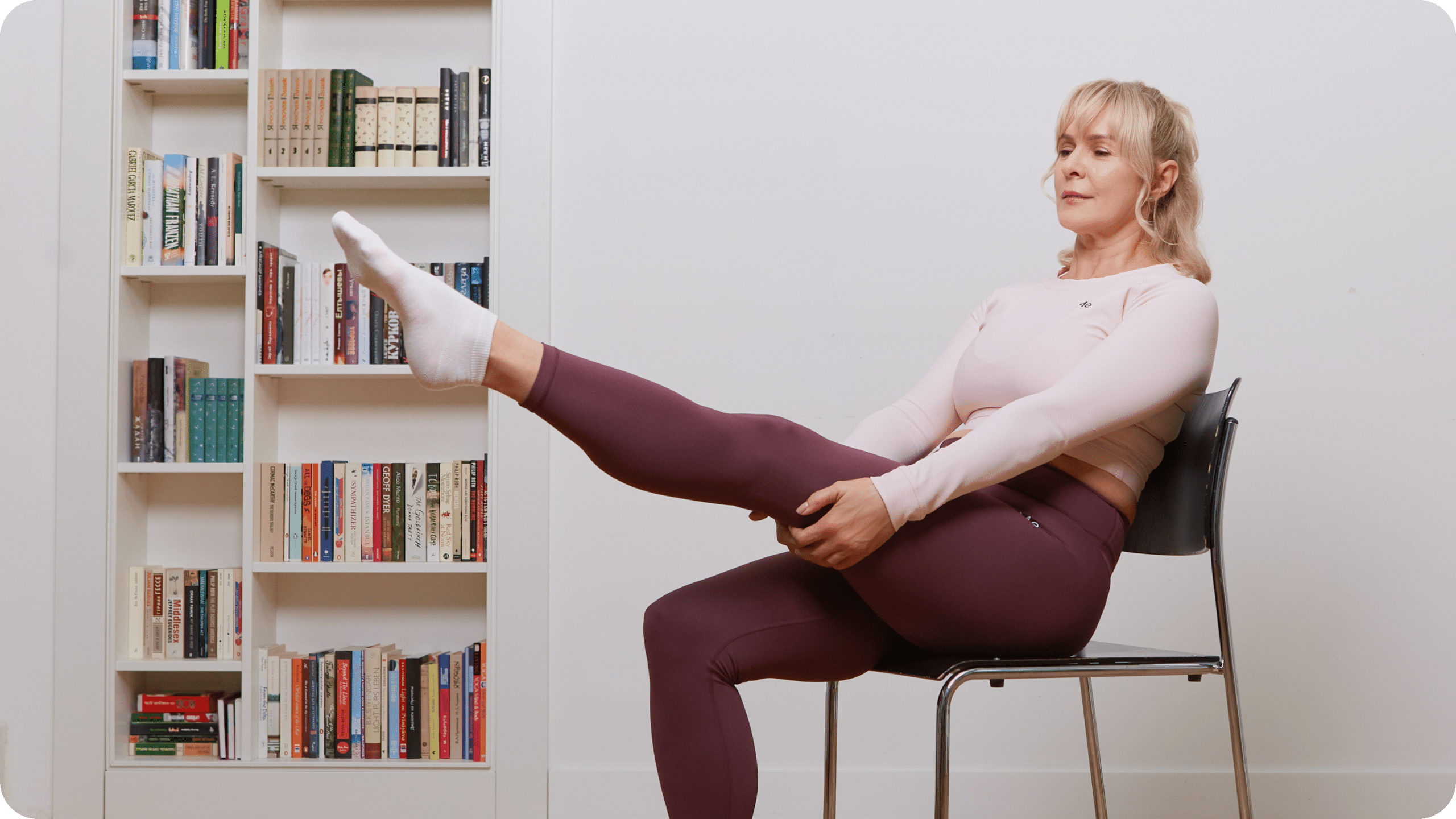
Chair yoga for women over 50 offers seated or supported movement without floor transitions. Start with a stable chair and a few comfortable poses. The four-option menu below includes seated alternatives and an optional standing plank, so you can choose according to your ability and experience.
If you have joint, muscle, or spine-related concerns, please consult your physician before starting this workout.
For another starting format, see our chair yoga guide for women over 60.
Key takeaways
- Age 50 is not a universal cutoff for a senior exercise category.
- A stable chair without wheels and supported feet are practical setup choices (1).
- The sample menu offers four pose ideas, with seated mountain as an alternative to the standing plank.
- Yoga practices may require individual modifications or omissions (2).
- Chair yoga does not promise belly-fat loss or a particular body shape.
- General adult activity guidance includes aerobic work and strength work; a gentle seated practice does not automatically meet both (3).
Does being over 50 change how you should exercise?
Being over 50 does not automatically require a chair-based routine or a particular exercise range. Current capacity, movement experience, preferences, and any clinician restrictions are more useful starting points. A woman in her fifties may prefer chair yoga for convenience, while another may prefer a more demanding class.
The general older-adult activity category begins at 65 in the guidance cited here (4). That category includes adjustments for ability; it is not a claim that every adult of the same age has the same needs.
How do you set up a chair-yoga practice?
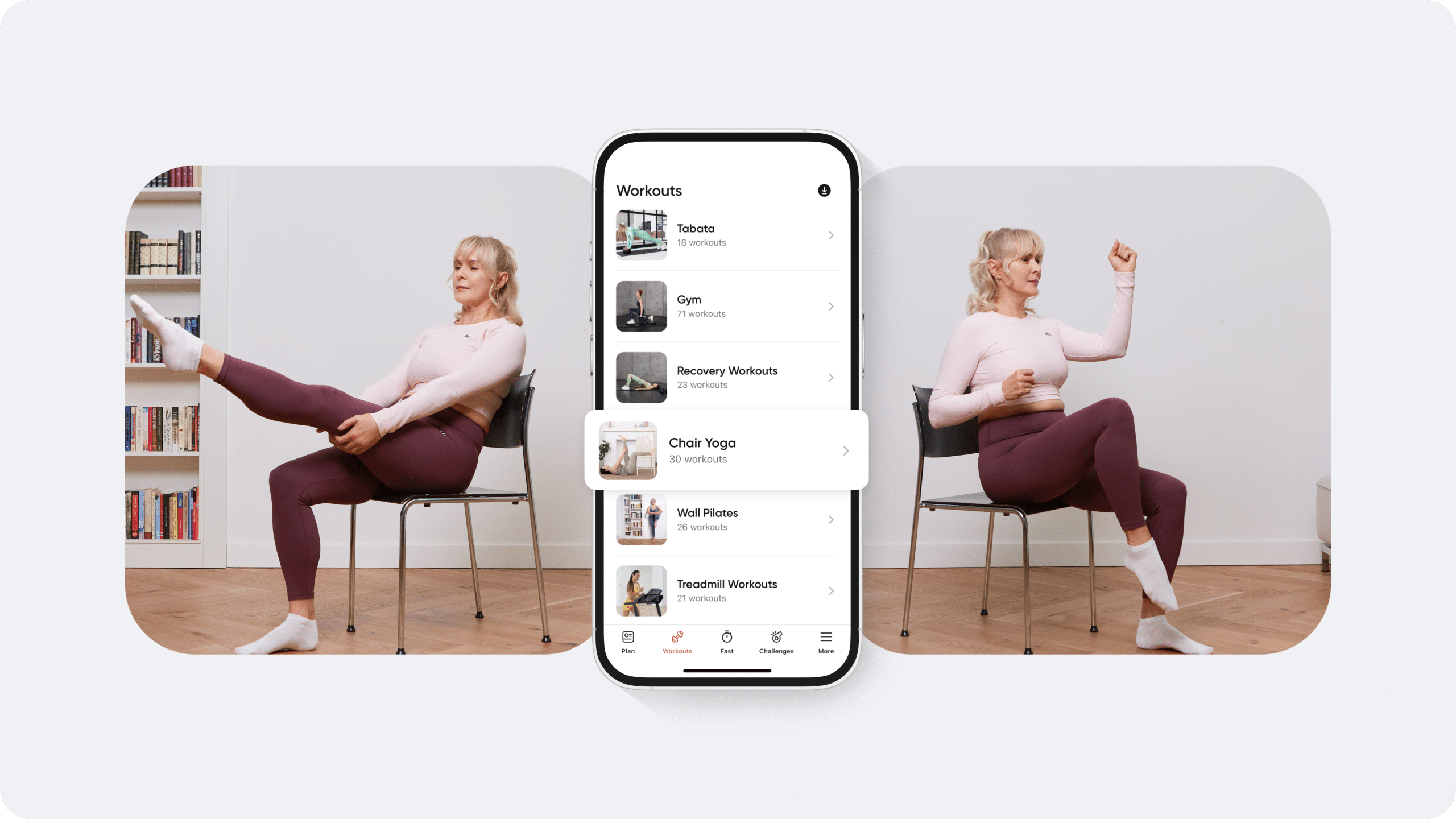
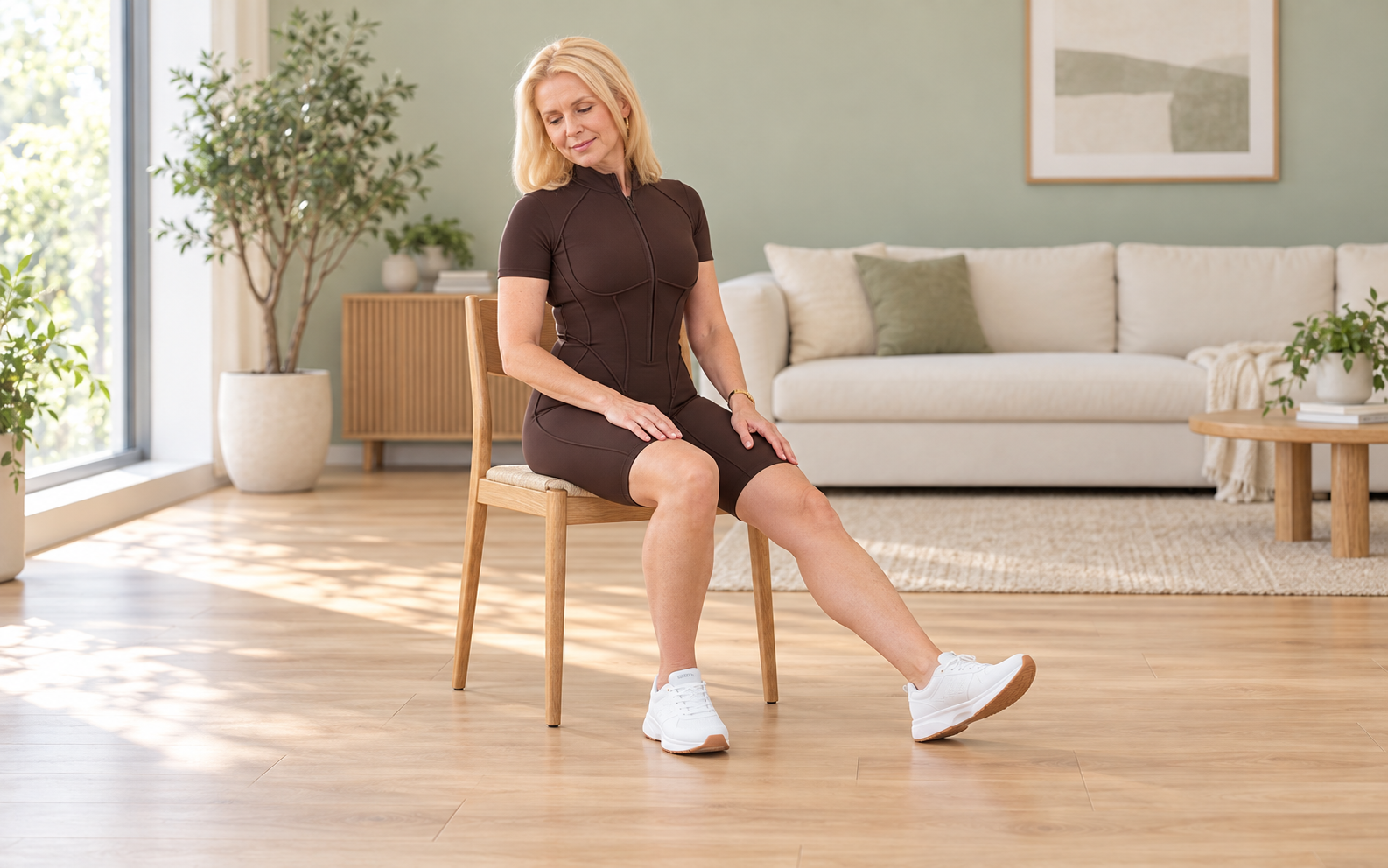
Use a solid chair that does not roll or slide, with enough room for comfortable movement. Sit with your feet supported and choose a seat height that does not leave them dangling. Public seated-exercise guidance recommends a stable chair without wheels (1).
A chair with arms may obstruct selected poses, but support needs differ. Ask an instructor about the setup when you are unsure. A chair adds support without making every pose suitable for everyone.
Which four poses can you start with?
Start with familiar seated poses and keep the supported plank optional. Choose movements according to your ability and any individual guidance you have received.
|
Pose idea |
Starting version |
Easier alternative |
|---|---|---|
|
Chair plank |
Optional high-support standing variation |
Seated mountain |
|
Eagle pose |
Seated self-hug or eagle arms |
Hands on opposite shoulders |
|
Seated twist |
Small upper-torso turn |
Small upper-chest movement |
|
Seated cat-cow |
Small torso movement |
Nearly upright breathing practice |
Seated mountain
- Sit with both feet supported for seated mountain.
- Lengthen your torso gently during seated mountain.
- Rest your hands comfortably during seated mountain.
Seated eagle arms
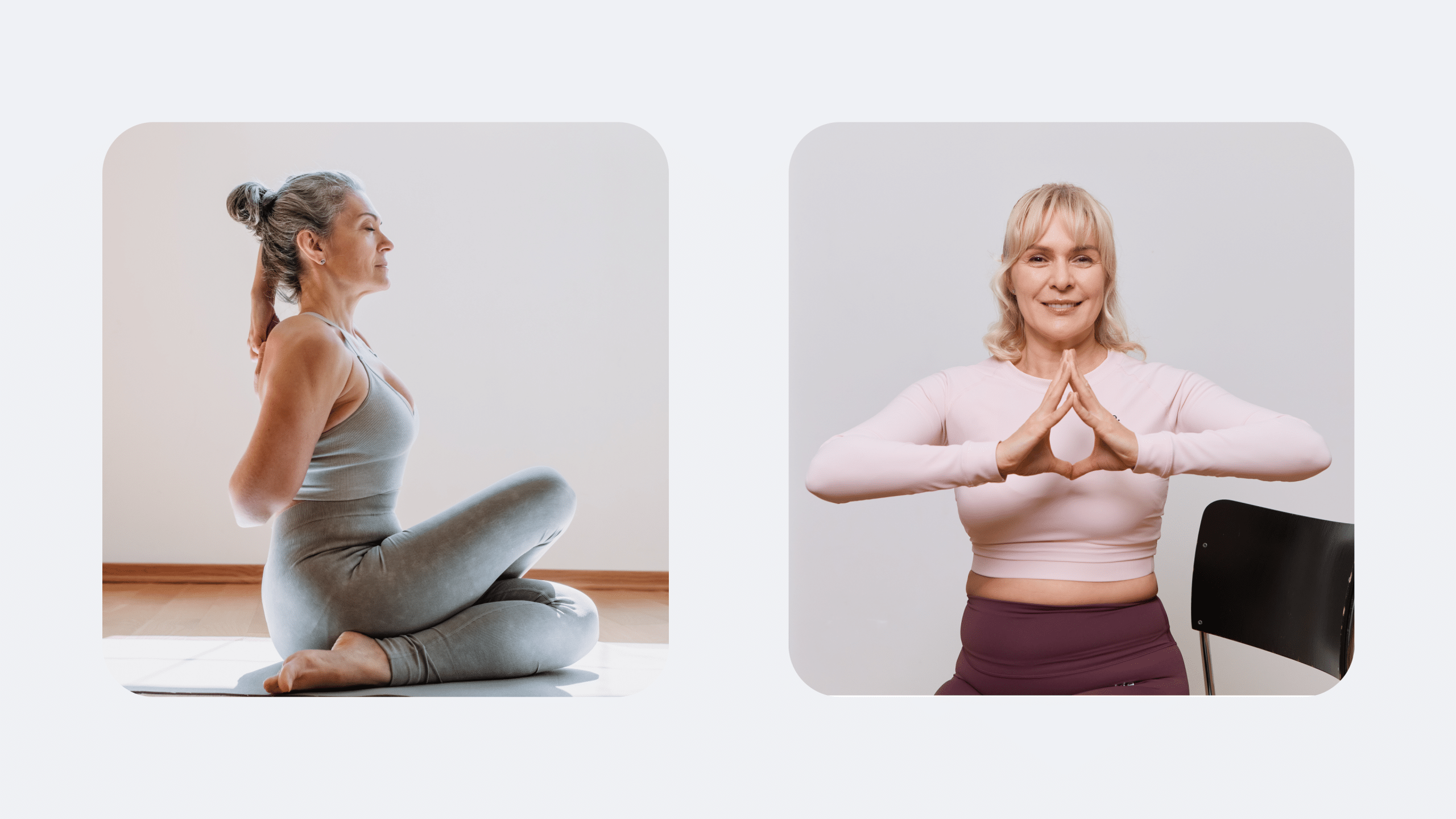
- Sit with relaxed shoulders for seated eagle arms.
- Bring your arms into a comfortable self-hug during seated eagle.
- Release your arms from seated eagle slowly.
A deeper arm wrap and crossed legs are optional, not required.
Seated twist
- Ground both feet for the seated twist.
- Turn your upper torso a little during the seated twist without pulling on the chair.
- Return from the seated twist before changing sides.
Seated cat-cow
- Rest your hands on your thighs for seated cat-cow.
- Open your chest slightly during seated cat-cow.
- Return through a gentle rounded position during seated cat-cow.
Optional supported plank
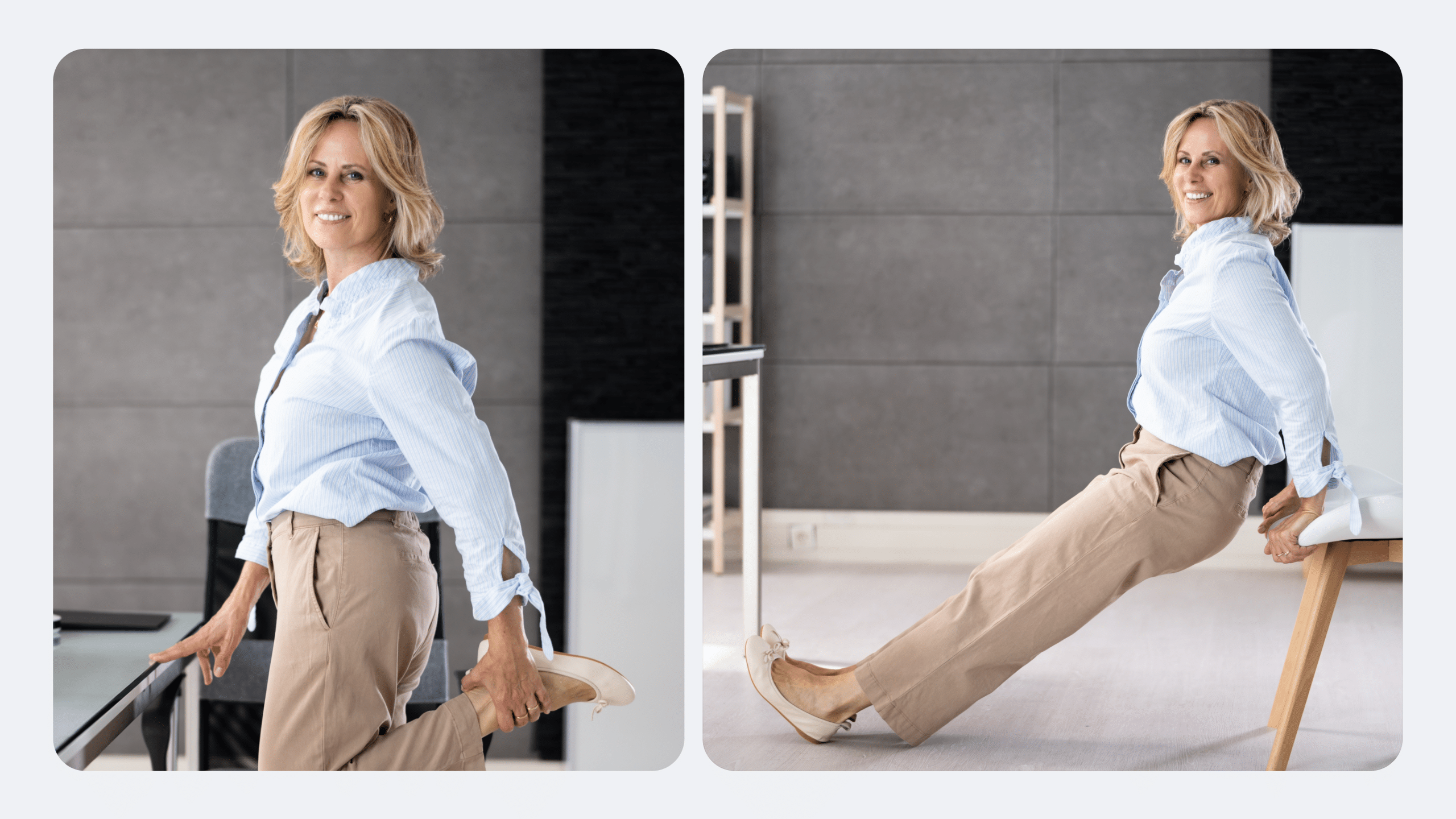
- Place your hands on a stable high support for the supported plank.
- Hold the supported plank with normal breathing and a steady body position.
- End the supported plank before your position changes.
Do not use a chair that tips or slides under pressure. Keep the practice seated when standing support does not suit you. Use a qualified instructor for unfamiliar variations; yoga poses may need modifying or avoiding (2).
Our chair yoga pose library for seniors provides more seated options without making a senior label necessary to use them.
Intense sweat sessions, working weight loss tips, lip-smacking recipes come in one package with the BetterMe app. And all of it is at your fingertips, start transforming your life now!
How can you turn the pose menu into a routine?
Select a few comfortable movements and allow time for transitions. As a starting example, try two or three sessions a week and adjust the duration or frequency to your capacity.
|
Time available |
Example choice |
|---|---|
|
About 5 minutes |
Seated mountain, self-hug, and relaxed breathing |
|
About 10 minutes |
Add cat-cow and a gentle twist |
|
About 15 minutes |
Repeat familiar movements with pauses |
Use our timed chair yoga sequence if you want a predictable movement order. You can shorten the sequence or use fewer poses.
How can you adjust the four pose ideas to your own setup?
Adjust the seat, support, and movement before choosing a longer hold. The four-pose menu includes arm positions, torso movement, and an optional standing task. They place different demands on you. Keep the seated alternatives available instead of treating a standing plank as the next required level.
Arm positions
For eagle arms, begin with the light self-hug. Rest each hand where you can reach comfortably and keep the shoulders relaxed. You can release between repetitions. A deeper elbow wrap or leg crossing is optional, and both can be omitted.
If reaching across the body is awkward, rest the hands on the thighs and make a small shoulder movement. Choose the version that you can enter and release without pulling. There is no requirement to make the hands meet in a particular shape.
Twist and cat-cow choices
For the twist, sit with both feet supported and begin from a stable forward-facing position. Turn the upper torso a small amount and return before changing sides. The hands can rest lightly; using the chair to pull farther changes the task and is unnecessary for this example.
The head can remain in a comfortable position rather than turning toward a point behind you. Do not chase a deeper twist as the hold continues. A smaller upper-chest movement is enough for practicing the selected version.
For seated cat-cow, place the hands on the thighs and use a small chest-opening movement. Return through a gentle rounded position without forcing the chin down or looking far upward. Keep breathing normally. Remaining nearly upright is an alternative when the larger movement does not fit.
Optional plank support
A supported plank needs a surface that will not move under pressure. An ordinary chair may slide or tip, so do not use one simply because the exercise is called chair plank. Ask an instructor to choose the support and angle. A solid wall may be a more practical starting setup.
Establish the position before choosing a hold duration. Step closer to the support or finish earlier if the position becomes difficult to maintain.
How can you evaluate a class without relying on promises?
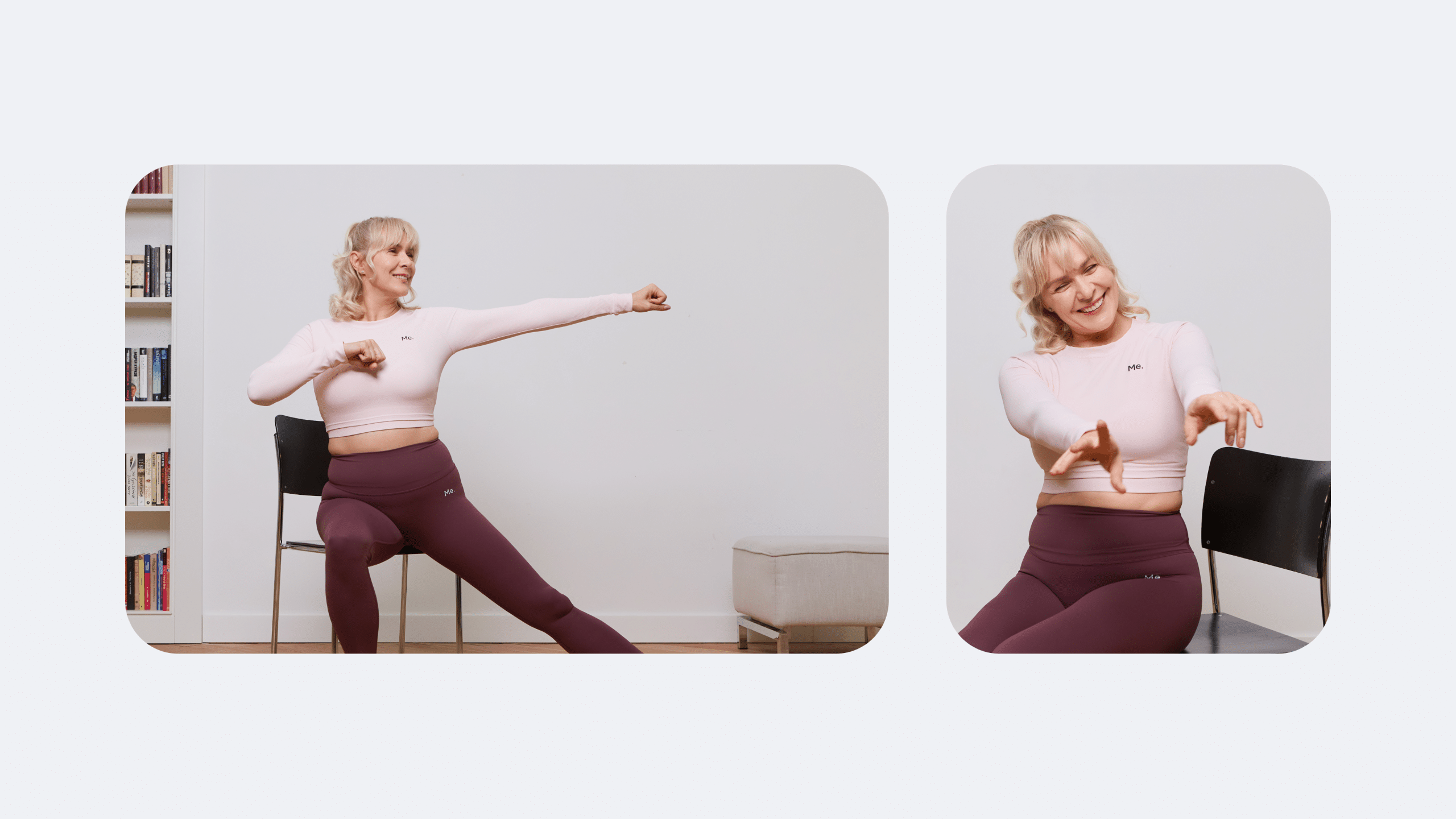
Look at the movements and teaching, not claims about rejuvenation or a particular body shape. Ask whether the routine can remain fully seated and whether the instructor shows alternatives. Age-specific marketing does not reveal the actual demands of the practice.
Preview a video for deep folds, long holds, repeated standing, and fast transitions. Check whether the chair used in the demonstration resembles a setup you can use. Pause when you need more time, and omit a movement that exceeds your guidance.
An instructor can help you learn a pose, while a clinician can assess medical concerns. These roles differ. If a class is promoted for a condition you manage, do not assume the program has assessed your situation or can replace existing care.
How should you use the routine during a busy week?
Choose a small pose group and a realistic time to practice. For example, seated mountain, a self-hug, and a small cat-cow movement may be simpler than the full menu. The five-minute option is a scheduling example, not a threshold for a promised benefit.
Keep a brief record of which versions you used. If you change the chair, arm range, or support, note that too. A longer session in a different setup is a changed task, so it should not be judged only by minutes.
Repeat the familiar practice or shorten it when needed. More frequency does not require deeper movement. If a pose causes discomfort, stop it and seek guidance for persistent concerns. Ordinary rest is a valid choice.
When planning other activity, keep aerobic work and strength practice separate. A comfortable seated sequence can fit alongside them, but it should not be counted as all categories merely because it includes several poses. Choose the next activity according to your capacity and goals.
Can chair yoga reduce belly fat?
This practice does not promise to reduce belly fat. Abdominal exercises or twists should not be presented as a method demonstrated to change one body area. Body-composition outcomes depend on factors beyond a short seated routine, and individual results vary.
Choose a goal the practice can directly organize, such as learning a sequence or making movement more consistent. That keeps the plan useful without tying success to a particular appearance.
Whether you’re looking to simply pep up your fitness routine, jazz up your diet with mouth-watering low-calorie recipes or want to get your act together and significantly drop that number on your scale – BetterMe app has got you covered! Improve your body and revamp your life with us!
Can chair yoga be your whole fitness plan?
A gentle chair-yoga practice does not automatically cover all fitness goals. General adult guidance includes aerobic activity and muscle-strengthening activity on at least two days weekly (3). For adults 65 and older, balance activity is also included explicitly (4).
A slow seated session may not reach moderate aerobic effort. Gentle flexibility exercises are a separate option for practicing comfortable movement ranges (5), while general bodyweight strengthening provides another activity choice when appropriate (6).
Our weekly chair yoga workout plan helps organize the seated practice alongside other suitable activity.
How should you choose a class or app?
Check the pace, demonstrations, support options, and pause controls before choosing a class or app. Preview the movements and ask whether seated alternatives are available for any standing sections.
FAQs
Is chair yoga only for seniors?
No, adults of different ages may prefer chair support or seated practice. Age 50 does not automatically place someone in a senior category.
Can you get in shape with chair yoga?
Chair yoga can be part of a broader movement routine, but “in shape” can mean different goals. This gentle menu does not promise to cover aerobic fitness, strength, or body-composition goals by itself.
Can you do chair yoga every day?
A short familiar practice may fit some people’s days, while others prefer rest days. Adjust frequency and duration to your capacity rather than treating daily practice as necessary.
The bottom line
Choose a few movements that fit your setup and current ability. Start with the seated options, record useful modifications, and repeat a manageable routine. Ask for guidance on the support and angle before adding the optional plank.
DISCLAIMER:
This article is intended for general informational purposes only and does not serve to address individual circumstances. It is not a substitute for professional advice or help and should not be relied on for making any kind of decision-making. Any action taken as a direct or indirect result of the information in this article is entirely at your own risk and is your sole responsibility.
BetterMe, its content staff, and its medical advisors accept no responsibility for inaccuracies, errors, misstatements, inconsistencies, or omissions and specifically disclaim any liability, loss or risk, personal, professional or otherwise, which may be incurred as a consequence, directly or indirectly, of the use and/or application of any content.
You should always seek the advice of your physician or other qualified health provider with any questions you may have regarding a medical condition or your specific situation. Never disregard professional medical advice or delay seeking it because of BetterMe content. If you suspect or think you may have a medical emergency, call your doctor.
SOURCES:
- Sitting exercises (2024, nhs.uk)
- Yoga: Effectiveness and Safety (2023, nccih.nih.gov)
- Adult Activity: An Overview (2023, cdc.gov)
- Older Adult Activity: An Overview (2025, cdc.gov)
- Flexibility exercises (2023, nhs.uk)
- Strength exercises (2024, nhs.uk)

 Reviewed by
 Reviewed by
 Reviewed by