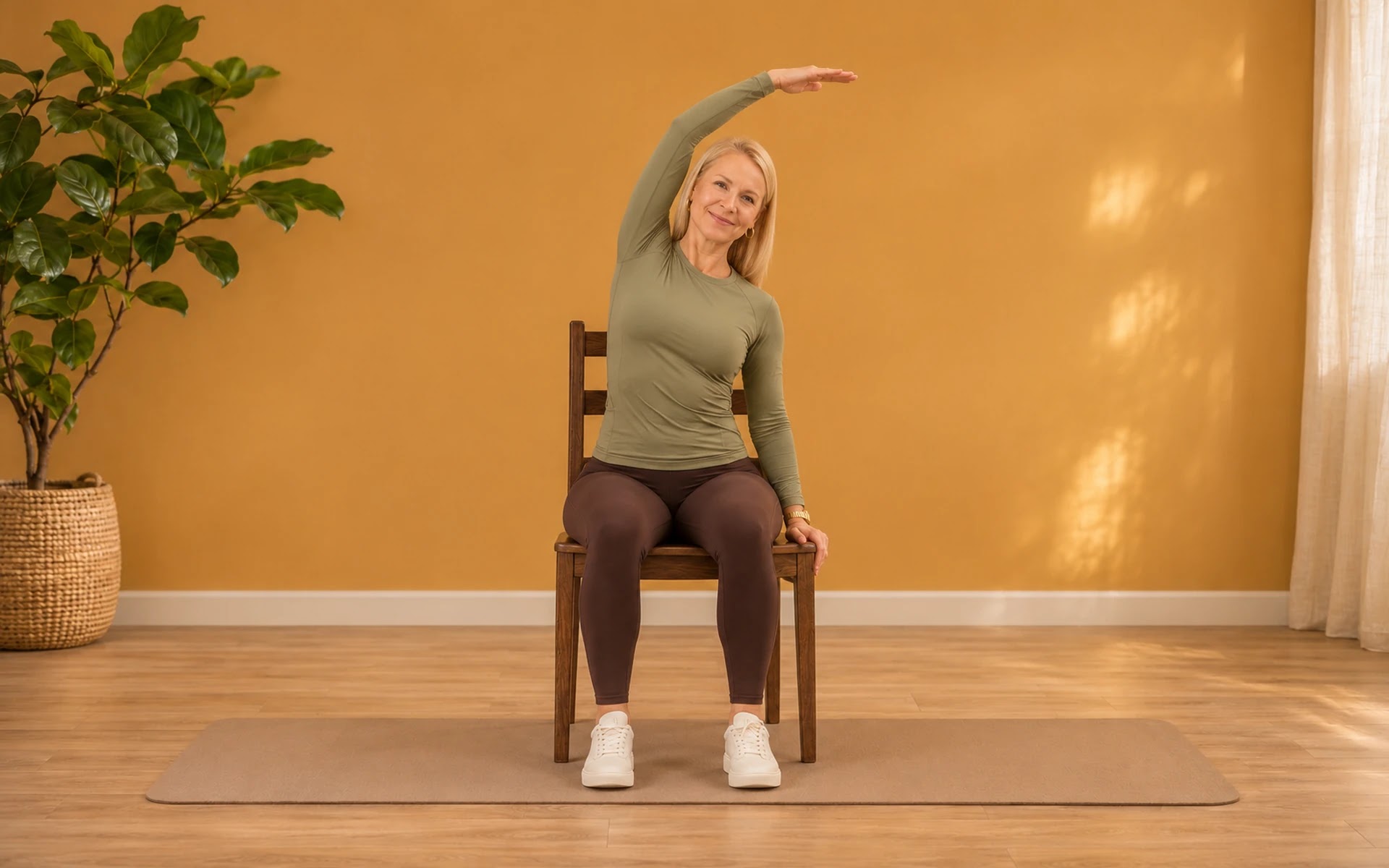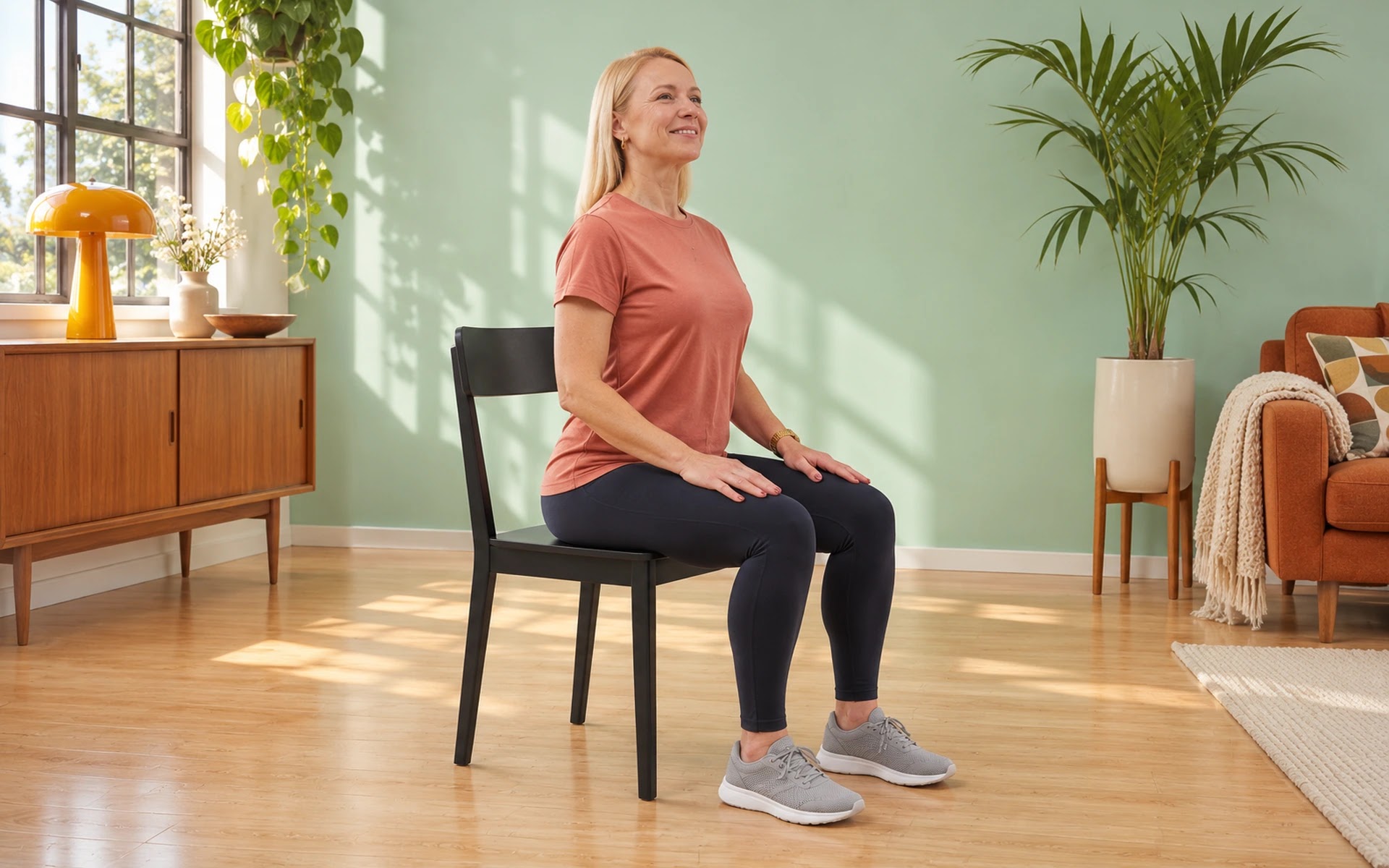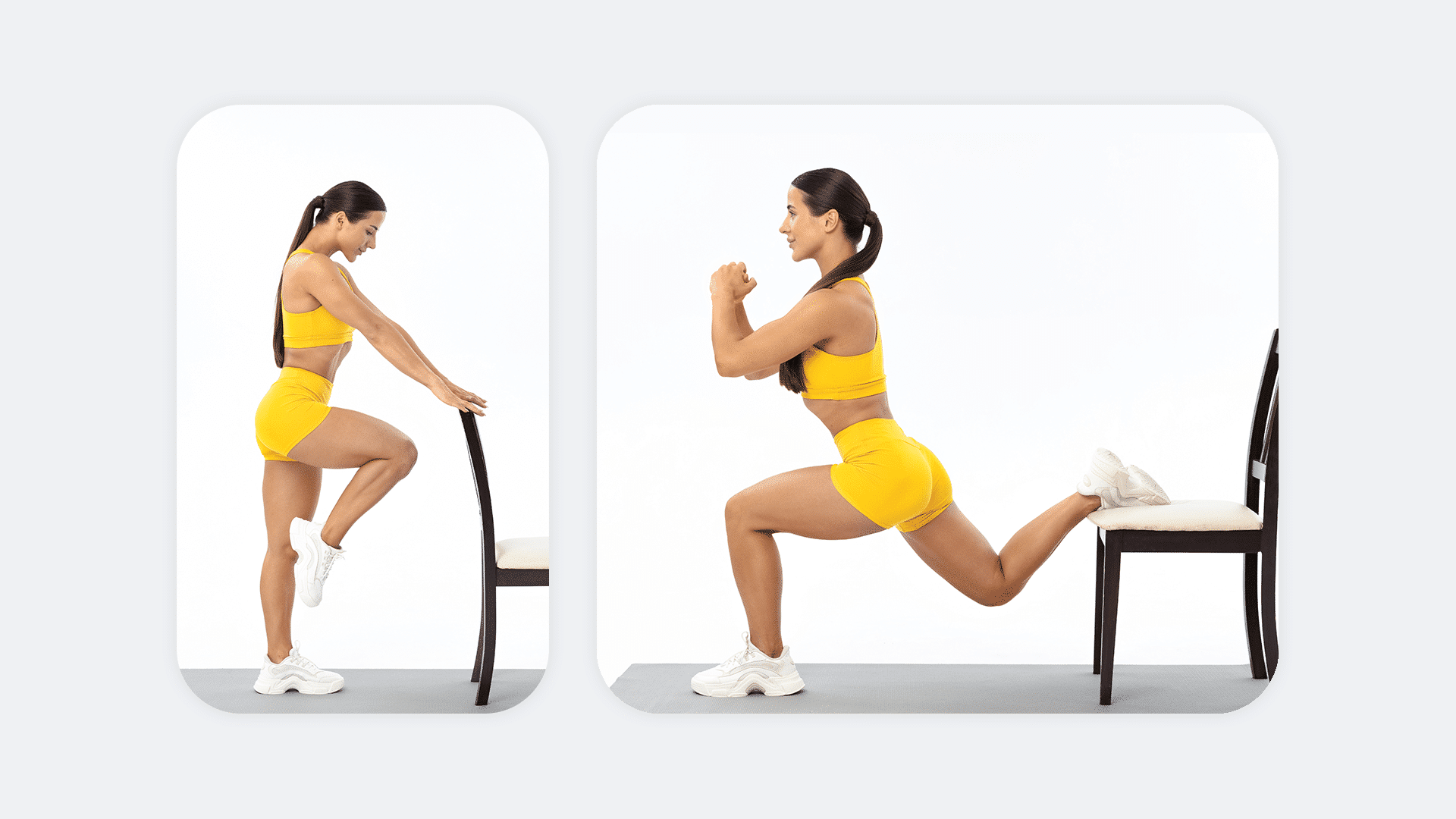
Advanced chair yoga poses use the chair for support during longer holds, standing movements and balance work. Choose a variation that lets you keep steady control, and use both hands for support when needed. If the movements are new to you, start with our chair yoga for beginners guide.
Check with a doctor before starting if you have a heart condition, joint or balance problems, or recent surgery.
If you have joint, muscle, or spine-related concerns, please consult your physician before starting this workout.
Key takeaways
Harder chair poses build on the basics and train strength and balance.
- Compared with inactive groups, yoga improved balance, flexibility, and leg strength in older adults (1).
- Compared with other active groups, yoga also improved leg strength and flexibility (1).
- In adults aged 60 and over, yoga gave a small gain in balance and a medium gain in mobility (2).
- Progress gradually when a movement feels controlled and comfortable (3).
- Older adults and people with health conditions may need to modify poses with guidance from their clinician and yoga instructor (4).
- Stretching can temporarily increase range of motion (5).
Who are advanced chair yoga poses for?
These poses suit people who can do basic chair yoga with ease.
- You can do 10 chair squats with good form.
- You can hold a supported tree pose for 30 seconds.
- You can twist and fold without discomfort.
- You have no balance problems that need medical review.
Why progress to harder chair poses?
Your body adapts to the same routine over time. Making moves harder helps strength keep improving (3). Without new challenges, progress may slow over time.
Advanced poses add longer holds, single-leg work, and less support from the chair. They train leg strength and balance, which yoga improved in reviews of older adults (1, 2).
What do you need?
Use a solid setup for harder poses, because you will put more weight through the chair.
- A sturdy chair without wheels or arms, placed against a wall
- A non-slip floor or mat
- Comfortable clothes
- Bare feet or shoes with grip
What are 10 advanced chair yoga poses?
Warm up first and keep the chair close for support. Research on stretching found that range of motion can increase temporarily after a stretch (5). For seated alternatives, try our five chair yoga poses.
1. Chair pose with heel raise
- Stand in front of the chair with your feet hip-width apart.
- Bend your knees and lower your hips toward the seat.
- Hover just above the seat and lift your heels.
- Hold for 3 to 5 breaths, then stand. Repeat 3 times.
2. Seated boat pose
- Sit near the front edge and hold the sides of the chair.
- Lean back slightly with a straight back.
- Lift both feet off the floor with knees bent.
- Hold for 3 to 5 breaths. Straighten your legs to make it harder.
3. Chair plank
- Place the chair against a wall.
- Put your hands on the edge of the seat.
- Step your feet back into a straight line.
- Hold for 20 to 40 seconds.
4. Chair side plank
- Place one hand on the seat with your arm straight.
- Stack your feet and lift your hips into a straight line.
- Reach your other arm up.
- Hold for 15 to 30 seconds, then switch sides.
5. Supported warrior III
- Stand facing the chair back and hold it with both hands.
- Hinge forward and lift one leg behind you.
- Form a straight line from head to raised heel.
- Hold for 3 to 5 breaths, then switch legs.
6. Supported dancer pose
- Stand beside the chair and hold it with one hand.
- Bend your outside knee and hold your foot or ankle.
- Lean forward slightly and press your foot back into your hand.
- Hold for 3 to 5 breaths, then switch sides.
7. Chair crescent lunge
- Sit sideways with your right thigh on the seat.
- Step your left leg far back with the heel lifted.
- Raise both arms overhead.
- Hold for 5 breaths, then switch sides.
8. Chair pigeon
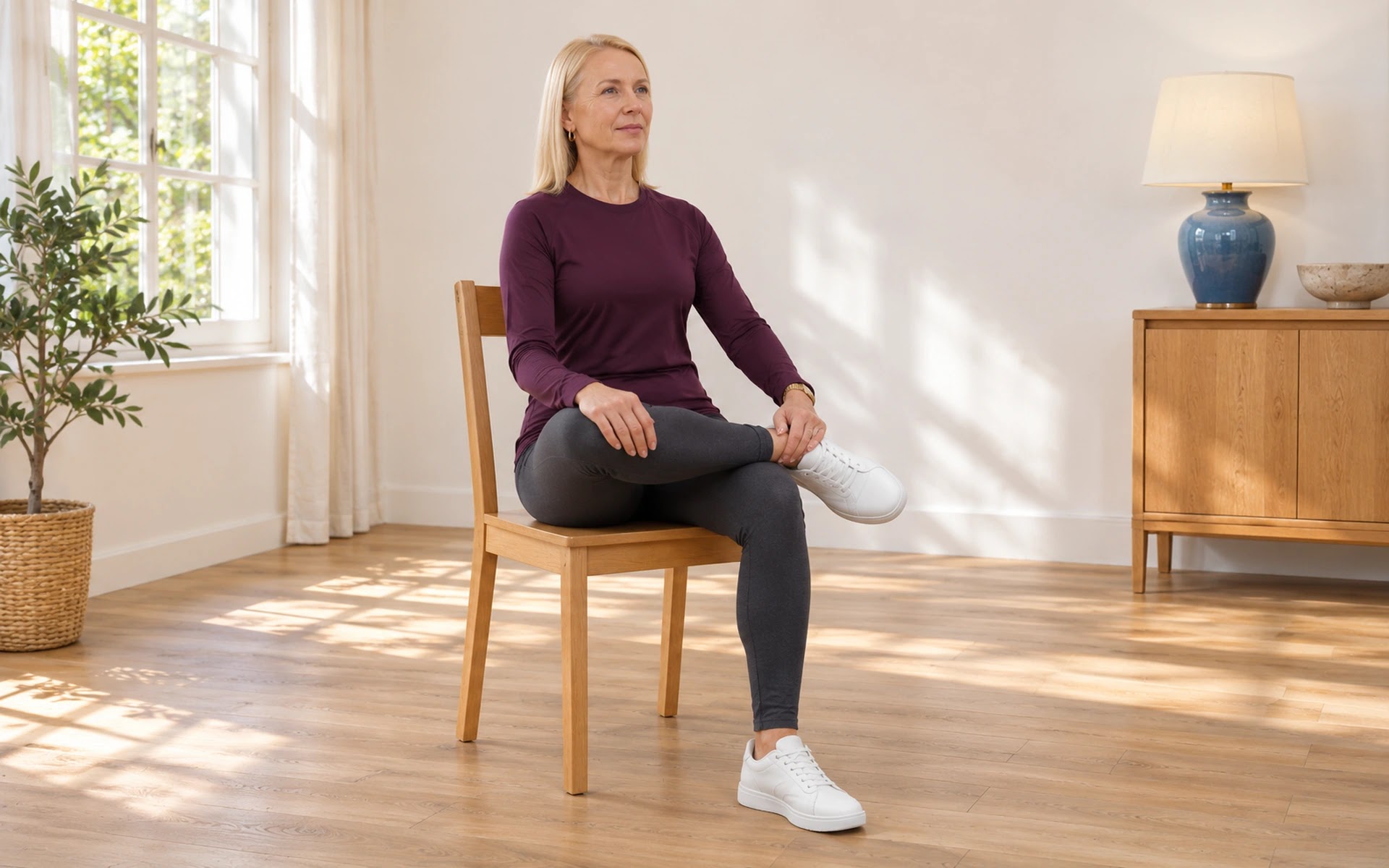
- Sit tall and place your right ankle on your left knee.
- Press gently on the right knee.
- Fold forward with a long spine.
- Hold for 5 breaths, then switch sides.
9. Chair downward dog
- Place your hands on the chair seat or back.
- Walk your feet back and hinge at your hips.
- Lengthen your spine and lower your chest between your arms.
- Hold for 5 breaths.
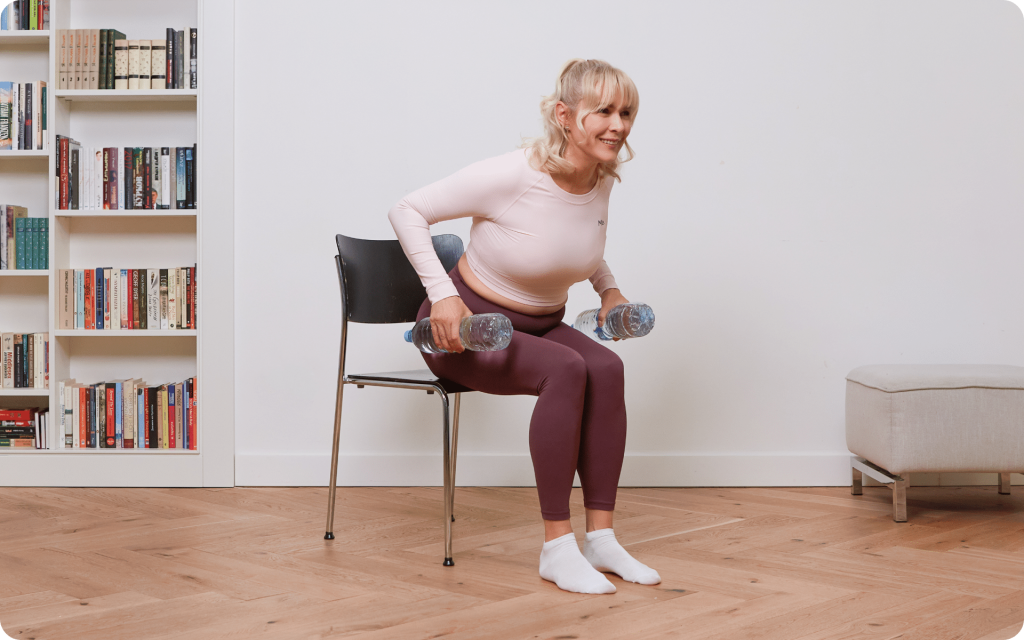
10. Single-leg chair squat
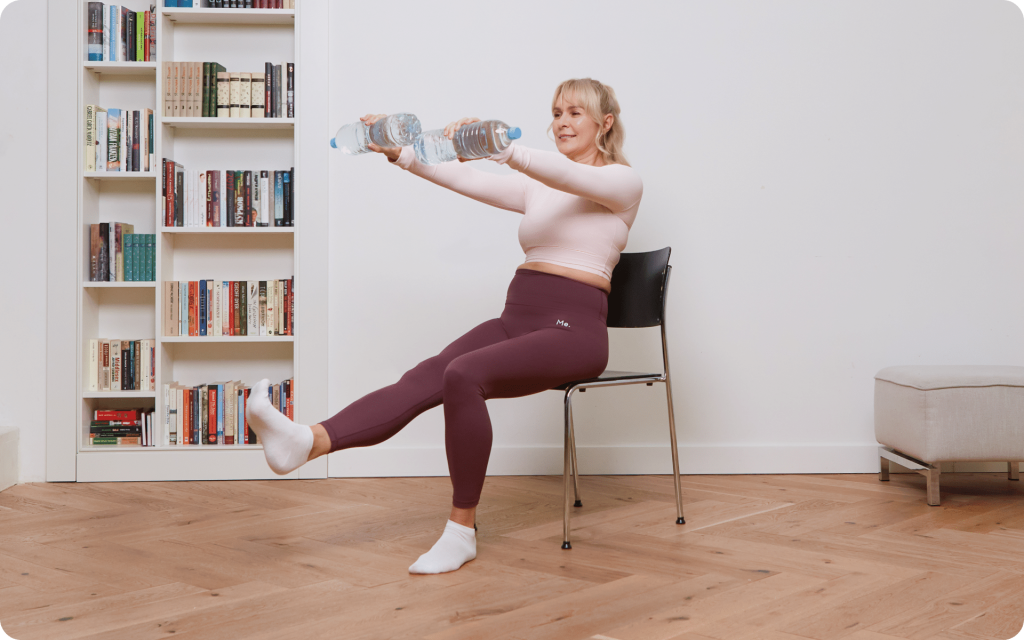
- Sit near the front edge with one foot flat and the other leg straight out.
- Stand up using the planted leg.
- Lower slowly back to the seat.
- Do 3 to 6 reps per leg, using your hands if needed.
Read more: 28-day chair yoga challenge: weekly plan and 11 poses
Which muscles does each pose work?
The table below is a guide to the options.
|
Pose |
Main focus |
|---|---|
|
Chair pose with heel raise |
Thighs, calves, balance |
|
Seated boat pose |
Core, hip flexors |
|
Chair plank |
Core, shoulders |
|
Chair side plank |
Obliques, shoulders |
|
Supported warrior III |
Hamstrings, glutes, balance |
|
Supported dancer pose |
Front thighs, chest, balance |
|
Chair crescent lunge |
Hip flexors, thighs |
|
Chair pigeon |
Outer hips, glutes |
|
Chair downward dog |
Shoulders, hamstrings, spine |
|
Single-leg chair squat |
Thighs, glutes |
How do you progress each pose?
Make one change at a time (3).
|
Pose |
Easier |
Harder |
|---|---|---|
|
Chair pose |
Sit lightly on the seat |
Hover longer with heels lifted |
|
Boat pose |
Toes on the floor |
Legs straight |
|
Chair plank |
Hands on the chair back |
Hands on the seat, longer hold |
|
Warrior III |
Two hands on the chair |
One hand, then fingertips |
|
Single-leg squat |
Hands on thighs |
No hands, slower lowering |
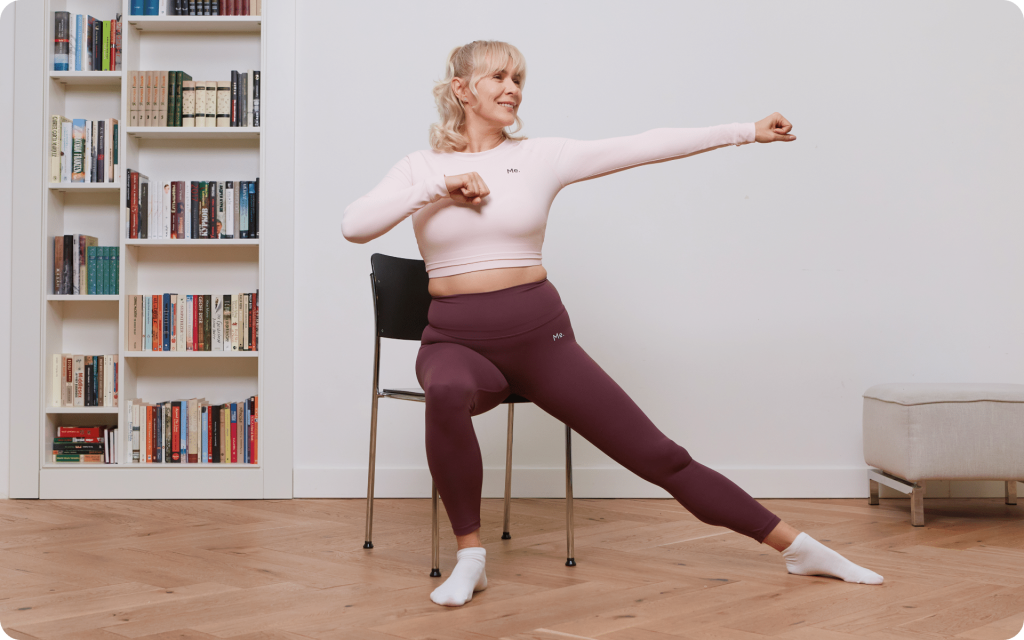
How should you warm up?
A warm-up may help harder holds feel easier.
- March in place for 1 minute.
- Do 10 shoulder rolls and 10 arm circles.
- Do 6 seated cat-cow moves.
- Do 8 regular chair squats.
- Do 1 supported tree pose on each side.
What does a 25-minute strength flow look like?
The flow below is one example.
|
Part |
Poses |
Time or reps |
|---|---|---|
|
Warm-up |
Marching, arm circles, cat-cow, chair squats |
5 minutes |
|
Legs |
Chair pose with heel raise |
3 holds |
|
Core |
Seated boat pose, chair plank |
2 rounds |
|
Balance |
Supported warrior III, supported dancer |
2 holds per side |
|
Hips |
Chair crescent lunge, chair pigeon |
5 breaths per side |
|
Strength |
Single-leg chair squat |
2 sets of 3 to 6 per leg |
|
Cool-down |
Chair downward dog, seated rest |
3 minutes |
BetterMe can help you add more structure to your daily wellness routine with workouts, meal planning tools, and habit-building features. Explore the app and take a practical step toward a routine that feels more manageable for you.
What does a 6-week plan look like?
Build up slowly. Adjust this sample schedule to the poses you can control.
|
Weeks |
Sessions |
Focus |
|---|---|---|
|
1 to 2 |
2 to 3 a week |
Learn 5 poses with the easier versions |
|
3 to 4 |
3 a week |
Add the other 5 poses |
|
5 to 6 |
3 to 4 a week |
Longer holds and less support from the chair |
How hard should advanced poses feel?
End a hold while you can still control your position. If age-related balance changes or a health condition affect the pose, ask your clinician and instructor about suitable modifications (4).
- Keep breathing comfortably during each hold.
- You should keep good form throughout.
- Stop if you lose balance or feel sharp discomfort.
How should you breathe?
Steady breathing helps you hold harder poses.
- Breathe in as you lengthen or lift.
- Breathe out as you lower or fold.
- Keep breathing through each hold.
- Use slow exhales to stay calm in balance poses.
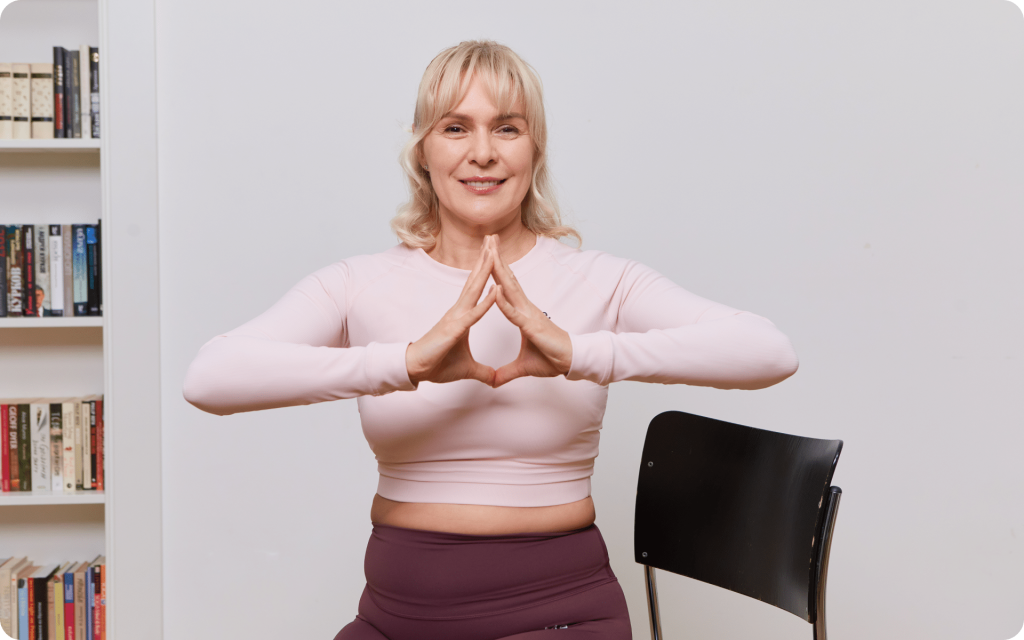
How do you cool down?
A cool-down helps your body settle.
- Hold chair downward dog for 5 breaths.
- Do a seated twist on each side.
- Do a seated forward fold for 5 breaths.
- Sit quietly for 1 minute.
Read more: 10 yoga chair exercises for seniors: steps, routine, and tips
What does a weekly routine look like?
Mix advanced chair yoga with walking and rest. The plan below is one example.
|
Day |
Plan |
|---|---|
|
Monday |
Advanced chair yoga flow |
|
Tuesday |
Brisk walk, 30 minutes |
|
Wednesday |
Gentle chair yoga or stretching |
|
Thursday |
Advanced chair yoga flow |
|
Friday |
Brisk walk, 30 minutes |
|
Saturday |
Advanced chair yoga flow or a longer walk |
|
Sunday |
Rest |
How do advanced poses support daily life?
Harder poses train strength and balance you use every day. The table below is a guide to the options.
|
Daily task |
Helpful pose |
|---|---|
|
Standing up from a low seat |
Single-leg chair squat, chair pose |
|
Climbing stairs |
Chair crescent lunge |
|
Reaching to put on socks |
Chair pigeon |
|
Carrying bags |
Chair plank, side plank |
|
Standing on one leg to dress |
Supported warrior III, dancer |
How do you track progress?
Track a few markers every 2 weeks.
- Hold times for chair plank and boat pose
- Single-leg squat reps per leg
- How much chair support you need in warrior III
- How steady you feel in dancer pose
Which mistakes should you avoid?
Avoid these common mistakes.
- Skipping the basics
- Using a chair that slides
- Letting your hips sag in planks
- Letting go of the chair too early
- Holding your breath
Who should be careful?
Get advice before starting if you have:
- Balance problems or a recent fall
- Wrist or shoulder problems, for planks
- Knee or hip replacements
- High blood pressure or heart disease
Frequently Asked Questions
How can you make a standing balance pose easier?
Keep both hands on the chair and leave the toes of your raised foot on the floor. Try a smaller movement before reducing support.
How often should you practice?
Choose a frequency that leaves you comfortable for the next session. The weekly table gives one example.
Can advanced chair yoga build muscle?
The cited yoga studies do not establish whether this chair routine builds muscle (1). A chair squat or plank places demand on the working muscles, but that does not predict a change in muscle size.
Are these poses suitable for older adults?
If you are an older adult, check with your clinician about balance, joint or health concerns and ask a qualified instructor for an appropriate variation.
How long until you notice changes?
There is no fixed timeline for this routine. Track your balance, control, and repetitions over time.
Should you combine chair yoga with other training?
Yes. Walking and strength training add to the benefits.
What if a pose feels too hard?
Go back to the easier version for a week, then try again.
The bottom line
Advanced chair yoga poses build on the basics with longer holds, single-leg work, and less support. They train strength, balance, and flexibility in a controlled way. Progress one change at a time and keep the chair close. For a calming flow to pair with these poses, see our chair yoga sequence guide.
DISCLAIMER:
This article is intended for general informational purposes only and does not serve to address individual circumstances. It is not a substitute for professional advice or help and should not be relied on for making any kind of decision-making. Any action taken as a direct or indirect result of the information in this article is entirely at your own risk and is your sole responsibility.
BetterMe, its content staff, and its medical advisors accept no responsibility for inaccuracies, errors, misstatements, inconsistencies, or omissions and specifically disclaim any liability, loss or risk, personal, professional or otherwise, which may be incurred as a consequence, directly or indirectly, of the use and/or application of any content.
You should always seek the advice of your physician or other qualified health provider with any questions you may have regarding a medical condition or your specific situation. Never disregard professional medical advice or delay seeking it because of BetterMe content. If you suspect or think you may have a medical emergency, call your doctor.
SOURCES:
- The effects of yoga compared to active and inactive controls on physical function and health related quality of life in older adults: systematic review and meta-analysis of randomised controlled trials (2019, doi.org)
- Yoga-based exercise improves balance and mobility in people aged 60 and over: a systematic review and meta-analysis (2016, doi.org)
- American College of Sports Medicine position stand: progression models in resistance training for healthy adults (2009, doi.org)
- Yoga: Effectiveness and Safety (n.d., nccih.nih.gov)
- Acute effects of muscle stretching on physical performance, range of motion, and injury incidence in healthy active individuals: a systematic review (2016, doi.org)
 Reviewed by
 Reviewed by