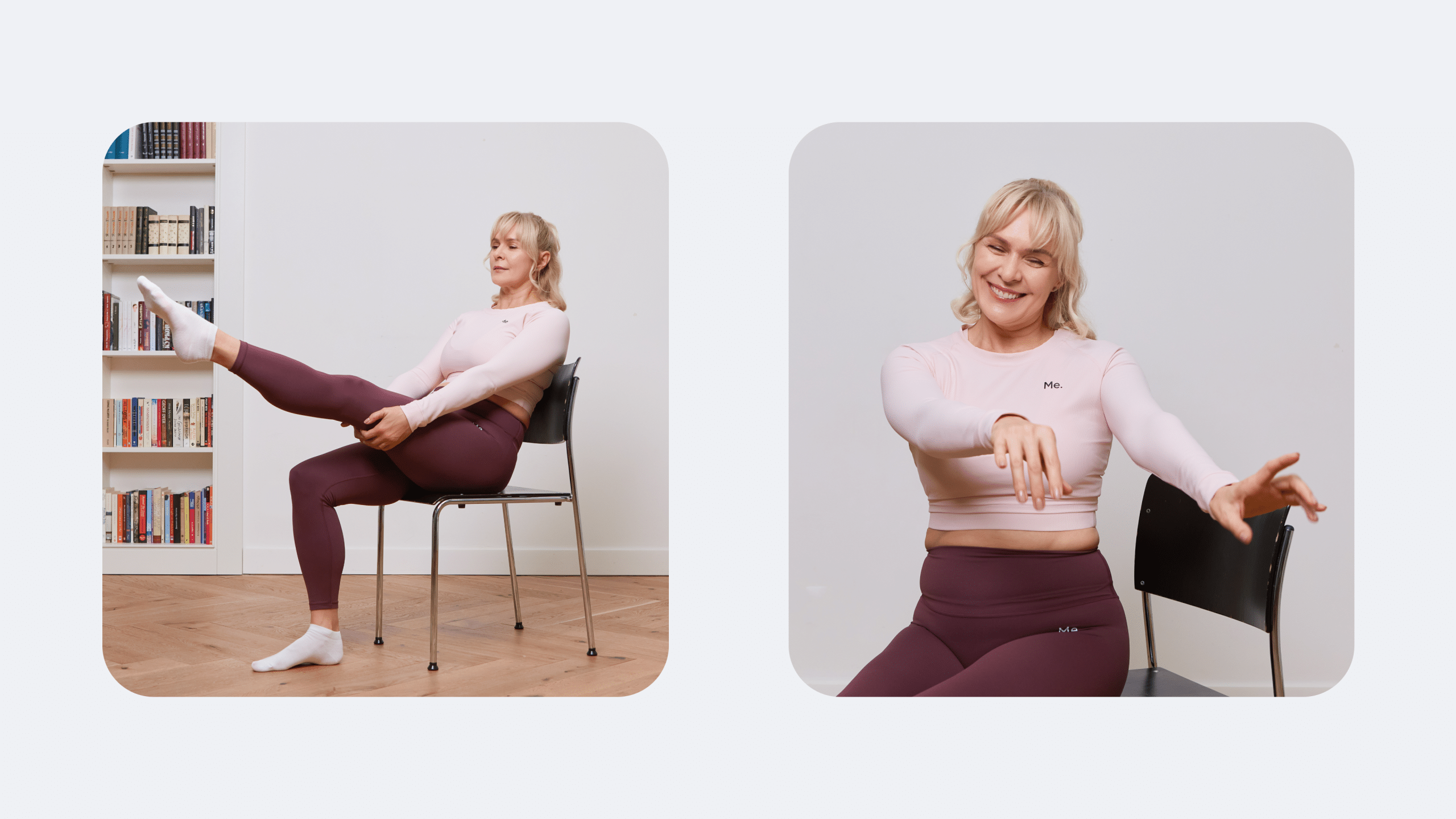
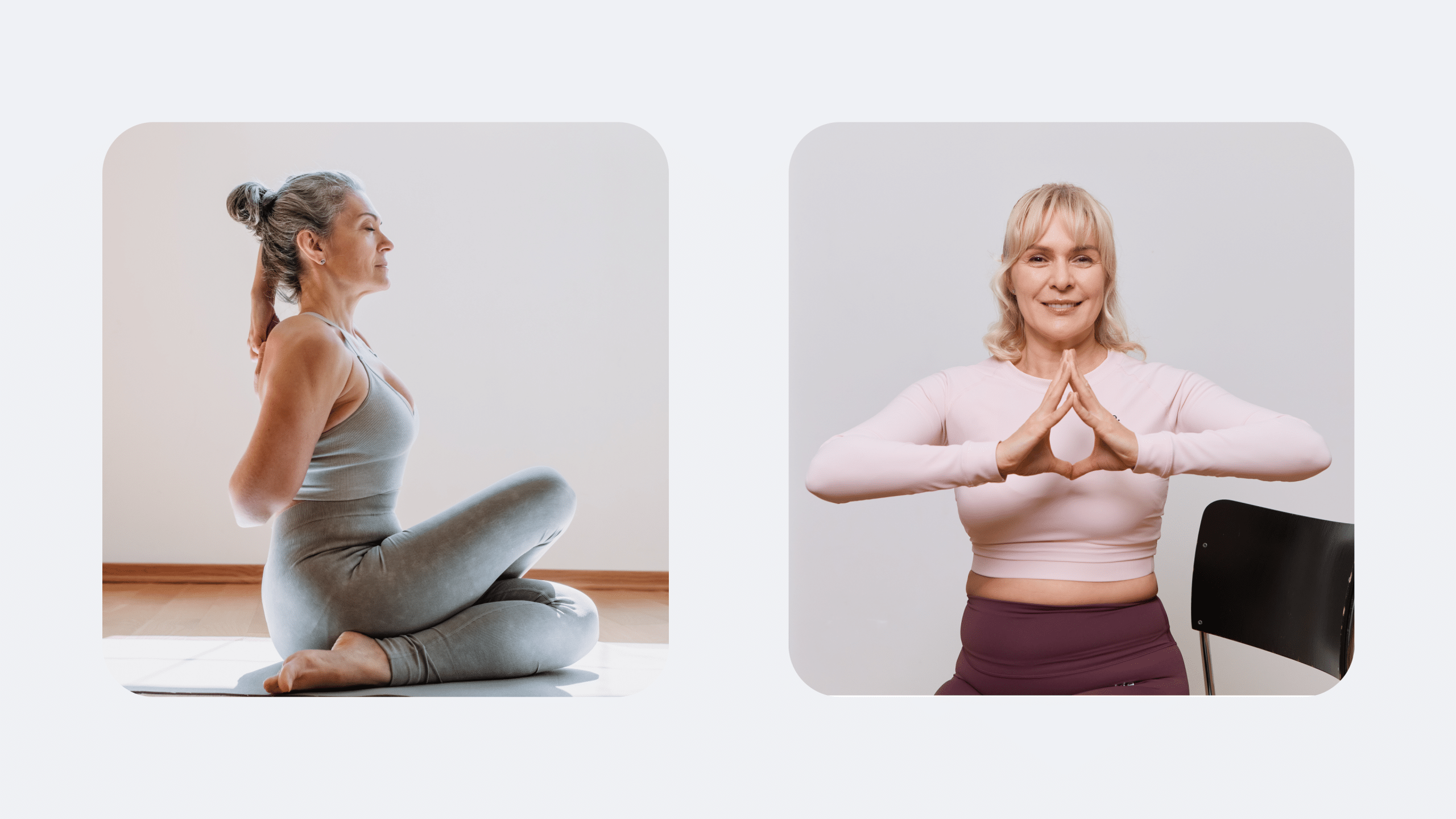
A chair yoga sequence for seniors arranges seated poses in a repeatable order. The twelve-minute sample below uses six sections, including an opening and finish. Begin with a stable chair and supported feet, then adjust each section to allow comfortable movement, pauses, and transitions.
If you have joint, muscle, or spine-related concerns, please consult your physician before starting this workout.
For age-specific setup considerations, see our chair yoga guide for women over 60.
Key takeaways
- A stable chair without wheels and supported feet help establish a practical seated setup (1).
- The sample sequence uses twelve minutes across six timed sections.
- Each pose can use a smaller range, a shorter section, or a pause.
- A seated sequence is not automatically a standing-balance or aerobic workout.
- General older-adult guidance includes aerobic, muscle-strengthening, and balance activity (2).
- Yoga styles and research populations vary, so findings do not validate this exact sequence (3).
How do you prepare the chair and space?
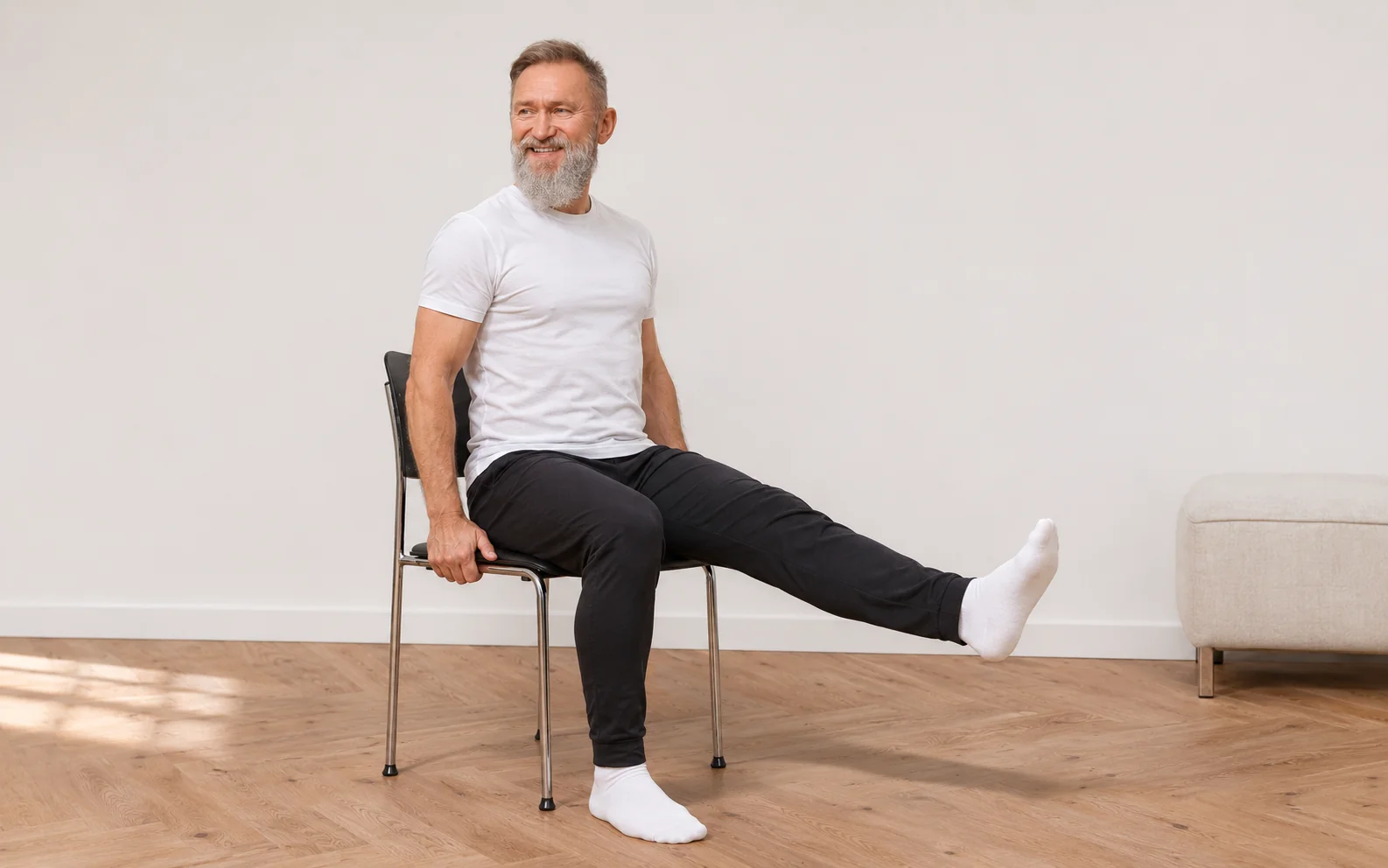
Prepare a solid chair on a nonslip surface, with enough room for your arms and feet. Public seated-exercise guidance recommends a chair without wheels and a position with feet flat on the floor (1). Avoid a seat that tips, rolls, or forces your feet to hang.
Set water within reach and choose a pace that allows pauses. If you are new to yoga, a qualified instructor can help select modifications (3). This sequence remains fully seated; a supported standing pose is a separate choice, not a required progression.
If you wish to free yourself from all the extra pounds that have been weighting you down for way too long, start using the BetterMe app and overhaul your entire life!
What does a twelve-minute sequence look like?
The twelve-minute sample moves from upright sitting through shoulder and torso movements, then returns to rest. Each section includes time for transitions and pauses.
|
Time |
Pose or movement |
Posture cue |
Easier variation |
|---|---|---|---|
|
0 to 2 minutes |
Seated mountain |
Feet supported; shoulders relaxed |
Use the backrest |
|
2 to 4 minutes |
Shoulder movement and upward salute |
Reach only within comfortable range |
Keep hands below shoulder height |
|
4 to 6 minutes |
Seated cat-cow |
Small torso movement |
Stay nearly upright |
|
6 to 8 minutes |
Gentle chair twist |
Keep hips facing forward |
Turn the upper chest slightly |
|
8 to 10 minutes |
Seated side reach |
Keep both sitting bones supported |
Rest one hand on the thigh |
|
10 to 12 minutes |
Seated mountain and relaxed breathing |
No forced breathing rhythm |
Rest completely |
Use both sides in the twist and side-reach sections, with unhurried transitions. Repetitions are optional; stop before the timer ends if needed. Our chair yoga workout plan offers ways to place a shorter sequence in the week.
How do you perform each section?
Perform each section slowly enough to notice your position without forcing the movement. These are general reminders; unfamiliar poses benefit from an instructor’s demonstration.
Seated mountain
- Sit with feet supported for seated mountain.
- Lengthen your torso gently during seated mountain.
- Rest your hands comfortably during seated mountain.
Shoulder movement and upward salute
- Sit with relaxed shoulders for the shoulder movement.
- Move your shoulders gently through a small range.
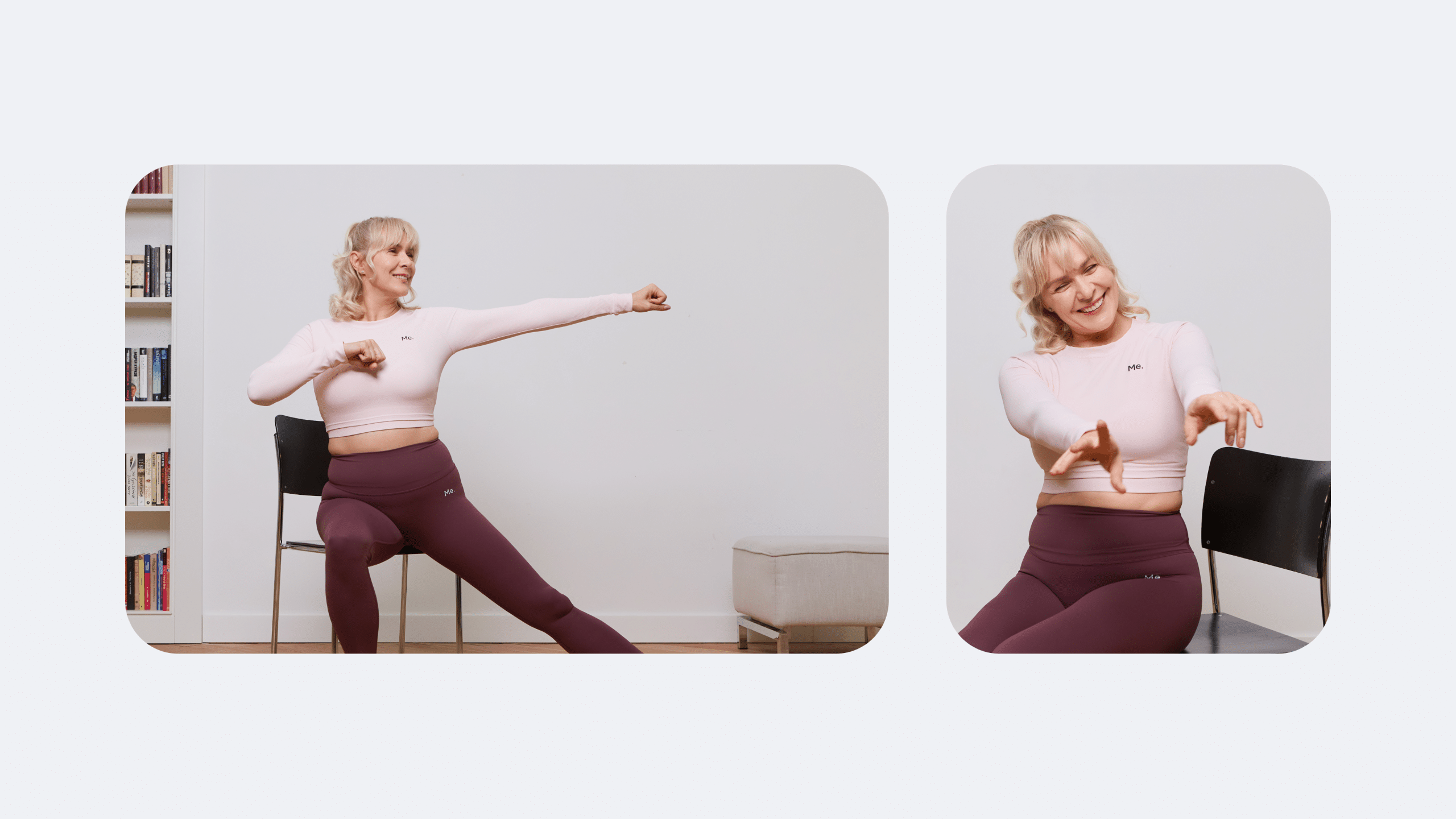
- Raise your arms only as far as comfortable for the upward salute.
- Lower your arms from the upward salute slowly.
Seated cat-cow
- Rest your hands on your thighs for seated cat-cow.
- Open your chest slightly during seated cat-cow.
- Return through a gentle rounded position during seated cat-cow.
Gentle chair twist
- Sit with both feet grounded for the chair twist.
- Turn your upper torso slightly during the chair twist without pulling with your hands.
- Return from the chair twist before changing sides.
Seated side reach
- Sit with both feet supported for the seated side reach.
- Reach one arm through a comfortable range during the seated side reach.
- Return upright from the seated side reach before changing sides.
Relaxed breathing
- Choose a supported sitting position for relaxed breathing.
- Breathe normally during the relaxed breathing section without forcing a count.
- End the relaxed breathing section at your own pace.
How can you shorten or extend the sequence?
Shorten the sequence by practicing fewer sections, or extend it by allowing more time for pauses and familiar movements. More time does not require a deeper stretch or a harder pose.
|
Duration choice |
How to organize it |
|---|---|
|
About 6 minutes |
Mountain, cat-cow, and relaxed breathing |
|
About 12 minutes |
Six sections in the timed table |
|
About 15 minutes |
Same poses with longer pauses |
|
Variable duration |
Stop whenever the practice no longer feels manageable |
Choose two or three sessions a week as an optional starting routine, then adjust to your capacity. Our chair yoga pose library for seniors can supply alternatives without requiring every pose in one session.
How do you follow the timed sections without rushing?
Use the clock to organize the practice rather than to force a continuous hold. Each two-minute section includes learning the position, comfortable movement, changing sides where relevant, and pauses. You do not need to stretch for the entire interval.
Opening and arm movement
During the opening section, settle into the chair and check that your feet are supported. Rest the hands and let the shoulders relax. If the seat feels wrong, stop and change the setup before continuing. Seated mountain can use the backrest when needed.
For shoulder movement and upward salute, begin with a small range. Lower the arms between attempts. The arms can stay below shoulder height if that is the version selected for you. Interlacing fingers and reaching far overhead are optional, not ways to prove that the movement is complete.
Torso movement
Seated cat-cow can be a small chest-opening movement followed by a gentle rounding. Keep breathing normally. Do not force the head upward or the chin down to enlarge the movement. A nearly upright version is available when a larger change does not fit.
For the twist section, return to the middle before changing sides. Let the hands rest rather than using them to pull against the chair. You can keep the head comfortable instead of turning it toward the back of the room.
The side reach also needs a return to upright between directions. Keep both sitting bones supported and raise the arm only as far as appropriate. Resting a hand on the thigh can make the transition simpler. Reaching farther is not required when the section lasts longer.
The finish
Return to supported sitting for the final section. The breathing should remain comfortable and unforced. Closing the eyes is optional. You can keep them open and look toward a stable point if that makes the position easier to maintain.
Before standing, end the practice and use your normal supported way of getting up. The seated sequence does not include a standing-balance test. If standing afterward is difficult, ask for appropriate guidance rather than adding a challenging pose to the finish.
Yanking yourself back in shape has never been so easy with our game-changing fitness app! Start transforming your life with BetterMe !
How can you adjust the order without changing its purpose?
Keep a predictable order with a familiar opening and finish. You can omit the twist or side reach and spend that time resting. The sequence remains a planning example, even when the chosen selection is smaller.
If changing the order, allow an upright pause between positions. Do not link two unfamiliar movements simply to make them flow. Learning one position at a time can be a more practical approach than trying to match a fast video.
For an approximately six-minute version, use seated mountain, a small cat-cow movement, and relaxed breathing. Allow about two minutes for each section, including transitions and pauses.
For a longer version, repeat familiar movements or allow more pauses. Keep the range comfortable and change one part of the practice at a time.
How should you choose instruction?
Ask the instructor about the chair, ranges, and alternatives you plan to use. Preview a recorded routine to see whether its timing includes transitions. A teacher moving quickly between poses may need pausing while you set up.
Share restrictions relevant to the practice and stop an uncomfortable movement. An instructor can explain a pose modification within that guidance; the timed table cannot assess a medical concern or guarantee that a position is suitable.
After practice, note which sections were comfortable and which needed a pause or omission. Use those notes to plan the next session, keeping the movements you can repeat comfortably.
Treat any standing or floor-based routine as a different activity selection. A seated sequence should not quietly grow into a more demanding practice because you reached the twelve-minute mark. Discuss the new positions and support before adding them.
Does this sequence cover all your exercise needs?
No, a gentle seated sequence does not automatically cover aerobic, strengthening, and balance recommendations. For adults 65 and older, general guidance includes all three categories, adjusted to abilities and conditions (2). Gentle movement may still be worthwhile even when it does not meet a particular intensity threshold.
Moderate aerobic effort usually allows talking but not singing (4). Separate strengthening exercises can provide a different challenge when appropriate (5). Gentle flexibility exercises offer additional range-of-motion choices (6).
Should seniors choose yoga or Pilates?
Choose according to the actual class demands, instructor guidance, and your goals. Both labels cover a range of exercises, and neither is automatically more suitable for every older adult. A seated yoga sequence and a floor-based Pilates class can have very different demands.
For women entering this topic before age 60, our chair yoga guide for women over 50 keeps age and ability separate.
FAQs
Can you do this seated sequence every day?
Some people prefer a brief familiar practice often; others need more rest. Use a manageable frequency and avoid treating daily practice as a requirement.
Can chair yoga get rid of belly fat?
This sequence does not promise to reduce belly fat. It is a movement practice, not a method demonstrated to change a specific body area.
Does chair yoga prevent falls?
This exact seated sequence has not been shown to prevent falls. Standing balance training and individual assessment are separate from simply sitting on a chair.
The bottom line
Start with the six sections and keep the chair setup consistent. Shorten or omit sections when needed, and record any useful modifications. Plan aerobic, strengthening, and balance activities separately according to your capacity.
DISCLAIMER:
This article is intended for general informational purposes only and does not serve to address individual circumstances. It is not a substitute for professional advice or help and should not be relied on for making any kind of decision-making. Any action taken as a direct or indirect result of the information in this article is entirely at your own risk and is your sole responsibility.
BetterMe, its content staff, and its medical advisors accept no responsibility for inaccuracies, errors, misstatements, inconsistencies, or omissions and specifically disclaim any liability, loss or risk, personal, professional or otherwise, which may be incurred as a consequence, directly or indirectly, of the use and/or application of any content.
You should always seek the advice of your physician or other qualified health provider with any questions you may have regarding a medical condition or your specific situation. Never disregard professional medical advice or delay seeking it because of BetterMe content. If you suspect or think you may have a medical emergency, call your doctor.
SOURCES:
- Sitting exercises (2024, nhs.uk)
- Older Adult Activity: An Overview (2025, cdc.gov)
- Yoga: Effectiveness and Safety (2023, nccih.nih.gov)
- How to Measure Physical Activity Intensity (2025, cdc.gov)
- Strength exercises (2024, nhs.uk)
- Flexibility exercises (2023, nhs.uk)

 Reviewed by
 Reviewed by
 Reviewed by