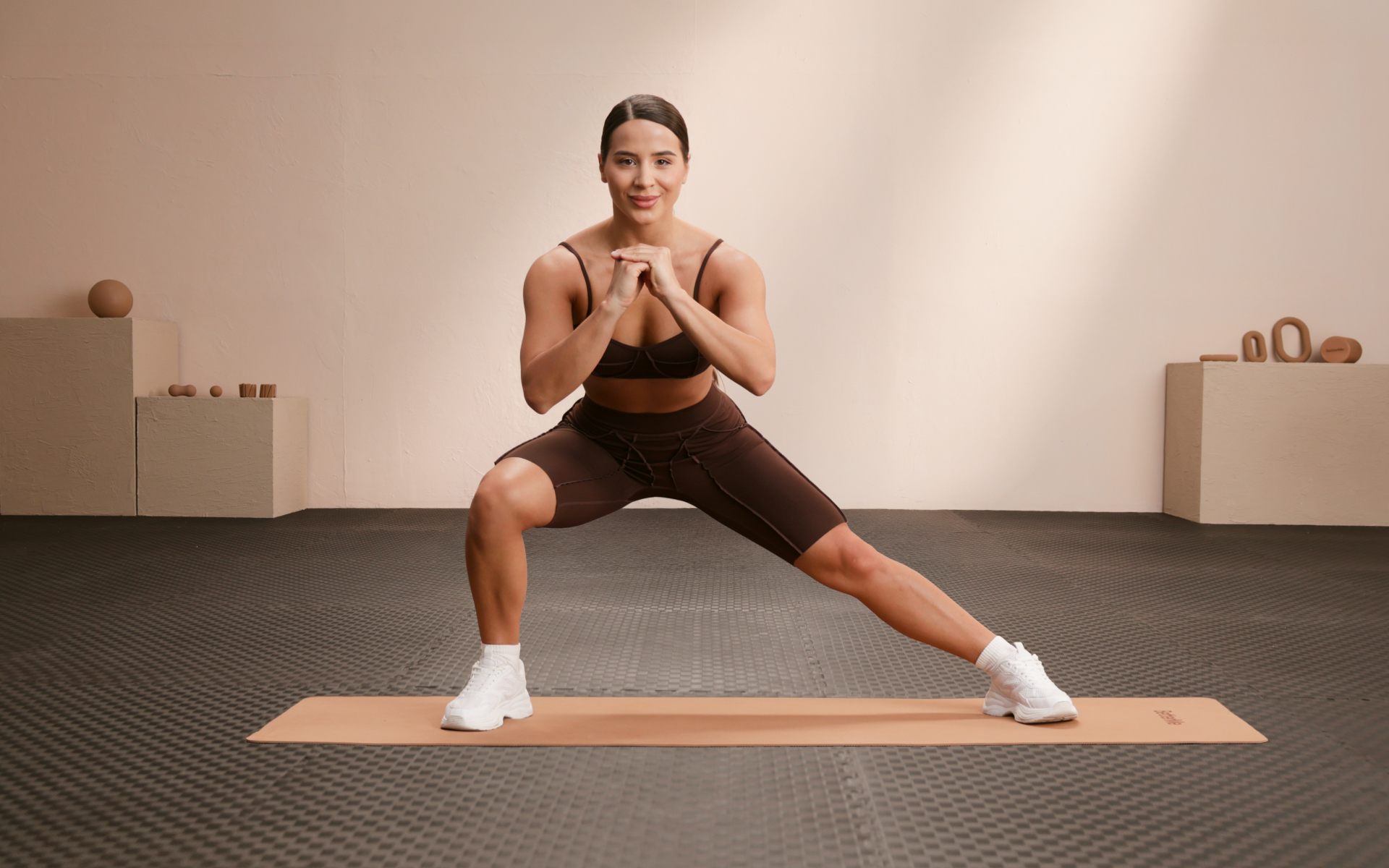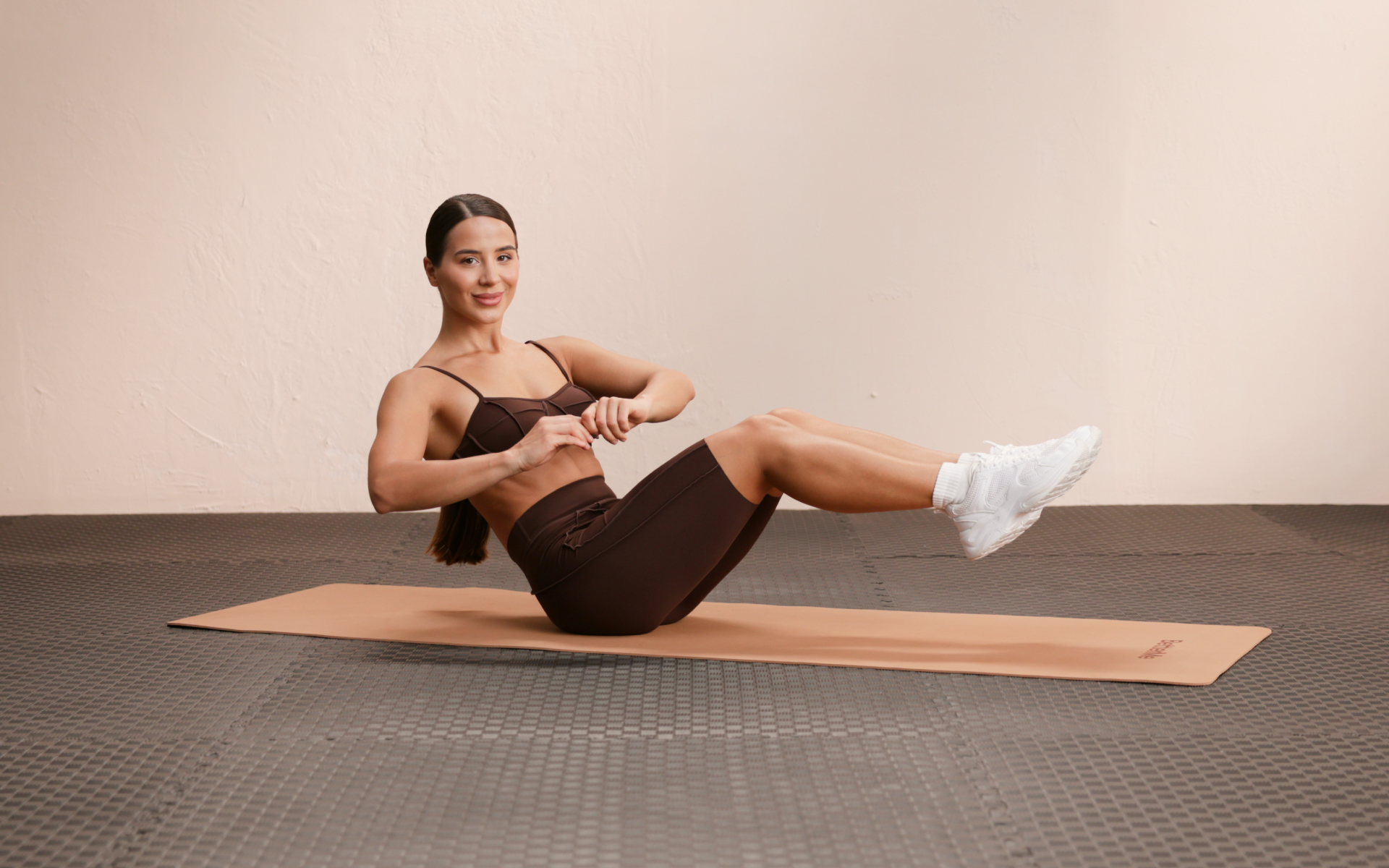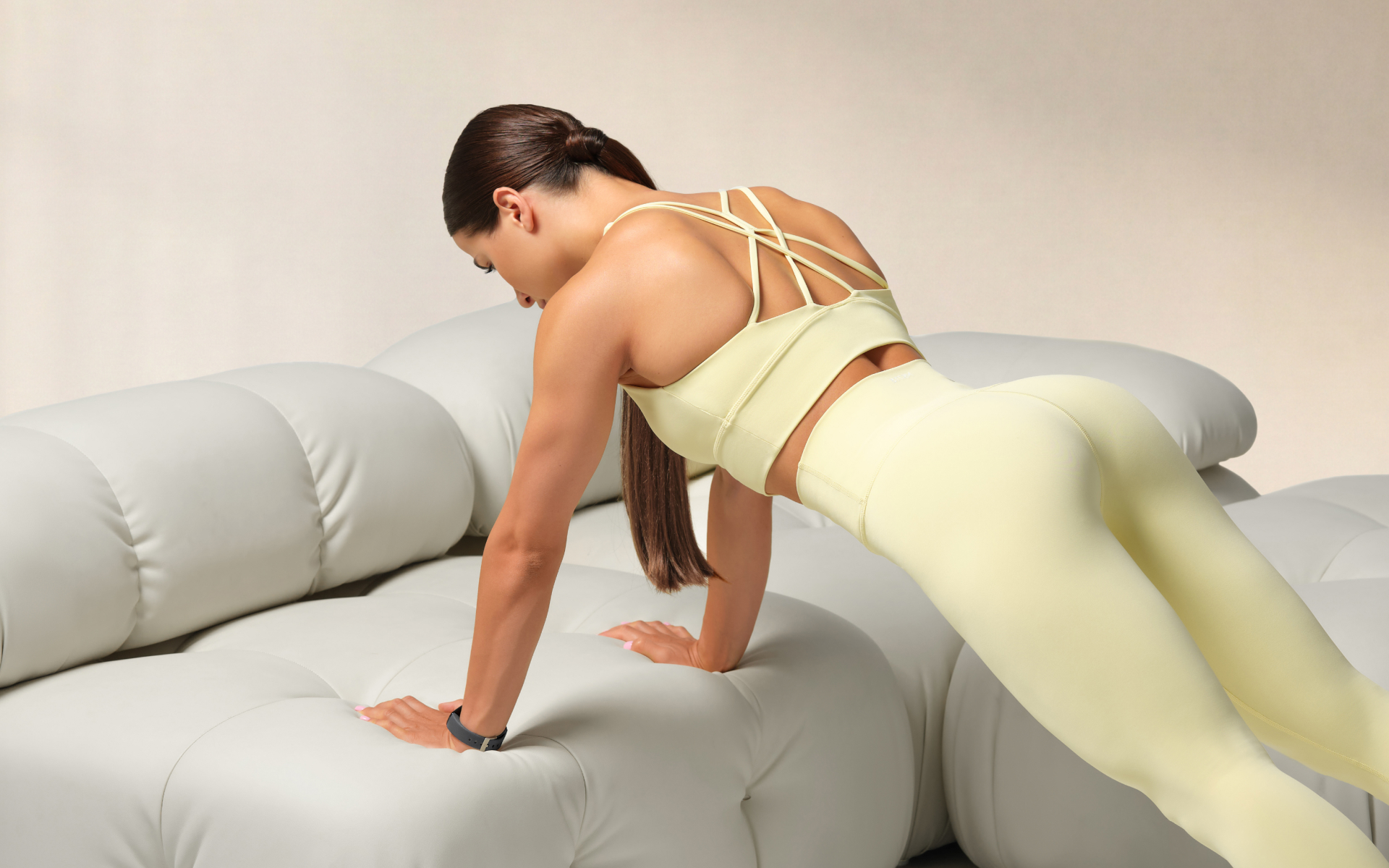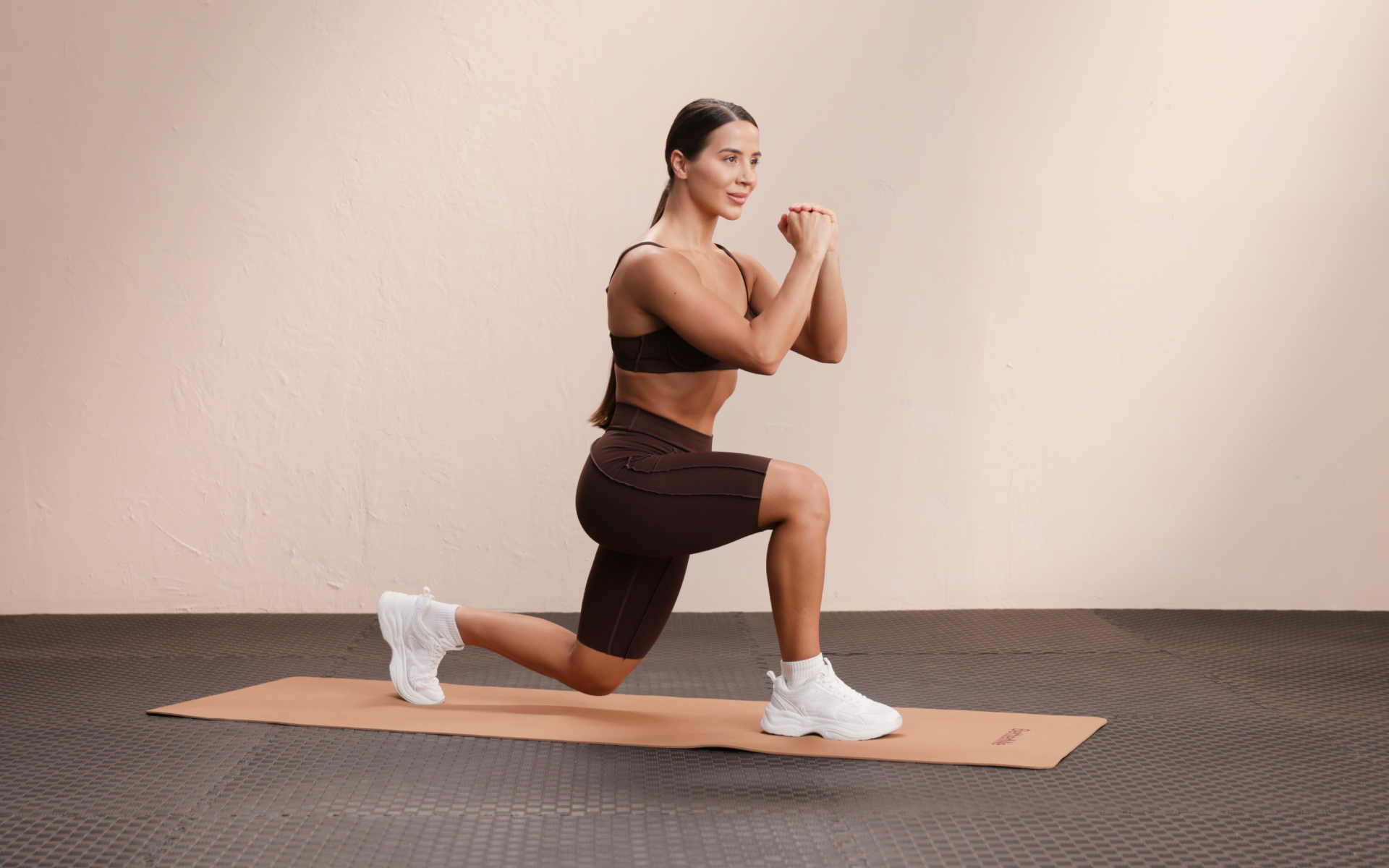
Bodyweight exercises for the chest use your own body weight as resistance. Push-up training may support chest strength and muscle growth, as observed in a small eight-week trial (1). Choose a variation you can control and repeat with consistent technique.
This guide explains chest exercises you can practice at home and ways to adjust their difficulty. For more exercise ideas, explore our calisthenics chest workout guide. Choose options that match your current ability; results vary between people.
Key takeaways
- Chest training: Push-up variations use body weight to challenge the chest, shoulders, and triceps.
- Starting level: Wall and incline push-ups offer options when floor push-ups feel too demanding.
- Gradual progression: Add repetitions when your current exercise feels manageable. Repetition increases supported adaptations in one resistance-training trial (2).
- Muscle growth: An eight-week push-up trial in young men found increased chest muscle thickness (1). Individual outcomes vary.
- Repetition ranges: A review found muscle growth possible across different loads, rather than one universal repetition target (3).
- Balanced practice: Include other muscle groups, rest between challenging sessions, and seek guidance for ongoing discomfort.
What are bodyweight exercises for the chest?
Bodyweight chest exercises use your own weight as resistance to challenge the chest muscles. Push-ups are one example of this form of calisthenics. Some variations use only floor space, while others require a sturdy elevated surface or purpose-built equipment.
Can you build your chest with body weight?
Yes, bodyweight training can improve chest strength and may support muscle growth. Small trials have compared specific push-up programs with bench press training. Their findings apply to the participants and training methods studied, rather than every workout.
- Effect of progressive calisthenic push-up training on muscle strength and thickness
A 2018 study compared progressive push-up training with traditional bench press training. Researchers measured changes in upper-body strength and muscle thickness.
The moderately trained male subjects were divided into two groups, and they trained 3 days per week for 4 weeks. Once the study period was completed, researchers found that:
- Both groups showed significant increases in 1RM (repetition maximum) and push-up progression.
- Push-up progression was significantly greater in the calisthenic push-up training group.
- Neither group showed a significant change in muscle thickness or medicine ball performance during the four-week trial.
These findings support progressive push-ups for upper-body strength in moderately trained men. The short trial does not establish equivalent muscle growth across training methods (4).
Progressive overload means gradually increasing the challenge during resistance training. One trial compared increases in load with increases in repetitions (2). Both approaches supported adaptations in the participants studied.
For bodyweight exercises, a harder variation can increase the challenge without adding external weights.
E.g., wall push-ups → knee push-ups → standard push-ups → decline push-ups, etc.
- The effects of a calisthenics training intervention on posture, strength, and body composition
This study examined posture, strength, and body composition in untrained men.
After eight weeks, the calisthenics group improved postural measures and push-up and pull-up performance. Researchers also reported reduced body fat (5).
- An eight-week comparison of push-ups and bench press
A separate eight-week trial included 18 young men assigned to push-ups or a low-load bench press program.
The push-up position was adjusted to approximate the bench press load. Both groups trained twice weekly and increased chest and triceps muscle thickness.
Both groups also improved bench press strength. These results support those specific programs, but do not mean every bodyweight workout matches every weightlifting routine (1).
- The effect of breaking up sedentary time with calisthenics on neuromuscular function: a preliminary study
This study was done on 17 healthy adults in their early 30s to mid-40s. Researchers wanted to find out whether 4 weeks of calisthenics training could improve their bodies. The participants were broken into 2 groups. The calisthenics group training program was as follows:
- Up to eight sets of exercises during the working day.
- One set of exercises had 5 different workouts, including squats and lunges.
- Each exercise in the set was done in 8 repetitions.
Ultimately, researchers concluded that calisthenic exercises can help increase muscle strength, force steadiness, and dynamic balance (6).
These small studies suggest that bodyweight training can improve specific measures of strength and physical performance. They do not prove that every exercise provides all the benefits discussed.
Read more: Calisthenics Hands: How to Build Stronger Wrists, Grip, and Control for Key Skills
What are some useful bodyweight exercises for the chest?
The following exercises offer options for a chest-focused routine. Choose a few that suit your experience rather than performing every variation. For a broader session, explore our 30-minute calisthenics workout.
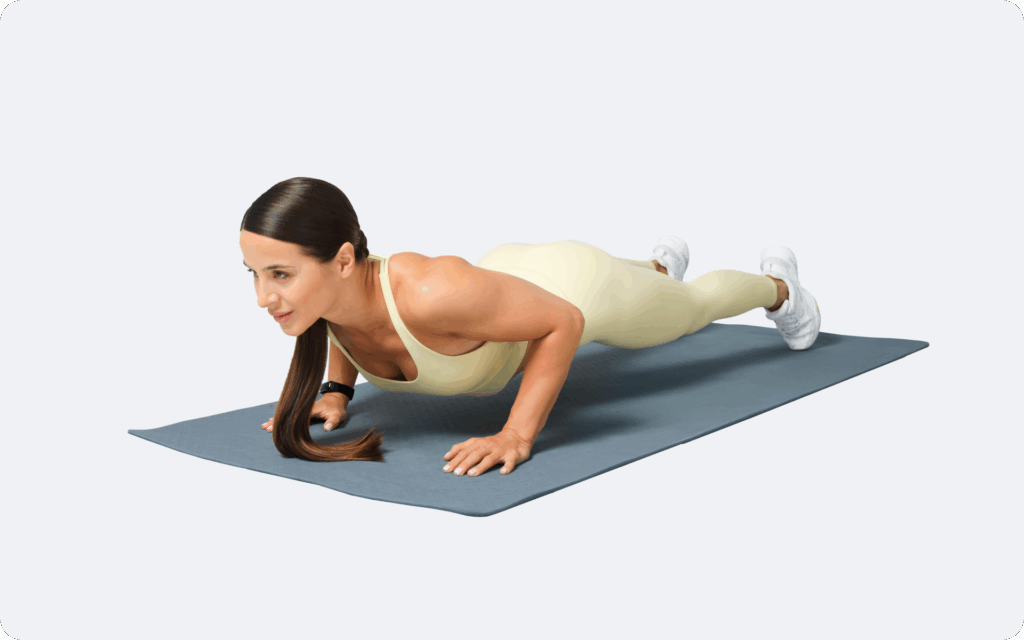
Standard push-ups
How to do it:
- Start in a plank position with your hands under your shoulders.
- Lower your chest toward the floor, keeping your elbows close to your body.
- Push back to the starting position, focusing on engaging your chest.
- This is one rep. Complete 8-10 reps for one set.
Standard push-ups challenge the chest, triceps, and shoulders. They are one option for combining chest and arm work.
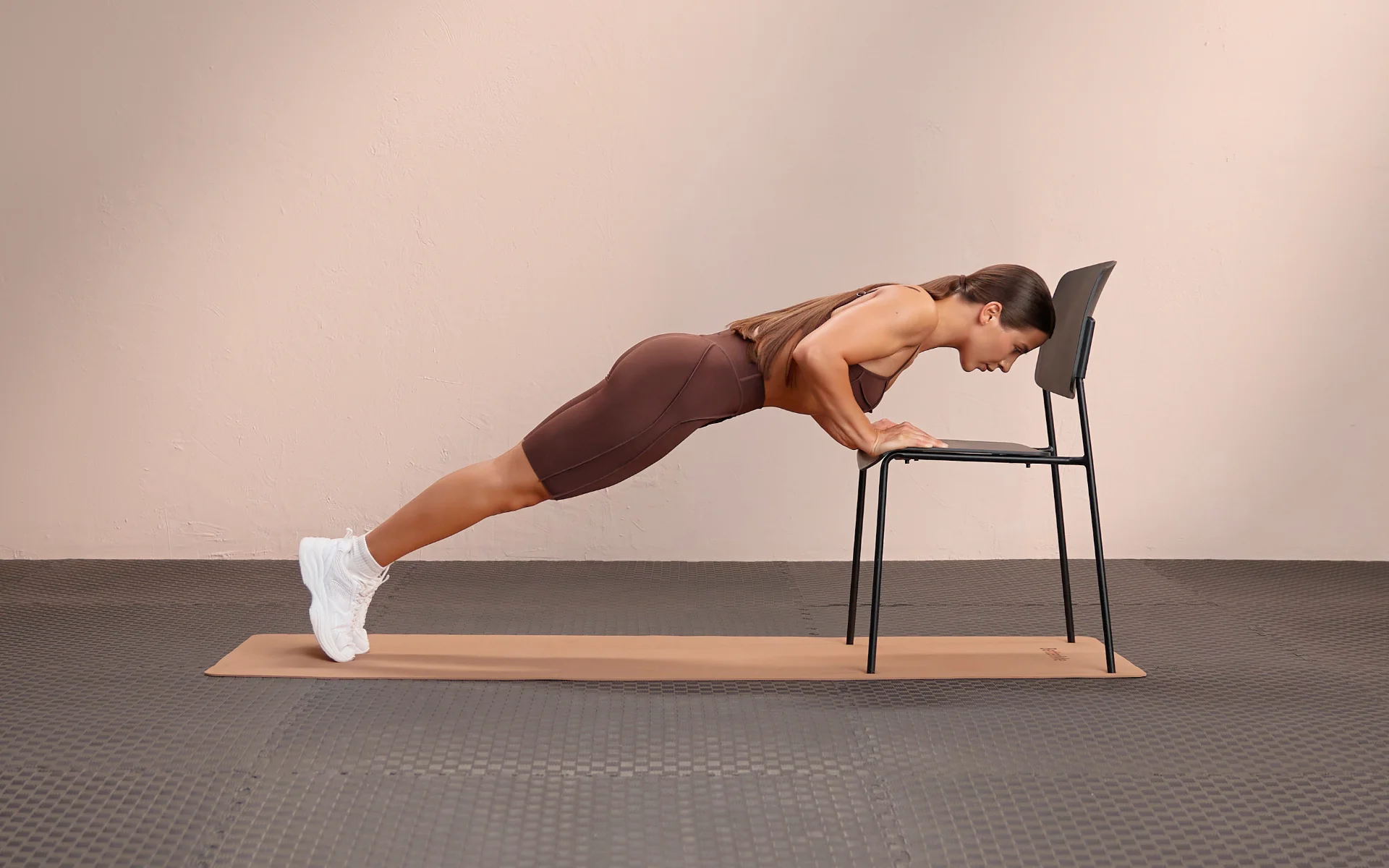
The standard push-up may be too difficult for anyone who is new to exercising. Wall push-ups are great bodyweight chest exercises for beginners. To perform them, push off against the wall instead of getting down to a plank position.
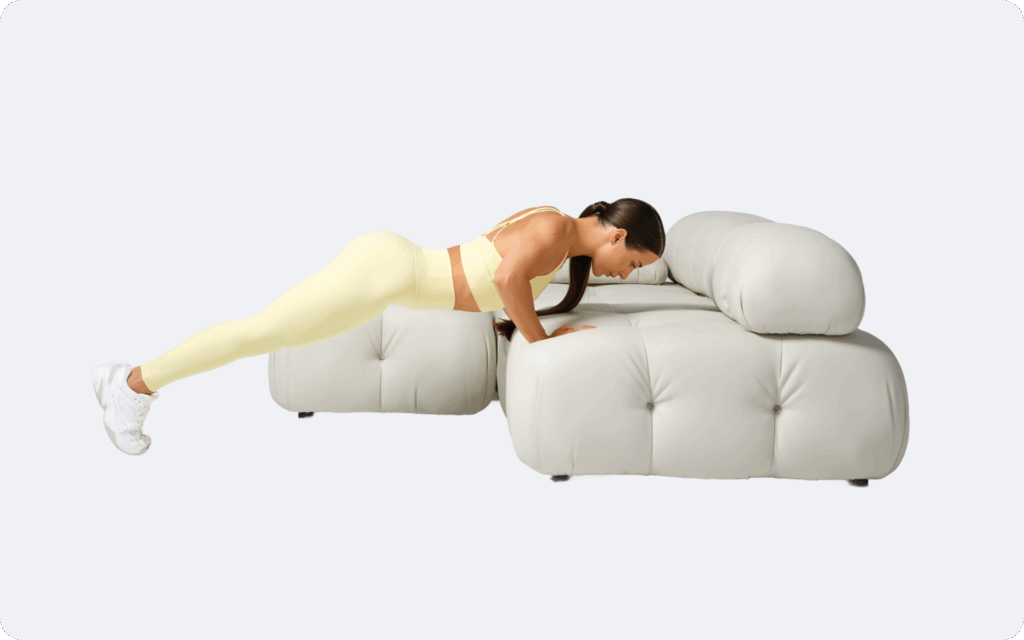
Incline push-ups
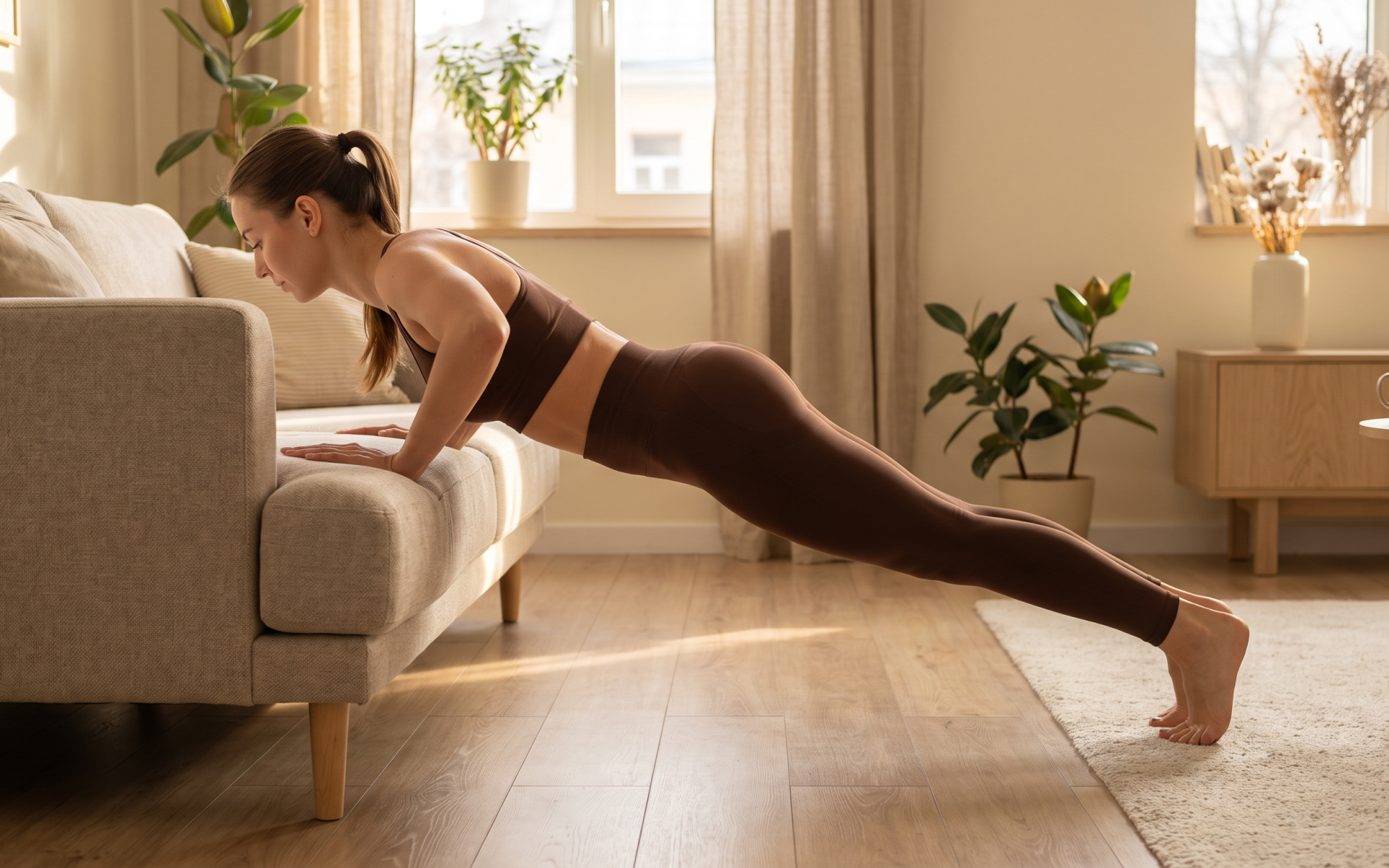
Incline push-ups place your hands above your feet on a sturdy bench, step, or counter. This usually reduces the resistance compared with a floor push-up. They can be useful when learning the movement.
- Place your hands slightly wider than shoulder-width apart on a stable, elevated surface.
- Hold your body in a straight line, with your arms extended and your core engaged.
- Lower yourself until your chest touches the elevated surface, keeping your elbows close to your sides.
- Push back up to the starting position.
Decline push-ups
For anyone who is looking for a challenge for upper chest bodyweight exercises, this variation could be what you need.
While performing decline push-ups, your feet aren’t on the ground and are elevated on a bench, yoga block, or chair.
Elevating the feet increases the challenge and changes the pressing angle. Use a stable surface and choose a height you can control.
How to do it:
- Place your feet on an elevated surface such as a bench, chair, or step.
- Position your hands slightly wider than shoulder-width apart on the floor.
- Ensure that your body is in a straight line from your head to your feet, engaging your core muscles.
- Bend your elbows to lower your chest toward the floor. Keep them at approximately 45 degrees to your torso.
- Keep lowering until your chest almost touches the ground.
- Press through your hands to straighten your arms and return to the starting position.
- This is one rep. Do up to 10 reps for 1 set while maintaining your form.
Pike push-ups
Pike push-ups primarily emphasize the shoulders and triceps. They can complement chest-focused pushing exercises, but are not a direct substitute for them.
How to perform them:
- Start in a downward dog position with your hands shoulder-width apart and your hips raised high.
- Drop your head between your arms and keep your back straight.
- Slowly bend your elbows and lower the top of your head toward the floor. Ensure your elbows flare out slightly through the movement.
- Stop just before your head touches the ground. Pause.
- Push up by extending your elbows to lift your head back to the starting position.
- This is one rep. Perform 6-8 reps in a slow, controlled manner while maintaining proper form.
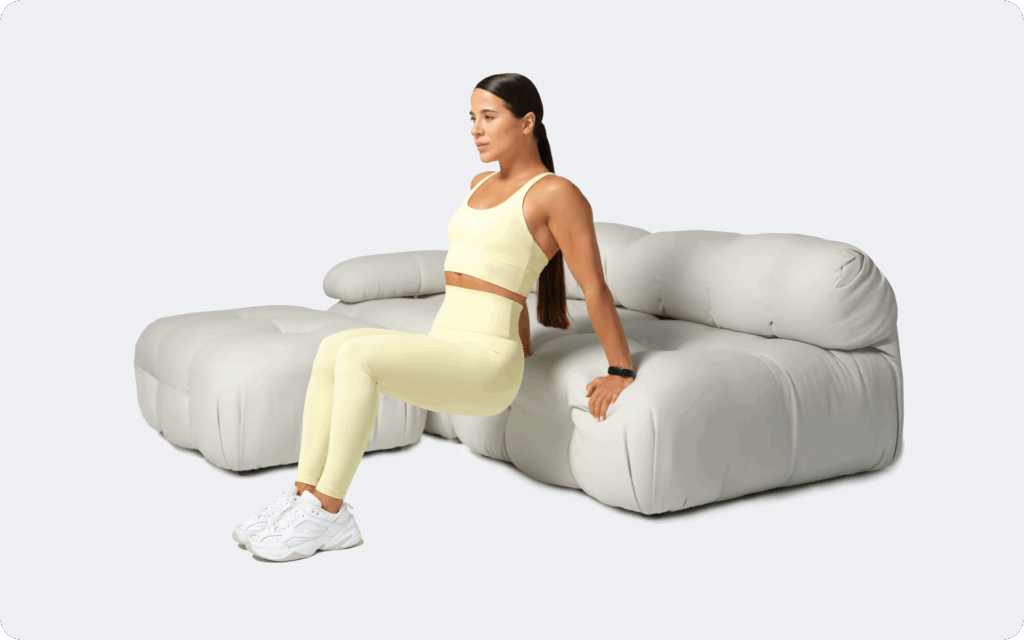
Forward lean chest dips
Don’t forget about this exercise when creating a plan for a good chest and arm workout. This exercise can be done using workout rings or parallel bars. Chest dips target the shoulders, lower pectoralis major, and the triceps brachii.
How to perform it (using parallel bars):
- Stand between the parallel bars and hold them with your palms facing inwards.
- Extend your arms so you’re pressing your body above the bars.
- Bend your knees to move your feet behind your body.
- Lean slightly forward with your core braced and back straight.
- Bend your elbows and lower within a comfortable range. Stop before you lose shoulder control; avoid forcing a deep position.
- Push back up to the start position, and stop just before you lock out your elbows.
- This is one rep. Perform 8-10 reps for one set.
These exercises train the chest muscles, but they cannot determine where your body loses fat. Focus on movement quality and gradual progression rather than expecting a change in one specific area.
How long does it take for chest growth?
There is no universal timeline for chest growth. Training load, total work, and frequency influence resistance-training outcomes (7). Other practical factors to consider include:
- Your genetics
- The level of nutrition, especially protein intake
- Your starting fitness level
- Training duration, intensity, and frequency
- Rest
- Your individual response to training
Individual responses vary, so there is no single timeline for chest muscle growth.
Workouts, weight management tools, and recipe ideas come together in the BetterMe: Health Coaching app, giving you practical support for building a more consistent wellness routine.
How many reps are needed for chest growth?
A 2021 review challenges the idea that muscle growth requires one narrow repetition range. Its findings suggest the following distinctions (3):
- Strength: Heavier loads generally produce larger improvements in one-repetition maximum strength.
- Muscle growth: A broad range of loads can support hypertrophy when the training stimulus is sufficient.
- Endurance: Findings are less consistent, so a fixed threshold of 15 repetitions should not be presented as universally superior.
This review discusses resistance training generally. Bodyweight exercise also provides resistance, but the load depends on your position and movement.
An 8-12 repetition range can be a practical starting example, rather than an optimal rule for everyone. Adjust the variation and repetitions to your current ability.
How much weight does it take to grow your chest?
There is no single dumbbell weight that everyone needs for chest growth. Different loads can support muscle growth, and moderate loads are not uniquely effective (3).
If you also use dumbbells, choose a load you can control throughout your intended repetitions. An 8-12 repetition target is one example. Reduce the load if it changes your technique.
As the same workload becomes easier, a small increase in load or repetitions may provide further challenge (2). Keep the movement controlled rather than forcing a heavier weight.
How to build a big chest without benching
Some ways you can achieve this goal include:
Progressive push-up overload
Do more reps or sets of your preferred push-up variations. You can also choose more advanced push-up variations than you’re used to. Such a routine may look as follows:
Wall push-up to incline push-up to standard push-up to decline push-up. Progressions vary; shoulder-focused and advanced single-arm movements are optional.
Points to note:
- Progression: Consider a small increase when you can complete your chosen sets with controlled technique and effort remaining.
Add a few repetitions or try a slightly harder variation. Avoid changing several variables at once, and keep enough rest to maintain control.
- Timing: Repeat your current level until it feels manageable. There is no requirement to advance every one or two weeks.
Optional weighted exercises
Some examples include:
Dumbbell floor fly
- Lie on your back and bend your knees so your feet can be planted on the floor.
- Press the dumbbells up so you’re holding them above the chest, your palms facing each other.
- Keep a soft bend in your elbow.
- On an inhale, slowly lower the dumbbells in an arc movement until your arms are in line with your body. Your elbows should be close to touching the floor.
- Breathe out and squeeze your chest to push the dumbbells back together.
- This is one rep. Do 8-12 reps for one set.
Dumbbell floor squeeze press
- Lie on your back on the floor while holding one dumbbell in each hand directly above your chest.
- Lower the dumbbells toward your chest with your palms facing each other. Bend your elbows while keeping your forearms roughly upright.
- Keep your arms close together and squeeze the dumbbells as if trying to bring them toward each other.
- Slowly press the weights upward until your arms are fully extended. Pause.
- Lower the weights back down in a controlled way, keeping your arms close together throughout the movement.
- This is one rep. Repeat 8-12 times for 1 set.
Read more: Chest Calisthenics Exercises That Deliver Results
Chest isolation workouts
The following exercises require weights or a cable machine, so they are optional additions rather than bodyweight exercises. They offer different ways to train the chest when suitable equipment is available.
Dumbbell flys
- Lie flat on a bench, holding a dumbbell in each hand above your chest.
- Slowly lower the dumbbells in an arc motion, keeping a slight bend in your elbows.
- Stop when the dumbbells reach chest level, then bring them back together at the top.
Cable crossovers
- Set the pulleys on a cable machine at shoulder height.
- Stand in the center and grab the handles with your arms extended slightly forward.
- Pull the handles together in front of your chest within a range you can control.
- Slowly return to the starting position while maintaining tension.
What are the biggest mistakes when training chest?
Common mistakes when training the chest include:
- Not using proper form: As seen from all the exercises listed above, none of them are done the same. They all have slight or major variations that impact their effectiveness.
Pay attention to the movement pattern and use a range you can control. If you experience discomfort, stop the exercise and reassess the setup.
- Ignoring other muscle groups: Include pulling and lower-body movements alongside chest work. This helps organize a balanced routine.
We recommend full-body training. Think of back-focused movements such as bent-over rows, pull-ups, back extensions or squats, lunges, thrusts, deadlifts, etc. for legs. This will help you create a more balanced routine and physique.
- Using a load you cannot control: Choose a manageable resistance rather than forcing heavier weights before you are ready.
Increase the challenge gradually as your technique improves. A qualified exercise professional can help you choose suitable variations. Consider qualified guidance for ongoing discomfort. For broader planning, explore how to start calisthenics.
BetterMe offers a variety of workouts, recipes, challenges, and support tools to help you stay more consistent with your wellness routine. Explore the app to find features that fit your goals, preferences, and schedule.
FAQs
What builds your chest the fastest?
There is no shortcut or guaranteed fastest method for chest growth. Factors that can support a consistent routine include:
- Consistent, progressive overload training.
- Protein intake: A review found small additional lean-mass gains with increased protein intake during resistance training in healthy adults. Individual needs vary (8).
- Nutrition context: Weight-loss research discusses energy deficits, while an off-season bodybuilding review discusses surpluses for that specific population (9, 10). These are different goals, not universal dietary instructions.
How important is sleep for muscle growth?
Sleep can influence the body’s response to training. One experiment in 13 young adults found lower muscle protein synthesis after a night without sleep (11). This does not establish that occasional poor sleep inevitably causes muscle loss or fat gain.
What is the hardest part of the chest to build?
There is no established answer that applies to everyone. Progress can differ across exercises and individuals. Choose a manageable program rather than relying on claims about one chest region being universally hardest to develop.
How much protein do I need to grow my chest?
There is no protein target specific to chest muscles. Research in healthy adults links protein intake with lean-mass gains during resistance training (8). Findings vary by age and intake. For individual nutrition needs, consider a qualified dietitian.
What is the number one chest exercise?
There is no single chest exercise that suits every person or goal. Push-ups and bench presses are different options. A routine can include:
- A variety of exercises that target different chest muscles.
- Progressive overload, whether through more advanced workouts or weight loads.
Choose movements you can control and progress gradually. The number and type of exercises should match your experience and goals.
The bottom line
Bodyweight exercises for the chest can improve strength and may support muscle growth with gradual progression. Choose a manageable push-up variation and maintain a balanced routine. Specific studies do not establish universal equivalence with weightlifting, and individual results vary.
DISCLAIMER:
This article is intended for general informational purposes only and does not serve to address individual circumstances. It is not a substitute for professional advice or help and should not be relied on for making any kind of decision-making. Any action taken as a direct or indirect result of the information in this article is entirely at your own risk and is your sole responsibility.
BetterMe, its content staff, and its medical advisors accept no responsibility for inaccuracies, errors, misstatements, inconsistencies, or omissions and specifically disclaim any liability, loss or risk, personal, professional or otherwise, which may be incurred as a consequence, directly or indirectly, of the use and/or application of any content.
You should always seek the advice of your physician or other qualified health provider with any questions you may have regarding a medical condition or your specific situation. Never disregard professional medical advice or delay seeking it because of BetterMe content. If you suspect or think you may have a medical emergency, call your doctor.
SOURCES:
- Low-load bench press and push-up induce similar muscle hypertrophy and strength gain (2017, pubmed.ncbi.nlm.nih.gov)
- Progressive overload without progressing load? The effects of load or repetition progression on muscular adaptations (2022, pmc.ncbi.nlm.nih.gov)
- Loading Recommendations for Muscle Strength, Hypertrophy, and Local Endurance: A Re-Examination of the Repetition Continuum (2021, pmc.ncbi.nlm.nih.gov)
- Effect of Progressive Calisthenic Push-up Training on Muscle Strength and Thickness (2018, pubmed.ncbi.nlm.nih.gov)
- The effects of a calisthenics training intervention on posture, strength and body composition (2017, journals.sagepub.com)
- The Effect of Breaking Up Sedentary Time with Calisthenics on Neuromuscular Function: A Preliminary Study (2022, pmc.ncbi.nlm.nih.gov)
- Resistance training prescription for muscle strength and hypertrophy in healthy adults: a systematic review and Bayesian network meta-analysis (2023, pmc.ncbi.nlm.nih.gov)
- Systematic review and meta-analysis of protein intake to support muscle mass and function in healthy adults (2022, pubmed.ncbi.nlm.nih.gov)
- Optimal Diet Strategies for Weight Loss and Weight Loss Maintenance (2020, pmc.ncbi.nlm.nih.gov)
- Nutrition Recommendations for Bodybuilders in the Off-Season: A Narrative Review (2019, pmc.ncbi.nlm.nih.gov)
- The effect of acute sleep deprivation on skeletal muscle protein synthesis and the hormonal environment (2021, pubmed.ncbi.nlm.nih.gov)
 Reviewed by