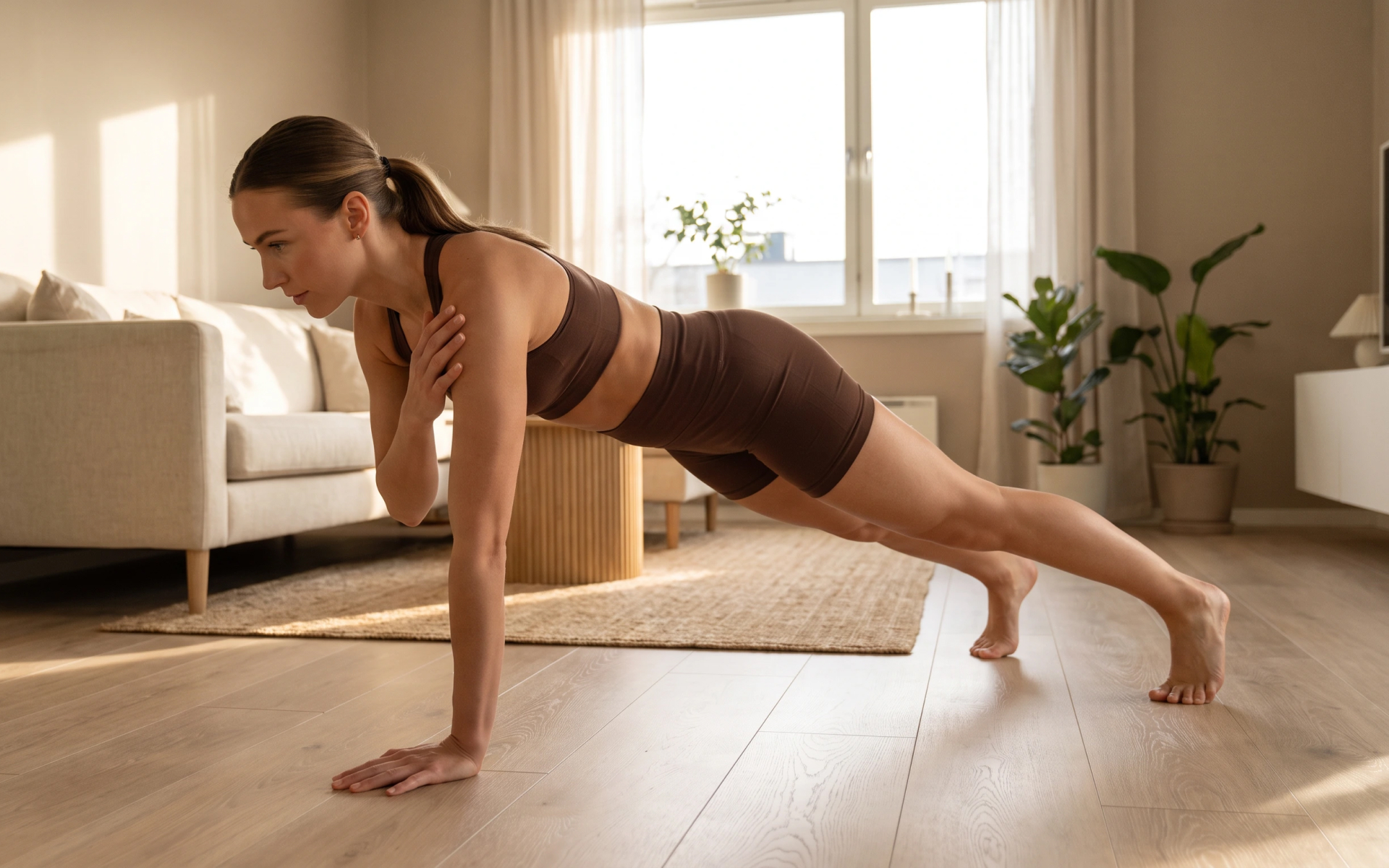

Calisthenics for women’s weight loss can provide strength practice and add to total activity. It cannot guarantee a calorie deficit or a particular scale change. These eight exercises offer a menu of strength and conditioning options, with easier variations and a sample routine you can adjust to your ability.
For a schedule with strength days and rest already organized, explore our 1-month calisthenics workout plan. This guide explains how to choose exercises while keeping expectations about weight and appearance realistic.
Calisthenics can contribute to physical activity, while individual weight changes vary. Individual results vary, and a workout plan alone cannot predict a specific weight change in four weeks.
Key takeaways
- Calisthenics can contribute to physical activity; food intake and total activity both influence the energy balance involved in weight management (1).
- This BetterMe menu contains 4 strength-focused options and 4 optional conditioning options. Choose a subset for each session.
- Wall push-ups, supported lunges, regular squats, step jacks, and marching are easier alternatives to more demanding movements.
- General adult guidance includes at least 150 minutes of moderate-intensity aerobic activity and muscle strengthening on at least 2 days weekly (2).
- Research in healthy adult women supports resistance training for strength. This menu cannot promise a particular physique (3).
- A review of resistance-training trials found modest average reductions in body fat compared with no-exercise controls; the averages do not predict an individual’s result (4).
- Exercise choice cannot promise fat loss from a particular area or a particular amount of weight loss in four weeks (5).
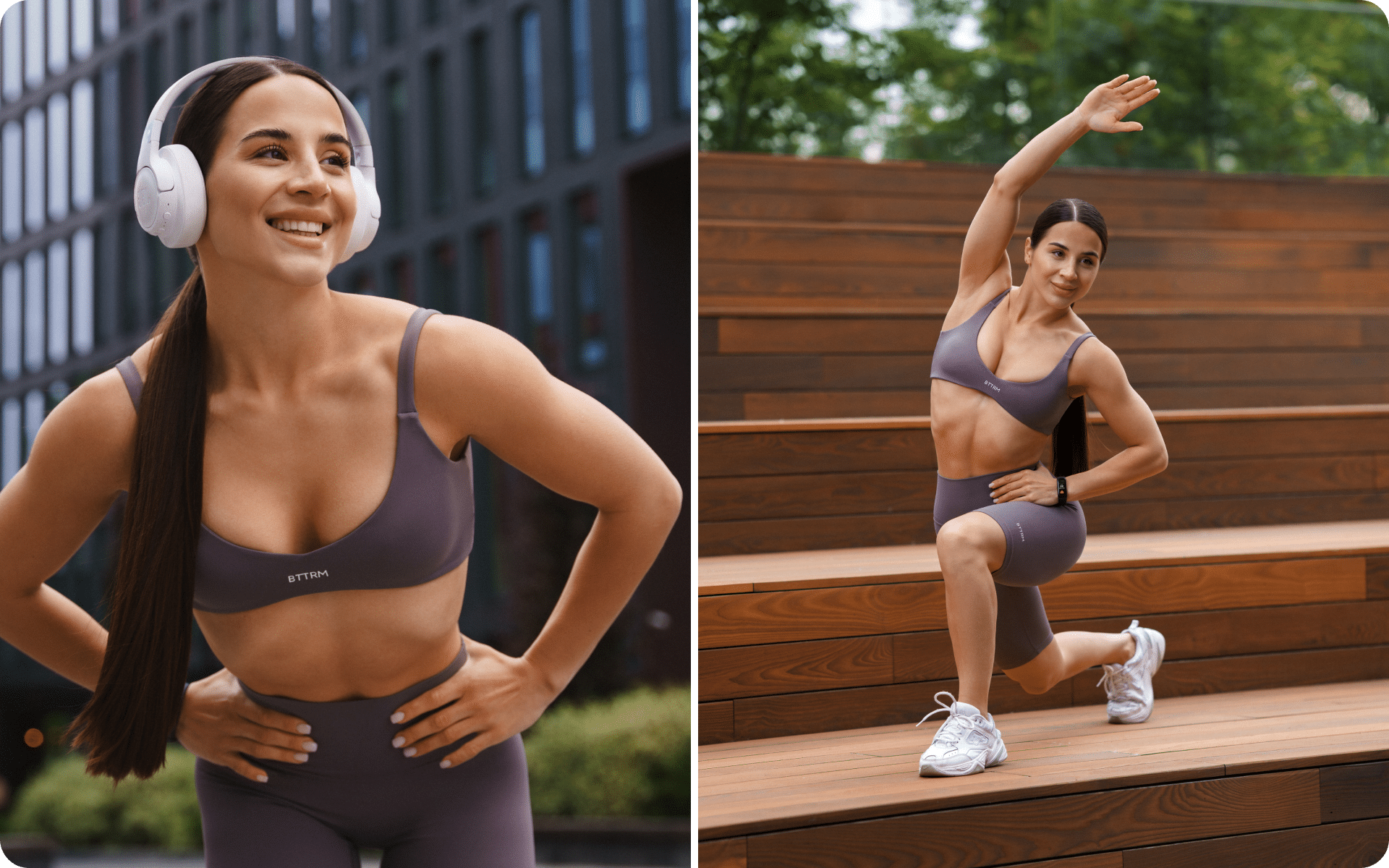
Is calisthenics good for losing weight?
Calisthenics can add physical activity to a weight-management routine. Weight change is not guaranteed.
Weight loss involves an energy deficit over time. Physical activity increases energy use, while food and drink intake also affect energy balance. The amount of activity needed differs between people, and an exercise routine alone cannot establish the size of that deficit (1).
A review of resistance-training trials in healthy adults found average body-fat reductions compared with no-exercise controls (4). The studies used different programs, so their averages cannot predict results from this eight-exercise menu.
There is no universal calorie-burn figure for burpees, planks, or a short calisthenics session. Effort, body size, session duration, and rest all change the amount of work performed. A demanding-looking exercise is not automatically a more useful choice for your routine.
Read more: Weight Loss Shakes: The Complete Guide (2026)
Is calisthenics useful for female beginners?
Calisthenics can give female beginners adjustable resistance-training movements, without needing a separate set of exercises solely because they are women.
You can change the repetitions, sets, or exercise variation to match your current ability. Adjust each movement separately; one option may suit you better than another.
Research in healthy adult women supports resistance training for strength and muscle development. It does not establish a guaranteed size or appearance change from bodyweight exercises (3).
Start with movements you can perform with control. Select a variation and dose that suit your current ability.
Which eight exercises can you choose?
Choose from the eight exercises according to their purpose, starting with easier versions when needed.
The menu includes burpees, mountain climbers, jump squats, push-ups, planks, lunges, jumping jacks, and high knees. Regular squats replace jump squats in the sample strength routine. Choose conditioning movements as optional additions; you do not need to perform all eight in one sequence.
All doses below are editorial coaching examples. Begin with one set or interval if needed and stop before technique deteriorates.
| Exercise | Sample starting dose | Easier alternative | Main role |
|---|---|---|---|
| Burpee | 1-2 sets of 3-5 controlled reps | Step-back version without a jump or push-up | Optional conditioning |
| Mountain climber | 1-2 intervals of 10-20 secs | Slow incline knee drive | Optional conditioning |
| Jump squat | 1-2 sets of 4-6 reps, only if comfortable | Regular squat or sit-to-stand, 6-10 reps | Leg strength practice with a nonjumping variation |
| Push-up | 1-2 sets of 6-10 reps | Wall or incline push-up | Strength |
| Plank | 1-2 holds of 10-20 secs | Plank from knees | Core practice |
| Lunge | 1-2 sets of 5-8 reps per leg | Supported split squat | Strength |
| Jumping jack | 1-2 intervals of 15-20 secs | Step jack | Optional conditioning |
| High knees | 1-2 intervals of 15-20 secs | Comfortable marching | Optional conditioning |
Use 60-90 seconds of rest after a strength set or conditioning interval, or longer when needed. There is no need to shorten rest to make the workout count. A slow strength session also does not automatically count toward the moderate-intensity aerobic target (2).
Burpees
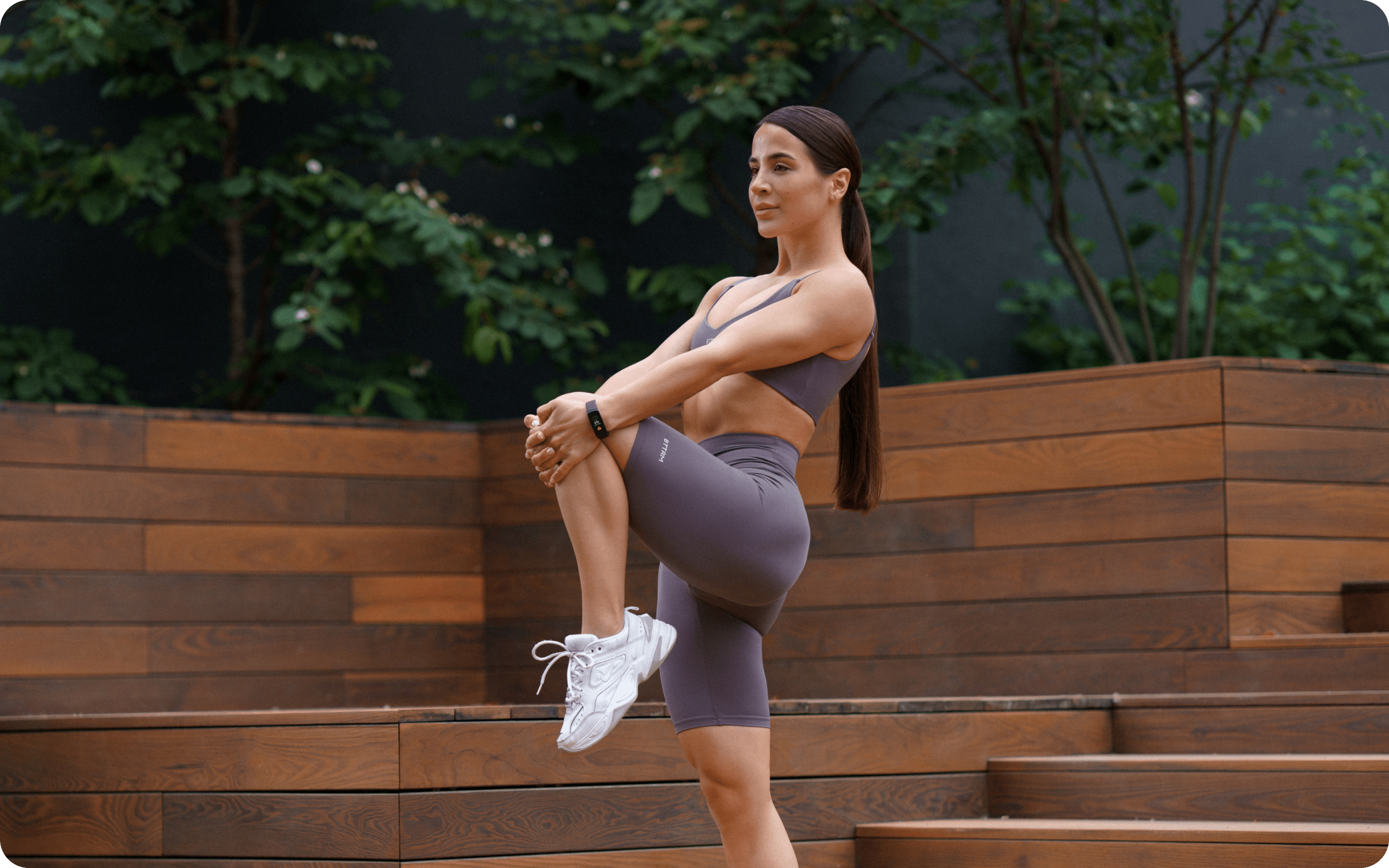
A burpee combines a squat, a plank transition, and a return to standing. Start with a controlled step-back version; a jump and push-up are optional, more demanding additions.
- Stand with your feet in a comfortable stance.
- Bend your knees to lower toward a squat.
- Place your hands on the floor or a fixed raised surface.
- Step one foot and then the other into a plank position.
- Step each foot back toward your hands.
- Stand up without jumping.
Use a raised surface that will not slide or tip if the floor transition is too demanding. Choose another movement if the transition causes discomfort.
Workouts, weight management tools, and recipe ideas come together in the BetterMe: Health Coaching app, giving you practical support for building a more consistent wellness routine.
Mountain climbers
Mountain climbers alternate knee movements from a plank position. A slow incline version reduces the demand compared with fast floor-based repetitions.
- Place your hands on a fixed counter or the floor.
- Position your shoulders over your hands.
- Bring one knee forward within a comfortable range.
- Return that leg to the starting position.
- Repeat the knee drive on the other side.
Keep your movement controlled rather than using maximum speed. Stop the interval when your body position changes.
Jump squats
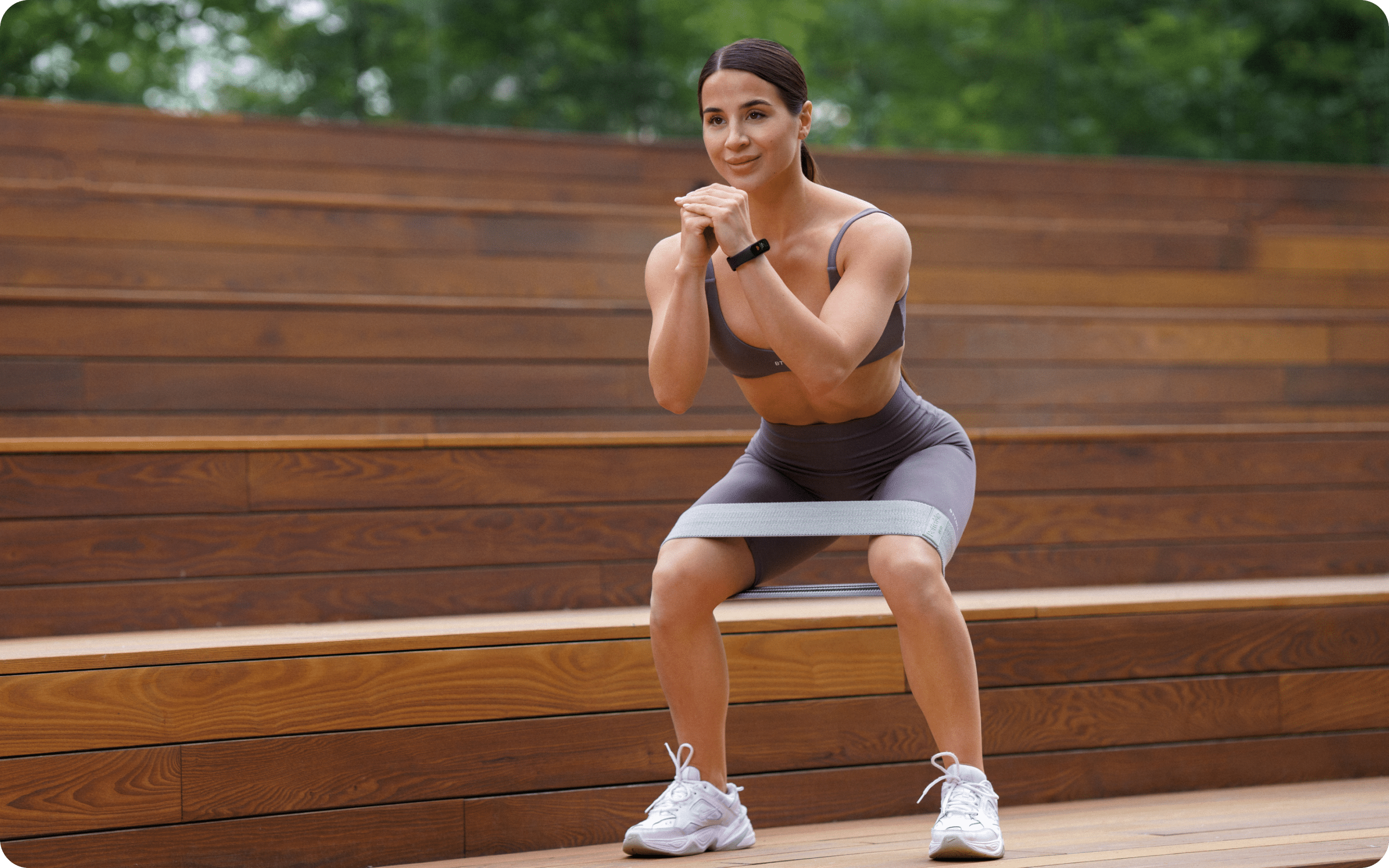
Jump squats add a jump to a squat, while a regular squat provides a starting alternative without the landing demand.
- Stand with your feet in a comfortable stance.
- Bend your knees and move your hips back into a controlled squat.
- Stand back up for the nonjumping version.
If jumping already feels manageable, use a small jump from the squat and land with control. Do not add jumps simply because the menu lists them, and choose the regular squat for the sample strength routine.
Push-ups
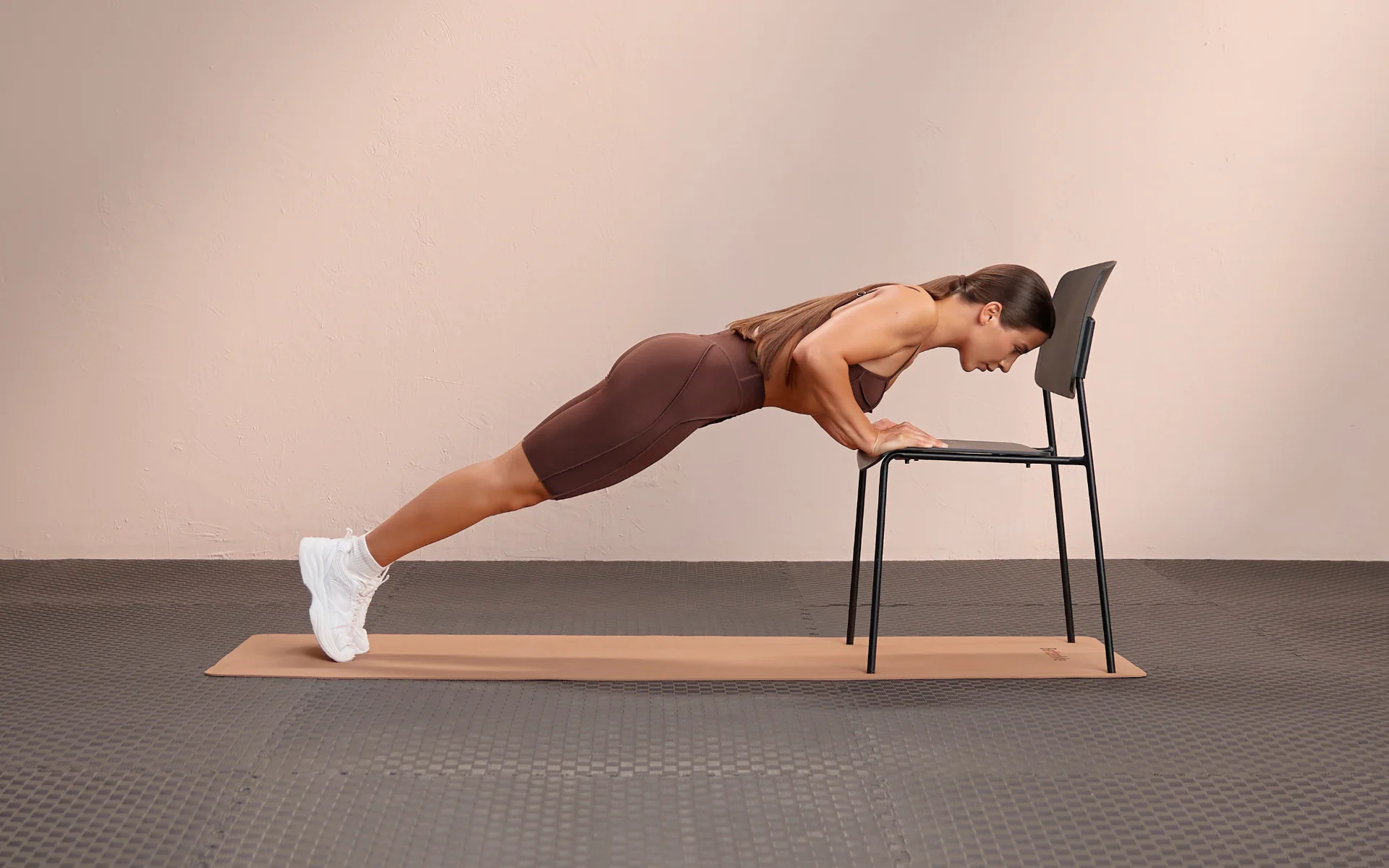
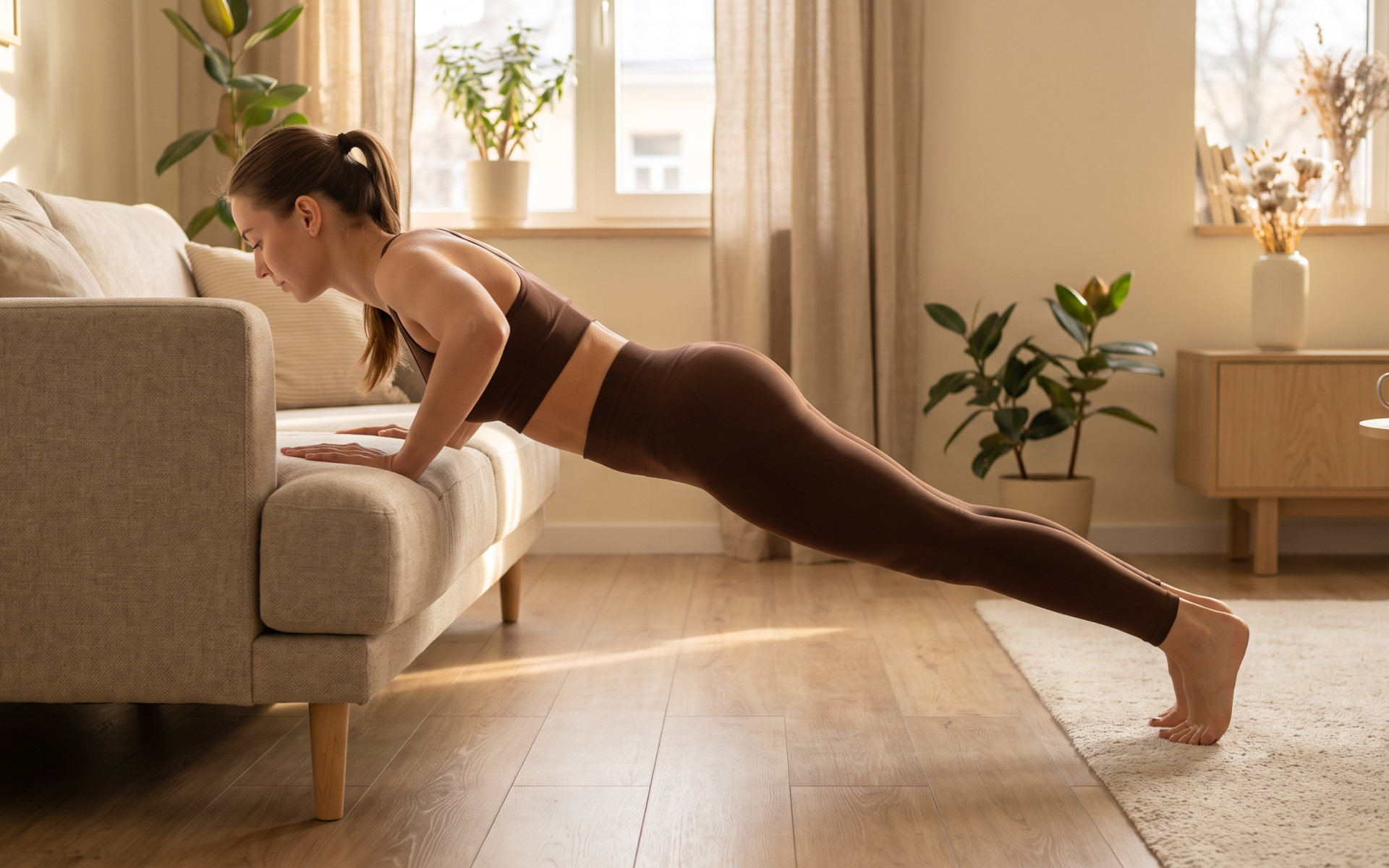
Push-ups provide a pushing pattern and can be adjusted by using a wall, incline, or floor.
- Place your hands on a wall, fixed counter, or floor.
- Position your body in a controlled straight line.
- Bend your elbows to lower your chest toward the support.
- Press through your hands to return to the starting position.
A higher support usually makes the movement easier. Choose a range you can control instead of requiring your chest to reach the floor.
Planks
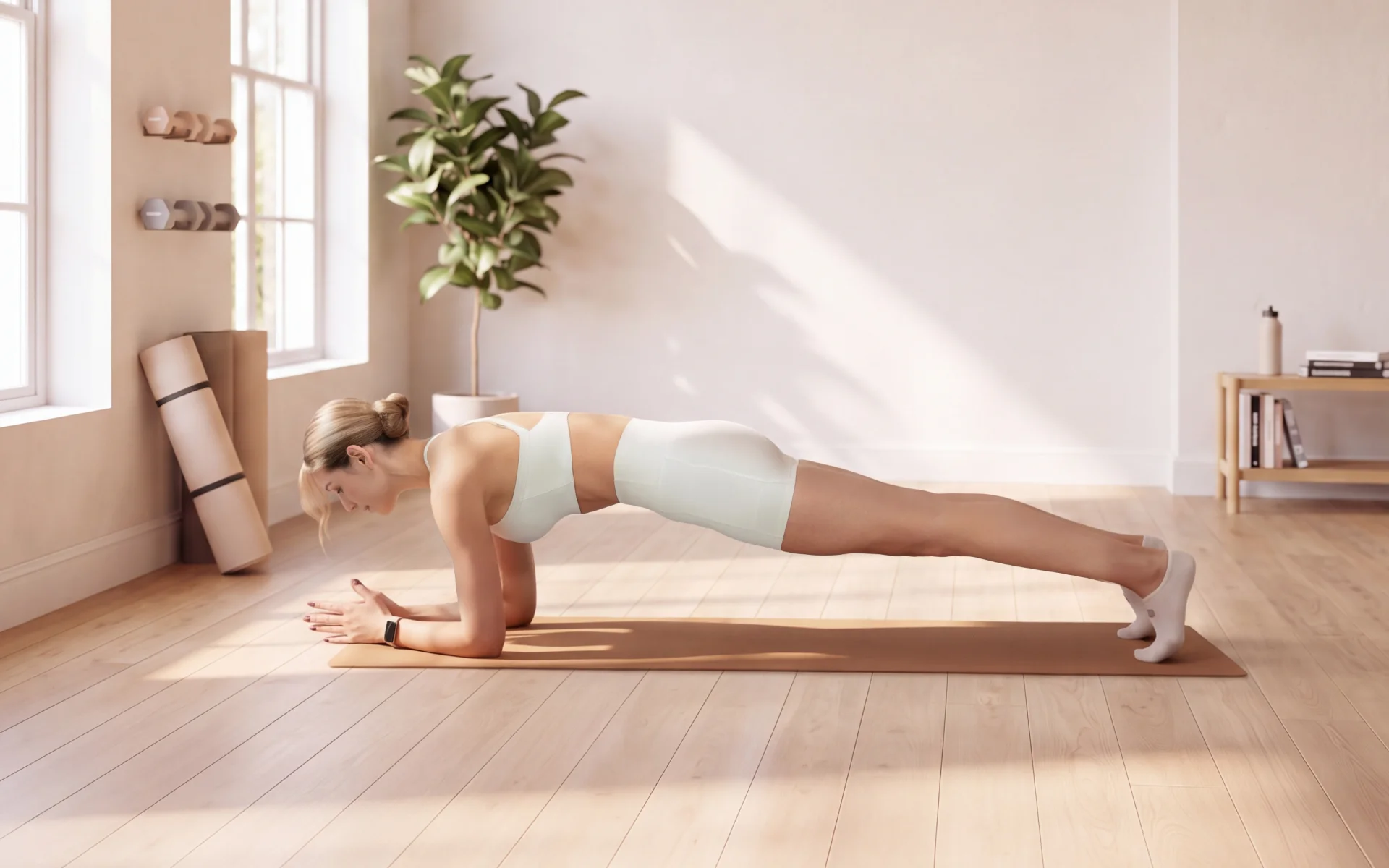
Planks provide a timed core exercise, with shorter holds and knee support as starting options.
- Place your forearms beneath your shoulders.
- Position your knees or feet on the floor.
- Lift your hips into a controlled straight body line.
- Hold while breathing steadily.
- Lower to rest before your hips sag or lift.
A longer hold is not necessary for the exercise to count. Repeat a shorter controlled hold instead of chasing a time target.
Read more: Counting Macros for Weight Loss: Pros, Cons, and How-To (A Beginner’s Guide)
Lunges
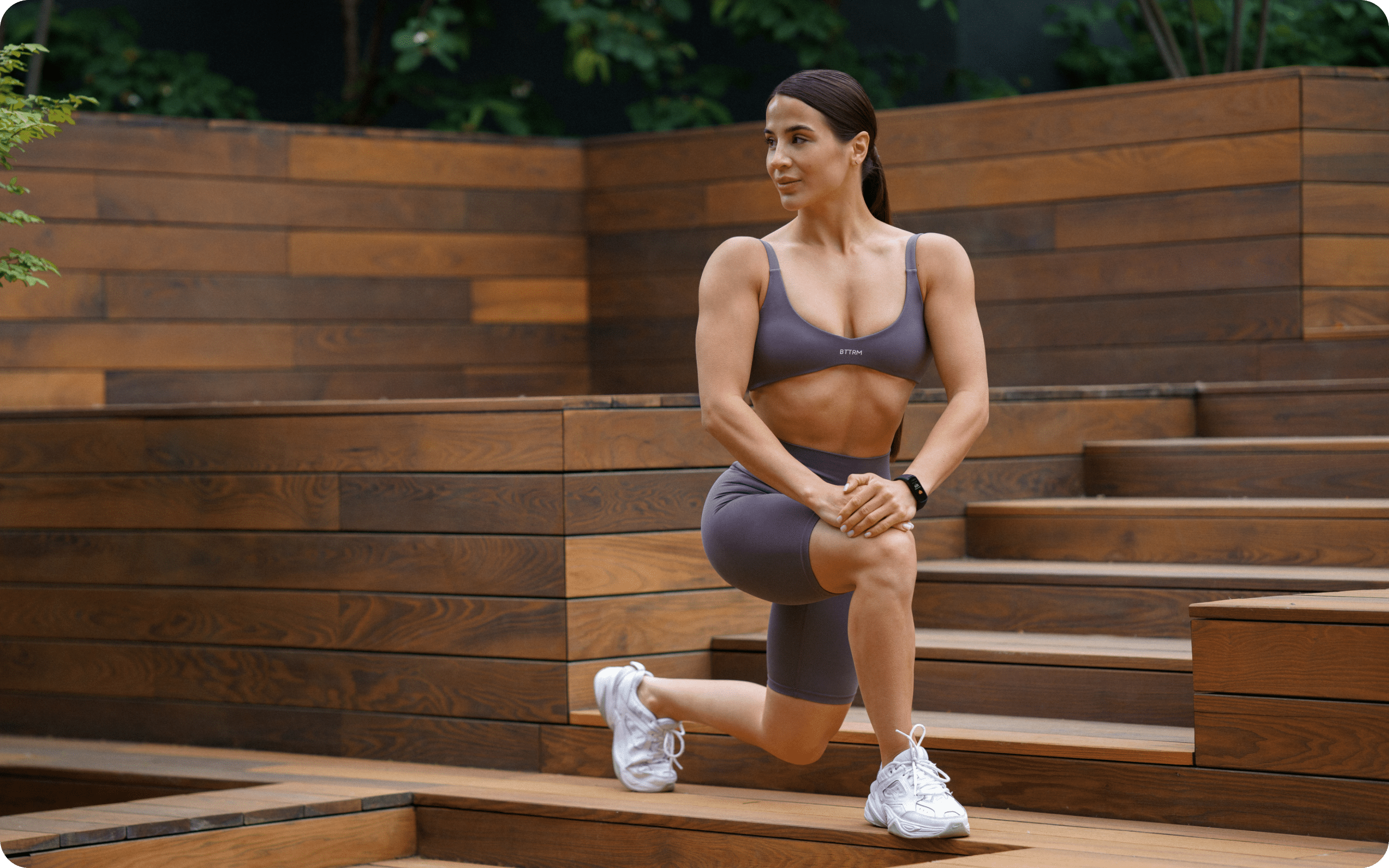
Lunges provide a single-leg movement pattern, while a supported split squat can reduce the balance demand.
- Stand beside stable support if needed.
- Step one foot back.
- Bend both knees within a comfortable range.
- Push through your front foot to return to standing.
- Repeat the reverse lunge on the other side.
For a split squat, keep your feet in the split stance while lowering and rising. You do not need a fixed depth or a prescribed knee angle.
Jumping jacks
Jumping jacks are a conditioning option; step jacks provide a nonjumping alternative.
- Stand with your feet together and your arms at your sides.
- Step one foot outward while raising your arms within a comfortable range.
- Return that foot and your arms to the starting position.
- Repeat the step jack on the other side.
If you choose the jumping version, use controlled jumps and landings. Switch back to stepping when effort or technique becomes difficult to manage.
High knees
High knees are a running-style conditioning option, while marching gives you a gentler starting movement.
- Stand with your feet hip-width apart and your chest lifted.
- Lift one knee to a comfortable height.
- Lower that foot to the floor.
- Repeat the march on the other side.
Use a natural arm swing if it feels comfortable. There is no need to lift your knee to waist height or move as quickly as possible.
For a routine that develops these movements over four weeks, see our 28-day calisthenics workout challenge.
How can you build a routine from the exercise menu?
Build a routine from a small strength-focused selection, adding optional conditioning only when the strength work remains manageable.
This example uses four movements from the menu. Add a glute bridge for hip movement and supported rows for pulling if you have suitable purpose-built equipment.
| Session component | Sample exercise | Adjustable dose |
|---|---|---|
| Preparation | Gentle marching and easier practice repetitions | Gradually build effort |
| Strength 1 | Wall or incline push-up | 1-2 sets of 6-10 reps |
| Strength 2 | Regular squat or sit-to-stand | 1-2 sets of 6-10 reps |
| Strength 3 | Supported split squat or reverse lunge | 1-2 sets of 5-8 reps per leg |
| Core | Plank from knees | 1-2 holds of 10-20 secs |
| Optional conditioning | Step jacks or marching | 1-2 intervals of 15-20 secs |
| Finish | Easier movement | Reduce effort gradually |
Leave a rest or lighter day between demanding full-body sessions. Two nonconsecutive strength days are a practical starting example, with a third only if the workload suits you. General adult activity guidance includes muscle strengthening at least twice weekly and separate aerobic activity targets (2).
The 30-day calisthenics workout plan offers exercise instructions and adjustable weekly phases. The 30-day challenge calendar can help you place sessions and rest days in a longer sequence.
Will calisthenics make you bulky?
Calisthenics can provide a muscle-building stimulus, but it cannot predict a particular physique or define what “bulky” means to you.
Resistance training can increase strength and muscle size in healthy adult women (3). The amount of change varies with the training stimulus, food intake, starting point, and other circumstances.
Choose training goals you can measure, such as a more controlled push-up or a repeatable session. Women can gain muscle, and people have different preferences for how they want to look.
How do calisthenics and gym training differ for weight management?
Calisthenics and gym training can both contribute to physical activity. Neither method guarantees a particular weight change.
Home-based bodyweight training may fit your schedule and preferences. Gym equipment may make certain pulling movements or load adjustments easier. Those practical differences do not establish one method as superior for everyone.
A review of resistance-training trials in healthy adults found modest average body-fat reductions compared with no-exercise controls (4). Those findings concerned different forms of resistance training and do not rank this exercise menu against a gym routine.
Choose a format you can repeat and adjust. Account for your other activity and food intake when assessing weight-management expectations (1).
BetterMe can help you add more structure to your daily wellness routine with workouts, meal planning tools, and habit-building features. Explore the app and take a practical step toward a routine that feels more manageable for you.
Can these exercises target belly or facial fat?
These exercises cannot promise fat loss from your belly, face, or another chosen area.
Training one muscle does not determine where body fat changes. In a small study of 11 people, 12 weeks of single-leg training did not significantly reduce fat in the trained leg (5). The study was narrow and does not test every form of exercise.
Use exercise to practice movement and increase activity. Do not choose planks or high knees on the expectation that they will remove fat from one location.
How do nutrition and progress tracking fit into weight management?
Nutrition and progress tracking help you assess the whole routine without treating a single workout or scale reading as the result.
Food and drink intake affect energy balance alongside physical activity (1). Choose regular meals and protein-containing foods that fit your preferences; use a calorie target only when it suits your needs and has reliable support.
A review found that protein supplementation could add to some resistance-training gains (6). It did not establish that every beginner needs supplements. Seek individual guidance from a qualified professional when needed.
Record the exercise variation, repetitions, rest, and perceived effort. Compare the same movement setup over time. Strength practice can be worthwhile even when body weight does not change.
If you want to explore BetterMe, visit the calisthenics quiz. Exercise and diet both influence results, and individual results may vary.
FAQs
Is calisthenics good for skinny people?
Calisthenics is an excellent choice for skinny people who are looking to gain strength, build muscle, and improve their overall fitness. Bodyweight exercises may not provide as much resistance as weightlifting, but they can still be very challenging, particularly when done with proper technique (4).
Does calisthenics burn a lot of fat?
Calisthenics can definitely help burn fat, as it is a form of high-intensity interval training (HIIT) that promotes muscle building, cardiovascular endurance, and weight loss (1). By increasing your heart rate, calisthenics exercises also ramp up your metabolism to help you burn more calories, even after you’ve finished working out. In comparison to low-intensity exercises, such as steady-state cardio, calisthenics can burn more calories in less time.
Can calisthenics help me build muscle and lose weight?
Yes, calisthenics can build muscle and help with weight loss. By challenging your muscles through bodyweight exercises, you can stimulate muscle growth and increase strength. In addition, the high-intensity nature of calisthenics promotes fat-burning and high calorie expenditure, which helps with weight loss (4).
Can calisthenics burn face fat?
Calisthenics won’t directly target fat in the face – no exercise can spot-reduce fat from specific areas. But by incorporating calisthenics exercises into your overall fitness routine, you can promote overall weight loss and reduction of body fat, including in the face.
The bottom line
Use the eight exercises as a menu, starting with easier variations and a small repeatable routine. Calisthenics can support strength practice and total activity, while weight and appearance outcomes depend on more than the exercise list.
Disclaimer
This article is intended for general informational purposes only and does not serve to address individual circumstances. It is not a substitute for professional advice or help and should not be relied on for making any kind of decision-making. Any action taken as a direct or indirect result of the information in this article is entirely at your own risk and is your sole responsibility.
BetterMe, its content staff, and its medical advisors accept no responsibility for inaccuracies, errors, misstatements, inconsistencies, or omissions and specifically disclaim any liability, loss or risk, personal, professional or otherwise, which may be incurred as a consequence, directly or indirectly, of the use and/or application of any content.
You should always seek the advice of your physician or other qualified health provider with any questions you may have regarding a medical condition or your specific situation. Never disregard professional medical advice or delay seeking it because of BetterMe content. If you suspect or think you may have a medical emergency, call your doctor.
Sources
- Physical Activity and Your Weight and Health (2026, cdc.gov).
- Adult Activity: An Overview (2023, cdc.gov).
- The Effect of Resistance Training in Women on Dynamic Strength and Muscular Hypertrophy: A Systematic Review with Meta-analysis (2020, pubmed.ncbi.nlm.nih.gov).
- The Effect of Resistance Training in Healthy Adults on Body Fat Percentage, Fat Mass and Visceral Fat: A Systematic Review and Meta-Analysis (2022, pubmed.ncbi.nlm.nih.gov).
- Regional fat changes induced by localized muscle endurance resistance training (2013, pubmed.ncbi.nlm.nih.gov).
- A systematic review, meta-analysis and meta-regression of the effect of protein supplementation on resistance training-induced gains in muscle mass and strength in healthy adults (2018, pmc.ncbi.nlm.nih.gov).
 By
 Reviewed by
 Reviewed by