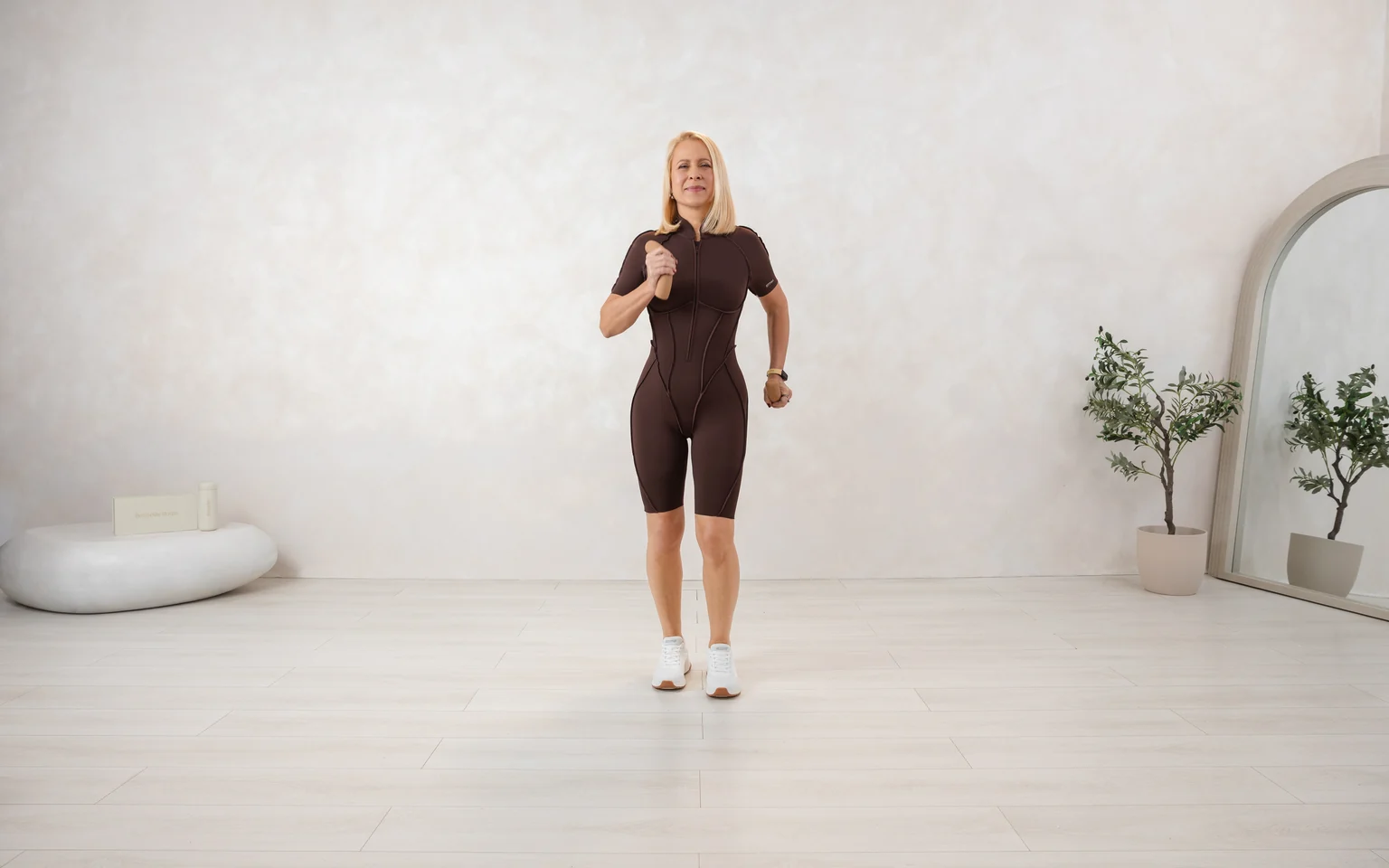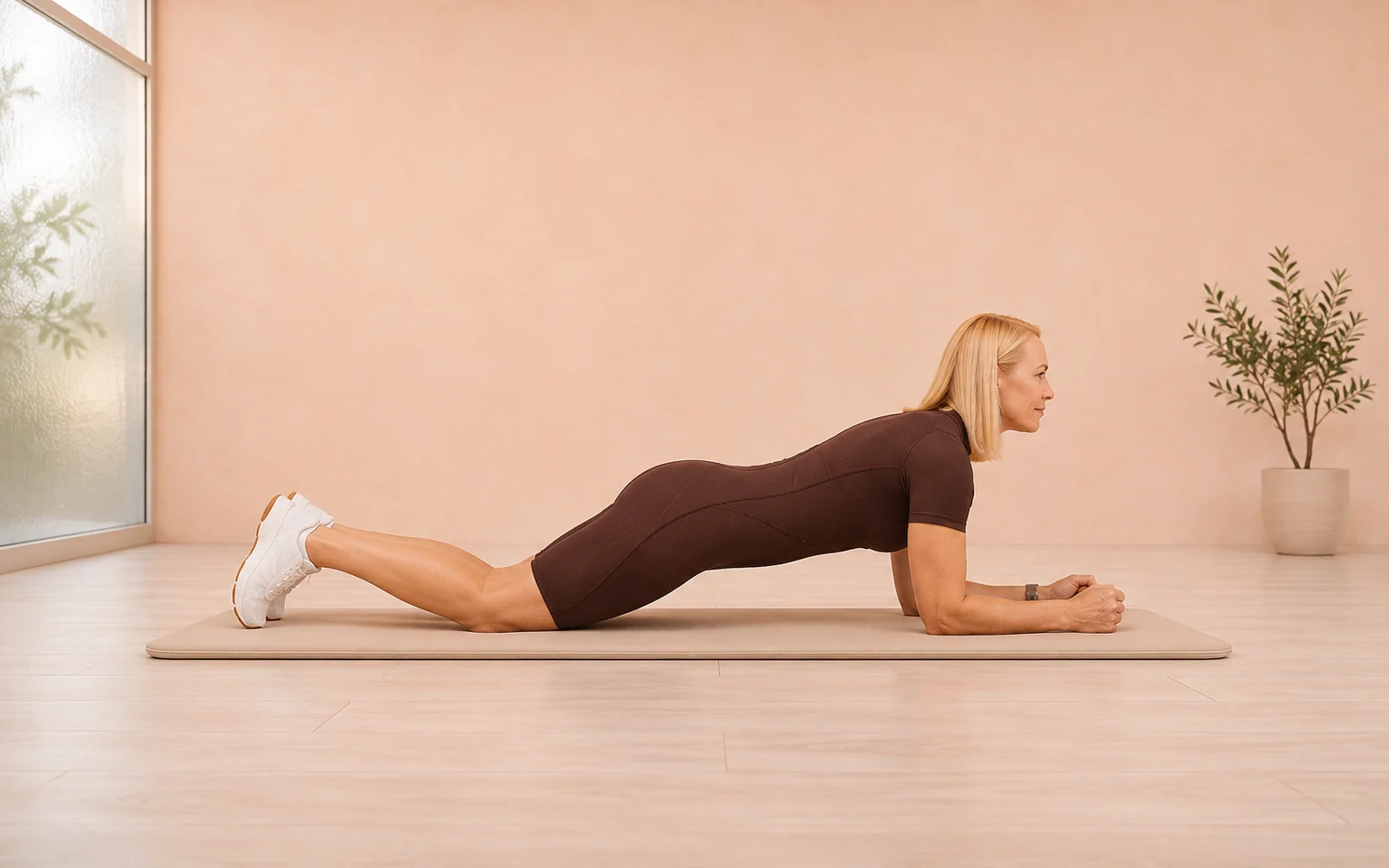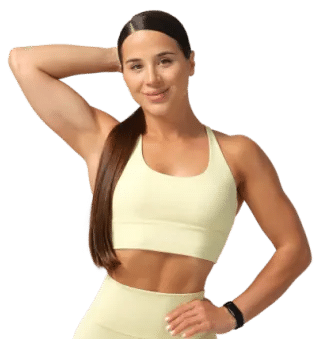

A female calisthenics body is not a specific body shape or appearance. Calisthenics describes training that uses bodyweight resistance, and women can practice it at different fitness levels. Training may improve strength and muscle size, but visible changes vary. Exercise choice, consistency, and individual circumstances all influence the experience.
Our guide to calisthenics benefits for women explains the broader reasons to start.
Following exercise and diet plans is the key in your fitness journey and greatly impacts results. In 4 weeks users can typically expect to lose not more than 1-2 lbs per week. Individual results may vary.
Key takeaways
These points summarize what a female calisthenics body can mean and what to expect.
- There is no single appearance that identifies someone who practices calisthenics.
- Resistance training can improve strength and muscle size in women (1).
- Bodyweight training can provide useful resistance when the exercise is appropriately challenging (2).
- Calisthenics does not promise a particular weight, silhouette, or result timeline.
- Performance records can show progress without relying on appearance comparisons.
- Choose exercise versions based on current ability, equipment, and any individual restrictions.
Is calisthenics suitable for women?
Women can use calisthenics as a form of resistance training. The exercises do not require a separate biological rulebook for every woman. Suitable starting versions depend on experience, current ability, and individual circumstances.
A review of resistance training in women found improvements in upper-body and lower-body strength. It also found increases in muscle size across the included studies (1). Those findings support training possibilities without predicting an identical outcome for everyone.
Bodyweight exercises range from a wall push-up to demanding bar skills. You do not need advanced skills to begin. A controlled chair squat may be a useful starting task for one person, while another needs greater resistance.
Pregnancy, recent surgery, persistent discomfort, or other medical considerations may change the appropriate starting point. Seek qualified guidance when those circumstances apply. A general article cannot determine individual readiness or replace specific instructions from your clinician.
Avoid assuming that every woman wants the same result. Some readers want stronger pushing movements, while others want a convenient routine. Your goal can guide the exercise selection without becoming a required appearance standard.
Can calisthenics change your body shape?
Calisthenics can contribute to changes in muscle size when it provides a sufficient resistance-training stimulus. Whether those changes are visible varies considerably. No routine can promise a specific waist, hip shape, or resemblance to another person.
A large review found that different resistance-training prescriptions improved strength and muscle growth compared with no training (3). The research covers varied programs. It does not establish that a particular bodyweight challenge produces a predictable appearance.
Bodyweight resistance can also become easier as you gain strength. An exercise that once challenged you may later require adjustment. That adjustment should follow your goal and control, rather than an arbitrary deadline. Bodyweight exercise can provide useful resistance when it is suitably challenging (2).
Changes in body weight involve more than exercise selection. Physical activity and eating patterns both contribute to weight management (4). A calisthenics routine alone cannot establish how your weight will change.
You also cannot use exercise photos to separate the effects of training from other influences. Lighting, posing, clothing, and the timing of a photograph can change its appearance. Treat online images as limited information rather than a forecast.
What can you measure besides appearance?
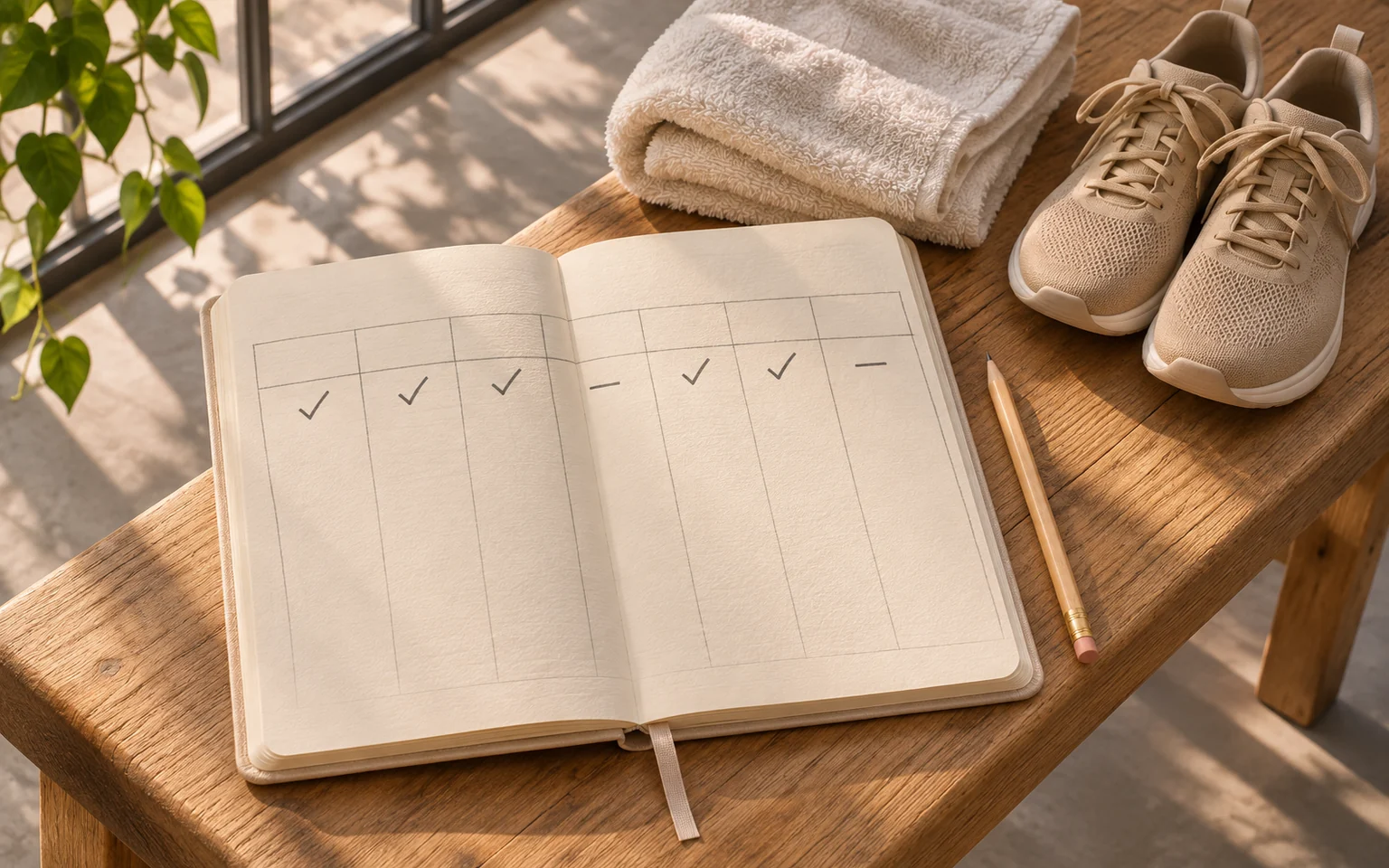
Measure a task that you can repeat under similar conditions. You might track wall push-ups at the same foot distance or squats to the same chair. Keep the exercise version and rest reasonably consistent.
A progress record can include repetitions, sets, assistance, and range. It can also note whether you completed the movement more steadily. These details help you understand changes that a photograph cannot show.
| Progress question | What to record | What it does not prove |
| Can I repeat more controlled repetitions? | Exercise version, repetitions, and rest | A specific amount of muscle gain |
| Do I need less assistance? | Exact support or assistance used | That every other movement improved |
| Can I use a harder variation? | Old and new setup details | That rapid progression should continue |
| Am I practicing consistently? | Completed sessions and interruptions | A set body change |
| Does the routine fit my week? | Time needed and scheduling barriers | That the same plan suits everyone |
Choose records that help you make a practical decision. If photographs or body measurements make the process distressing, you can leave them out. They are not required to organize a workable exercise habit.
Avoid testing your maximum every session. Regular practice and occasional comparisons serve different purposes. Repeated all-out attempts can make the workload harder to manage without answering your main question.
For more detail about organizing training, see our women’s calisthenics routine. Use the exercise information to support a goal you chose yourself.
Which exercises can help you get started?
Start with movements you can set up consistently and control through a comfortable range. The examples below cover several useful patterns. They are a learning menu, not a requirement to complete every exercise immediately.
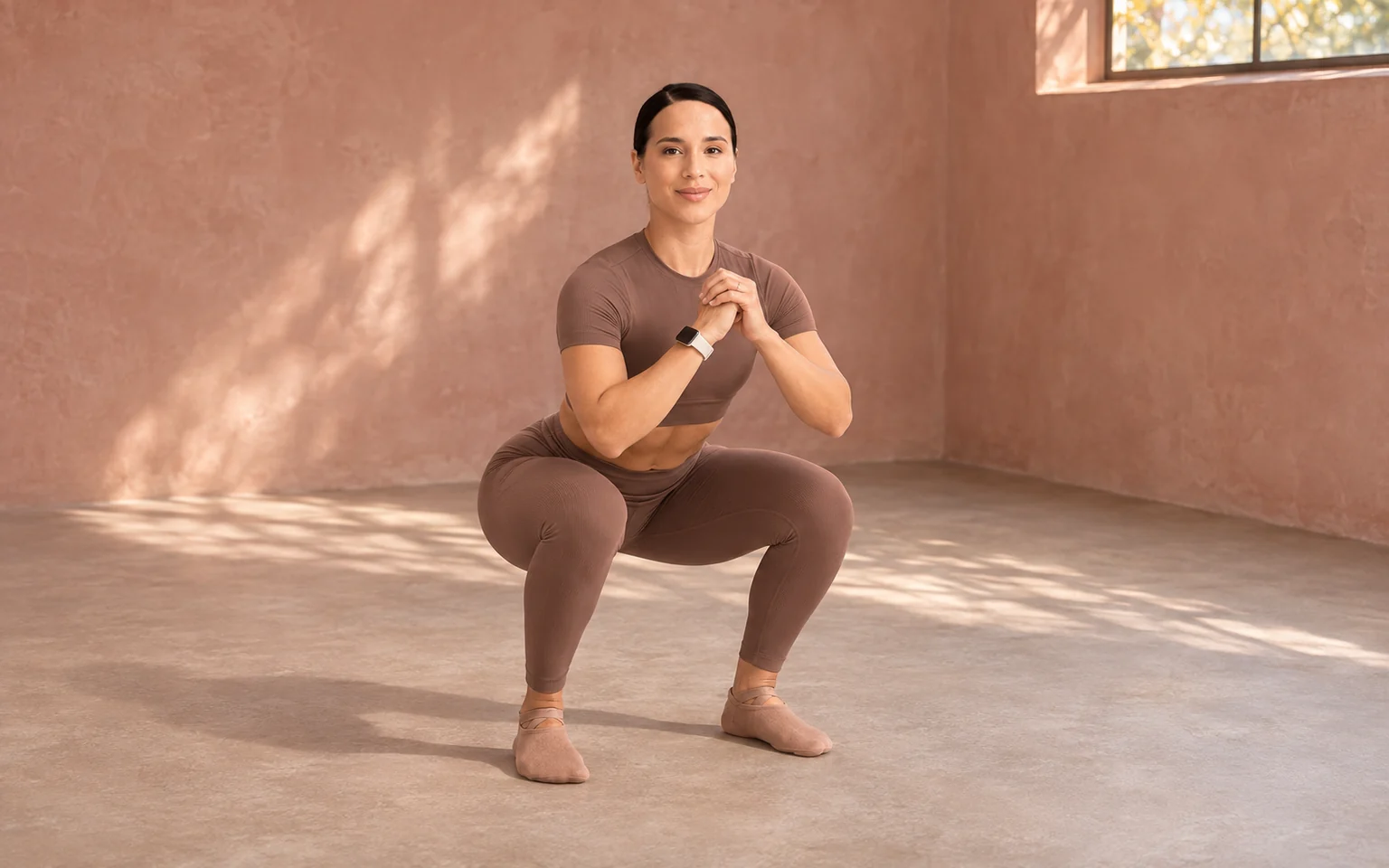
Chair squat
- Stand in front of a stable chair.
- Bend your hips and knees to lower toward the seat.
- Touch the seat gently or sit with control.
- Press through your feet to stand.
Use assistance when needed, and keep the chair from sliding. Public home-exercise guidance includes chair-based strengthening practice (5). The chair gives you a repeatable target for recording your progress.
Avoid dropping onto the seat as you become tired. Reduce the repetitions or use a higher stable seat if control becomes difficult. A shorter practice set can still provide information about your current ability.
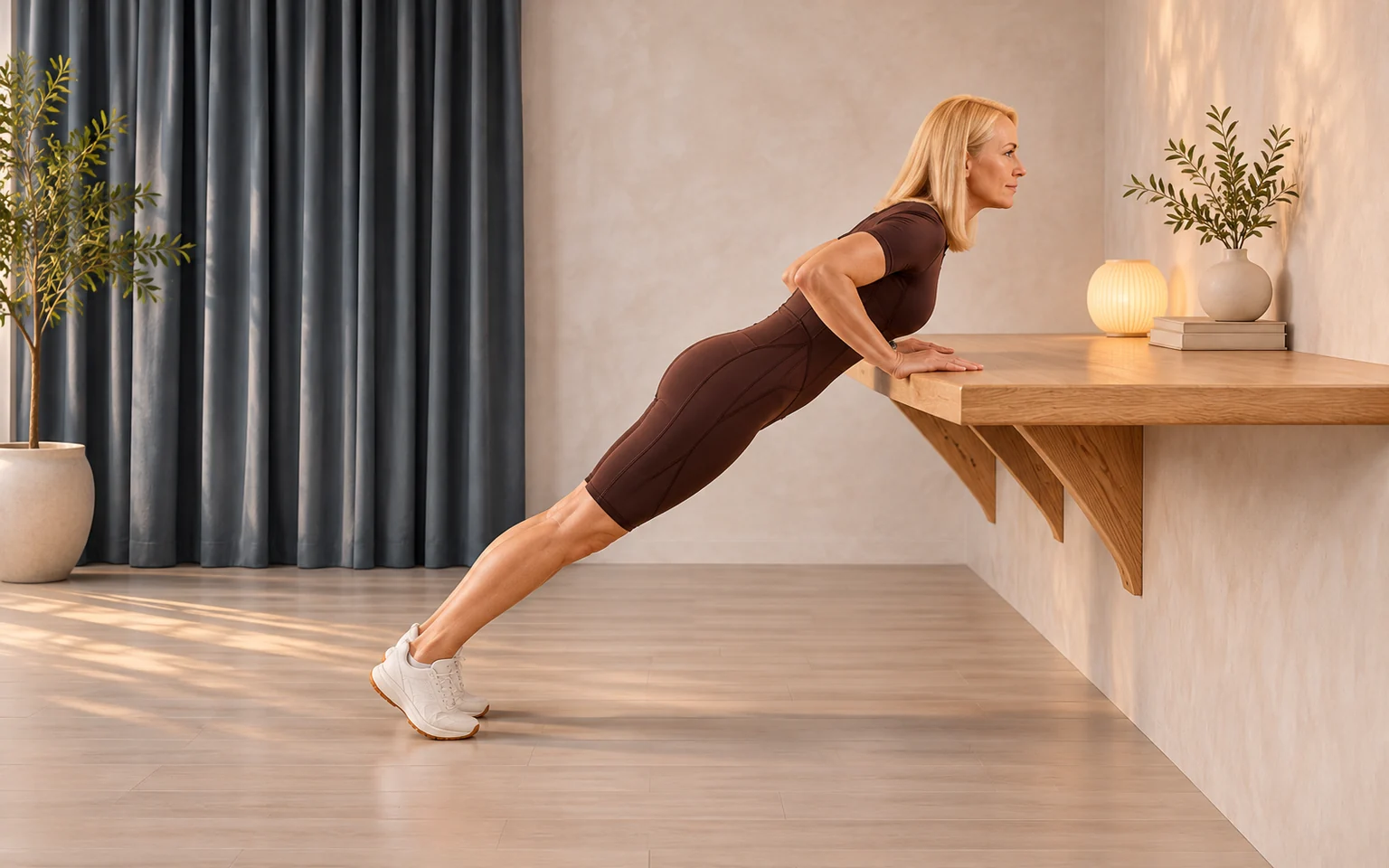
Wall or incline push-up
- Place your palms against a stable wall or suitable fixed support.
- Position your feet so your trunk remains aligned.
- Bend your elbows to lower toward the support.
- Press away to return.
Choose the support height according to your present strength. You do not need to reach the floor version before the movement counts as practice. Our push-up benefits guide explains the options in more detail.
Keep the setup consistent when comparing sessions. A lower support increases the challenge, so fewer repetitions may still represent a harder task. Record the version alongside the number.
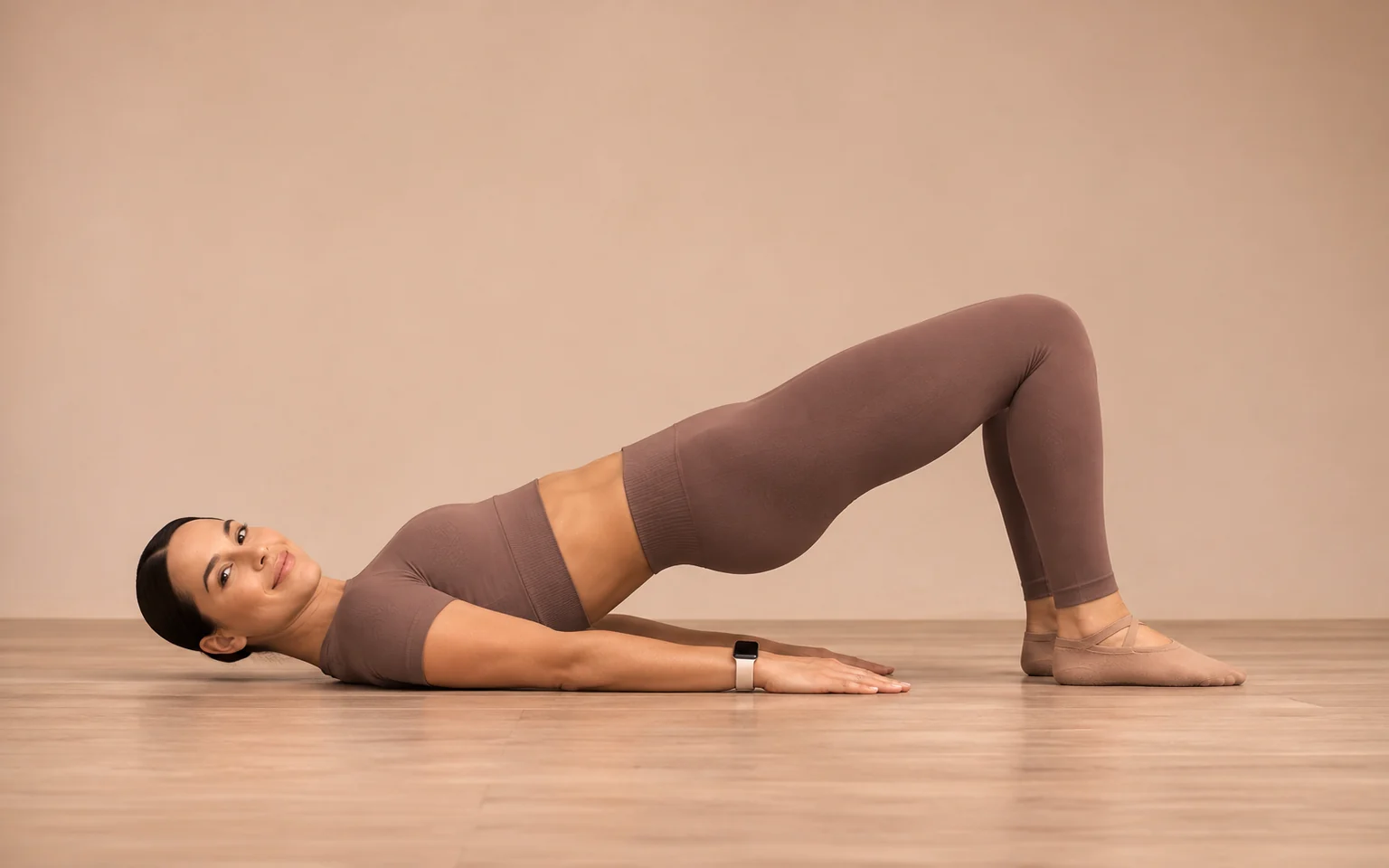
Glute bridge
- Lie on your back with bent knees.
- Place your feet flat on the floor.
- Lift your hips in a controlled movement.
- Lower gently to the starting position.
Choose a modest range while learning the exercise. Avoid forcing extra height by arching through your lower back. If getting onto the floor is difficult, ask for a suitable alternative.
A bridge can contribute to lower-body training without promising a particular silhouette. Focus on control and a repeatable setup. Additional challenge may eventually require different exercise choices or resistance.
Heel slide
- Lie on your back with your knees bent.
- Keep your trunk in a comfortable position.
- Slide one heel away slowly.
- Return that heel before switching sides.
Use a range that lets you breathe normally and stay steady. A small controlled movement is sufficient for learning the task. Stop if the position causes discomfort.
A suitable pulling exercise
Pulling usually requires an appropriate resistance setup. Learn the chosen exercise with qualified instruction and follow equipment installation guidance. Do not improvise bodyweight rows using furniture that was not designed to support you.
If pulling equipment is unavailable, recognize that the routine has a gap. Other movements can still be practiced while you arrange an option. A list of floor exercises does not automatically cover every major muscle group.
How should you organize your first sessions?
Choose a small selection of manageable movements and leave time to learn their setup. A first session can focus on practice rather than high repetition totals. Repeat familiar versions before adding difficult variations.
General adult guidance includes strengthening all major muscle groups on at least two weekly days (6). That recommendation is a broad target, not an individual starting prescription. Your circumstances may call for a different introduction.
You might begin with one manageable set of each selected movement. Stop when control declines instead of treating a target number as compulsory. Record what you actually completed so the next session starts from useful information.
A beginner home calisthenics plan can help organize the week. Keep rest and setup time in the schedule. Do not assume a short exercise list means the entire session will be equally short.
General technique guidance recommends adjusting the workload when form deteriorates and allowing rest between similar strength sessions (7). Use those principles when reviewing your practice. More work is not automatically a useful next step.
How long does it take to notice progress?
There is no universal deadline for visible changes or a specific skill. Early progress may involve learning the setup, remembering the sequence, or controlling a familiar movement. Those improvements are worth recording separately from appearance.
Research reports average results across groups and defined training periods. It cannot tell you exactly what your body will look like after that period. Avoid turning a study duration into a personal promise.
Review your notes after several sessions. If the same movement feels steadier, you may be ready for a small adjustment. If fatigue lingers or technique remains difficult, repeat or reduce the current workload.
Changes do not need to happen at the same rate across exercises. Pushing strength and lower-body movements may have different starting points. Give each movement an appropriate progression instead of advancing everything together.
What about food, rest, and comparisons?
An exercise routine does not require a restrictive eating challenge. Keep nutrition decisions appropriate to your needs and seek qualified advice for specific concerns. Food does not need to be earned through training.
Make room for sleep and rest when planning the week. If fatigue repeatedly disrupts your usual movement, reconsider the training amount and seek advice when needed. A rigid schedule need not override persistent discomfort.
Online before-and-after stories often omit important context. They may not show the person’s earlier training, daily routine, or changes outside exercise. You cannot use those stories to calculate your own timeline.
Stop for sharp pain, dizziness, chest discomfort, or unusual breathlessness. Seek appropriate medical advice when these signs persist or concern you. General exercise guidance cannot establish why these signs occurred.
Frequently Asked Questions
These answers cover gym comparisons, why calisthenics appeals, starting at 30, and early difficulty.
Is calisthenics harder than gym training?
Neither setting has one fixed difficulty level. A wall push-up and an advanced bar skill create very different demands. Compare the actual exercise and resistance rather than the location.
Why do some women find calisthenics appealing?
Some people enjoy practicing movement skills or using minimal equipment. Others value the convenience of exercising at home. That appeal does not depend on achieving a particular body shape.
Is 30 too late to start?
No, turning 30 does not create a cutoff for learning bodyweight exercises. Start according to your current ability and any individual restrictions. Previous experience matters more than matching someone else’s starting level.
Why does calisthenics feel difficult at first?
Your bodyweight may provide more resistance than you can currently control in a particular exercise. Use a more supported variation and shorter practice sets. Difficulty is information about the task, not a judgment about your body.
The bottom line
Choose a training goal you can measure through practice, such as a steadier squat or a more controlled push-up. Record comparable sessions and adjust gradually. Your progress does not need to match a specific appearance or another person’s timeline.
DISCLAIMER:
This article is intended for general informational purposes only and does not serve to address individual circumstances. It is not a substitute for professional advice or help and should not be relied on for making any kind of decision-making. Any action taken as a direct or indirect result of the information in this article is entirely at your own risk and is your sole responsibility.
BetterMe, its content staff, and its medical advisors accept no responsibility for inaccuracies, errors, misstatements, inconsistencies, or omissions and specifically disclaim any liability, loss or risk, personal, professional or otherwise, which may be incurred as a consequence, directly or indirectly, of the use and/or application of any content.
You should always seek the advice of your physician or other qualified health provider with any questions you may have regarding a medical condition or your specific situation. Never disregard professional medical advice or delay seeking it because of BetterMe content. If you suspect or think you may have a medical emergency, call your doctor.
SOURCES:
- The Effect of Resistance Training in Women on Dynamic Strength and Muscular Hypertrophy: A Systematic Review with Meta-analysis (2020, pubmed.ncbi.nlm.nih.gov).
- ACSM Unveils Landmark 2026 Resistance Training Guidelines: First Update in 17 Years (2026, acsm.org).
- Resistance training prescription for muscle strength and hypertrophy in healthy adults: a systematic review and Bayesian network meta-analysis (2023, pubmed.ncbi.nlm.nih.gov).
- Benefits of Physical Activity (2025, cdc.gov).
- Strength exercises (2024, nhs.uk).
- Adult Activity: An Overview (2023, cdc.gov).
- Weight training: Do’s and don’ts of proper technique (2025, mayoclinic.org).
 By
 Reviewed by