A 10-minute calisthenics workout can provide a brief opportunity to move and practice familiar bodyweight exercises. This example allocates five minutes to warming up, four minutes to exercise slots, and one minute to finishing. It is a short practice option, not a complete weekly training plan or a required intensity target.
For a longer-term starting schedule, see our beginner calisthenics workout plan at home.
Following exercise and diet plans is the key in your fitness journey and greatly impacts results. In 4 weeks users can typically expect to lose not more than 1-2 lbs per week. Individual results may vary.
Key takeaways
These points summarize how the 10-minute calisthenics workout runs and how to adjust it.
- The example totals 10 minutes, including preparation, short exercise slots, and a finish.
- Each exercise slot contains up to 20 seconds of movement and 10 seconds for rest or transition.
- Extend the clock whenever you need more preparation, rest, or transition time.
- A timed bodyweight routine is not automatically high-intensity interval training.
- Weekly adult guidance includes aerobic activity and strengthening, which this short routine does not fully cover (1).
- Bodyweight exercise can contribute to resistance training when the movements provide suitable challenge (2).
What can a short workout accomplish?
A short workout gives you a defined period for movement practice. It can be useful when a longer session does not fit your day. Its contribution depends on the exercises, effort, and how it fits your wider routine. Bodyweight exercise can contribute to resistance training when the movements are suitably challenging (2).
Do not assume ten elapsed minutes equal ten minutes of moderate or vigorous activity. The clock includes warming up, rest, and transitions. This example also uses brief practice slots rather than sustained demanding work.
General adult guidance recommends aerobic activity alongside strengthening all major muscle groups on at least two weekly days (1). This small routine does not automatically satisfy those recommendations. It also lacks a substantial pulling exercise.
Resistance-training research shows that different programs can improve strength and muscle size (3). That finding does not establish the effectiveness of this exact ten-minute sequence. Treat the routine as an organizational example, not a research-tested intervention.
If your main goal is progressive strength training, use a broader plan with recorded sets and appropriate resistance. Our home calisthenics workout plan explains how to organize those sessions.
What should you prepare before starting?
Clear enough space to step, reach, and move without contacting furniture. Check that the floor is dry and free of loose rugs. Place any mat where it will not slide during transitions.
If you use a wall or fixed support, check that your hands can rest securely. Do not lean on movable furniture. Choose all exercise variations before starting the timer so you are not learning under time pressure.
The timed version is intended for familiar movements. If an exercise is new, practice its setup first and allow additional time. Learning instructions does not need to happen inside the ten-minute appointment.
Have a timer you can see or hear without repeatedly turning your head. Set it for eight 30-second slots after the warm-up. Each slot includes a short movement period followed by time to rest or change position.
Consider individual restrictions before beginning. Recent surgery, persistent discomfort, or difficulty changing positions may require different choices. Seek qualified guidance when you need help deciding what is appropriate.
What is the exact 10-minute schedule?
The schedule uses a five-minute warm-up, eight 30-second slots, and a one-minute finish. Eight slots total four minutes. Together, those blocks total ten minutes.
| Time | Activity | How to use the time |
| 0:00 to 5:00 | Gentle warm-up | Gradually rehearse comfortable movements |
| 5:00 to 5:30 | Supported burpee alternative | Up to 20 seconds moving, then 10 seconds rest |
| 5:30 to 6:00 | Bodyweight squat | Up to 20 seconds moving, then 10 seconds rest |
| 6:00 to 6:30 | Supported reverse lunge or step-back | Up to 20 seconds moving, then 10 seconds rest |
| 6:30 to 7:00 | Squat-to-calf-raise option | Up to 20 seconds moving, then 10 seconds rest |
| 7:00 to 7:30 | Wall sit or supported standing option | Up to 20 seconds practice, then 10 seconds transition |
| 7:30 to 8:00 | Glute bridge or standing hip extension | Up to 20 seconds moving, then 10 seconds rest |
| 8:00 to 8:30 | Plank step-out or standing side tap | Up to 20 seconds moving, then 10 seconds rest |
| 8:30 to 9:00 | Push-up variation | Up to 20 seconds moving, then 10 seconds rest |
| 9:00 to 10:00 | Comfortable finish | Slow your movement and reassess how you feel |
The ten-second breaks include all transitions. If that is insufficient, pause the timer and extend the session. Avoid hurrying onto the floor or continuing while unsteady just to keep to the duration.
You can choose the standing options throughout to reduce floor changes. These alternatives are different exercises, not identical substitutes. Keep the choice consistent if you want to compare later sessions.
How should you warm up?
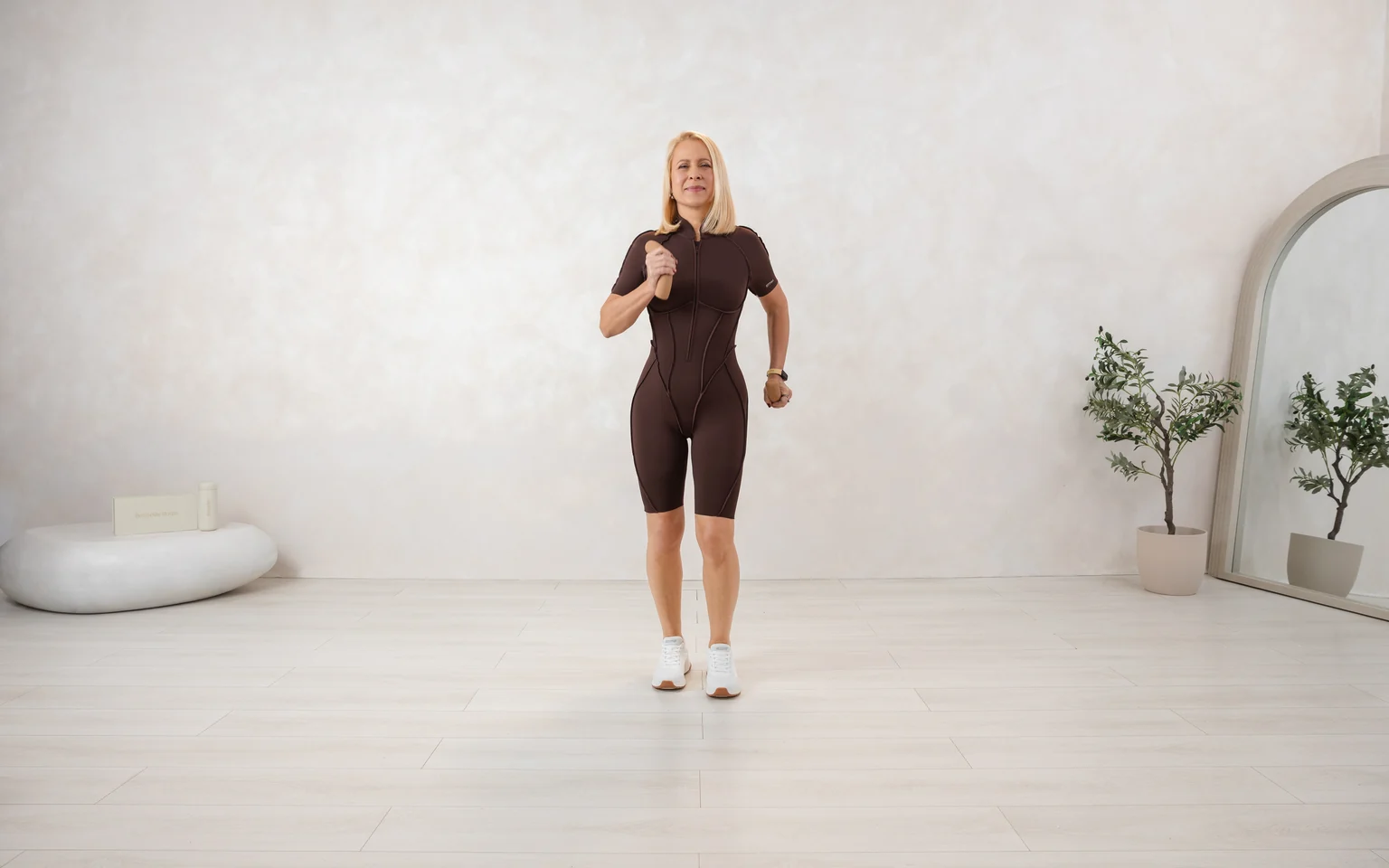
Use the first five minutes for gentle movement and rehearsal. You might walk comfortably, then practice small versions of the planned standing movements. Gradually increase your range only while the movements feel manageable.
General technique guidance recommends warming up for five to ten minutes before strength work (4). This example uses the shorter end of that range. Take longer when needed, even though the total session will exceed ten minutes.
A possible sequence is two minutes of comfortable walking followed by three minutes of gentle exercise rehearsal. Avoid using the rehearsal as an extra demanding round. Its purpose here is to prepare for the movements and check your setup.
If you remain stiff, unsteady, or uncomfortable, adjust the plan before continuing. You can skip the timed block and practice easier movements instead. The timer does not determine whether you are ready.
How do you perform the eight movements?
Use controlled repetitions and stop before the slot ends whenever needed. The movement periods are maximum available time, not mandatory work targets. There is no required repetition total.
1. Supported burpee alternative
- Place your hands on a stable fixed support.
- Step one foot back into a comfortable supported position.
- Step that foot forward again.
- Repeat with the other foot.
This removes the floor drop and jump found in many burpees. It is a separate introductory option, not an equivalent high-intensity movement. Skip it if your support or balance is uncertain.
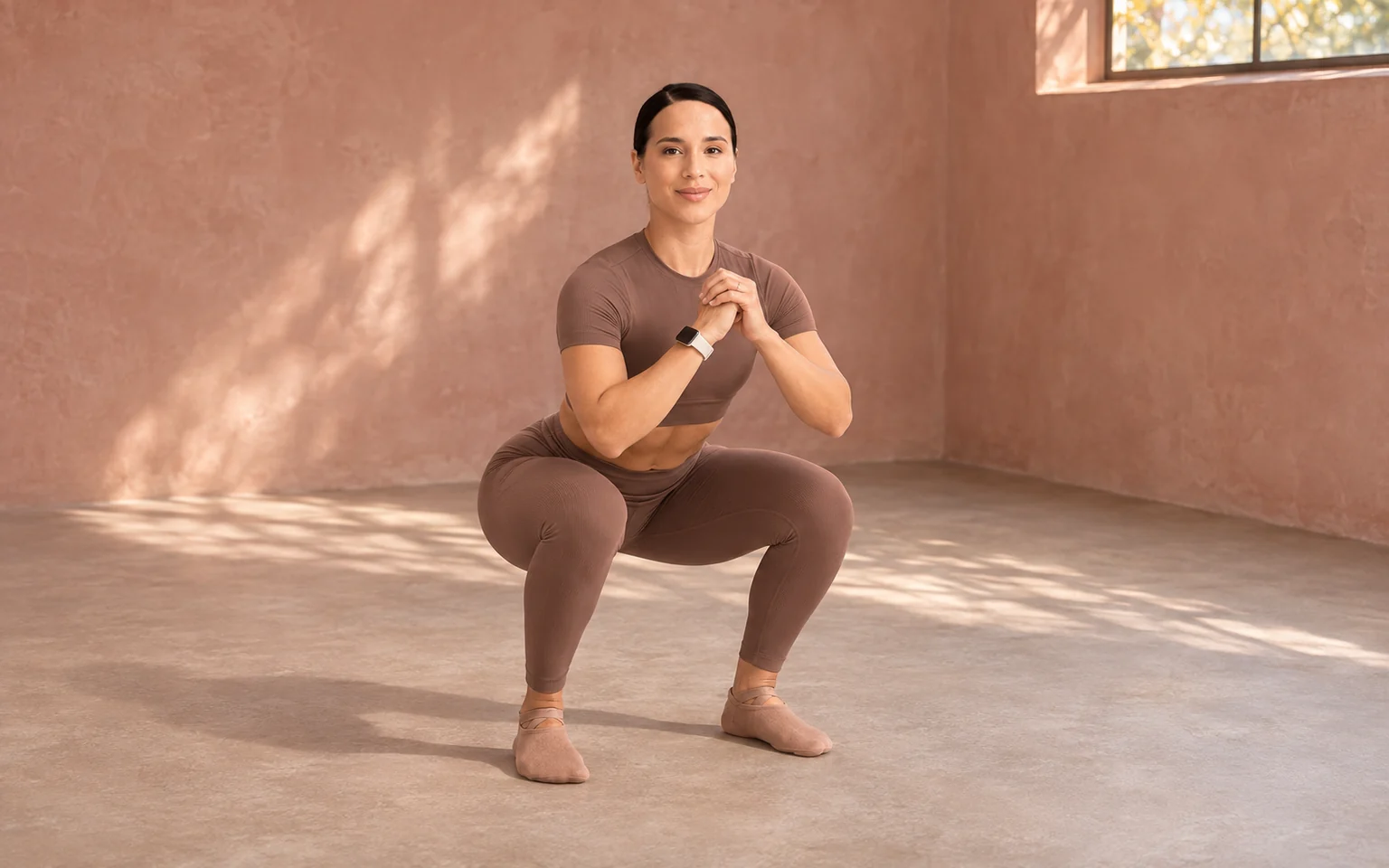
2. Bodyweight squat
- Stand with your feet comfortably apart.
- Bend your hips and knees to lower under control.
- Stop at a depth you can manage steadily.
- Press through your feet to stand.
Use a stable chair as a target if helpful. Chair rises and mini-squats appear in public home-strength guidance (5). Keep your movement deliberate rather than chasing repetitions.
3. Supported reverse lunge or step-back
- Hold a stable support lightly.
- Step one foot backward a short distance.
- Bend your knees slightly if comfortable.
- Return to standing before changing sides.
A simple step-back without lowering is another option. It changes the exercise demand and may make the setup easier to learn. Keep both sides controlled rather than forcing equal repetitions within the slot.
4. Squat-to-calf-raise option
- Perform a shallow, controlled squat.
- Return to standing.
- Lift your heels while using support if needed.
- Lower your heels gently.
This is a non-jumping lower-body option. It adds no requirement to leave the floor. Keep the squat and calf raise separate enough to maintain your balance.
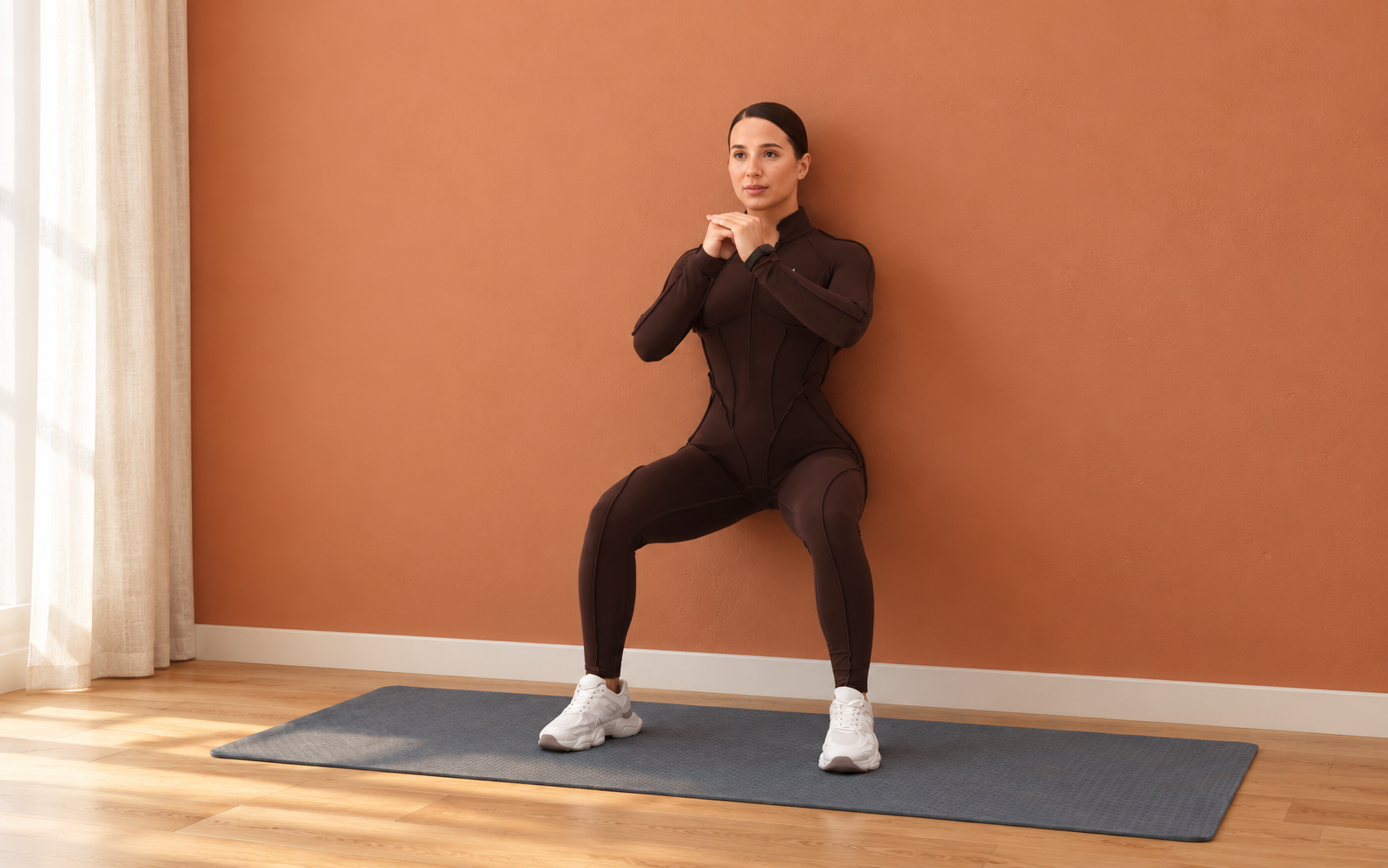
5. Wall sit or supported standing option
- Place your back against a suitable wall.
- Move your feet slightly forward.
- Lower only a small, comfortable distance.
- Return to standing before control becomes difficult.
You can instead remain standing and perform a supported calf raise. A knee-lift variation adds a balance challenge and is optional. Do not add that challenge while learning the basic position.
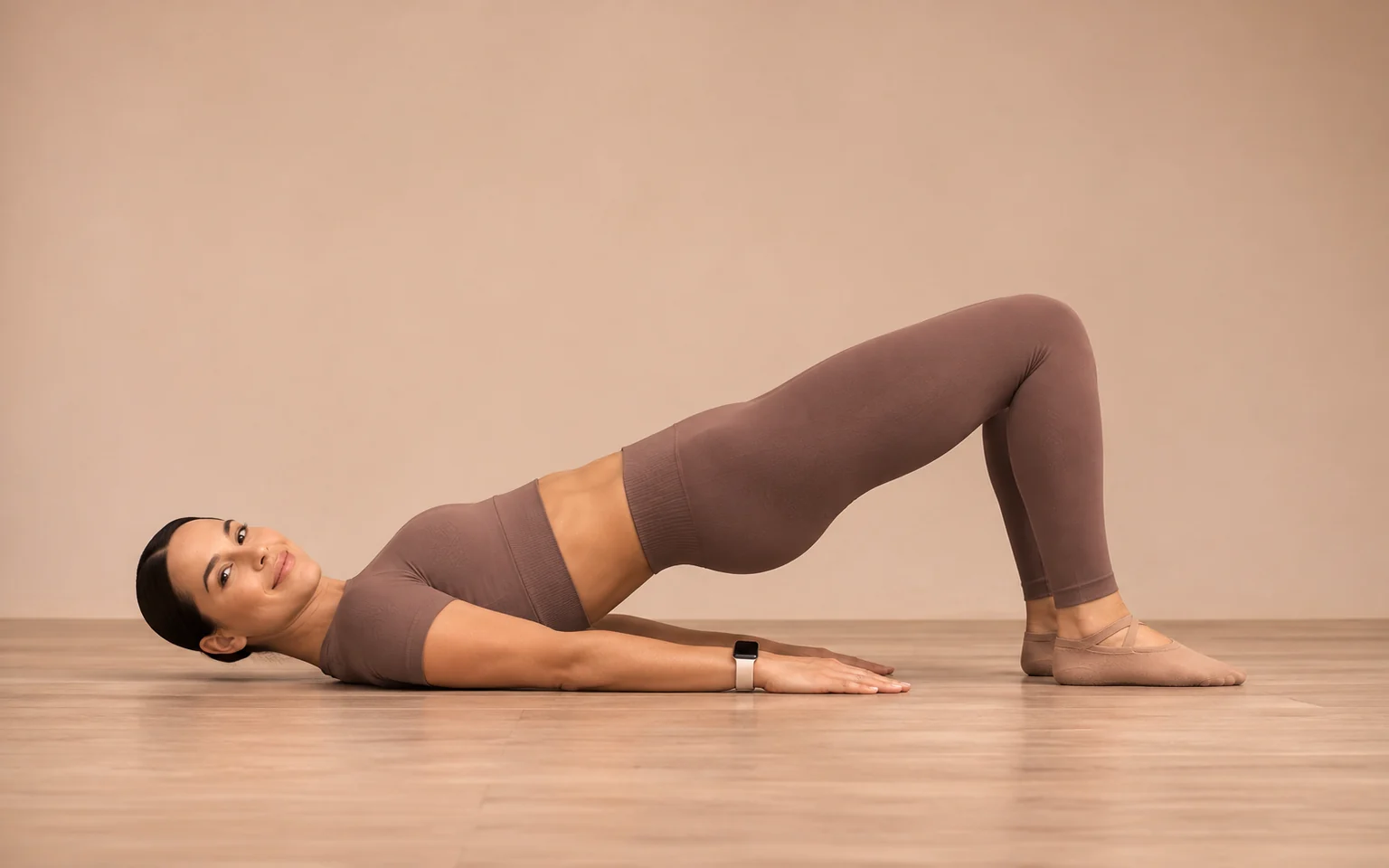
6. Glute bridge or standing hip extension
- Lie on your back with bent knees for the bridge.
- Place your feet flat on the floor.
- Lift your hips without forcing your lower back into an arch.
- Lower with control.
For the standing option, hold a stable support and move one leg gently backward. Keep the movement small and your trunk steady. Switch sides without rushing; the standing option avoids a floor transition.
Our calisthenics glute exercise guide explains additional lower-body choices. Do not add those exercises automatically to this timed sequence.
7. Plank step-out or standing side tap
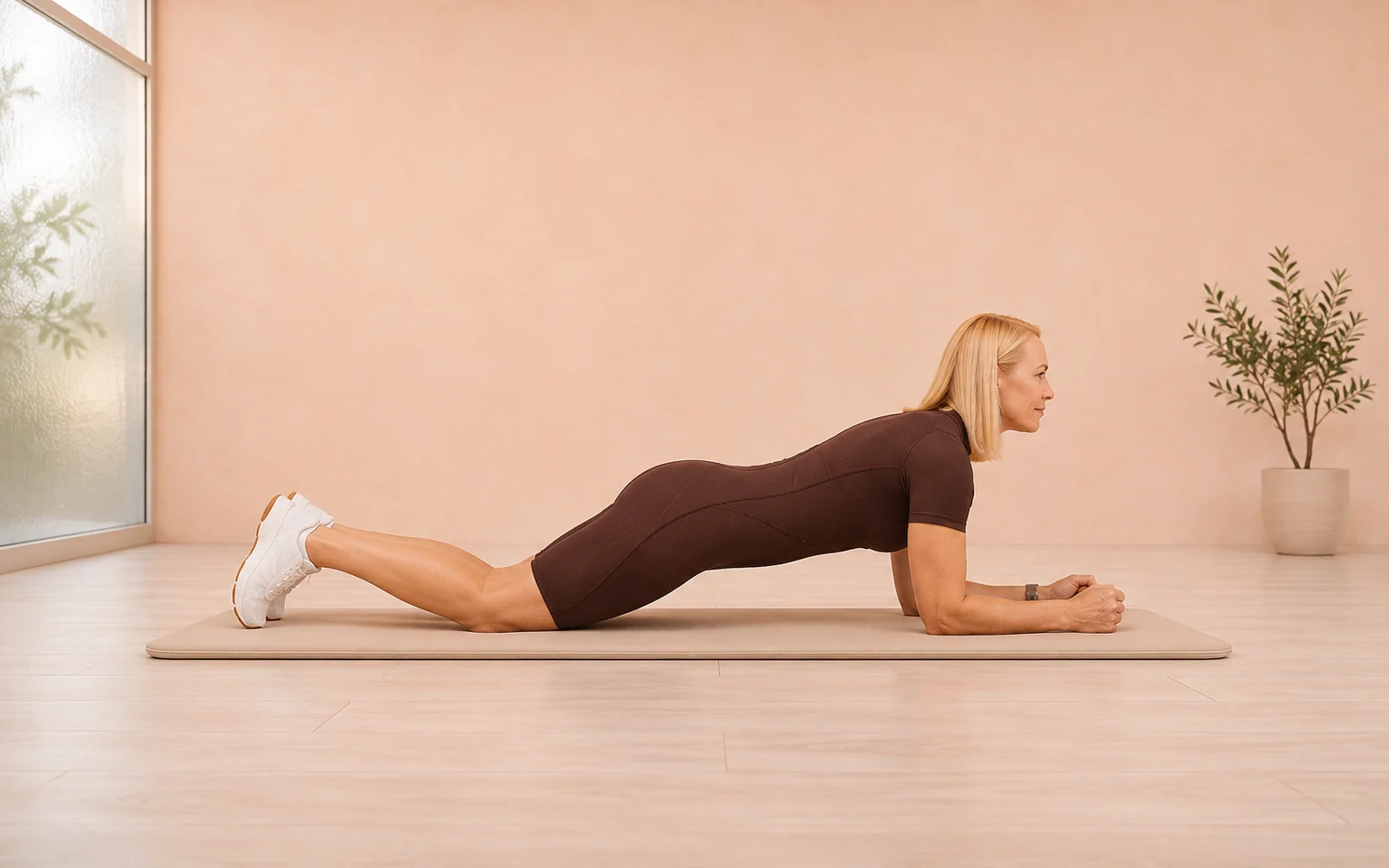
- Set up a supported plank on a suitable fixed surface.
- Step one foot slightly sideways.
- Return that foot to its starting position.
- Repeat on the other side.
Use a standing side tap if the plank position is difficult. Jumping both feet outward, as in plank jacks, adds impact and coordination demands. Jumping is not required for this routine.
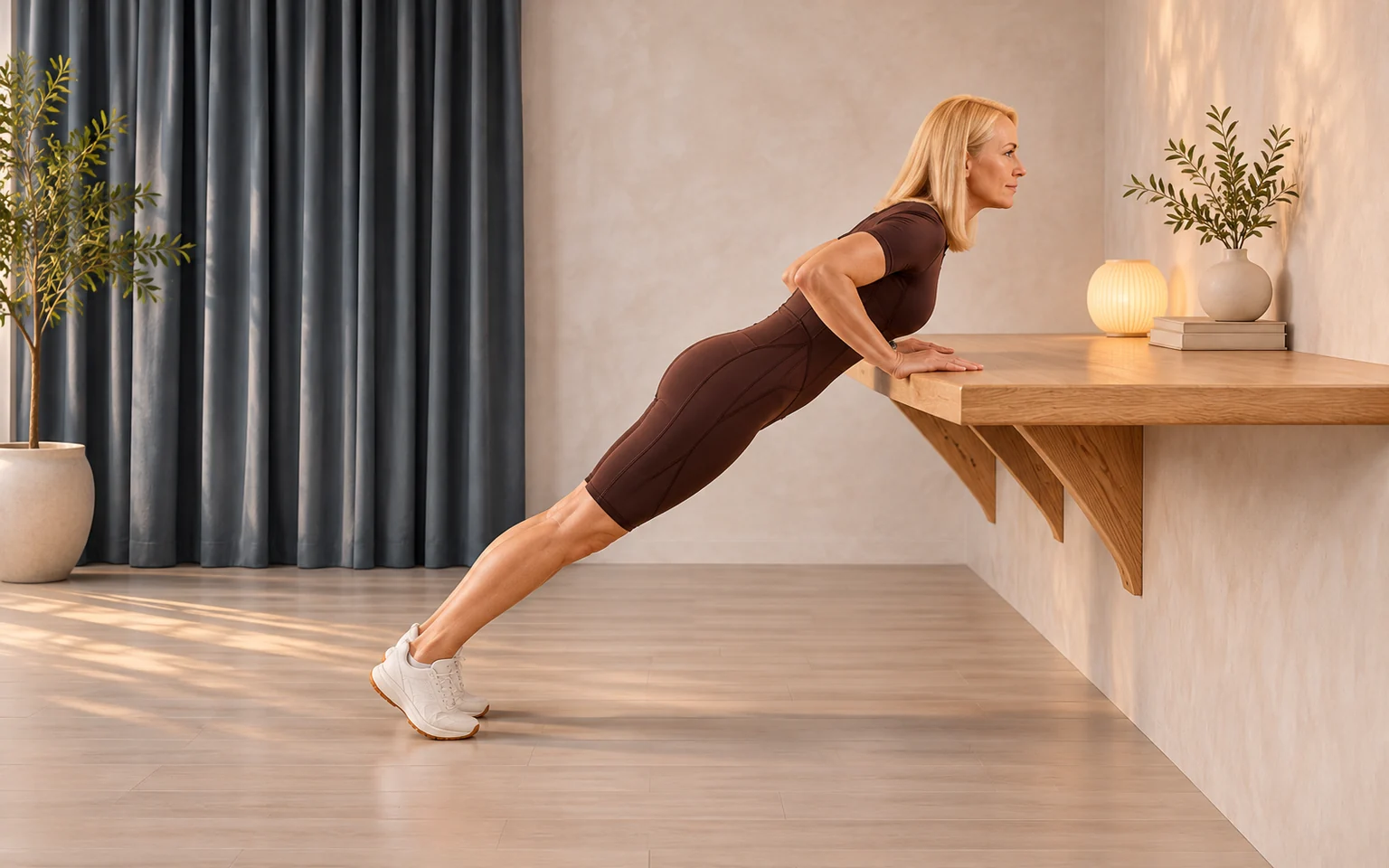
8. Push-up variation
- Place your hands on a wall or suitable stable support.
- Position your feet so your trunk remains aligned.
- Bend your elbows to lower toward the support.
- Press away with control.
Choose the version before the timer starts. Our push-up guide for women covers starting options. A higher support may be more manageable after the earlier exercises.
How should you finish and decide what comes next?
Use the final minute for comfortable walking or another gentle movement. Let your breathing settle without forcing a particular pace. Take additional rest time when needed instead of stopping because the clock reaches ten.
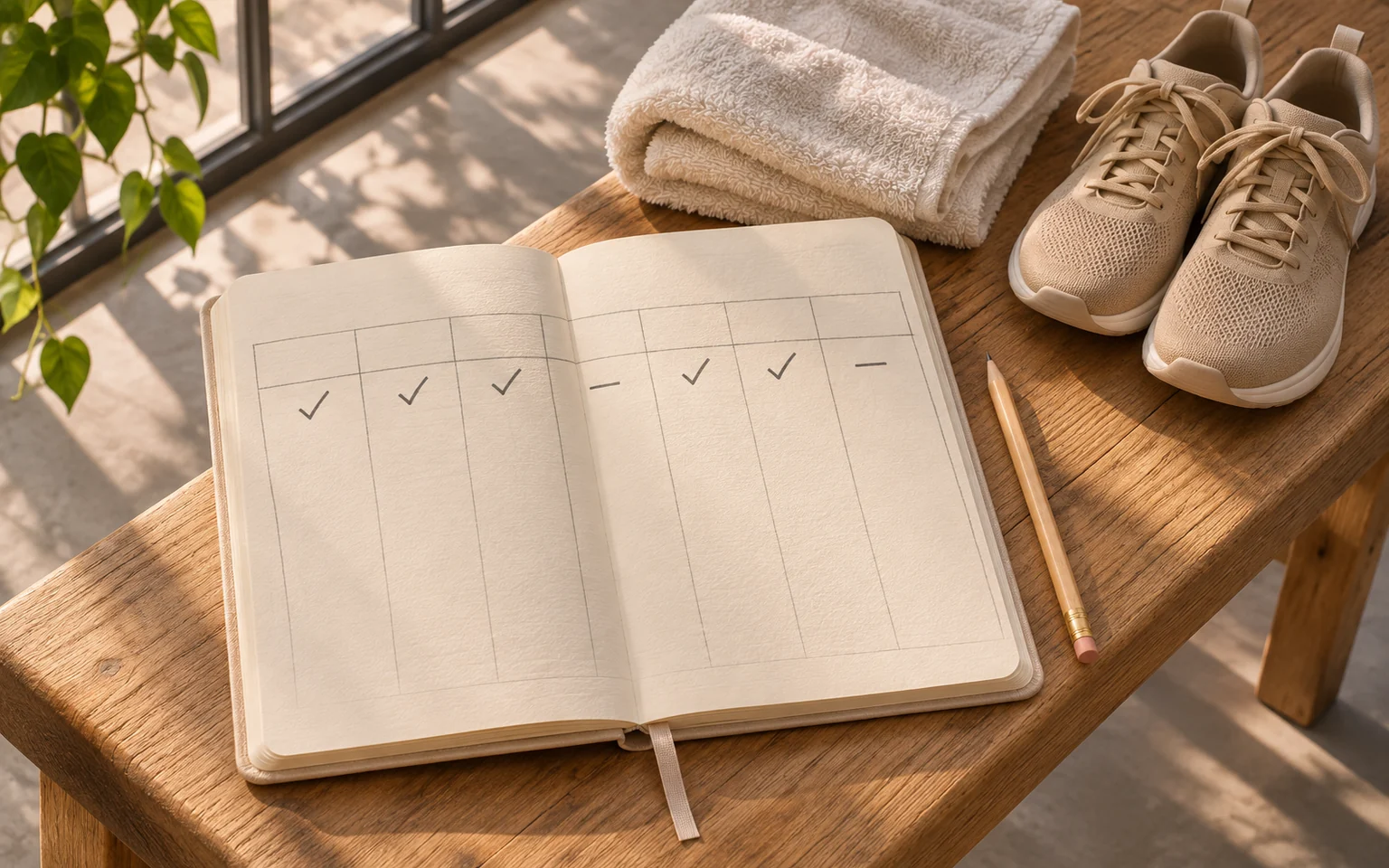
Record which versions you used and whether transitions felt rushed. This information helps you decide whether to repeat the same format. If several transitions were difficult, choose standing options or allow a longer session next time.
A review of resistance training in women found improvements across varied training programs (6). It does not show that this short routine promises those changes. Your broader training schedule and exercise challenge still matter.
Stop for sharp pain, dizziness, chest discomfort, or unusual breathlessness. Seek appropriate medical advice when these signs persist or concern you. Do not restart the timer simply to complete a planned round.
Frequently Asked Questions
These answers cover HIIT, repeating the sequence, floor transitions, and weight loss.
Is this automatically a HIIT workout?
No, timed exercise slots do not establish high intensity. This routine emphasizes manageable practice and controlled transitions. Your actual effort determines how demanding it feels.
Can you repeat the sequence several times?
Repeating it changes both the duration and workload. Consider rest and your wider routine before adding rounds. Do not describe multiple rounds as the same ten-minute session.
What if you cannot get onto the floor quickly?
Use the standing options or extend the transition time. Practice position changes separately if you need to learn them. Avoid rushing a floor transition to keep up with a timer.
Can ten minutes promise weight loss?
No, this routine cannot promise weight loss or a particular calorie expenditure. Outcomes depend on more than the duration of one workout. Use the session for its stated movement purpose rather than a promised body change.
The bottom line
Choose familiar variations, prepare your space, and use the timeline as a guide. Extend it whenever control or rest requires more time. Record what you practiced before deciding whether this short format fits your broader routine.
DISCLAIMER:
This article is intended for general informational purposes only and does not serve to address individual circumstances. It is not a substitute for professional advice or help and should not be relied on for making any kind of decision-making. Any action taken as a direct or indirect result of the information in this article is entirely at your own risk and is your sole responsibility.
BetterMe, its content staff, and its medical advisors accept no responsibility for inaccuracies, errors, misstatements, inconsistencies, or omissions and specifically disclaim any liability, loss or risk, personal, professional or otherwise, which may be incurred as a consequence, directly or indirectly, of the use and/or application of any content.
You should always seek the advice of your physician or other qualified health provider with any questions you may have regarding a medical condition or your specific situation. Never disregard professional medical advice or delay seeking it because of BetterMe content. If you suspect or think you may have a medical emergency, call your doctor.
SOURCES:
- Adult Activity: An Overview (2023, cdc.gov).
- ACSM Unveils Landmark 2026 Resistance Training Guidelines: First Update in 17 Years (2026, acsm.org).
- Resistance training prescription for muscle strength and hypertrophy in healthy adults: a systematic review and Bayesian network meta-analysis (2023, pubmed.ncbi.nlm.nih.gov).
- Weight training: Do’s and don’ts of proper technique (2025, mayoclinic.org).
- Strength exercises (2024, nhs.uk).
- The Effect of Resistance Training in Women on Dynamic Strength and Muscular Hypertrophy: A Systematic Review with Meta-analysis (2020, pubmed.ncbi.nlm.nih.gov).
 By
 Reviewed by