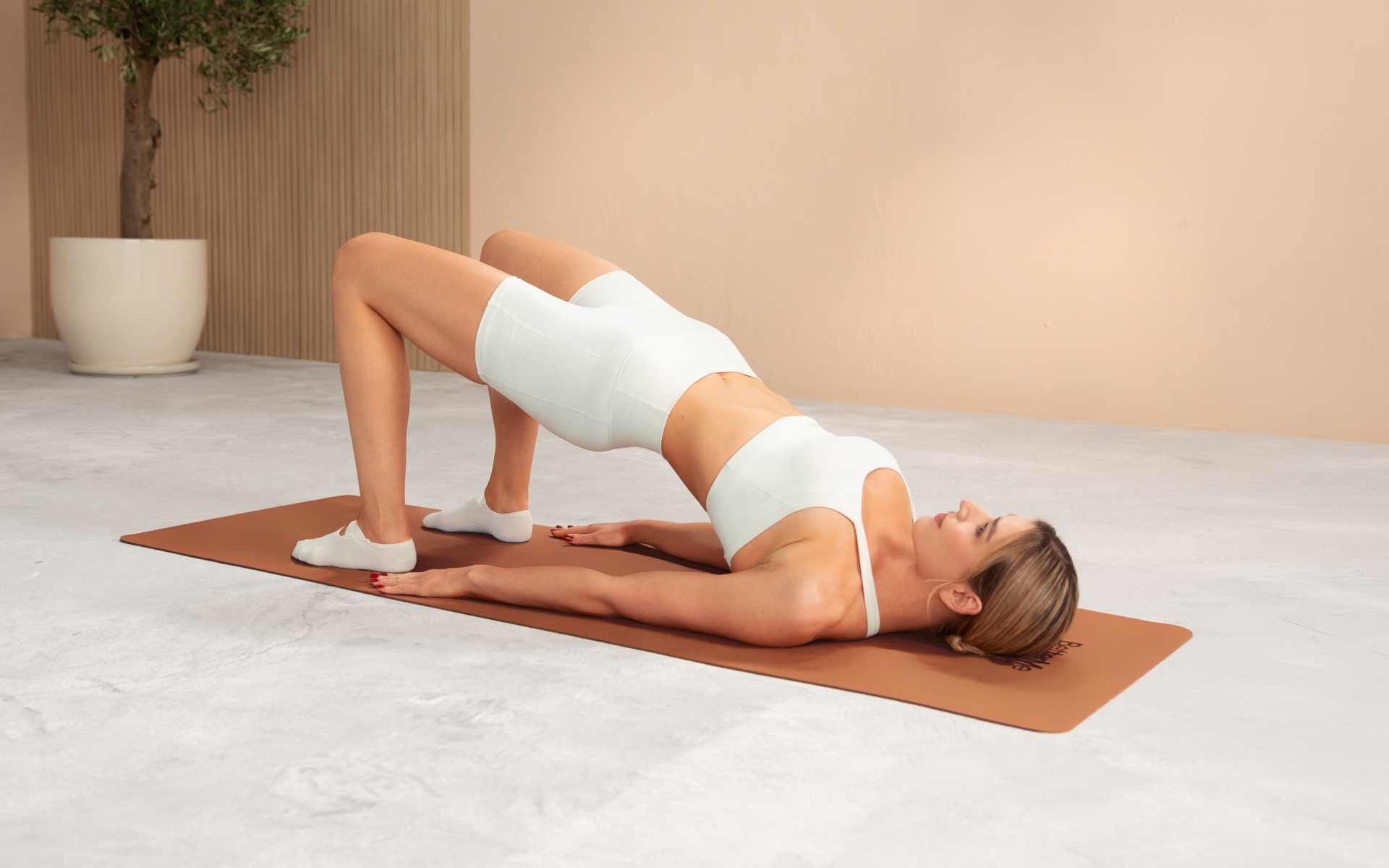
Pilates glute exercises are lower-impact, controlled movements that may support strength and muscle engagement in the hips and lower body. The workouts often focus on alignment, slow pacing, and muscle engagement instead of heavy resistance training.
You can perform Pilates glute exercises at home with no equipment, or use a tool like a reformer for added variety and challenge. When practiced regularly, Pilates glute exercises may support lower-body strength, stability, posture awareness, and movement control over time (1).
What Are Pilates Glute Exercises?
Pilates glute exercises focus on the glute muscles through controlled, precise movement. They often consist of lower-body Pilates exercises and core engagement to support balance and movement (2). The exercises can be performed on a mat or with equipment such as a reformer. Mat Pilates glute exercises are simple and beginner-friendly, which makes them a popular choice.
Pilates moves for glutes focus on form and alignment. They may also support better muscle awareness, which makes them a practical option for both beginners and more advanced routines.
Can Pilates Strengthen Your Glutes?
When performed consistently and with proper control, Pilates may help strengthen the glutes by keeping the muscles engaged through slow, controlled movements (3). Pilates exercises emphasize slow but controlled movements that keep the muscles engaged. The approach can help activate the glutes while also supporting surrounding muscle groups, such as the core and hips.
If you’re wondering, “Can Pilates build glutes?” The answer likely depends on consistency and progression. Pilates routines can gradually increase intensity through added repetitions, holds, or variations by adding repetitions or variations in the workout. Pilates glute workout routines are incredibly adaptable, which makes them beginner-friendly for many people.
What Pilates Glute Exercises Can You Do?
There are lots of Pilates glute exercises you can incorporate into your routine. Most of these movements can be done on a mat or with equipment.
Pilates Glute Bridge Exercise
- Lie on your back.
- Bend your knees.
- Lift your hips slowly.
- Lower slowly, maintaining control.
This is a common mat Pilates glute exercise.
Side-Lying Leg Lifts
- Lie on your left side.
- Lift the right leg slowly.
- Keep your hips stable.
- Lower your right leg slowly
- Switch to your right side and repeat the sequence.
This movement may support glute engagement and balance control.
Clamshells
- Lie on your left side.
- Bend both your knees.
- Open the top knee while keeping your feet together.
- Switch to the other side and repeat the sequence.
You’ll find this often in Pilates glute exercises for beginners.
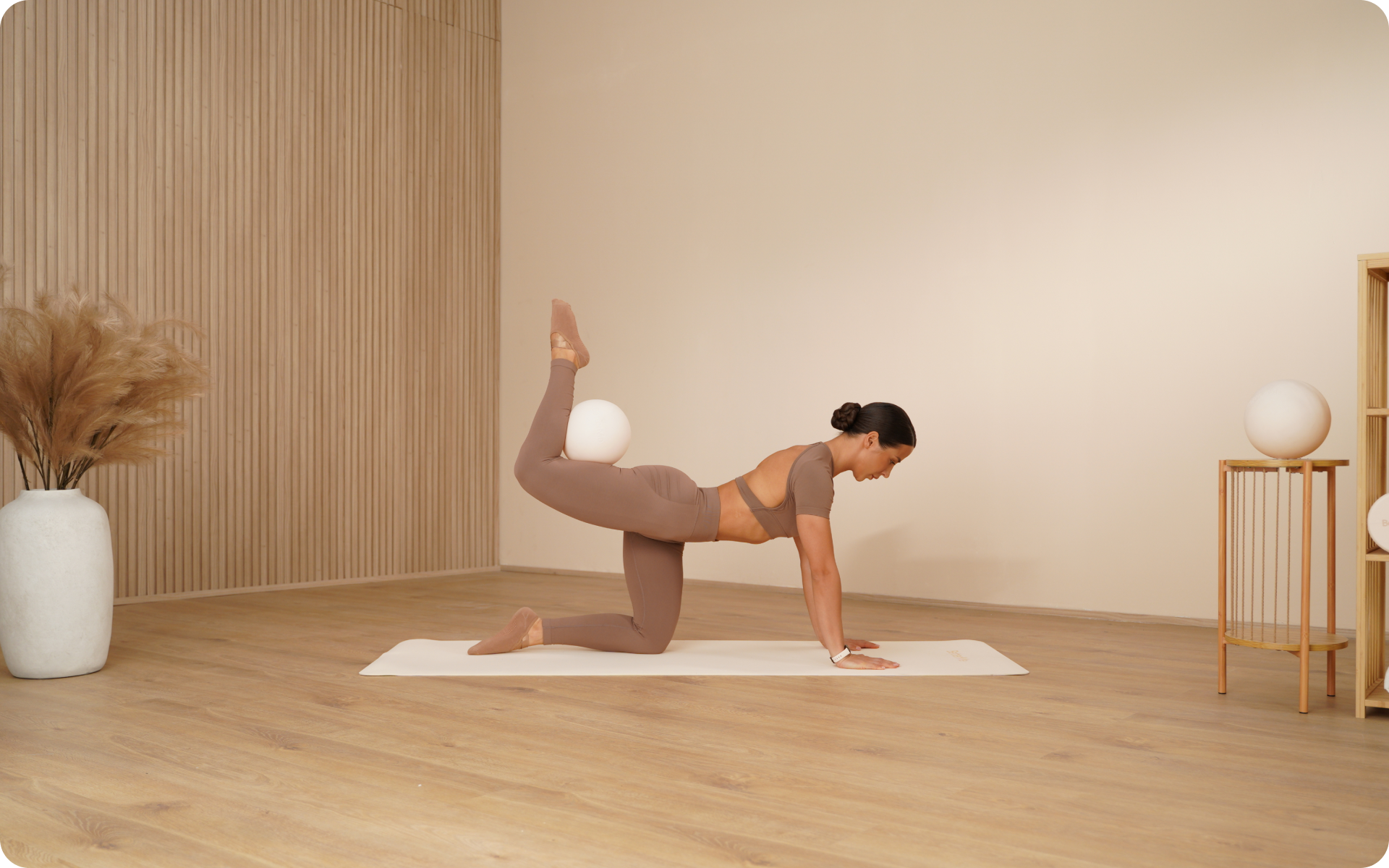
Donkey Kicks
- Start on your hands and knees.
- Lift one leg upward.
- Keep movement controlled.
This focuses on the glutes and hips.
Read more: The Side Booty Workout that Hits Every Angle of Your Glutes
Fire Hydrants
- Start on your hands and knees.
- Lift up your left leg to the side.
- Keep your core engaged.
- Switch to the right and repeat the sequence.
Fire hydrants may help you practice hip stability and control.
Standing Leg Extensions
- Stand up tall
- Extend one leg backward slowly.
You may want to stand near a wall or sturdy chair for extra balance support. The movement may support balance and control over time.
Reformer Glute Press
- Lie down on a Pilates reformer.
- Press the carriage with your legs.
This movement requires access to a Pilates reformer. It adds resistance and variety to your workout.
Single-Leg Bridge
- Perform a glute bridge.
- Extend one leg while keeping your hips stable.
This variation adds more challenge and encourages greater control throughout the movement.
Kickbacks
- Slowly extend your leg backward.
- Keep your torso stable.
This may support lower-body and core engagement.
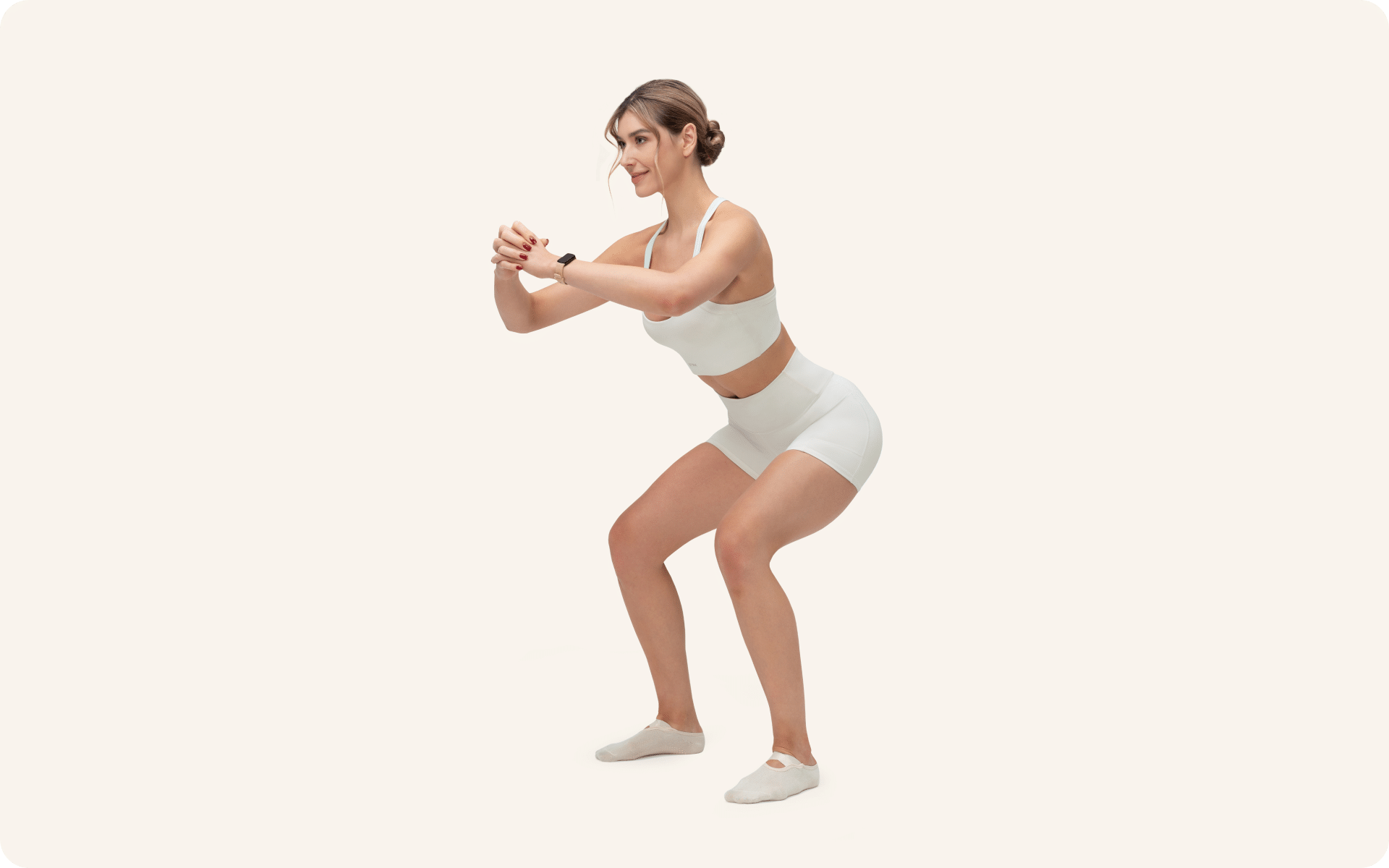
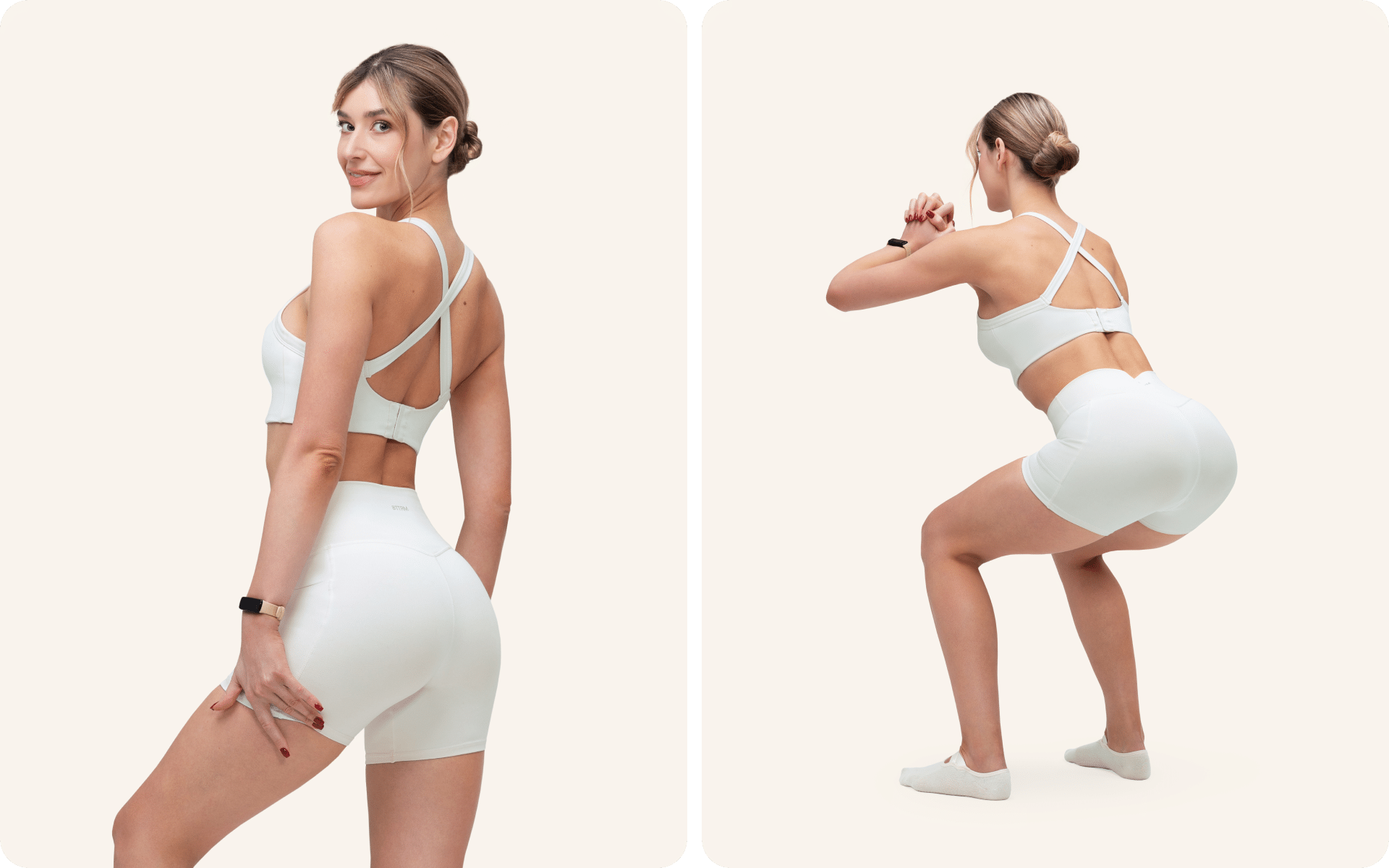
Pulse Squats (Pilates Style)
- Slowly lower your body into a squat.
- Pulse slightly up and down.
The movement can challenge lower-body strength and control.
Many of these movements work well as Pilates glute exercises with no equipment at home. You can combine several of these exercises to create a balanced Pilates glute workout routine.
How Do You Do a Pilates Glute Workout?
A simple Pilates glute workout usually focuses on consistency and controlled movement. To get started:
- Choose 5 exercises.
- Perform each of them for 10-15 repetitions.
- Focus on slow and controlled movement.
Pilates glute exercises at home are often short but structured routines. You can adjust them based on your comfort level and goals. A simple Pilates glute workout may take 10 to 20 minutes.
Intense sweat sessions, working weight loss tips, lip-smacking recipes come in one package with the BetterMe Well-Being Coach app—all at your fingertips, start transforming your life now!
What Are Some Common Mistakes in Glute Workouts?
Avoiding common mistakes may help you move with better control.
Moving Too Quickly
Keeping your movements slow and controlled is key in Pilates. Fast movements may make it harder to maintain control during Pilates-style exercises (4).
Losing Proper Alignment
Control and alignment matter. Try to keep your hips and spine stable to maintain alignment.
Not Engaging the Core
Core engagement can help you maintain control during movements. Pilates exercises rely on core support.
Overarching the Lower Back
It helps to keep your lower back in a neutral position. You’ll want to avoid pushing too far into each movement.
Skipping Warm-Up
Warming up can help prepare your body for movement (5).
How Many Times a Week Should You Do Pilates for Glutes?
Some people practice Pilates glute exercises two to four times per week, depending on their schedules, fitness levels, and recovery needs. That schedule can leave time between sessions while maintaining consistency. As a beginner, you may start with fewer sessions and build gradually. Pilates glute exercises for beginners should focus on form, consistency, and repetition instead of just intensity.
How Long Does It Take to Strengthen Glutes?
Building strength varies depending on consistency, genetics, health, and routine. This schedule can leave time between sessions (6). Typically, building strength happens gradually over time. Pilates glute exercises at home can support this process when done regularly.
Pilates Glute Exercises at Home: Tips for Consistency
Building a home routine can make it easier to stay consistent as it can be simple to fit into a routine. Here are some tips to keep in mind:
- Keep workouts short.
- Focus on proper form.
- Use a regular schedule.
No-equipment Pilates glute exercises can work well for home routines.
Pilates Glute Exercises for Beginners: How to Start
Begin with the simpler movements if you’re new to Pilates. Try:
- Glute bridges
- Clamshells
- Side-lying leg lifts
These mat Pilates glute exercises can help you practice control before you add more advanced movements.
Lower-Body Pilates Exercises to Add
Lower-body Pilates exercises can add variety to a glute-focused routine. Some examples include:
- Lunges
- Squats
- Leg lifts
Adding these movements can help create a more balanced routine.
Read more: Side Glutes Exercises Gym Guide for Toned Hips and a Confident You
Pilates Glute Exercises Standing: Why They’re Useful
Standing Pilates glute exercises may support balance, coordination, and lower-body control. These movements can also involve core engagement while the body stays upright.
Standing exercises are useful as they mimic everyday movement patterns. They may also feel more accessible for those who don’t want to spend an entire workout on the floor or in the gym.
Standing Leg Pulses
- Stand tall with your hands on your hips.
- Extend one leg behind you.
- Pulse the leg upward slightly.
The movement can engage the glutes while challenging balance.
Standing Side Leg Lifts
- Stand with your feet hip-width apart.
- Lift one leg slowly to the side.
- Lower with control.
Pilates glute exercises standing tend to focus on slow movement rather than speed.
Standing Pilates Heel Raises
- Stand tall with your feet hip-width apart.
- Lift your heels slowly off the ground.
- Lower with control.
This standing movement can challenge lower-body stability while engaging the glutes and legs through controlled positioning.
Pilates Reformer Glute Exercises to Try
Pilates glute exercises reformer routines involve controlled resistance to challenge the lower body in various ways. The reformer also allows smooth movement patterns with added tension through springs and resistance.
Reformer Foot Presses
- Lie on the reformer carriage.
- Press through your heels.
- Return slowly.
The action focuses on the glutes and legs while encouraging control.
Single-Leg Reformer Press
- Place one foot on the platform.
- Extend your leg slowly.
- Return with control.
Pilates reformer glute exercises focus on balance between strength and stability.
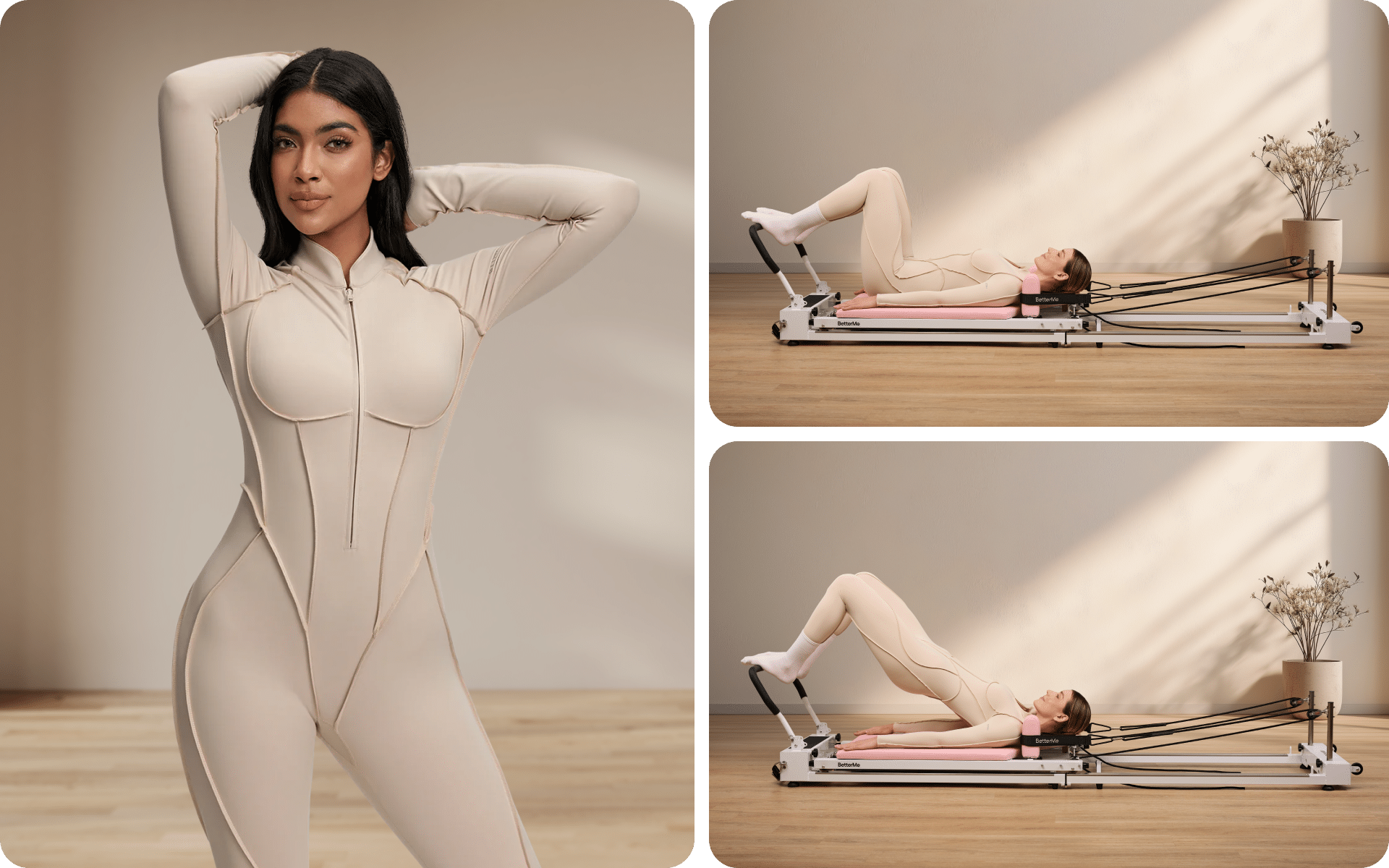
Reformer Bridge Variations
- Lie on the reformer.
- Lift your hips into a bridge.
- Control the carriage movement slowly.
The variation to the bridge builds on the traditional, adding an extra challenge.
Mat Pilates Glute Exercises for Home Workouts
Mat Pilates glute exercises can be a simple way to build a home routine. They require little space and usually no equipment. Mat Pilates glute exercises for home workouts may work well for beginners, short workouts, lighter movement days, and lower-impact routines.
Pilates glute exercises with no equipment are also useful when you want a simple and repeatable workout.
Best Beginner Mat Exercises
If you’re just starting out, begin with:
- Glute bridges
- Clamshells
- Side-lying leg lifts
- Donkey kicks
These Pilates glute exercises for beginners can help you practice control before you progress to more advanced movements.
Whether you’re looking to simply pep up your fitness routine, jazz up your diet with mouth-watering low-calorie recipes or want to get your act together and significantly drop that number on your scale – BetterMe Well-Being Coach app has got you covered! Improve your body and revamp your life!
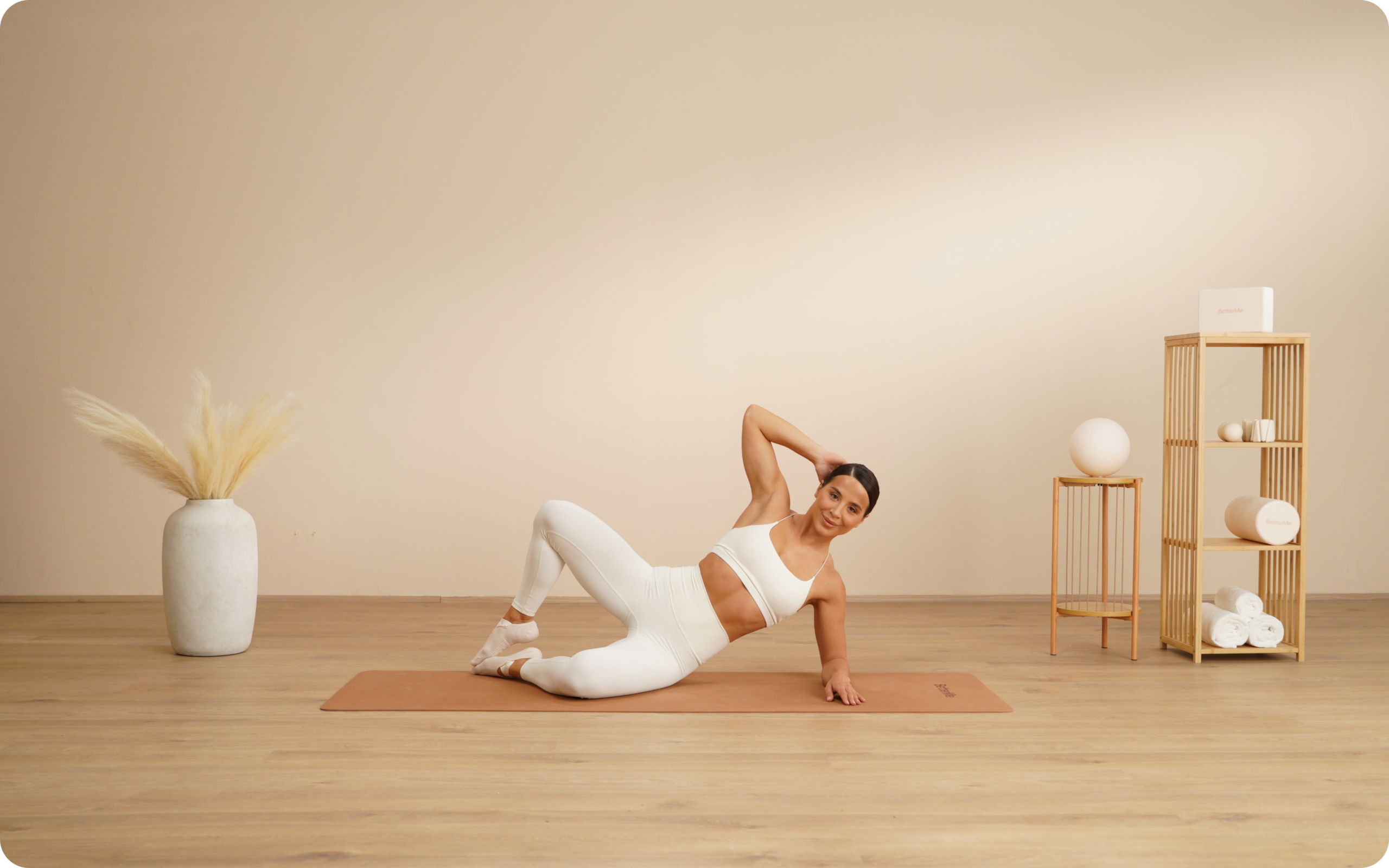
How to Progress a Pilates Glute Workout
Progressing your Pilates glute workout gradually can help keep your routine challenging without making it too overwhelming.
Increase Repetitions Slowly
Start slowly with just 10 repetitions. Then you can add more over time. A small increase may make progression feel more manageable while maintaining proper form.
Slow Down the Movement
Moving slowly and with control often helps maintain muscle engagement. Taking it slowly may help you maintain muscle engagement. Pilates moves for glutes often work best when the focus is control rather than speed.
Add Holds and Pulses
You can make the movements more challenging by:
- Holding the top of a bridge.
- Adding pulses to squats.
- Pausing during leg lifts.
The muscles stay engaged for longer periods.
How to Rest Between Pilates Glute Workouts
Rest between sessions is an important part of a workout routine (7). To give your body time between sessions:
- Take rest days when needed.
- Add gentle mobility or stretching if it feels comfortable for your body.
- Stay consistent, but don’t overdo it.
Again, the short, regular sessions of Pilates glute exercises at home are often easier to maintain than the long, demanding routines.
Frequently Asked Questions
How can you tell your glutes may need more strength work?
Difficulty maintaining balance or feeling less stable during movement may be one reason to work on lower-body strength and control. A trainer or healthcare professional can help assess your needs.
Can Pilates strengthen the glutes?
A consistent Pilates workout routine may help strengthen and engage the glute muscles over time.
What parts of the body does Pilates work?
Pilates often focuses on the core, lower body, and overall movement control.
Are side-lying Pilates exercises good for glutes?
Side-lying Pilates exercises target the glute muscles.
Should you warm up before Pilates glute exercises?
A short warm-up may help prepare the body for movement.
The Bottom Line
Pilates glute exercises can be simple and practical. When done consistently, they may support strength, stability, and movement control. Whether you use mat Pilates glute exercises or implement a reformer, the movements can fit into short routines at home. The key is to focus on controlled movement, consistency, and gradual progression that fits your current level.
DISCLAIMER:
This article is intended for general informational purposes only and does not serve to address individual circumstances. It is not a substitute for professional advice or help and should not be relied on for making any kind of decision-making. Any action taken as a direct or indirect result of the information in this article is entirely at your own risk and is your sole responsibility.
BetterMe, its content staff, and its medical advisors accept no responsibility for inaccuracies, errors, misstatements, inconsistencies, or omissions and specifically disclaim any liability, loss or risk, personal, professional or otherwise, which may be incurred as a consequence, directly or indirectly, of the use and/or application of any content.
You should always seek the advice of your physician or other qualified health provider with any questions you may have regarding a medical condition or your specific situation. Never disregard professional medical advice or delay seeking it because of BetterMe content. If you suspect or think you may have a medical emergency, call your doctor.
SOURCES:
- Effects of Pilates on Body Posture: A Systematic Review (2024, pmc.ncbi.nlm.nih.gov/)
- Effects of Core Stability Training on Deep Stabilizing Muscle Function and Neuromuscular Control (2025, pmc.ncbi.nlm.nih.gov)
- How to Activate the Glutes Best? Peak Muscle Activity of Acceleration-Specific Pre-Activation and Traditional Strength Training Exercises (2024, pmc.ncbi.nlm.nih.gov)
- Effects of Speed, Agility, and Quickness Training on Athletic Performance: A Systematic Review and Meta-Analysis (2025, pmc.ncbi.nlm.nih.gov)
- Revisiting the ‘Whys’ and ‘Hows’ of the Warm-Up: Are We Asking the Right Questions? (2023, pmc.ncbi.nlm.nih.gov)
- How Long Does It Take To Build Muscle? (2025, health.clevelandclinic.org)
- The Importance of Recovery in Resistance Training Microcycle Construction (2024, pmc.ncbi.nlm.nih.gov)
 Reviewed by
 By
By 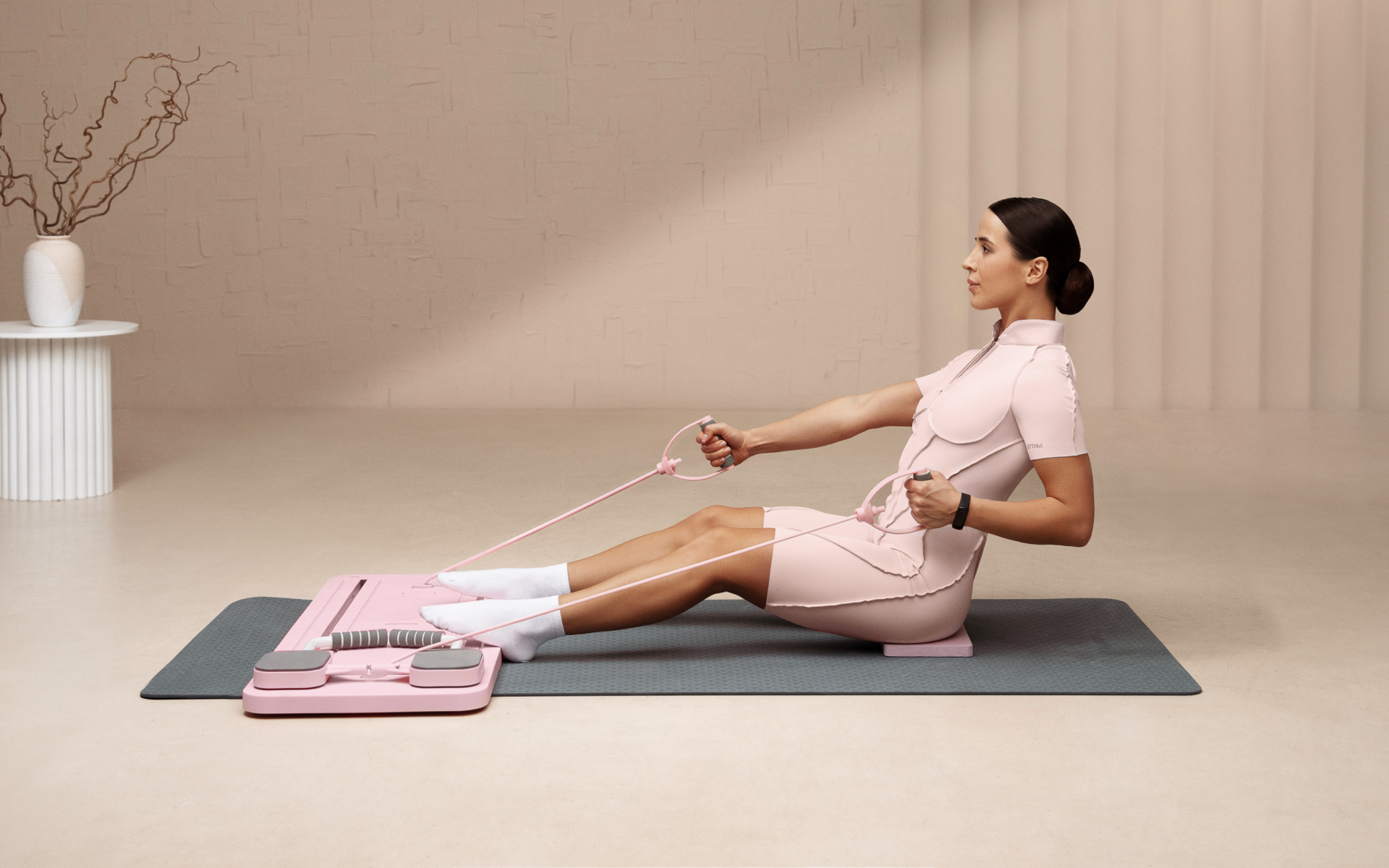
 Reviewed by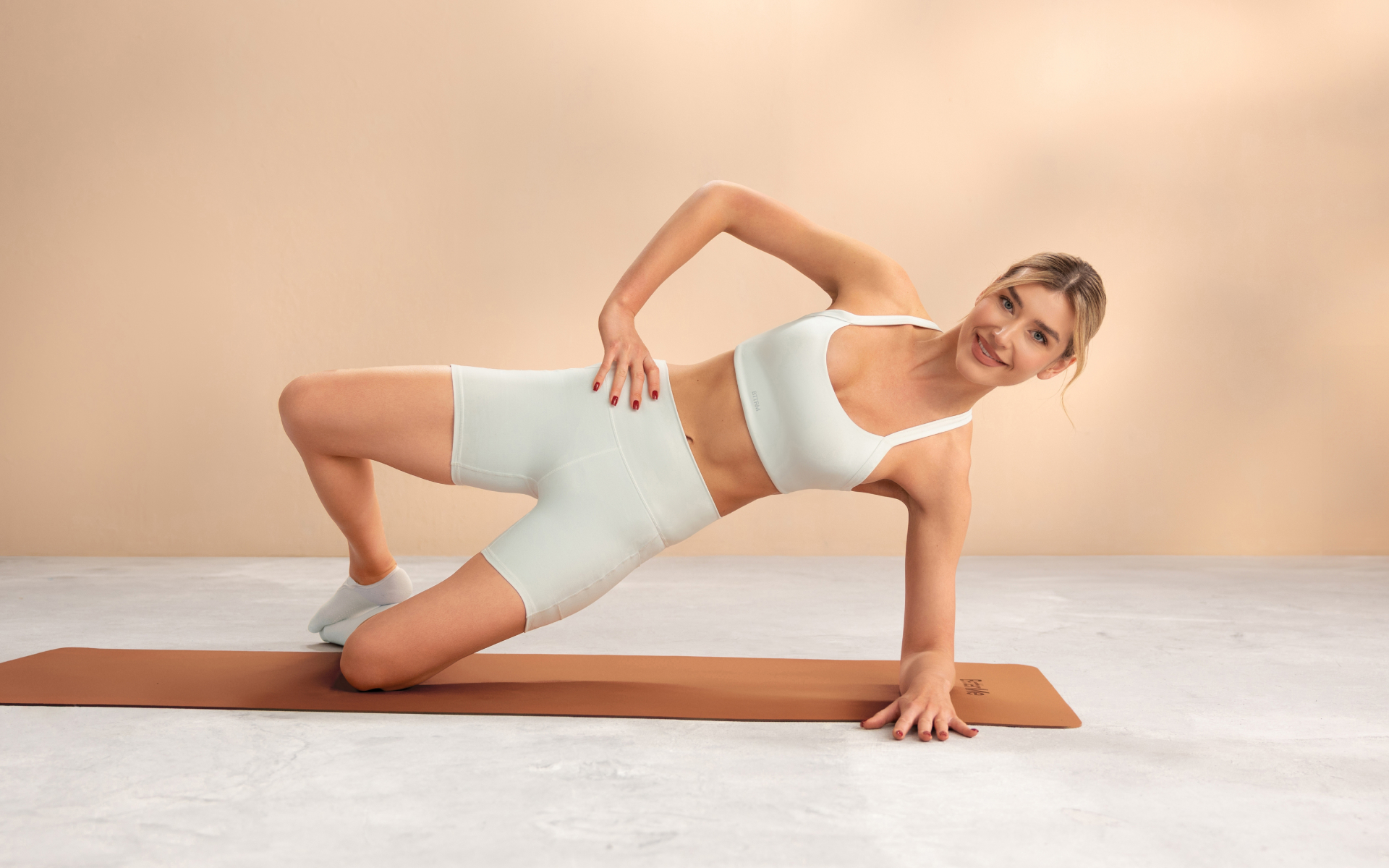
 Reviewed by