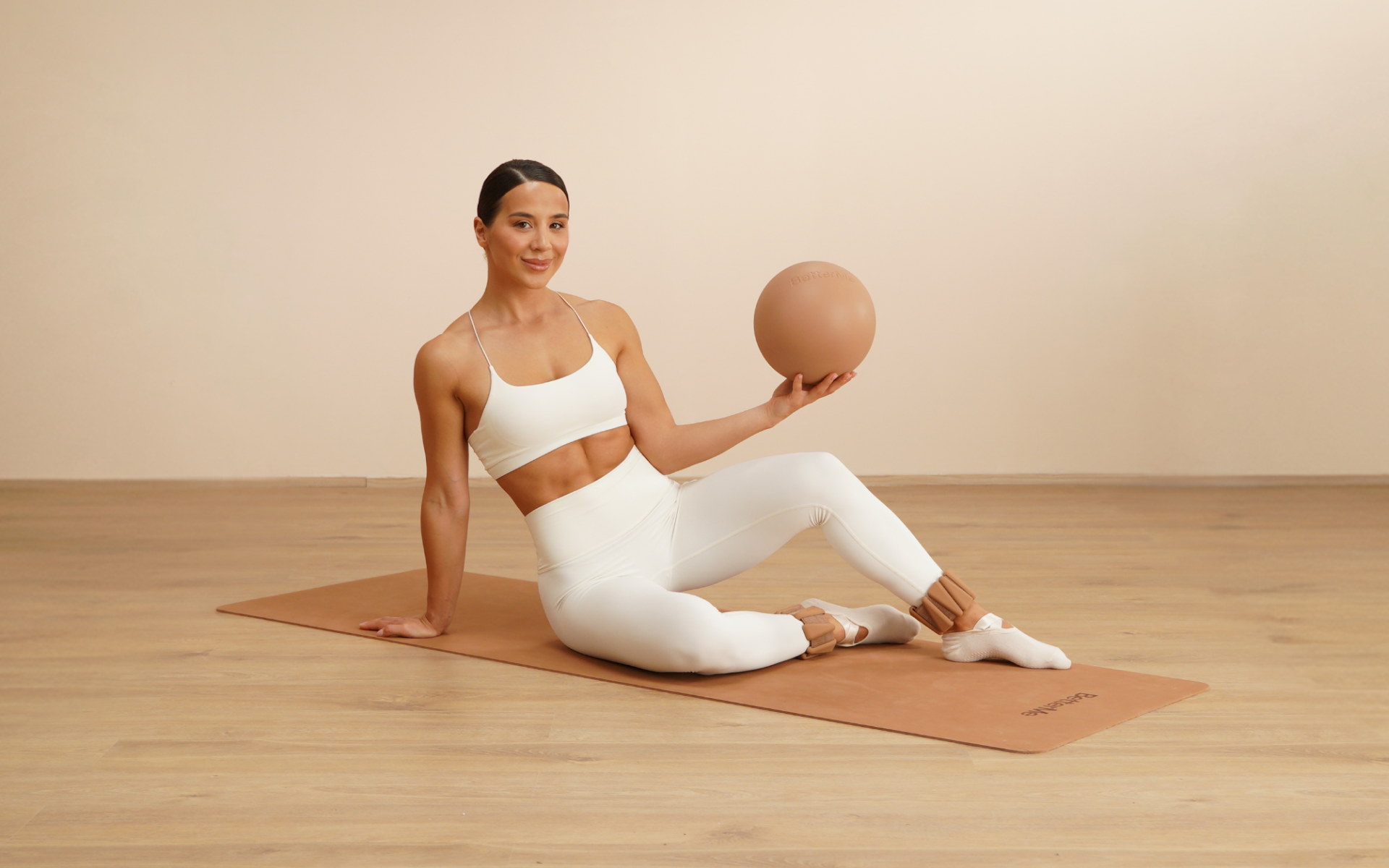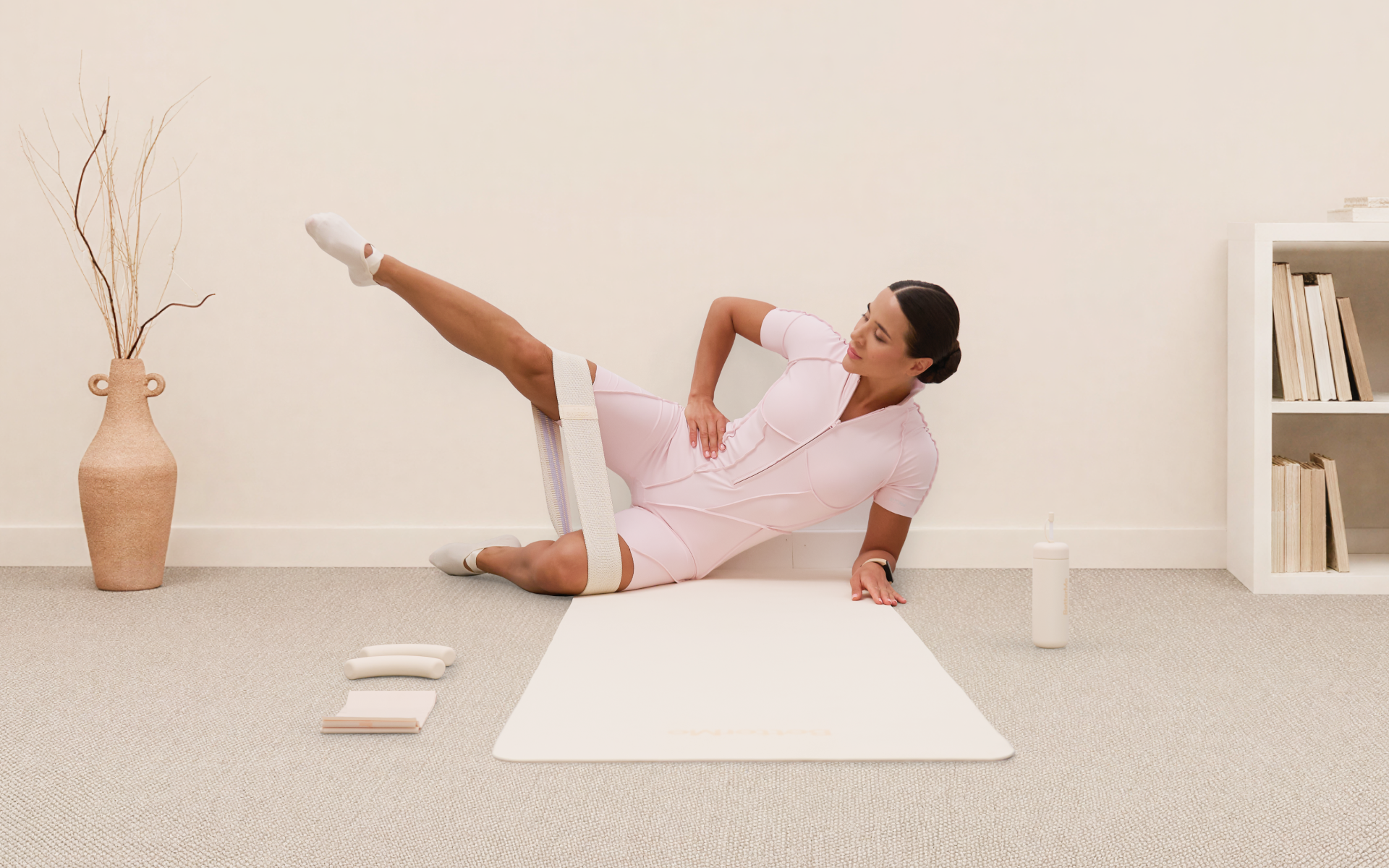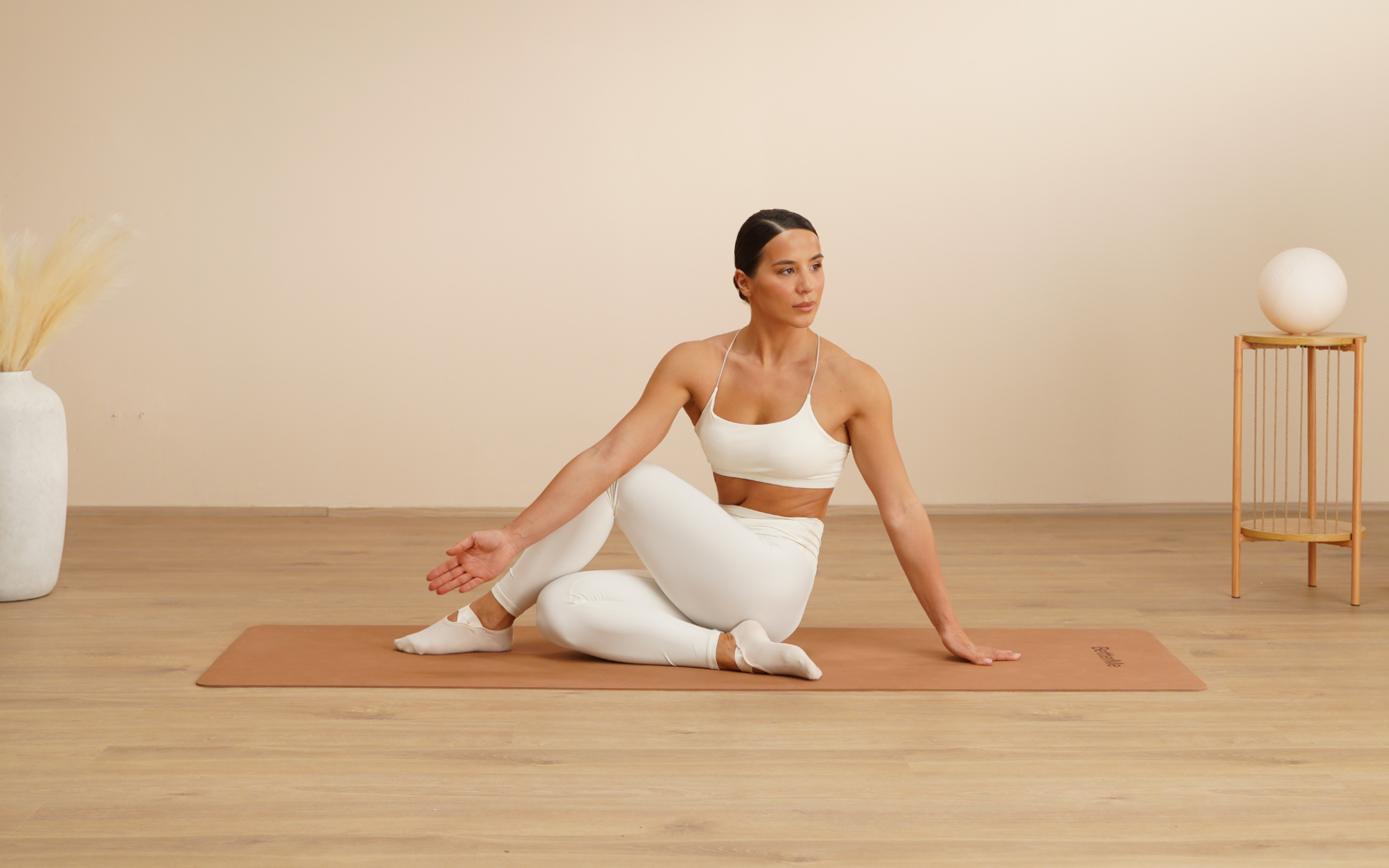
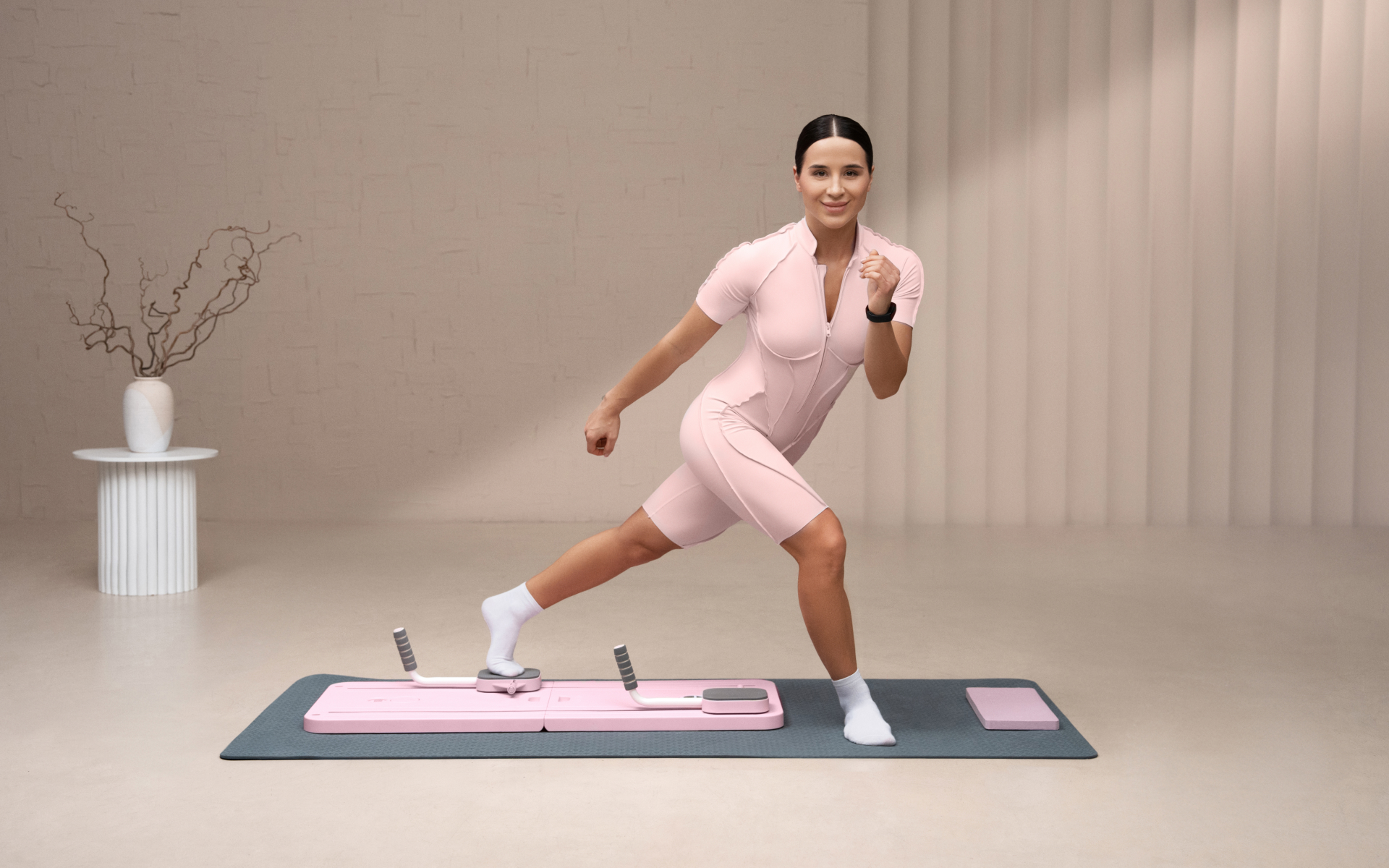
Pilates footwork is a fundamental series of lower-body exercises that focuses on foot placement, leg alignment, and core stability. It involves pressing your feet against a bar, wall, or mat to engage your legs and core. This practice is often used at the beginning of a session to warm up the body and establish proper form. For many people, it sets the tone for a thoughtful and focused movement routine.
Are you looking for a gentle way to build lower-body strength and physical awareness? This guide to Pilates footwork is for anyone who wants to understand the foundation of this popular practice. You can learn how mindful foot alignment can support your entire body during movement. We’ll explore what these movements entail, the muscles they engage, and how you can try them at home. Building a steady routine can help you feel more grounded in your daily life. Keep reading to discover how you can start practicing these supportive exercises today.
What Is Footwork in Pilates?
Footwork in Pilates is a specific sequence of movements that is designed to connect your lower body with your core. This is performed with the goal of building awareness of how your legs and feet work together.
The practice involves placing your feet in a variety of positions while pressing against a stable surface, such as a reformer, wall, or floor.
Many instructors use these movements as a warm-up at the beginning of a session. This approach can help you establish proper form before you attempt more complex exercises. By focusing on how you push and pull, you can learn to control your movements from your center. This steady control is a cornerstone of the entire practice.
There are many Pilates footwork variations available for different bodies and experience levels. Different movements focus on:
- Pressing through your toes, heels, or arches
- Rotating your feet out
- Combining different pressing placements and rotations
Each variation gently engages different parts of the leg and foot.
Over time, practicing these movements can help you lay a solid foundation for your overall well-being. They are beginner-friendly and can be modified to match your current fitness level. For anyone exploring basic Pilates moves, footwork can be a helpful place to begin because it teaches alignment, control, and steady breathing.
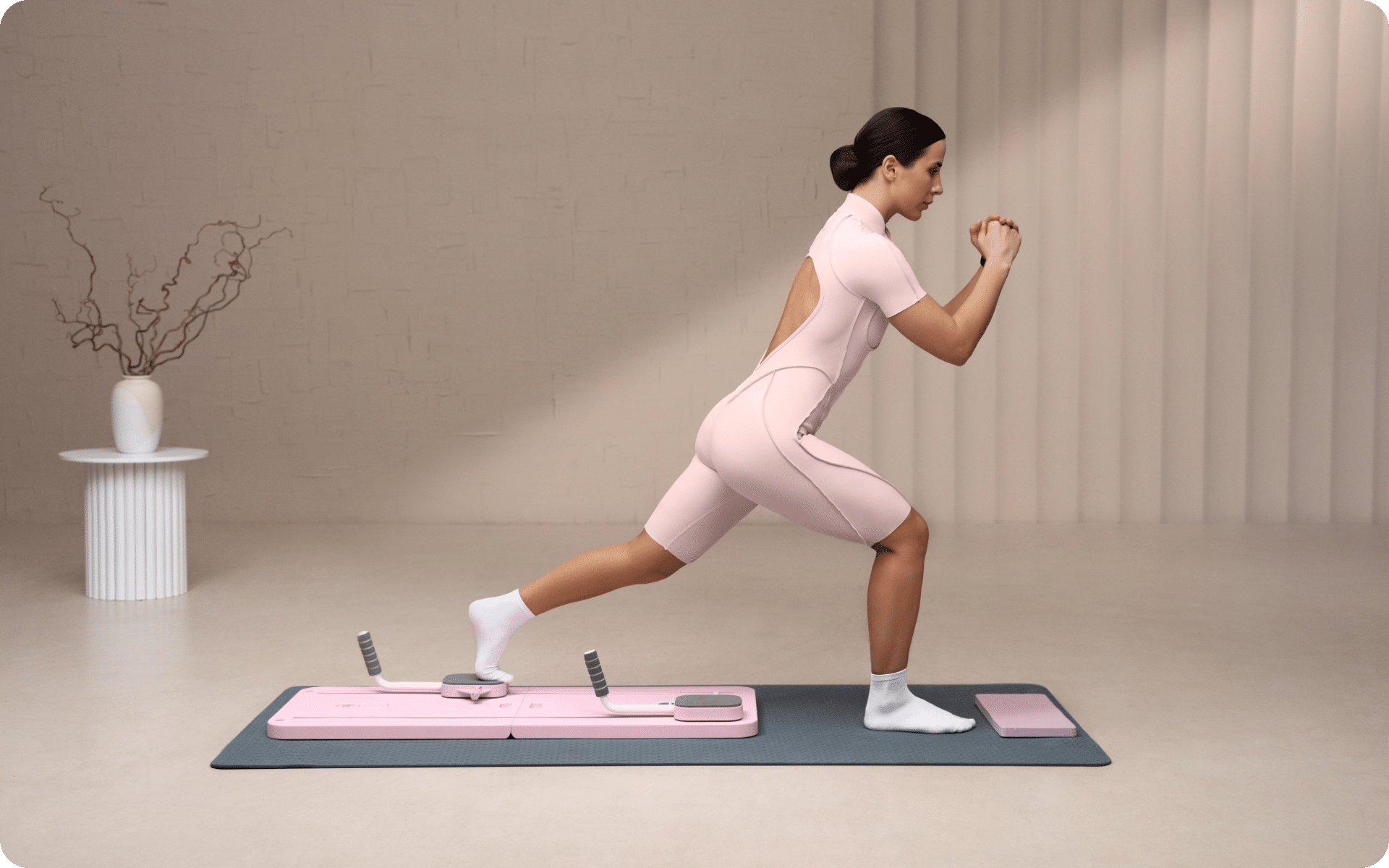
What Muscles Does Pilates Footwork Work?
Pilates footwork exercises are designed to engage multiple muscle groups across your lower body and core. These movements can engage several lower-body muscles, including the calves, thighs, hamstrings, and glutes. It’s believed that changing your foot placement may target different muscles slightly and alter activation (1).
- Toes/ball of foot on the bar: Targets your calf muscles and the front of your thighs (quadriceps)
- Arches on the bar/flat foot: Emphasizes the inner thighs and hamstrings
- Heels on the bar: Targets the back of your legs (hamstrings, glutes)
Your core remains active the entire time to keep your pelvis stable.
Understanding this muscle engagement is one of the key Pilates footwork benefits. It helps you build balanced strength without placing any undue stress on your joints.
The following table provides a clear breakdown of the muscle groups that are engaged during different foot positions.
| Foot position | Primary muscles engaged | Secondary muscles supported | Focus area |
|---|---|---|---|
| Toes/balls of feet | Calves, quadriceps (front thighs) | Deep core, ankles stabilizers | Calf engagement, ankle stability, and foot control |
| Arches | Hamstrings (back thighs), core | Glutes, inner thighs | Mid-foot stability and pelvic control |
| Heels | Glutes, hamstrings | Quadriceps, lower back stabilizers | Backline strength and power |
| Wide V-stance | Inner thighs, outer glutes | Calves, deep core | Hip rotation and inner leg engagement |
BetterMe Well-Being Coach app helps you achieve your body goals with ease and efficiency by helping to choose proper meal plans and effective workouts. Start using our app and you will see good results in a short time.
What Are the Benefits of Pilates Footwork?
Practicing these movements can offer a variety of benefits for your physical well-being. As the exercises are low-impact, they are easy on the body. They offer a thoughtful way to build strength without excessive strain.
1. May Support Better Posture
Focusing on your foot alignment can often influence how the rest of your body moves. When your feet and legs are properly aligned, your hips and lower back may feel more supported.
This balanced alignment tends to encourage better posture (2) during your daily activities. Some research has suggested that mindful movement practices can support overall spinal alignment over time (3).
2. Can Encourage Lower-Body Strength
Regularly performing these movements can help you build steady strength in your legs and glutes. Pushing against resistance challenges your muscles in a slow, controlled manner.
For many people, this gradual approach helps build lasting muscular endurance. This strength can make everyday tasks such as walking or climbing stairs feel more manageable. Among lower-body Pilates exercises, footwork stands out because it combines leg strength, foot awareness, and core stability in one controlled movement pattern.
3. Tends to Promote Mind-Body Connection
These exercises require you to pay close attention to your breathing and your physical form. This focus can help you develop a stronger mind-body connection (4).
You may find that you become more aware of how your muscles contract and release. This heightened awareness may help you notice and manage physical tension during movement.
4. May Enhance Flexibility and Joint Mobility
Moving your ankles and knees through their full range of motion can gently improve joint mobility. Pointing and flexing your feet helps stretch the muscles along the back of your legs. This dynamic stretching can leave your lower body feeling more open and relaxed. It’s a gentle practice that respects your body’s natural limits.
Read more: 6 Wall Stretches for the Lower Back: A Complete Guide
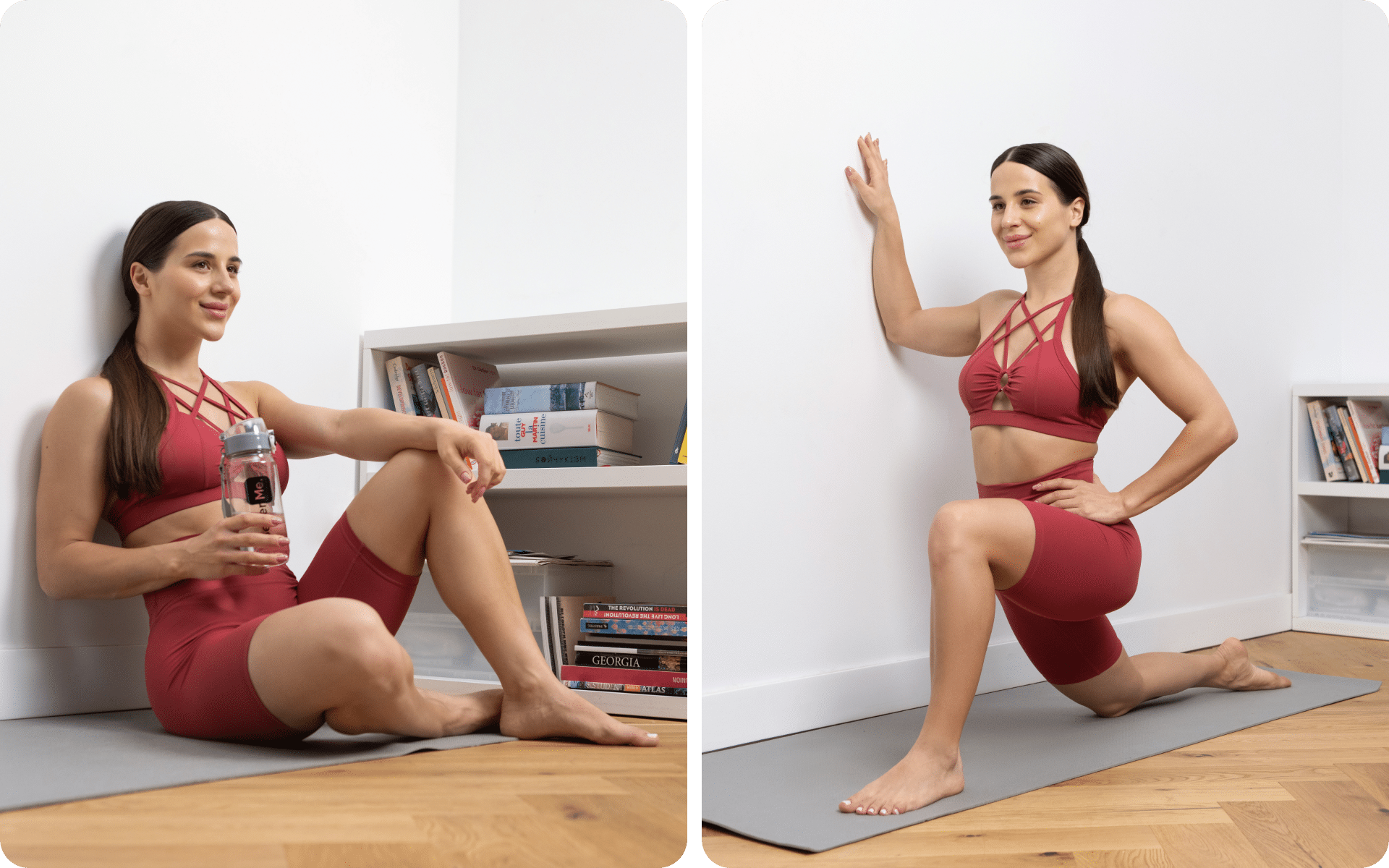
How Do You Do Pilates Footwork?
Learning Pilates footwork for beginners is simple and requires only a little bit of focus. The most important aspect is moving slowly and maintaining steady control. You don’t need to push yourself to exhaustion to experience the benefits.
To begin, you need to find a comfortable space where you can lie on your back. If you don’t have access to a machine, you can easily use a sturdy wall. Lie down and place your feet flat against the surface. Ensure that your back feels long and your lower back is comfortably supported on the floor.
Focus on your breathing as you prepare to move. Inhale deeply through your nose to prepare your body. As you push your feet against the surface, exhale smoothly through your mouth. This breathing pattern helps engage your core muscles automatically (5, 6).
Keep your movements fluid and avoid locking your knees when your legs are straight. Return to your starting position with just as much control as when you pushed away. This eccentric control is where much of the strengthening occurs (7).
What Is the Pilates Footwork Sequence?
The classic reformer Pilates footwork sequence follows a specific, logical order. This progression is designed to warm up your feet and leg muscles systematically. It usually starts with the toes, moves to the arches, and finishes with the heels.
Following a structured Pilates reformer footwork series helps ensure that all major muscle groups are addressed. However, you can adapt this sequence to fit your own needs and comfort level.
Below is a comparison table that outlines a standard sequence you can try at home using a wall.
| Sequence order | Exercise name | Foot placement | Repetitions |
|---|---|---|---|
| First | Pilates V (toes) | Toes on wall, heels touching, knees apart | 8-10 reps |
| Second | Parallel arches | Arches on wall, feet and knees hip-width apart | 8-10 reps |
| Third | Parallel heels | Heels on wall, toes pointing up, hip-width apart | 8-10 reps |
| Fourth | Wide stance | Heels wide on wall, toes slightly turned out | 8-10 reps |
Pilates V (Toes)
- Lie on your back and place the balls of your feet against the wall.
- Bring your heels together and let your toes point slightly outward.
- Exhale and push against the wall to straighten your legs smoothly.
- Inhale and bend your knees to return to the starting position.
Parallel Arches
- Move your feet so your arches are flat against the wall.
- Keep your feet and knees parallel, approximately hip-width apart.
- Push your legs straight while keeping your core engaged.
- Slowly return to the bent-knee position without rushing.
Parallel Heels
- Flex your feet and place only your heels against the wall.
- Keep your toes pointing directly up toward the ceiling.
- Press through your heels to extend your legs fully.
- Bend your knees and return slowly to the starting point.
Wide Stance
- Step your feet wider than your hips on the wall.
- Turn your toes and knees slightly outward.
- Push away from the wall, feeling the effort in your inner thighs.
- Return to the start with steady, controlled movement.
Reasons why BetterMe is a safe bet: a wide range of calorie-blasting workouts, finger-licking recipes, 24/7 support, challenges that’ll keep you on your best game, and that just scratches the surface! Start using our app and watch the magic happen.
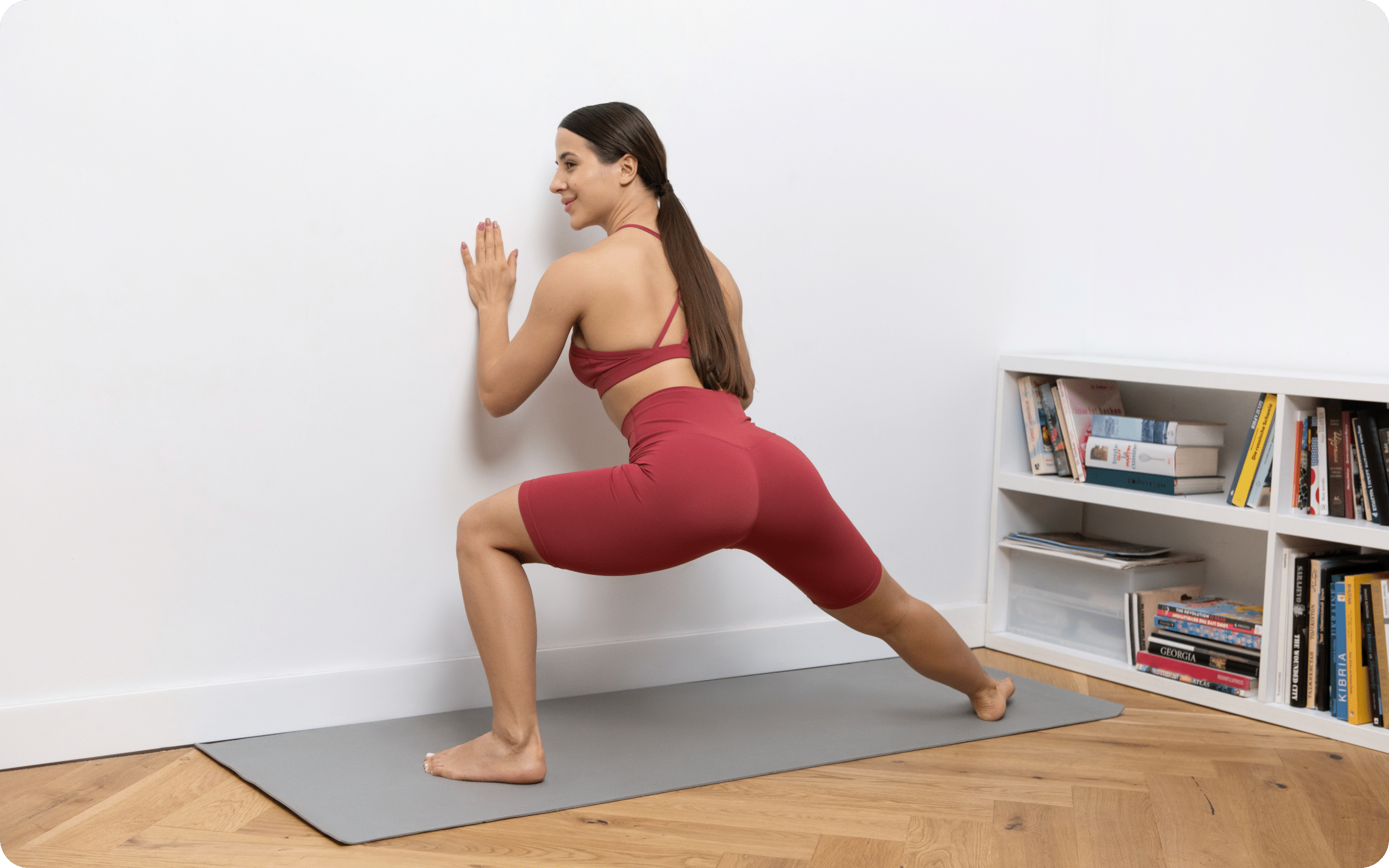
Can You Do Pilates Footwork Without a Reformer?
Yes, you can practice Pilates footwork without reformer equipment. Doing a Pilates footwork mat routine is one way—you only need a comfortable mat and a clear wall space to get started.
When you practice on a mat, you use your own body weight and the wall for resistance. This method can still be useful for building movement awareness and gentle strength (8). You can also use a resistance band wrapped around your feet if you want to increase the challenge.
Practicing at home allows you to move at your own pace. You can focus entirely on your form without the distraction of a busy studio. This accessibility makes it a wonderful option for maintaining a consistent wellness routine. For people interested in Pilates for legs, this wall-based approach can be a simple way to practice lower-body control without using large equipment.
However, if you need guidance, you can always consult a qualified instructor for demonstrations and variations of the exercises.
What Mistakes Should You Avoid During Pilates Footwork?
Paying attention to your form can help you get the most out of your practice. There are a few common pitfalls that many people experience when they first start, and being aware of these can help you build a more supportive routine.
1. Rushing the Movement
One of the most common issues is moving too quickly. When you rush, momentum takes over, and your muscles don’t have to work as hard. Moving slowly ensures that your deep core and leg muscles stay engaged. It also allows you to focus on your breathing and body alignment.
2. Losing Core Connection
It can be easy to focus so much on your legs that you forget about your core. If your lower back arches off the floor heavily, you may have lost your center support. Try to keep your ribs gently drawing downward and your belly softly pulled in. This connection protects your lower back and keeps your pelvis stable.
3. Locking the Knees
When you extend your legs, try to avoid snapping your knees backward into a locked position. Locking the joints can place unnecessary stress on them and disengage your leg muscles. Instead, keep a very tiny, soft bend in the knee, even when your legs are fully straight. This keeps the workload in the muscles rather than the joints.
4. Misaligning the Knees and Toes
Your knees should always track in the same direction as your toes. If your toes are pointing forward, your knees should point forward too. Letting your knees cave inward or fall outward can create an imbalance. Maintaining this alignment is essential for supporting your lower body effectively.
Read more: Wall Lean Stretch Guide for Better Flexibility and Mobility
Frequently Asked Questions
Does Pilates footwork work your glutes?
Yes, Pilates footwork works your glutes, particularly when you press through your heels. Movements such as the wide stance also encourage your outer glutes to engage and support your hips. Focusing on a slow return phase will keep these muscles active throughout the entire exercise.
Is mat Pilates the hardest?
Mat Pilates can be uniquely challenging as you must rely entirely on your own body weight (8). Without the support of a machine, your core may need to work harder to stabilize your movements. However, it’s highly adaptable and you can always modify the exercises to suit your current level.
Is 20 minutes of mat Pilates enough?
Yes, 20 minutes of mat Pilates is often enough to warm up your body and engage your core. Short, consistent sessions tend to be more practical for busy schedules than occasional long workouts. A focused 20-minute routine can provide a wonderful boost to your daily physical well-being.
Should I do mat Pilates barefoot?
Yes, you generally do mat Pilates barefoot. Practicing barefoot allows you to feel the floor and engage the small muscles in your feet more actively (9). If your space is slippery or cold, wearing socks with grips on the bottom is a great alternative.
Is Pilates better than yoga?
Neither practice is inherently better than the other—they simply offer different experiences. Pilates often focuses heavily on core stability, controlled resistance, and muscular endurance (10, 11). The best choice depends entirely on your personal goals and what type of movement you enjoy the most.
The Bottom Line
Practicing Pilates footwork can be a simple way to build a more supportive movement routine. These simple, controlled movements may help you build lower-body strength and core stability over time. Start by trying a few variations against a wall today, and see how this gentle practice can fit into your busy life.
DISCLAIMER:
This article is intended for general informational purposes only and does not serve to address individual circumstances. It is not a substitute for professional advice or help and should not be relied on for making any kind of decision-making. Any action taken as a direct or indirect result of the information in this article is entirely at your own risk and is your sole responsibility.
BetterMe, its content staff, and its medical advisors accept no responsibility for inaccuracies, errors, misstatements, inconsistencies, or omissions and specifically disclaim any liability, loss or risk, personal, professional or otherwise, which may be incurred as a consequence, directly or indirectly, of the use and/or application of any content.
You should always seek the advice of your physician or other qualified health provider with any questions you may have regarding a medical condition or your specific situation. Never disregard professional medical advice or delay seeking it because of BetterMe content. If you suspect or think you may have a medical emergency, call your doctor.
SOURCES:
- Analysis of Muscle Activation of The Lower Limbs in Variations of Footwork Pilates Exercises (2025, openurl.ebsco.com)
- Effect of Pilates on Lower Limb Strength, dynamic balance, agility and coordination skills in aspiring state level badminton players (2023, researchgate.net)
- A Systematic Review of Mindfulness Practices for Improving Outcomes in Chronic Low Back Pain (2022, pmc.ncbi.nlm.nih.gov)
- The Importance of Mind–Body in Pilates Method in Patients with Chronic Non-Specific Low Back Pain—A Randomized Controlled Trial (2024, mdpi.com)
- Diaphragmatic breathing exercises in recovery from fatigue-induced changes in spinal mobility and postural stability: a study protocol (2023, frontiersin.org)
- Effect of Adding Diaphragmatic Breathing Exercises to Core Stabilization Exercises on Pain, Muscle Activity, Disability, and Sleep Quality in Patients With Chronic Low Back Pain: A Randomized Control Trial (2023, sciencedirect.com)
- The Health and Functional Benefits of Eccentric versus Concentric Exercise Training: A Systematic Review and Meta-Analysis (2023, pmc.ncbi.nlm.nih.gov)
- The effects of mat Pilates exercise and barrel Pilates exercise on body composition and muscle activity in adult women (2025, sciencedirect.com)
- Effects of Barefoot and Minimalist Footwear Strength-Oriented Training on Foot Structure and Function in Athletic Populations: A Systematic Review (2025, mdpi.com)
- Effects of Pilates on health and well-being of women: a systematic review (2023, link.springer.com)
- Effects of Pilates Training on Physiological and Psychological Health Parameters in Healthy Older Adults and in Older Adults With Clinical Conditions Over 55 Years: A Meta-Analytical Review (2021, frontiersin.org)
 Reviewed by
 Reviewed by