
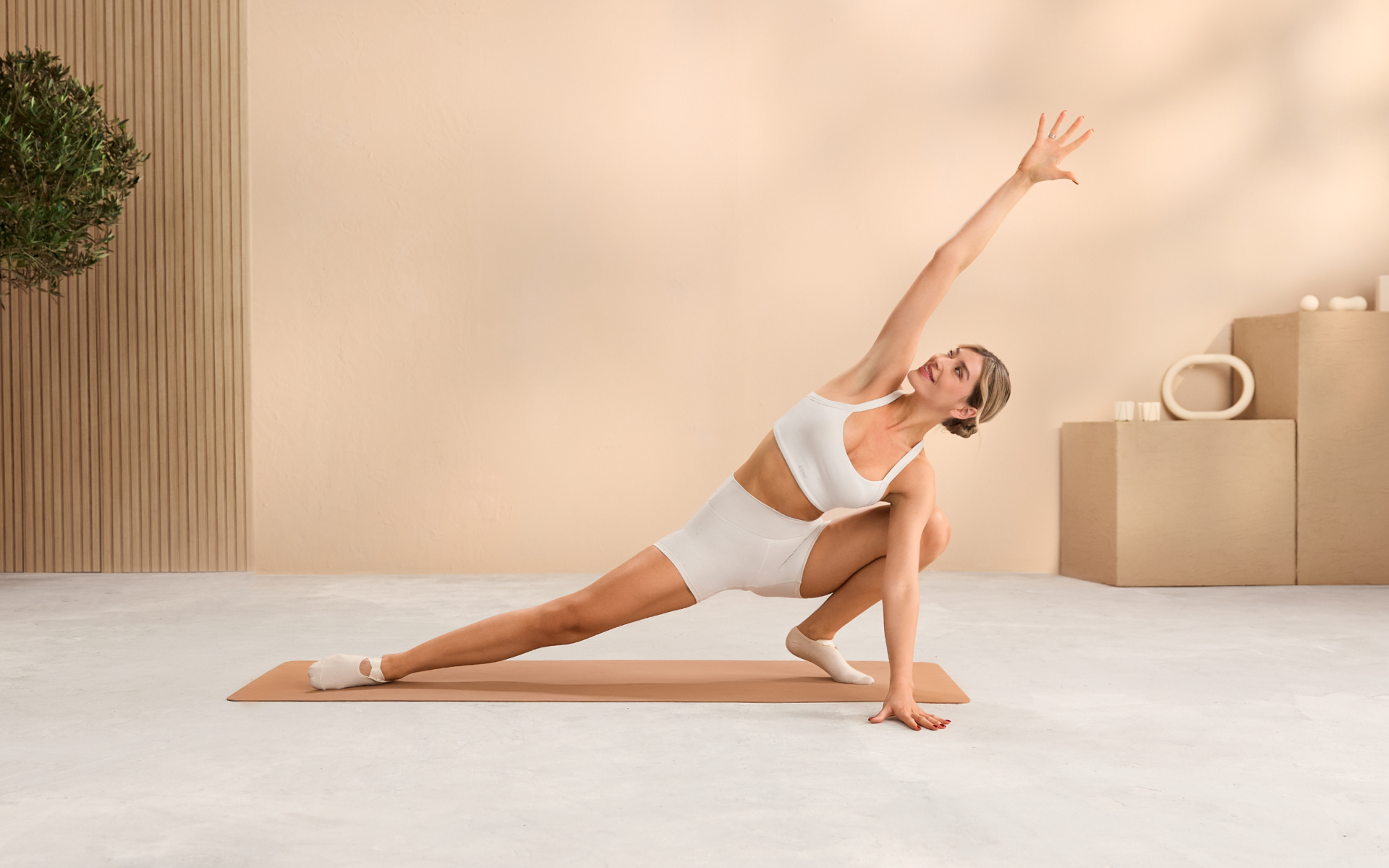
Stretching is often the most overlooked part of a fitness plan. Many people focus on lifting weights or running miles, but they forget to dedicate time to improving their flexibility and mobility. A consistent stretching practice can be a valuable tool in your wellness arsenal. Some of the most practical benefits of stretching include improved range of motion, reduced tension, and better body awareness.
If you’re looking for a structured way to start, a guided session can provide the framework that you need. This guide will explain how to build an effective 30-minute stretching routine, what the research says about best practices, and how to perform key stretches for optimal results.
What Is a 30-Minute Stretch Routine?
A 30-minute stretch routine is a structured session that’s designed to improve flexibility and help you feel looser. It typically:
- Begins with a brief warm-up to prepare your muscles
- Is followed by a series of stretches that target the major muscle groups
- Ends with a cool-down period
This format allows for sustained holds that gently lengthen muscles and connective tissues. It’s suitable for most fitness levels, as the intensity and range of motion can be modified to match your individual needs.
The goal isn’t to force your body into uncomfortable positions, but to work within your current limits to gradually enhance your range of motion. This type of routine provides a dedicated block of time for rest and body maintenance.
What Muscles Benefit the Most from Stretching?
While you can stretch virtually any muscle in your body, some areas tend to hold more tension due to posture, activity, or stress. Focusing on these key muscle groups can typically provide the most noticeable benefits.
- Hamstrings: Located on the back of your thighs, these muscles often become tight from prolonged sitting.
- Hip Flexors: Found at the front of your hips, they can shorten from sitting for long periods, potentially affecting your posture.
- Quadriceps: The large muscles on the front of your thighs that work hard during activities such as walking, running, and squatting.
- Glutes: Your buttock muscles can become tight, which may influence lower-back comfort.
- Calves: The muscles in your lower legs, which can tighten from walking or wearing certain types of shoes.
- Pectorals (Chest): Slouching over a desk or phone can lead to tightness in the chest muscles.
- Upper Back and Shoulders: These areas commonly hold tension from daily stress and poor posture.
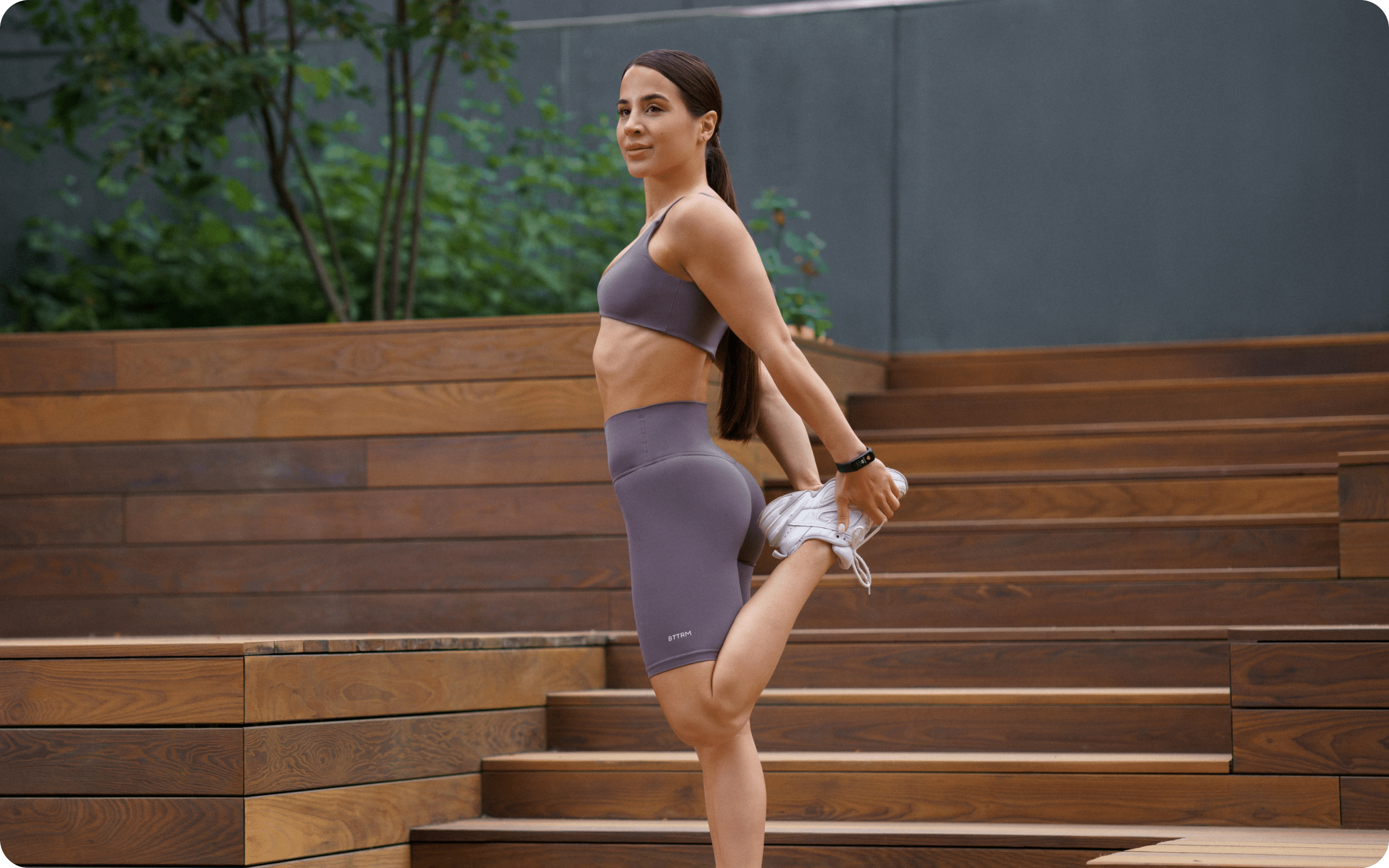
What Is the Optimal Duration of Stretches?
The ideal duration for a stretch depends on your goal. Research provides specific recommendations for different outcomes.
If your aim is to improve your range of motion (ROM) for the short term, such as before an activity, holding a stretch for 30 to 60 seconds per muscle group is effective. Studies have shown that even brief holds of 5 to 30 seconds can acutely increase ROM (1).
For long-term flexibility gains, the focus shifts to total weekly volume. To achieve notable improvements in ROM, it’s recommended to perform 2-3 sets of static stretches daily, holding each for 30-120 seconds per muscle group (1).
Interestingly, if the goal is to reduce passive muscle stiffness, research has suggested that longer durations are needed. Static stretching for more than four minutes per muscle has been shown to be effective for this purpose (1).
It should be noted that prolonged static stretching of over 60 seconds per muscle isn’t recommended immediately before activities that require maximal strength or explosive power, as it can temporarily reduce performance (2).
BetterMe Well-Being Coach app helps you achieve your body goals with ease and efficiency by helping to choose proper meal plans and effective workouts. Start using our app and you will see good results in a short time.
Is 30 Minutes of Stretching a Day Good?
Dedicating 30 minutes a day to stretching can be highly beneficial. This duration allows you to thoroughly address all major muscle groups without rushing. A daily 30-minute stretching routine for flexibility provides enough time to warm up, hold each stretch for a duration of 30-60 seconds, and cool down.
Consistency is key for long-term improvements. A daily practice helps accumulate the weekly stretching volume that’s needed to make lasting changes in your flexibility. Furthermore, stretching can have positive effects on your vascular system (3).
Some research has suggested that 15 minutes of static stretching per muscle, performed 5 days per week, can help reduce arterial stiffness and improve certain markers of circulatory function (1). A 30-minute session easily accommodates this.
What Is a 30-Minute Daily Stretch Routine?
A well-structured 30-minute daily stretch routine should be balanced and comprehensive. It starts with a dynamic warm-up to increase blood flow, followed by a series of static stretches, and finishes with a cool-down. This approach ensures that your muscles are prepared for stretching and that your body has time to relax afterward.
Here’s a sample 30-minute stretching routine for beginners that you can follow. It’s designed to be a full-body session that you can adapt to your needs. When choosing a stretching exercise for beginners, prioritize simple positions that allow you to breathe steadily and stay within a comfortable range of motion.
| Phase | Duration | Activity |
|---|---|---|
| Warm-up | 5 mins | Light dynamic movements to increase heart rate and warm muscles. Examples: arm circles, leg swings, torso twists, cat-cow pose. |
| Stretching | 20 mins | Static stretches that target major muscle groups. Hold each stretch for 45-60 seconds per side. Complete one side fully before switching to the other. Examples: standing hamstring stretch, kneeling hip flexor stretch, standing quad stretch, pigeon pose, standing chest stretch, child’s pose. |
| Cool-down | 5 mins | Gentle movements and deep breathing to lower heart rate and relax the nervous system. Examples: lying on your back with your knees to your chest, diaphragmatic breathing. |
Read more: Daily Stretch Routine for Flexibility: A Simple Way to Move Better
Exercise Instructions
Standing Hamstring Stretch
- Stand with your feet hip-width apart.
- Step your right foot slightly forward and place the heel on the ground, keeping your toes pointed up. Keep a slight bend in your left (supporting) knee.
- Hinge at your hips, keeping your back straight, and lower your torso toward your right leg until you feel a stretch in the back of your thigh.
- Hold the position, breathing deeply.
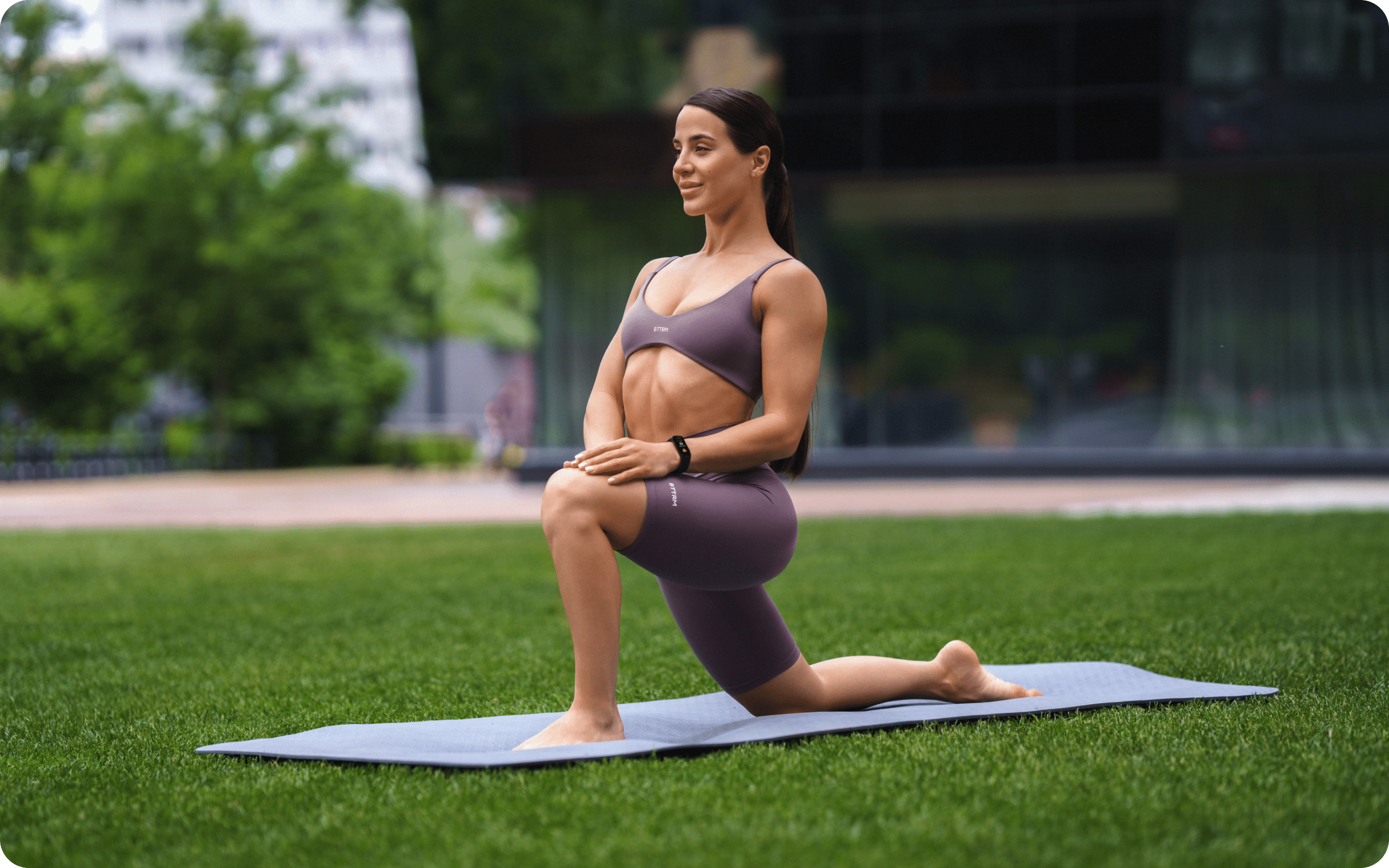
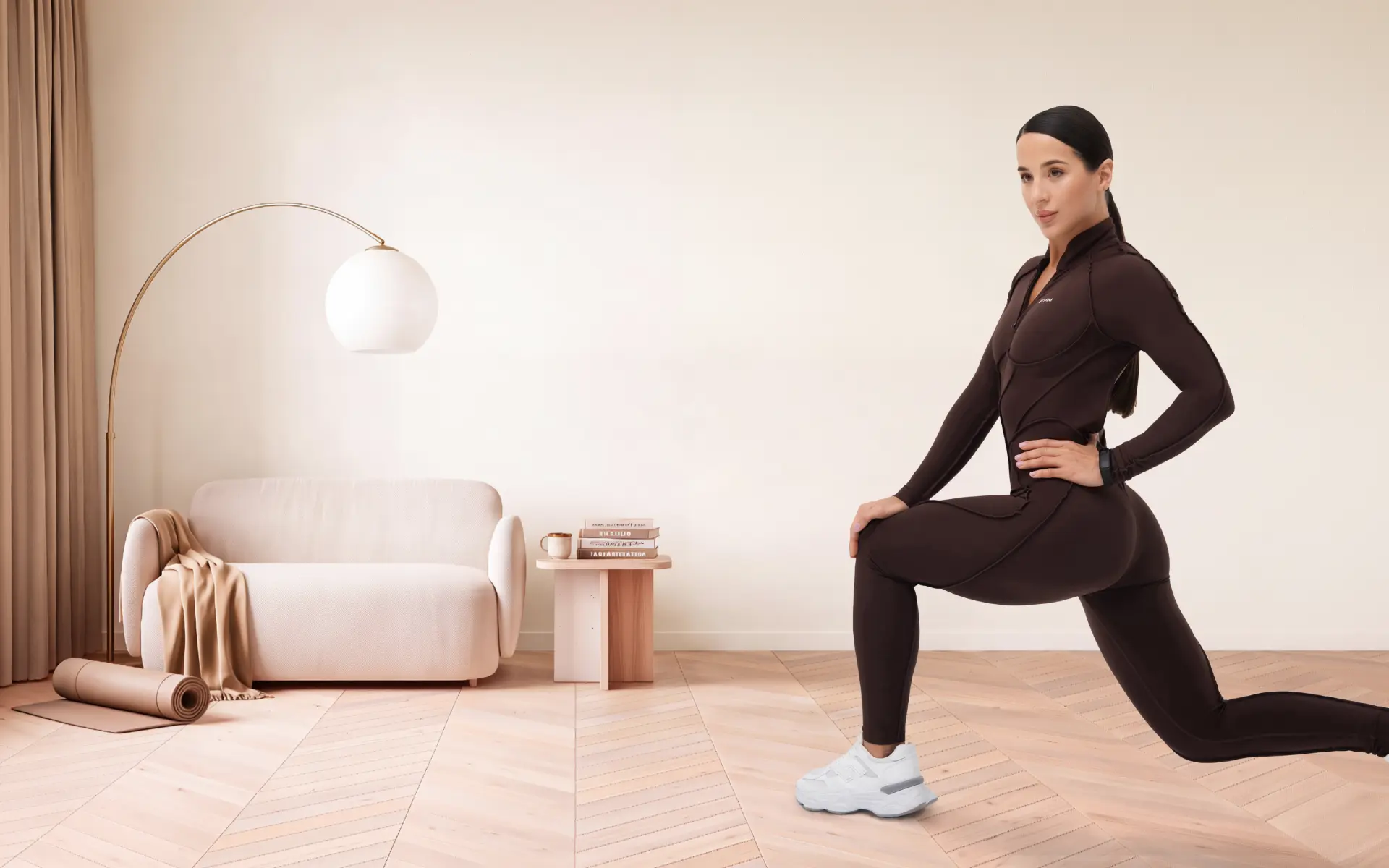
Kneeling Hip Flexor Stretch
- Kneel on your right knee, placing a cushion underneath it for comfort if needed.
- Place your left foot on the floor in front of you, with your left knee bent at a 90-degree angle.
- Keeping your back straight and your core engaged, gently push your hips forward until you feel a stretch in the front of your right hip and thigh.
- For a deeper stretch, raise your right arm overhead.
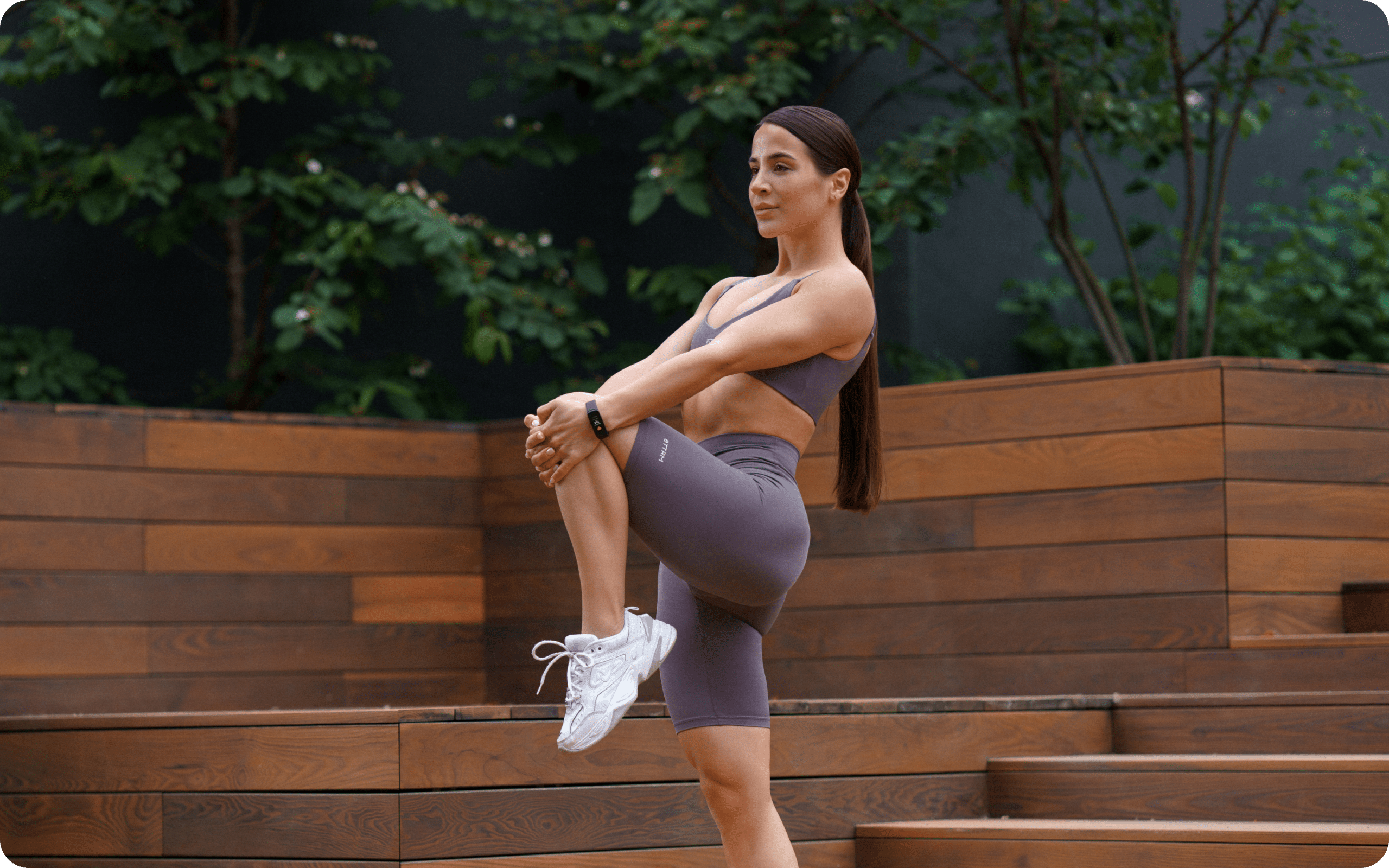
Standing Quad Stretch
- Stand on your left leg, holding onto a wall or chair for balance if needed.
- Bend your right knee and bring your heel toward your glute, grabbing your right ankle with your right hand.
- Gently pull your heel closer to your body, keeping your knees aligned and your back straight. You should feel a stretch in the front of your right thigh.
- Avoid arching your back by keeping your core engaged.
Pigeon Pose
- Start on all fours. Bring your right knee forward and place it behind your right wrist.
- Angle your right shin so your right foot is in front of your left hip. The more parallel your shin is to the front of the mat, the more intense the stretch.
- Extend your left leg straight behind you, with the top of your foot on the floor.
- Keep your hips square and slowly lower them toward the floor. You can stay upright on your hands or fold forward over your front leg to deepen the stretch.
Standing Chest Stretch
- Stand in a doorway or near a wall corner.
- Place your forearms on the frame of the doorway, your elbows slightly below shoulder height.
- Step one foot forward into a slight lunge.
- Gently press your chest forward until you feel a stretch across your chest and the front of your shoulders.
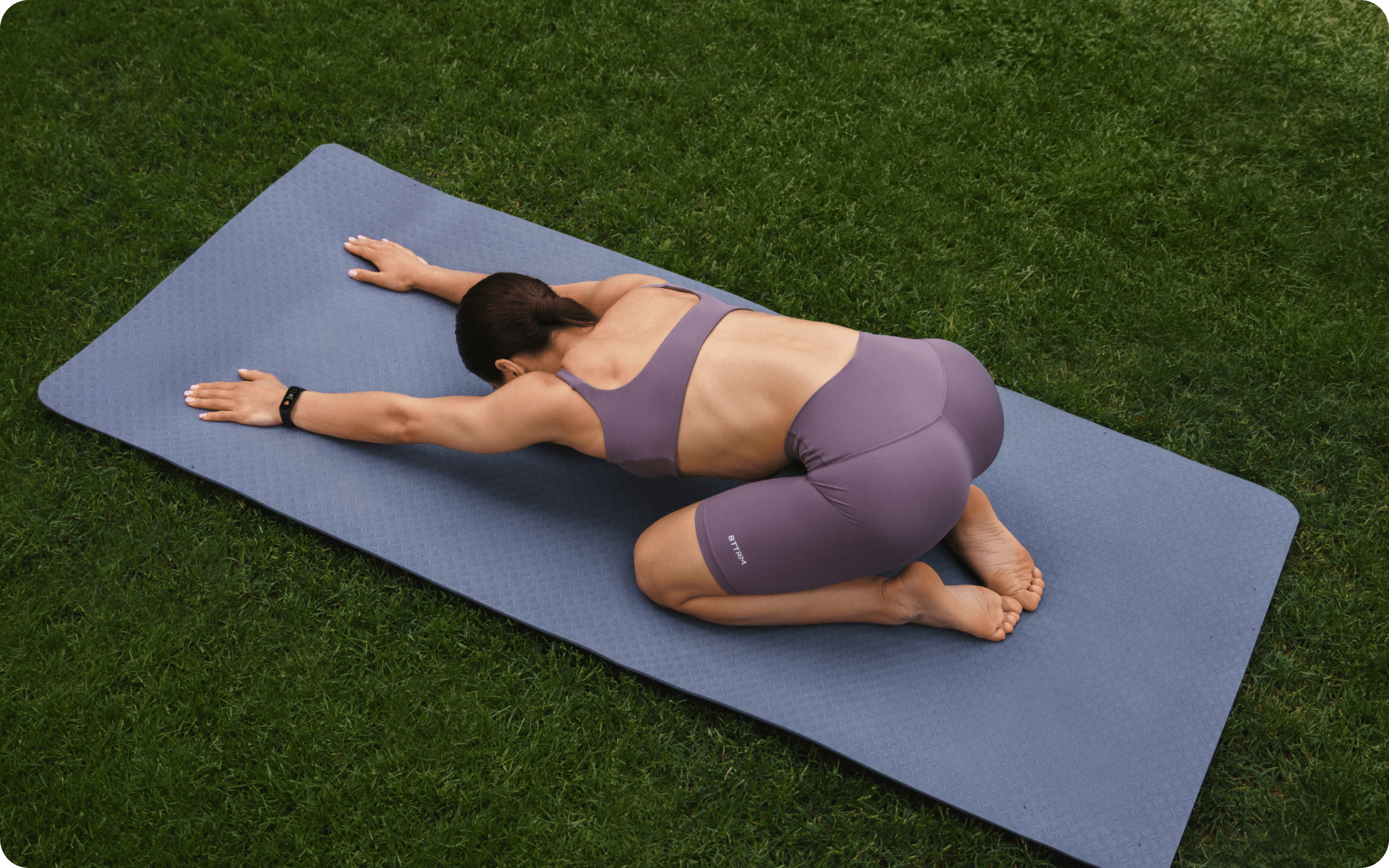
Child’s Pose
- Kneel on the floor with your toes together and your knees spread hip-width apart.
- Hinge at your hips and fold forward, walking your hands out in front of you.
- Lower your torso between your knees and rest your forehead on the floor.
- Allow your arms to relax forward or rest alongside your body. Breathe deeply into your back.
This 30-minute stretch routine for men and women can be a great foundation. You can find more movements by exploring other resources.
Is It Better to Stretch in the Morning or at Night?
There’s no definitive “better” time to stretch; the optimal time depends on your personal goals and schedule. Both morning and evening stretching sessions offer unique benefits.
- Morning Stretching: A morning session can help ease stiffness that may have developed overnight. It increases blood flow to your muscles and can help improve your posture for the day ahead. A 30-minute stretching flexibility routine in the morning can also serve as a gentle way to wake up your body and mind.
- Night Stretching: Stretching before bed can be a powerful tool for relaxation. It can help release physical tension accumulated throughout the day and calm your nervous system (4), potentially improving sleep quality. This can be an effective 30-minute recovery stretch.
The most important factor is consistency. Choose the time of day that you’re most likely to stick with. Whether it’s a morning ritual or an evening wind-down, a regular practice is what will yield the most significant long-term results.
Reasons why BetterMe is a safe bet: a wide range of calorie-blasting workouts, finger-licking recipes, 24/7 support, challenges that’ll keep you on your best game, and that just scratches the surface! Start using our app and watch the magic happen.
How Many Calories Does a 30-Minute Stretching Session Burn?
Stretching is a low-intensity activity, and its primary purpose isn’t to burn a high number of calories. The number of calories burned during a 30-minute stretching session is relatively low compared with cardiovascular or strength training exercises.
The exact amount depends on factors such as your body weight, age, sex, and the intensity of the stretches. On average, a 154-pound person might burn approximately 90 calories during a 30-minute gentle stretching session (5).
While a 30-minute stretching routine won’t contribute significantly to a calorie deficit for weight management, its indirect benefits can support that goal. By improving flexibility, reducing muscle soreness, and promoting relaxation, stretching can help you recover more effectively from higher-intensity workouts (6), which allows you to train more consistently. Stretching for weight loss is best viewed as a supportive habit rather than a primary calorie-burning strategy.
How Do I Know if Stretching Is Working?
Tracking progress in flexibility is different from tracking progress in strength or endurance. The signs are often more subtle, but they are just as significant.
- Increased Range of Motion: The most direct indicator is an improvement in your ability to move. You may notice that you can reach further in a hamstring stretch, sink deeper into a hip flexor stretch, or simply feel less restricted during daily activities such as bending down to tie your shoes.
- Reduced Sensation of Tightness: You may notice that muscles that previously felt tight—such as your hamstrings or shoulders—feel looser and more comfortable throughout the day.
- Improved Performance in Other Activities: Better flexibility can translate to better form in your workouts. For example, improved hip mobility could allow you to squat deeper with better technique.
- Less Muscle Soreness: While stretching doesn’t eliminate post-workout soreness, maintaining good flexibility may help reduce the intensity of delayed onset muscle soreness (DOMS).
- Feeling More Relaxed: Consistent stretching practice for 30 minutes a day can have a noticeable effect on your overall sense of well-being. If you feel calmer and less physically tense, this means that your routine is working.
Read more: Push Calisthenics Workout: A Guide to Building Upper-Body Strength
Frequently Asked Questions
Is stretching better than walking?
Stretching and walking are different activities with distinct benefits, and one isn’t inherently better than the other. Walking is a form of cardiovascular exercise that improves heart function and endurance (7). Stretching primarily enhances flexibility and range of motion (8). They complement each other well in a balanced fitness plan.
Can stretching alone build muscle?
The current body of research doesn’t recommend stretching as a primary strategy for building muscle mass (hypertrophy). While some specific, intense stretching protocols may induce a minor growth response (9), traditional resistance training is far more effective for muscle building.
Do you grow more if you stretch?
This question can be interpreted in several ways. If “grow” refers to muscle growth, as mentioned above, stretching isn’t the main driver. If it refers to height, stretching won’t make your bones longer. However, by improving posture and decompressing the back, stretching can help you stand taller and appear taller.
How soon will stretching show results?
You can experience acute results, such as a temporary increase in range of motion, immediately after a single stretching session. Lasting improvements in flexibility typically require consistent practice over several weeks. Most people will notice significant changes within 4 to 8 weeks of regular stretching.
Can stretching lose belly fat?
Stretching alone isn’t an effective method for losing belly fat, and spot reduction of fat from a specific area isn’t possible (10).
Fat loss is achieved by creating a consistent calorie deficit through a combination of diet and exercise that burns a significant number of calories, such as cardiovascular and strength training (11, 12).
The Bottom Line
Incorporating a 30-minute stretch routine into your daily life is a practical and powerful way to improve your flexibility, reduce feelings of tightness, and support your overall well-being.
By focusing on proper form and holding stretches for the recommended duration, you can make measurable progress. Remember that the goal is consistency, not intensity. Listen to your body, celebrate small improvements, and enjoy the process of becoming more mobile and connected with your physical self.
DISCLAIMER:
This article is intended for general informational purposes only and does not serve to address individual circumstances. It is not a substitute for professional advice or help and should not be relied on for making any kind of decision-making. Any action taken as a direct or indirect result of the information in this article is entirely at your own risk and is your sole responsibility.
BetterMe, its content staff, and its medical advisors accept no responsibility for inaccuracies, errors, misstatements, inconsistencies, or omissions and specifically disclaim any liability, loss or risk, personal, professional or otherwise, which may be incurred as a consequence, directly or indirectly, of the use and/or application of any content.
You should always seek the advice of your physician or other qualified health provider with any questions you may have regarding a medical condition or your specific situation. Never disregard professional medical advice or delay seeking it because of BetterMe content. If you suspect or think you may have a medical emergency, call your doctor.
SOURCES:
- Practical recommendations on stretching exercise: A Delphi consensus statement of international research experts (2025, sciencedirect.com)
- Acute Effects of Static Stretching on Muscle Strength and Power: An Attempt to Clarify Previous Caveats (2019, frontiersin.org)
- Effects of muscle stretching exercises on endothelial function in adults: A systematic review (2025, link.springer.com)
- The Impact of Stretching Intensities on Neural and Autonomic Responses: Implications for Relaxation (2023, mdpi.com)
- Physical Activity and Your Weight and Health | Healthy Weight and Growth (2023, cdc.gov)
- Stretching to Improve Muscle Performance, Recovery, and Health (2025, researchgate.net)
- The multifaceted benefits of walking for healthy aging: from Blue Zones to molecular mechanisms (2023, link.springer.com)
- Biomechanical, Healing and Therapeutic Effects of Stretching: A Comprehensive Review (2023, mdpi.com)
- Physiology of Stretch-Mediated Hypertrophy and Strength Increases: A Narrative Review (2023, link.springer.com)
- A proposed model to test the hypothesis of exercise-induced localized fat reduction (spot reduction), including a systematic review with meta-analysis (2022, hummov.awf.wroc.pl)
- A systematic review on the effectiveness of diet and exercise in the management of obesity (2023, sciencedirect.com)
- Optimal Diet Strategies for Weight Loss and Weight Loss Maintenance (2020, pmc.ncbi.nlm.nih.gov)


 Reviewed by