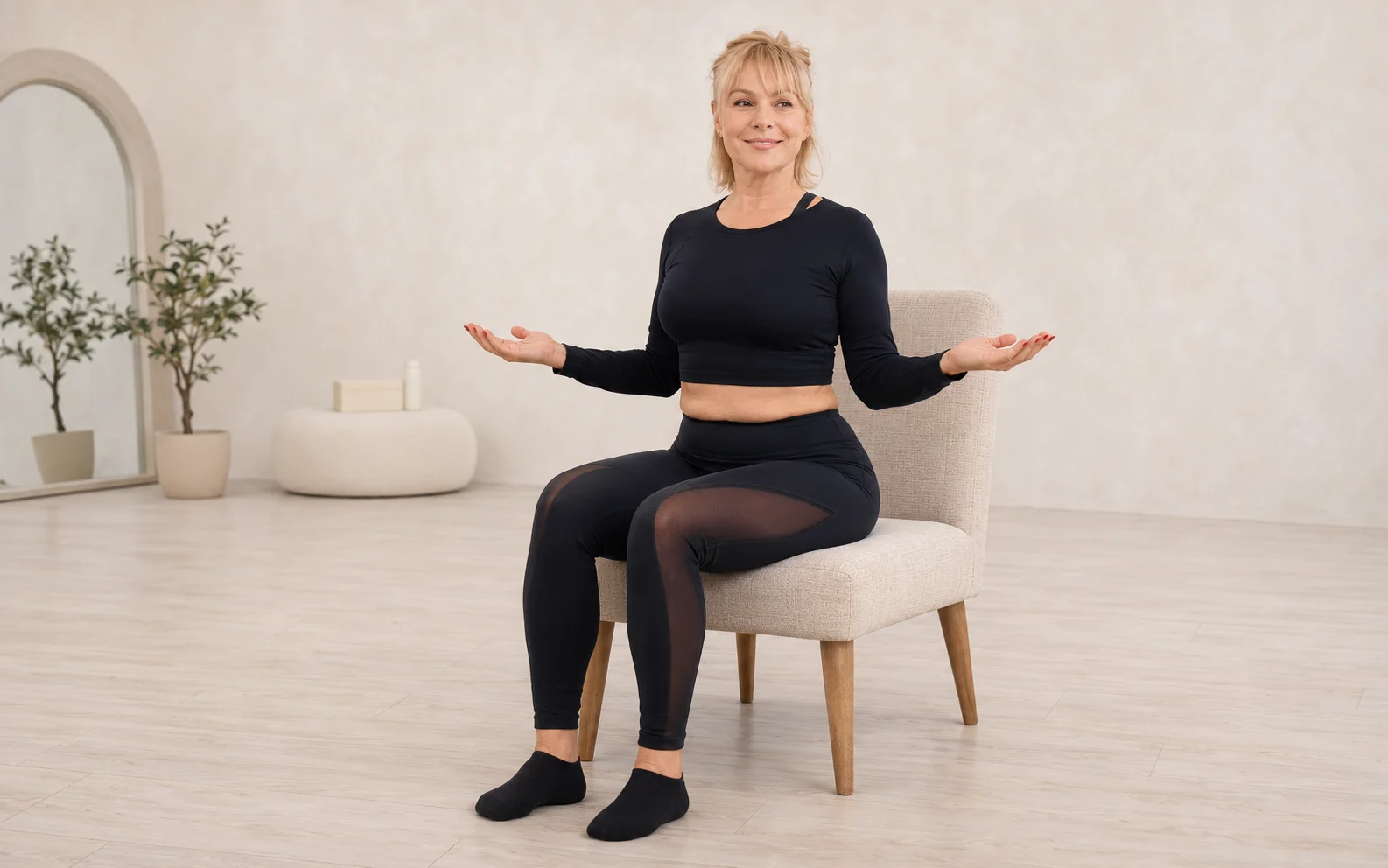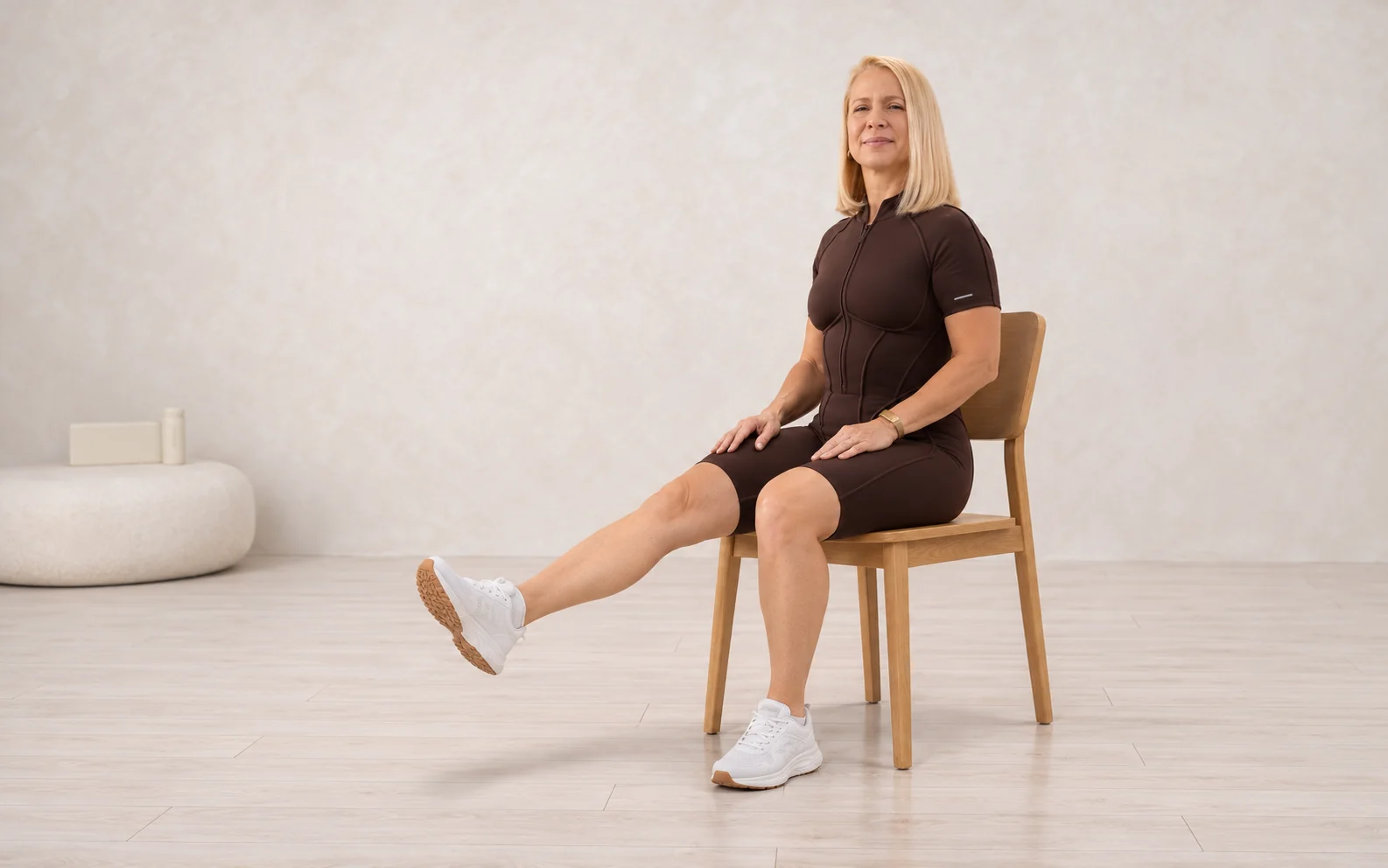

Office chair yoga uses seated stretches and breathing exercises you can do at your desk. Choose one or two movements that fit your workspace, then take a short walk when possible. For more poses, see our chair yoga poses guide.
Check with a doctor before starting if you have a neck, back, or joint condition, or recent surgery.
Following exercise and diet plans is the key in your fitness journey and greatly impacts results. In 4 weeks users can typically expect to lose not more than 1-2 lbs per week. Individual results may vary.
Key takeaways
These points sum up research on desk breaks, yoga, stretching, and weekly activity.
- In a small trial of adults with overweight or obesity, two-minute walking breaks every 20 minutes lowered glucose and insulin responses after a test drink (1).
- Adults are advised to limit sitting and replace it with activity of any intensity (2).
- A review examined stress measures across varied yoga programs. It did not test this office routine (3).
- In healthy active participants, stretching temporarily improved range of motion. The effect typically lasted less than 30 minutes (4).
- Adult guidelines recommend 150 to 300 minutes of moderate aerobic activity a week (2). Walking and active travel can contribute to physical activity (5).
- Most office chair yoga moves take 1 to 2 minutes and need no equipment.
What is office chair yoga?
Office chair yoga adapts classic yoga poses so you can do them while seated at work. It uses gentle stretches, twists, and slow breathing.
You do not need to change clothes or leave your desk. Most moves take 1 to 2 minutes, so they fit between tasks or meetings.
What are the benefits of chair yoga for office workers?
Office chair yoga offers a supported way to move between desk tasks. Standing or walking gives you a separate break from sitting.
Walking breaks during long periods of sitting
Adults are advised to reduce sedentary time and replace it with physical activity (2). In a small trial of adults with overweight or obesity, two-minute walking breaks every 20 minutes lowered glucose and insulin responses after a test drink (1). The trial tested walking. You can add a separate walk when you finish the seated movements.
Easier movement
In healthy active participants, stretching temporarily increased range of motion, with effects typically lasting less than 30 minutes (4). Choose a comfortable range during the desk version.
A calmer break
The review examined varied yoga programs rather than this desk routine (3). A breathing break gives you time away from screens and tasks.
A short reset between tasks
A short pause to move and breathe can help you reset before your next task. Many people find it easier to return to work after a break.
Is yoga good for desk workers?
A supported movement break can fit between desk tasks. Choose a movement that feels comfortable for your neck, shoulders or hips.
Adult guidelines recommend 150 to 300 minutes of moderate aerobic activity a week (2). Walking, including during travel, is one way to add physical activity (5).
How can you do yoga in your office?
Set up your space so you can move freely and stay steady.
- Use a firm, stationary chair without wheels or a swivel. If your office chair rolls or turns, move to a fixed chair before starting (6).
- Push back from the desk to give your legs room.
- Sit near the front edge with your feet flat.
- Loosen tight belts, ties, or jackets.
- Set a reminder every 30 to 60 minutes.
What are 5 yoga exercises you can do from your desk?
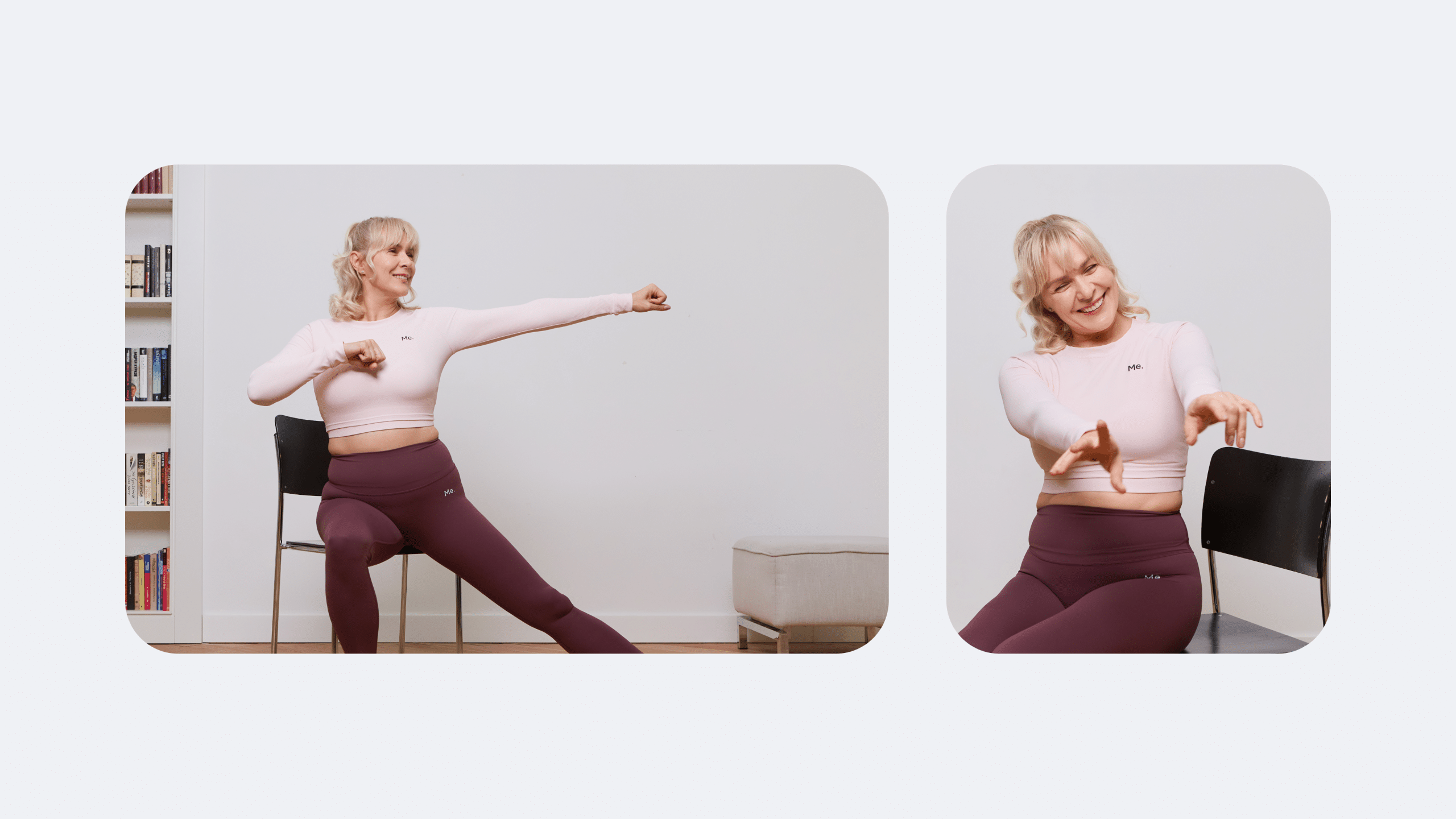
These moves target the neck, shoulders, back, and hips. Move slowly and breathe steadily.
1. Seated neck release
- Sit tall and relax your shoulders.
- Tilt your right ear toward your right shoulder.
- Hold for 3 breaths, then switch sides.
- Keep the stretch gentle and avoid rolling your head backward.
2. Seated cat-cow
- Place your hands on your knees.
- Breathe in, lift your chest, and gently arch your back.
- Breathe out, round your back, and tuck your chin.
- Repeat 6 to 8 times.
3. Seated twist
- Sit tall and place your right hand on your left knee.
- Place your left hand on the back of the chair.
- Turn your chest gently to the left and hold for 3 breaths.
- Switch sides.
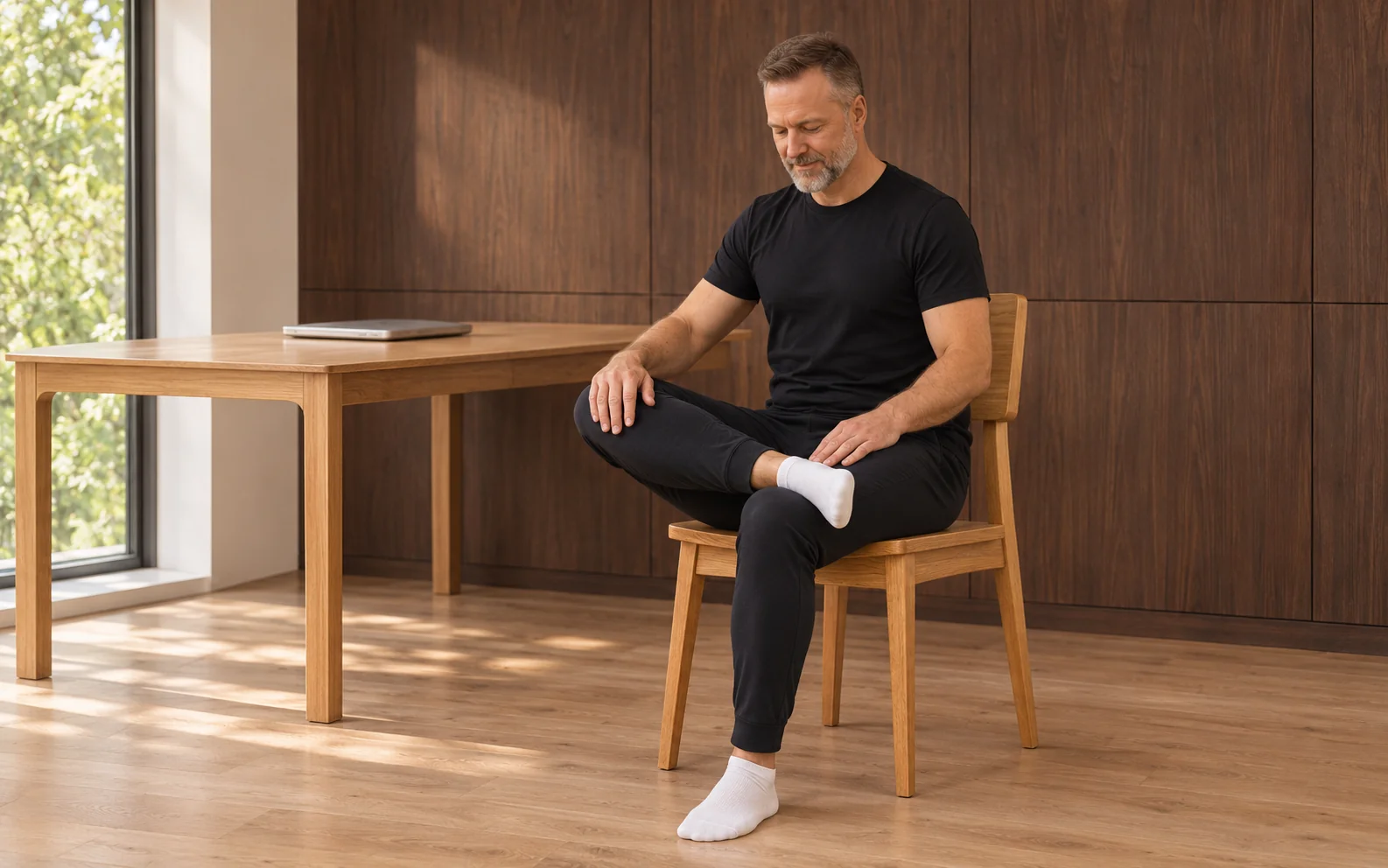
4. Seated figure four
- Cross your right ankle over your left knee.
- Keep your back straight and lean forward slightly.
- Hold for 20 to 30 seconds, then switch sides.
5. Desk chest opener
- Sit near the front edge of the chair.
- Clasp your hands behind your back or hold the chair back.
- Lift your chest and draw your shoulders back gently.
- Hold for 3 to 5 breaths.
Which areas does each exercise target?
Compare the movements and choose a version you can control.
|
Exercise |
Main focus |
|---|---|
|
Seated neck release |
Side of the neck |
|
Seated cat-cow |
Spine mobility |
|
Seated twist |
Upper back, core |
|
Seated figure four |
Outer hips, glutes |
|
Desk chest opener |
Chest, front of shoulders |
What does a 5-minute desk routine look like?
Use this sequence as a starting point and adjust it to your ability. The chair yoga for beginners guide explains more seated positions.
|
Exercise |
Time |
|---|---|
|
Seated neck release |
1 minute |
|
Seated cat-cow |
1 minute |
|
Seated twist |
1 minute |
|
Seated figure four |
1 minute |
|
Desk chest opener |
30 seconds |
|
Slow breathing |
30 seconds |
Which extra moves can you add?
These 3 moves add variety once the first 5 feel familiar.
Wrist and finger stretch
- Hold your right arm out with the palm facing up.
- Use your left hand to draw the fingers gently back.
- Hold for 15 seconds, then turn the palm down and repeat.
- Switch hands.
Seated eagle arms
- Cross your right arm under your left arm at the elbows.
- Bring your palms together, or hold opposite shoulders.
- Lift your elbows slightly and hold for 3 to 5 breaths.
- Switch the arm on top.
Seated forward fold
- Push your chair back from the desk.
- Sit near the front edge with your feet flat.
- Hinge forward from your hips and let your arms hang.
- Hold for 3 to 5 breaths, then sit up slowly.
What are signs you need a movement break?
Your body often signals that it is time to move.
- Your neck or shoulders feel stiff.
- You notice you have been slouching for a while.
- Your legs feel restless or heavy.
- Your focus drifts and you reread the same line.
- More than an hour has passed since you last stood up.
How many times per week should you do chair yoga?
Choose a manageable number of short breaks for your workday and change the frequency if you need more rest.
A longer session is another option. Brisk walking can contribute to the adult aerobic activity target (2).
What does a workday plan look like?
Spread short breaks across the day. Adjust the sample schedule to your week.
|
Time |
Break |
|---|---|
|
Mid-morning |
Neck release and cat-cow, 2 minutes |
|
Before lunch |
Short walk, 5 to 10 minutes |
|
Early afternoon |
Twist and figure four, 2 minutes |
|
Mid-afternoon |
Stand, stretch, and refill water, 2 minutes |
|
End of day |
Full 5-minute routine |
How should you breathe during desk yoga?
Keep breathing comfortably through each stretch; avoid forcing a slower rhythm.
- Breathe in through your nose as you sit tall.
- Breathe out slowly as you twist or fold.
- Let the next breath come and go at a comfortable pace.
- Keep breathing through each hold.
What are some standing options?
Standing moves add variety and break up sitting even more.
- Stand and reach both arms overhead for 3 breaths.
- Hold the desk and do 10 slow heel raises.
- For sit-to-stands, use a stationary chair with no wheels or swivel (6).
- Walk to a colleague instead of sending a message.
- Take phone calls while standing or walking.
How do you combine desk yoga with walking?
Walking adds more movement than stretching alone. Try a 5-minute walk after lunch and short walks to meetings. Use stairs for one or two floors when you can.
How can you build the habit?
Small cues help you remember to move.
- Set a timer or calendar reminder.
- Link a stretch to a regular task, such as sending a report.
- Keep a water bottle on your desk and refill it often.
- Invite colleagues to a shared 5-minute stretch break.
- Track how many breaks you take each day.
What about chair yoga and weight?
Use office chair yoga as a movement break. The research cited here does not establish a calorie-burn estimate for this routine.
For a broader activity plan, include separate walking breaks or active travel (5). The evidence cited here gives no individual weight-loss forecast for office chair yoga.
Which mistakes should you avoid?
Avoid these common mistakes.
- Using a chair with wheels or a swivel, including a chair with locked casters
- Rolling your head backward in neck stretches
- Forcing twists past a comfortable range
- Holding your breath
- Saving all movement for the end of the day
Who should be careful?
Get advice from a doctor or physical therapist before starting if you have:
- A neck or back condition
- Numbness or tingling in your arms or legs
- Recent surgery
- Dizziness when you turn your head
Frequently Asked Questions
Can you do chair yoga in work clothes?
Yes. Most moves are small and work in office clothes.
How long should a desk yoga break be?
One to 5 minutes can be enough for many breaks.
Is chair yoga enough exercise for office workers?
The desk routine offers a movement break. Include aerobic and strengthening activities across the week as appropriate for your abilities (2).
Can desk yoga help with stress at work?
The review studied varied yoga programs and did not establish an effect from this desk routine (3). Use a comfortable pause if you want one. Seek professional support when ongoing stress affects daily life.
How can I fit a desk break between meetings?
Pick a movement you can do in work clothes, use a stationary chair without wheels or a swivel, and leave clearance around your desk.
Can you do desk yoga in an open-plan office?
Yes. Most moves are subtle, and you can do them without standing up.
Do you need a yoga mat at work?
No. All of these moves are done in your chair or standing by your desk.
The bottom line
Office chair yoga is a quick way to break up sitting and loosen tight areas during the workday. Try 1 to 5 minute breaks several times a day, paired with short walks. For more seated options, see our seated yoga stretches guide.
DISCLAIMER:
This article is intended for general informational purposes only and does not serve to address individual circumstances. It is not a substitute for professional advice or help and should not be relied on for making any kind of decision-making. Any action taken as a direct or indirect result of the information in this article is entirely at your own risk and is your sole responsibility.
BetterMe, its content staff, and its medical advisors accept no responsibility for inaccuracies, errors, misstatements, inconsistencies, or omissions and specifically disclaim any liability, loss or risk, personal, professional or otherwise, which may be incurred as a consequence, directly or indirectly, of the use and/or application of any content.
You should always seek the advice of your physician or other qualified health provider with any questions you may have regarding a medical condition or your specific situation. Never disregard professional medical advice or delay seeking it because of BetterMe content. If you suspect or think you may have a medical emergency, call your doctor.
SOURCES:
- Breaking up prolonged sitting reduces postprandial glucose and insulin responses (2012, doi.org)
- WHO guidelines on physical activity and sedentary behaviour (2020, who.int)
- Yoga, mindfulness-based stress reduction and stress-related physiological measures: a meta-analysis (2017, doi.org)
- Acute effects of muscle stretching on physical performance, range of motion, and injury incidence in healthy active individuals: a systematic review (2016, doi.org)
- Physical activity fact sheet (2026, who.int)
- Sitting exercises (2024, nhs.uk)
 Reviewed by
 Reviewed by