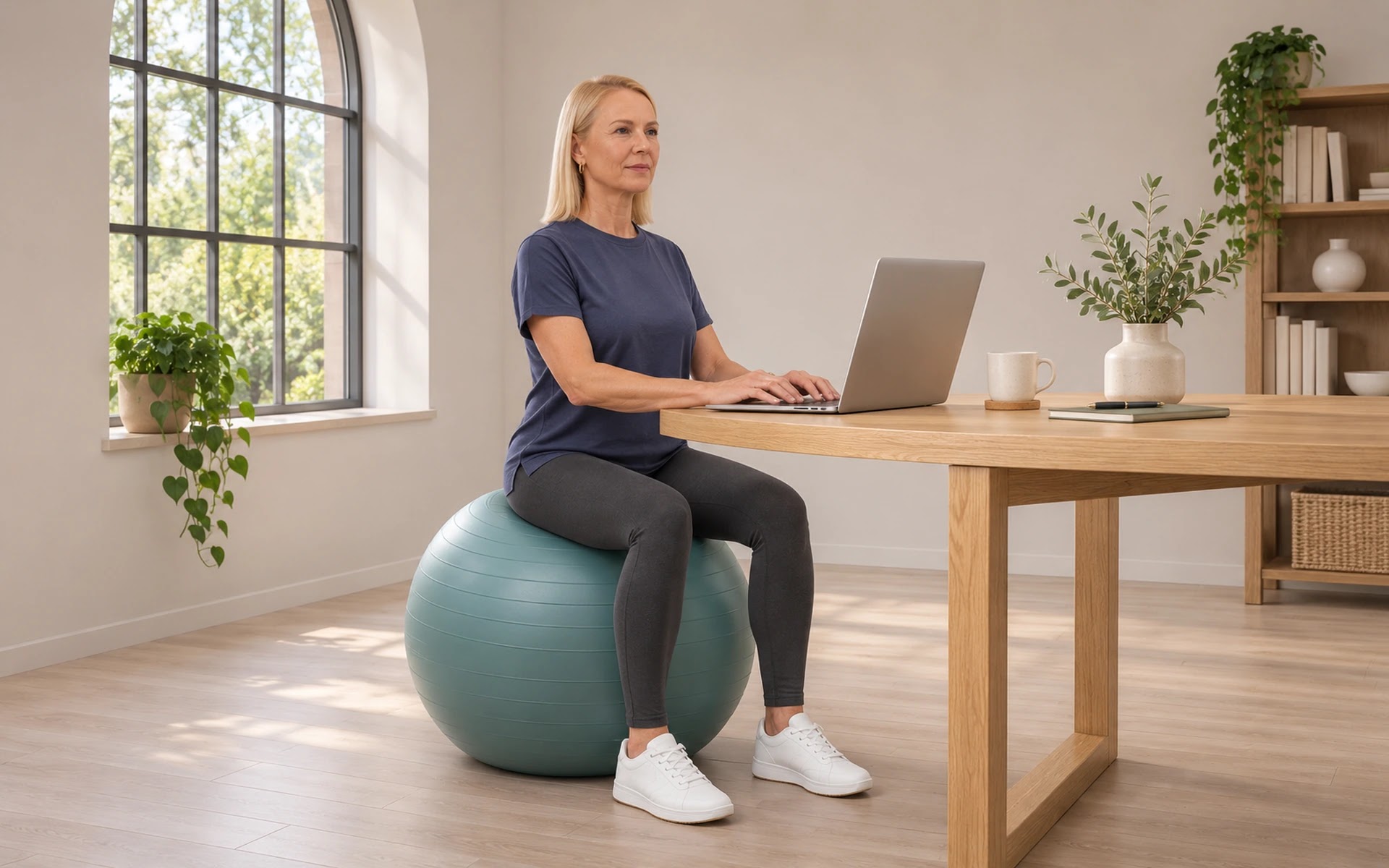
Chair yoga for weight loss can add comfortable movement to a wider routine, but it cannot guarantee weight change. Its value depends on the practice and your goals. Adults seeking a seated starting point can begin with what chair yoga involves*. Consider nutrition, activity, and individual support together.*
Following exercise and diet plans is the key in your fitness journey and greatly impacts results. In 4 weeks users can typically expect to lose not more than 1-2 lbs per week. Individual results may vary.
Key takeaways
Keep the role of chair yoga specific when considering weight management.
- A gentle chair-yoga routine does not guarantee weight loss or a fixed calorie burn. (1)
- Weight management depends on multiple factors, including health and eating patterns. (2)
- Structured chair exercise improved some physical-function measures in older adults (3).
- Use a firm chair and keep both feet comfortably supported. (4)
- Modify yoga for individual needs and avoid forcing movement. (5)
- General activity goals include aerobic and strengthening work beyond gentle stretching. (6)
Does chair yoga help you lose weight?
Chair yoga may contribute to an active routine, but its effect on body weight is uncertain for an individual. Avoid treating it as a stand-alone weight-loss method.
A session can range from quiet breathing to repeated, effortful movements. Those differences affect how much physical work the practice involves. The label chair yoga does not describe a fixed intensity.
Physical activity contributes to energy use, while weight change also depends on eating and drinking patterns. (1) Medication, health conditions, sleep, and other circumstances may affect the outcome. (2)
If weight loss is appropriate for you, consider the whole plan. A registered dietitian or relevant health professional can help decide what changes fit your situation.
You can still choose chair yoga for enjoyment, convenience, or a manageable introduction to movement. Those reasons do not depend on seeing a particular number on the scale.
How many calories does chair yoga burn?
There is no reliable single calorie figure for every chair-yoga session. Avoid using a generic yoga estimate as a precise chair-yoga value.
Energy expenditure depends on the person, activity, duration, and intensity. (1) A seated breathing session differs from a class with repeated standing movements.
An app or watch may display an estimate, but that number should not become a promise about fat loss. Do not assume a session offsets a particular food or meal.
For planning, record the actual activity and how it felt. Note whether the class involved stretching, balance, strengthening, or sustained movement. That gives a clearer description than a calorie total alone.
Read more: 10-minute chair yoga for seniors: a seated routine
What benefits have researchers studied?
Researchers have studied different chair-based programs, often focusing on physical function. The findings should stay tied to those programs and populations.
A review found improvements in some strength measures among older adults doing structured chair-based exercise. (3) It included varied interventions rather than one standard chair-yoga sequence.
The review did not measure fat loss from this gentle chair-yoga sequence.
General yoga studies differ in style, intensity, and participant needs. (5) A result from one type of yoga cannot simply be assigned to every seated routine.
Ask what you want the practice to provide. If the answer is a comfortable movement break, choose a class that delivers that experience. If you want progressive strength work, check whether the session actually includes it.
How does chair yoga compare with other chair exercise?
Chair yoga often emphasizes adapted poses, breathing, and attention. Other chair workouts may focus more directly on repeated strength or aerobic movements.
| Activity | Typical emphasis | Useful question |
|---|---|---|
| Gentle chair yoga | Comfortable poses and awareness | Can I adapt each position? |
| Chair strength exercise | Repeated muscle effort | Is the resistance suitable for me? |
| Seated aerobic movement | Sustained rhythmic activity | Can I maintain an appropriate effort? |
| Supported balance practice | Control while standing | Is stable support available? |
These categories can overlap. Read the class description and observe the actual movements rather than relying on the title.
For a different exercise menu, see chair exercises for weight loss. Choose the version that fits your abilities and wider plan.
BetterMe offers a variety of workouts, recipes, challenges, and support tools to help you stay more consistent with your wellness routine. Explore the app to find features that fit your goals, preferences, and schedule.
Which eight chair-yoga options can you try?
The following options provide a gentle movement menu. They are not a tested weight-loss protocol or a requirement to complete a circuit.
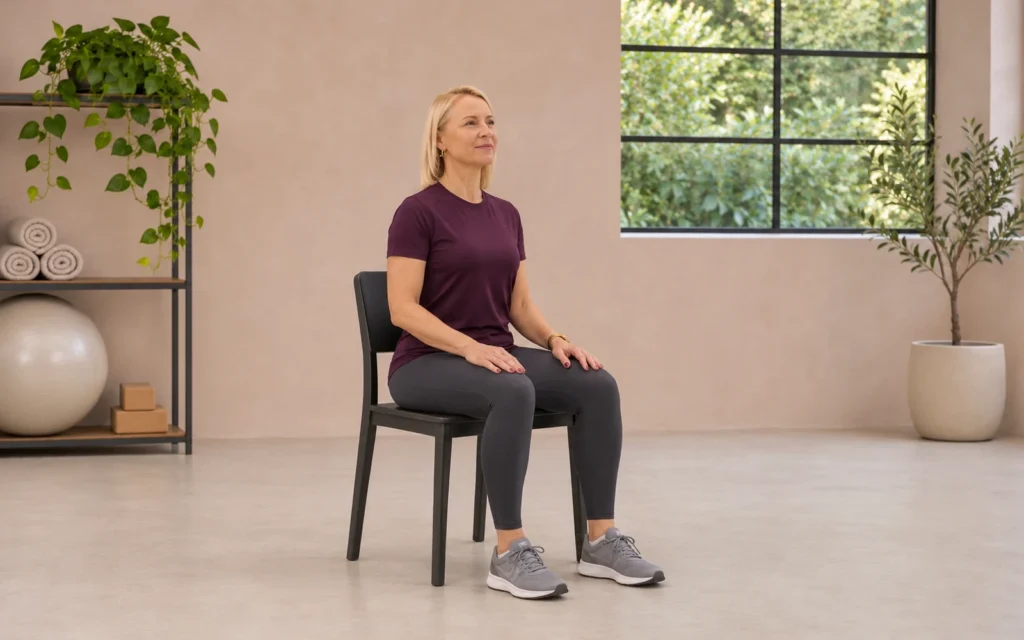
Use a firm, stationary chair that lets your feet reach the floor. (4) Begin with one comfortable attempt, then rest before deciding what to repeat.
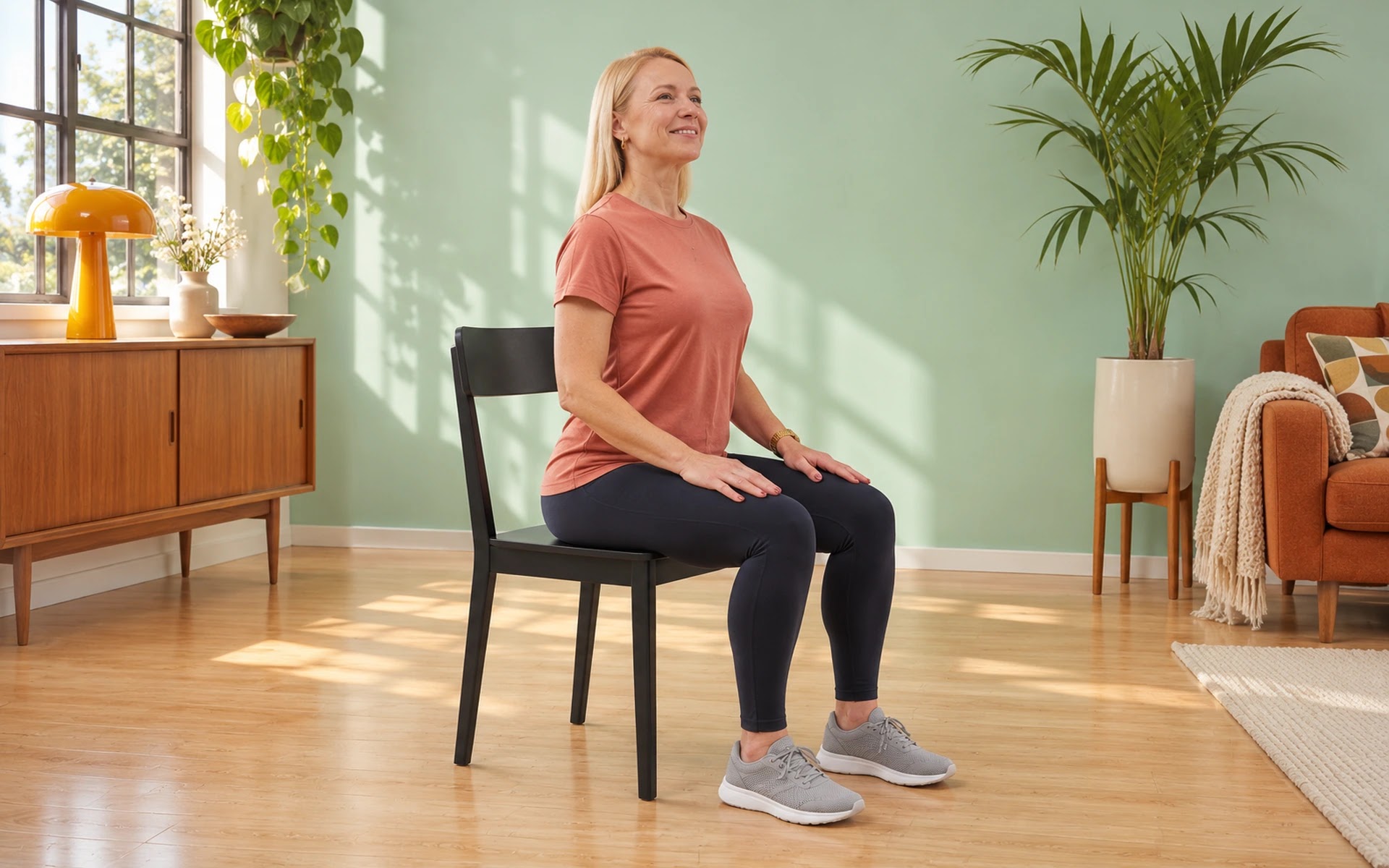
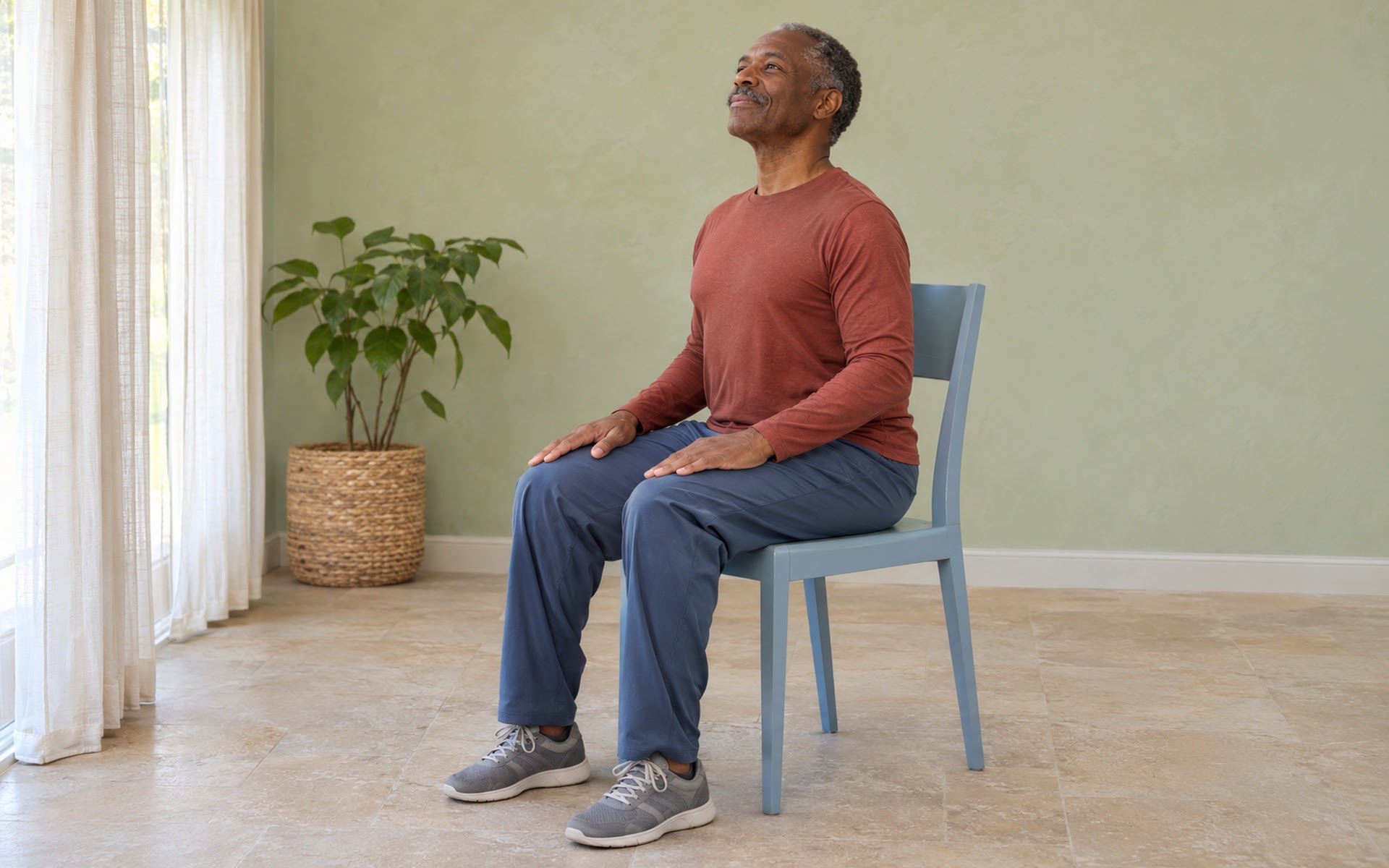
1. Supported upright sitting
- Sit with your back supported if needed and your hands resting comfortably.
- Let your feet settle on the floor.
- Keep your chin level without forcing a rigid posture.
Use this position to check the setup. Change the chair if you feel unstable or cannot sit comfortably.
2. Gentle shoulder movement
- Lift your shoulders slightly, then allow them to settle.
- Try a small backward circle only if comfortable.
- Keep the jaw and hands relaxed.
Leave out the circle when it causes pinching. A smaller movement is an acceptable option.
3. Seated cat-cow
- Rest your palms on your thighs.
- Lift the breastbone modestly, return through neutral, then round the upper back gently.
- Keep your head from dropping backward.
Do not force a large lower-back arch. Follow existing restrictions on spinal movement.
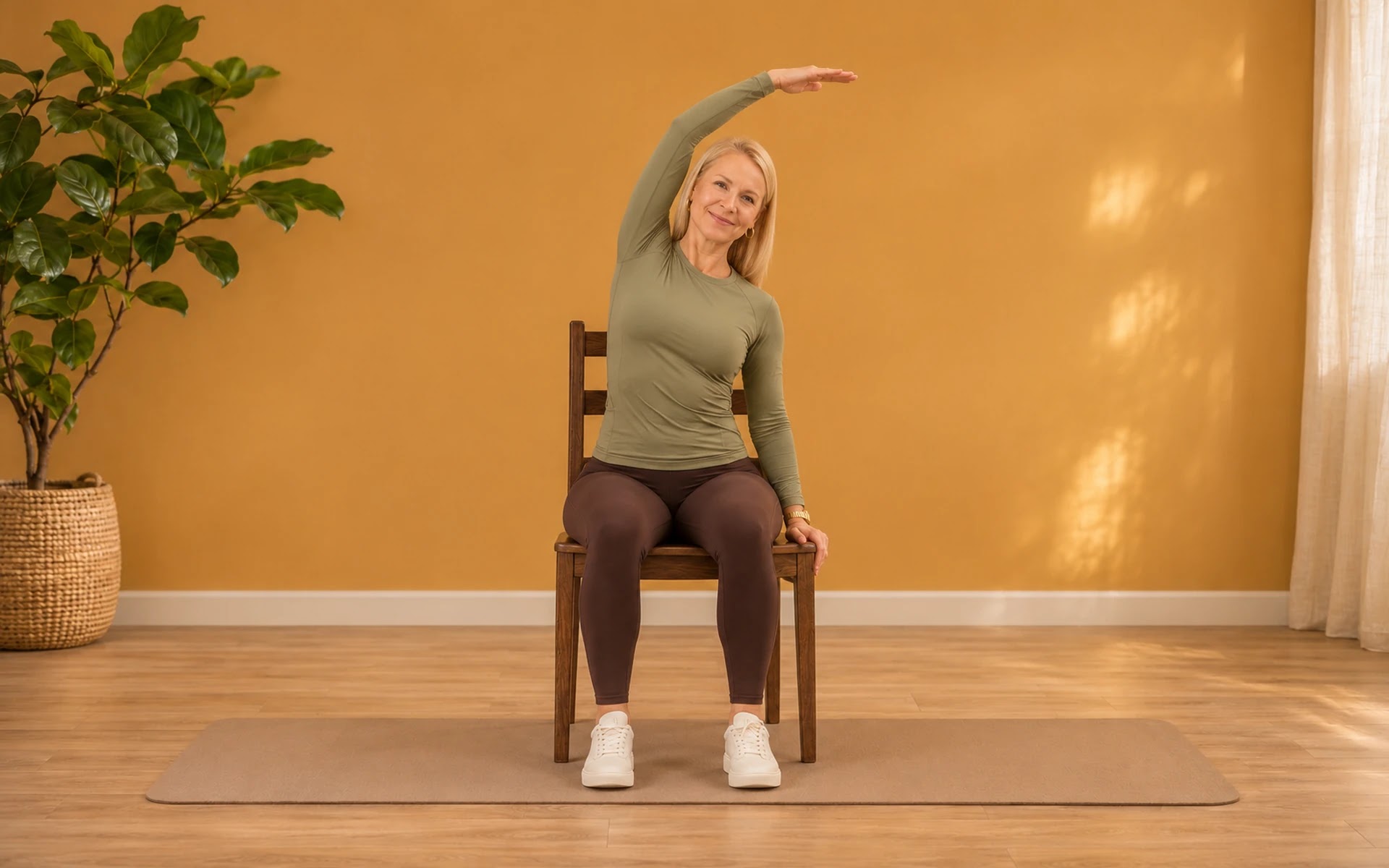
4. Low side reach
- Place one hand on your thigh and lift the other arm to a comfortable height.
- Reach slightly sideways while keeping both hips supported.
- Return upright before changing sides.
Keep the reaching hand near your waist if overhead movement is uncomfortable.
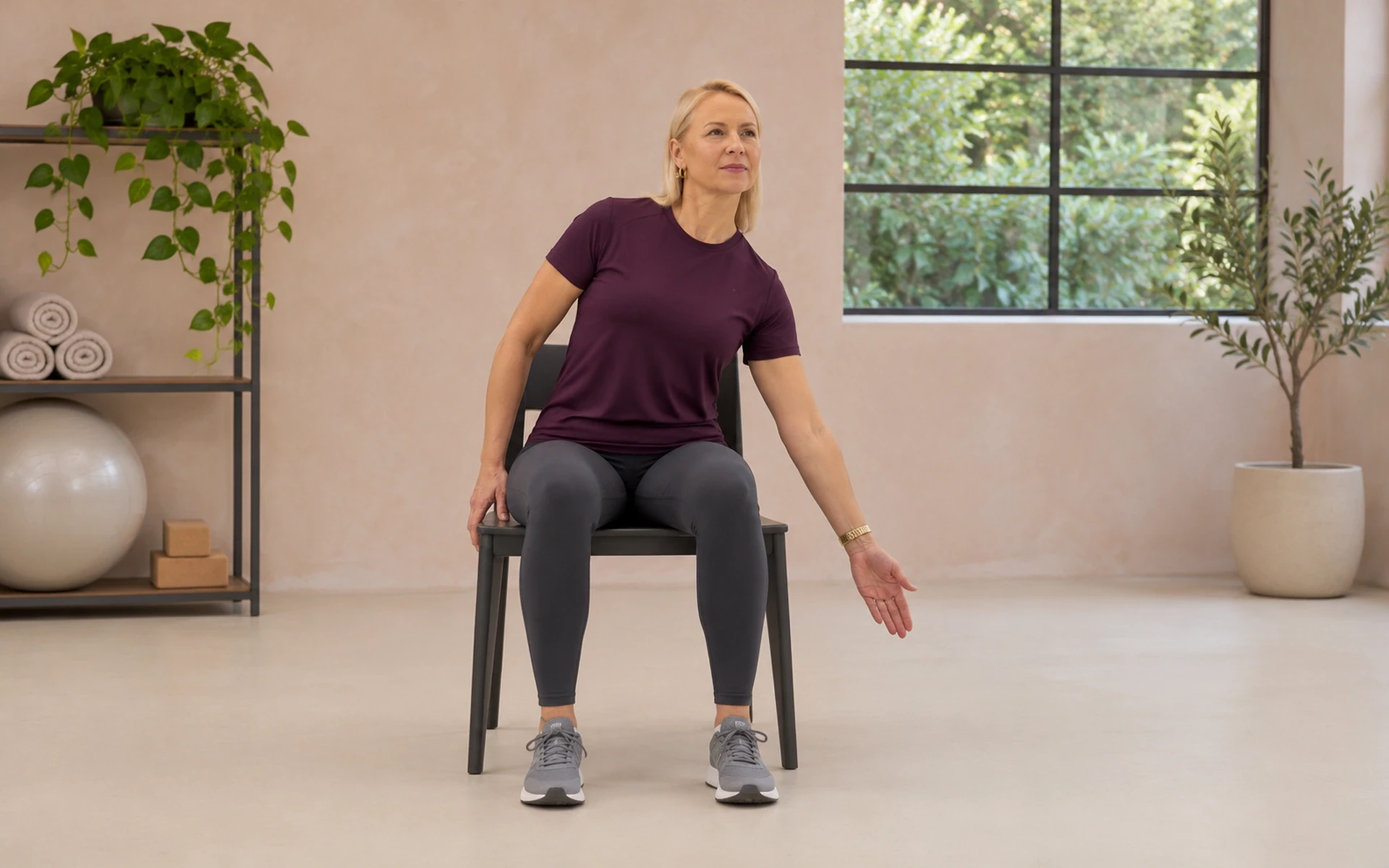
5. Small upper-body turn
- Keep your feet grounded and pelvis facing forward.
- Turn the chest slightly, with the head following comfortably.
- Return to center before changing sides.
Avoid gripping the chair to pull farther. Controlled upper-body turns appear in general seated guidance. (4)
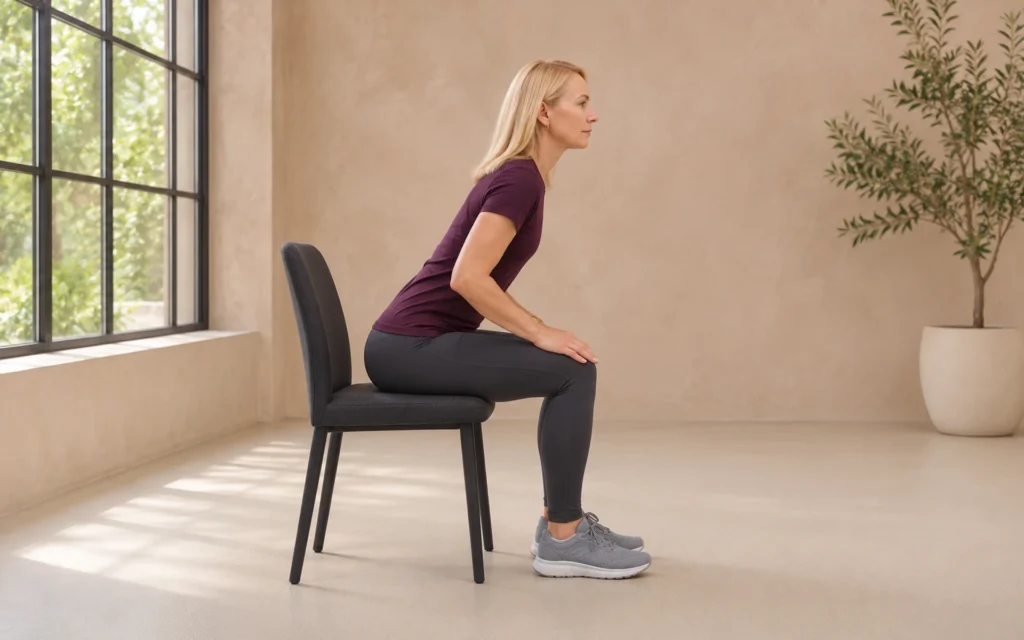
6. Shallow hip hinge
- Rest your hands on your thighs.
- Lean forward a little from the hips, then return upright with control.
- Keep the movement shallow enough to remain steady.
Reaching the floor is unnecessary. Skip the movement if forward bending is restricted for you.
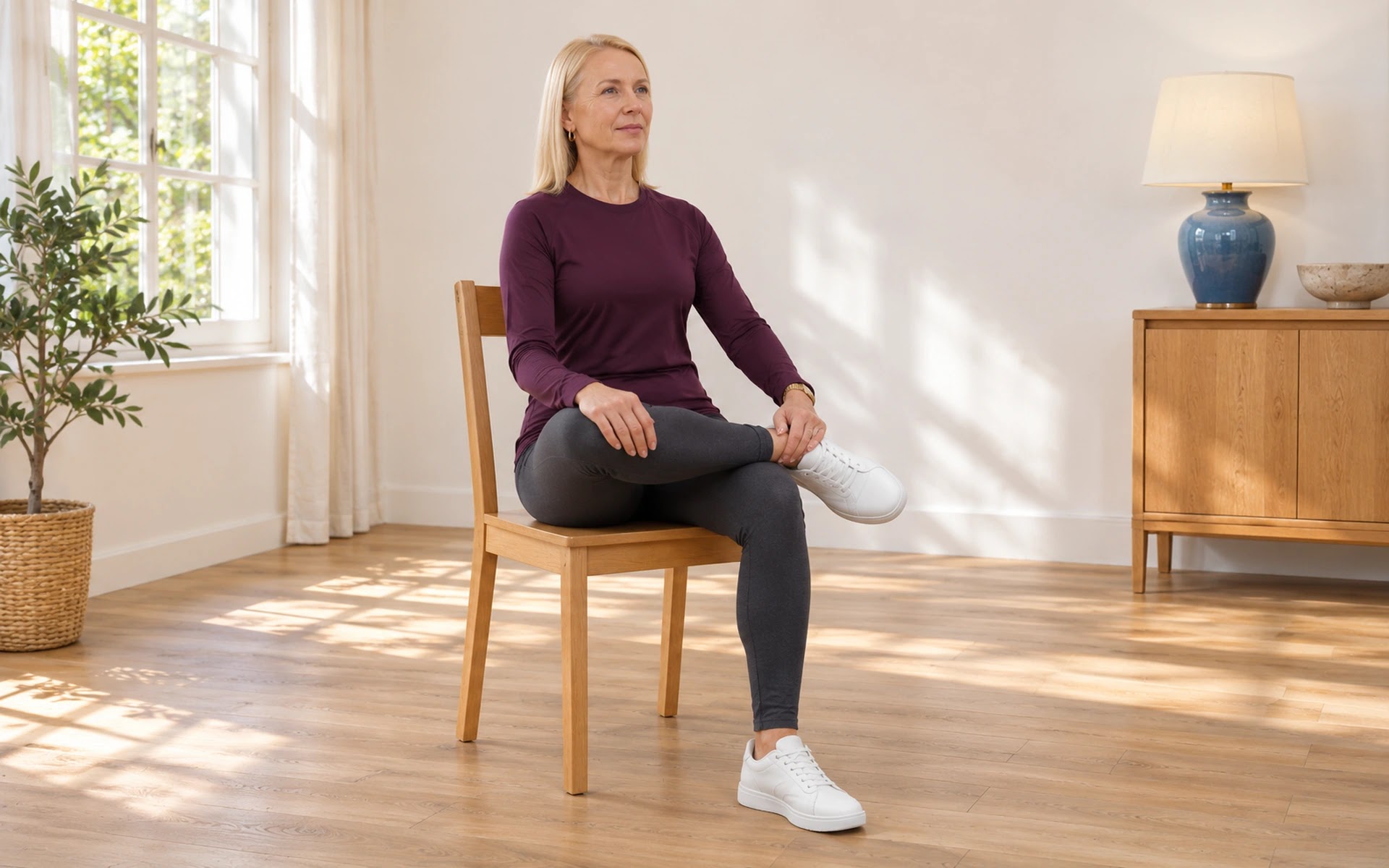
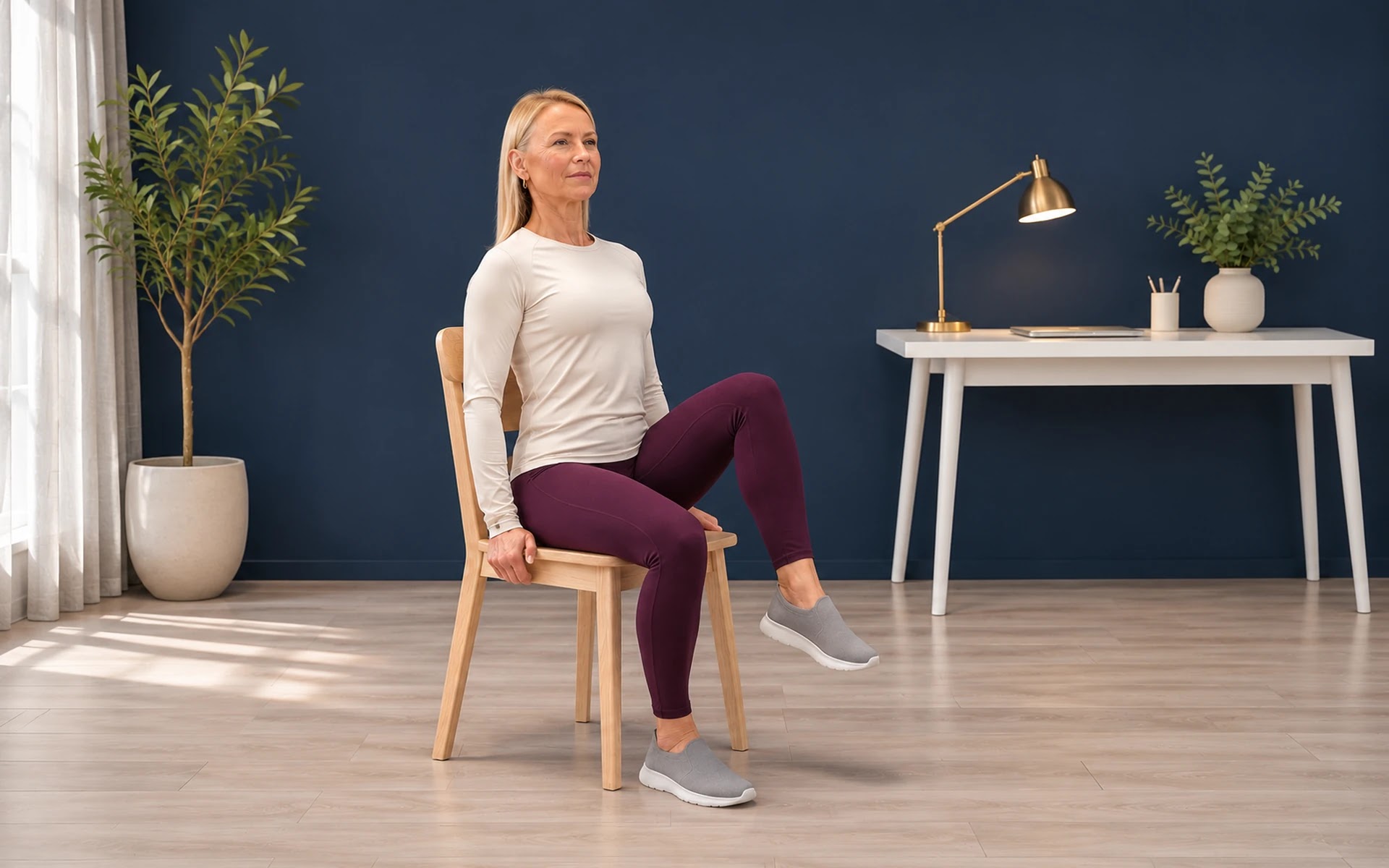
7. Gentle ankle movement
- Extend one foot slightly forward while keeping the leg supported.
- Move the ankle through a comfortable range, then return the foot to the floor.
Avoid locking the knee or forcing the toes. General seated guidance includes controlled ankle movement. (4)
8. Comfortable breathing rest
- Finish with your back supported and hands at rest.
- Let your breath come and go naturally.
- Do not force a deep inhalation or hold your breath.
If deliberate breath attention feels unpleasant, look around the room instead. Unforced breathing is the relevant starting principle. (7)
How can chair yoga fit into a weekly activity plan?
Use chair yoga for the role it actually fills, then consider what other activity suits you. Gentle stretching may leave other goals unmet.
General adult guidance includes 150 minutes of moderate aerobic activity weekly and strengthening on at least two days. (6) Those are population guidelines, not a starting prescription for everyone.
Your current ability, health, and restrictions should guide the initial plan. Some activity may be more appropriate than trying to reach a target immediately. Discuss adaptations when needed.
A gentle seated class may provide movement variety or a manageable introduction. Walking, swimming, adapted aerobic exercise, or suitable resistance work may serve different goals.
When discussing your activity with a qualified professional, describe which movements you did, how long they lasted and how much effort they required.
The wider chair yoga exercise collection can help you identify movement options, without replacing individual exercise advice.
Read more: Chair yoga classes online: how to choose and get started
What eating changes should accompany a weight-management goal?
Choose eating changes that fit your health needs and can continue beyond a short challenge. Severe restriction is unnecessary as a default approach.
A suitable weight-management plan considers nutrition, physical activity, support, and maintaining changes. (8) It should account for food access, preferences, and medical circumstances.
Rather than assigning a calorie target from an article, discuss your needs with a qualified professional. A chair-yoga schedule cannot determine how much you should eat.
Keep meals separate from exercise rewards or punishments. Missing a class is not a reason to skip food. Likewise, finishing a class does not require earning back calories.
If tracking weight or food causes distress, raise that concern with your care professional. You can discuss other ways to assess progress.
How should you track progress without relying only on weight?
Track the practical goals that led you to choose chair yoga. These may include attendance, comfort, or learning suitable modifications.
For example, note whether the chair setup worked or whether you remembered to keep a twist small. Record changes in exercise tolerance cautiously, without assuming they prove a medical benefit.
A simple log might include the class, approximate duration, and any discomfort during or afterward. Use that information to decide what to repeat or discuss with an instructor.
If weight monitoring is part of a professionally agreed plan, interpret it within that plan. A short-term change does not establish that one yoga session caused fat loss.
Who should get individual advice before practicing?
Ask for advice when symptoms, injuries, pregnancy, or a medical condition affect movement. Yoga may need specific modifications. (5)
A chair provides support but cannot remove all risks. Standing transitions, deep twists, or long holds may still be unsuitable for some participants.
Stop for sharp pain, numbness, dizziness, or unusual breathlessness. Seek appropriate care for symptoms that are severe, persistent, or unfamiliar.
Choose an instructor who explains alternatives and respects your decision to rest. Avoid classes that promise rapid results or pressure everyone to perform the same version.
Frequently Asked Questions
What information helps when comparing two class descriptions?
Look for the amount of seated and standing work, equipment requirements and whether participants can pause or change movements. Ask the instructor about anything the description leaves unclear.
Should you wear extra layers to sweat more?
No. Choose clothing that keeps you comfortable for the environment. Sweat is not a useful target for judging weight-loss results. Do not deliberately overheat to make a session feel more effective.
Can you practice with a friend of a different ability?
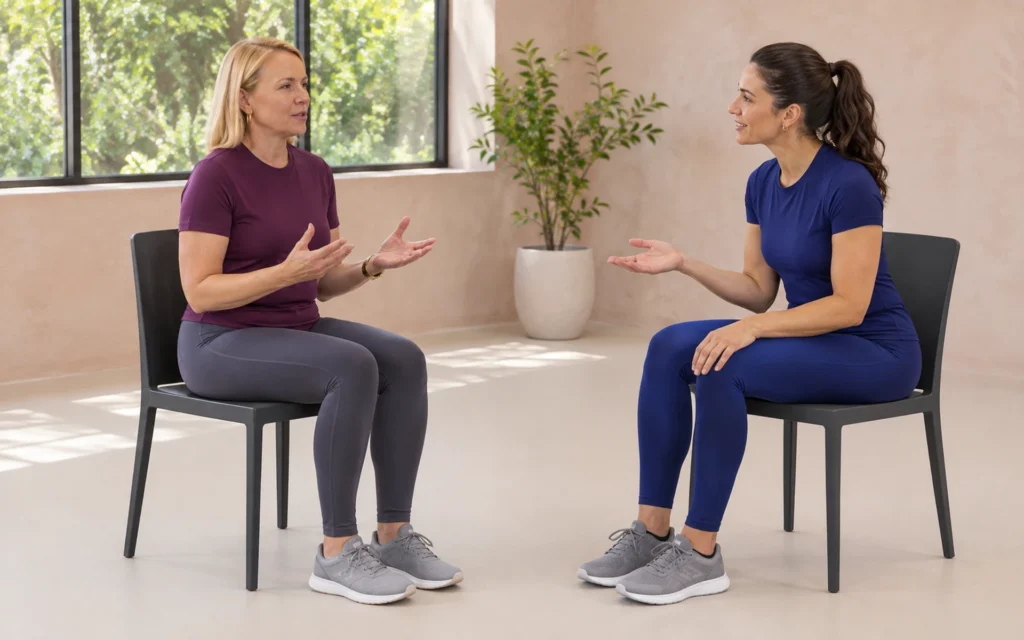
Yes, provided each person can choose suitable movements and support. You do not need identical ranges, repetitions, or session lengths. A shared class should still allow individual choices.
The bottom line
Chair yoga can be a manageable part of an active routine, but weight-loss results remain individual. Choose suitable movements and keep calorie claims in perspective. Consider nutrition, other activity, and professional support when weight management is relevant. Let the practice serve a clear, realistic purpose.
DISCLAIMER:
This article is intended for general informational purposes only and does not serve to address individual circumstances. It is not a substitute for professional advice or help and should not be relied on for making any kind of decision-making. Any action taken as a direct or indirect result of the information in this article is entirely at your own risk and is your sole responsibility.
BetterMe, its content staff, and its medical advisors accept no responsibility for inaccuracies, errors, misstatements, inconsistencies, or omissions and specifically disclaim any liability, loss or risk, personal, professional or otherwise, which may be incurred as a consequence, directly or indirectly, of the use and/or application of any content.
You should always seek the advice of your physician or other qualified health provider with any questions you may have regarding a medical condition or your specific situation. Never disregard professional medical advice or delay seeking it because of BetterMe content. If you suspect or think you may have a medical emergency, call your doctor.
Some visuals may be AI-generated.
SOURCES:
- Physical Activity and Your Weight and Health (n.d., cdc.gov)
- Steps for Losing Weight (2025, cdc.gov)
- The Effect of Chair-Based Exercise on Physical Function in Older Adults: A Systematic Review and Meta-Analysis (2021, mdpi.com)
- Sitting exercises (2024, nhs.uk)
- Yoga: Effectiveness and Safety (n.d., nccih.nih.gov)
- Adult Activity: An Overview (2023, cdc.gov)
- Breathing exercises for stress (2026, nhs.uk)
- Choosing a Safe & Successful Weight-loss Program (n.d., niddk.nih.gov)
 Reviewed by
 Reviewed by