Chair yoga exercises use a stable seat for support. Choose movements for your shoulders, torso or legs, or finish with a quiet seated pause. You can select a few options in any comfortable order. For the basic setup, read what chair yoga involves*.*
Key takeaways
Use this collection as a menu and select movements that suit your current ability.
- Start with a firm, stationary chair and comfortably supported feet. (1)
- Choose a few movements that feel comfortable today.
- Keep stretching within a comfortable range and avoid forcing symmetry. (2)
- Breathing practices should stay unforced. (3)
- Chair exercise research studied structured programs for older adults, not each movement here. (4)
- Individual conditions may require modifications or professional advice. (5)
How should you use this exercise collection?
The numbers help you find each movement again.
Some options are adapted yoga movements; others are gentle mobility or attention practices commonly paired with seated routines. Not every item is a traditional yoga pose.
Choose a few movements from this collection and pause between them.
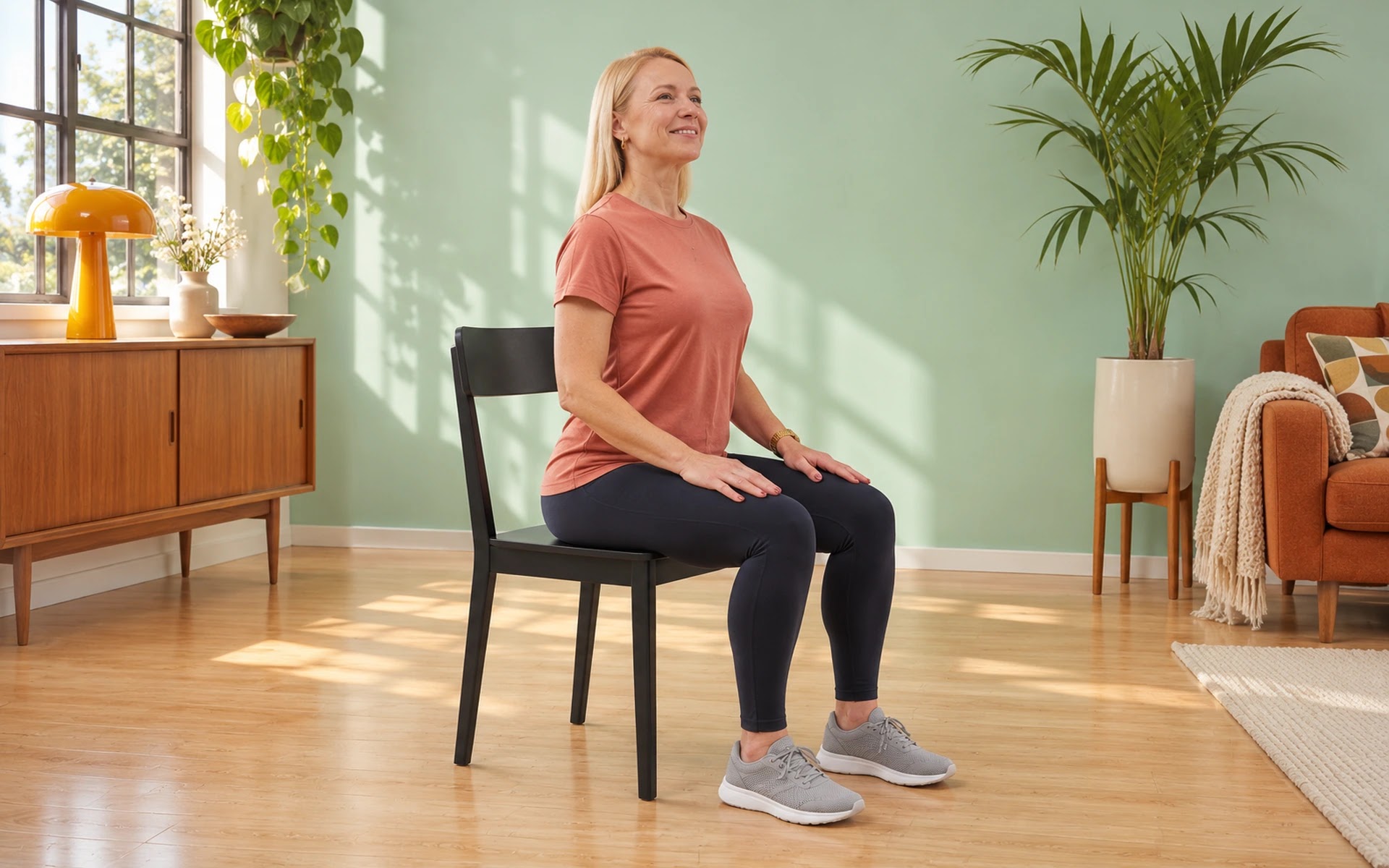
Use a stable chair with no wheels or rocking mechanism. Your feet should reach the floor, and the surrounding space should remain clear. (1)
If you use specialist seating, seek guidance that addresses that equipment. Do not change your usual support arrangement simply to imitate a demonstration.
Which upper-body movements can you choose?
Begin with small movements that keep your hips supported. Lower the arms or reduce the range whenever needed.
1. Shoulder lift and release
- Raise your shoulders a little, then allow them to settle.
- Keep the arms relaxed and avoid clenching your jaw.
- Pause before repeating.
- This movement does not require a large shrug.
- Stop if it causes pinching or neck symptoms.
2. Small shoulder circles
- Move the shoulders through a small backward circle while the hands rest comfortably.
- Keep the motion slow enough to stop anywhere.
- If circling feels awkward, return to the lift-and-release option.
- Avoid forcing the shoulders down at the end.
3. Comfortable neck rotation
- Turn your head gently toward one side, then return to center.
- Keep the shoulders relaxed before changing sides.
- Stay within a comfortable range, as in general flexibility guidance. (2) Do not use your hand to pull the head farther.
4. Small chin nod
- Make a small nod, as if gently looking slightly downward, then return to a comfortable neutral position.
- Keep the movement subtle.
- Avoid pushing the head forward or dropping it backward.
- Leave this option out if it causes dizziness or neck discomfort.
5. Low chest opening
- Rest your hands near your hips and let the elbows move slightly backward.
- Lift the breastbone modestly without arching the lower back.
- Do not clasp the hands behind you if that strains the shoulders.
- Keep the movement small and return to rest.
6. Gentle arm reach
- Reach one arm forward at a comfortable height, then lower it.
- Change arms without twisting the torso or leaning off the seat.
- An overhead reach is optional.
- Stop below any painful range and keep the shoulder relaxed.
7. Loose self-hug
- Cross your arms loosely over your chest, with each hand resting near the opposite upper arm.
- Release and change the upper arm.
- Avoid squeezing tightly or pulling the shoulders forward.
- Keep your hands lower if needed.
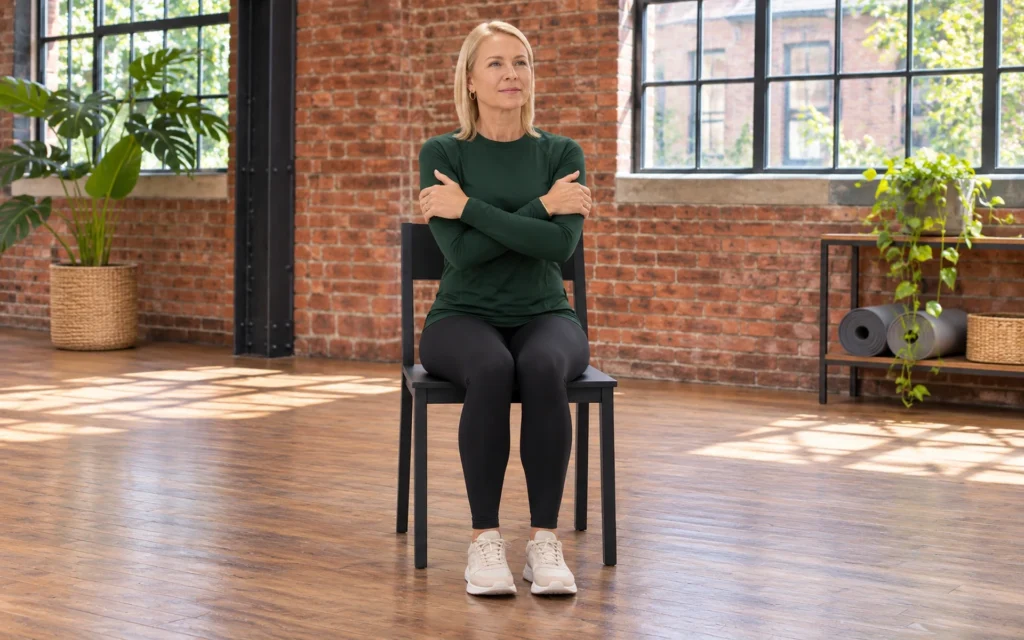
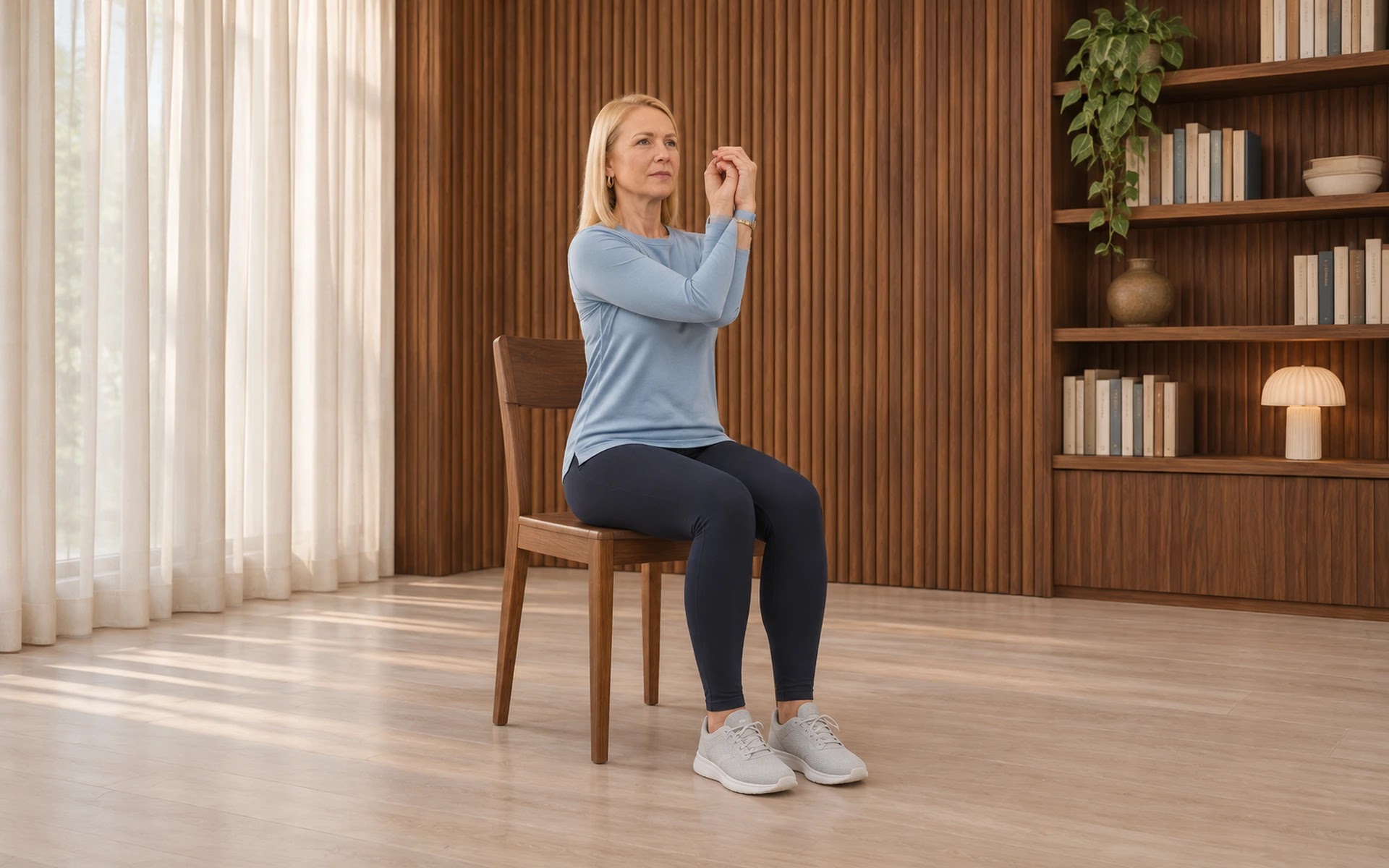
8. Eagle-arm variation
- Bring the forearms together or cross them gently while keeping the elbows at a comfortable height.
- Leave the hands apart if preferred.
- There is no need to wrap the arms fully or press the palms together.
- Keep both feet on the floor.
Read more: 10-minute chair yoga for seniors: a seated routine
Which seated torso movements can you choose?
Torso movements should remain small enough to control without pulling against the chair. Follow any existing restrictions on spinal motion.
9. Seated cat-cow
- Rest your hands on your thighs.
- Alternate a modest chest lift with gentle upper-back rounding, returning through neutral between positions.
- Keep the neck comfortable.
- Avoid creating a large lower-back arch or forcing a breath pattern.
10. Small upper-body turn
- Keep the pelvis facing forward while turning the chest slightly to one side.
- Return to center before changing sides.
- Let the hands rest lightly instead of using them as levers.
- Controlled torso rotation appears in seated-exercise guidance. (1)
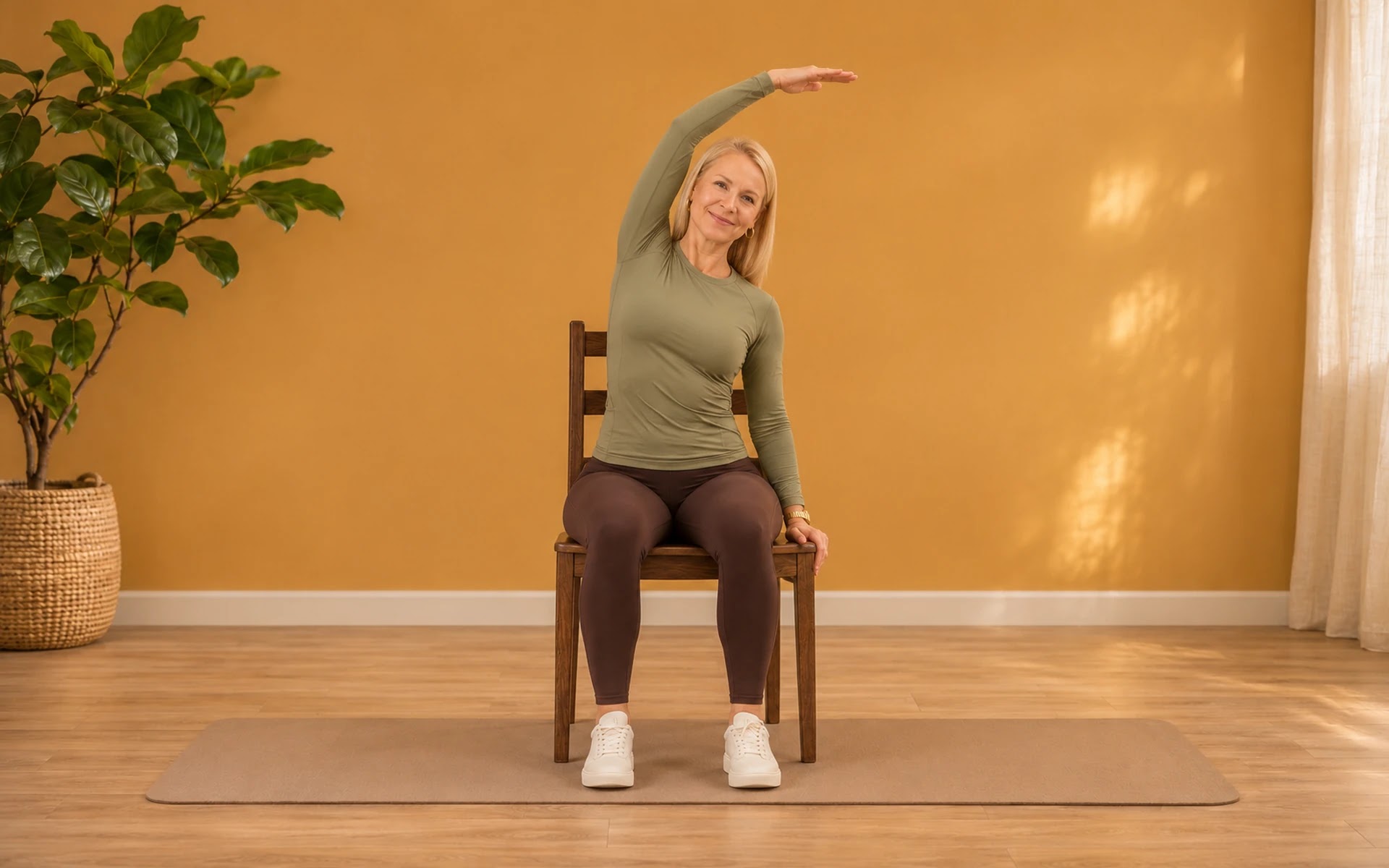
11. Low side bend
- Rest one hand on a thigh and reach the other arm slightly upward or outward.
- Lean gently sideways, then return upright.
- Keep both hips supported.
- Leave the reaching hand at your waist if shoulder movement is uncomfortable.
12. Shallow hip hinge
- Place your hands on your thighs and lean forward slightly from the hips.
- Return upright before your balance changes.
- Reaching the floor is unnecessary.
- Skip this option if forward bending is restricted or makes you lightheaded.
13. Small pelvic weight shift
Keep the weight shift small enough that both feet remain supported.
For a shorter sequence using familiar positions, see these five chair yoga poses.
Which lower-body movements can you choose?
Lower-body options should leave you steady on the seat. Keep the range modest and avoid pulling on the knees.
14. Ankle point and flex
- Extend one foot slightly forward and move the ankle gently away from and toward you.
- Return the foot before changing sides.
- Keep the knee comfortable and avoid forcing the toes.
- General sitting guidance includes controlled ankle movement. (1)
15. Small ankle circles
- Lift one foot only if you can remain steady.
- Make a small ankle circle, then change direction and return the foot.
- Keep the thigh supported.
- Use point-and-flex instead if circling causes discomfort.
16. Heel and toe lifts
- Keep both feet on the floor.
- Raise the heels while the toes stay down, then lower them and lift the toes.
- Avoid rocking the torso.
- Similar ankle movements appear in chair-exercise guidance. (6)
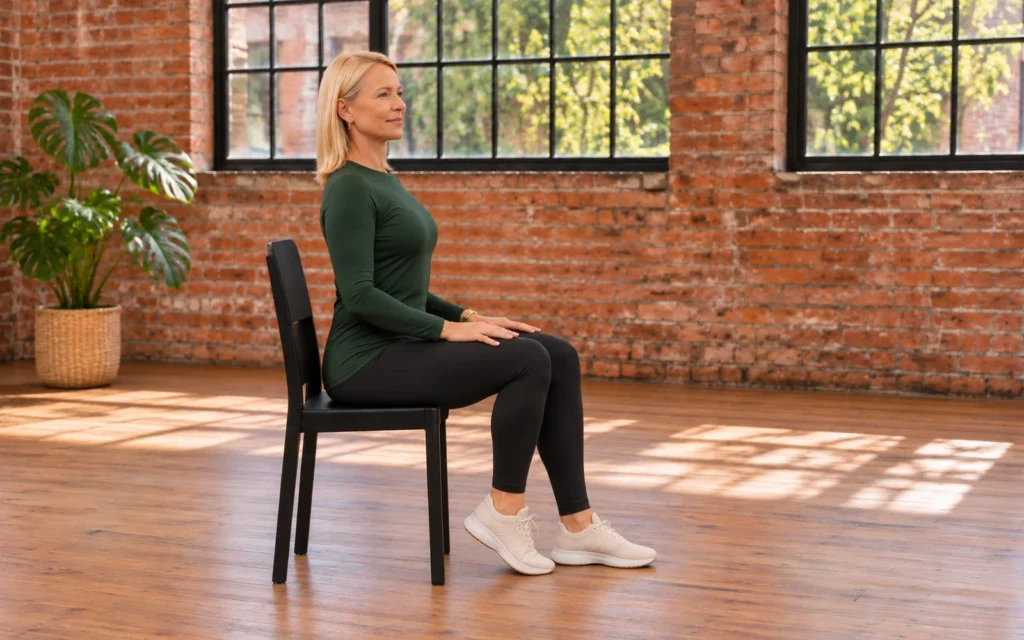
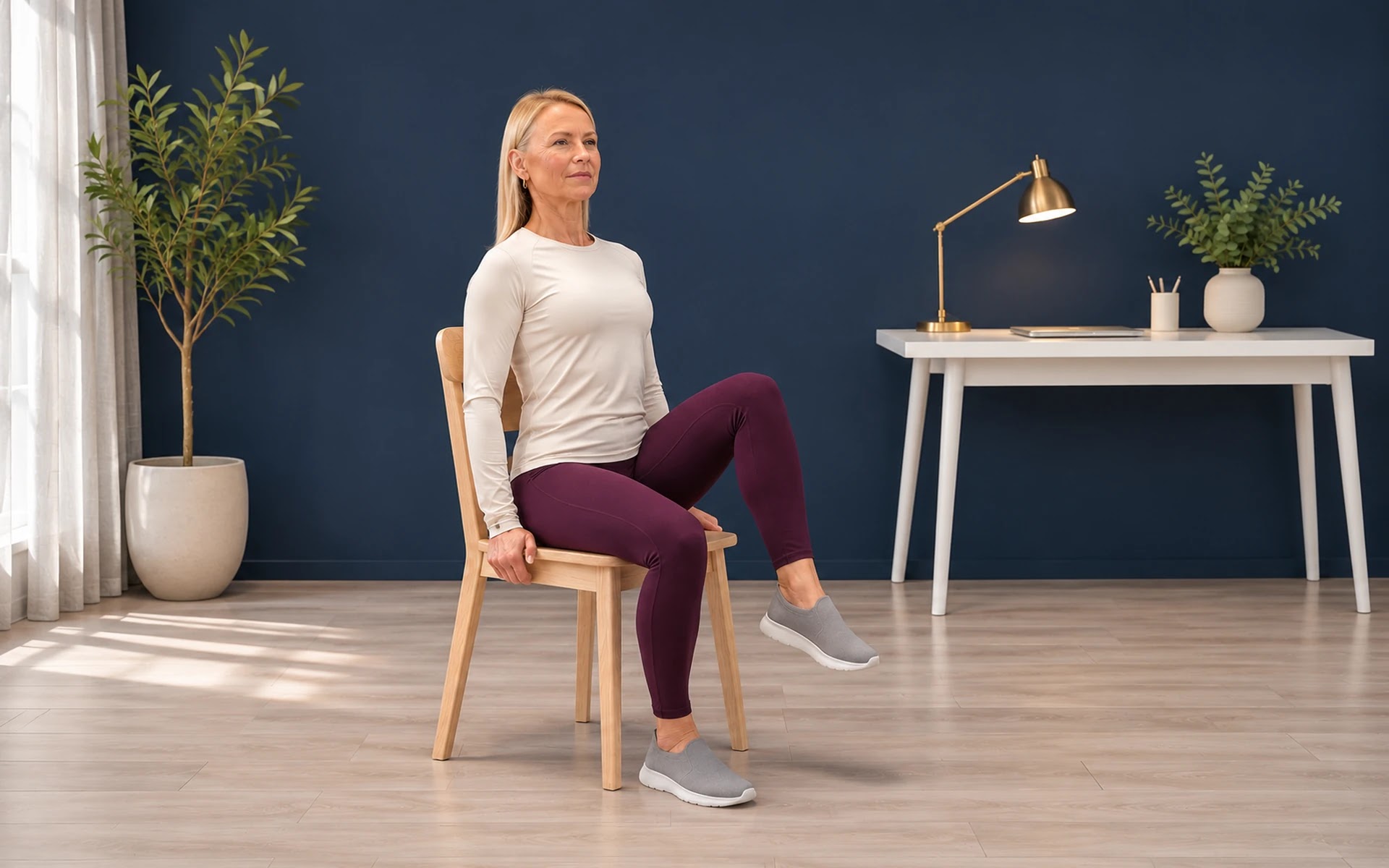
17. Small seated march
- Lift one foot a little, lower it, and change sides.
- Keep your hands resting on suitable support if needed.
- Do not lean backward to raise the knee higher.
- A smaller movement is suitable when a larger lift feels difficult. (1)
18. Supported leg extension
- Straighten one knee through a comfortable range, then lower the foot slowly.
- Keep the thigh supported by the seat.
- Avoid snapping the knee straight or swinging the leg.
- This controlled movement appears in chair-exercise guidance. (6)
BetterMe offers a variety of workouts, recipes, challenges, and support tools to help you stay more consistent with your wellness routine. Explore the app to find features that fit your goals, preferences, and schedule.
Which quiet attention options can finish the practice?
Choose a supported pause with ordinary breathing or an external focus. Neither option requires closed eyes.
19. Comfortable breathing awareness
- Let the backrest support you if wanted.
- Notice your ordinary breathing without increasing its depth or adding a hold.
- Gentle breathing guidance emphasizes an unforced rhythm. (3) Stop deliberate breath attention if it feels unpleasant.
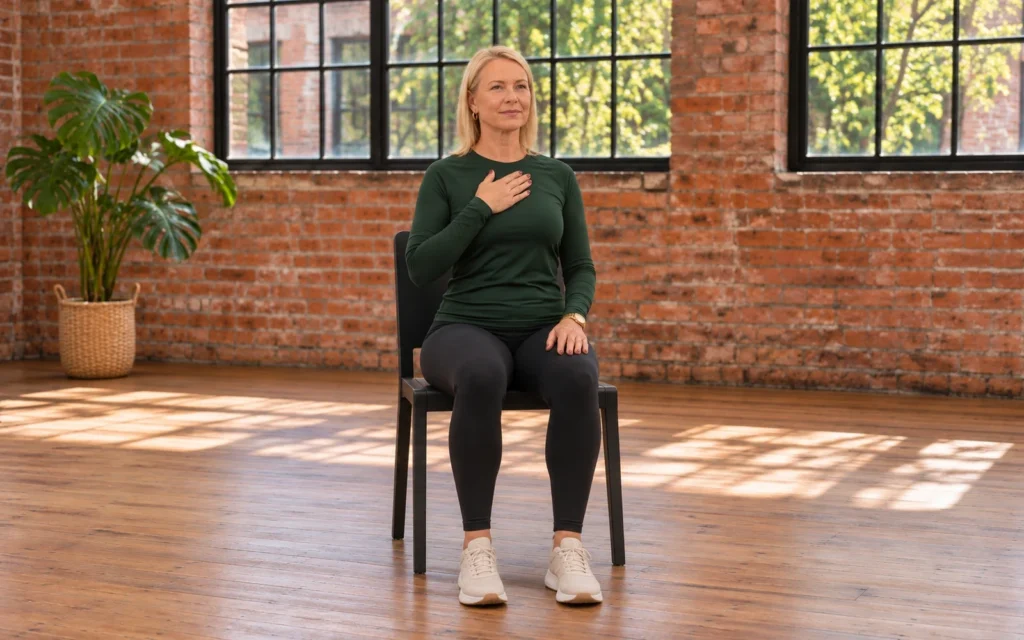
20. External attention rest
- Look at a familiar object and notice an ordinary detail, such as its color.
- Let your hands and feet remain supported.
- This option offers a simple alternative to focusing inward.
- You do not need to achieve a particular feeling before ending.
How can you select a short routine?
Choose movements from a few categories and leave room for rest.
| Preference | Example selection | Possible change |
|---|---|---|
| Upper-body movement | Shoulder release, low reach, loose hug | Keep the arms lower |
| Seated mobility | Small turn, ankle movement, seated march | Reduce each range |
| Quiet break | Shoulder release, supported breathing, external rest | Omit breath attention |
| Learning a sequence | Cat-cow, shallow hinge, small turn | Practice one option first |
Start with a brief attempt and reassess. Do not add repetitions to reach an arbitrary time target. Keep any movement that remains comfortable and leave out the rest.
For a different emphasis, the chair-yoga de-stress guide organizes a smaller selection around a seated break.
Read more: Chair yoga classes online: how to choose and get started
What are common technique mistakes?
Common mistakes include forcing range, gripping the chair to deepen a movement, and choosing unstable furniture. Correct the setup before adding difficulty.
A twist should not require pulling against the backrest. A side bend should not move you toward falling from the seat. Arm positions should not require painful shoulder pressure.
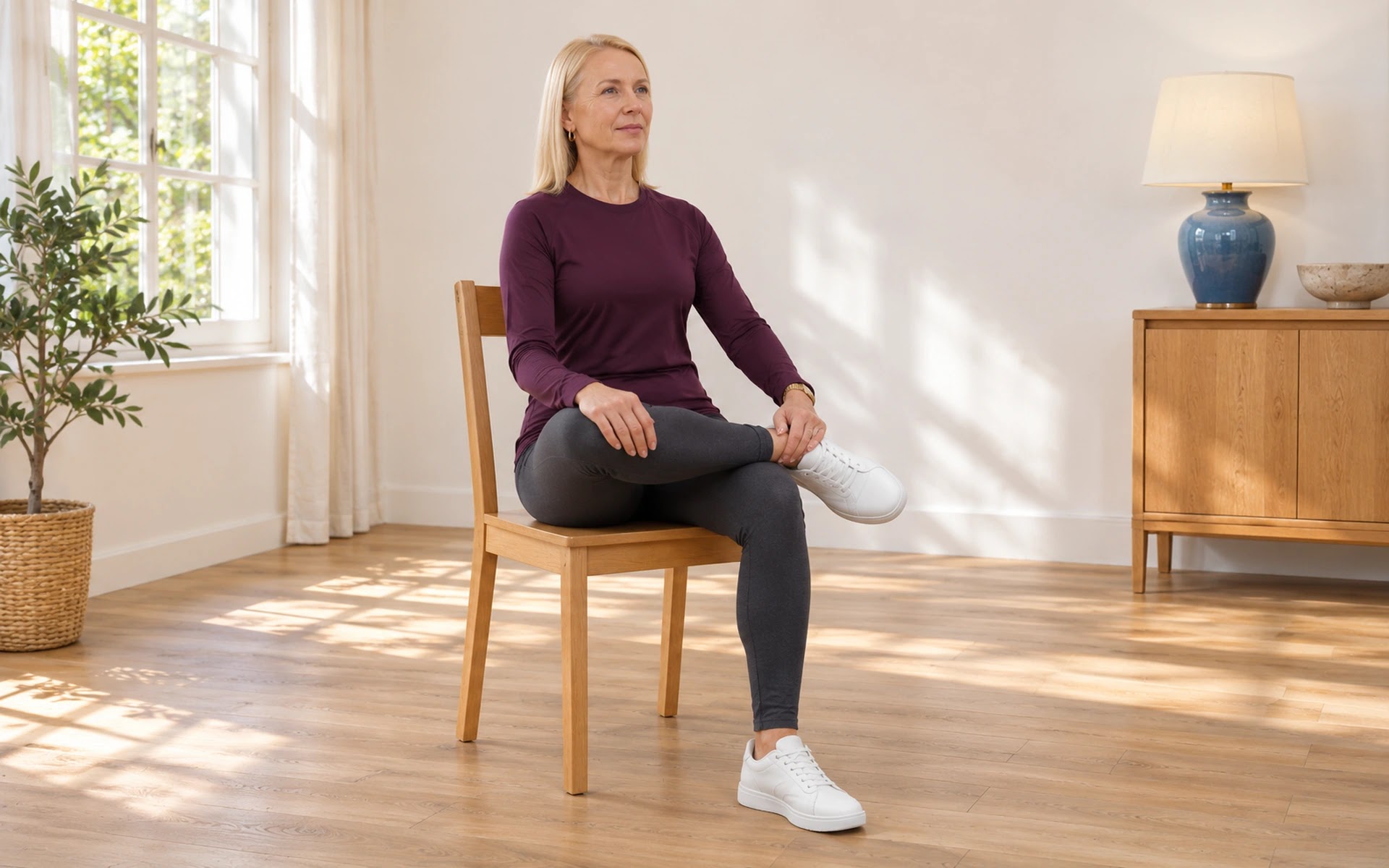
Avoid pushing a crossed knee downward or dragging a foot into position. Both feet can remain grounded throughout this collection.
Do not use a deep lounge chair as an automatic substitute. The lounge-chair setup guide explains the differences between resting furniture and a suitable exercise seat.
When a movement feels awkward, reduce the range first. If discomfort remains, stop that option rather than searching for a deeper variation.
What benefits can this collection reasonably offer?
The collection gives you choices for gentle movement and awareness. Use a comfortable range and stop any movement that causes pain.
Structured chair-based exercise has improved some strength measures in older adults. (4) These findings come from programs that differ in their content and duration.
General yoga evidence also varies across styles and participants. (5) It cannot establish that every exercise here produces the same physical or emotional response.
Choose a practice because its format fits your needs. For specific strength or balance goals, ask a qualified professional about a plan for them.
When should you ask for help?
Ask for individual guidance when a condition, injury, or recent procedure affects movement. Yoga may require changes for pregnancy and other circumstances. (5)
An instructor should offer specific alternatives and respect your decision to rest. Clinical restrictions take priority over completing a demonstration.
Stop for sharp pain, dizziness, numbness, or unusual breathlessness. Seek appropriate medical advice for severe, persistent, or unfamiliar symptoms.
Frequently Asked Questions
Do you need to perform the same number on both sides?
No. Start with each side’s comfortable range and tolerance. Do not force a restricted side to match the other. Ask for advice if a new or unexplained difference concerns you.
Can you use these movements during a work break?
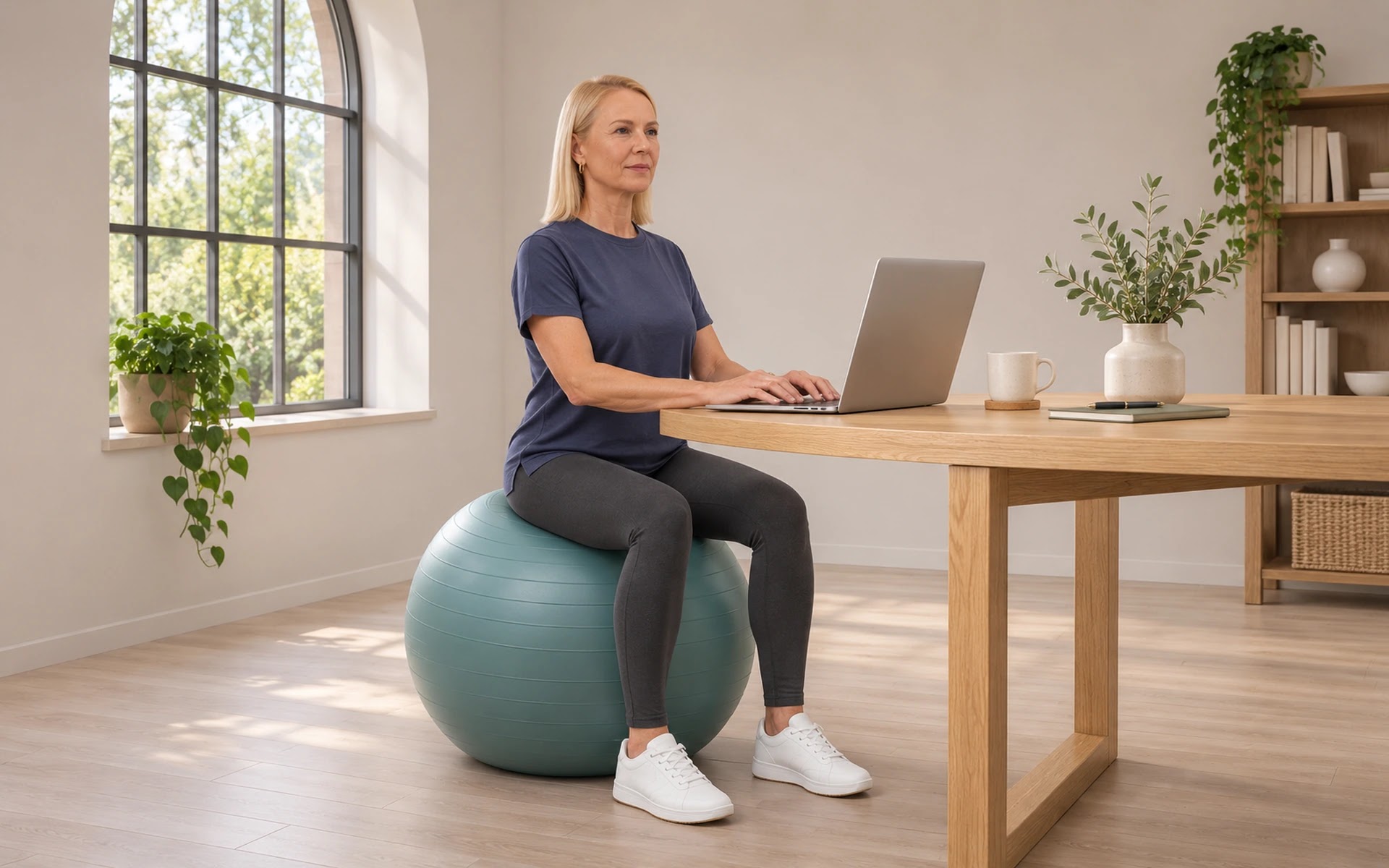
Yes, when you have a suitable stationary chair and clear space. Move away from a desk if it obstructs the motion. Avoid practicing on a swiveling or rolling chair.
Is holding a pose longer always better?
No. A longer hold can add difficulty without serving your goal. Release before strain develops and choose a duration that allows comfortable breathing.
The bottom line
These twenty chair yoga exercises offer a menu of gentle options. Choose a few movements, use a stable seat, and keep the range comfortable. Add or remove options according to your response. Get individual guidance when symptoms, equipment, or health needs make the choice uncertain.
DISCLAIMER:
This article is intended for general informational purposes only and does not serve to address individual circumstances. It is not a substitute for professional advice or help and should not be relied on for making any kind of decision-making. Any action taken as a direct or indirect result of the information in this article is entirely at your own risk and is your sole responsibility.
BetterMe, its content staff, and its medical advisors accept no responsibility for inaccuracies, errors, misstatements, inconsistencies, or omissions and specifically disclaim any liability, loss or risk, personal, professional or otherwise, which may be incurred as a consequence, directly or indirectly, of the use and/or application of any content.
You should always seek the advice of your physician or other qualified health provider with any questions you may have regarding a medical condition or your specific situation. Never disregard professional medical advice or delay seeking it because of BetterMe content. If you suspect or think you may have a medical emergency, call your doctor.
Some visuals may be AI-generated.
SOURCES:
- Sitting exercises (2024, nhs.uk)
- Flexibility exercises (2023, nhs.uk)
- Breathing exercises for stress (2026, nhs.uk)
- The Effect of Chair-Based Exercise on Physical Function in Older Adults: A Systematic Review and Meta-Analysis (2021, mdpi.com)
- Yoga: Effectiveness and Safety (n.d., nccih.nih.gov)
- Chair Exercises (n.d., nth.nhs.uk)
 Reviewed by
 Reviewed by