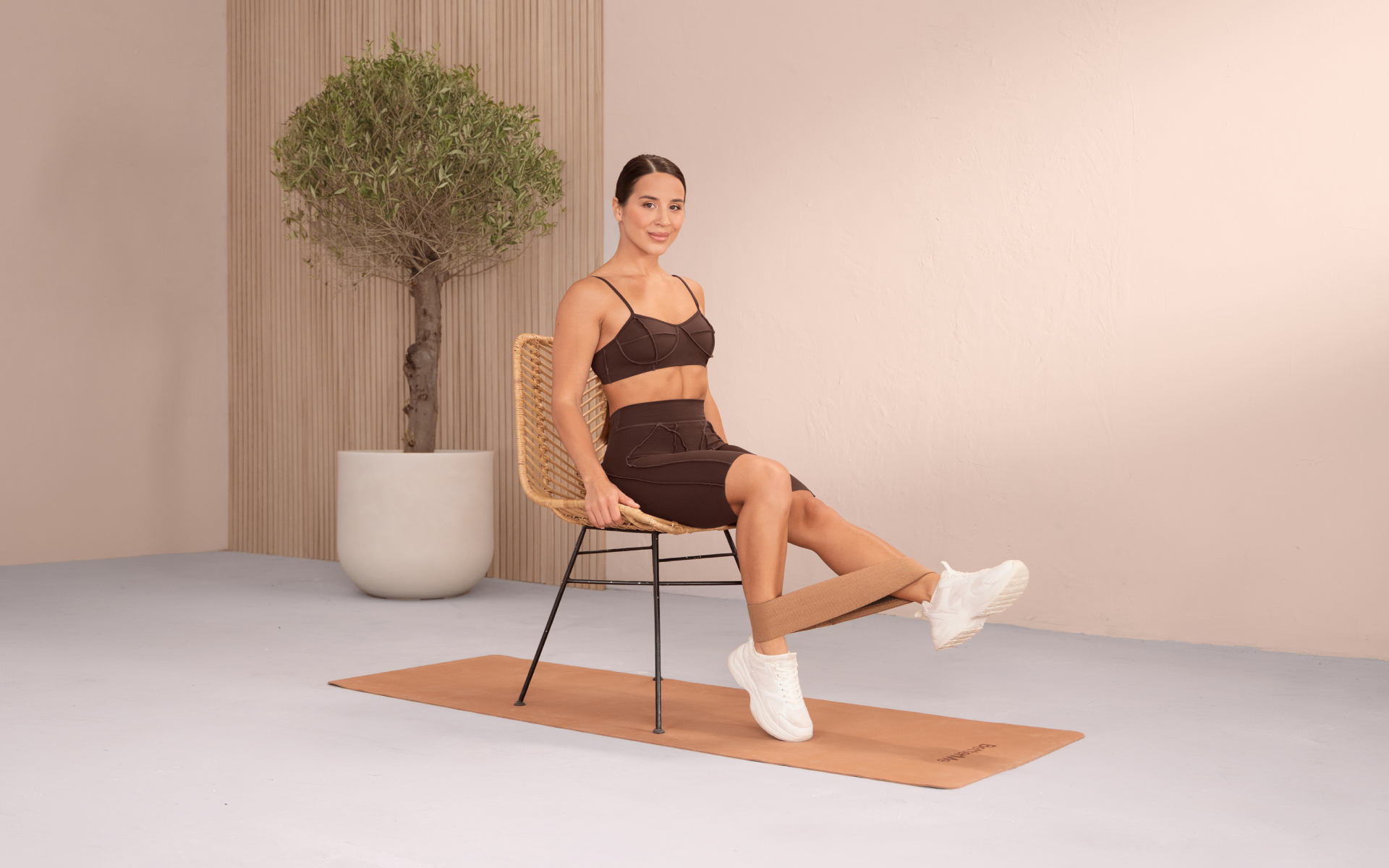
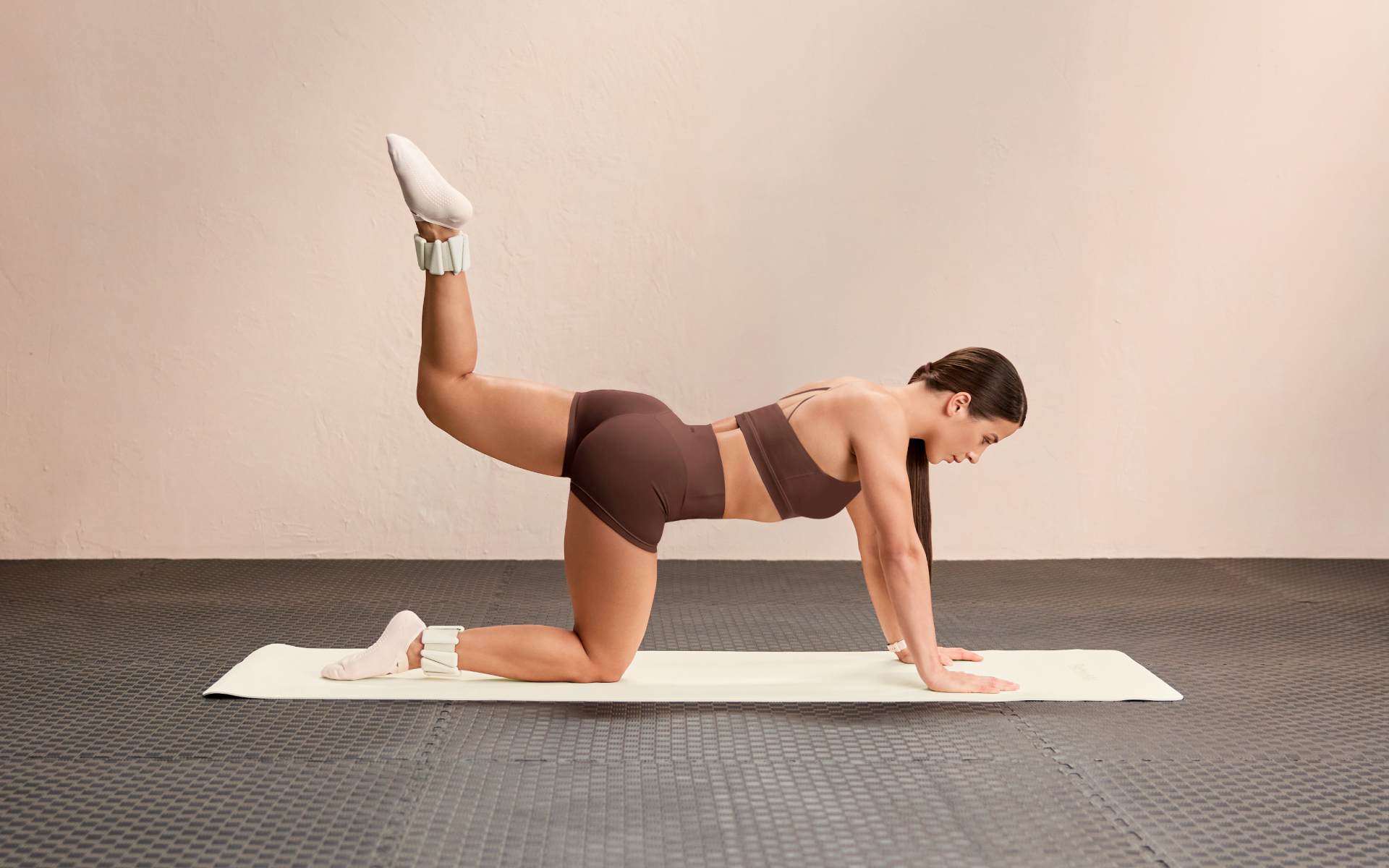
A leg day workout for women can include squats, lunges, hip hinges, and glute bridges, performed 2-3 times per week. For many people, 3-5 exercises, 3-4 sets each, and 8-15 reps per set support stronger lower-body muscles. You can train with body weight, dumbbells, or gym machines. Start light, focus on control, and add load gradually over several weeks.
A leg day workout for women is a session built around lower-body movements like squats, lunges, and hip hinges. “Leg day” simply means a workout that focuses mainly on your legs and glutes in one session.
This guide is for anyone who wants stronger, more capable legs—whether you train at home or in a gym. We’ll cover the muscles to focus on, the best exercises, sample routines, dumbbell options, recovery, and common mistakes to skip.
You don’t need fancy equipment or hours of free time. Start small, stay consistent, and adjust as you go. Ready to build a routine you can stick with? Keep reading.
Which Leg Muscles Should Women Train on Leg Day?
A complete leg workout for women targets the major muscle groups of the lower body. These muscles power everyday movements such as walking, climbing stairs, and standing up.
Here are the main muscle groups to focus on (1):
- Quadriceps: the front of your thighs, used when you straighten your knees.
- Hamstrings: the back of your thighs, used when you bend your knees or hinge.
- Glutes: your buttock muscles, used for hip extension and stability.
- Calves: the back of your lower legs, used for pushing off the ground.
- Adductors: your inner thighs, used to bring your legs together.
- Abductors: your outer hips, used to move your legs away from your body and steady your hips.
For balanced results, try to include at least one movement for each major group. For example, squats focus on quads and glutes, while hip hinges focus on hamstrings and glutes.
Training these muscles together may support lower-body strength, balance, and everyday movement. Some research suggests resistance training may be useful for helping older adults maintain functional movement over time (2).
You don’t need a separate exercise for every muscle each session. Two or three compound moves—exercises that work several muscles at once—can cover most groups efficiently.
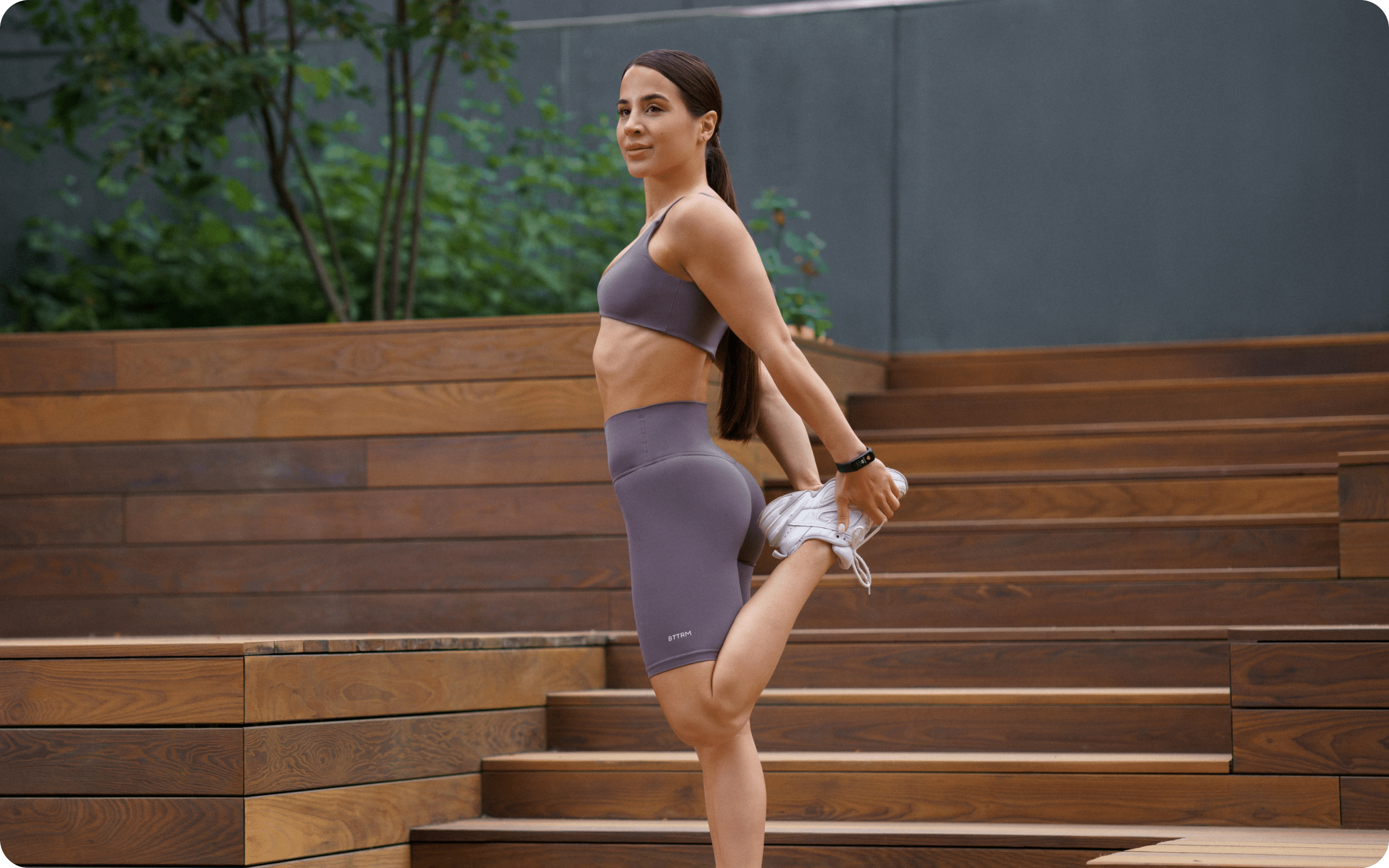
What Are the Best Leg and Glute Exercises for Women?
A well-rounded leg and glute workout for women can combine compound movements with a few targeted exercises. Compound moves work multiple muscles at once, which makes your sessions efficient.
Below is a comparison of popular leg day exercises for women and what each one focuses on.
| Exercise | Main muscles | Equipment | Best for |
|---|---|---|---|
| Squat | Quads, glutes, adductors | Body weight or dumbbells | Overall lower-body strength |
| Romanian deadlift | Hamstrings, glutes | Dumbbells or barbell | Back-of-leg focus |
| Lunge | Quads, glutes, adductors | Body weight or dumbbells | Balance and single-leg strength |
| Sumo squat | Adductors, quads, glutes | Body weight or dumbbells | Inner-thigh focus |
| Glute bridge | Glutes, hamstrings | Body weight or weight plate | Glute focus, beginner-friendly |
| Lateral lunge | Adductors, glutes, quads | Body weight or dumbbells | Inner and outer thigh focus |
| Side-lying leg raise | Abductors, glutes | Body weight or resistance band | Outer-hip focus |
| Banded lateral walk | Abductors, glutes | Resistance band | Hip stability, beginner-friendly |
| Calf raise | Calves | Body weight or dumbbells | Lower-leg strength |
For most sessions, follow these guidelines for a balanced leg day workout:
- Pick 3-5 of these movements
- Use 3-4 sets each leg exercise
- Use a load in the 8-15 rep range
- Rest for 60-90 seconds between sets
You can rotate exercises week to week to keep things interesting—just make sure your weekly plan covers quads, hamstrings, glutes, and calves.
If you need a refresher on workout terminology, here’s a quick guide:
- A “rep” is one full movement, such as one squat.
- A “set” is a group of reps done back to back.
- A “rest interval” is the pause between sets that lets your muscles recover.
BetterMe can help you add more structure to your daily wellness routine with workouts, meal planning tools, and habit-building features. Explore the app and take a practical step toward a routine that feels more manageable for you.
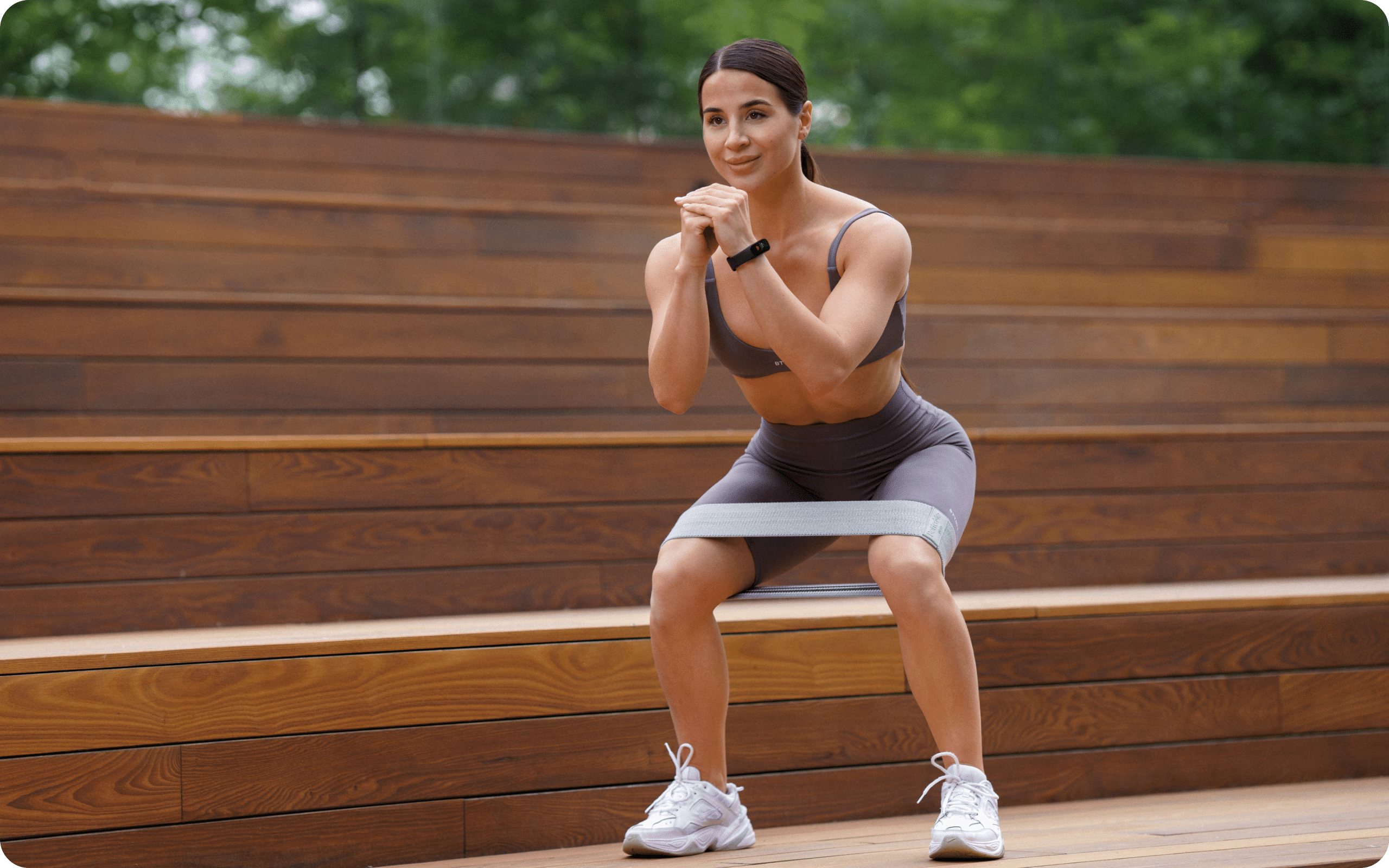
How Can Women Build a Leg Day Workout Routine?
Women can build a leg day routine by choosing 3-5 exercises, setting your sets and reps, and training legs 2-3 times per week. Start with compound moves, then add smaller exercises.
Here’s a simple step-by-step approach:
- Pick 2-3 compound moves. Examples include squats, lunges, and Romanian deadlifts.
- Add 1-2 targeted moves. Examples include glute bridges and calf raises.
- Set your volume. Try 2-3 sets of 8-15 reps per exercise.
- Set your rest. Rest 60-90 seconds between sets.
- Plan your frequency. Train legs 2-3 times per week, with at least one rest day between sessions.
Once a routine feels manageable, you can apply progressive overload. Progressive overload means gradually increasing the challenge over time.
- Add Reps. Add 1 rep per set each week
- Add Weight. Increase weight by 2.5-5% weekly
- Add Sets. Add 1 set every few weeks
This gradual approach supports muscle hypertrophy, the technical term that is used for muscle growth or the gradual increase in muscle size (3).
The table below compares routines by experience level. Individual results vary, so adjust based on how you feel.
| Level | Exercises per session | Sets x reps | Weekly frequency | Rest between sets |
|---|---|---|---|---|
| Beginner | 3-4 | 2-3 x 8-12 | 2 times | 60-90 seconds |
| Intermediate | 4-5 | 2-3 x 8-12 | 2-3 times | 60-120 seconds |
| Advanced | 5-6 | 2-3 x 8-12 | 3 times | 90-180 seconds |
A beginner leg day workout for women might feel challenging at first, and that’s normal. Stop a set when your form starts to break, rather than pushing to failure every time. Rest, let your body adapt, then come back and nail your next session.
What Is a Good Leg Day Workout for Women With Weights?
A good leg day workout for women with weights pairs compound lifts with targeted moves, using dumbbells or gym machines. Add load gradually as the movements feel more controlled.
Here’s a sample women’s leg workout with dumbbells.
- Do 3 sets of each exercise
- Rest 60-90 seconds between sets.
| Exercise | Sets | Reps |
|---|---|---|
| Goblet squat | 3 | 10-12 |
| Dumbbell Romanian deadlift | 3 | 10-12 |
| Dumbbell reverse lunge | 3 | 8-10 per leg |
| Dumbbell glute bridge | 3 | 12-15 |
| Standing calf raise | 3 | 12-20 |
Read more: Dynamic Leg Stretches: 6 Moves to Prepare You for a Workout
If you train at a gym, a gym leg workout for women can swap in machines for free-weight exercises:
- Goblet squat → Leg press
- Romanian deadlift → Hack squat or lying leg curls
- Glute bridge → Hip extension machine
The same set and rep ranges apply.
For load, choose a weight that feels challenging by your last 1-2 reps, while keeping good form. If 12 reps feel easy, add a small amount of weight next session.
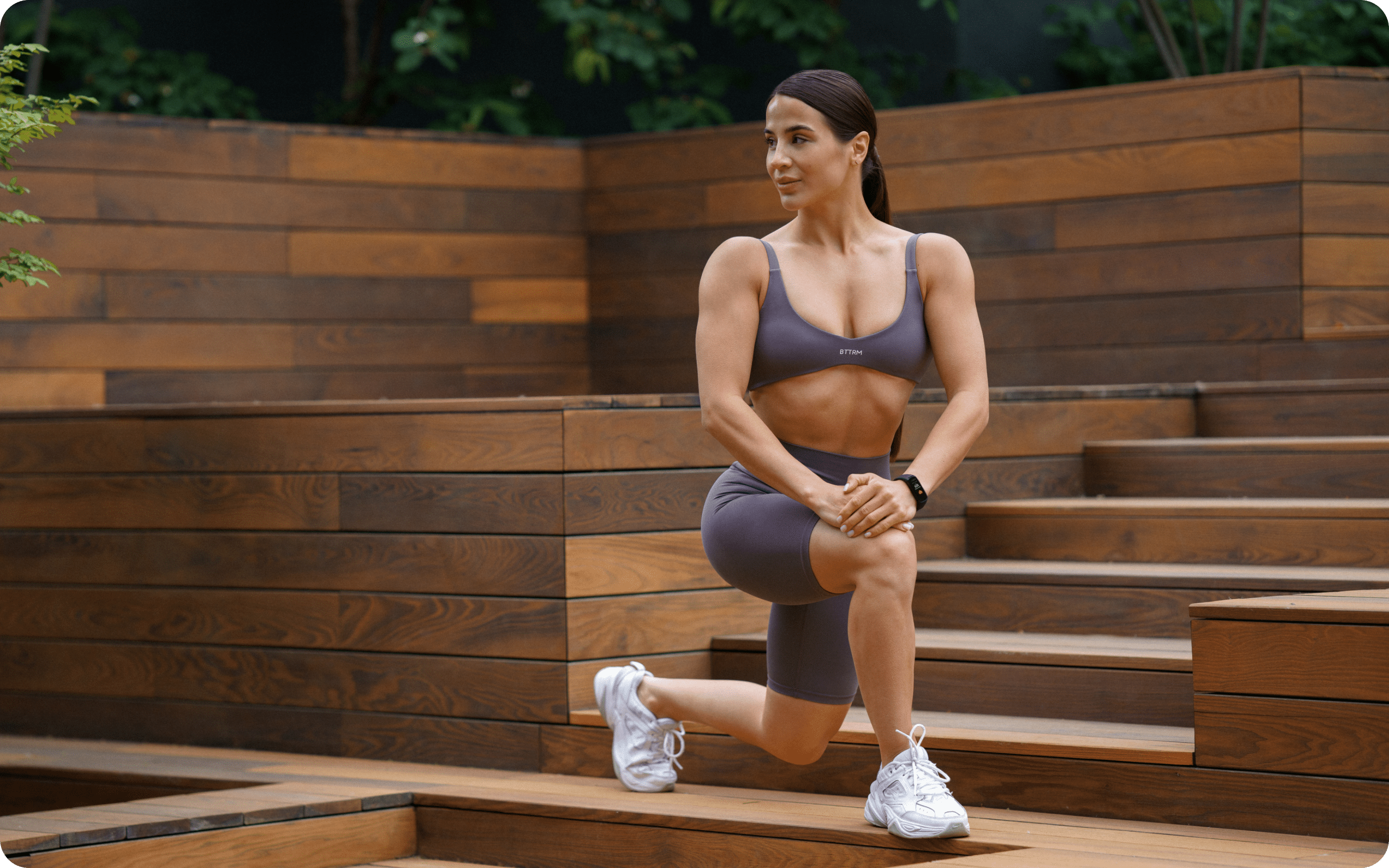
Exercise Instructions
Goblet Squat
- Hold one dumbbell vertically against your chest with both hands.
- Stand with your feet shoulder-width apart and your toes slightly turned out.
- Lower your hips back and down until your thighs are about parallel to the floor.
- Push through your feet to stand back up.
Dumbbell Romanian Deadlift
- Hold a dumbbell in each hand in front of your thighs.
- Keep a soft bend in your knees.
- Hinge at your hips, lowering the weights toward your shins.
- Stop when you feel a stretch in your hamstrings, then return to standing.
Dumbbell Reverse Lunge
- Hold a dumbbell in each hand at your sides.
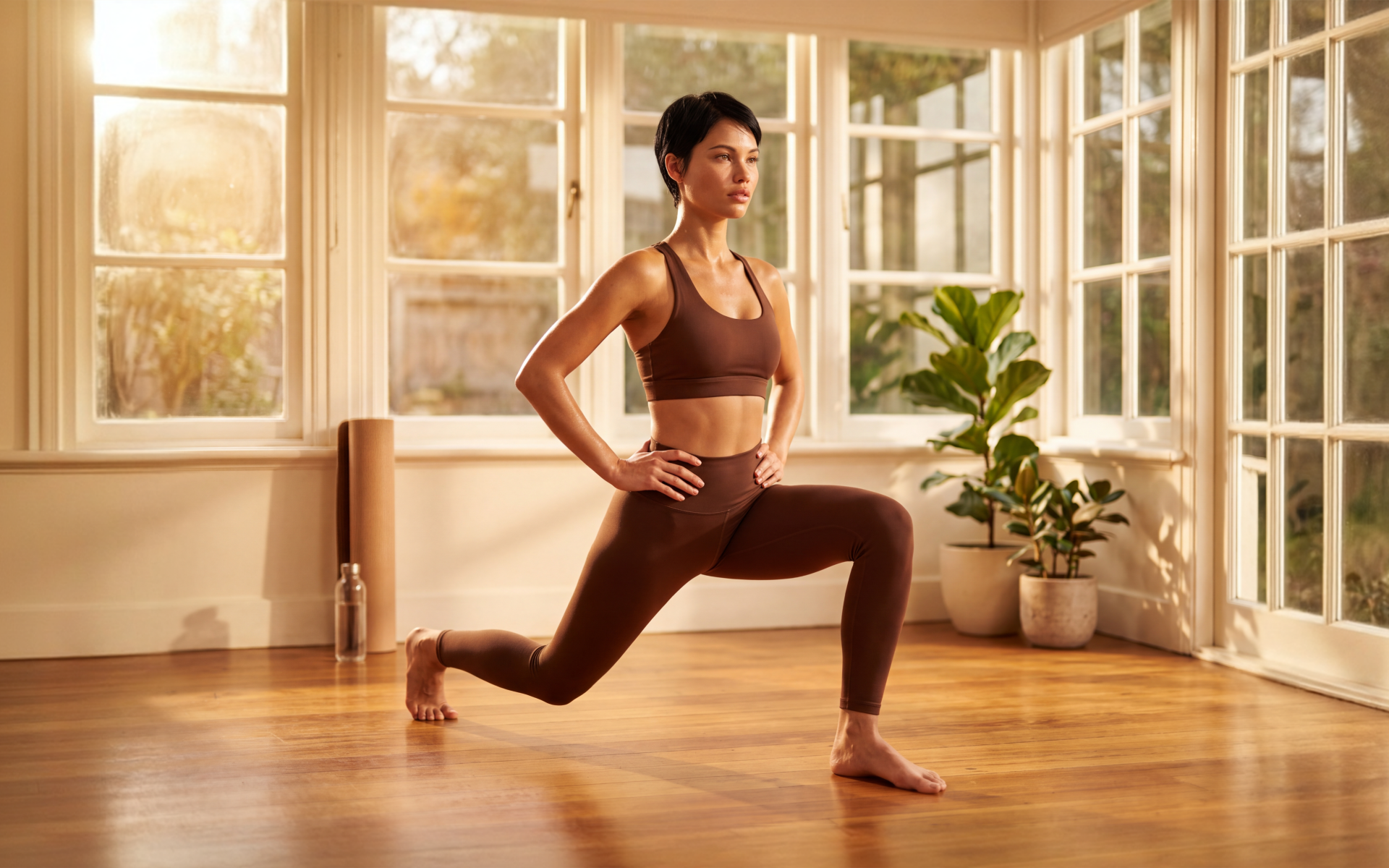
- Step one foot back and lower until both knees bend near 90 degrees.
- Keep your front knee over your ankle.
- Push through your front foot to return, then switch legs.
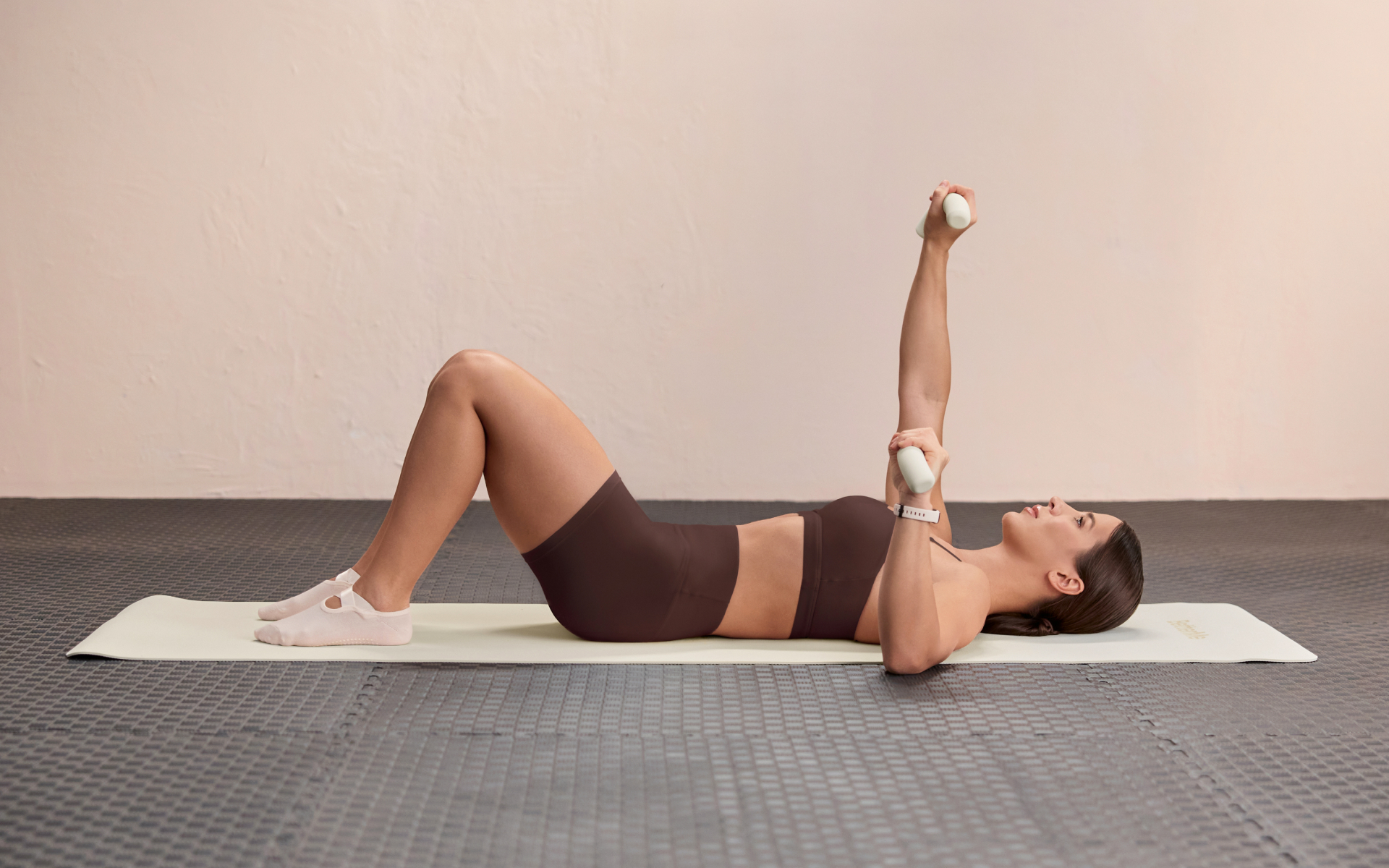
Dumbbell Glute Bridge
- Lie on your back with your knees bent and your feet flat.
- Rest a dumbbell across your hips, holding it steady.
- Press through your heels and lift your hips toward the ceiling.
- Squeeze your glutes at the top, then lower slowly.
Standing Calf Raise
- Stand tall, holding a dumbbell in each hand at your sides.
- Press through the balls of your feet to lift your heels.
- Pause briefly at the top.
- Lower your heels slowly back to the floor.
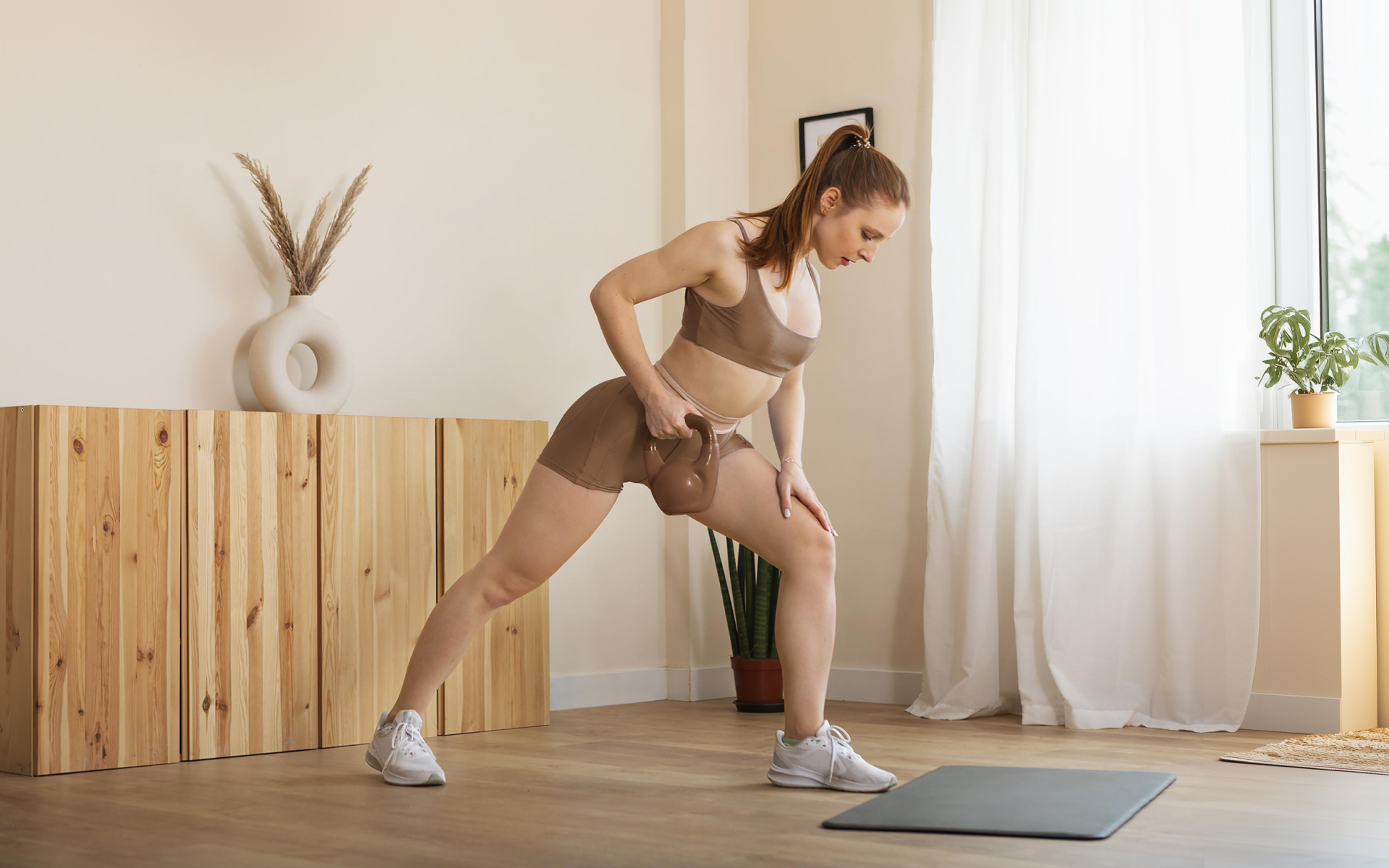
A leg day workout for women with dumbbells works well at home or in the gym. If you enjoy leg workouts at home with weights, a pair of dumbbells is often enough to train your quads, hamstrings, glutes, and calves effectively. Start with lighter weights to learn the movements first.
BetterMe offers a variety of workouts, recipes, challenges, and support tools to help you stay more consistent with your wellness routine. Explore the app to find features that fit your goals, preferences, and schedule.
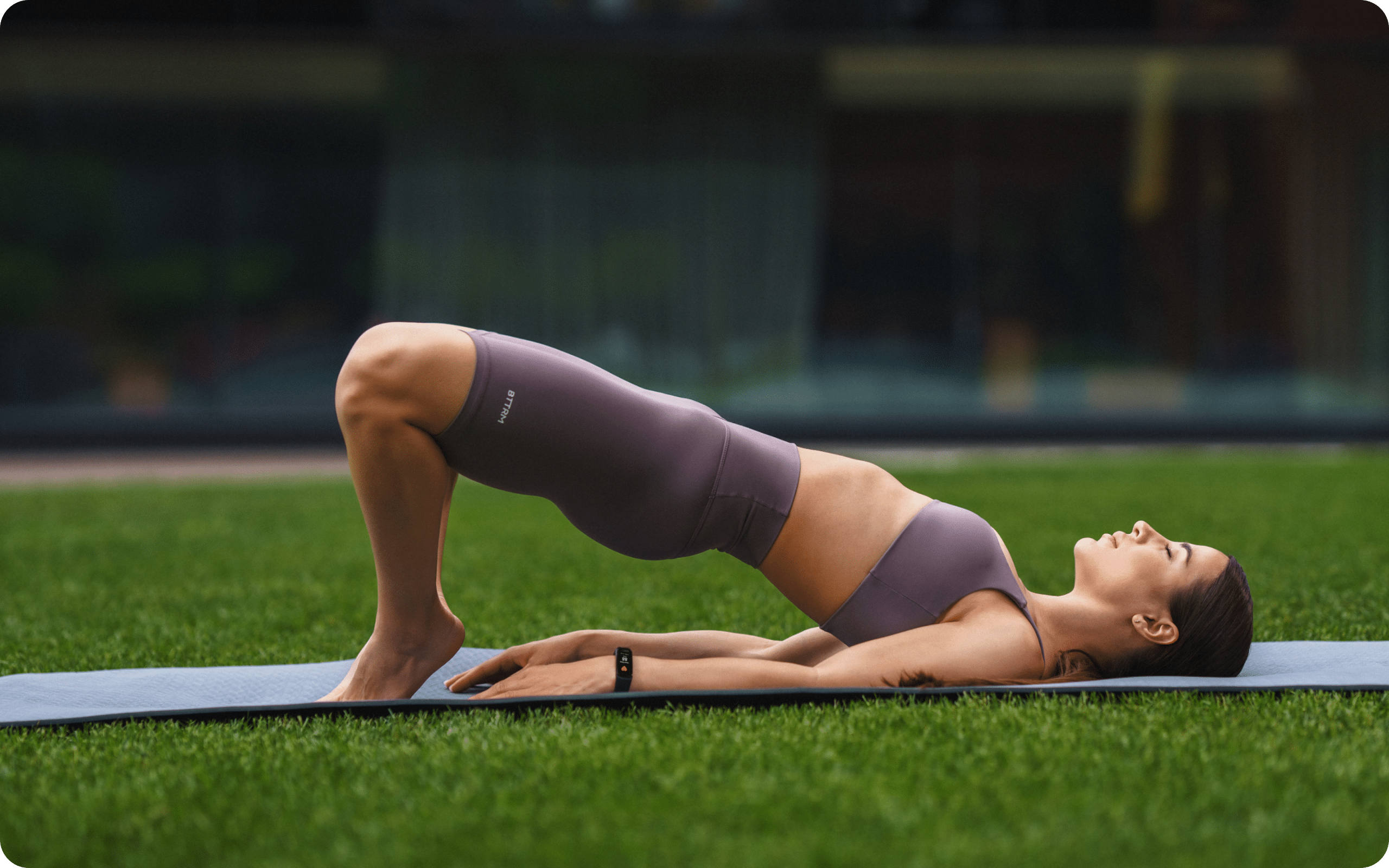
Can You Do a Leg Day Workout at Home?
Yes, you can do a lower-body workout for women at home with little or no equipment. A bodyweight lower body workout can also be an effective option when you’re learning movement patterns or don’t have access to equipment. Bodyweight, resistance bands, or a pair of dumbbells can cover most movements.
Try this beginner-friendly home circuit. Do 2-3 rounds, resting for 60 seconds between exercises, and 60-90 seconds between rounds:
- Bodyweight squats: 12-15 reps
- Reverse lunges: 10 reps per leg
- Glute bridges: 15 reps
- Step-ups onto a sturdy chair or step: 10 per leg
- Calf raises: 15-20 reps
To add a challenge without more weight, slow down each rep. For example, take 3 seconds to lower into a squat. This increases the time your muscles work. You can reduce the rest time between exercises and rounds as you progress.
You can also use household items, such as a backpack filled with books, for extra load. Just keep your movements controlled and steady.
How Long Does It Take to Build Leg Muscle?
Most people notice early changes in strength and muscle within 8-12 weeks of consistent training. The most visible muscle growth often appears in the first 3-6 months, then slows (4).
For steady progress, aim to train legs 2-3 times per week for at least 8-12 weeks (4).
Individual outcomes vary widely. Your results depend on factors such as your starting point, genetics, sleep, nutrition, and how consistently you train.
Patience and consistency tend to matter more than any single session. Some weeks you’ll feel stronger than others, and that’s completely normal.
Can You Build Stronger Legs Without Getting Bulky?
Yes, you can build stronger legs without significant bulk, as large muscle gains tend to take time and effort. Many women worry about looking “too muscular”, but this rarely happens quickly.
On average, natural trainees may gain only about 2.5-4.0 kg of muscle per year over the course of their lifting career (4). Building noticeable size usually takes years of focused, high-volume training.
A leg and glute workout for women may support lower-body strength, everyday movement, and confidence in your routine—you have full control over how you progress.
Read more: Compound Leg Exercises: 4 Moves for Lower-Body Strength
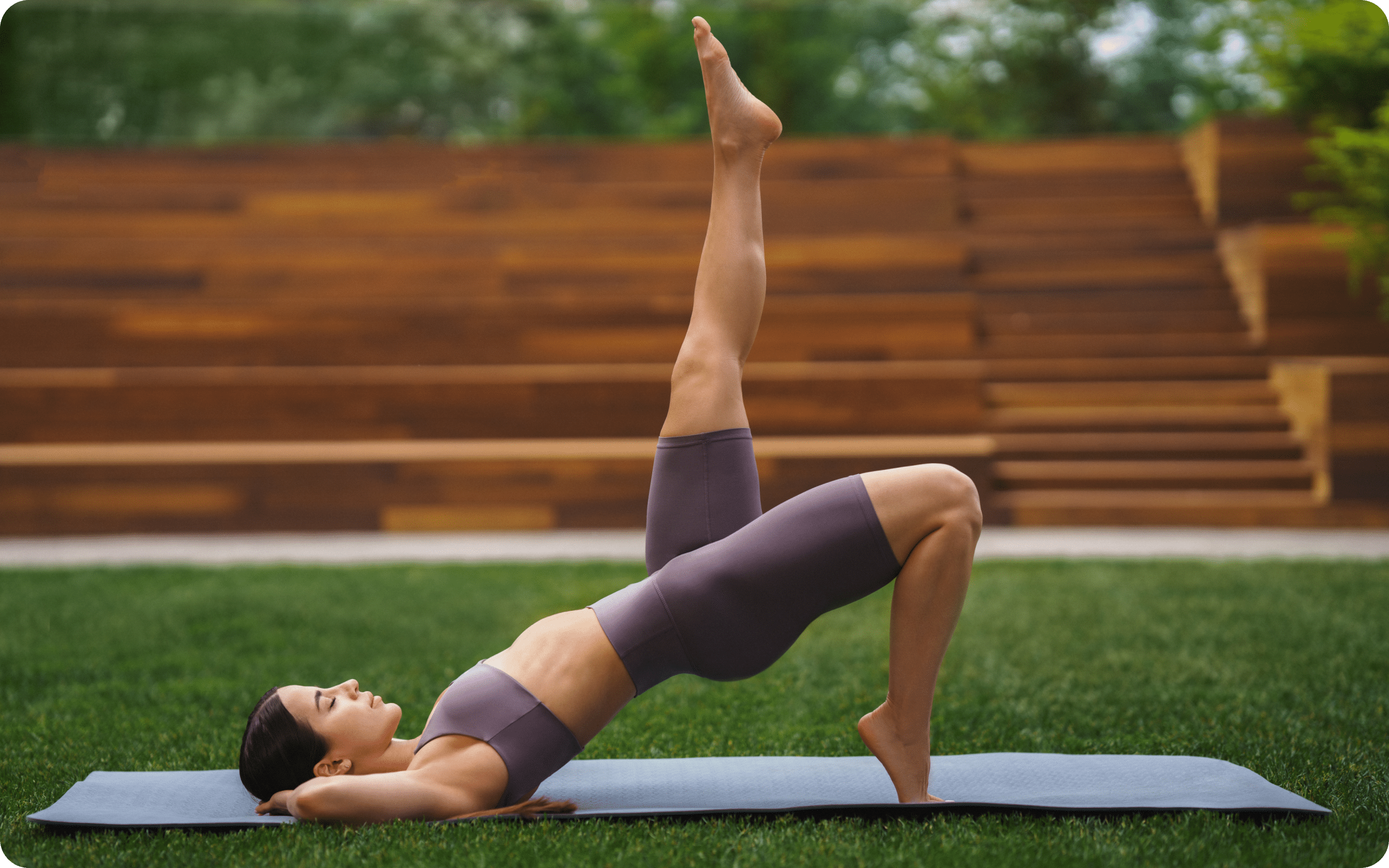
What Should You Do After a Leg Day Workout?
After leg day, you should focus on gentle movement, rest, fluids, and balanced meals to help your body feel ready for future sessions. Your muscles adapt between workouts, not only during them.
Here are simple steps to take after your session:
- Cool down. Walk for 3-5 minutes to ease your heart rate down.
- Stretch gently. Hold light stretches for your quads, hamstrings, and calves for 20-30 seconds each. These leg stretches after workout sessions may help you transition into your cool-down routine and prepare for your next training day.
- Refuel. Eat a balanced meal with protein and carbohydrates within a few hours.
- Hydrate. Drink water throughout the day.
- Rest. Allow at least 24-48 hours before training the same muscles again.
Mild muscle soreness in the 1-2 days after training is common (5), particularly when you’re new or trying something different. This often eases on its own. If discomfort feels sharp or unusual, consider checking in with a qualified professional.
What Should You Not Do on Leg Day?
On leg day, you should avoid skipping your warm-up, lifting too heavy too soon, and ignoring your form. These habits tend to raise your risk of strain and slow your progress.
Here are some common mistakes to skip:
- Skipping the warm-up. Spend 5-10 minutes on light cardio and dynamic moves first.
- Adding weight too fast. Increase load gradually, aiming for 2.5-5% once the current load is manageable.
- Training to failure every set. Leave 1-2 reps “in reserve” most of the time.
- Neglecting hamstrings and glutes. Balance quad-focused moves with hip hinges.
- Doing the same routine forever. Adjust exercises, reps, or load every 4-6 weeks.
For women over 50, resistance training may support strength, balance, and everyday movement when done with appropriate guidance and progression. Other women may be more interested in muscle definition, strength, or how their lower body feels during daily movement. Whatever your personal goal is, a leg day workout can be a useful part of a balanced fitness routine (2).
Listen to your body and adjust as needed. Progress isn’t always linear, and that’s okay.
Frequently Asked Questions
Can leg workouts help with thigh muscle definition?
Regular leg workouts may support thigh muscle definition over time, particularly when they’re paired with overall consistency. Definition tends to come from a mix of building muscle and overall body composition.
Consistent training with squats, lunges, and hip hinges focuses on your thigh muscles. For many people, results appear gradually over 8-12 weeks or more (4). Individual outcomes vary based on genetics, nutrition, and consistency.
Can you build legs without squats?
Yes, you can build strong legs without squats by using other compound and targeted moves. Good alternatives include lunges, Romanian deadlifts, glute bridges, step-ups, and leg presses.
These exercises focus on your quads, hamstrings, and glutes from different angles. Variety can keep training interesting and comfortable. Aim for 2-3 sets of 8—2reps, training your legs 2-3 times per week.
Are lunges better than squats?
Neither lunges nor squats are universally better—they simply focus on your muscles differently. Squats work both legs together and often allow heavier loads. Lunges work one leg at a time, which can support balance and address side-to-side differences.
For many people, including both offers well-rounded results. Try 8-12 reps of squats and 8-10 lunges per leg in your routine.
Will walking for 30 minutes a day tone my legs?
Walking for 30 minutes a day can support leg endurance and overall wellness, but it adds limited muscle. Walking is gentle, low-impact, and beginner-friendly, which makes it easy to maintain.
For more noticeable strength and tone, consider adding resistance training 2-3 times per week. Combining regular walks with leg exercises may create a more well-rounded lower-body routine over time.
Is it better to lift heavy or light to build leg muscle?
Both heavier and lighter loads can build leg muscle when you do enough total work. Some research has suggested similar muscle growth across loads when volume is matched (6). Heavier loads often use 1-5 reps, while lighter loads use 8-15 or more. Choose what feels comfortable and sustainable for you. The key is training close to your limit while keeping good form.
How many exercises should women do on leg day?
Most women should perform 3-5 exercises per leg day session. Beginners can start with 3 movements, while more experienced trainees may use 5-6. Aim for 3-4 sets of 8-15 reps per exercise. Include moves for your quads, hamstrings, glutes, and calves for balance. Quality and good form tend to matter more than the total number of exercises.
How often should women train legs?
Most women see steady progress by training legs 2-3 times per week. Leave at least one rest day between sessions so muscles can recover. Beginners may prefer 2 sessions, while more experienced trainees often add a third. Total weekly volume tends to matter more than frequency alone (7). Adjust based on your schedule, energy, and how your legs feel.
The Bottom Line
A consistent leg day workout for women can build lower-body strength, support everyday movement, and help you feel more capable. Start with a routine that fits your level, train legs 2-3 times per week, and progress gradually. Be patient with yourself—small, steady steps add up. Lace up, pick a few moves, and enjoy the journey.
DISCLAIMER:
This article is intended for general informational purposes only and does not serve to address individual circumstances. It is not a substitute for professional advice or help and should not be relied on for making any kind of decision-making. Any action taken as a direct or indirect result of the information in this article is entirely at your own risk and is your sole responsibility.
BetterMe, its content staff, and its medical advisors accept no responsibility for inaccuracies, errors, misstatements, inconsistencies, or omissions and specifically disclaim any liability, loss or risk, personal, professional or otherwise, which may be incurred as a consequence, directly or indirectly, of the use and/or application of any content.
You should always seek the advice of your physician or other qualified health provider with any questions you may have regarding a medical condition or your specific situation. Never disregard professional medical advice or delay seeking it because of BetterMe content. If you suspect or think you may have a medical emergency, call your doctor.
SOURCES:
- Leg Muscles (2021, my.clevelandclinic.org)
- Mechanism-Driven Strategies for Reducing Fall Risk in the Elderly: A Multidisciplinary Review of Exercise Interventions (2024, mdpi.com)
- Effects of Resistance Training Overload Progression Protocols on Strength and Muscle Mass (2024, pubmed.ncbi.nlm.nih.gov)
- Load-induced human skeletal muscle hypertrophy: Mechanisms, myths, and misconceptions (2026, sciencedirect.com)
- Delayed Onset Muscle Soreness (DOMS) (2025, my.clevelandclinic.org)
- Equal-Volume Strength Training With Different Training Frequencies Induces Similar Muscle Hypertrophy and Strength Improvement in Trained Participants (2022, researchgate.net)
- The Resistance Training Dose Response: Meta-Regressions Exploring the Effects of Weekly Volume and Frequency on Muscle Hypertrophy and Strength Gains: The Resistance Training Dose ResponseJ. C. Pelland et al. (2025, researchgate.net)
 Reviewed by