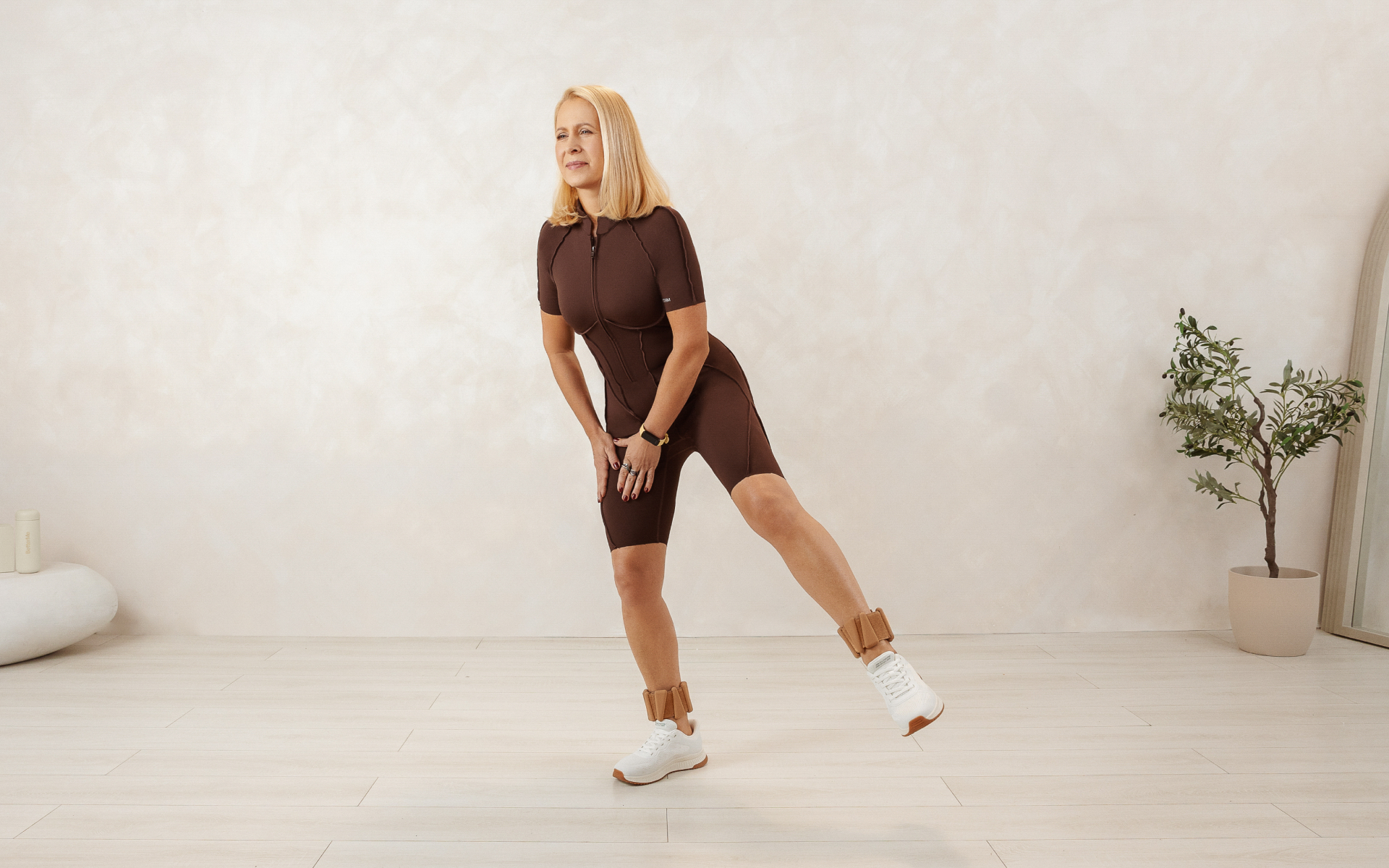
Compound leg exercises are moves that work several joints and muscle groups at once, such as squats, lunges, hip hinges, and step-ups. They train your legs and hips together, which can help you build lower-body strength using fewer total exercises. For many people, just 3-4 of these moves cover the vast majority of their major leg muscles. They suit beginners and experienced lifters alike, and you can do them with body weight, dumbbells, or other equipment.
Compound leg exercises are moves that bend and straighten more than one joint at a time, such as your hips, knees, and ankles working together. A squat is a classic example. As they recruit large muscle groups in one go, they’re an efficient way to train your lower body. This is one reason some people include compound exercises for weight loss in a broader fitness plan, especially when they want efficient movements that support strength, activity, and consistency.
This guide is for anyone who wants stronger legs without a complicated routine. We’ll cover compound moves compared to isolation moves, which muscles they target, and how to build a simple weekly plan. You’ll also find a beginner-friendly workout and answers to common questions.
Are Compound Leg Exercises Better Than Isolation Exercises?
Compound leg exercises train multiple muscles together, while isolation exercises focus on one, but neither is necessarily better and they are complementary. They serve different goals, and many people use both for a complete training plan.
An isolation exercise works a single joint and muscle. A leg extension, for example, targets mostly the front of your thighs. Leg isolation exercises can be useful for focusing on one area or easing back in after a break.
Compound moves tend to offer more in less time. Some research has explored muscle activation across squats, lunges, deadlifts, and step-ups, which suggests that these moves recruit several lower-body muscles at once (1).
Here’s a simple way to think about it:
- Compound: efficient for overall strength and full-leg coverage
- Isolation: helpful for targeting one muscle or adding variety
For most everyday goals, lower-body compound exercises can form the core of your routine. You can add isolation moves later if you want extra focus on specific body parts (3):
- Leg extensions for quadriceps development
- Good mornings for hamstrings
- Calf raises for your calves
Individual preferences and outcomes vary.
Read more: Leg Circuit Workout for Building Lower-Body Strength
What Leg Exercises Are Compound?
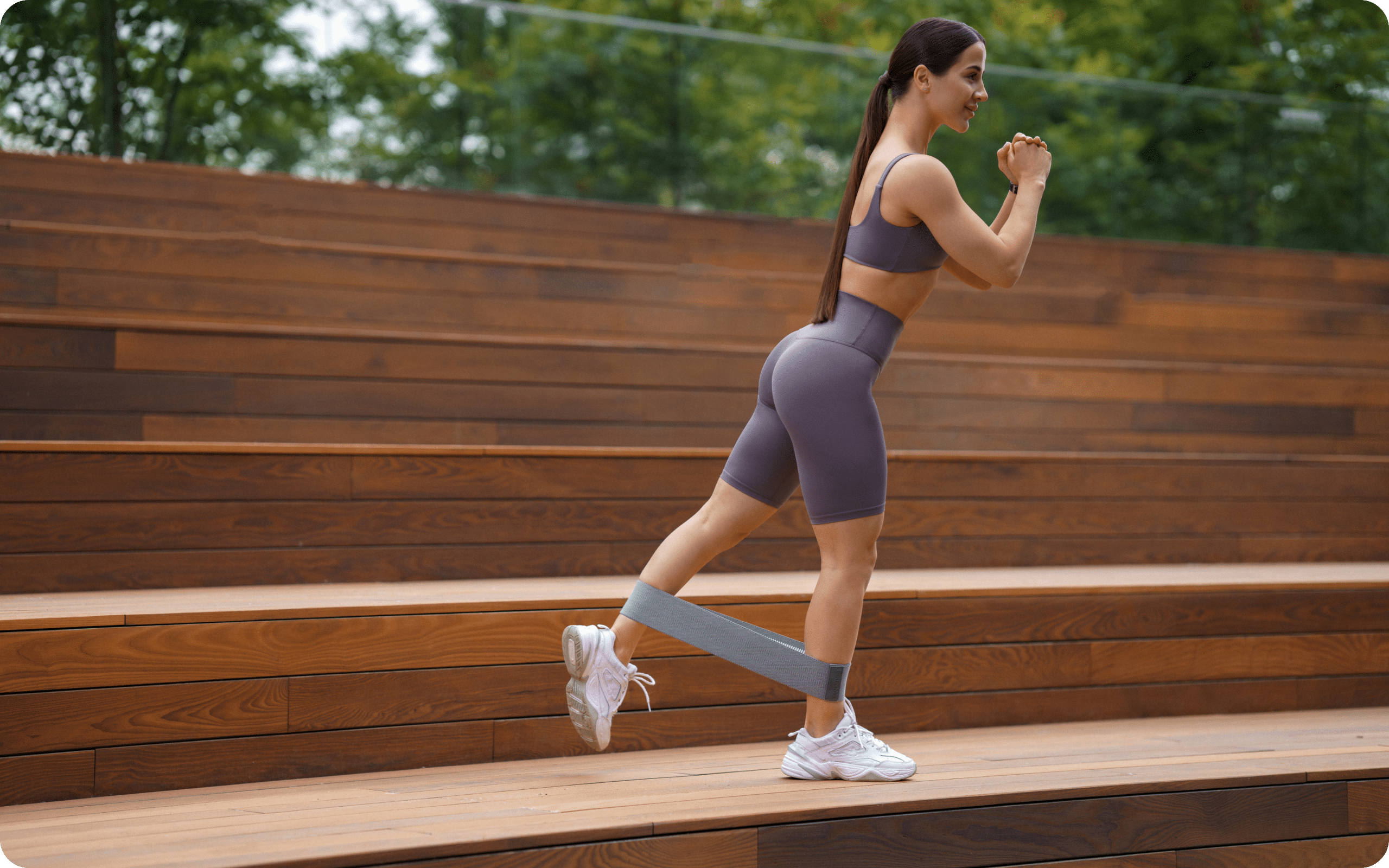
A compound leg exercise is a move that uses more than one joint at the same time (4). In lower-body training, this usually means your hips, thighs, knees, calves, and ankles work together to move your body or a load.
The four core movement patterns are:
- Squat
- Lunge
- Hip-hinge
- Step-up
Each movement pattern trains the legs in a slightly different way. That matters because no single exercise emphasizes every lower-body muscle equally. Using all four can help you build more balanced lower-body strength over time.
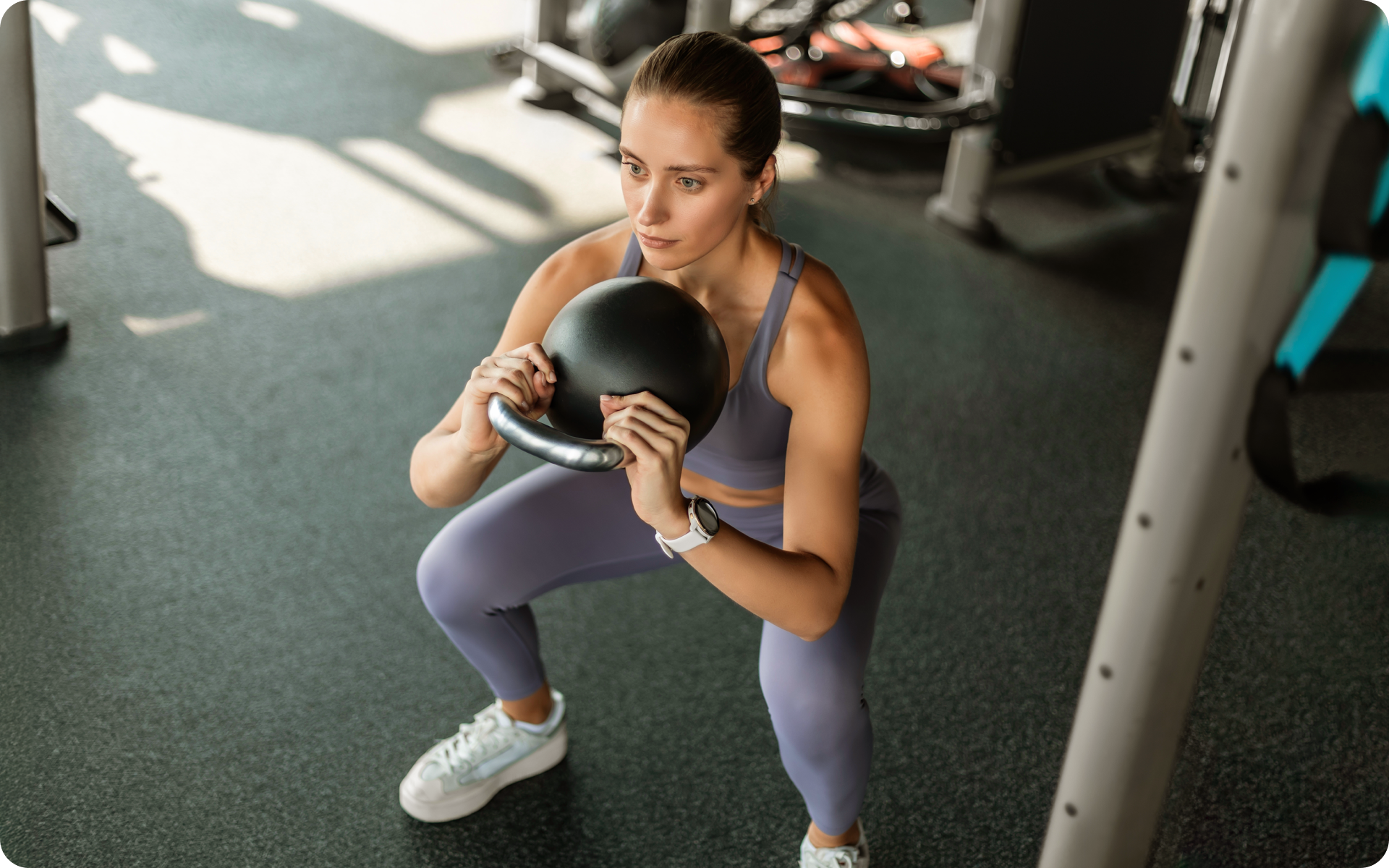
A squat is a movement where you bend at the hips, knees, and ankles together, then stand back up. Your torso stays fairly upright while your knees move forward and your hips move down and back.
This pattern places a large share of the work on your quads and glutes.
Squat exercise examples include:
- Bodyweight squats
- Goblet squats
- Front squats
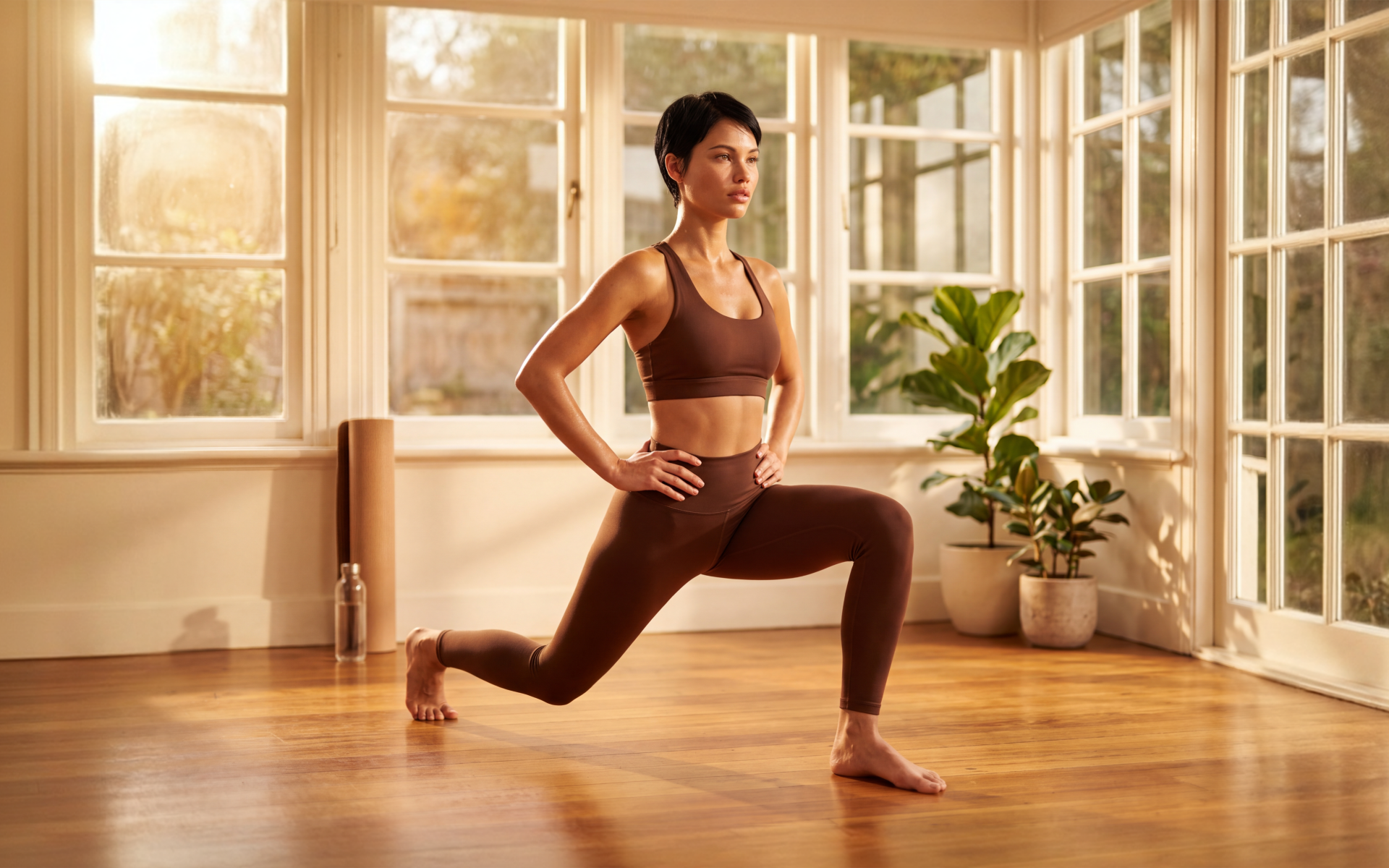
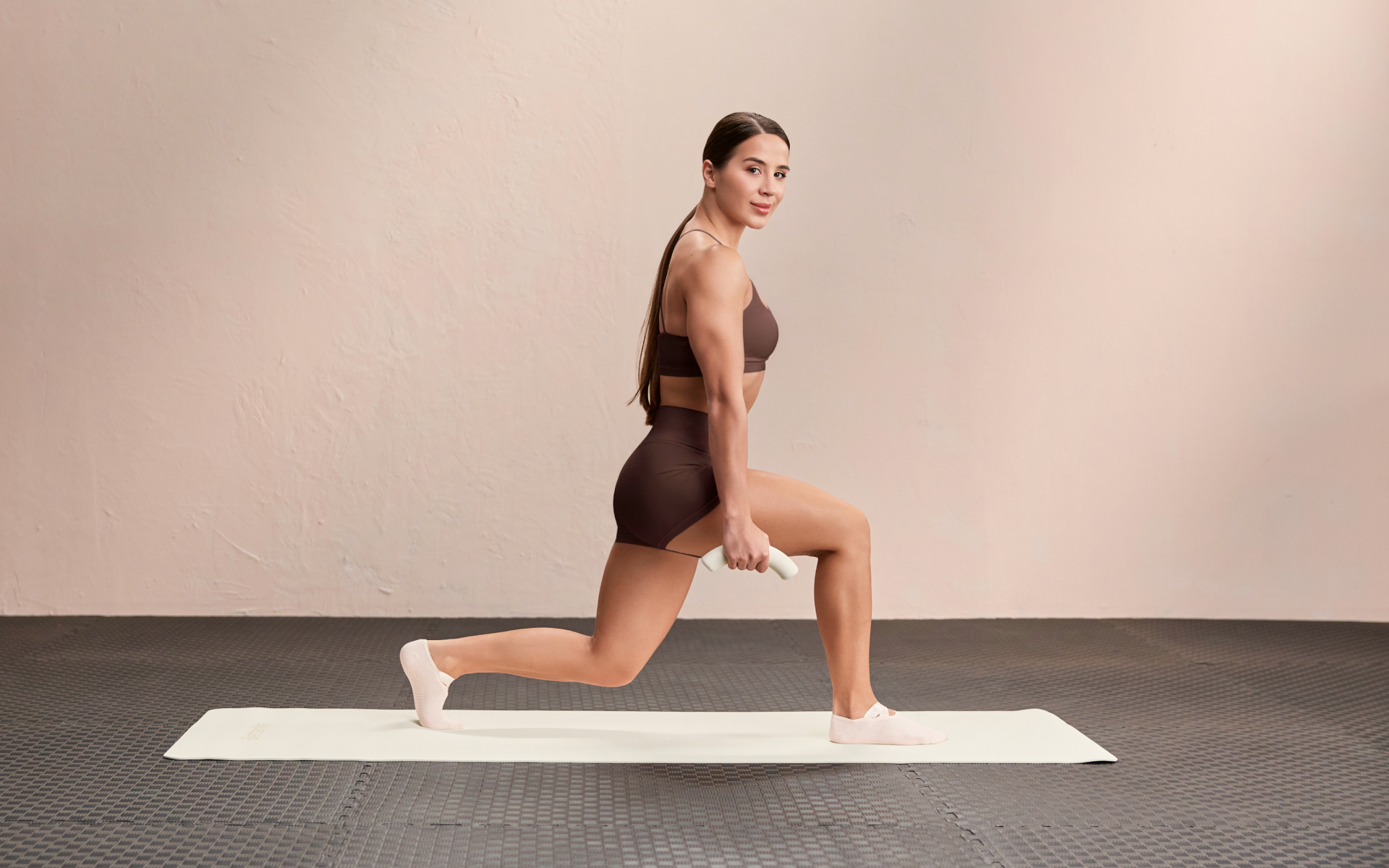
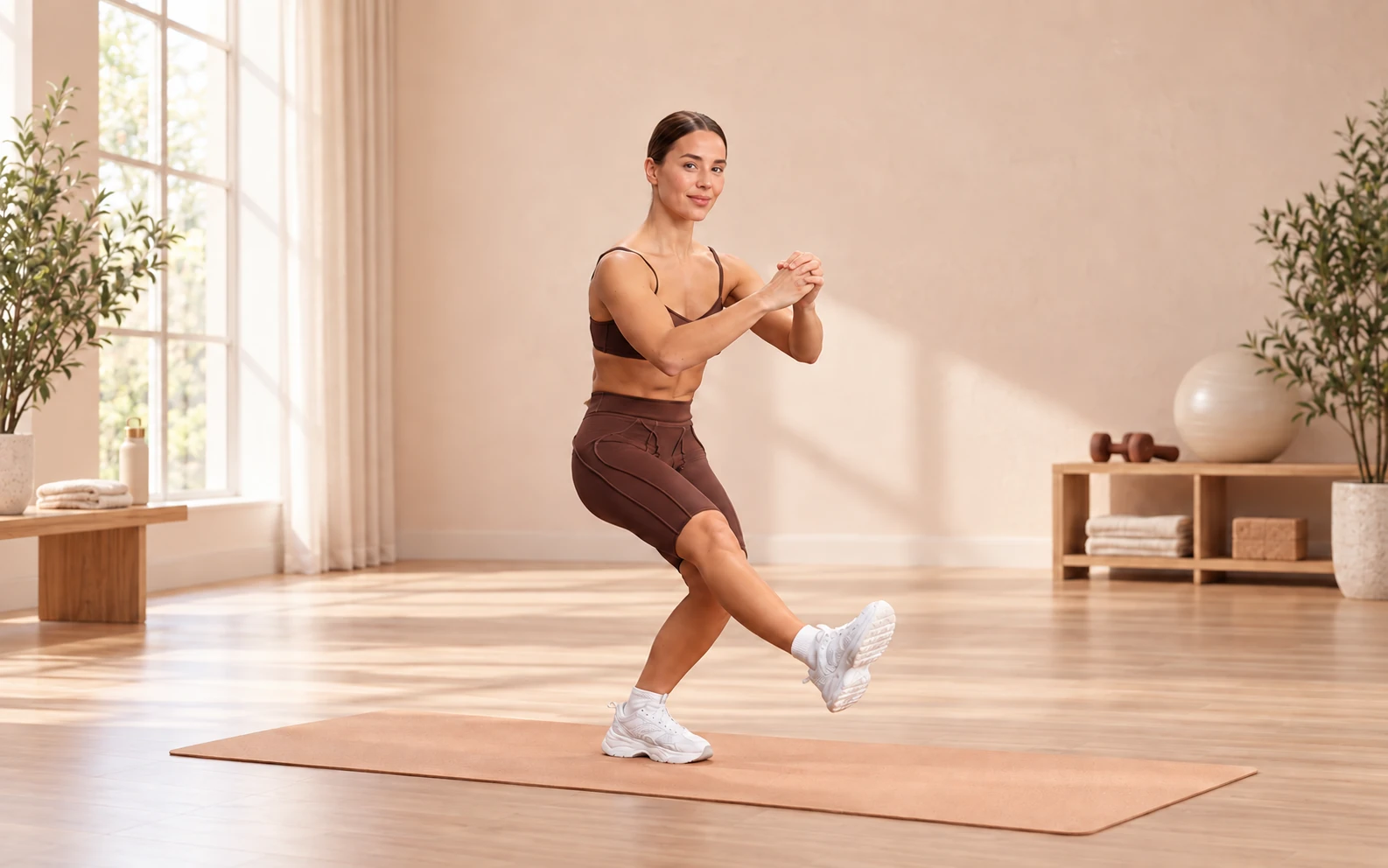
A lunge is a split-stance movement where one leg works in front of you and the other works behind you. You lower your body by bending both knees, then press back up.
As each side works more independently, lunges can reveal side-to-side differences in control and strength.
Lunge exercise examples include:
- Forward lunges
- Reverse lunges
- Split squats
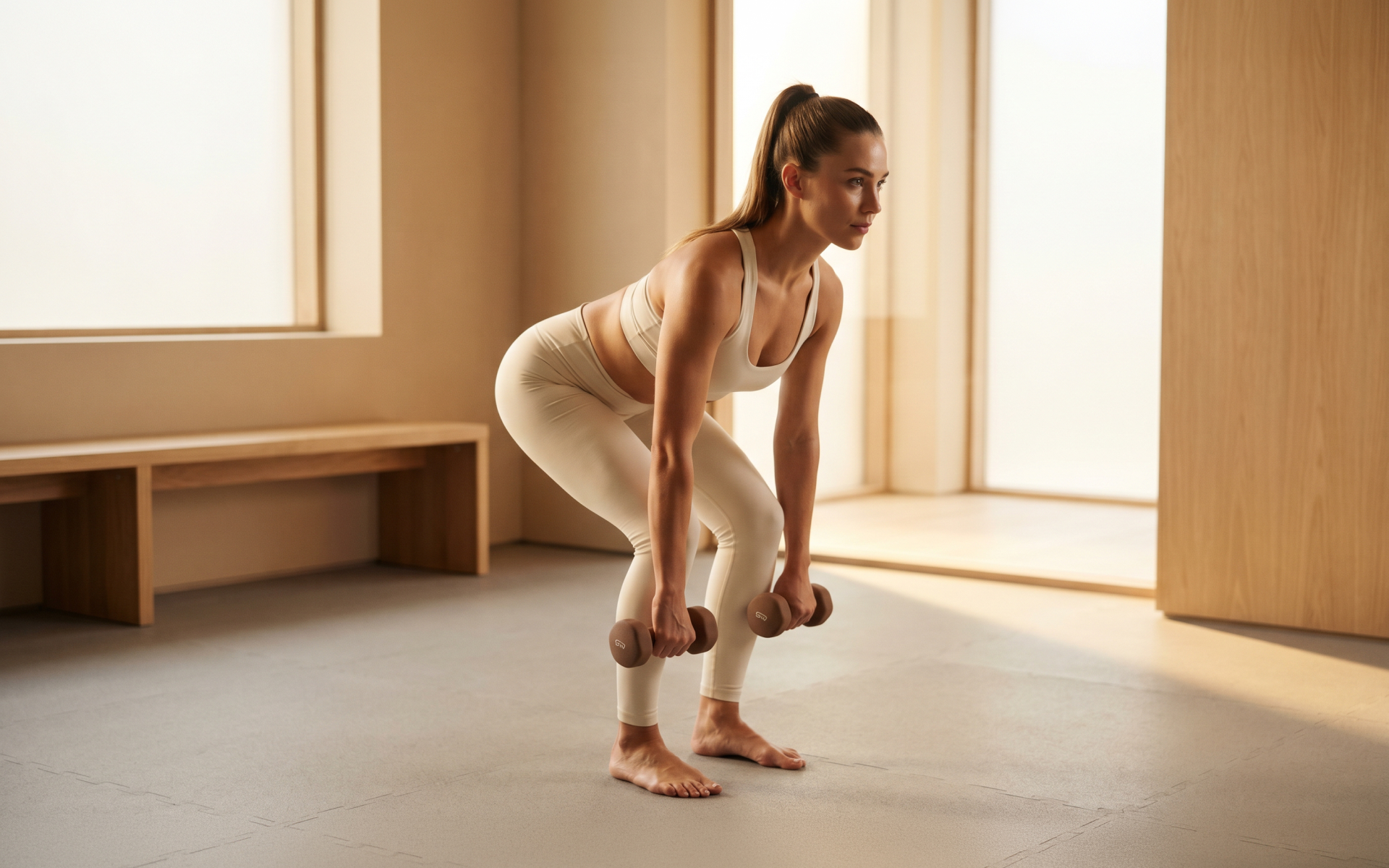
A hip hinge is a movement where you push your hips back while keeping a soft bend in your knees and a steady back position. Instead of dropping straight down, your torso tips forward as your hips travel backward.
This shifts more of the load to your glutes and hamstrings.
Hip-hinge exercise examples include:
- Deadlifts
- Romanian deadlifts
- Good mornings
A step-up is a single-leg movement where you place one foot on a platform, press through that foot, and lift your body upward. Your hip and knee extend as you rise, and your trailing leg helps only as much as needed.
This pattern can build lower-body strength and balance at the same time. It also gives you a clear way to adjust difficulty by changing step height or load.
Step-up exercise examples include:
- Step-up
- Step-up to jump
- Lateral step-up
These four moves cover most of your lower body. Here’s a quick comparison:
| Exercise | Joints involved | Main muscles | Beginner option |
|---|---|---|---|
| Squat | Hips, knees, ankles | Quads, glutes | Chair or box squat |
| Lunge | Hips, knees, ankles | Quads, glutes, hamstrings | Stationary split squat |
| Hip hinge/deadlift | Hips, knees | Hamstrings, glutes, back | Hip hinge with no weight |
| Step-up | Hips, knees, ankles | Quads, glutes | Low step, no weight |
You can load these as a compound leg workout with dumbbells or other tools as you progress. Start with body weight first to learn each pattern.
Which Muscles Do Compound Leg Exercises Work?
Compound leg exercises mainly work your quads, glutes, hamstrings, and calves. They also recruit other muscle groups as stabilizers, including your inner thighs, outer hips, core, and lower back.
Here’s a clearer breakdown of the main muscles that are involved:
- Quads: The muscles on the front of your thighs. They straighten your knees and do a large share of the work in squats, lunges, and step-ups.
- Glutes: The muscles around your hips, including the gluteus maximus, medius, and minimus. They help extend your hips and keep your pelvis stable, particularly in lunges and step-ups.
- Hamstrings: The muscles on the back of your thighs. They cross your hip and knee joint, which gives them two roles. They’re the primary knee flexors and also help drive hip extension. They usually work hardest in hip-hinge patterns such as deadlifts.
- Calves: The muscles around your lower leg and ankle. They help control ankle position, support push-off, and contribute to balance during standing movements.
- Adductors: Your inner thigh muscles. They help guide hip position and support control in squats and lunges.
- Abductors: Your outer thigh muscles. They help control side-to-side movement and keep your knees and pelvis steady during single-leg work.
- Core: The muscles around your abdomen and trunk. They help you stay braced and stable while your hips and legs move.
- Lower back: These muscles help support your torso, particularly during hip hinges and other loaded movements.
Together, these muscles help you produce force, control position, and stay steady through each rep. This makes compound leg exercises useful for functional strength training, as they practice the kind of coordinated lower-body movement you use during stairs, lifting, walking, and daily activities.
Reasons why BetterMe is a safe bet: a wide range of calorie-blasting workouts, finger-licking recipes, 24/7 support, challenges that’ll keep you on your best game, and that just scratches the surface! Start using our app and watch the magic happen.
How Can You Build a Compound Leg Workout Routine?
A compound leg workout routine is built by first ensuring you incorporate the four major movement patterns. Then use the appropriate training variables for your goals. For most people, this looks like:
- Train your legs 2-3 times per week
- Ensure at least 1 rest day between leg workouts
- Use 2-3 sets for each leg exercise
- Use 8-12 reps per set when training your legs
Progressive overload. This means gradually doing a little more over time. In practice, that can mean adding 1-2 reps, 2.5-5 pounds, or 1 extra set, but only when your form stays steady for all prescribed reps (2).
If you prefer a simple schedule, a 3-day compound workout routine can help you spread squats, lunges, hip hinges, and step-ups across the week without overloading one session. Here’s a sample weekly structure you can adjust:
| Day | Focus | Exercises | Sets x Reps | Rest |
|---|---|---|---|---|
| Monday | Lower body | Squat, hip hinge | 3 x 8-12 | 60-90 secs |
| Wednesday | Lower body | Lunge, step-up | 3 x 8-12 | 60-90 secs |
| Friday | Full lower body | All 4 moves | 2 x 8-10 | 60-90 secs |
You can run this as a compound leg workout with weights or with body weight only, depending on your situation. Adjust the days to fit your schedule.
Exercise Instructions
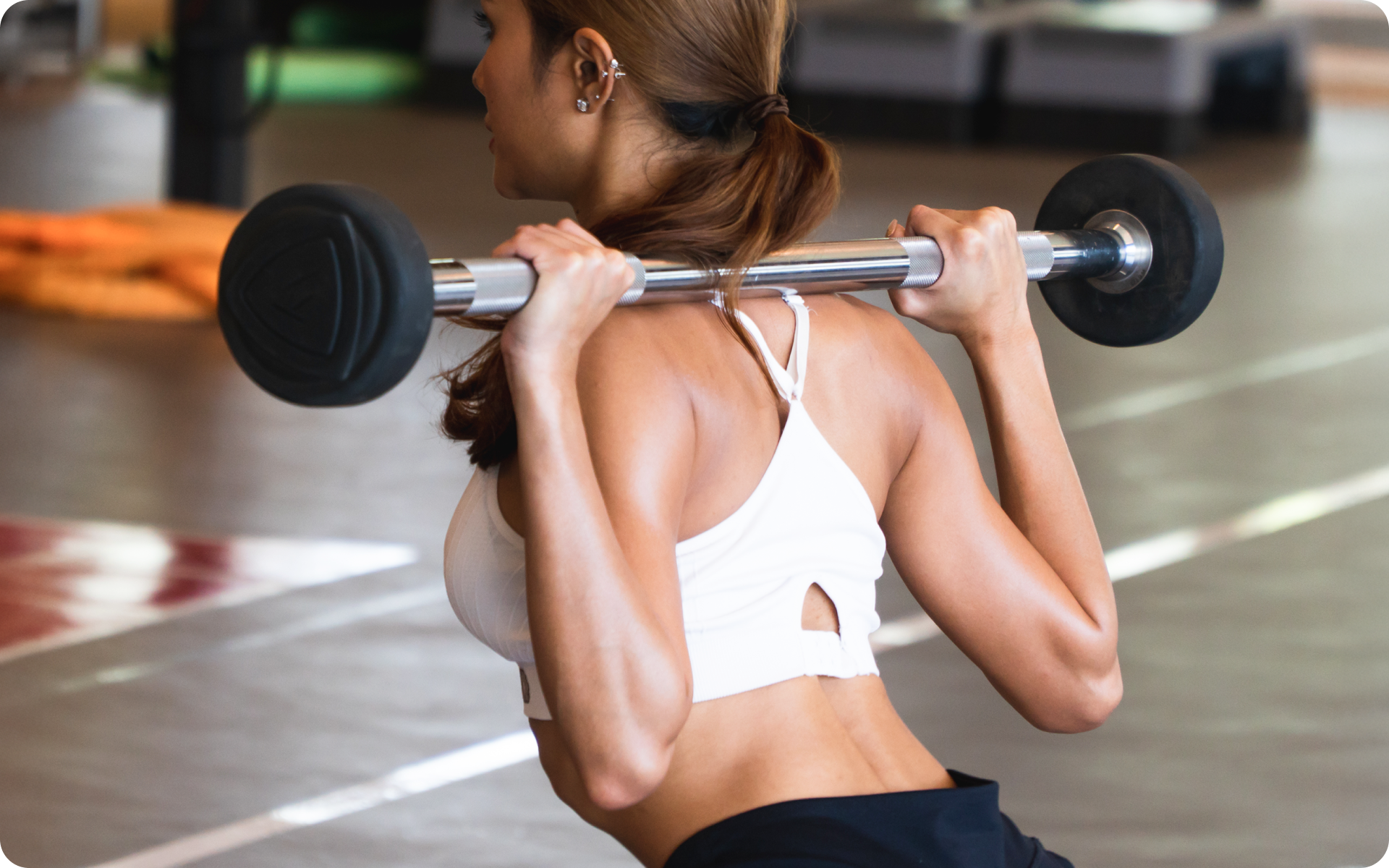
How to do a squat:
- Stand with your feet about shoulder-width apart.
- Push your hips back and bend your knees, as if sitting into a chair.
- Lower until your thighs are roughly parallel to the floor, if this is comfortable.
- Press through your feet to stand back up.
How to do a lunge:
- Stand tall, then step one foot forward.
- Lower your back knee toward the floor, keeping your front knee over your ankle.
- Pause when both knees reach about a 90-degree bend.
- Push through your front foot to return, then switch sides.
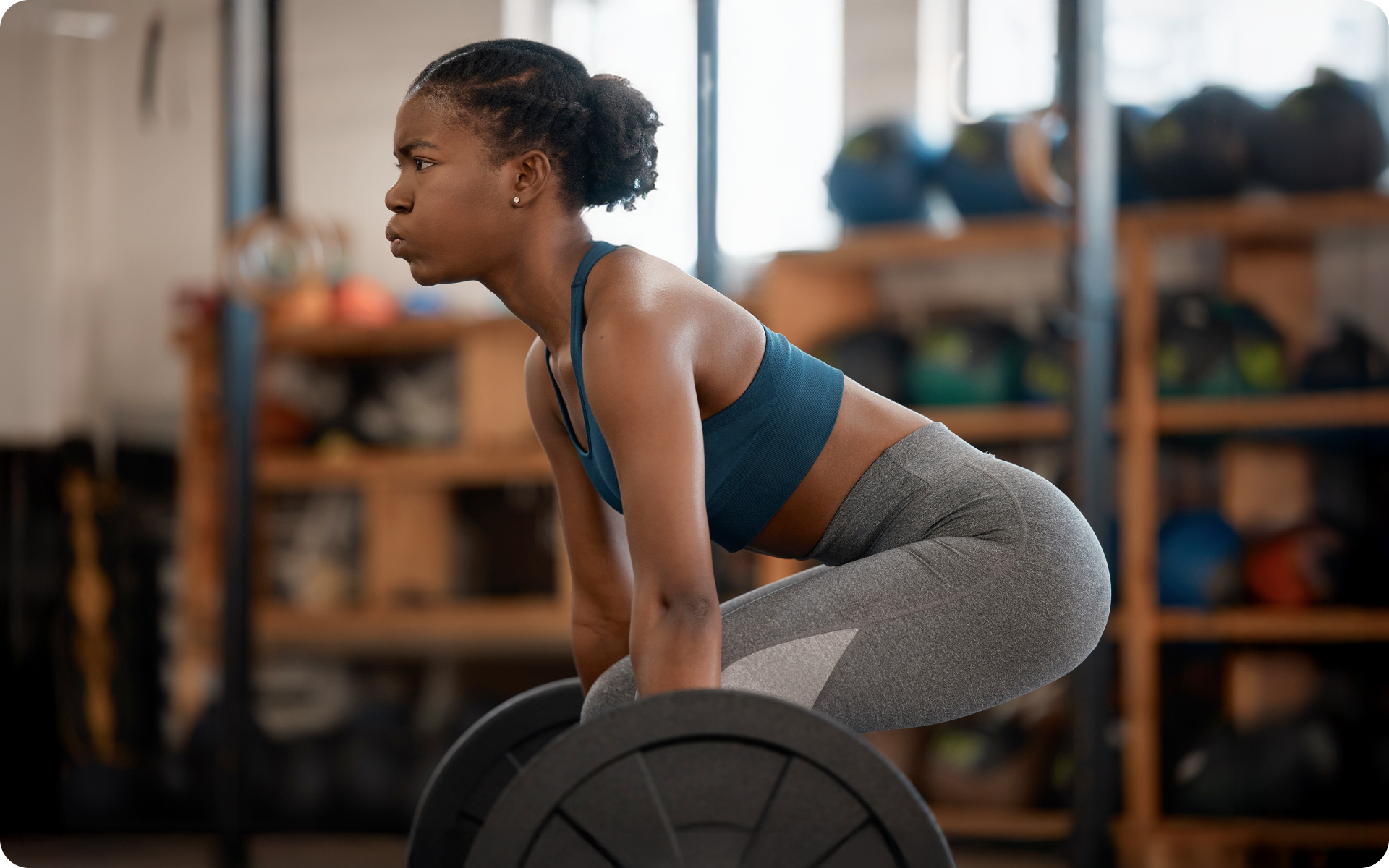
How to do a hip hinge or deadlift:
- Stand with your feet hip-width apart and your knees slightly bent.
- Push your hips back and lower your hands or a weight toward your shins.
- Keep your back flat and your chest open throughout.
- Drive your hips forward to stand back up.
How to do a step-up:
- Stand facing a sturdy step or low box.
- Place one full foot on the step.
- Press through that foot to lift yourself up.
- Step down with control, then repeat or switch sides.
How Many Compound Leg Exercises Should You Do?
For most people, 3-4 compound leg exercises per session is plenty. This covers your major lower-body muscles without feeling overwhelming.
If you’re new to training, you might start with just 2 moves, such as a squat and a hip hinge. Add the lunge and step-up when you feel ready.
A simple progression guide for compound leg exercises for beginners:
- Level 1: Choose 2 exercises and complete 2 sets of 8-10 reps.
- Level 2: Choose 3 exercises and complete 2-3 sets of 8-12 reps.
- Level 3: Choose 3-4 exercises and complete 3 sets of 8-12 reps.
Start with Level 1 and move to the next level once you can complete the current workload with controlled form and feel ready for a bigger challenge.
This is a flexible template, not a rule. Some people progress faster, while others progress slower, and that’s completely fine. Individual outcomes vary based on experience, recovery, and consistency.
The goal isn’t to do as much as possible, it’s to do enough with good form, then build gradually. Quality reps tend to matter more than sheer volume.
Read more: Superset Leg Workout: Pros, Cons, and How to Do It for Optimal Results
How Much Rest Do You Need Between Compound Leg Exercises?
Rest for about 60-90 seconds between sets of compound leg exercises. Heavier sets may need closer to 2-3 minutes, while lighter sets may need less (5).
Rest gives your muscles time to recover so your next set stays strong. If your form starts to slip, this is often a sign that you need a little more rest.
A simple guide:
- Lighter sets (12+ reps): 45-60 seconds
- Moderate sets (8-12 reps): 60-90 seconds
- Heavier sets (5-8 reps): 2-3 minutes
Between leg-focused days, you should aim for at least one rest day. Your muscles tend to adapt during rest, not just during the workout (6).
Listen to how your body feels. Some days you’ll need more rest, and that’s okay. There’s no single perfect number—use these ranges as a starting point and adjust.
Can You Do Compound Leg Exercises at Home?
Yes, you can do compound leg exercises at home with little or no equipment. Body weight squats, lunges, hip hinges, and step-ups all work well in a small space.
A compound leg workout at home can be simple. You only need room to move and a sturdy surface for step-ups, such as a low, stable step or staircase.
To add resistance over time, you can use:
- Dumbbells or kettlebells
- A loaded backpack
- Filled water bottles or jugs
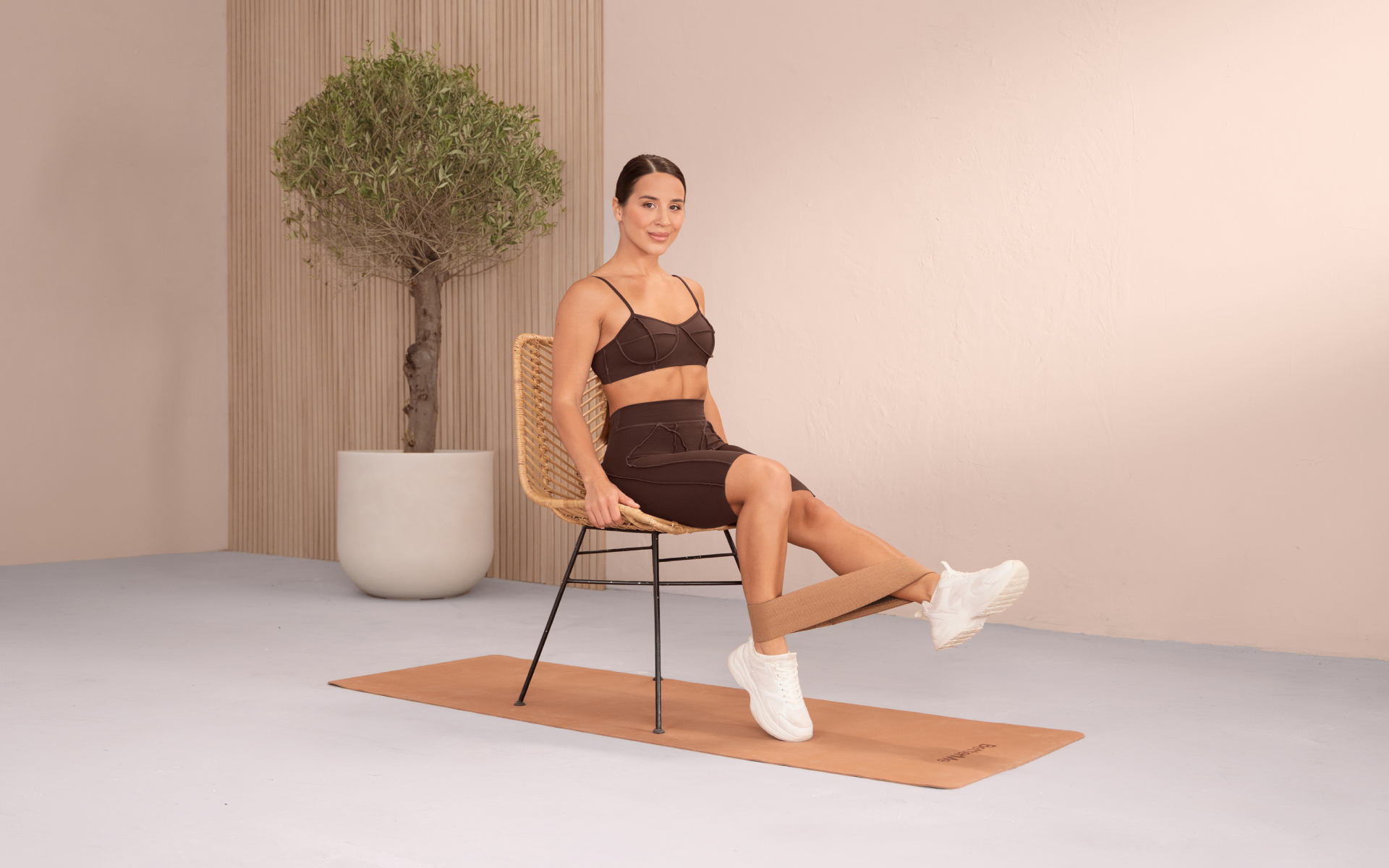
- Resistance bands
Start with body weight to learn the movement patterns. Once 12 reps feel manageable with steady form, consider adding light resistance.
A short home session might be:
- 3 moves
- 3 sets of 10 reps
- 3 times per week
This is a practical option for busy schedules. You can adjust the moves, sets, and reps to match your space and energy.
What Happens If You Only Do Compound Leg Exercises?
If you only do compound leg exercises, you can still build solid lower-body strength. These moves cover most major muscles, so a focused routine can work well on its own.
That being said, you might miss some targeted work. Leg isolation exercises, such as leg curls, can add extra focus to one muscle if you want it (3).
A balanced approach might look like this:
- Core of your routine: Compound moves for overall strength
- Optional extras: Isolation moves for specific areas
- Don’t forget: Upper-body and rest days for balance
Relying only on leg compounds is a reasonable choice, particularly when time is tight. Many people see steady progress this way. Individual results vary, and your goals can guide your choices.
If your aim is general strength and efficiency, compound moves alone can carry you far. Add variety when you’re ready, not because you feel you have to.
Intense sweat sessions, working weight loss tips, lip-smacking recipes come in one package with the BetterMe Well-Being Coach app—all at your fingertips, start transforming your life now!
Frequently Asked Questions
Can you grow your legs without compound exercises?
Yes, you can build leg strength using only isolation exercises, but it may take more moves to cover the same muscles. Exercises such as leg extensions, leg curls, and calf raises each target one area. You’d simply need several of them to match what a few compound moves do. Isolation work is a valid option, but it tends to be less time-efficient.
Should beginners do compound exercises?
Yes, beginners can do compound exercises, often starting with body weight and steady form. Moves such as the squat and hip hinge teach patterns you’ll use everywhere. Start with 2 moves, 2 sets of 8-10 reps, and progress slowly. Learning these patterns early can lay a strong foundation. If anything feels off, consider working with a qualified trainer.
What compound leg exercise works the most lower-body muscles?
The squat is often considered one of the most complete lower-body compound moves—it recruits your quads, glutes, hamstrings, and calves, while your core helps you stay steady. The hip hinge runs a close second, leaning more on your hamstrings and glutes. Using both gives you broad coverage (1). Individual responses vary based on form and body mechanics.
Are squats a compound exercise?
Yes, squats are a compound exercise as they move your hips, knees, and ankles together. This means that they recruit several muscle groups at once, including your quads, glutes, and hamstrings. Your core also works to keep you balanced (7). That combination makes squats one of the most efficient lower-body moves you can do.
Are lunges a compound exercise?
Yes, lunges are a compound exercise that works multiple joints and muscles together. As you step and lower, your hips, knees, and ankles all move at once. This recruits your quads, glutes, and hamstrings, plus your core for balance. Lunges also challenge each leg separately, which can help even out side-to-side differences over time (8).
Are deadlifts a leg exercise or a back exercise?
Deadlifts are both, as they use a hip hinge that works your legs and back together. Your hamstrings and glutes drive the movement, while your back muscles help keep you stable (9). Therefore, a deadlift counts as a lower-body compound move and a back move at once. That dual role is part of why it’s so popular.
The Bottom Line
Compound leg exercises—squats, lunges, hip hinges, and step-ups—offer a practical, efficient way to build lower-body strength using just a few moves. Start with body weight, focus on steady form, and progress gradually when you feel ready. Pick one or two moves to try this week, and build from there. You’ve got a simple plan to begin—now it’s your move.
DISCLAIMER:
This article is intended for general informational purposes only and does not serve to address individual circumstances. It is not a substitute for professional advice or help and should not be relied on for making any kind of decision-making. Any action taken as a direct or indirect result of the information in this article is entirely at your own risk and is your sole responsibility.
BetterMe, its content staff, and its medical advisors accept no responsibility for inaccuracies, errors, misstatements, inconsistencies, or omissions and specifically disclaim any liability, loss or risk, personal, professional or otherwise, which may be incurred as a consequence, directly or indirectly, of the use and/or application of any content.
You should always seek the advice of your physician or other qualified health provider with any questions you may have regarding a medical condition or your specific situation. Never disregard professional medical advice or delay seeking it because of BetterMe content. If you suspect or think you may have a medical emergency, call your doctor.
SOURCES:
- Strength Training Modalities for Lower Body Strength and Power: A Narrative Review (2024, researchgate.net)
- Effects of Resistance Training Overload Progression Protocols on Strength and Muscle Mass (2024, pubmed.ncbi.nlm.nih.gov)
- How to Add Isolation Exercises to Your Strength-Training Routine (Shape) (2022, acefitness.org)
- What Are The Benefits Of Compound Exercises? (2024, fitnesseducation.edu.au)
- RECOVERY BETWEEN SETS IN STRENGTH TRAINING: SYSTEMATIC REVIEW AND META-ANALYSIS (2024, researchgate.net)
- Why Rest Days Are Important for Muscle Building (2024, nasm.org)
- A Biomechanical Review of the Squat Exercise: Implications for Clinical Practice (2024, pmc.ncbi.nlm.nih.gov)
- Effects of Step Length and Stride Variation During Forward Lunges on Lower-Extremity Muscle Activity (2025, mdpi.com)
- Electromyographic activity in deadlift exercise and its variants. A systematic review (2020, pmc.ncbi.nlm.nih.gov)
 Reviewed by