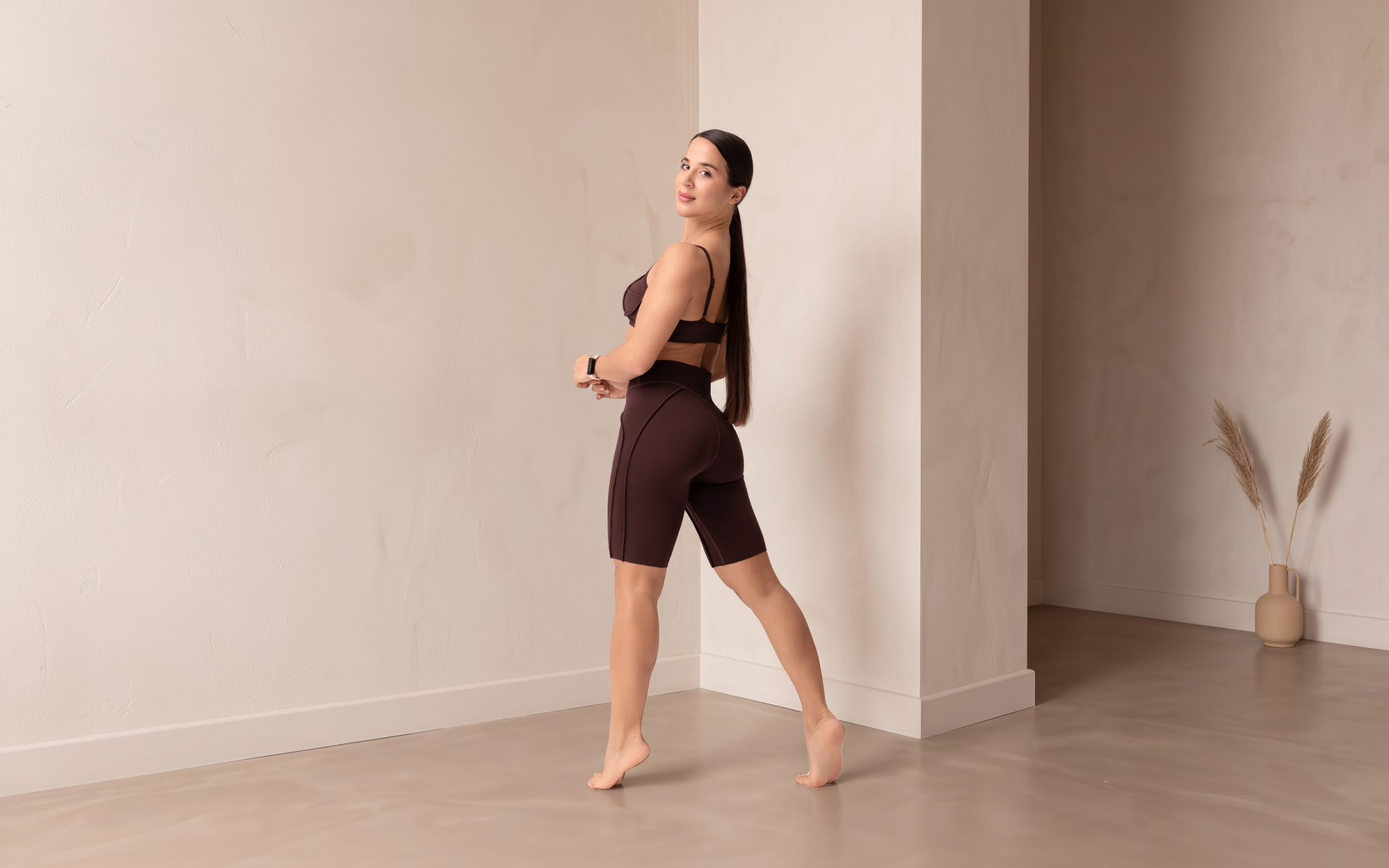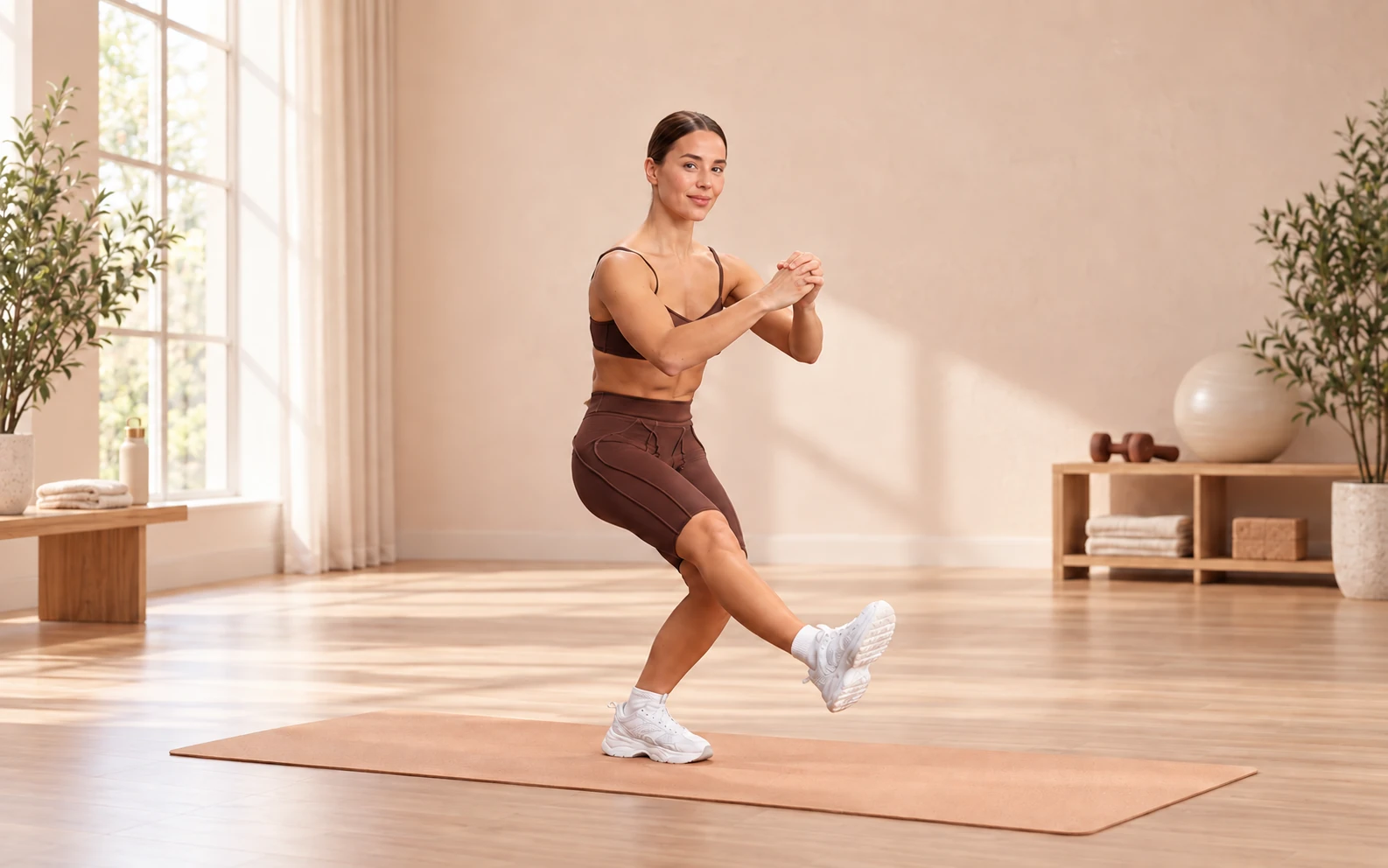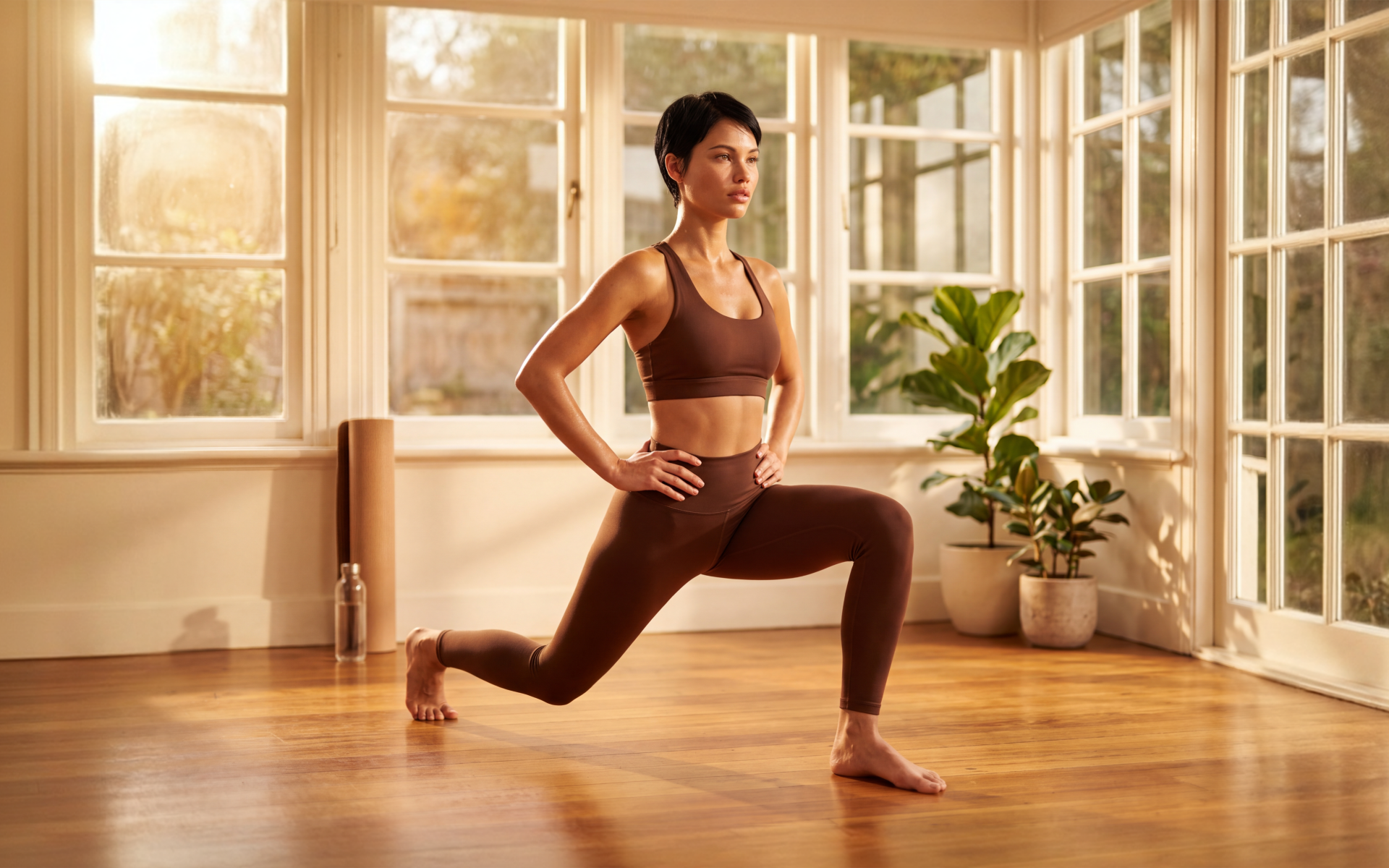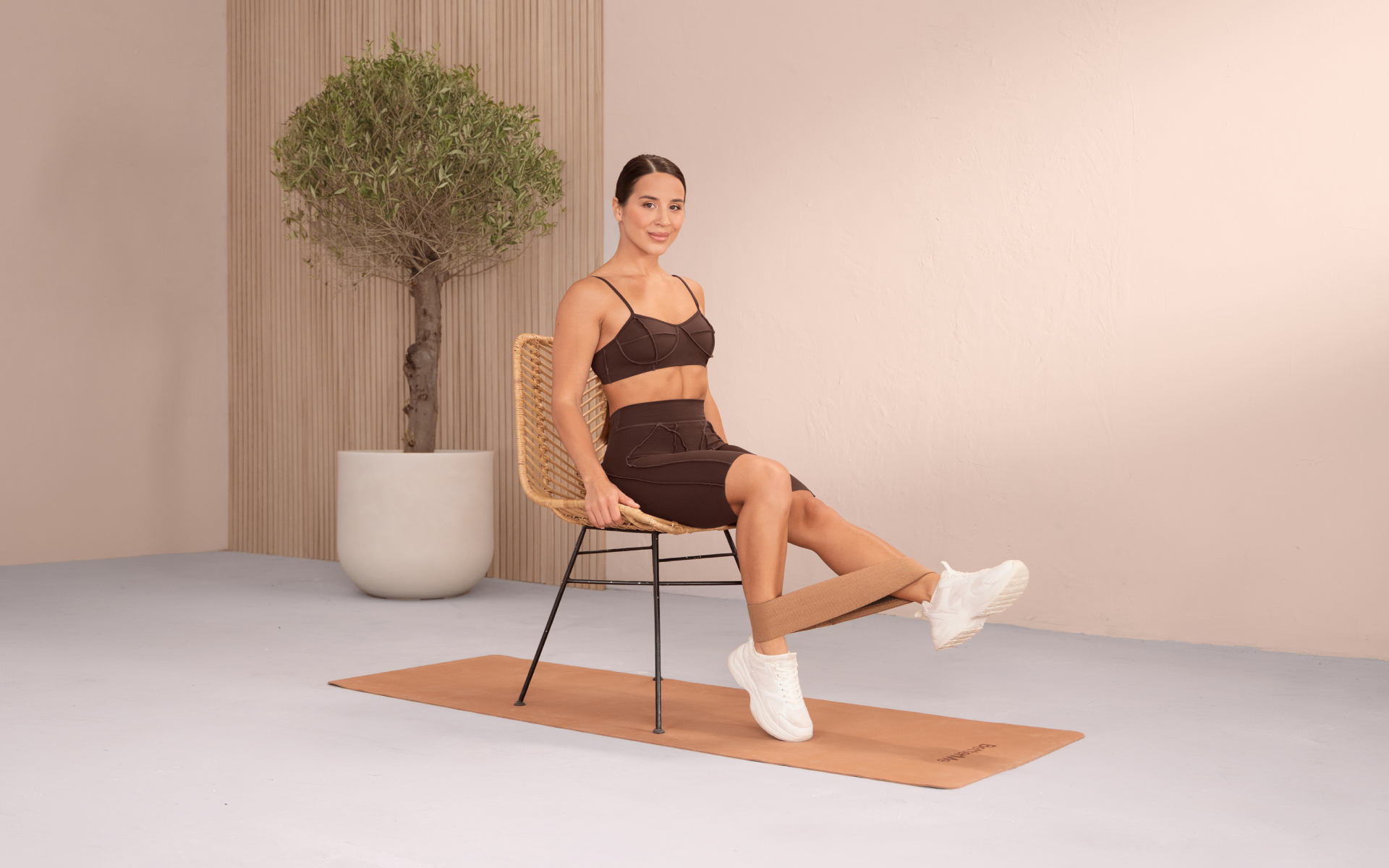
Low-impact leg exercises avoid jumping and sprinting and can include controlled movements for the lower body. A low-impact leg workout targets your glutes, quads, hamstrings, and calves through controlled movements. These are typically suitable for beginners, older adults, or those simply looking for a sustainable way to train.
In this guide, you’ll find low-impact leg exercise examples and ideas for structuring a routine. Once you draft a routine for yourself, you can choose exercise variations that feel manageable for you.
Who Is a Low-Impact Leg Workout Good For?
Recently, low-impact leg workouts have entered into several fitness routines. Low-impact training is one way to structure a lower-body routine.
If you are looking for controlled lower-body movements without jumping, low-impact variations may be worth exploring (1).
Interestingly, many of these exercises overlap with calisthenics for lower body, using your own body weight to practice lower-body movement patterns. As you progress, you can add resistance bands or dumbbells to keep challenging your legs without sacrificing joint comfort.
| Suitable for | Why does it work? |
|---|---|
| Beginners | Builds strength with easy movements (1). |
| Older adults | Choose exercise variations that feel comfortable and controlled (2, 3). |
| People with knee discomfort | Less impact compared to running or jumping. |
| People with larger bodyweights | Minimizes impact on the knees, ankles, and hips during exercise (4). |
Generally anyone who is looking for an exercise plan that doesn’t strain them too much but activates lower strength should definitely consider low-impact leg workouts.
Research also supports this approach. Start with a manageable variation and adjust the range of motion, load, and training frequency gradually. The greatest improvements were observed when participants trained at 50-60% of their one-repetition maximum (1RM) three times per week (5). This indicated that moderate, consistent training can significantly increase leg strength without requiring heavy loads.
Read more: Leg and Glute Workout Guide for Beginners: Exercises, Tips and FAQs
What Are the Best Low-Impact Leg Exercises for Women?
A low-impact leg workout can combine exercises for the glutes, quads, hamstrings, and calves without jumping. When creating a low-impact leg workout for women or men in an older demographic, take time to evaluate their current fitness levels and the targets they should meet.
A few exercises to go for are:
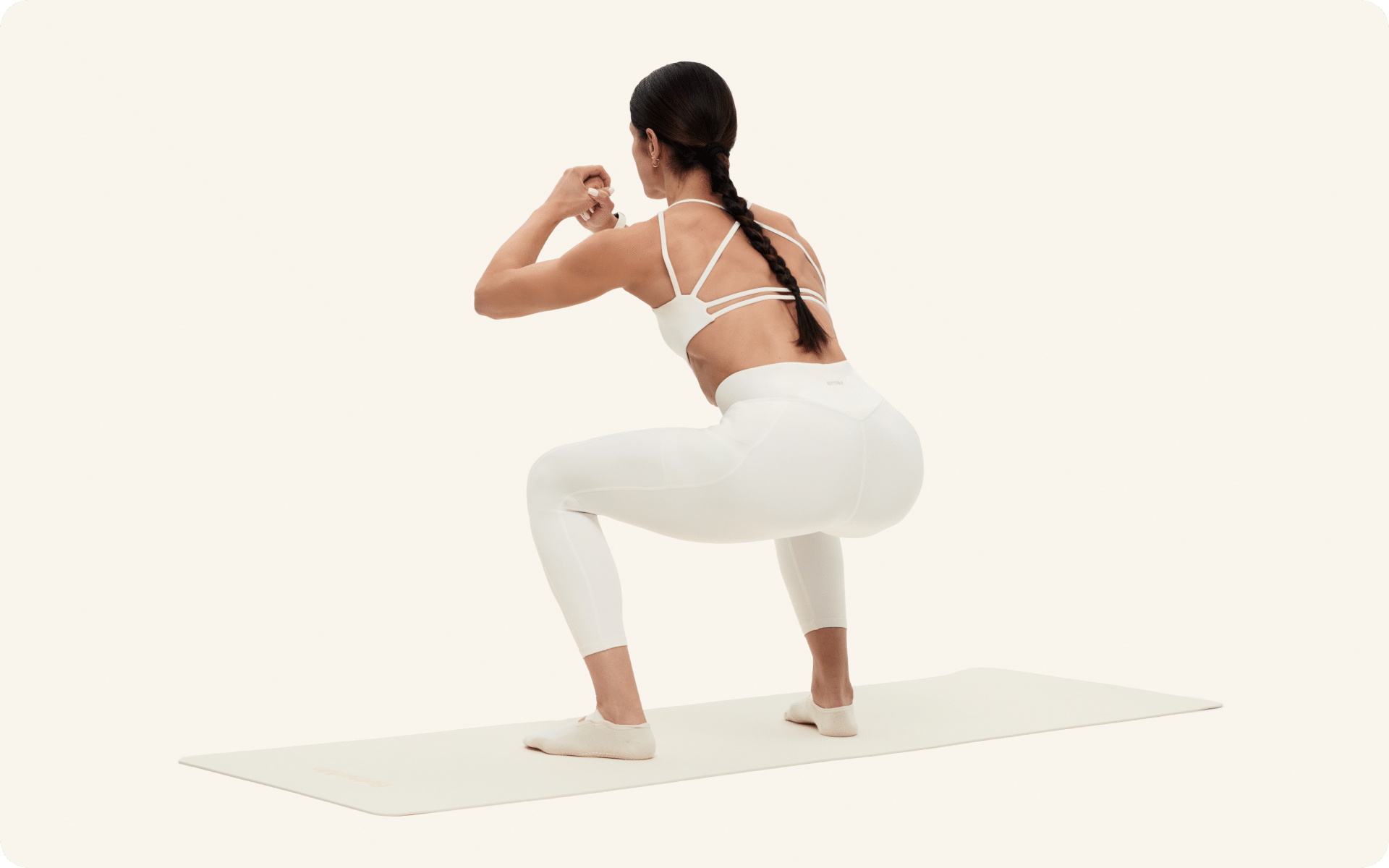
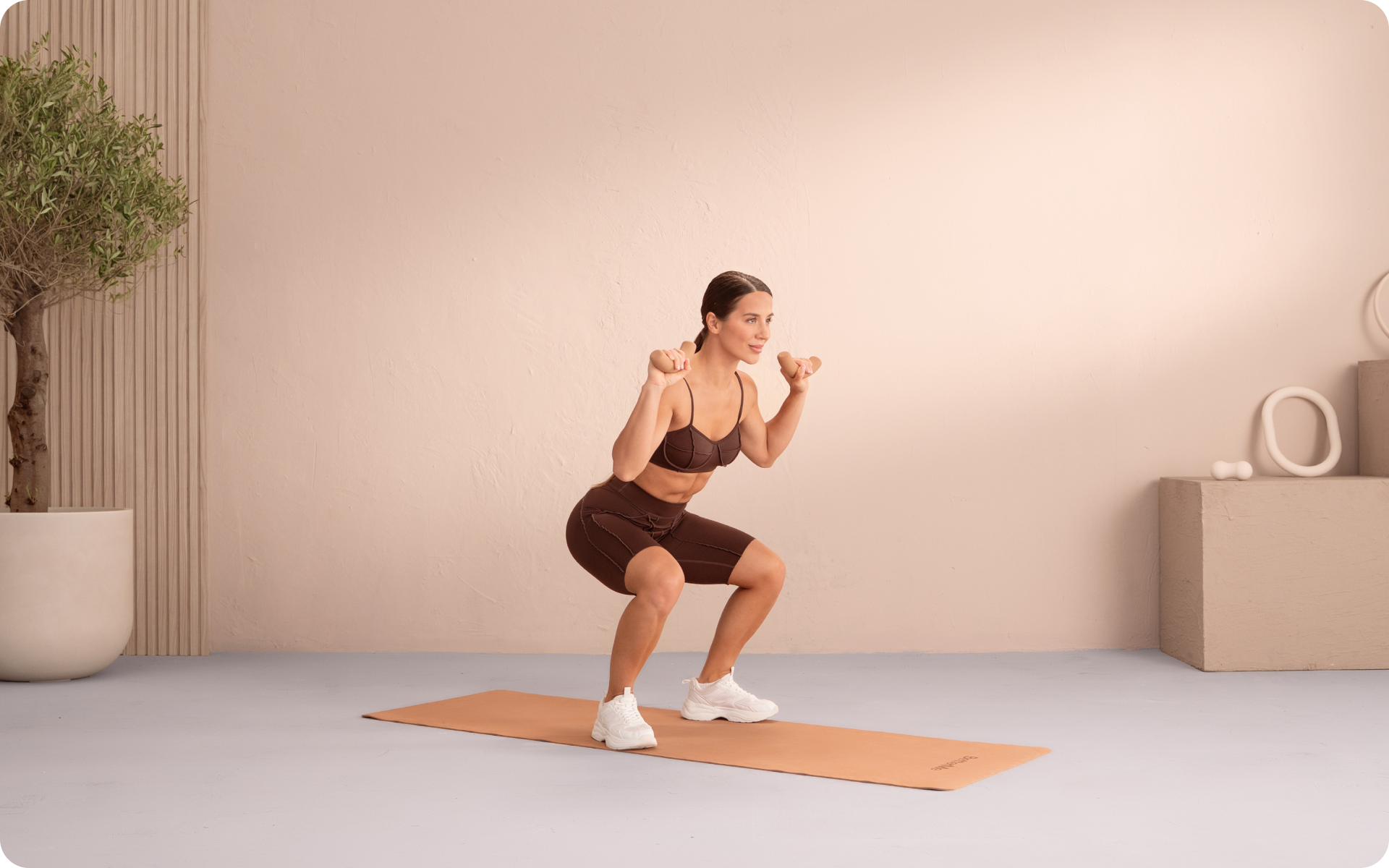
Bodyweight Squats
- Stand with your feet shoulder-width apart.
- Push your hips back and bend your knees to lower into a squat.
- Keep your chest lifted and your knees aligned with your toes.
- Press through your heels to return to standing.
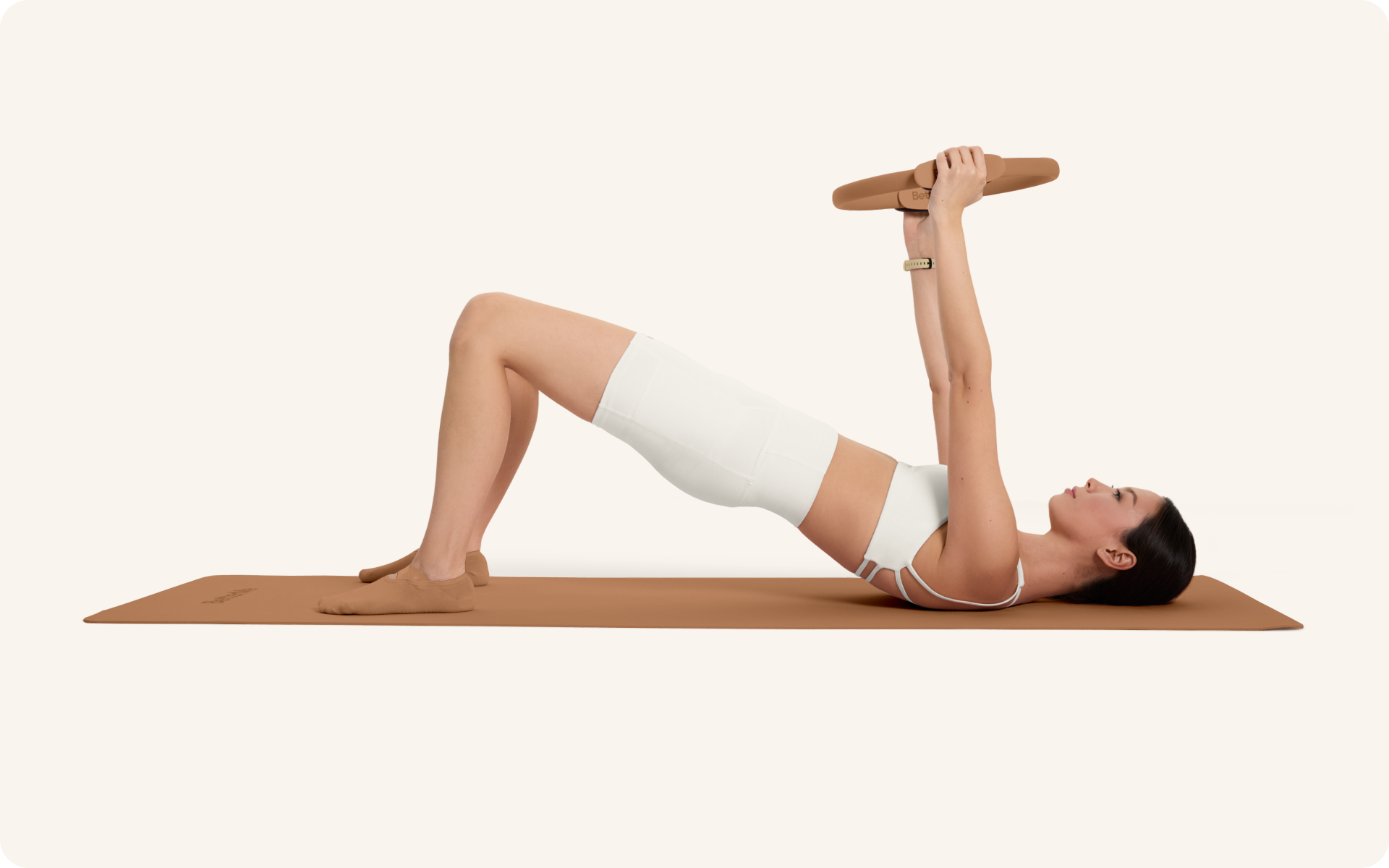
Glute Bridges
- Lie on your back with your knees bent and feet flat on the floor.
- Tighten your core and squeeze your glutes.
- Lift your hips until your body forms a straight line from shoulders to knees.
- Lower slowly and repeat.
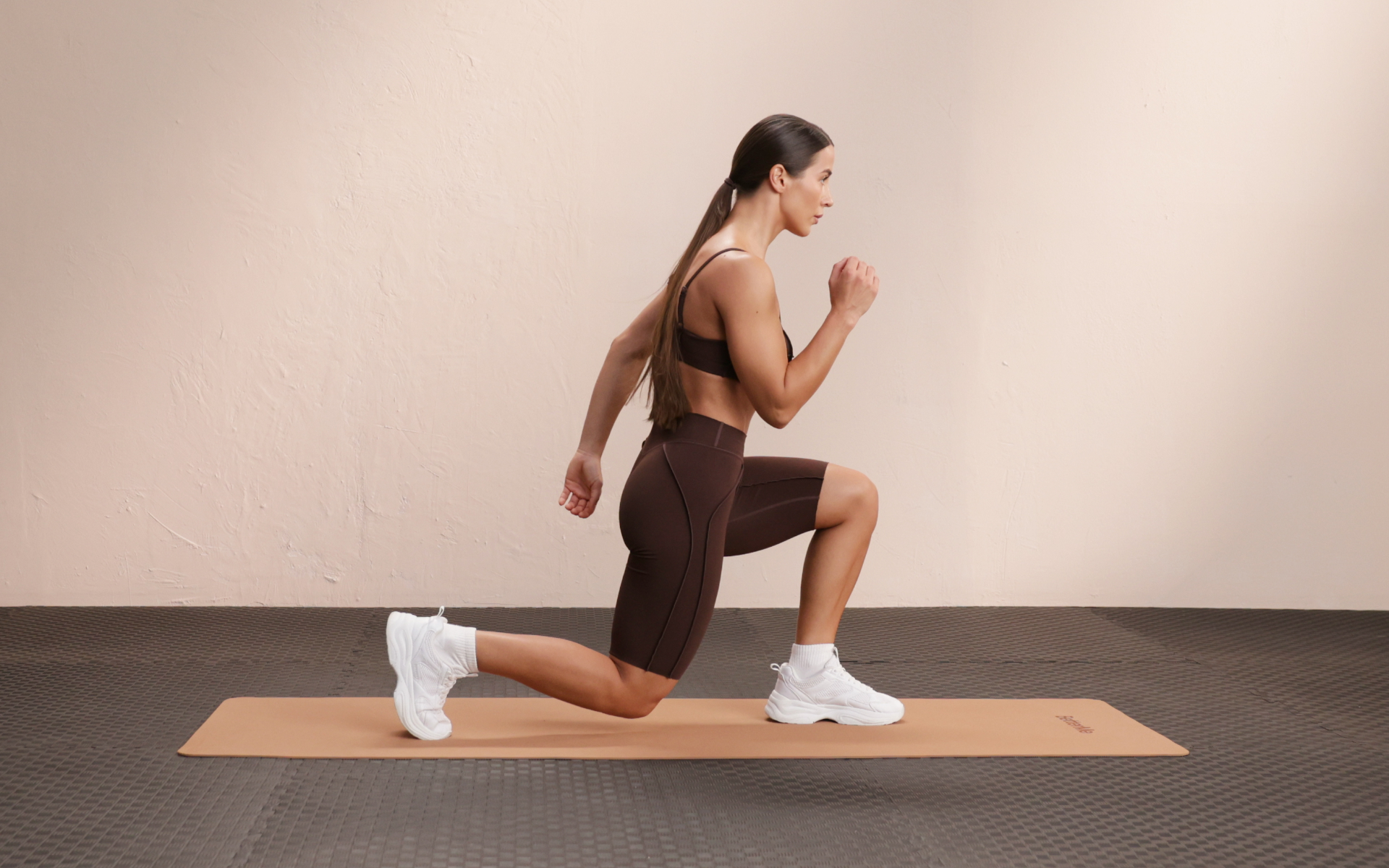
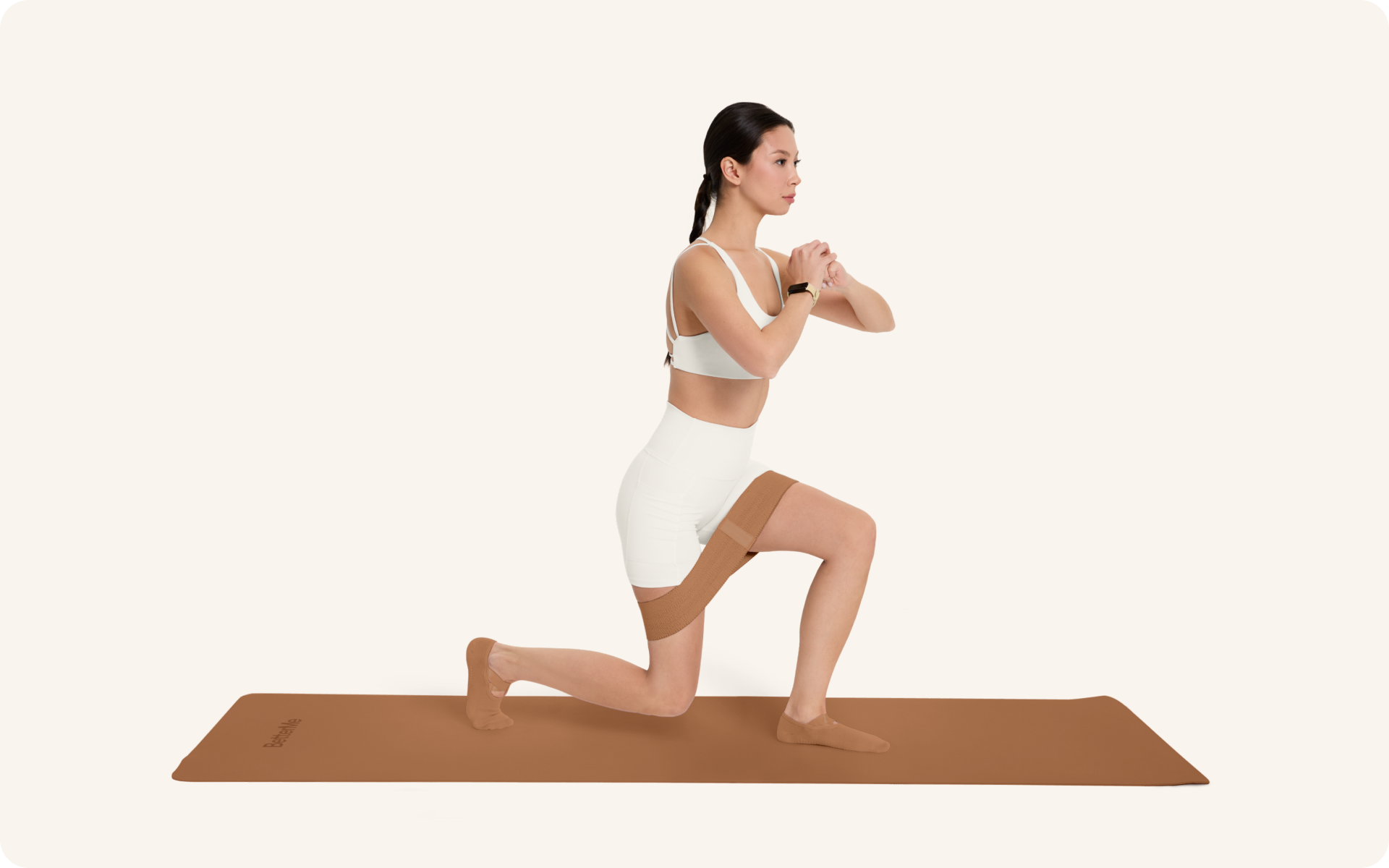
Reverse Lunges
- Stand tall with your feet hip-width apart.
- Step one foot backward and lower both knees until they form roughly 90-degree angles.
- Push through your front heel to return to the starting position.
- Alternate legs with each repetition.
Standing Calf Raises
- Stand with your feet hip-width apart.
- Rise onto the balls of your feet as high as comfortable.
- Pause briefly at the top.
- Lower your heels slowly back to the floor.
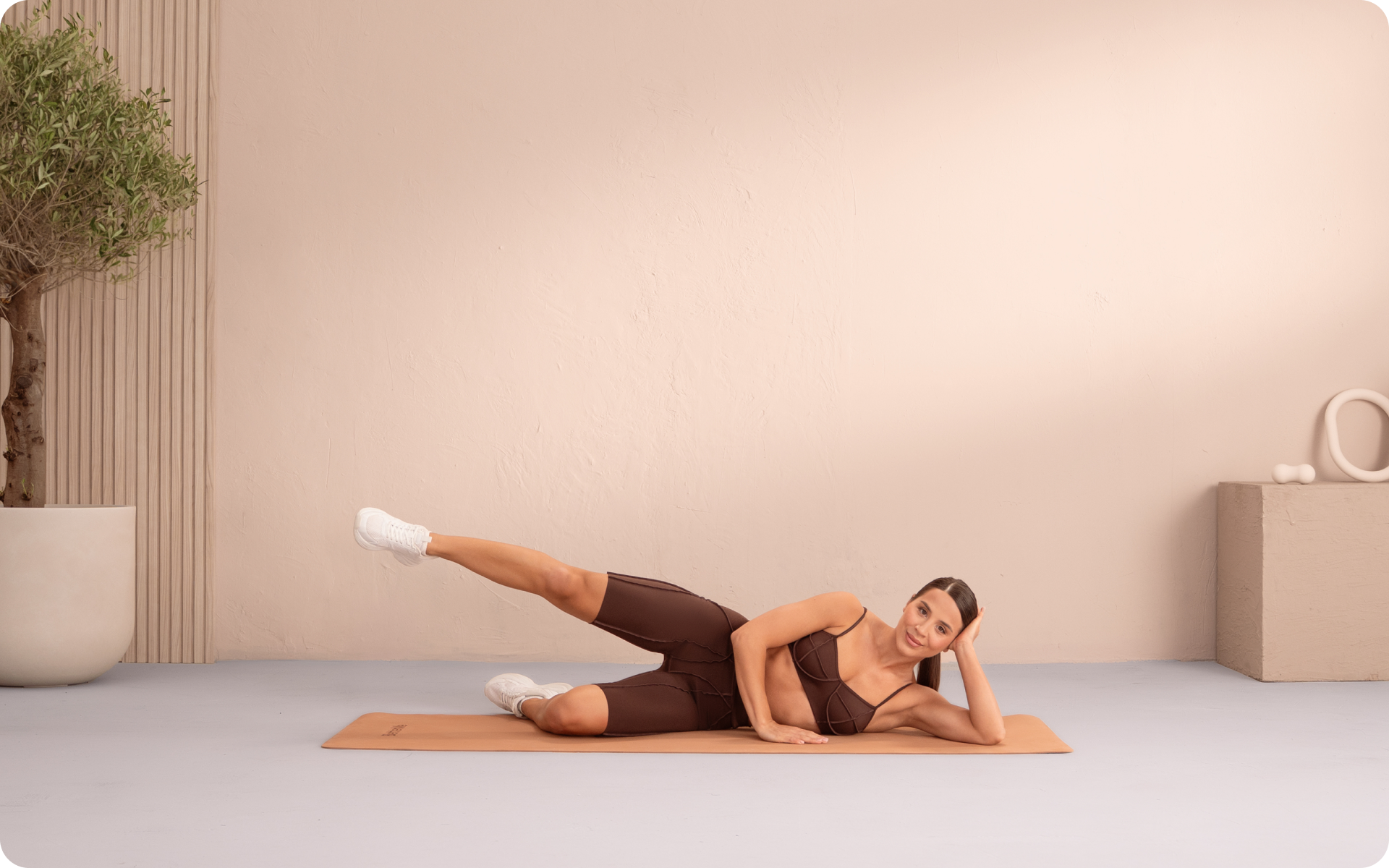
Side-Lying Leg Raises
- Lie on one side with your legs stacked.
- Keep your top leg straight and lift it toward the ceiling.
- Pause at the top without rotating your hips.
- Lower with control and repeat before switching sides.
What Is a Low-Impact Leg Workout You Can Do at Home?
Looking for a simple no jumping leg workout you can do anywhere? This beginner-friendly routine targets all the major lower-body muscles while keeping joint impact to a minimum.
| Exercise | Reps/time | Rest |
|---|---|---|
| Bodyweight squats | 12-15 reps | 30 sec |
| Glute bridges | 15 reps | 30 sec |
| Reverse lunges | 10-12 reps per leg | 30 sec |
| Side-lying leg raises | 12-15 reps per leg | 20 sec |
| Standing calf raises | 15-20 reps | 60 sec before repeating |
Complete 2-3 rounds, depending on your fitness level. Move slowly, focus on good form, and increase the repetitions or add light resistance as the workout becomes easier.
Workouts, weight management tools, and recipe ideas come together in the BetterMe Well-Being Coach app, giving you practical support for building a more consistent wellness routine.
What Is a Low-Impact Leg Workout with Dumbbells?
Adding dumbbells is an easy way to make your low-impact leg exercises more challenging without adding high-impact movements. Ensure that you pick a weight that lets you complete each exercise with good form while feeling the last few repetitions.
| Exercise | Reps | Rest |
|---|---|---|
| Goblet squats | 10-12 | 30 sec |
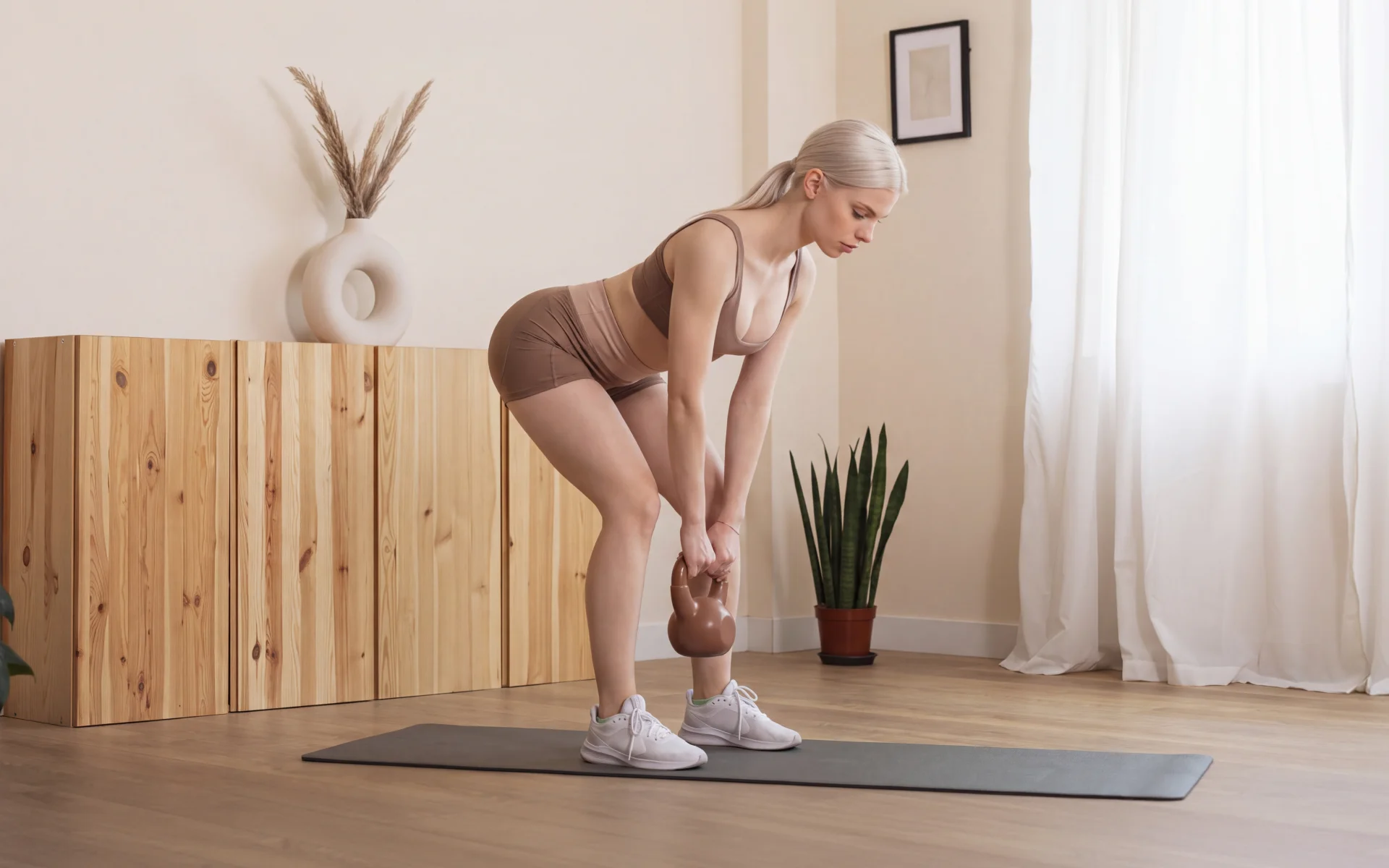
| Dumbbell romanian deadlifts | 10-12 | 30 sec |
| Reverse lunges (holding dumbbells) | 8-10 per leg | 30 sec |
| Dumbbell glute bridges | 12-15 | 30 sec |
| Standing dumbbell calf raises | 15-20 | 60 sec before repeating |
Perform 2-3 rounds, resting for 1-2 minutes between rounds. As you start feeling stronger, gradually increase the dumbbell weight while maintaining slow, controlled movements.
How Can You Make Squats and Lunges Lower Impact?
You don’t have to ditch squats and lunges just because you’re avoiding high-impact workouts. You can modify squats and lunges to make the movement feel more manageable. In fact, this slow-and-controlled approach is a core principle of Pilates for legs, where quality of movement always beats speed.
Try these simple modifications:
- Slow the tempo. Lower yourself gradually and avoid bouncing at the bottom.
- Shorten the depth. Only squat or lunge as far as your mobility and comfort allow.
- Hold onto support. Use a chair, countertop, or wall for support if it helps you feel steadier during the movement.
- Start light. Master the movement with your body weight before adding resistance.
- Step, don’t drop. Place your foot down gently during lunges and drive back up through your front heel.
Research backs this up. One study found that the type of weight you use can affect the stress your joints experience during lunges. Different equipment options can change how an exercise feels. Choose a variation and load you can control comfortably.
The right equipment can make it easier to adjust an exercise to your experience level.
Read more: Leg Day Workout at Home Without Equipment
How Many Sets and Reps Should You Do?
The right number of sets and reps depends on your goal. However, for most people, 2-4 sets of 8-15 reps per exercise is a great place to start. Pick a resistance that makes the last 2-3 reps feel challenging while still allowing you to maintain good form.
Below are some sets and reps we propose but you can modify according to your training capacity:
| Goal | Sets | Reps |
|---|---|---|
| Build strength | 3-4 | 6-10 |
| Build muscle | 3-4 | 8-12 |
| Improve muscular endurance | 2-3 | 12-15+ |
| Beginners | 2-3 | 10-12 |
A 2021 systematic review found that when it comes to building muscle, the number of challenging sets you do may matter more than the exact way you organize your workouts (6).
So, whether you train your legs once a week or spread your sessions out, use lighter or heavier weights, or stick to different rep ranges, you can still make progress if your overall training volume is similar. Instead of chasing the “perfect” number of reps, focus on doing quality sets that leave your muscles working hard.
How Often Should You Do Low-Impact Leg Workouts?
A low-impact workout for legs and glutes can be done 2-4 times a week to strengthen and tone your lower body while keeping joint stress low. The frequency for best results could look something like this:
- Beginners: Start with 2-3 sessions per week and focus on proper form.
- Experienced exercisers: Train more frequently while allowing enough recovery time.
- Everyone: Stay consistent, gradually increase intensity, and give your muscles time to rebuild and grow.
Start with a manageable schedule and adjust gradually.
BetterMe offers a variety of workouts, recipes, challenges, and support tools to help you stay more consistent with your wellness routine. Explore the app to find features that fit your goals, preferences, and schedule.
What Mistakes Should You Avoid During Low-Impact Leg Workouts?
Knowing the usual mistakes can help you create a flawless low-impact leg workout. Some common errors people make are:
- Skipping the warm-up: Prepare your muscles and joints with light movements before starting your workout.
- Using poor form: Focus on controlled movements and an exercise range you can manage.
- Ignoring progression: Gradually increase reps, resistance, or intensity to keep challenging your muscles.
- Overtraining your legs: Leave time between sessions when you need it.
- Rushing through exercises: Slow, controlled movements can make it easier to maintain your form.
It may take some time for you to get used to controlling yet progressive movements. The only rule to remember is to keep going, and eventually you’ll find your form improving.
FAQs
Can you build leg strength with low-impact exercises?
Yes, you can. Low-impact exercises can be part of a lower-body routine. Choose a variation that feels manageable and progress gradually. Try using proper form, enough resistance, and gradually increasing the challenge.
Are squats considered low impact?
Yes, squats are a classic low-impact move because your feet stay grounded and there’s no jumping involved. They work the lower body without requiring jumping.
Are step-ups low impact?
Yes! Step-ups are a lower-body exercise that can be adjusted by changing the step height or using support. You can make them easier or harder by adjusting the step height or adding resistance.
Are wall sits good for leg workouts?
Definitely. Wall sits are a static lower-body exercise that can be included in a low-impact routine. They’re a great option when you want an effective workout without high-impact movements.
What is the difference between low impact and low intensity?
Low impact generally describes movements that avoid jumping and keep at least one foot on the floor. A workout can be low-impact yet challenging enough to build strength and improve fitness.
The Bottom Line
Not everyone can perform intense workout sessions at the gym. Some people prefer gentle movements, and low-impact leg workouts are something they’d highly appreciate. The discussion above shows how these exercise routines can suit beginners and adults alike. With regular practice, you may become more familiar with the movements over time.
If you have concerns about starting a new exercise routine, consider speaking with a qualified healthcare professional.
DISCLAIMER:
This article is intended for general informational purposes only and does not serve to address individual circumstances. It is not a substitute for professional advice or help and should not be relied on for making any kind of decision-making. Any action taken as a direct or indirect result of the information in this article is entirely at your own risk and is your sole responsibility.
BetterMe, its content staff, and its medical advisors accept no responsibility for inaccuracies, errors, misstatements, inconsistencies, or omissions and specifically disclaim any liability, loss or risk, personal, professional or otherwise, which may be incurred as a consequence, directly or indirectly, of the use and/or application of any content.
You should always seek the advice of your physician or other qualified health provider with any questions you may have regarding a medical condition or your specific situation. Never disregard professional medical advice or delay seeking it because of BetterMe content. If you suspect or think you may have a medical emergency, call your doctor.
SOURCES:
- A Novel Low-Impact Resistance Exercise Program Increases Strength and Balance in Females Irrespective of Menopause Status (2024, ovid.com)
- Strength Training Modalities for Lower Body Strength and Power: A Narrative Review (2024, researchgate.net)
- The effects of low-impact moderate-intensity stepping exercise on fatigue and other functional outcomes in older adults with multimorbidity: A randomized controlled trial (2022, sciencedirect.com)
- Effect of exercise training on weight loss, body composition changes, and weight maintenance in adults with overweight or obesity: An overview of 12 systematic reviews and 149 studies (2021, onlinelibrary.wiley.com)
- Low-intensity resistance training to improve knee extension strength in community-dwelling older adults: Systematic review and meta-analysis of randomized controlled studies (2023, sciencedirect.com)
- Total Number of Sets as a Training Volume Quantification Method for Muscle Hypertrophy: A Systematic Review (2021, ovid.com)
 Reviewed by
 Reviewed by