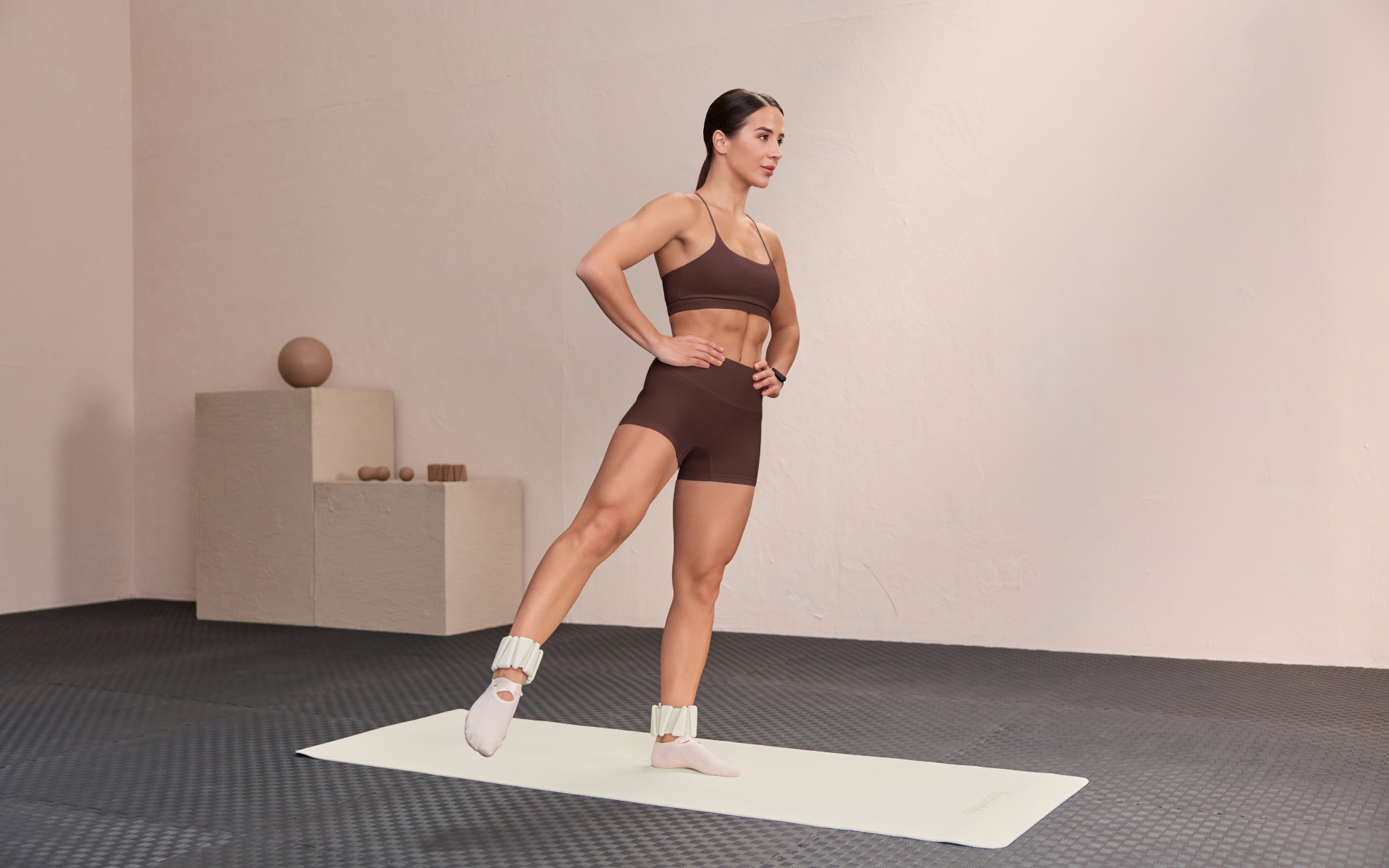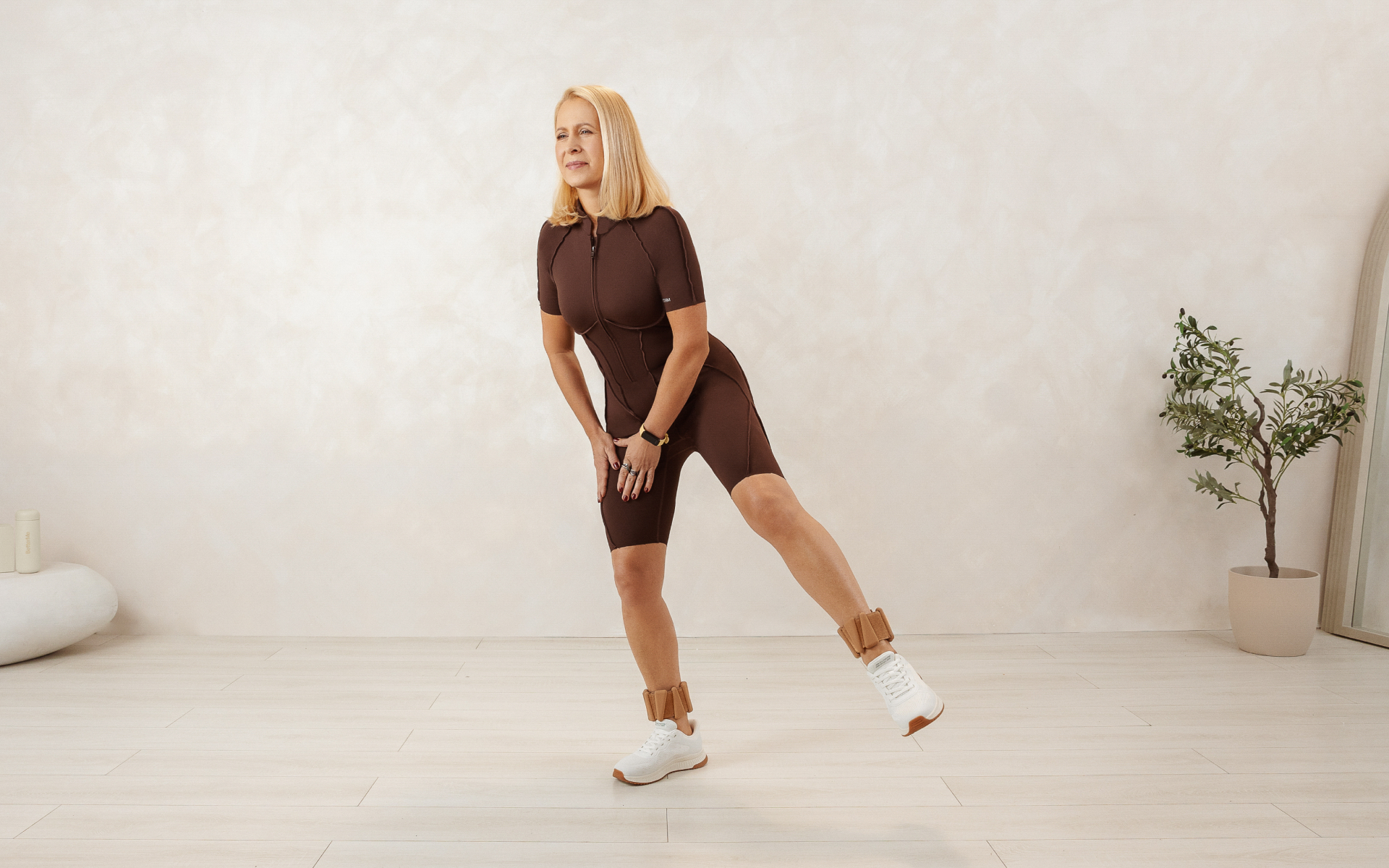
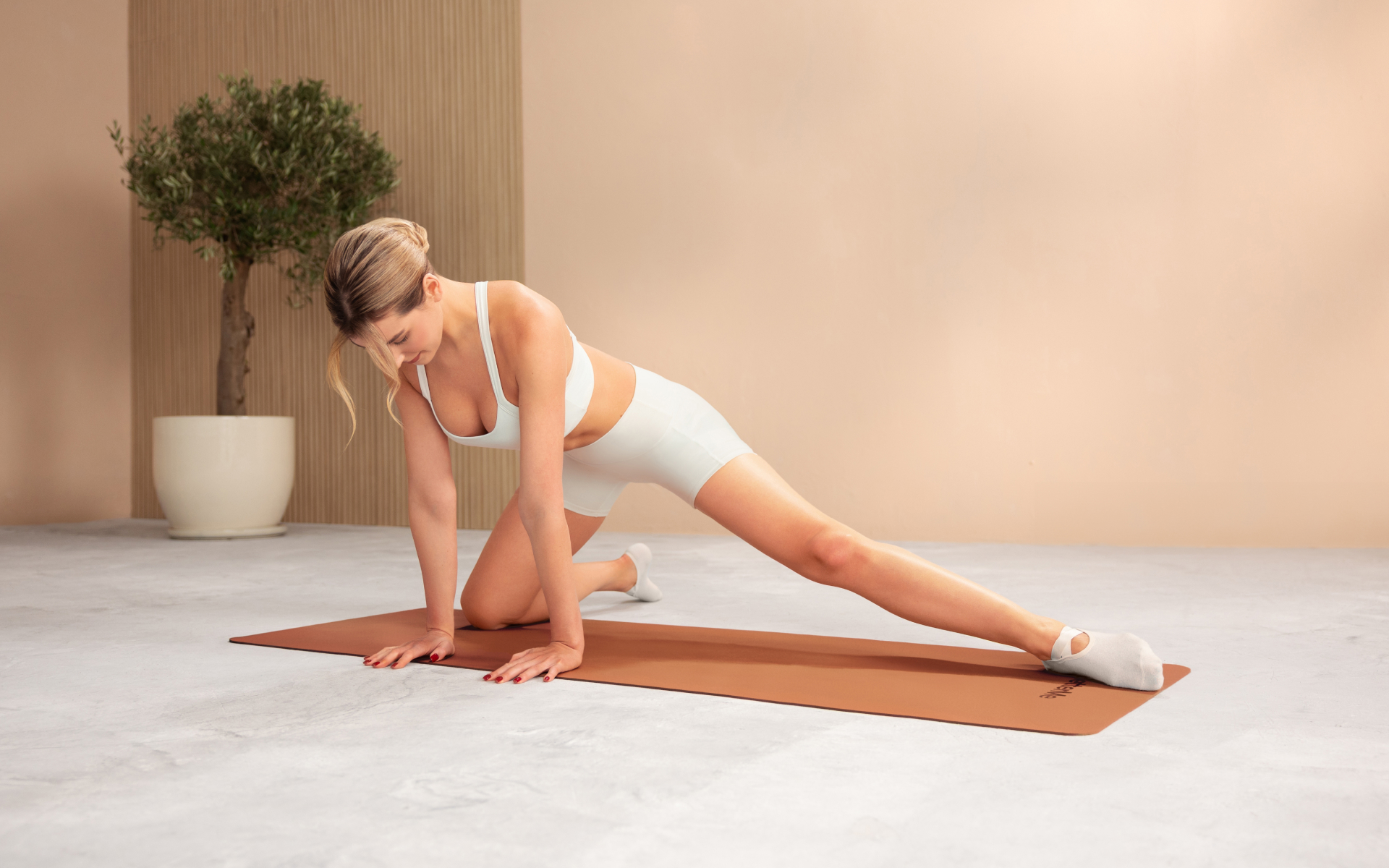
Dynamic leg stretches are active, controlled movements that take your legs through their range of motion to prepare you for exercise. You move continuously instead of holding a position. Doing dynamic leg stretches before a workout may help warm up your muscles, support joint mobility, and make the transition into exercise feel smoother. Many people use them as part of a warm-up.
Do you want a simple warm-up you can actually stick to? This guide walks you through what dynamic leg stretches are, why people use them, and when they fit best. You’ll get a 6-move routine with clear steps, plus tips on timing.
Whether you’re new to movement or returning after a break, here’s what you need to know. This routine also works well as a stretching exercise for beginners because it uses simple, controlled movements that are easy to adjust to your comfort level.
What Is the Difference Between Static and Dynamic Leg Stretching?
The main difference is movement. Dynamic stretching uses active motion, while static stretching means holding a position still (1).
With dynamic stretches, you swing, step, or march through a full range of motion. Think leg swings or walking lunges. You keep moving for a set number of reps.
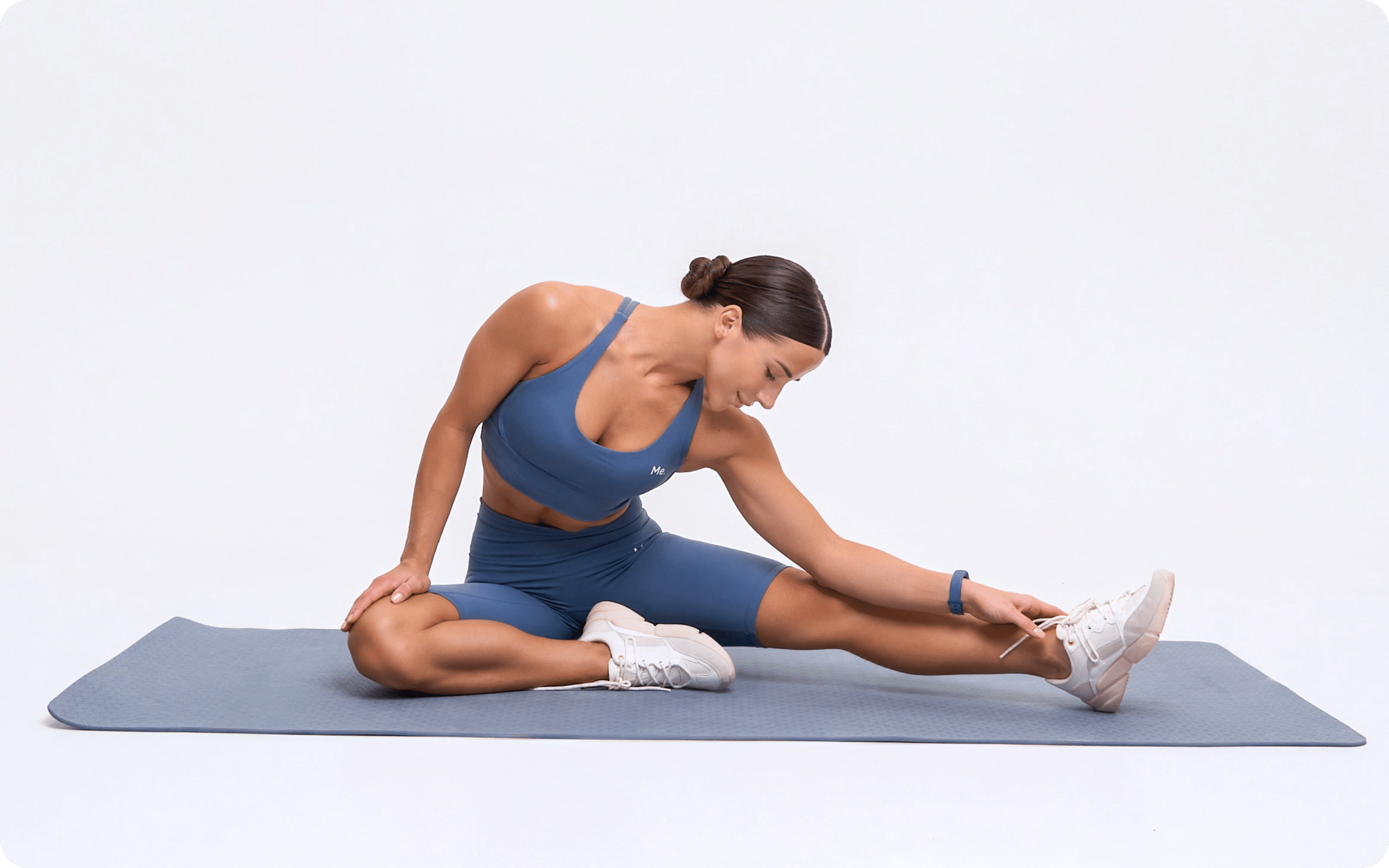
Static stretching is different. You lengthen a muscle and hold it, usually for 15-60 seconds (2). A seated reach toward your toes is one example.
Both have their place. Research has suggested that dynamic moves tend to suit warm-ups (3), while static holds may fit better afterward (2). We’ll cover the timing later.
Read more: Leg Circuit Workout for Building Lower-Body Strength
What Are the Benefits of Dynamic Leg Stretches?
Dynamic leg stretches may help prepare your body for movement by raising muscle temperature and taking your joints through their range. This may help you feel more ready before a session (4).
Here’s what many people notice (4):
- Warmer muscles: Active movement tends to increase muscle temperature, which may help ease feelings of stiffness.
- Better range of motion: Stretching through full motion may improve how freely your joints move.
- Movement readiness: Dynamic stretches that mimic the workout ahead may help your body feel more ready for weighted movement.
Some research has explored associations between dynamic warm-ups and better performance in jumping and short sprints. One review found dynamic stretching often supported these outcomes more than static holds (5). However, research is still limited on how much dynamic stretching may affect different types of physical activity.
Keep in mind that responses vary. What feels great for one person may feel different for another. Individual results depend on your body, activity, and consistency.
When Should You Do Dynamic Leg Stretches?
Dynamic leg stretches often fit well at the start of a session, after a light aerobic warm-up. They’re commonly used as pre-workout stretches before the main activity.
A common flow looks like this:
- Start with 3-5 minutes of light cardio, such as an easy jog or brisk walk.
- Move into dynamic leg stretches for several minutes.
- Finish with the specific activity you’re training for.
This order tends to make sense. The light cardio raises your heart rate gently. The dynamic moves then take warm muscles through active motion.
Here’s a quick comparison of when each stretching style may fit:
| Timing | Best stretch type | Why it may fit | Example |
|---|---|---|---|
| Before a workout | Dynamic | Warms muscles and primes movement | Leg swings, high knees |
| After a workout | Static | May suit cool-down and flexibility | Seated hamstring reach |
| Separate flexibility session | Static | Focused range-of-motion practice | Held calf stretch |
| Before running | Dynamic | Mimics the stride pattern | Walking lunges, butt kicks |
BetterMe can help you add more structure to your daily wellness routine with workouts, meal planning tools, and habit-building features. Explore the app and take a practical step toward a routine that feels more manageable for you.
What Are the Best Dynamic Leg Stretches Before a Workout?
The best dynamic leg stretches before a workout target your major leg muscles through active motion. A good routine usually covers the front, back, and sides of your legs.
Below is a simple 6-move program. Aim to spend about 5-8 minutes total. Move with control rather than rushing.
| Exercise | Target area | Reps or time | Pace | Best use |
|---|---|---|---|---|
| Leg swings front to back | Hips, hamstrings | 8-12 each side | Controlled | Hip mobility |
| Leg swings side to side | Inner, outer thighs | 8-12 each side | Controlled | Lateral mobility |
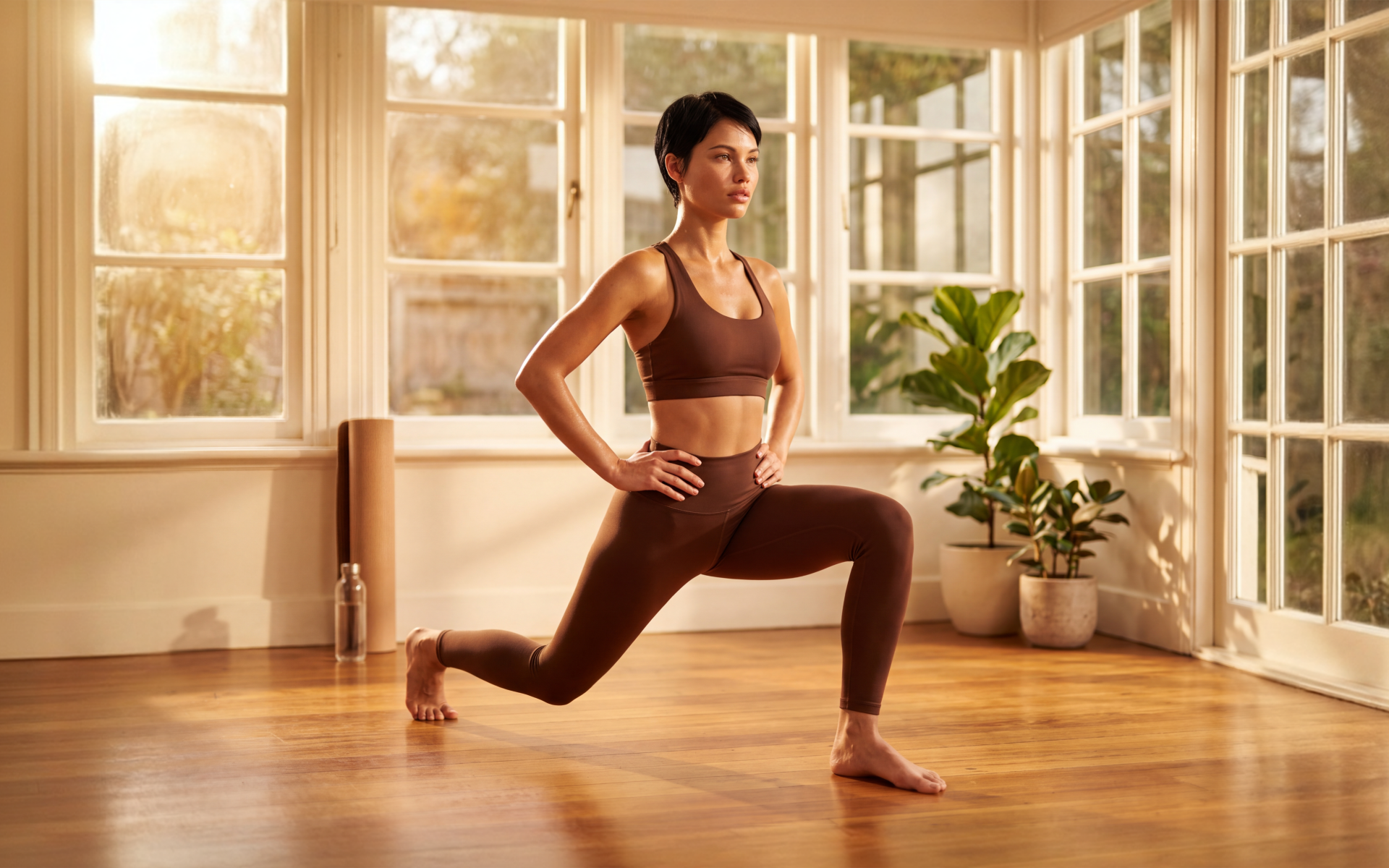
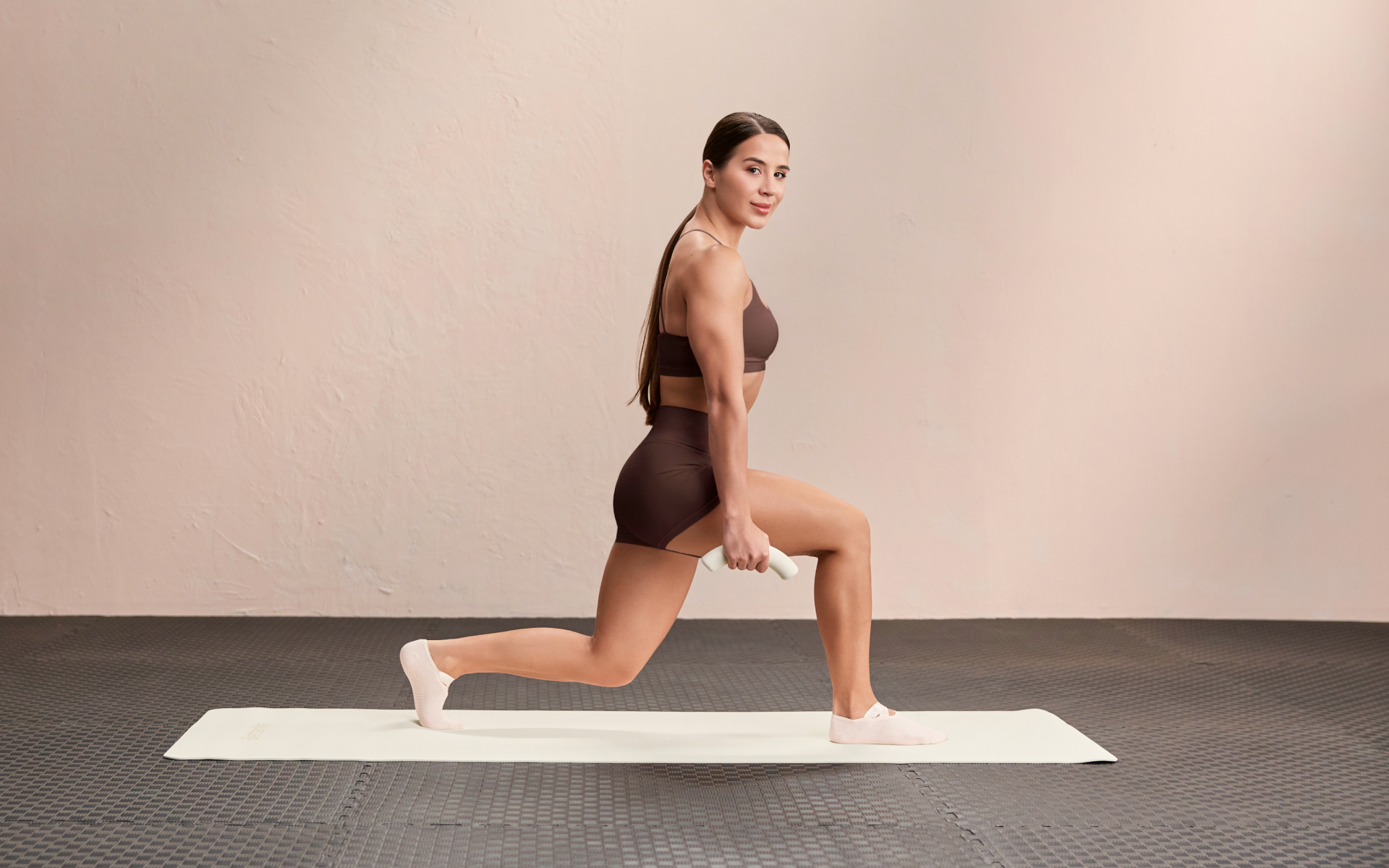
| Walking lunges with reach | Quads, glutes, hips | 8-10 each leg | Steady | Full-leg activation |
| High knees march | Hip flexors, quads | 20-30 seconds | Light, rhythmic | Movement readiness |
| Butt kicks | Hamstrings, calves | 20-30 seconds | Light, rhythmic | Pre-run warm-up |
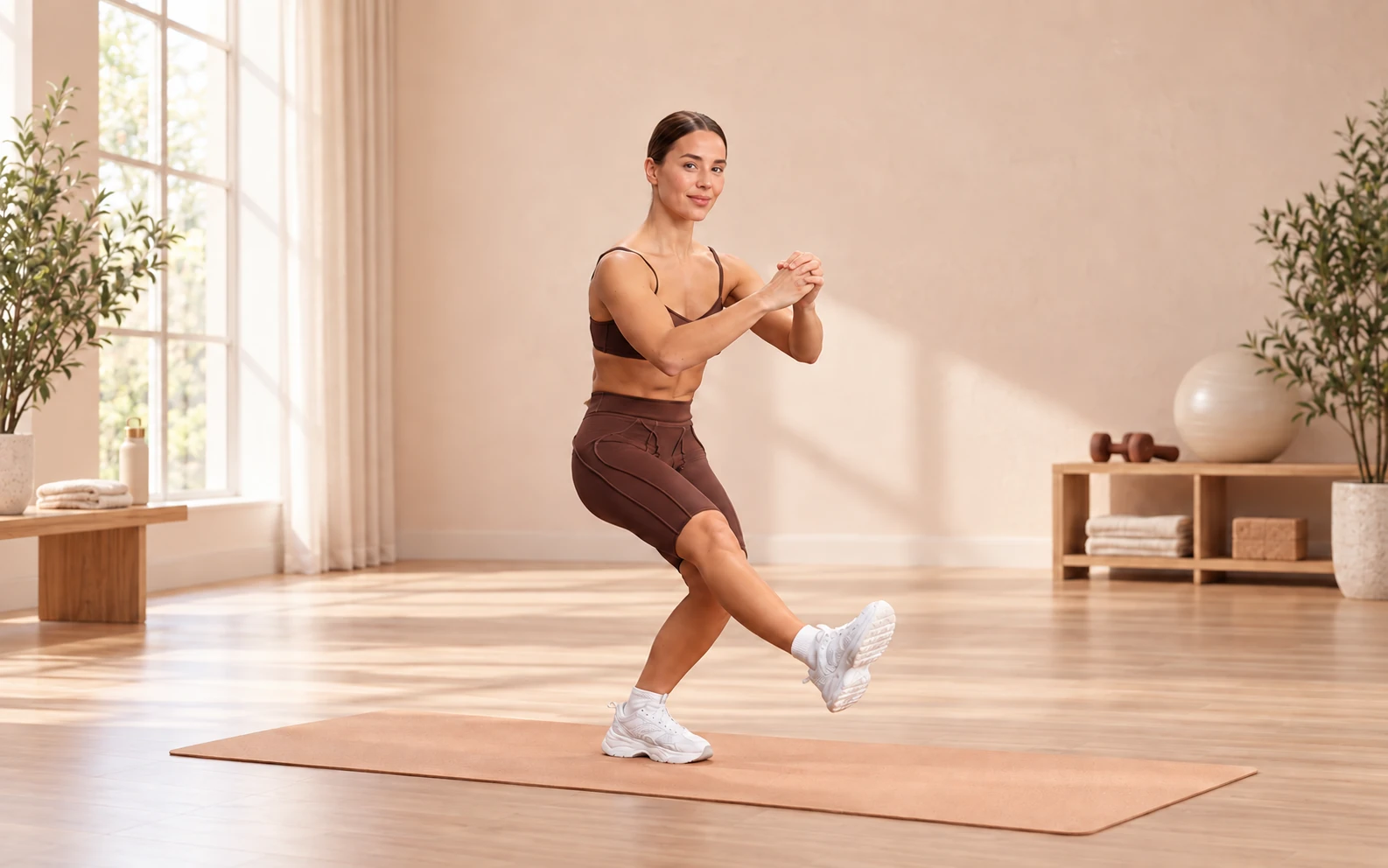
| Lateral squat shift | Inner thighs, glutes | 8-10 each side | Controlled | Side-to-side mobility |
Adjust the reps to match your level. Beginners can start at the lower end. Remember, comfort matters more than speed.
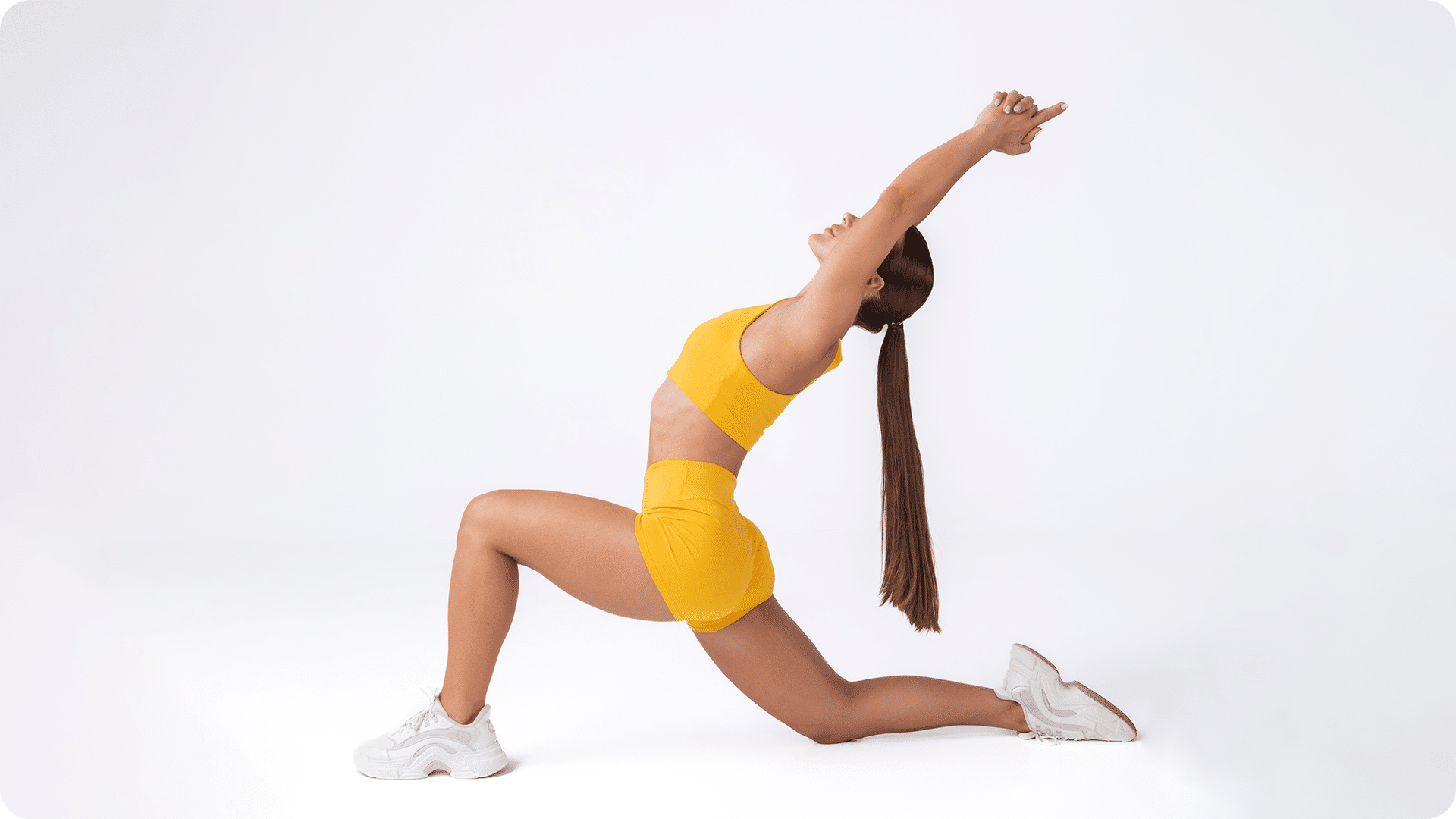
Leg Swings Front to Back
- Stand tall beside a wall or sturdy support for balance.
- Hold the support with one hand.
- Swing your outside leg forward and then backward in a smooth motion.
- Keep the swing controlled, not forced.
- Do 8-12 swings, then switch sides.
Leg Swings Side to Side
- Face a wall and place both hands on it for balance.
- Shift your weight onto one leg.
- Swing your other leg across your body, then out to the side.
- Keep your back tall and core gently engaged.
- Do 8-12 swings, then switch legs.
Walking Lunges with Reach
- Stand with your feet hip-width apart.
- Step forward into a lunge, lowering your back knee toward the floor.
- As you lunge, reach both arms overhead.
- Push through your front foot to step forward into the next lunge.
- Continue for 8-10 lunges per leg.
High Knees March
- Stand tall with your feet hip-width apart.
- March in place, lifting one knee toward your chest.
- Alternate legs in a steady rhythm.
- Swing your arms naturally as you march.
- Continue for 20-30 seconds.
Read more: Compound Leg Exercises: 4 Moves for Lower-Body Strength
Butt Kicks
- Stand with your feet hip-width apart.
- Jog lightly in place, kicking one heel toward your glutes.
- Alternate heels in a smooth rhythm.
- Keep the motion light and bouncy.
- Continue for 20-30 seconds.
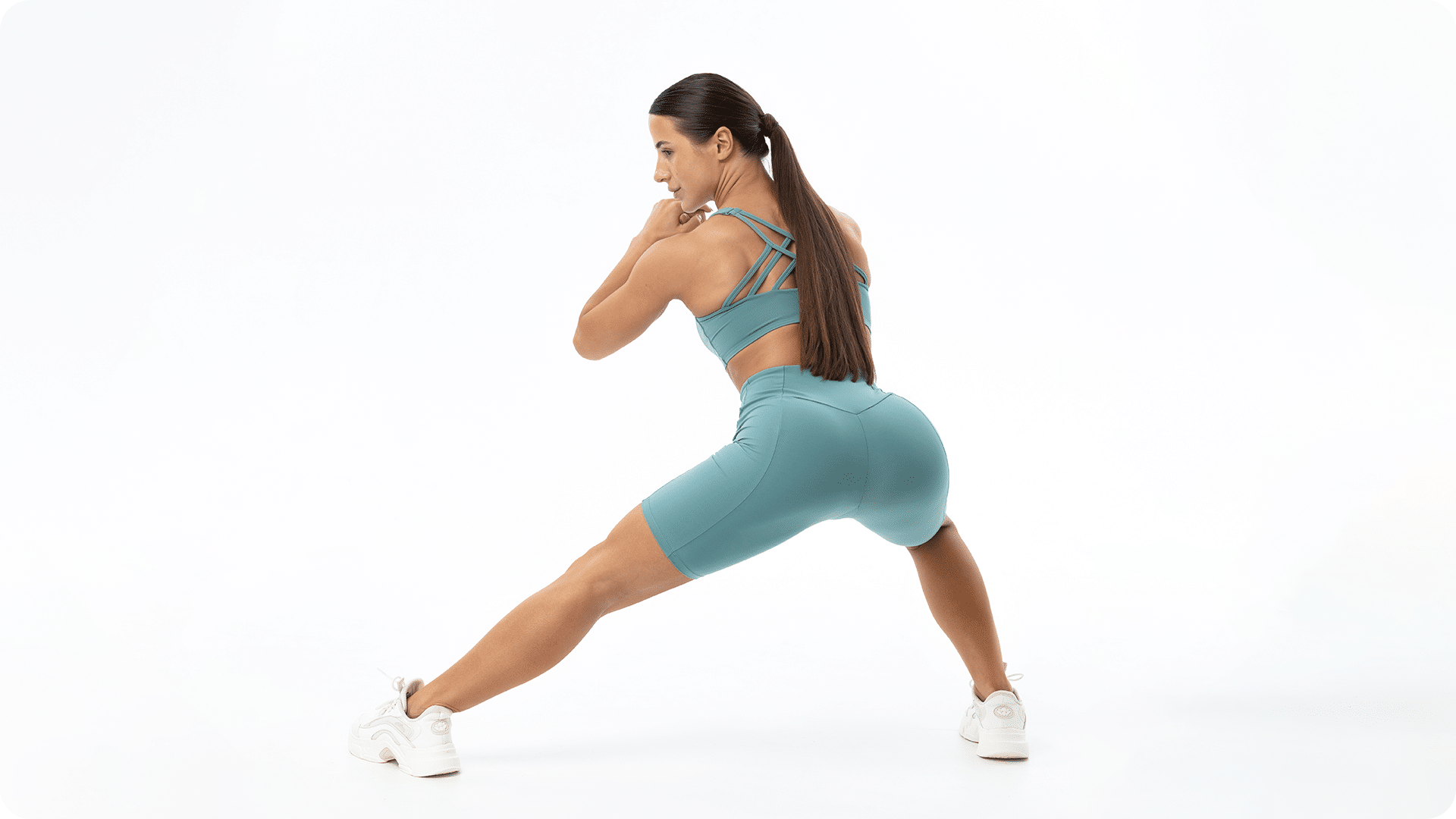
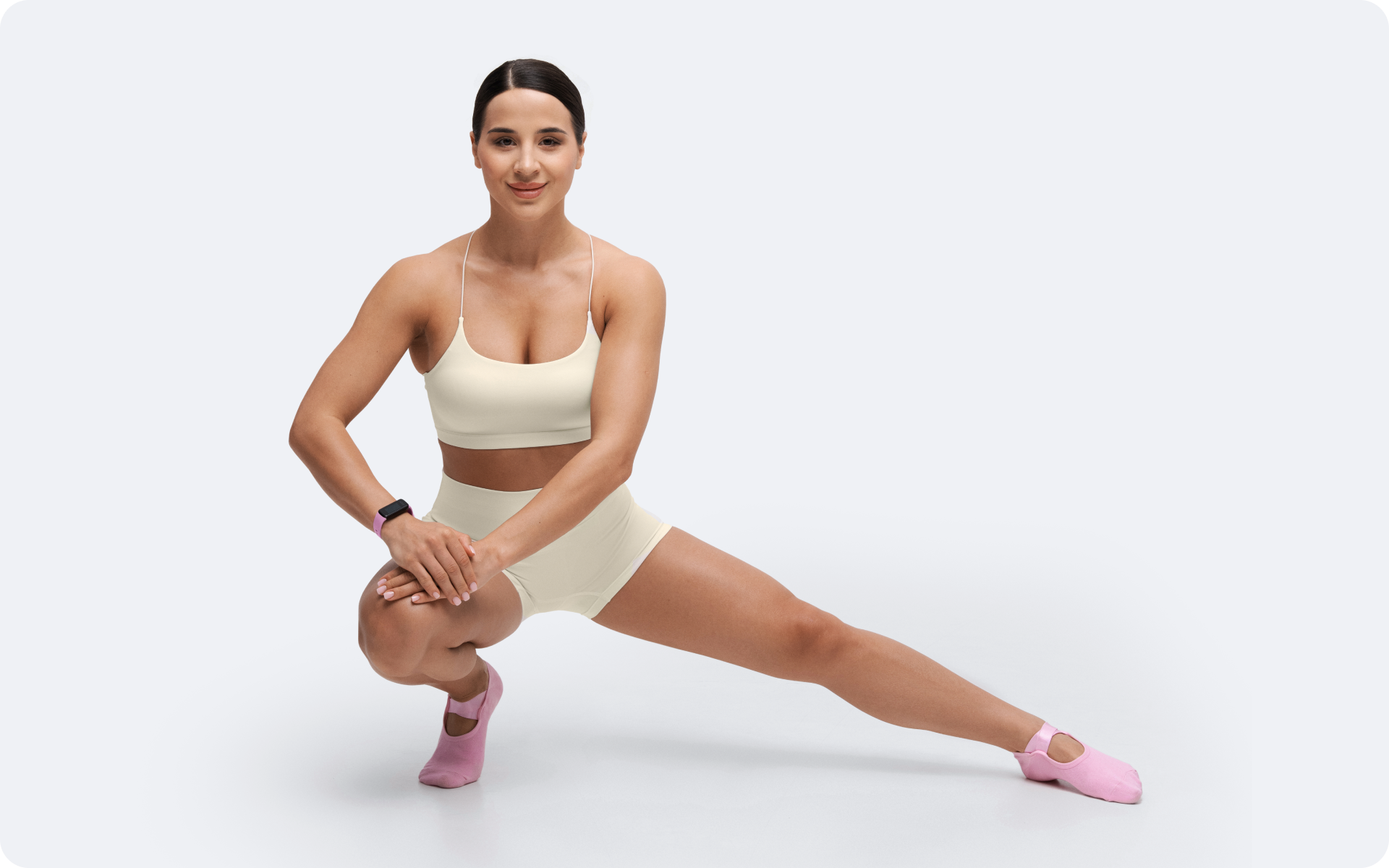
Lateral Squat Shift
- Stand with your feet wider than your shoulders.
- Bend one knee and shift your weight to that side.
- Keep the other leg straight as you sink into a side squat.
- Shift smoothly to the opposite side.
- Repeat 8-10 times per side.
What Dynamic Stretches Help Warm up the Legs and Hips?
Dynamic stretches for legs and hips include leg swings, walking lunges, and lateral squat shifts. These moves take your hips through forward, backward, and side-to-side motion.
Your hips move in many directions, so variety helps. Try grouping moves by direction:
- Forward and back: Leg swings front to back, high knees march.
- Side to side: Leg swings side to side, lateral squat shift.
- Combined motion: Walking lunges with reach.
This mix can help your hips feel ready for activity. For many people, covering multiple directions feels more complete than just one.
If a move feels uncomfortable, ease the range or skip it. You can always adjust as you go.
How Long Should Dynamic Leg Stretches Last?
Most dynamic leg stretch routines last about 5-10 minutes. That’s usually enough to warm up without tiring you out before your main session.
Some research suggests a dynamic warm-up of roughly 7-10 minutes may support performance for certain activities (6). Shorter sessions may not warm you up fully, while very long ones could feel draining.
A simple guide:
- Quick warm-up: 5 minutes, 1 set of each move.
- Standard warm-up: 7-10 minutes, with a few extra reps.
- Pre-run focus: Add more leg swings and butt kicks.
These are starting points, not rules. Outcomes vary, so adjust the length to how your body feels that day.
Should You Do Dynamic Leg Stretches Every Day?
You can do dynamic leg stretches daily, as they’re low-impact and gentle on the body. Many people use them as a quick morning move or a warm-up before activity.
Regular movement may help your legs and hips feel more mobile for some activities.
That said, listen to your body. If something feels off, rest or reduce the range. There’s no need to push through discomfort.
Consistency tends to matter more than intensity. A short daily routine you enjoy often beats an occasional long one. If you have any ongoing concerns, consider checking with a qualified professional first.
Whether you’re just starting your fitness journey or looking to add more structure to your routine, BetterMe offers tools that can support different wellness goals. Explore the app and see how its workout, nutrition, and habit-building features can fit into your lifestyle.
When Are Static Leg Stretches a Better Choice?
Static leg stretches may be a better choice after your workout or during a separate flexibility session. If you’re looking for leg stretches after workout sessions, gentle static holds may feel more appropriate once your training is complete. That’s when held stretches tend to fit well (7).
Some research has suggested that static holds before intense activity may briefly reduce power output (8). So they often suit cool-downs more than warm-ups.
Here’s a quick way to compare:
| Goal | Better choice | When to do it |
|---|---|---|
| Warm up for activity | Dynamic stretches | Before your session |
| Cool down after training | Static stretches | After your session |
| Build lasting flexibility | Static stretches | Separate session |
| Prepare for running | Dynamic stretches | Before your run |
Both styles can have a place in a balanced movement routine. Picking the right one for the moment is what matters. Individual responses differ, so feel free to experiment.
Frequently Asked Questions
Is it okay to stretch your legs every day?
For many people, gentle leg stretching can fit into a regular routine, especially when the movements are low-impact and easy to control. Dynamic stretches can be a simple part of a daily routine. Listen to your body and ease off if anything feels uncomfortable. Consistency tends to help more than intensity. If you have ongoing concerns, consider talking with a qualified professional.
Are leg swings a dynamic stretch?
Yes, leg swings are a classic dynamic stretch as they move your leg through an active range of motion. You swing the leg forward, backward, or side to side in a controlled rhythm. This active motion helps warm up your hips and legs. Many people use leg swings before workouts or runs as part of a dynamic warm-up.
Are arm circles a dynamic stretch?
Yes, arm circles are a dynamic stretch since they move your shoulders through continuous, active motion. While they focus on the upper body rather than the legs, they follow the same principle as dynamic leg stretches. You keep moving instead of holding still. Arm circles can be a handy addition to a full-body warm-up before activity.
Should you do static or dynamic stretches before running?
Dynamic stretches are often used before running because they move your muscles through active motion. Moves such as leg swings and butt kicks mimic the running stride. Some research has suggested that static holds before running may briefly reduce power (8). Static stretches tend to fit better afterward. That being said, responses vary, so notice what works for you.
Can beginners do dynamic leg stretches?
Yes, dynamic leg stretches are beginner-friendly and easy to adjust to your level. Start with fewer reps, such as 8 per side, and move slowly with control. There’s no need to swing hard or rush. As you get comfortable, you can add reps or range. These moves make a simple, approachable starting point for a warm-up.
The Bottom Line
Dynamic leg stretches may offer a quick, low-impact way to warm up your legs and hips before a workout or run. A few controlled moves can help many people feel more ready, and you can adjust reps to match your level. Consider using the quick routine shared above before your next workout.
DISCLAIMER:
This article is intended for general informational purposes only and does not serve to address individual circumstances. It is not a substitute for professional advice or help and should not be relied on for making any kind of decision-making. Any action taken as a direct or indirect result of the information in this article is entirely at your own risk and is your sole responsibility.
BetterMe, its content staff, and its medical advisors accept no responsibility for inaccuracies, errors, misstatements, inconsistencies, or omissions and specifically disclaim any liability, loss or risk, personal, professional or otherwise, which may be incurred as a consequence, directly or indirectly, of the use and/or application of any content.
You should always seek the advice of your physician or other qualified health provider with any questions you may have regarding a medical condition or your specific situation. Never disregard professional medical advice or delay seeking it because of BetterMe content. If you suspect or think you may have a medical emergency, call your doctor.
SOURCES:
- Effects of static and dynamic stretching techniques on muscle function (2025, pmc.ncbi.nlm.nih.gov)
- Practical recommendations on stretching exercise: A Delphi consensus statement of international research experts (2025, sciencedirect.com)
- Does the Inclusion of Static or Dynamic Stretching in the Warm-Up Routine Improve Jump Height and ROM in Physically Active Individuals? A Systematic Review with Meta-Analysis (2024, mdpi.com)
- Dynamic Warm‐ups Play Pivotal Role in Athletic Performance and Injury Prevention (2024, onlinelibrary.wiley.com)
- Acute Effects of a Static Vs. a Dynamic Stretching Warm-up on Repeated-Sprint Performance in Female Handball Players (2020, pmc.ncbi.nlm.nih.gov)
- A systematic review and net meta-analysis of the effects of different warm-up methods on the acute effects of lower limb explosive strength (2023, link.springer.com)
- Chronic Effects of Static Stretching Exercises on Muscle Strength and Power in Healthy Individuals Across the Lifespan: A Systematic Review with Multi-level Meta-analysis (2023, link.springer.com)
- Effects of slow dynamic, fast dynamic, and static stretching on recovery of performance, range of motion, balance, and joint position sense in healthy adults (2024, link.springer.com)
 Reviewed by