Calisthenics benefits for women include opportunities to develop strength, practice movement skills, and train with little equipment. Bodyweight exercises can suit different starting points when their difficulty matches your ability. This guide explains ten practical benefits and their limits. It also shows how to try a short session with realistic expectations.
For a scheduled introduction, see our beginner calisthenics plan at home.
Following exercise and diet plans is the key in your fitness journey and greatly impacts results. In 4 weeks users can typically expect to lose not more than 1-2 lbs per week. Individual results may vary.
Key takeaways
These points summarize the main calisthenics benefits for women and what to expect.
- Resistance training can increase strength and muscle size in healthy adult women (1).
- Calisthenics uses body weight as resistance, with equipment needed for some pulling exercises.
- Weekly adult activity guidance includes muscle strengthening on at least two days (2).
- Calisthenics is not automatically high-intensity interval training just because it uses body weight.
- A short session can provide useful practice without covering every weekly activity need.
- Choose progress measures such as controlled repetitions and exercise difficulty, rather than appearance alone.
What can calisthenics offer women?
Calisthenics offers a way to practice resistance exercise using movements such as squats, push-ups, and supported lunges. The ten benefits below combine training outcomes with practical advantages. Their importance depends on your goals, available space, and current ability.
1. A way to develop strength
Bodyweight exercises ask your muscles to overcome resistance. A review of 24 studies found strength improvements in healthy adult women following resistance training (1). Those studies used varied programs, so they cannot predict your response to a particular home routine.
Choose a version you can repeat with control. A wall push-up may be demanding initially, while another person needs a lower support. Record the support height so comparisons remain meaningful.
2. Options for muscle development
Calisthenics can provide a muscle-building stimulus when exercises remain sufficiently demanding. Current resistance-training guidance recognizes bodyweight and home-based training as useful options (3).
An exercise may eventually become too easy for your chosen goal. You can change its difficulty, use suitable equipment, or combine bodyweight work with weights. Adding endless easy repetitions is not your only option.
3. Little equipment for many movements
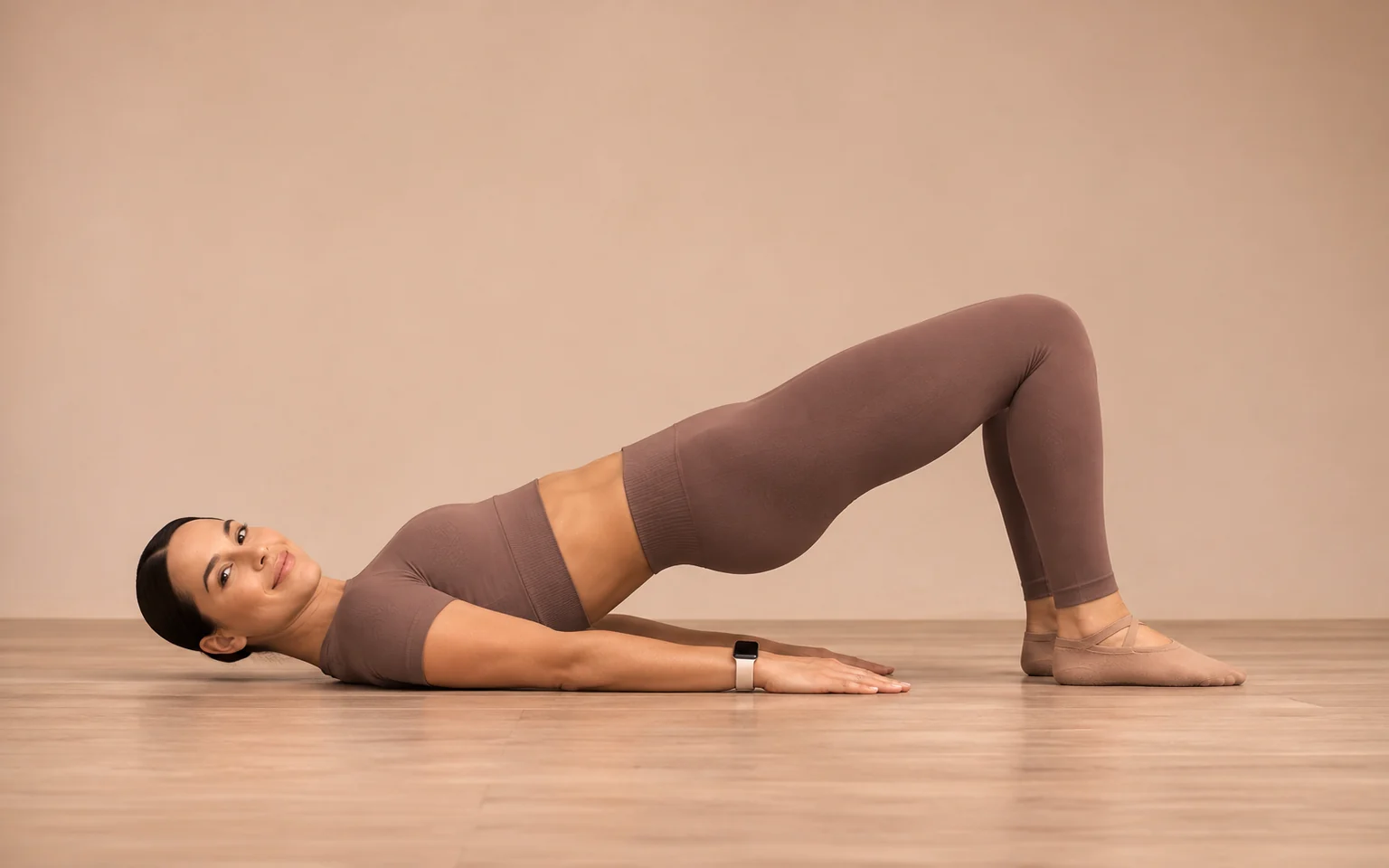
Squats, bridges, and floor exercises need little more than clear space. Wall push-ups offer a standing alternative when floor work is inconvenient. A mat can make kneeling more comfortable, although it should stay secure.
Equipment requirements depend on the movement. Pull-ups need a properly installed bar, and rows need a suitable anchor or other resistance. Avoid using unstable household furniture to create a pulling station.
4. Flexible places to practice
You can choose a home room, a suitable outdoor space, or a gym. Before starting, check the surface, surrounding objects, and available support. A movement that fits indoors may need changing on uneven ground.
Prepare the area before the session. Move pets, loose rugs, and breakable objects away from your working space. Check overhead clearance before reaching or lifting your arms.
5. Adjustable starting difficulty
Many exercises have versions that change the load or support. Public exercise guidance includes chair rises, mini-squats, and wall press-ups as home options (4).
Adjustment requires more thought than choosing a beginner label. Consider balance, floor access, and whether the movement feels comfortable. A qualified instructor can help when written directions leave you uncertain.
6. Practice controlling body position
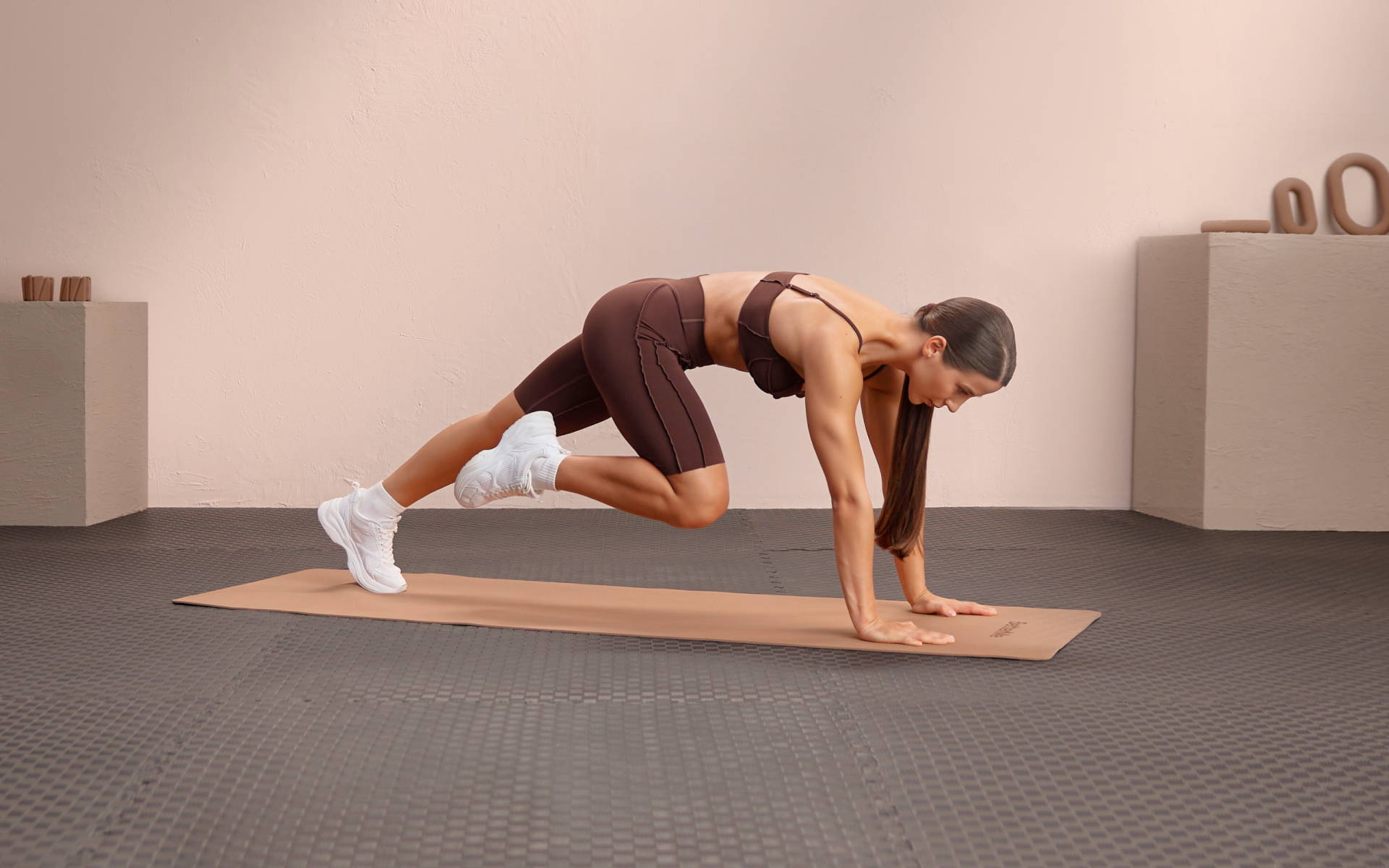
Calisthenics gives you repeated opportunities to notice how you move. During a squat, you can observe foot pressure and the direction of your knees. During a plank, you can notice whether your trunk position changes as you tire.
Use these observations to choose a manageable version. Avoid expecting one posture to ease discomfort or prevent strain. A particular exercise cannot explain every discomfort someone experiences.
7. A way to work on repeated effort
Repeating an exercise allows you to practice continuing with a consistent movement standard. Track the number of controlled repetitions before your technique changes. Compare sessions using the same version and similar rest.
Keep strength and endurance goals clear. A long series of easy repetitions feels different from a short, demanding set. Neither requires a race against someone else’s total.
8. A possible contribution to aerobic activity
A continuous bodyweight circuit can raise breathing and heart rate. Whether it counts as moderate or vigorous activity depends on your actual effort. Resting between strength sets does not automatically provide sustained aerobic work.
Adults generally need 150 weekly minutes of moderate aerobic activity, or an equivalent amount of vigorous activity (2). Walking can complement a strength routine. Calisthenics is not automatically high-intensity interval training simply because it uses body weight.
9. A practical break from sitting
Standing up for a few comfortable movements can interrupt a long seated period. General activity guidance encourages moving more and sitting less (2). A movement break can be brief and does not need to become a demanding workout.
Choose a convenient cue, such as finishing a work task. Walk around or practice an easy movement before sitting again. Keep the break separate from your harder training if you need rest.
10. Clear skills to track
Calisthenics offers observable goals: using less assistance, repeating a controlled movement, or learning a new position. Choose one goal that matters to you. Write down the exercise version before recording the result.
For example, record five wall push-ups with the same foot position each time. Later, compare the same setup or document a deliberate change. These records help explain progress when photographs show little difference.
Will calisthenics change body shape?
Calisthenics may change muscle size, but appearance changes differ between people. Exercise cannot promise a particular silhouette or a fixed result date. The phrase “bulky” also has no consistent training definition.
Women can gain muscle through resistance training (1). Avoid advice suggesting women cannot build noticeable muscle. Choose training goals based on your preferences rather than assumptions about how women should look.
Body weight also reflects factors beyond one workout. Eating patterns and activity both matter for weight management (5). A single session may not change body weight, and a calorie estimate cannot predict your individual result.
For a closer discussion, read our female calisthenics body guide. Keep appearance goals optional. Improvements in a movement you value can be useful even when your clothing fits the same.
How can you try five movement patterns?
Try easier versions of the squat, lunge, push-up, plank, and burpee patterns. Start with a few controlled repetitions before deciding whether to continue. The following instructions are practice examples, not a prescribed program.
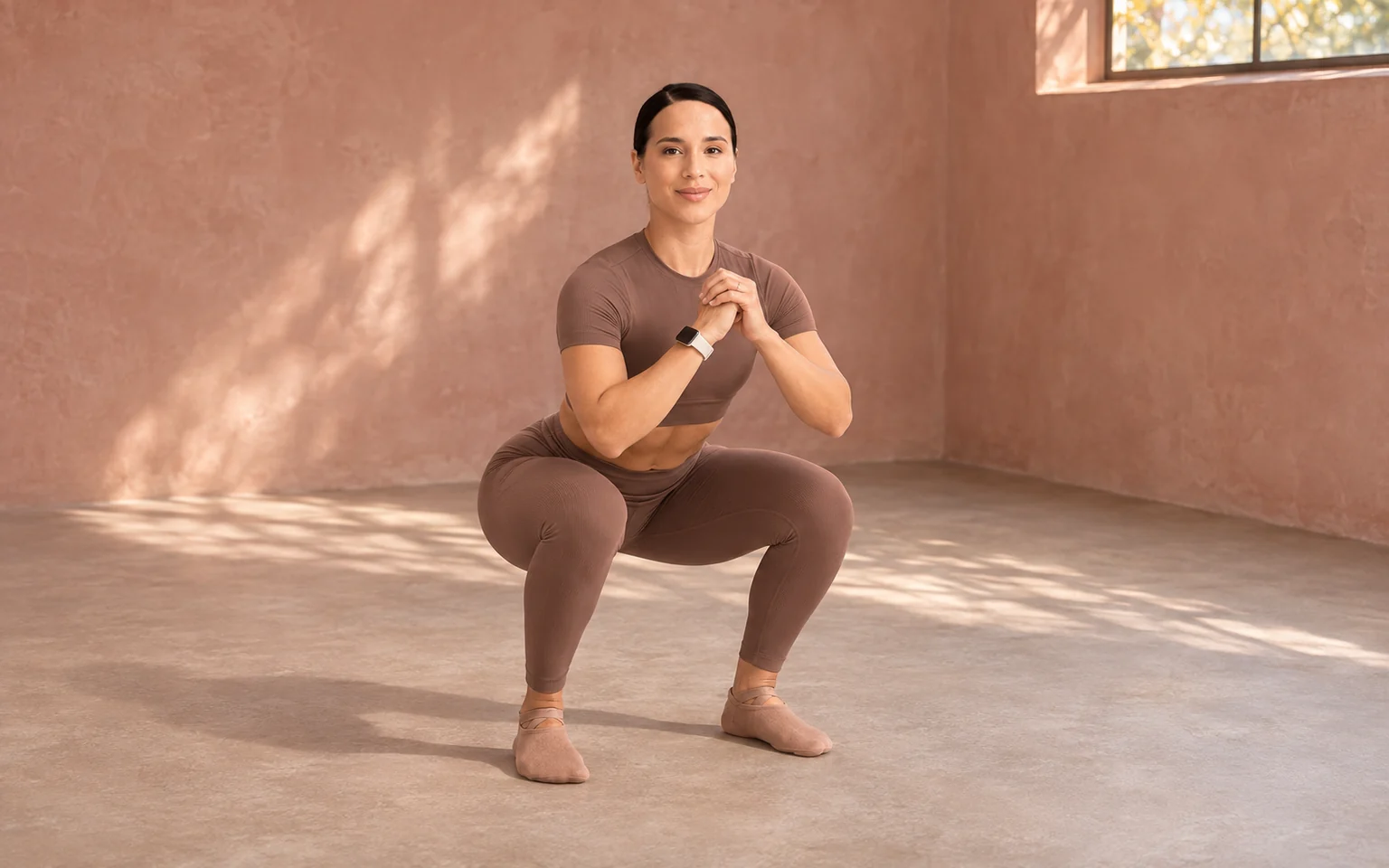
Squat
- Stand with your feet comfortably apart for the squat.
- Bend your hips and knees toward a comfortable depth.
- Press through your feet to stand.
A firm chair behind you can provide a depth reference. Avoid dropping onto the seat. Your knees may move forward as you lower; use a comfortable stance and controlled movement.
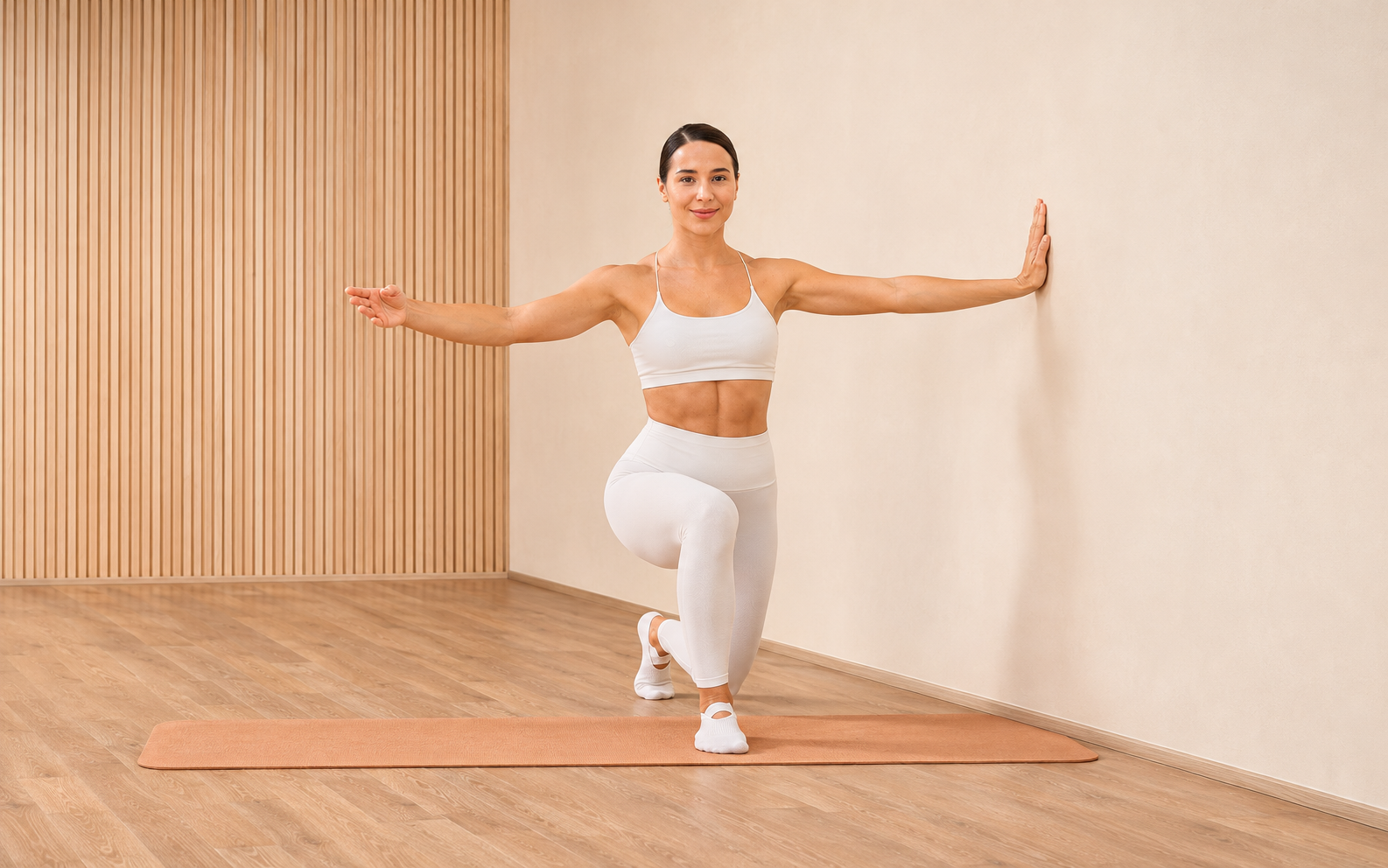
Supported reverse lunge
- Hold a stable support beside your standing position.
- Step one foot backward into a comfortable split stance.
- Bend both knees slightly to lower.
- Press through the front foot to return.
Start with a small step and shallow bend. If stepping disrupts balance, keep both feet planted and practice a supported split squat. Change sides after completing the chosen repetitions.
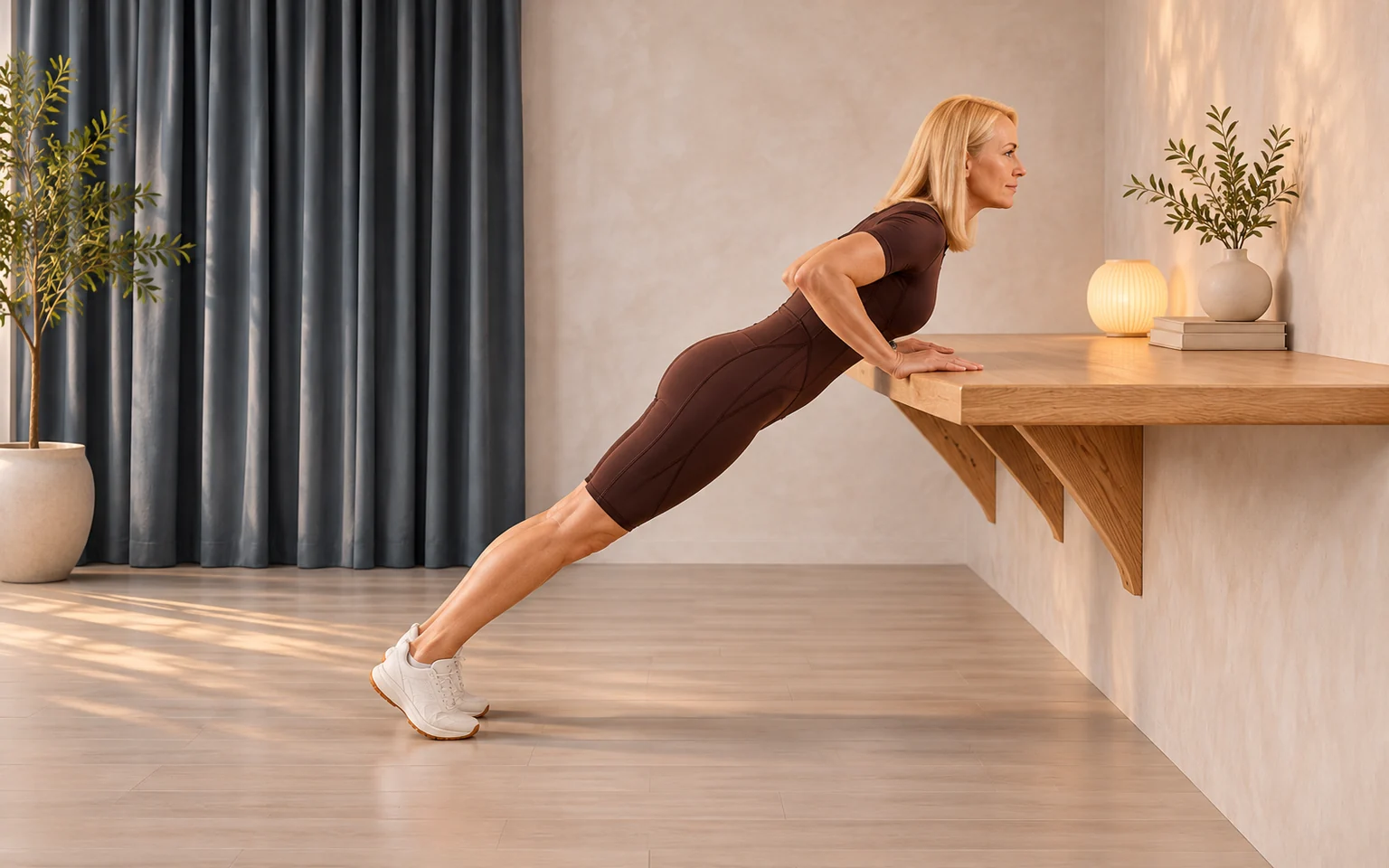
Wall push-up
- Place your hands against a clear wall around shoulder height.
- Bend your elbows to bring your body toward the wall.
- Press away while keeping your trunk aligned.
Move your feet closer if the wall push-up feels too demanding. Our push-up guide for women explains other variations.
Supported plank
- Place your forearms on a stable raised surface.
- Step back until your body forms a comfortable straight line.
- Hold briefly while breathing normally.
- Step forward to finish.
Use a higher support or shorter hold when your trunk position changes. A long hold is unnecessary for learning the position. Avoid comparing seconds across different plank variations.
Standing burpee alternative
- Stand facing a stable counter for the supported burpee alternative.
- Place both hands on the counter.
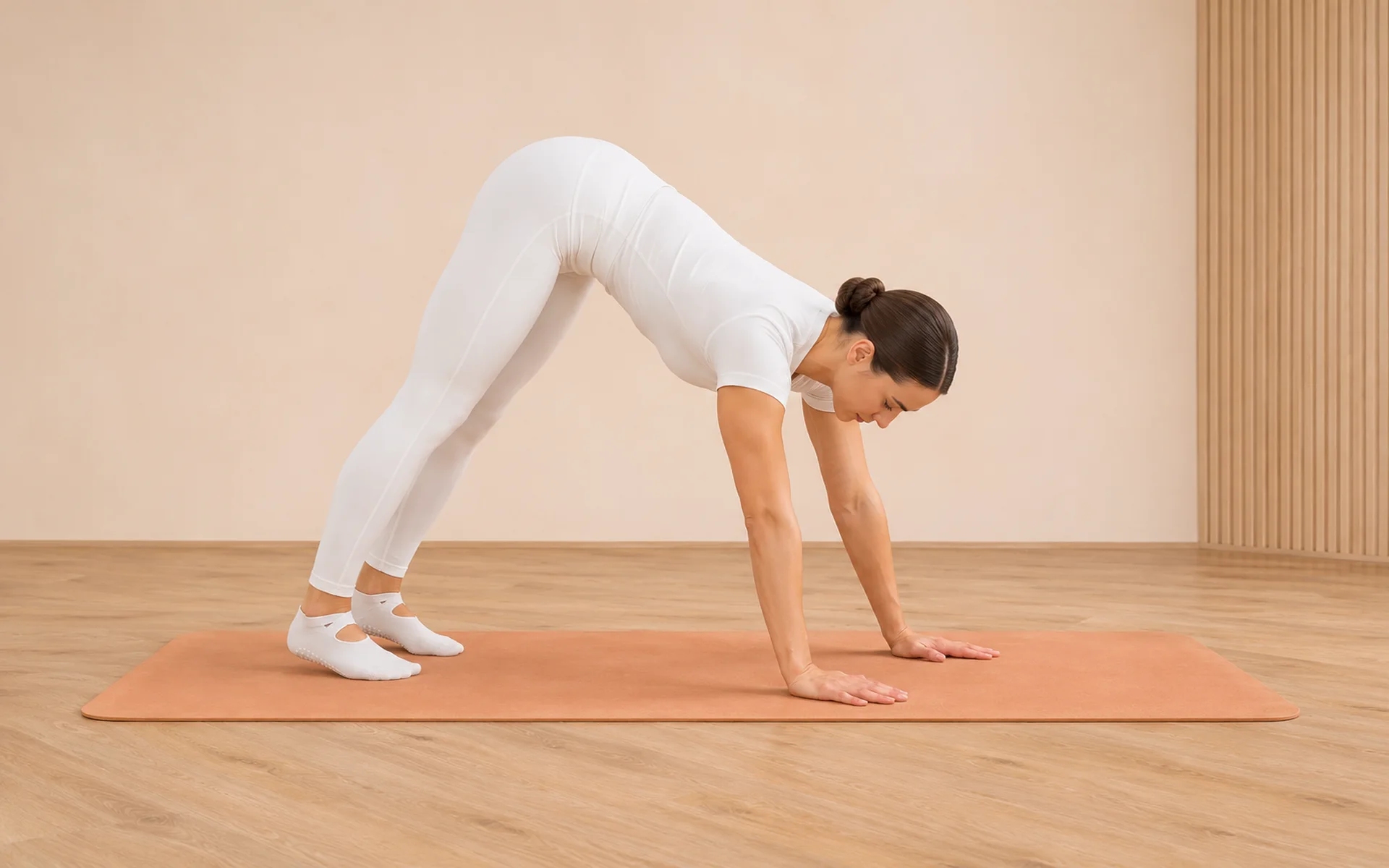
- Step each foot backward into an inclined plank.
- Step each foot forward again.
- Stand upright to finish.
This version removes the jump and floor transition. A full burpee combines several demanding movements and is optional. Do not rush transitions to make the movement look more advanced.
Can a 20-minute session be useful?
A 20-minute session can provide time to practice several movements and rest. Its value depends on exercise selection and effort. Duration alone does not establish that every muscle group received enough work.
This editorial example shows how to organize the time. Every practice slot includes rest and setup. Stop the session when needed rather than forcing the schedule.
| Elapsed time | Activity | What to do |
| 0 to 5 minutes | Warm-up | Easy walking and comfortable joint movements |
| 5 to 8 minutes | Squat practice | Short sets with pauses |
| 8 to 11 minutes | Wall push-up practice | Rest between controlled sets |
| 11 to 14 minutes | Supported lunge practice | Divide practice between sides |
| 14 to 17 minutes | Supported plank practice | Brief holds with generous rests |
| 17 to 20 minutes | Easy finish | Walk slowly and let breathing settle |
The optional burpee alternative can replace a practice slot, rather than extending the session. This example lacks substantial pulling work. A more complete home calisthenics workout plan can address that equipment decision.
How should you build on the first session?
Repeat a manageable session before increasing its demands. Keep a record of the exercise version and how the last repetitions felt. Change one feature at a time so you can judge the effect.
A review found that many resistance-training prescriptions improved strength compared with no training (6). That finding supports choosing a workable starting routine. It does not mean every combination of exercises produces identical results.
Leave room for rest between demanding sessions. If fatigue repeatedly disrupts your technique, reduce the work or seek instruction. Stop for sharp discomfort, dizziness, or unusual breathlessness, and seek appropriate medical advice.
Frequently Asked Questions
These answers cover planche training, workout clothing, and combining calisthenics with gym sessions.
Can a woman learn a planche?
Yes, some women learn a planche through advanced skill training. The movement requires substantial shoulder and wrist capacity, balance, and specific preparation. Seek coaching rather than attempting it solely because a plank feels comfortable.
Do you need special workout clothing?
No, specialized clothing is unnecessary for these practice examples. Wear clothing that permits movement and footwear appropriate for the surface. Remove anything that catches on equipment or restricts your position.
Can you combine calisthenics with gym sessions?
Yes, bodyweight movements can share a routine with weight training. Count both toward your total workload and avoid duplicating demanding exercises without a reason. Choose the combination around your available equipment and goals.
The bottom line
Choose one practical reason to begin, then test a manageable exercise version. Record what you did and how it felt. Build your routine from repeatable sessions, with realistic expectations about strength, appearance, and the time needed to learn.
DISCLAIMER:
This article is intended for general informational purposes only and does not serve to address individual circumstances. It is not a substitute for professional advice or help and should not be relied on for making any kind of decision-making. Any action taken as a direct or indirect result of the information in this article is entirely at your own risk and is your sole responsibility.
BetterMe, its content staff, and its medical advisors accept no responsibility for inaccuracies, errors, misstatements, inconsistencies, or omissions and specifically disclaim any liability, loss or risk, personal, professional or otherwise, which may be incurred as a consequence, directly or indirectly, of the use and/or application of any content.
You should always seek the advice of your physician or other qualified health provider with any questions you may have regarding a medical condition or your specific situation. Never disregard professional medical advice or delay seeking it because of BetterMe content. If you suspect or think you may have a medical emergency, call your doctor.
SOURCES:
- The Effect of Resistance Training in Women on Dynamic Strength and Muscular Hypertrophy: A Systematic Review with Meta-analysis (2020, pubmed.ncbi.nlm.nih.gov).
- Adult Activity: An Overview (2023, cdc.gov).
- ACSM Unveils Landmark 2026 Resistance Training Guidelines: First Update in 17 Years (2026, acsm.org).
- Strength exercises (2024, nhs.uk).
- Benefits of Physical Activity (2025, cdc.gov).
- Resistance training prescription for muscle strength and hypertrophy in healthy adults: a systematic review and Bayesian network meta-analysis (2023, pubmed.ncbi.nlm.nih.gov).
 By
 By
 Reviewed by