A 5-day calisthenics workout can combine strength practice with lighter activity, leaving two days free from planned training. Five active days do not require five demanding strength sessions. A calisthenics weekly routine helps you distribute exercise according to your current capacity, available equipment, and time for rest.
Key takeaways
These points summarize how to plan a 5-day calisthenics workout and balance the week.
- This sample week contains two full-body strength sessions, three lighter activity days, and two rest days.
- Adult guidance includes muscle-strengthening work on at least two days weekly (1).
- A five-day calendar does not establish whether a program’s workload is suitable for you.
- Bodyweight exercises can provide resistance training without requiring advanced skills or complete muscular failure (2).
- Record strength sets separately from walking time so the weekly workload stays clear.
- Keep lighter activity days noticeably less demanding than the two strength sessions.
What counts as a five-day calisthenics plan?
A five-day plan reserves five days for planned movement, with different demands across the week. Some routines use a muscle-group split. Others combine bodyweight strength with walking and comfortable mobility practice.
The sample here uses the second approach. Two days cover strength, while three days contain lighter activity. This arrangement suits readers who want a regular appointment for movement without five strenuous workouts.
The schedule is an example rather than a required starting dose. If five appointments are difficult to maintain, begin with fewer. A calendar should help you organize practice without making missed sessions feel like a debt.
Strength training and aerobic activity meet different parts of general activity guidance. Adults are advised to accumulate 150 minutes of moderate aerobic activity or 75 vigorous minutes weekly (1). The sample walking amounts can be a starting point, but they do not automatically meet that full target.
How can the five training days fit into one week?
Place the two strength sessions on separated days and use the other activity days for easier movement. The following sample assigns a clear purpose to each day. Change the days to fit your commitments while preserving suitable rest.
|
Day |
Planned activity |
Sample duration or workload |
|---|---|---|
|
Monday |
Full-body strength A |
One or two sets per exercise |
|
Tuesday |
Comfortable walking |
15 to 20 minutes |
|
Wednesday |
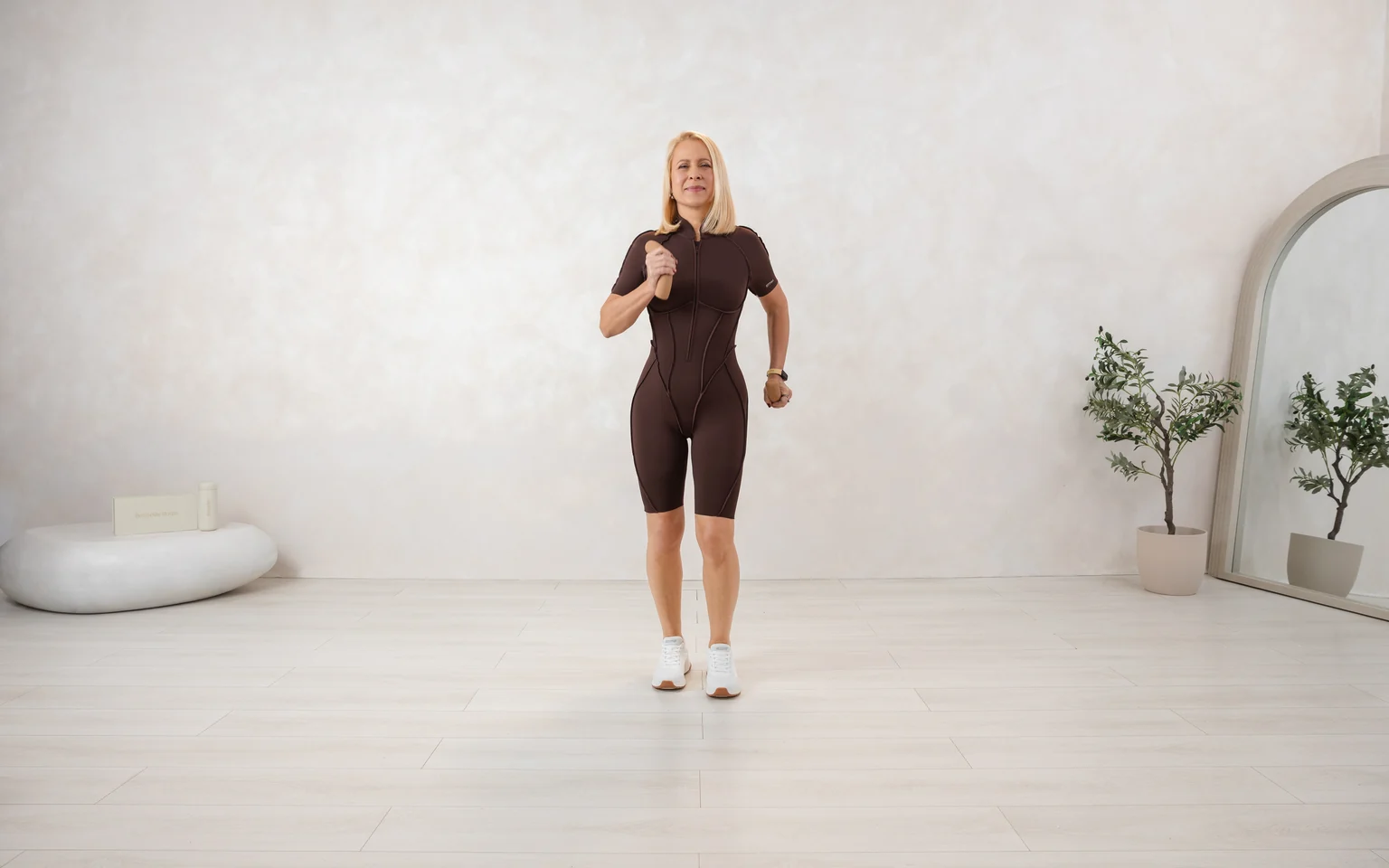
Mobility and easy marching |
10 to 15 minutes |
|
Thursday |
Full-body strength B |
One or two sets per exercise |
|
Friday |
Rest |
No planned workout |
|
Saturday |
Walking or another familiar aerobic activity |
15 to 20 minutes |
|
Sunday |
Rest |
No planned workout |
Monday, Tuesday, Wednesday, Thursday, and Saturday are the five active days. Friday and Sunday are rest days. Normal daily movement can continue on rest days without becoming another scheduled workout.
Keep the walking comfortable at first. Increase duration or pace gradually when appropriate. A hard uphill walk or demanding class may add substantial work, even when labeled a lighter day.
If Thursday’s strength session feels unusually difficult, review the preceding days. The Wednesday session may have become more demanding than intended. Adjust the actual activity, not just its label in your calendar.
What goes into strength session A?
Strength session A covers a squat, push, pull, hip movement, and short trunk hold. The sample amounts allow room to start conservatively. Use fewer repetitions when needed to maintain control.
|
Exercise |
Sample amount |
Adaptation |
|---|---|---|
|
Sit-to-stand |
One or two sets of 5 to 8 |
Use hand assistance if needed |
|
Wall push-up |
One or two sets of 5 to 8 |
Adjust distance from the wall |
|
Supported row |
One or two sets of 6 to 10 |
Use suitable band or bodyweight equipment |
|
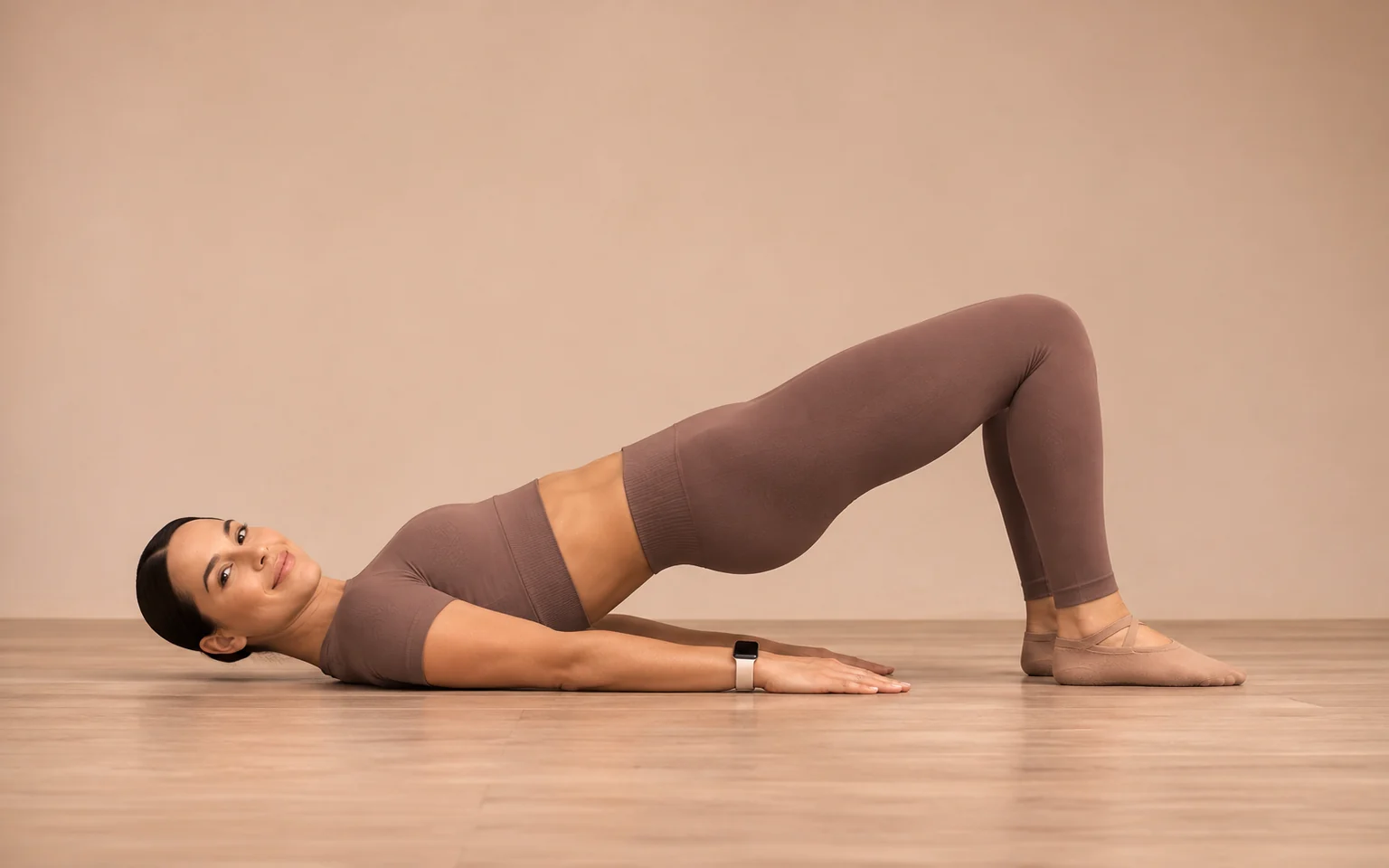
Glute bridge |
One or two sets of 6 to 10 |
Use a comfortable lifting range |
|
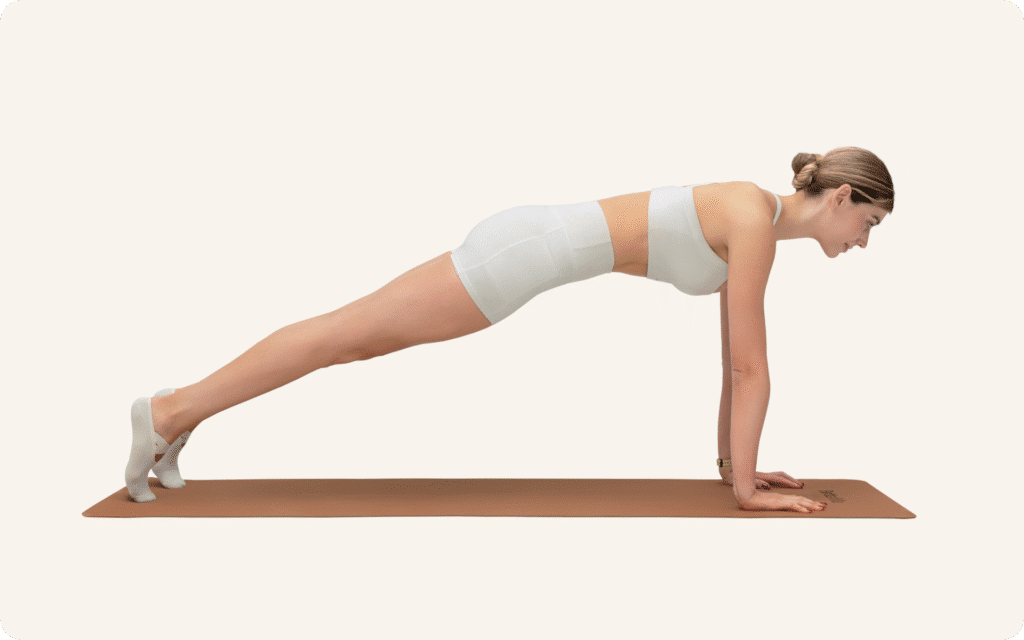
Supported plank |
One or two holds of 10 to 20 seconds |
Choose wall or knees-supported position |
Use a solid chair that cannot slide for sit-to-stands. That setup follows public home-strength guidance (3). Avoid wheeled chairs and loose furniture.
Rows require equipment suitable for the load. Check the anchor, band, or suspension system according to its instructions. If you lack suitable pulling equipment, leave the row out temporarily and arrange an appropriate alternative.
Warm up before beginning the working sets. General strength-training guidance recommends five to ten minutes of aerobic movement (4). Include a few easy repetitions of your chosen exercises to check the setup.
Want a structured routine? Take the BetterMe quiz to get a customized calisthenics workout plan.
How is strength session B different?
Strength session B uses the same movement categories with small changes that are easy to record. Keeping a familiar push-up and row can simplify practice. Lower-body or trunk exercises can vary when the alternatives feel manageable.
|
Exercise |
Sample amount |
Adaptation |
|---|---|---|
|
Supported squat |
One or two sets of 5 to 8 |
Use a comfortable depth |
|
Wall or incline push-up |
One or two sets of 5 to 8 |
Keep the same setup as session A initially |
|
Supported row |
One or two sets of 6 to 10 |
Repeat the established equipment setup |
|
Calf raise |
One or two sets of 5 to 10 |
Hold a stable support |
|
Knees-supported side plank |
One or two holds of 10 to 15 seconds per side |
Shorten the hold when needed |
The side plank introduces a different trunk position. If floor transfers are difficult, use a standing alternative recommended by a qualified trainer. A substituted exercise should be recorded by name.
Avoid adding dips, pike push-ups, and shoulder taps simply because another routine includes them. Each adds work to muscles already involved in pushing. The useful question is whether the additional movement serves your goal and fits your capacity.
For additional starting options, read a beginner calisthenics plan at home. Keep the weekly plan understandable enough that you can explain what each session contributes.
How do you perform the main movements with control?
Choose a manageable range and stop a set when your position becomes difficult to maintain. The following cues provide a starting point. Seek a trainer’s feedback when a movement or setup remains unclear.
Wall push-up
- Place your palms against the wall at a comfortable height.
- Move your feet back to a manageable distance.
- Bend your elbows while keeping your trunk steady.
- Press away from the wall to return.
Keep your breathing continuous. Move closer to the wall if the exercise feels too demanding. The benefits of push-ups for women depend on choosing an appropriate challenge, not starting on the floor.
Supported squat
- Hold a stable support while standing comfortably.
- Bend your hips and knees through a manageable range.
- Pause before losing balance or control.
- Return to standing.
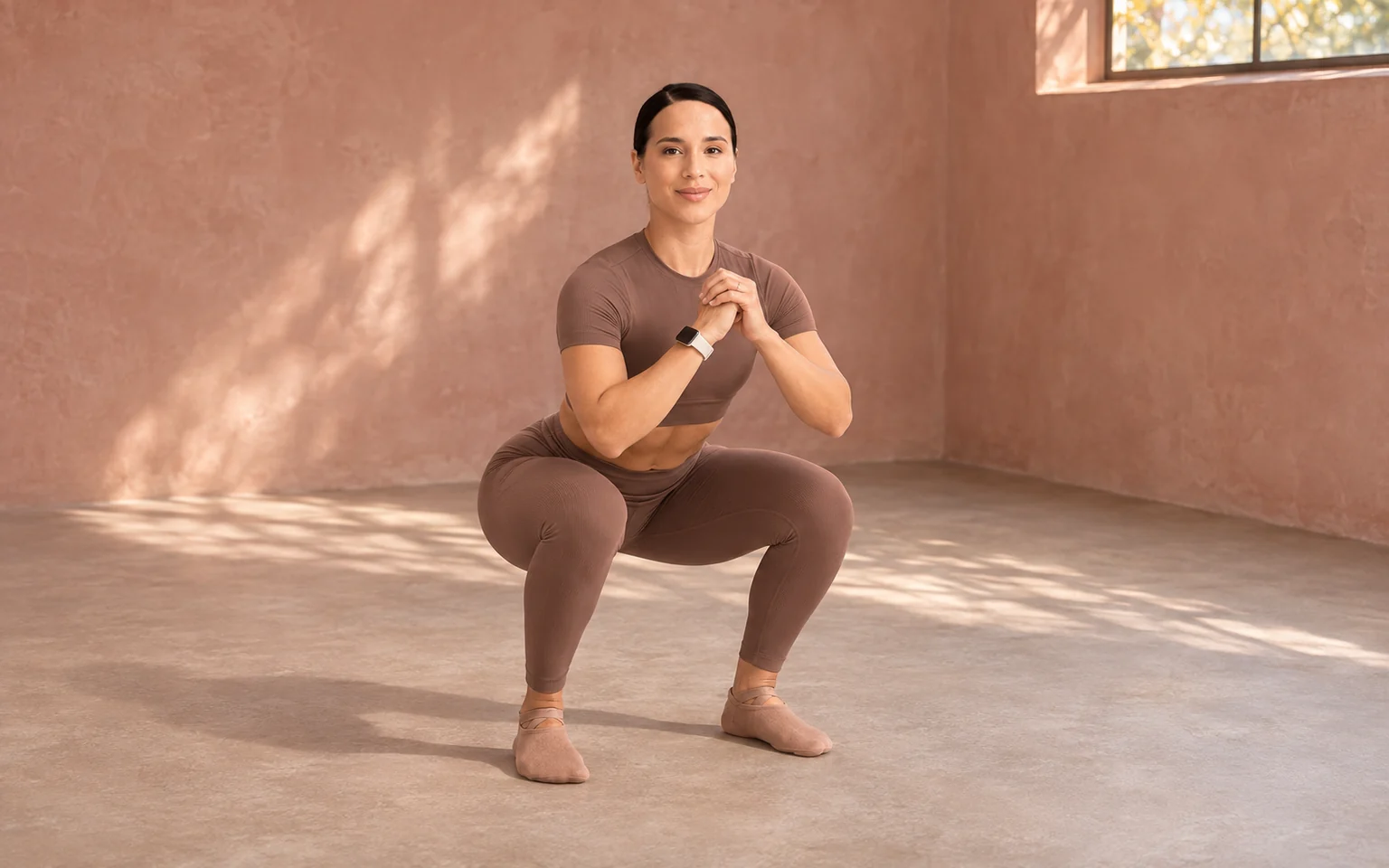
The support is available for balance and assistance. Adjust depth to the movement you can repeat. A deeper squat is not a required achievement during the first week.
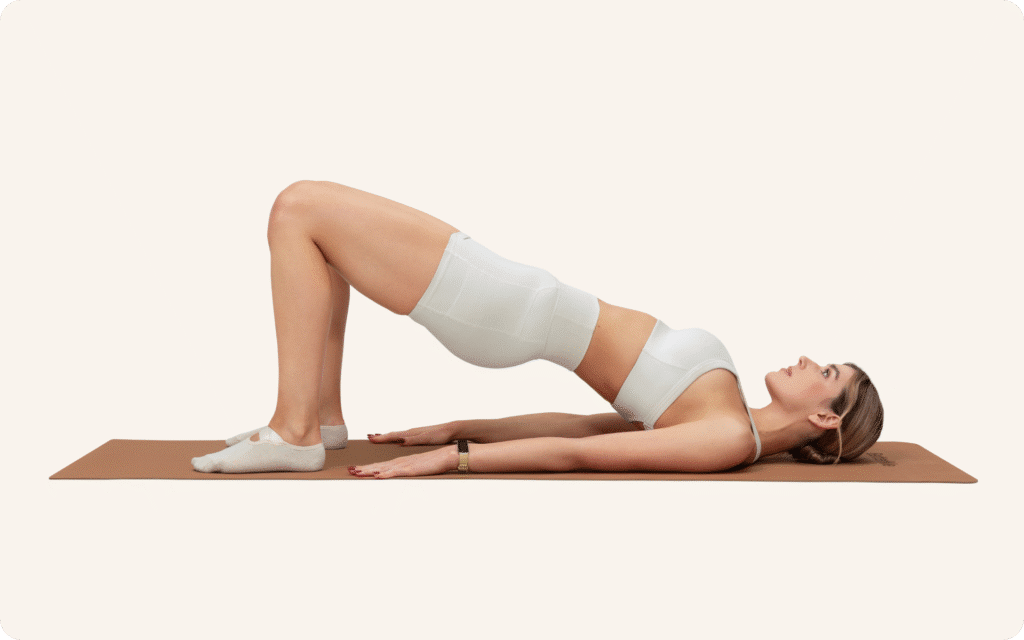
Glute bridge
- Lie on your back with both feet on the floor.
- Press through your feet to lift your hips comfortably.
- Pause without forcing a lower-back arch.
- Lower to the floor with control.
Record the repetitions that stayed controlled. If the movement causes discomfort beyond normal effort, stop. General resistance-training guidance recommends responding to that signal instead of continuing (4).
How much effort should each session require?
Strength sets should feel challenging enough to practice the movement without losing control. Easier days should remain noticeably less demanding. Avoid using exhaustion as the test of whether a session counted.
Current resistance-training guidance identifies bodyweight work as a useful option. Complete muscular failure and complex training methods are not necessary for many adults (2). You can stop a set before another repetition becomes impossible.
Record a brief effort note after the session. “Comfortable,” “challenging,” or “too difficult to repeat” can help you review the week. A personal note is not a clinical measurement or diagnosis.
When an exercise becomes manageable across repeated sessions, change one variable. Add a repetition or consider a small variation change. Avoid increasing sets, difficulty, and weekly frequency simultaneously.
The 8-week calisthenics plan provides a longer review structure. You can repeat the same weekly schedule while changing individual movements gradually.
When should you reduce the workload?
Reduce demanding exercise when fatigue, soreness, or movement difficulty prevents a controlled session. A rest day may be more useful than forcing the planned workload. Return with a manageable amount after reassessment.
Overtraining syndrome involves persistent problems and clinical evaluation. Fatigue and underperformance have several possible explanations, and the syndrome cannot be diagnosed from training frequency alone (5). Talk to a doctor about persistent or concerning signs.
Do not label a single difficult workout as overtraining. Review whether the previous session was unfamiliar, sleep was disrupted, or ordinary responsibilities increased. Keep those observations separate from any medical conclusion.
Rest also requires enough opportunity for sleep. Adults aged 18 to 60 are advised to get at least seven hours nightly (6). Keep a regular sleep schedule where possible and seek advice for ongoing sleep problems.
The five-day plan should fit around meals, work, and other activity. Avoid skipping meals to compensate for a rest day. If food planning becomes difficult, a registered dietitian can provide individual guidance.
How do you review the first completed week?
Review the first week by comparing the planned work with the activity you actually completed. Note which appointments fit naturally and which felt difficult to arrange. Keep the useful parts before adding more work.
If a session was missed because of time, shorten the next version or move its appointment. If a movement was too difficult, choose an easier version. Those changes address different problems and should be recorded separately.
Keep the first review focused on practical adjustments. You do not need a new exercise list after one week. Repeat the manageable structure long enough to judge whether the schedule suits you.
Prefer to follow a plan? The BetterMe quiz can help you set up a calisthenics routine that fits your schedule.
Frequently Asked Questions
Can I switch the weekend activity to Friday?
Yes, you can move the walking session to Friday if that suits your week. Keep the activity manageable after Thursday’s strength session. Review the full sequence whenever you move a demanding workout.
Should I add exercises when a session feels short?
No, a short session does not automatically need more work. Check whether you completed the planned movements with control. Add work only when it serves a clear training goal.
Can two people follow the same weekly calendar?
Yes, two people can share training days while using different exercise versions and repetition amounts. Each person should record their own workload. Matching another person’s numbers is unnecessary.
The bottom line
Start with two manageable strength sessions and keep the other active days lighter. Record the actual workload so walking, strength work, and rest remain distinct. Adjust the calendar when it stops fitting your capacity or available time.
DISCLAIMER:
This article is intended for general informational purposes only and does not serve to address individual circumstances. It is not a substitute for professional advice or help and should not be relied on for making any kind of decision-making. Any action taken as a direct or indirect result of the information in this article is entirely at your own risk and is your sole responsibility.
BetterMe, its content staff, and its medical advisors accept no responsibility for inaccuracies, errors, misstatements, inconsistencies, or omissions and specifically disclaim any liability, loss or risk, personal, professional or otherwise, which may be incurred as a consequence, directly or indirectly, of the use and/or application of any content.
You should always seek the advice of your physician or other qualified health provider with any questions you may have regarding a medical condition or your specific situation. Never disregard professional medical advice or delay seeking it because of BetterMe content. If you suspect or think you may have a medical emergency, call your doctor.
SOURCES:
- Adult Activity: An Overview (2023, cdc.gov)
- ACSM Unveils Landmark 2026 Resistance Training Guidelines: First Update in 17 Years (2026, acsm.org)
- Strength exercises (2024, nhs.uk)
- Weight training: Do’s and don’ts of proper technique (2026, mayoclinic.org)
- Overtraining Syndrome: A Practical Guide (2012, pmc.ncbi.nlm.nih.gov)
- About Sleep (2024, cdc.gov)

 Reviewed by
 By