An 8-week calisthenics program organizes bodyweight practice into manageable sessions, with rest and regular progress checks. Start with movements you can control, then adjust repetitions or exercise difficulty as your ability changes. A calisthenics weekly routine helps you reserve training time without treating eight weeks as a deadline for visible changes.
Key takeaways
These points summarize how to follow an 8-week calisthenics program and what to expect.
- This sample program uses two full-body strength sessions each week, with an optional third session after reassessment.
- Adult guidance includes training all major muscle groups on at least two days weekly (1).
- Bodyweight training can increase strength, and advanced training methods are optional for many adults (2).
- Progress to a harder exercise only when the current version remains controlled throughout the set.
- Pulling exercises require equipment designed to bear your body weight or the resistance used.
- Eight weeks provides a review period; individual changes in appearance and performance vary.
What does an 8-week calisthenics program include?
An eight-week plan includes repeated strength sessions, easier activity, rest days, and a method for recording progress. Calisthenics uses body weight as resistance. Push-ups, squats, rows, and planks each train different movement patterns.
The sample schedule keeps familiar exercises long enough to compare your performance. Changing every movement each week makes those comparisons harder. Keep a written record of the exercise version, repetitions, and how the final repetition felt.
Adults’ activity guidance includes muscle strengthening alongside aerobic movement. The aerobic target is 150 minutes of moderate activity or 75 minutes of vigorous activity weekly (1). You can build toward that target gradually. Rest periods during strength training do not automatically count as moderate aerobic activity.
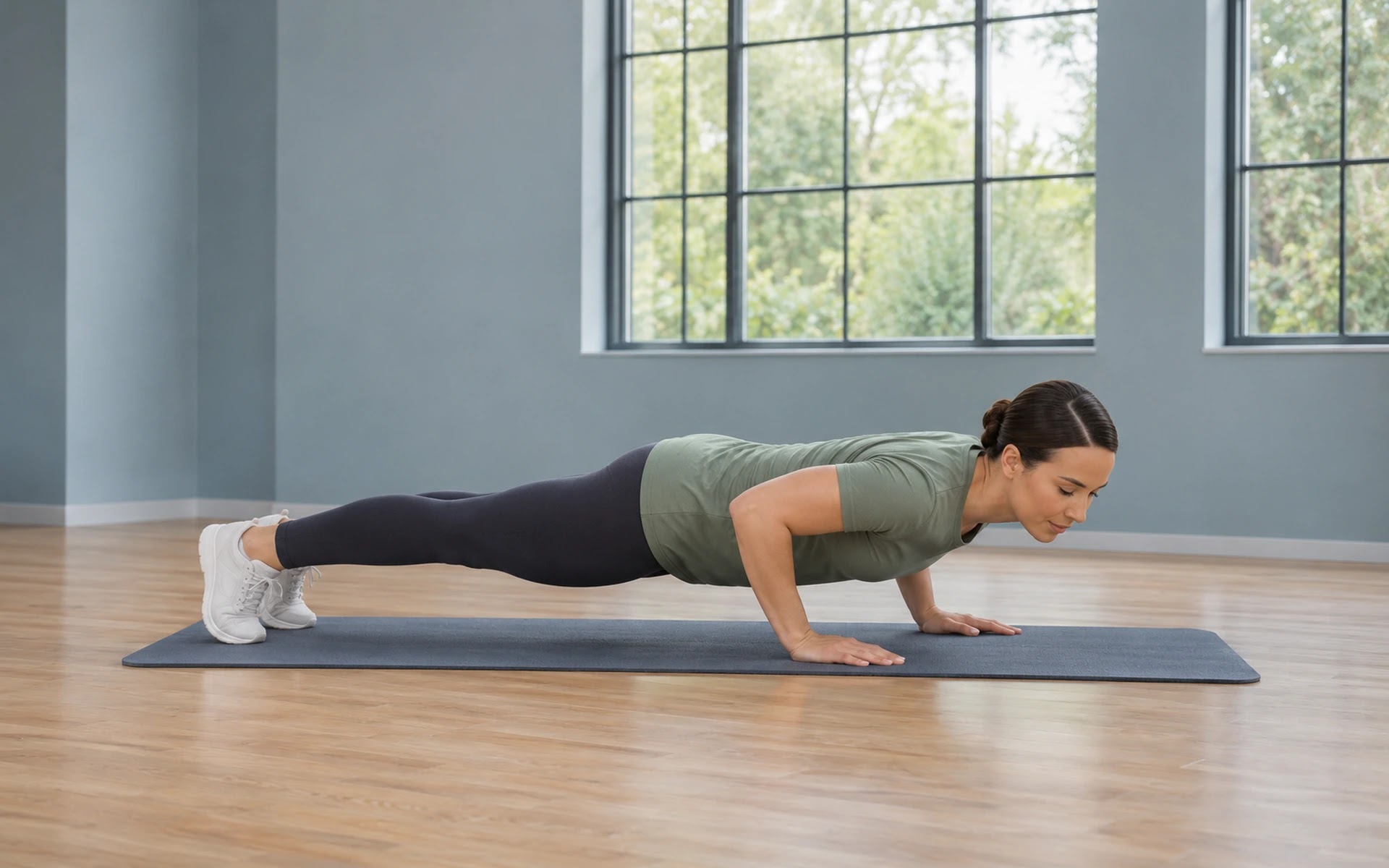
Women can use the same movement categories without following an appearance-based program. Exercise selection should reflect current ability, equipment, and preferences. A floor push-up is optional; a wall variation provides another starting point.
How should you prepare before week one?
Choose your training space, available equipment, and manageable exercise versions before setting repetition targets. Clear enough floor space for your whole body and check that your footwear grips the surface.
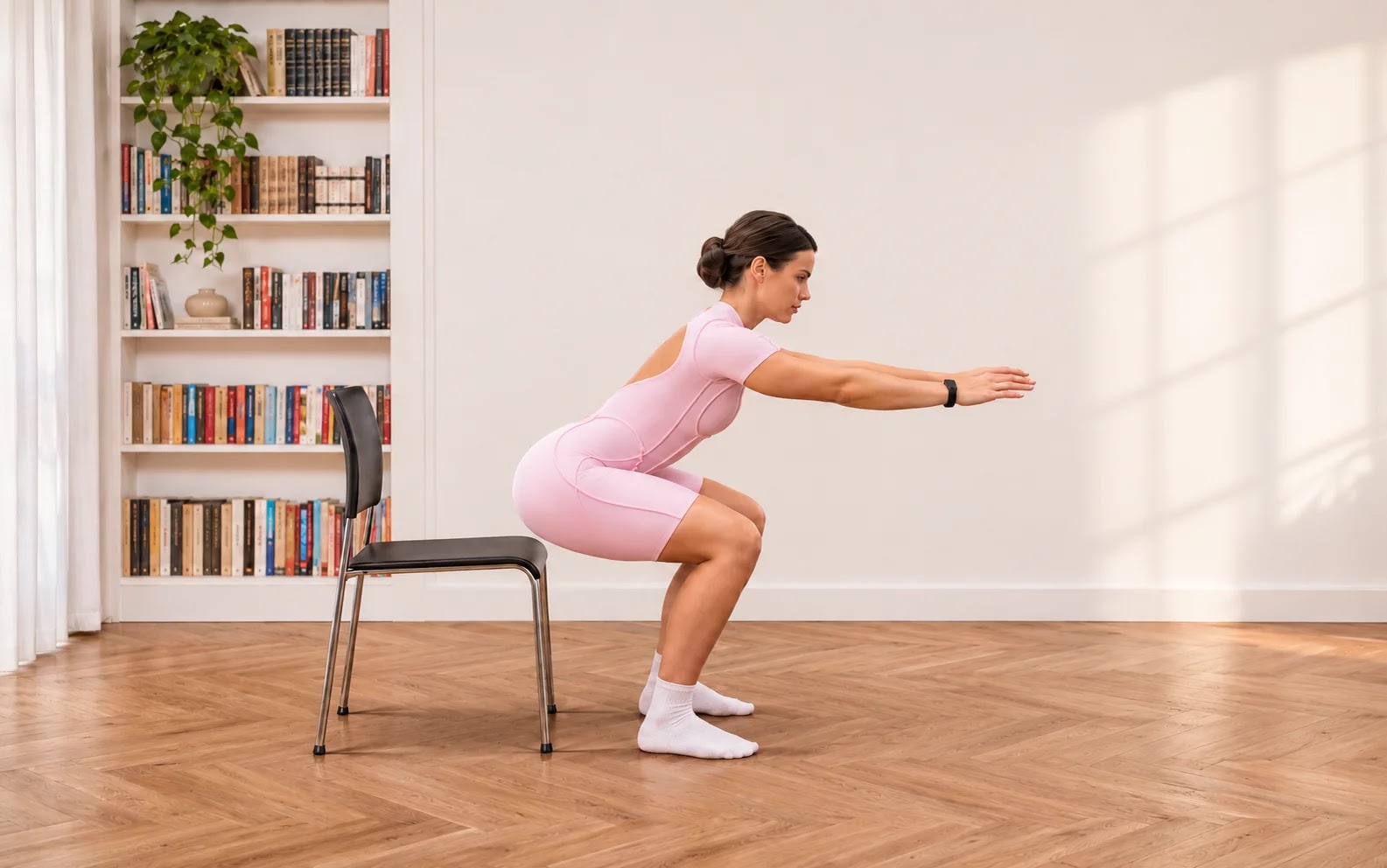
Use a solid, stable chair for sit-to-stands. Home exercise guidance recommends a chair without wheels that cannot slide (3). A chair suitable for sitting is not automatically suitable for dips or inverted rows.
Pulling requires a separate equipment decision. Use a professionally installed bar or purpose-built suspension equipment according to its instructions. Avoid improvising rows beneath furniture that could tip. A resistance-band row is an alternative when the band and anchor are suitable.
For a simpler starting setup, review a beginner calisthenics plan at home. Note any movement you cannot currently perform comfortably. A qualified trainer can help you choose an alternative.
If a medical condition, recent operation, or ongoing discomfort affects exercise, seek individual guidance before using the schedule. Stop an exercise that causes discomfort beyond normal effort. Technique guidance also recommends reducing resistance or repetitions when control breaks down (4).
How are the eight weeks organized?
The sample program divides eight weeks into four review blocks, while keeping the same basic exercise menu. The blocks describe practice priorities. Moving into a new block does not require a harder variation.
|
Weeks |
Weekly strength sessions |
Main task |
|---|---|---|
|
1 to 2 |
Two |
Learn manageable versions and record starting repetitions |
|
3 to 4 |
Two |
Repeat the exercises and add repetitions when controlled |
|
5 to 6 |
Two, optionally three |
Consider one small exercise change after reassessment |
|
7 to 8 |
Maintain the chosen frequency |
Compare repeatable performance and plan the next block |
Schedule the initial sessions on separated days, such as Monday and Thursday. Tuesday can include a comfortable walk. Wednesday and Friday remain available for rest or ordinary daily movement.
The optional third session belongs on another separated day, such as Saturday. Add that session only if the existing workload feels manageable. Keeping two sessions throughout all eight weeks remains a valid way to complete this sample.
Do not make up missed sessions by stacking several demanding workouts together. Resume at the next practical opportunity. Record the interruption so you can interpret the next performance check fairly.
Want a structured routine? Take the BetterMe quiz to get a customized calisthenics workout plan.
Which exercises belong in the strength session?
Include a squat, push, pull, hip movement, and trunk exercise, using a manageable version of each. The following table is a sample menu. The set and repetition ranges are starting options, not individual prescriptions.
|
Exercise |
Starting option |
Sample amount |
|---|---|---|
|
Squat |
Sit-to-stand from a stable chair |
One or two sets of 5 to 8 |
|
Push-up |
Wall or fixed-surface incline |
One or two sets of 5 to 8 |
|
Row |
Suitable band or supported bodyweight setup |
One or two sets of 6 to 10 |
|
Glute bridge |
Both feet on the floor |
One or two sets of 6 to 10 |
|
Plank |
Wall or knees-supported version |
One or two holds of 10 to 20 seconds |
Begin with the lower amount when the movements are unfamiliar. Rest long enough between sets to regain comfortable breathing and repeat the movement with control. The session is complete when the planned work is finished; a longer workout is not automatically required.
Warm up before the strength work. General resistance-training guidance suggests five to ten minutes of walking or another aerobic activity (4). Follow with easy practice repetitions of the movements you plan to use.
A training session’s total duration includes preparation, exercise, rest, and equipment changes. Avoid racing through the table to meet a stopwatch target. If time runs short, reduce the planned sets before sacrificing control.
How do you perform the starting movements?
Practice each movement slowly enough to notice your position and breathing. Keep the first attempts comfortable while you learn the setup. Stop before fatigue changes the movement substantially.
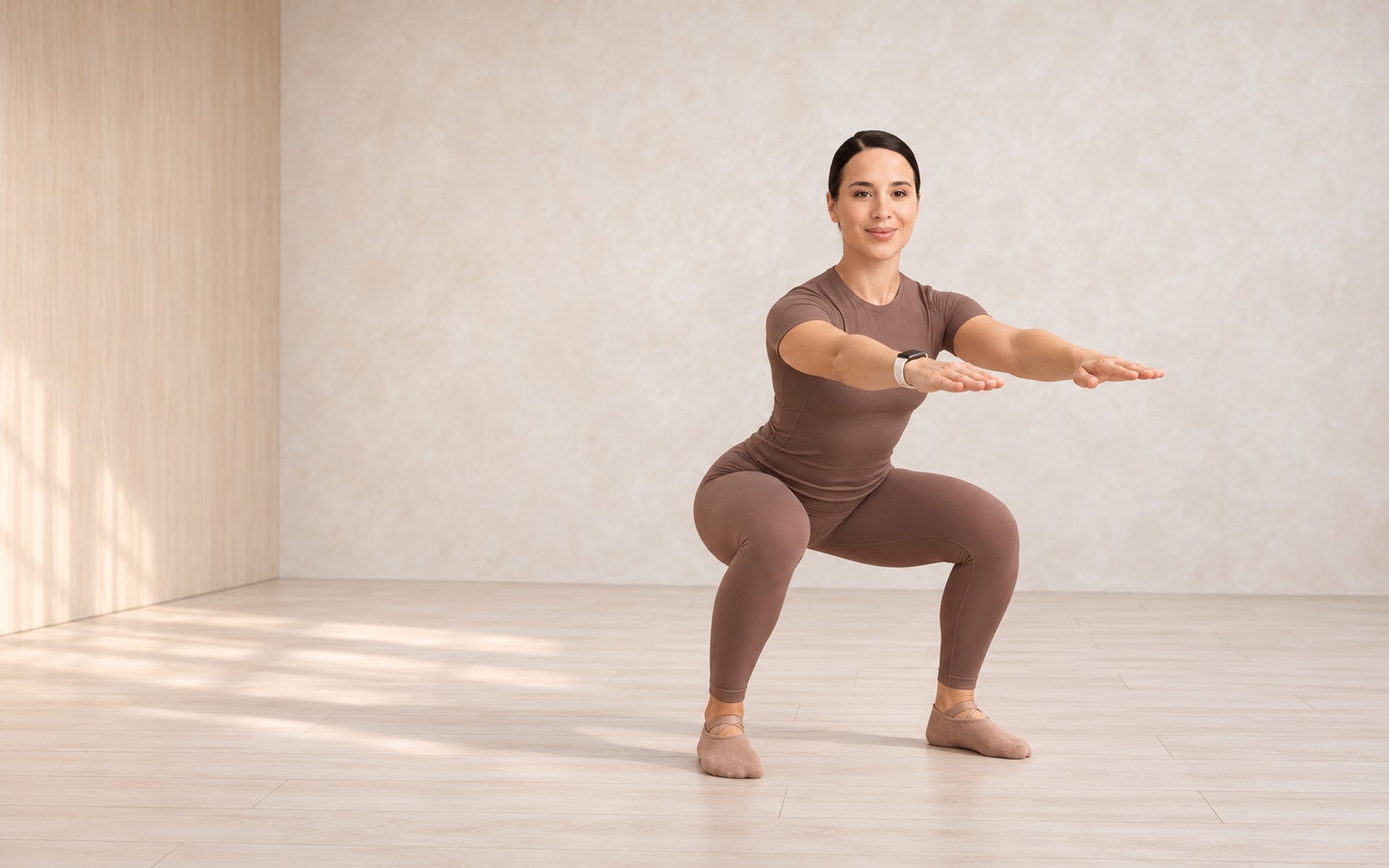
Sit-to-stand
- Sit near the front of a stable chair with your feet supported.
- Lean your trunk slightly forward.
- Rise to a comfortable standing position.
- Lower yourself back toward the chair with control.
Use your hands for assistance when needed. Choose a chair height that allows a manageable movement. Sit-to-stand is included in public home-strength guidance (3).
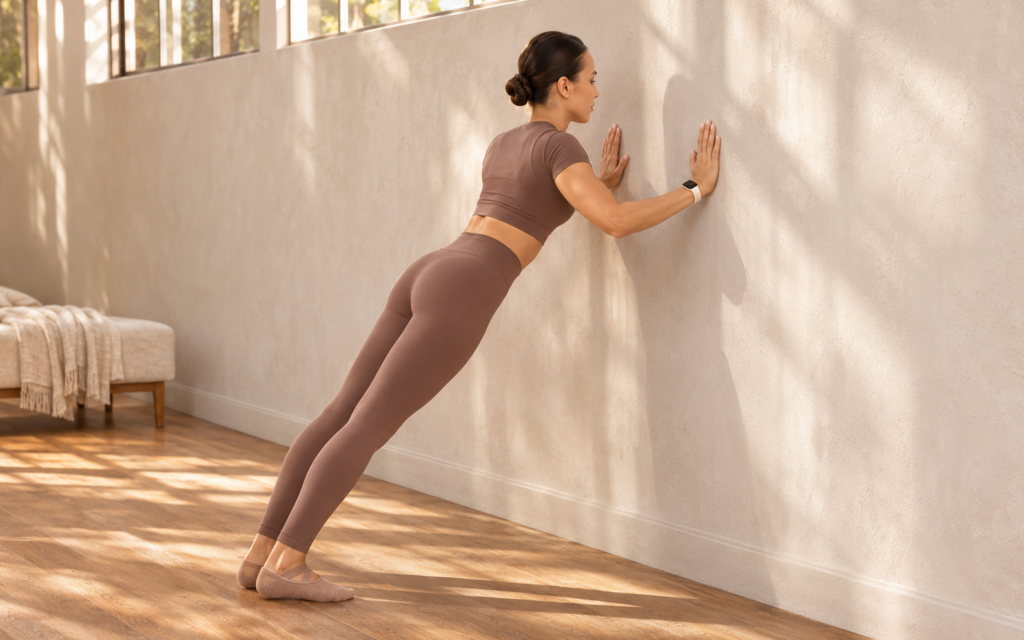
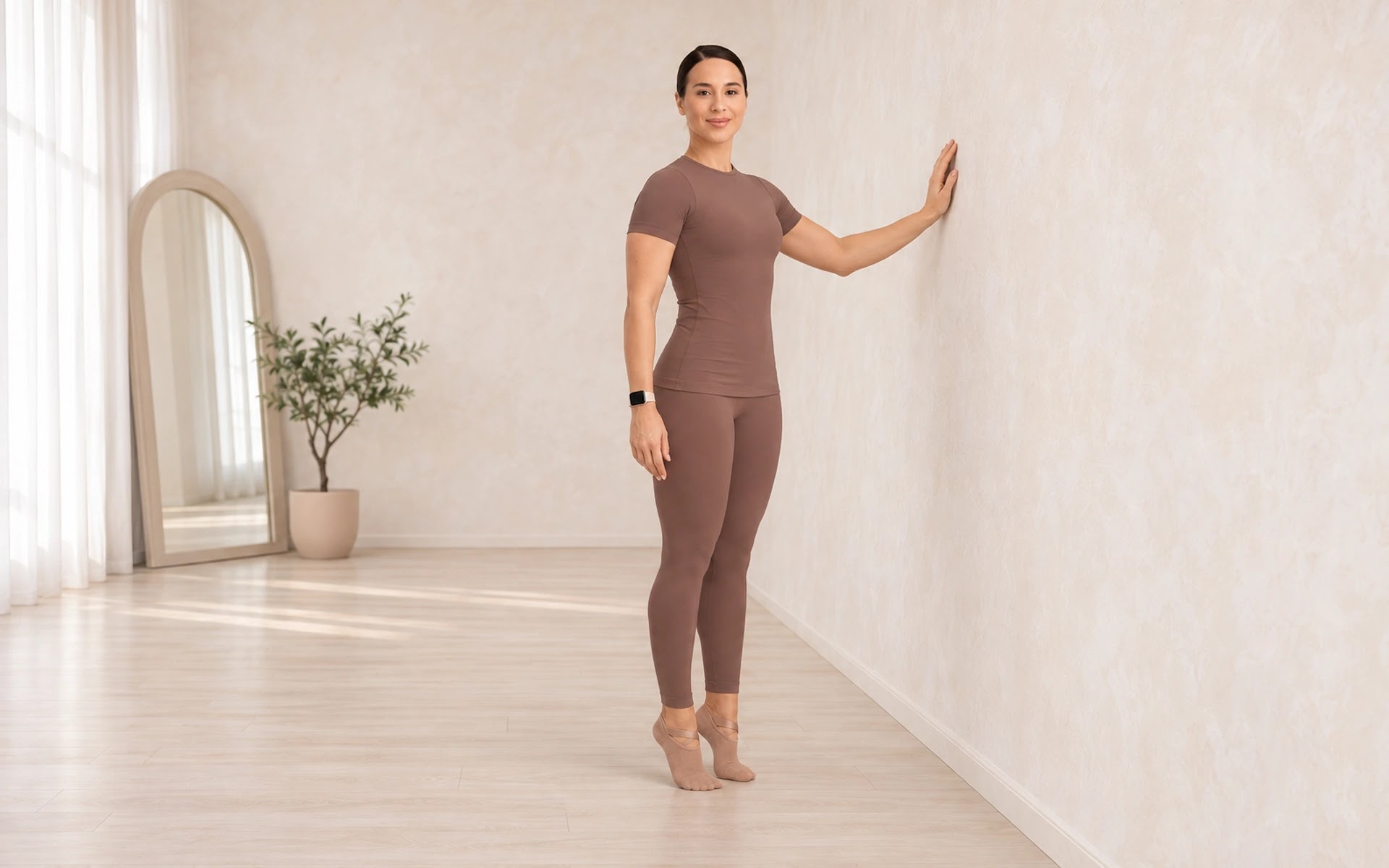
Wall push-up
- Place your palms against a wall at a comfortable height.
- Step your feet back until the position feels manageable.
- Bend your elbows to bring your chest toward the wall.
- Press through your palms to return.
Keep your body moving as one unit. Adjust your foot position to reduce the difficulty when needed. A stable incline can provide a later option, without requiring an immediate move to the floor.
Supported row
- Check the equipment and attachment according to the manufacturer’s instructions.
- Take the prescribed grip with your body supported.
- Draw your elbows back through a comfortable range.
- Return to the starting position without releasing control.
A trainer can help establish the correct setup for your equipment. Band rows and inverted rows use different resistance arrangements. Record which version you use instead of treating their repetition counts as interchangeable.
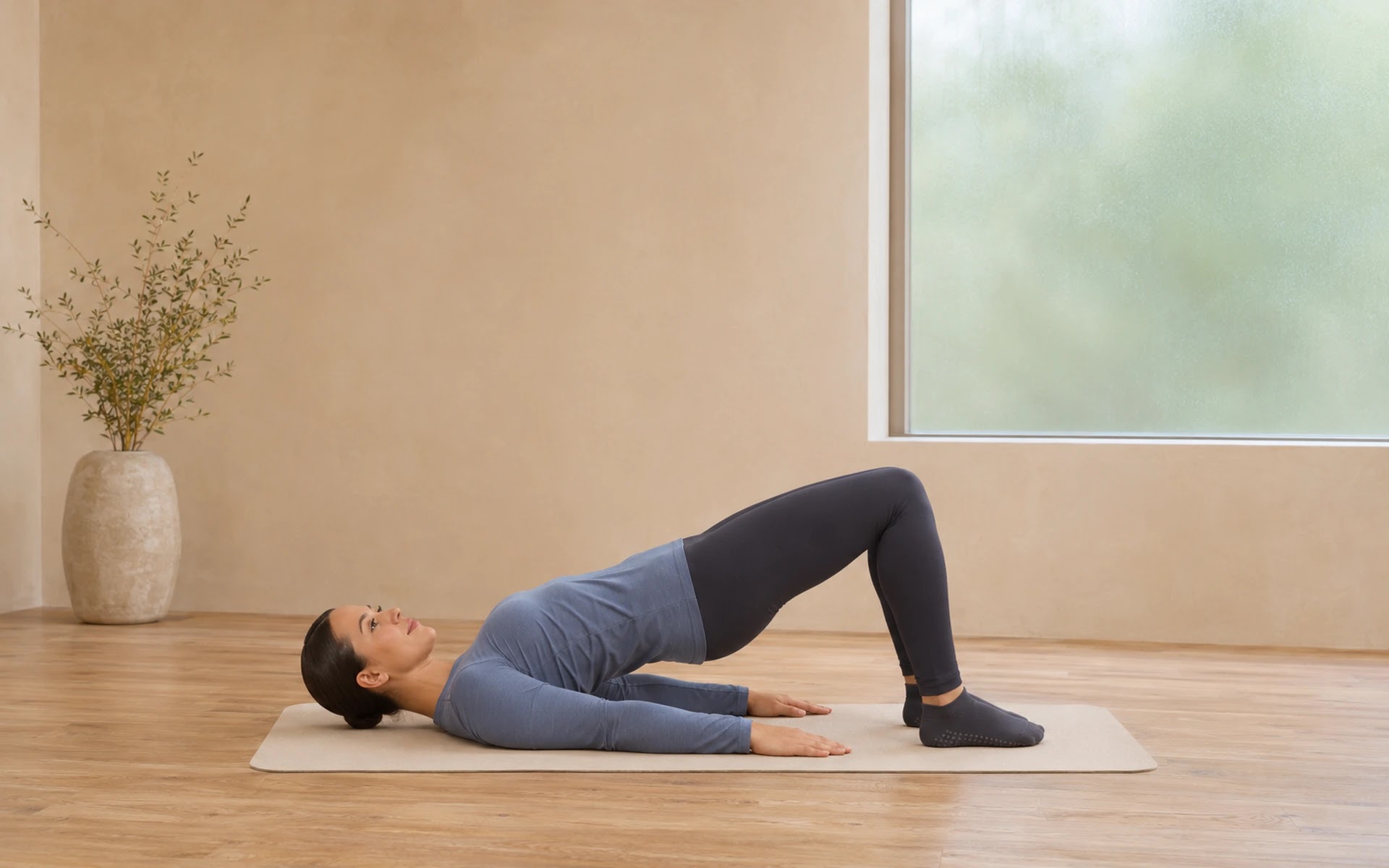
Glute bridge
- Lie on your back with your knees bent and feet on the floor.
- Press through your feet to raise your hips comfortably.
- Pause without forcing your lower back into an arch.
- Lower your hips to the floor.
Use a shorter range if you cannot maintain control. More detailed options appear in calisthenics for glutes. Keep breathing throughout the movement.
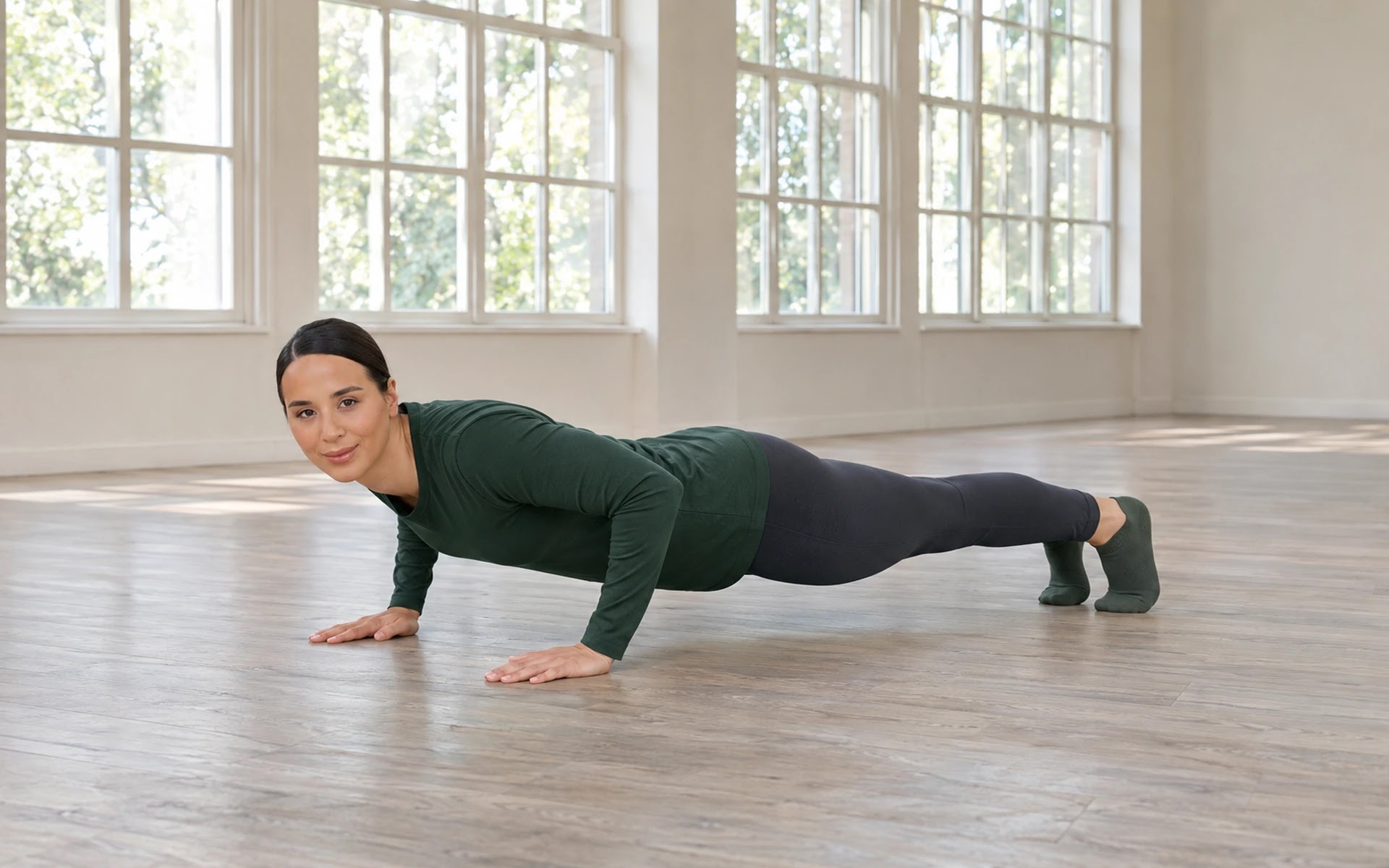
Supported plank
- Choose a wall or knees-supported plank position.
- Establish a comfortable line through your trunk.
- Hold the position while breathing normally.
- End the hold before your position changes.
Plank duration is useful only when the setup stays comparable. A shorter controlled hold can be easier to repeat accurately. Avoid extending the hold simply because the timer has not reached its target.
When should you make an exercise harder?
Increase difficulty when the current exercise feels repeatable and the final repetitions remain controlled. Change one training variable at a time. You might add a repetition, add a set later, or choose a slightly harder variation.
For example, record two sets of six wall push-ups using the same foot position. If both sets remain manageable, try an additional repetition at a later session. Keep the foot position unchanged during that comparison.
When you move to a lower incline, reduce the repetitions if necessary. The new variation creates a different task. Matching the previous repetition total immediately is unnecessary.
Current resistance-training guidance does not require advanced methods or complete muscular failure for many adults (2). Muscle-ups, pistol squats, and explosive push-ups therefore remain optional skills. The calendar alone does not establish readiness for those movements.
An extended 12-week calisthenics program offers another way to organize practice after this block. Repeat familiar movements when they still provide an appropriate challenge.
What changes can you reasonably assess after eight weeks?
Assess changes in repeatable exercise performance, attendance, and comfort with the movements. Eight weeks may bring progress, but no specific body change is assured. Individual results vary.
Bodyweight research supports possible changes without establishing a universal timetable. A small trial included 13 sedentary young women who trained twice weekly for six weeks. Both progressive bodyweight and barbell groups increased measured muscle thickness (5). Those findings cannot predict one person’s appearance after eight weeks.
Use the same exercise version when comparing the first and final sessions. Record assistance, range of movement, and rest alongside repetitions. More repetitions with a shorter movement range do not provide a like-for-like comparison.
Keep nutrition and sleep practical. Regular meals and enough food for your activity come before any supplement decision. Adults aged 18 to 60 are advised to get at least seven hours of sleep nightly (6).

Prefer to follow a plan? The BetterMe quiz can help you set up a calisthenics routine that fits your schedule.
Frequently Asked Questions
Can I repeat the same eight weeks?
Yes, you can repeat the schedule while adjusting the exercise versions to your current ability. Begin the next block from your recent training record. Repeating a manageable structure can make progress easier to compare.
Do I need to test my maximum repetitions?
No, a maximum-effort test is unnecessary for this plan. Compare a normal working set using the same setup. Stop when your position or movement control changes.
Can I complete the sessions while traveling?
Yes, when you have suitable space and equipment for the chosen movements. If a pulling setup is unavailable, record that omission. Resume pulling practice when suitable equipment becomes available.
The bottom line
Use the first week to choose manageable movements and reserve two training sessions. Record your exercise setup, then change one variable when the current work feels repeatable. Review your own performance after eight weeks and use that record to plan what comes next.
DISCLAIMER:
This article is intended for general informational purposes only and does not serve to address individual circumstances. It is not a substitute for professional advice or help and should not be relied on for making any kind of decision-making. Any action taken as a direct or indirect result of the information in this article is entirely at your own risk and is your sole responsibility.
BetterMe, its content staff, and its medical advisors accept no responsibility for inaccuracies, errors, misstatements, inconsistencies, or omissions and specifically disclaim any liability, loss or risk, personal, professional or otherwise, which may be incurred as a consequence, directly or indirectly, of the use and/or application of any content.
You should always seek the advice of your physician or other qualified health provider with any questions you may have regarding a medical condition or your specific situation. Never disregard professional medical advice or delay seeking it because of BetterMe content. If you suspect or think you may have a medical emergency, call your doctor.
SOURCES:
- Adult Activity: An Overview (2023, cdc.gov)
- ACSM Unveils Landmark 2026 Resistance Training Guidelines: First Update in 17 Years (2026, acsm.org)
- Strength exercises (2024, nhs.uk)
- Weight training: Do’s and don’ts of proper technique (2026, mayoclinic.org)
- Effects of progressive body-weight versus barbell back squat training on strength, hypertrophy and body fat among sedentary young women (2023, nature.com)
- About Sleep (2024, cdc.gov)
 Reviewed by
 Reviewed by
 Reviewed by
 Reviewed by