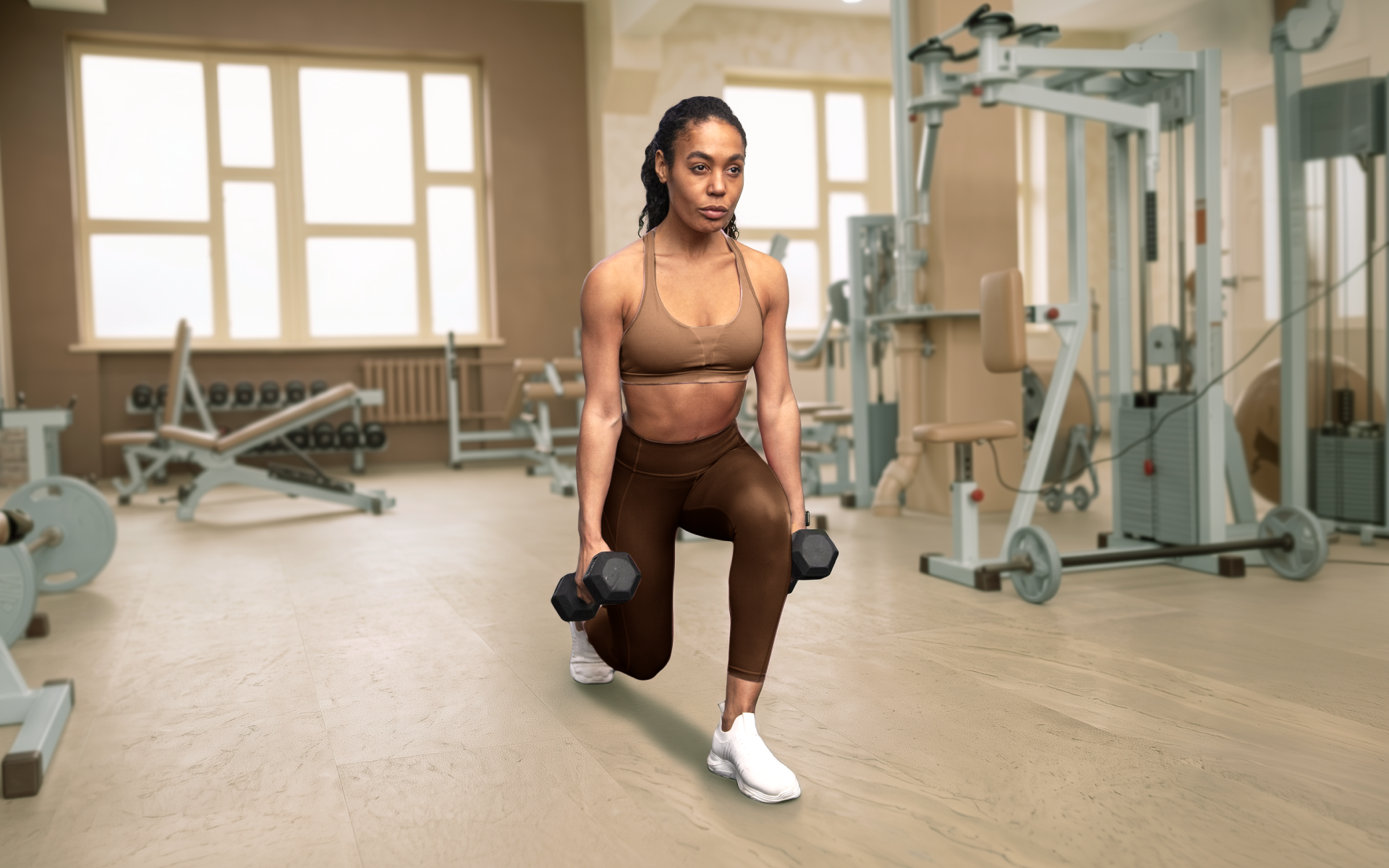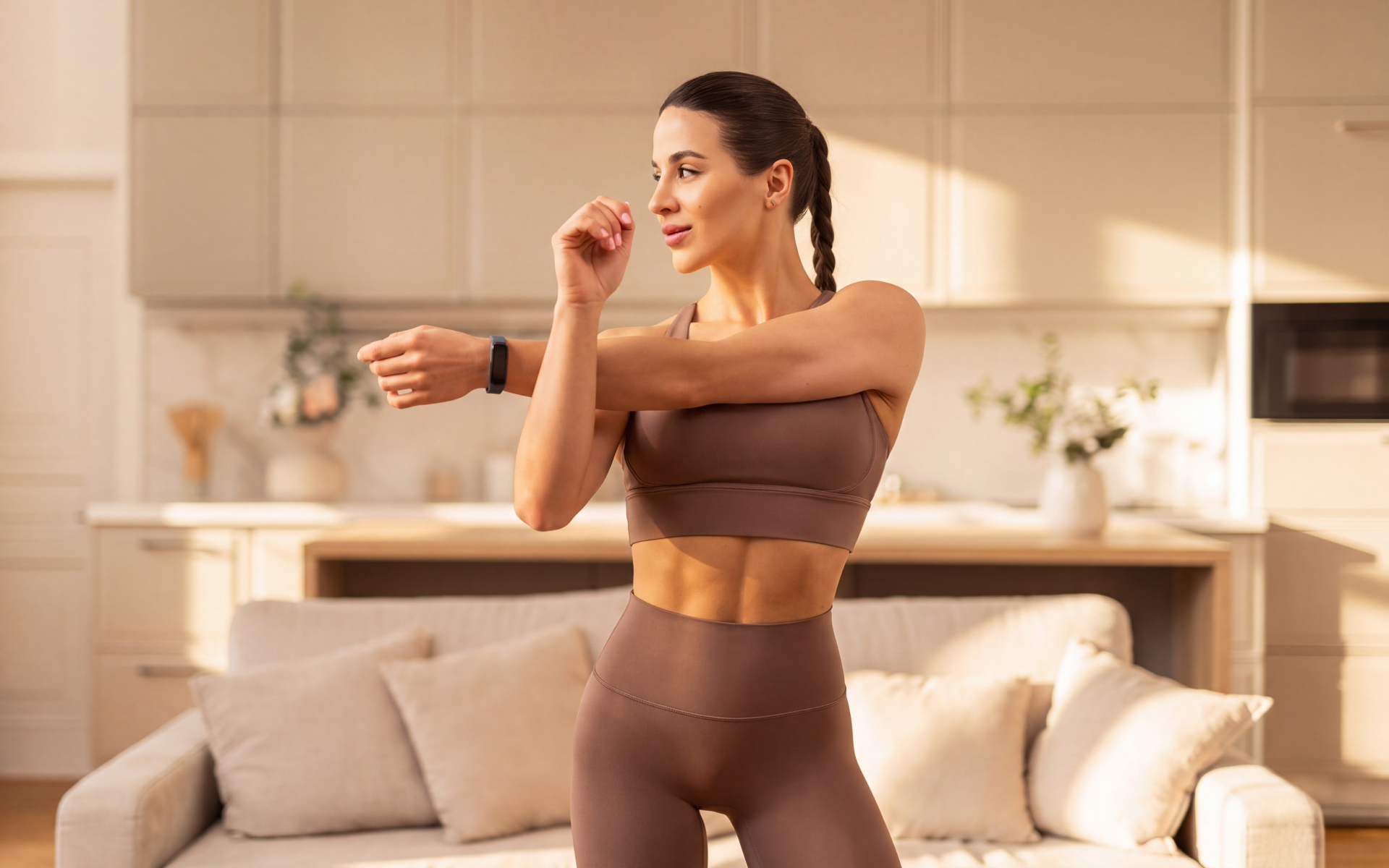
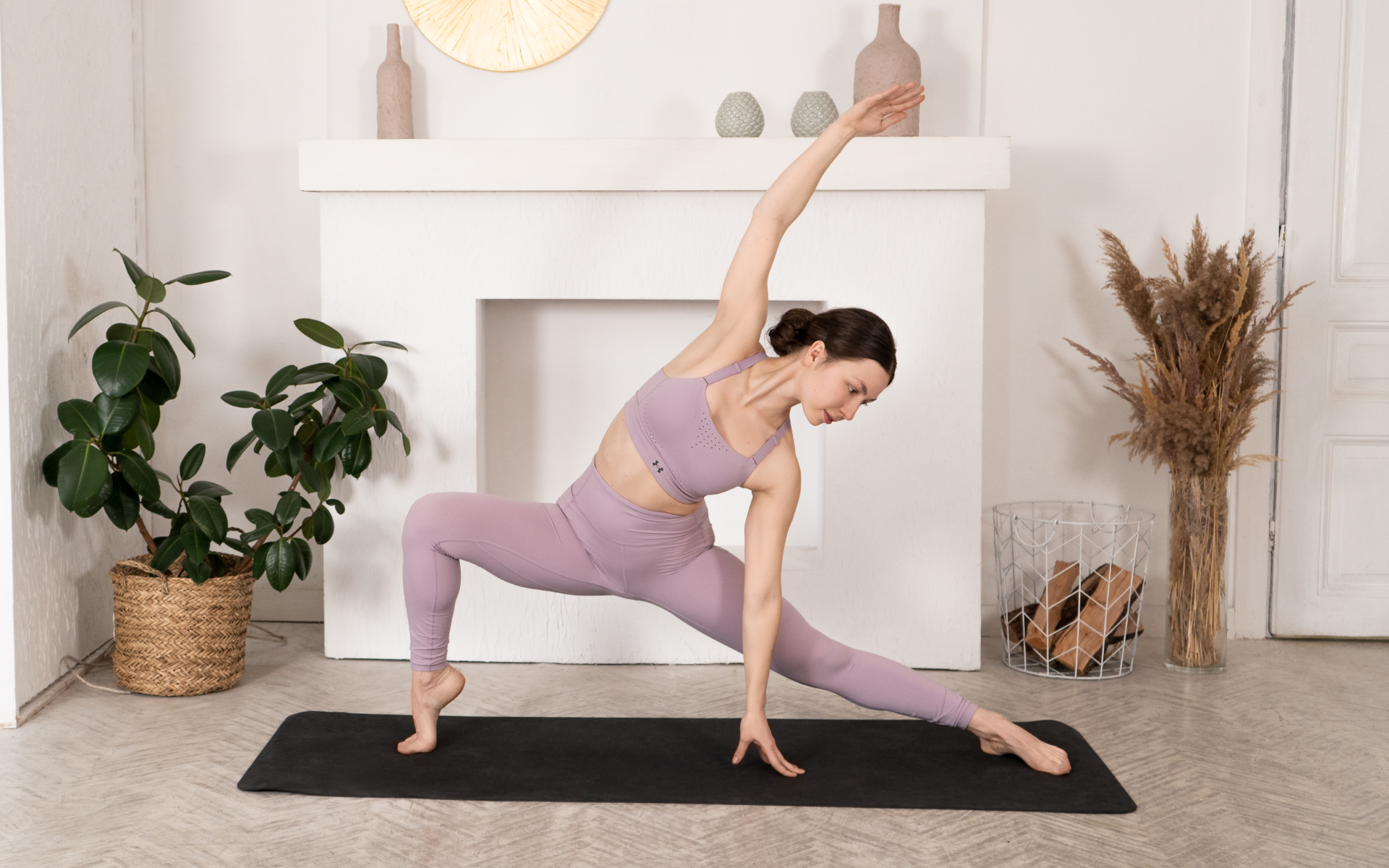
An at-home barre workout combines supported standing exercises, repeated small movements, and trunk-control work. Use a fixed counter or wall and begin with a comfortable range. The 30-minute example below includes preparation, rest, transitions, and a finish. The barre benefits guide explains what training claims deserve caution.
Key takeaways
- Barre can challenge lower-body and trunk endurance; one small trial measured improvements in female office workers (1).
- A fixed support and clear floor space help you arrange the movements.
- The 30-minute session is an editorial example, with all rest and transitions included.
- Low-impact movement can still require substantial effort and balance.
- A burning sensation or shaking does not determine whether a set is useful.
- Your weekly plan should also consider aerobic activity and strengthening coverage (2).
What is an at-home barre workout?
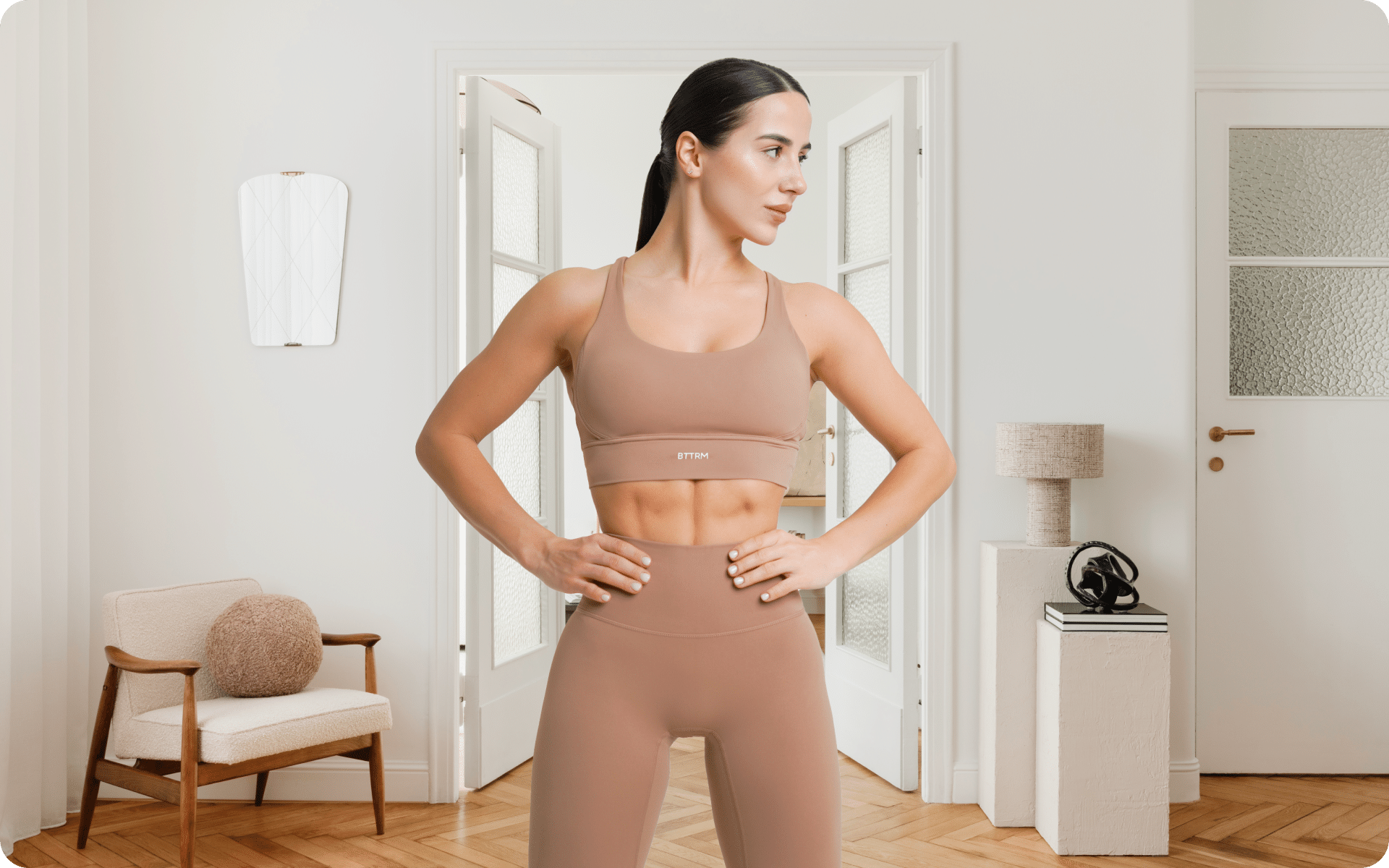
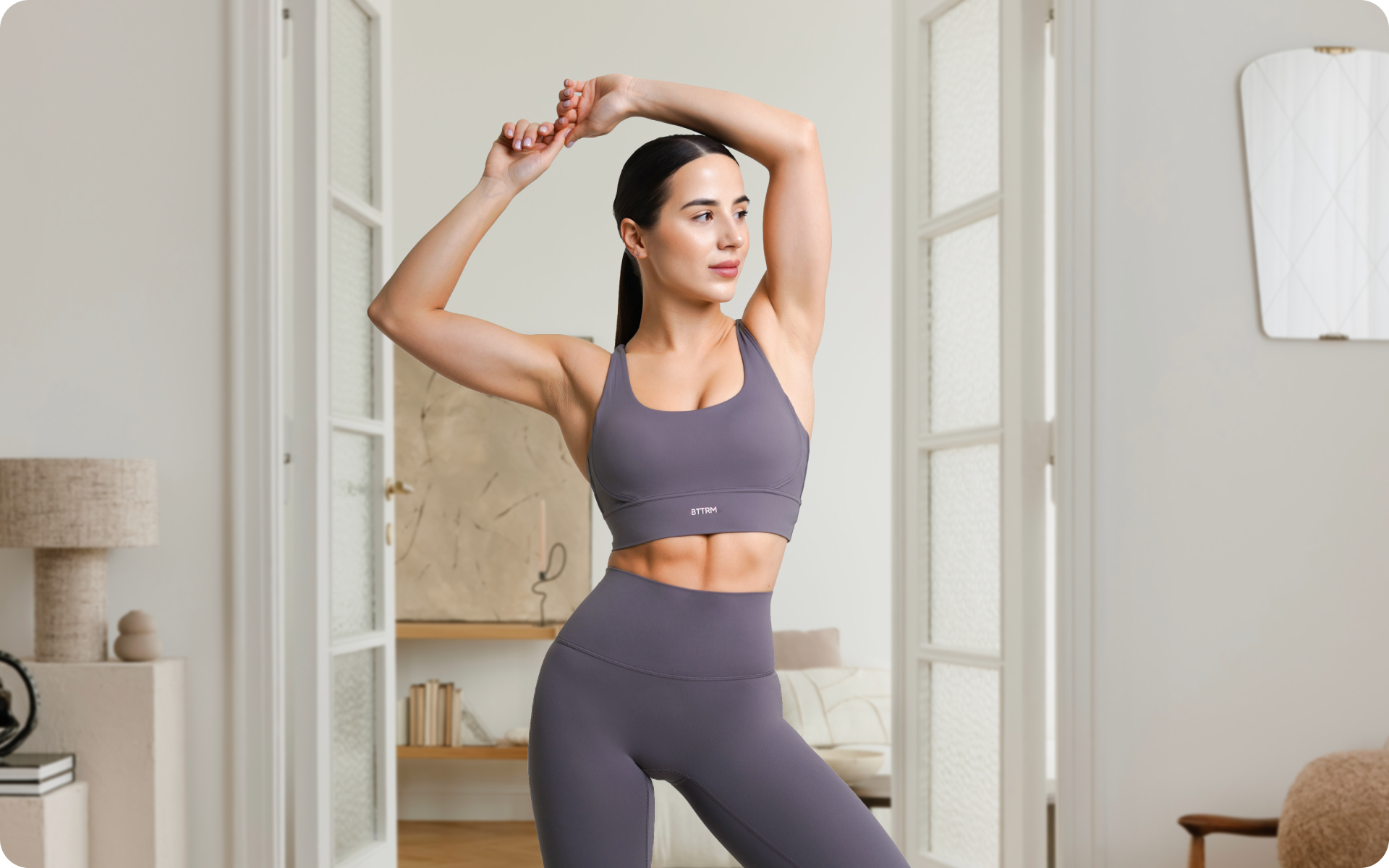
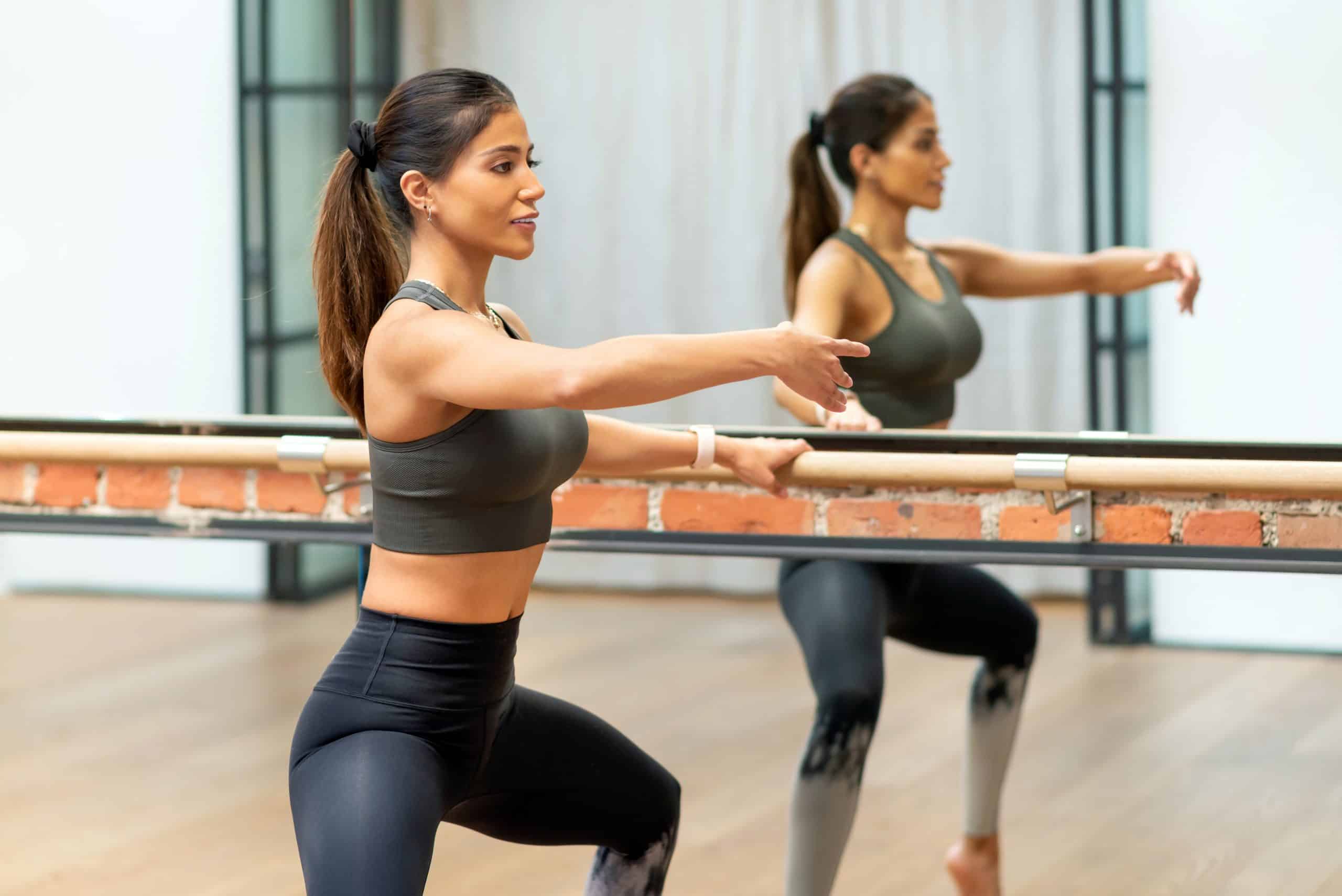
An at-home barre workout adapts ballet-inspired fitness movements to a home setting. The routine can include knee bends, heel raises, standing hip movement, and floor or supported trunk exercises. Class styles vary in pace and equipment.
Small pulses repeat part of a movement range. Holds maintain a position. Larger controlled repetitions move through more of your available range. Those actions place different demands on the exercise.
The ballet influence does not require dance experience. Start with parallel feet when turnout feels unfamiliar. Your feet and knees should remain comfortable throughout the movement.
The support gives you a reference for balance. A home countertop can serve that purpose if the surface is fixed and the floor is clear. Avoid movements that require pulling away from improvised furniture.
What equipment do you need?
You need a clear surface, a fixed support for standing balance, and a comfortable area for any floor work. The sample uses bodyweight. No specialized barre, weights, or resistance band is required.
Choose a wall or fixed counter before considering a chair. A chair may slide or tip even when placed near a wall. If the support shifts during a light balance check, use another surface.
|
Item |
Purpose |
Setup check |
|---|---|---|
|
Fixed wall or counter |
Standing balance |
Surface cannot slide or tip |
|
Clear floor |
Foot placement and stepping |
No loose objects or wet patches |
|
Optional mat |
Comfortable floor practice |
Mat stays flat |
|
Timer |
Track inclusive intervals |
Easy to read without turning suddenly |
|
Water nearby |
Optional drink during breaks |
Container outside the movement area |
Do not use a door handle as your exercise support. Avoid balancing on a ring or other flexible prop. Use equipment according to its intended purpose.
The Pilates ring setup guide describes a different equipment task. You can leave props aside until your standing positions feel familiar.
BetterMe Well-Being Coach app helps you achieve your body goals with ease and efficiency by helping to choose proper meal plans and effective workouts. Start using our app and you will see good results in a short time.
How does the 30-minute routine work?
The routine uses timed blocks that include rest and position changes. The plan is an editorial example, rather than a tested program. You can shorten the active portions and keep the remaining time for rest.
|
Block |
Included activity |
Time |
Interval structure |
|---|---|---|---|
|
Preparation |
Easy marching, arm movement, practice knee bends |
5 minutes |
Comfortable continuous practice with pauses |
|
Thigh movement |
Supported plié or parallel knee bend |
5 minutes |
5 rounds of 40 seconds movement, 20 seconds rest |
|
Calf movement |
Supported heel raises |
3 minutes |
3 rounds of 40 seconds movement, 20 seconds rest |
|
Hip movement |
Standing kickback, alternating sides |
6 minutes |
6 rounds of 40 seconds movement, 20 seconds rest |
|
Trunk control |
Standing knee lift and supported plank |
6 minutes |
6 rounds of 30 seconds movement, 30 seconds rest |
|
Finish |
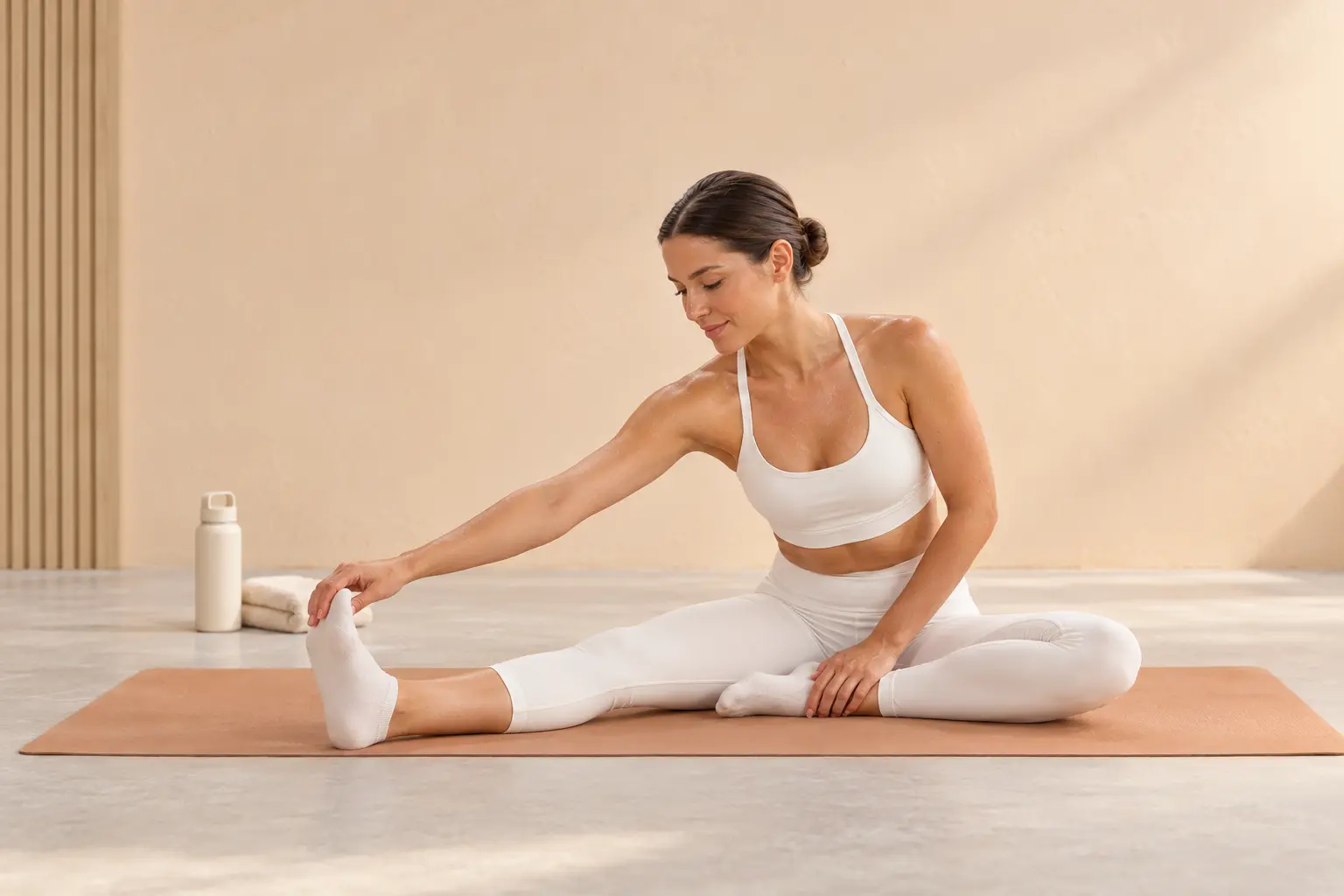
Easy walking and optional comfortable stretches |
5 minutes |
Comfortable movement with pauses |
|
Total |
Includes all planned rests and transitions |
30 minutes |
No additional timed block required |
Use the rest portions to change position. During the hip block, alternate sides each minute. Each leg receives 3 movement intervals.
For trunk control, alternate a supported standing knee lift and a wall or counter plank. The 6 rounds give 3 intervals of each movement. Keep every active portion shorter when control needs attention.
A shorter practice can use only preparation and a few movement intervals. Avoid rushing the finish to preserve a headline duration. The clock organizes the session, while your comfort determines participation.
How do you perform the standing exercises?
Perform the standing exercises with light support and a range you can repeat smoothly. Begin with larger slow repetitions before trying pulses. Stop to reset if your feet, knees, or trunk lose position.
Supported plié or parallel knee bend
A plié is a knee bend performed with some turnout. A parallel stance is an alternative when turnout feels awkward.
- Stand beside a fixed support.
- Place your feet in a comfortable stance.
- Bend your knees through a small range.
- Straighten your legs gradually.
- Pause upright when you need rest.
Keep your knees moving in the same direction as your toes. Avoid forcing your feet into a fixed turnout angle. Your available hip movement determines a comfortable stance.
Pulses are optional after you can repeat the bend smoothly. Use a small controlled movement rather than bouncing. Return upright before fatigue changes your position.
Supported heel raise
A heel raise practices lifting and lowering your heels while maintaining balance. Begin with parallel feet and both hands available for support.
- Stand facing a fixed counter.
- Rest your hands lightly on the surface.
- Lift your heels a comfortable distance.
- Lower your heels gradually.
- Pause with both feet flat.
Avoid rolling your weight toward the outer edges of your feet. A lower raise may feel steadier. Keep your heels down and practice weight shifts if lifting feels uncertain.
Long heel-raised holds are optional variations. The timed block does not require holding for its entire active interval. You can repeat comfortable raises and pause between them.
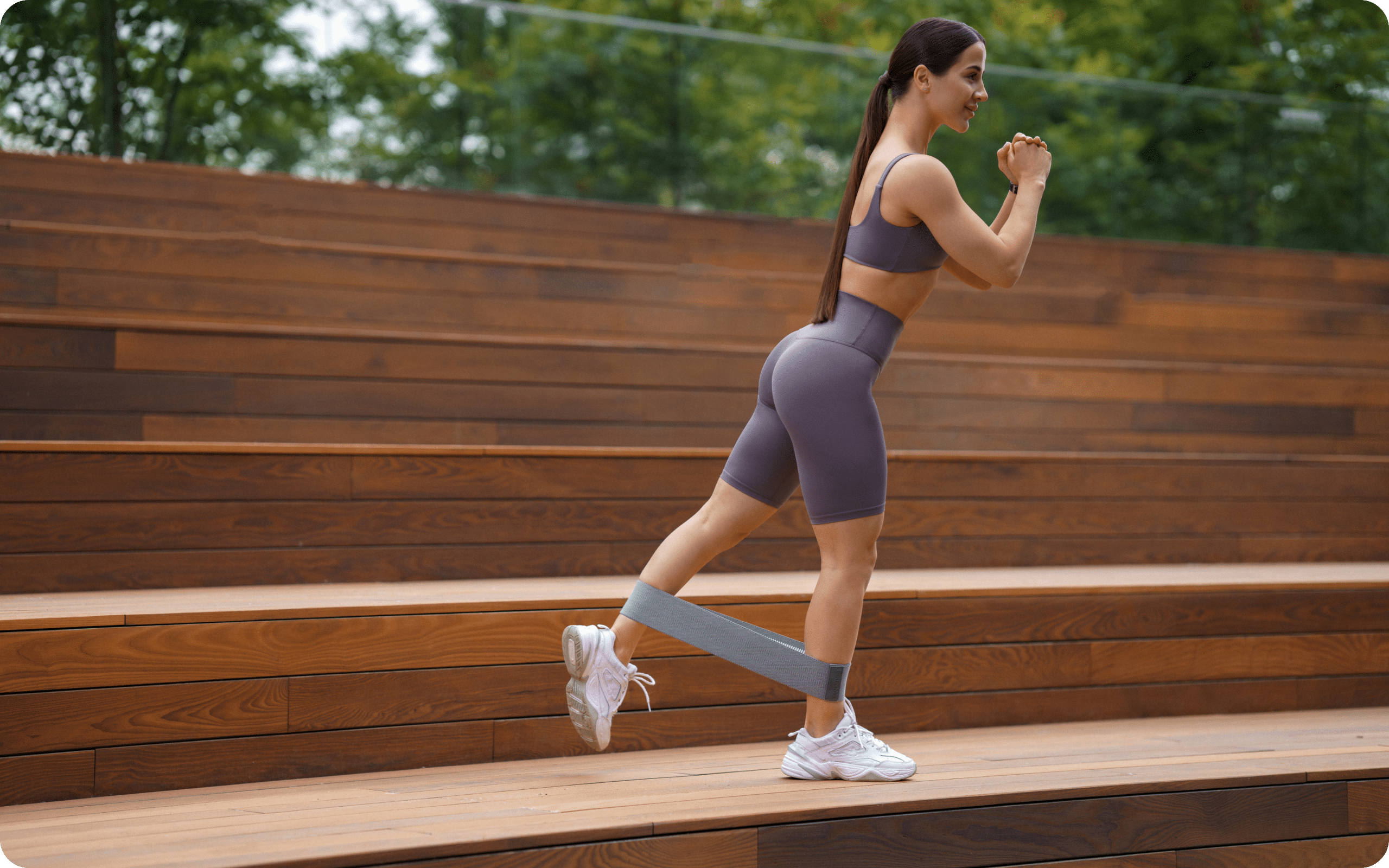
Standing kickback
A standing kickback moves one leg behind you while the supporting leg stays steady. Keep the movement small.
- Face a fixed support with your hands resting on it.
- Shift weight onto one leg.
- Move the other leg a short distance backward.
- Return the working foot to the floor.
- Change sides during the next rest interval.
Avoid arching your back to lift the leg farther. The movement comes from the hip. A low backward reach can provide a clearer starting task than a high leg lift.
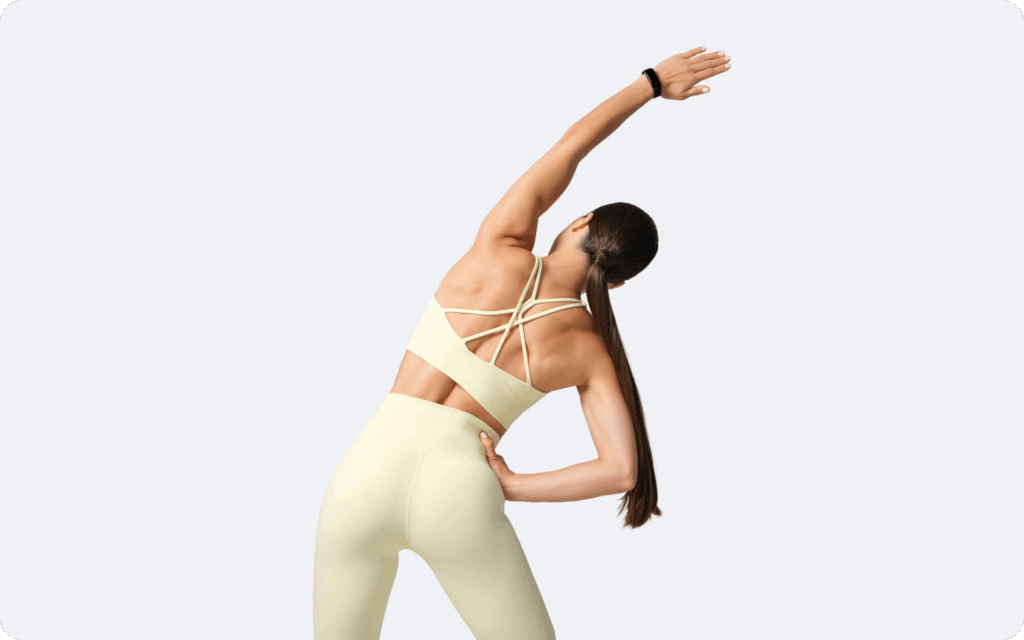
Optional curtsy modification
A curtsy crosses one leg behind the other and adds a knee bend. The crossed position can be harder to regulate. Use a straight step-back when the curtsy feels awkward.
- Stand beside a fixed support.
- Step one foot a short distance backward.
- Bend both knees slightly if comfortable.
- Return the back foot to the starting position.
Keep this variation outside your first practice if the basic knee bend remains unfamiliar. You can replace a kickback interval with a supported step-back. Keep the same interval timing and alternating-side pattern.
How do you perform the trunk-control block?
Perform trunk-control work with a stable starting position and comfortable breathing. The sample alternates standing knee lifts and supported planks. Both can be simplified without changing the block duration.
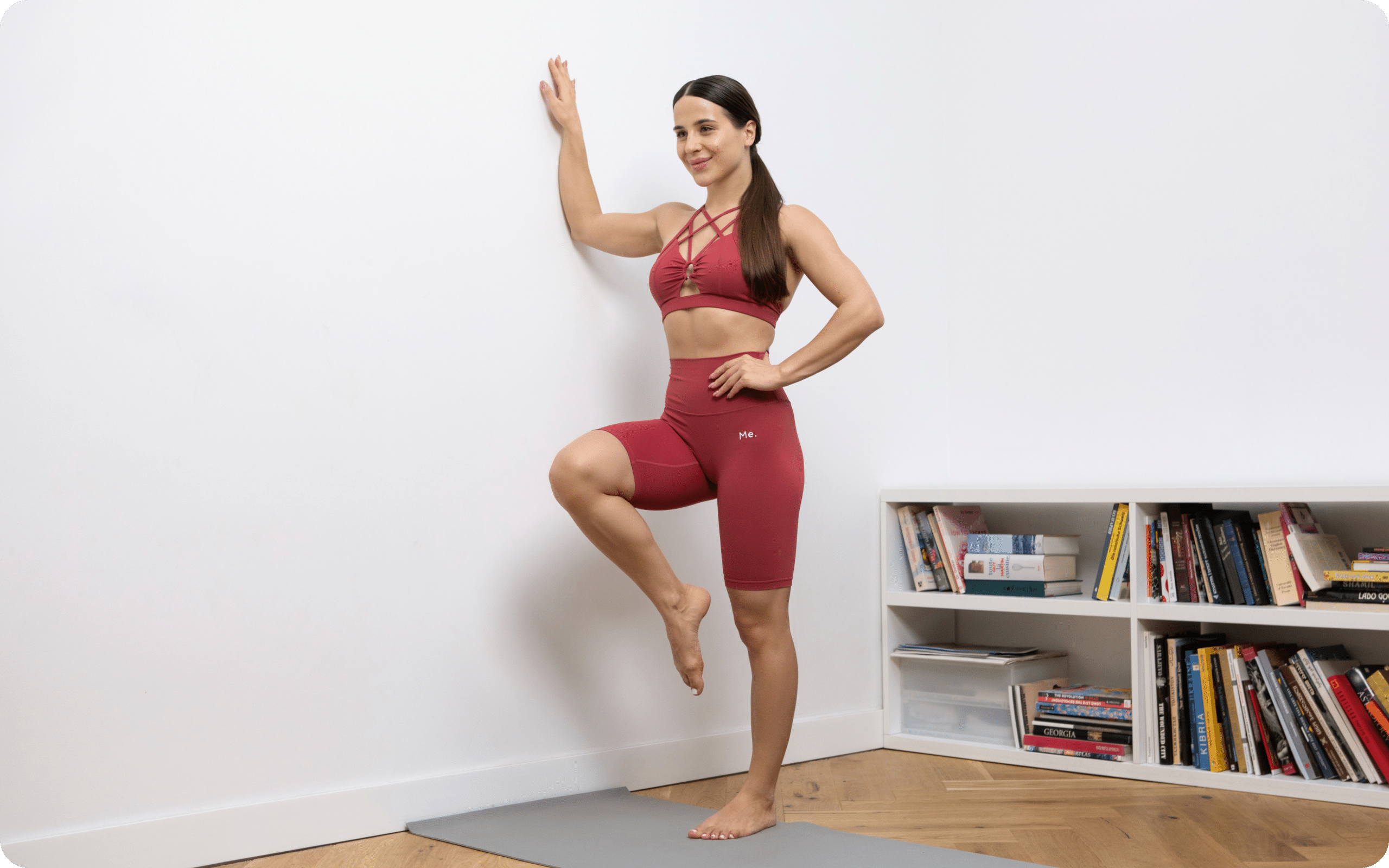
Supported standing knee lift
- Stand beside a wall or fixed counter.
- Shift weight onto one leg.
- Lift the other knee a comfortable distance.
- Return the foot to the floor.
- Alternate legs within the interval.
Keep your trunk upright. Avoid pulling your knee toward an overhead elbow during the first session. The simpler knee lift lets you monitor balance before adding a side crunch.
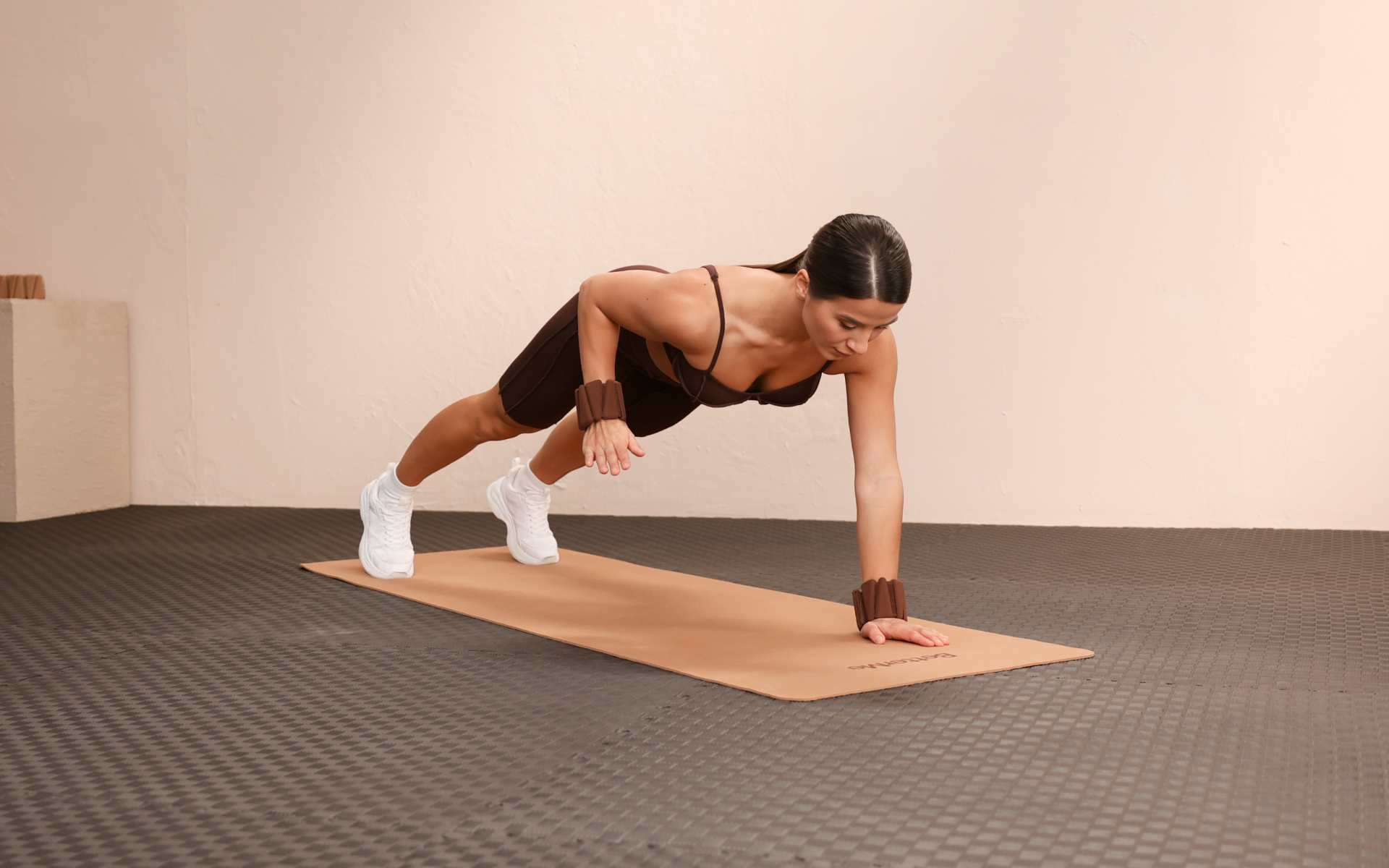
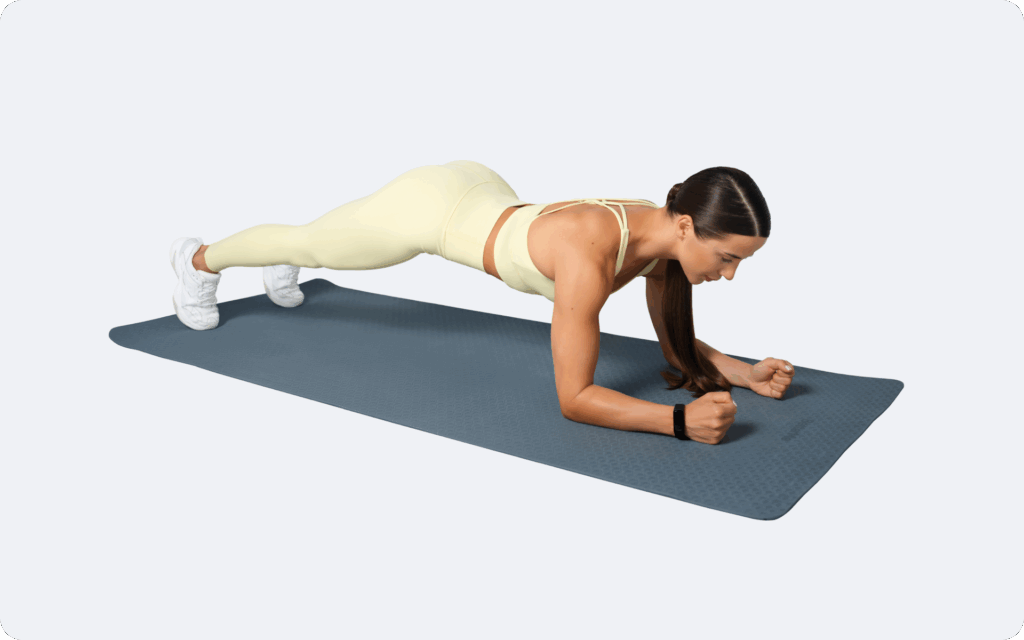
Wall or counter plank
- Place your hands on a fixed wall or suitable counter.
- Step your feet back a comfortable distance.
- Maintain a steady line through your trunk.
- Breathe comfortably during the hold.
- Step forward to finish.
Use the wall when the counter version feels too demanding. A floor forearm plank is another variation, with greater control demands. Avoid moving to the floor simply to make the exercise look harder.
For a closer comparison of mat work, read the barre and Pilates guide. The format helps explain why different trunk exercises can feel demanding.
Reasons why BetterMe is a safe bet: a wide range of calorie-blasting workouts, finger-licking recipes, 24/7 support, challenges that’ll keep you on your best game, and that just scratches the surface! Start using our app and watch the magic happen.
Can barre build strength or change body shape?
Barre can provide muscular work, but body-shape changes are not guaranteed. A small trial measured lower-limb and trunk strength and endurance improvements (1). The participants were sedentary female office workers.
Progressive resistance training supports muscle function, with the program and load affecting the result (3). A repeated bodyweight routine can eventually become less demanding. Review your movement quality before adding external resistance.
Pilates research has also measured endurance and flexibility improvements in specific adults (4). Those findings do not establish that barre produces the same changes. Use the relevant evidence for the method being discussed.
Avoid judging the workout by soreness, shaking, or a promised transformation date. Record whether your stance remains steady and both sides receive the planned intervals. Track the actual exercises you completed.
Does a barre session count as cardio?
A barre session counts toward aerobic goals when the relevant portions reach a suitable sustained effort. Class labels alone cannot establish intensity. Moderate effort allows talking but makes singing difficult (5).
The full 30 minutes includes rest and preparation. Those minutes should not automatically be recorded as moderate aerobic activity. Use your actual effort rather than the headline duration.
General adult guidance includes at least 150 minutes of moderate aerobic activity weekly and muscle-strengthening work on 2 days (2). Your activity plan can combine different formats. The three-style comparison includes another movement option.
Yoga formats also vary, with guidance emphasizing appropriate instruction and adaptations (6). A class name does not establish suitability. Seek qualified guidance when medical circumstances or ongoing discomfort affect exercise choices.
How can you record your first session?
Record the movements you actually completed, including shortened intervals and extra breaks. Note the support you used and any position changes. Keep the record brief enough to repeat after another session.
Compare the same movements before changing the routine. A steadier heel raise or smoother step-back gives you a specific observation. If an exercise remains confusing, bring that question to an instructor instead of adding more repetitions.
Yes, choose footwear that grips the surface and lets your feet move comfortably. Test the stance before beginning timed intervals. No, pause when shaking affects your control. Resume with a smaller movement or shorter active interval if comfortable. Yes, pause the timer or let the interval become rest. Extra breaks can extend the elapsed session beyond 30 minutes.Frequently Asked Questions
Can I complete the routine in shoes?
Should I continue pulsing when my legs shake?
Can I use the same timer when I take extra breaks?
The bottom line
Set up a fixed support and begin with the simpler standing movements. Use the timed plan to include rest and transitions. Keep active intervals manageable, and record the work you completed before adding difficulty.
Disclaimer:
This article is intended for general informational purposes only and does not serve to address individual circumstances. It is not a substitute for professional advice or help and should not be relied on for making any kind of decision-making. Any action taken as a direct or indirect result of the information in this article is entirely at your own risk and is your sole responsibility.
BetterMe, its content staff, and its medical advisors accept no responsibility for inaccuracies, errors, misstatements, inconsistencies, or omissions and specifically disclaim any liability, loss or risk, personal, professional or otherwise, which may be incurred as a consequence, directly or indirectly, of the use and/or application of any content.
You should always seek the advice of your physician or other qualified health provider with any questions you may have regarding a medical condition or your specific situation. Never disregard professional medical advice or delay seeking it because of BetterMe content. If you suspect or think you may have a medical emergency, call your doctor.
Sources:
- Effects of Barre Exercise Training on Lower Limbs and Core Muscle Endurance and Strength in Sedentary Female Office Workers (2024, he02.tci-thaijo.org)
- Adult Activity: An Overview (2024, www.cdc.gov)
- American College of Sports Medicine Position Stand. Resistance Training Prescription for Muscle Function, Hypertrophy, and Physical Performance in Healthy Adults: An Overview of Reviews (2026, pmc.ncbi.nlm.nih.gov)
- Pilates for improvement of muscle endurance, flexibility, balance, and posture (2010, pubmed.ncbi.nlm.nih.gov)
- How to Measure Physical Activity Intensity (2025, www.cdc.gov)
- Yoga: Effectiveness and Safety (n.d., www.nccih.nih.gov)
 Reviewed by
 Reviewed by