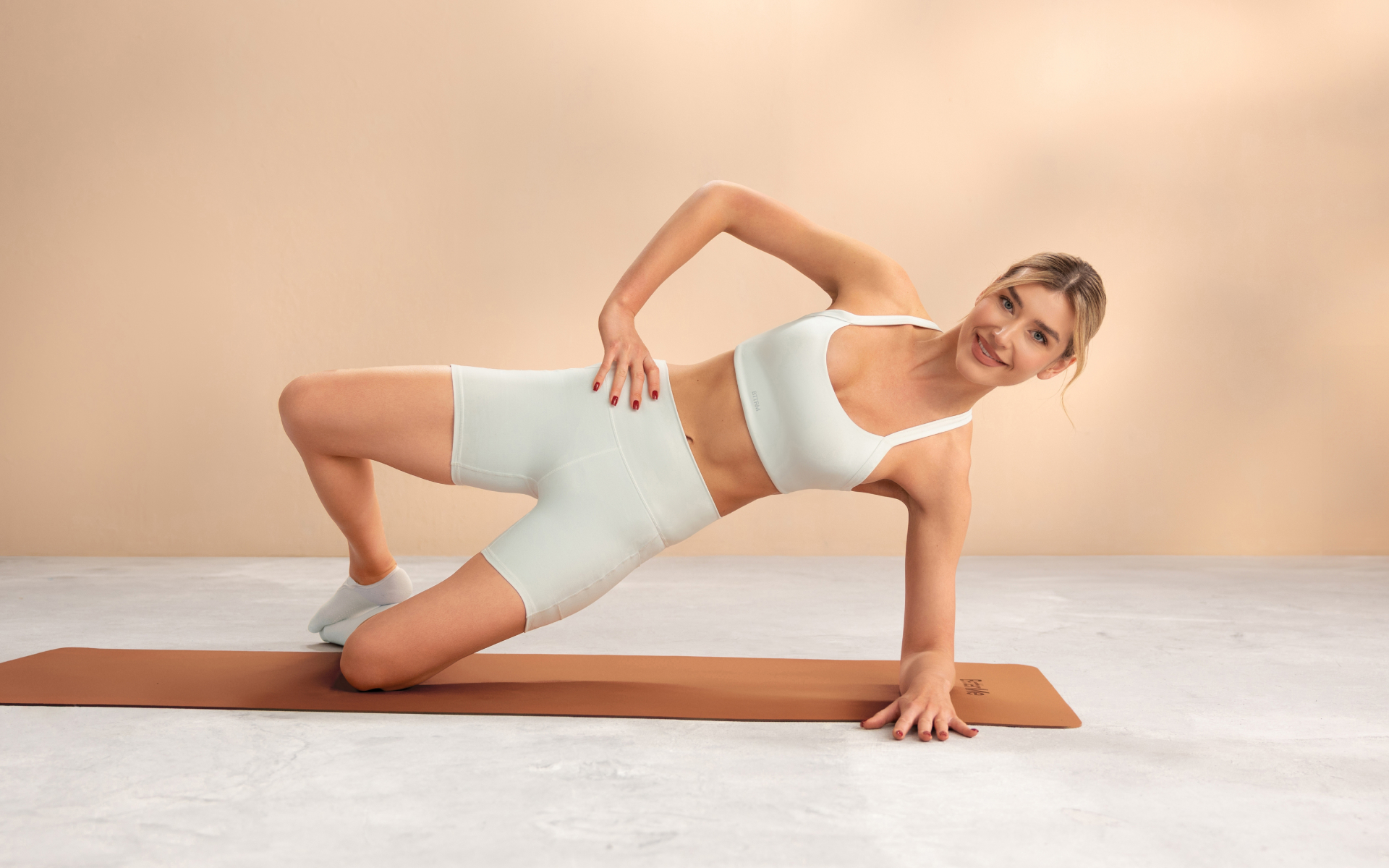
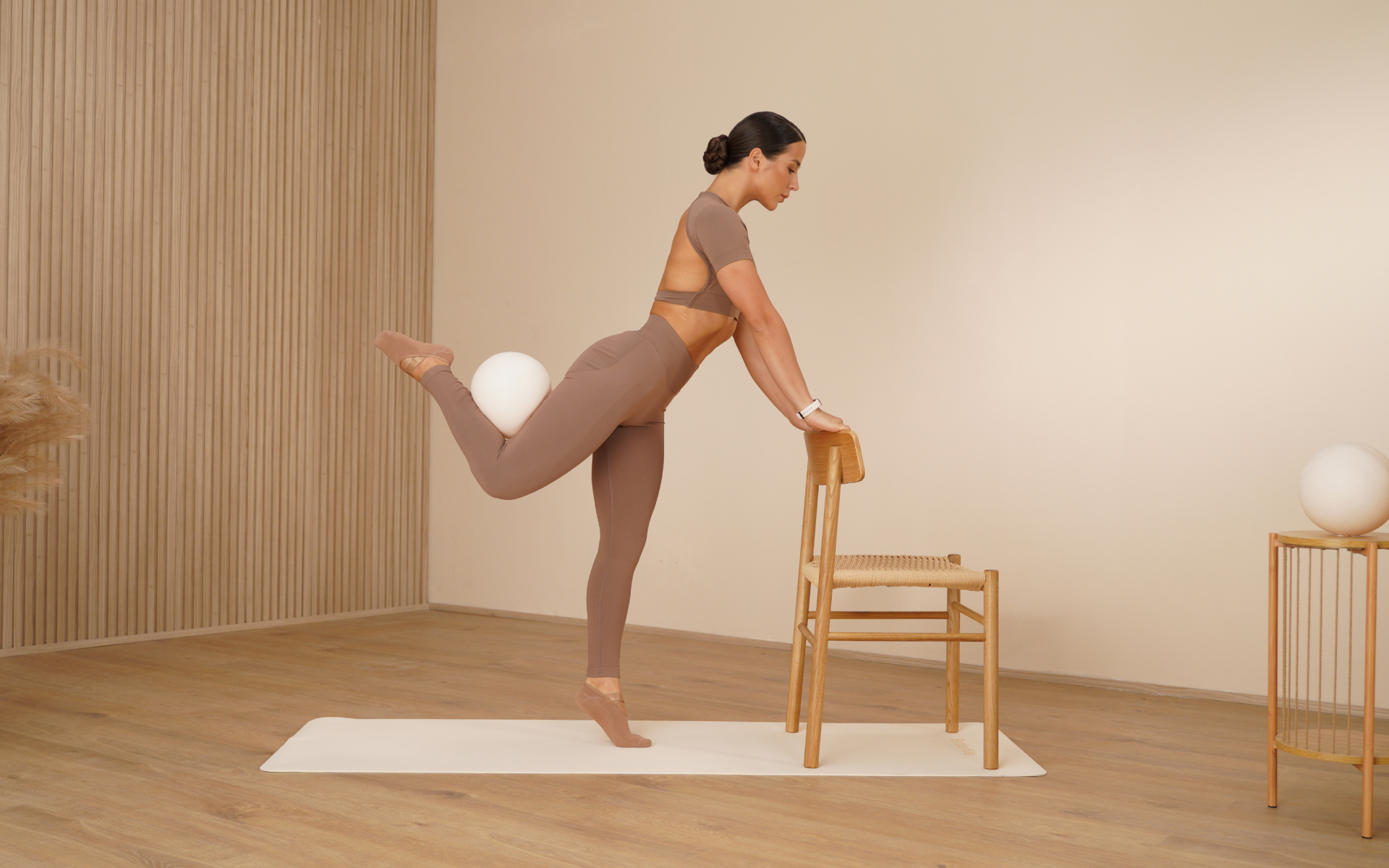
Barre and Pilates are both lower-impact workout styles that often focus on core work, flexibility, alignment, and controlled movement. The main difference is that Pilates primarily uses mat-based exercises or a reformer machine to build core stability and controlled movement, while barre incorporates a ballet barre and blends elements of dance, yoga, and strength training with small, isometric movements. If you prefer a faster-paced, music-driven class with lower-body-focused repetitions, barre may feel more engaging.
Barre and Pilates have something in common: they both include exercises that challenge core strength, muscular endurance, and body control. Pilates is a full-body practice that may support posture awareness, flexibility, balance, and coordination (1). On the other hand, barre is a series of low-impact exercises choreographed to music and is based on a combination of ballet moves and strength-training exercises (2).
Knowing this, which one may fit your routine better? The answer will depend on your individual needs and goals. Many forms of regular movement may support overall wellness, particularly when combined with a balanced diet and lifestyle.
It can be helpful to consider your preferences because if you enjoy doing it, you’re more likely to stick with it over a long period of time. That being said, you might need to know a little bit more about each exercise to decide which one better fits your preferences and routine. Here’s a comprehensive Pilates vs barre comparison to help you decide.
Always consult your physician before you start any recovery fitness program to make sure that it’s suitable for your specific needs. The information below isn’t medical advice, and it’s important to follow proper protocols when recovering from an injury.
Pilates vs Barre Origins
Not that knowing the origin of the exercises has much to do with you enjoying it, but it does serve as interesting knowledge.
Pilates was created by German physical trainer Joseph Pilates in the early 20th century. Pilates’ father was a gymnast and his mother was a naturopath, so Joseph had a strong interest in physical fitness and conditioning (3).
Growing up, he became interested in movement, strength, and physical conditioning. He eventually developed a system of exercises that emphasized the core muscles, breathing, and body control.
Barre is a combination of ballet moves and strength-training exercises that was popularized by ballerina Lotte Berk in London in 1959 (2).
When Berk injured her back performing, she began to look for ways to stay active and support her recovery. She combined elements of ballet, yoga, and other exercises that focus on isometric strength training and stretching.
Her goal was to combine ballet routines with conditioning exercises in order to create a controlled, lower-impact workout. This is the basis of the modern barre class.
Pilates vs Barre for Weight Management
Weight management is one common reason why people explore fitness routines. While cardio and lifting weights are more or less mainstream weight management activities, Pilates and barre may also fit into a balanced movement routine.
A standard Pilates class involves controlled movements, often in repetition and with a small range of motion. Your heart rate may increase if it’s a Pilates reformer class because this adds in resistance. As a result, you may expend more energy than in a slower, lower-resistance session.
How much energy you expend depends on your body weight, intensity, and the length of the class. Energy expenditure estimates for a Pilates session can range from approximately 64 to 213 calories, depending on the specific protocol and equipment used (4).
Pilates may support muscle strength and endurance as part of a consistent fitness routine. With consistent practice, Pilates may support strength, flexibility, and muscular endurance (5). Changes in body composition or appearance vary based on nutrition, consistency, intensity, and individual factors.
Barre is similar to Pilates in that it often uses lower-impact, controlled movements that may raise your heart rate and contribute to energy expenditure. However, it has a dance component that gives it a different dynamic.
The more you move, the more energy you expend. It may support muscular endurance, strength, and overall activity levels (6).
Both Pilates and barre may fit into a weight-management routine. Barre may feel more active for people who enjoy continuous, music-driven movement.
Note that compared to other types of exercises such as cardio or weight training, Pilates and barre are lower-intensity activities. As such, they may not be enough on their own for people with more substantial weight-management goals. A broader plan that includes nutrition, daily activity, and professional guidance may be more appropriate.
Read more: 3 Pilates Hip Exercises for a Stronger Lower Body
Pilates vs Barre for Flexibility and Strength
Pilates and barre classes may help support strength and flexibility over time.
In a typical Pilates class, you may be guided to stabilize your core muscles and move through small ranges of motion. This may help support strength and control in your smaller stabilizing muscles, as well as support overall strength and flexibility (1).
You’ll also be encouraged to focus on your breathing, which may help some people feel more focused during class.
Barre often feels more fast-paced, depending on the class format as it combines elements of ballet and strength training. Barre classes usually involve putting your body in various positions and using isometric exercises to focus on specific muscle groups (6).
Some classes use repeated movements that may challenge muscular endurance and flexibility over time.
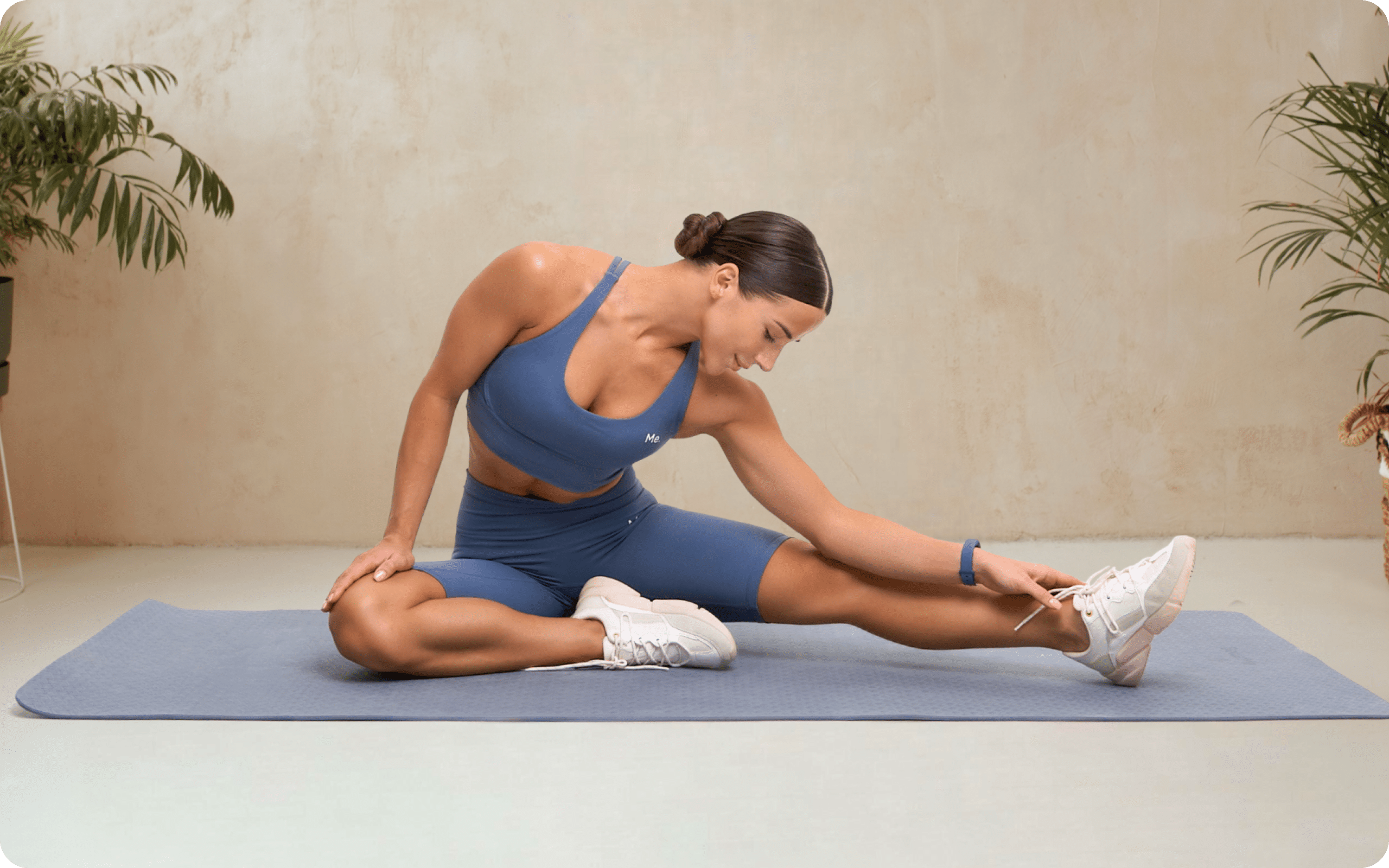
Pilates vs Barre for Low-Impact Movement
Both Pilates and barre are low-impact workout styles, but they’re not automatically suitable for everyone. If you have an injury, ongoing discomfort, or a medical condition, consult a qualified healthcare professional before starting or modifying a workout routine.
Pilates may appeal to people who prefer slower, controlled, core-focused movement. Its slower pace and emphasis on body control may feel more manageable for some beginners, while barre may appeal to those who prefer small-range, lower-body movements in a more upbeat class format.
Barre can also be adapted in some classes, depending on the instructor and format. Its lower-impact, strength-focused movements may help some people work on stability and control (6). Barre may help engage muscles through controlled, low-impact movements, which can help support overall physical wellness.
Intense sweat sessions, working weight loss tips, lip-smacking recipes come in one package with the BetterMe Well-Being Coach app—all at your fingertips, start transforming your life now!
Pilates vs Barre for Posture Awareness
Slouching, hunching, and reduced core awareness are common concerns for people who spend long periods sitting. Pilates and barre may support more mindful alignment.
Pilates focuses on core engagement, body control, and coordination. The exercises also emphasize alignment, which may help you become more aware of your posture during movement (7).
Barre classes also incorporate postural movement and alignment into the exercises. Posture-related awareness may improve through intentional control, core engagement, and repeated alignment cues. Some people may notice changes as they practice movement from different angles and work through comfortable ranges of motion (8).
Barre also includes dynamic, full-body movements that may support posture awareness over time (8).
If posture awareness is one of your goals, both Pilates and barre may be worth considering.

Barre vs Mat Pilates vs Reformer Pilates
When comparing these workouts, it’s helpful to understand the differences between the main variations of Pilates and how they stack up against barre.
| Feature | Barre | Mat Pilates | Reformer Pilates |
|---|---|---|---|
| Primary equipment | Ballet barre, light weights, resistance bands | Yoga/Pilates mat, body weight | Reformer machine (springs, pulleys, carriage) |
| Main focus | Lower-body endurance, isometric holds, high reps | Core stability, controlled movement, breathing | Full-body resistance, alignment, dynamic core strength |
| Pace and style | Upbeat, music-driven, continuous movement | Slow, focused, deliberate | Controlled, resistance-based, fluid |
| Best for | Lower-body endurance, small-range strength work, and continuous movement | Foundational core work, controlled movement, and minimal equipment | Added resistance, controlled movement, and flexibility-focused work |
Pilates vs Barre: Which One Should You Choose?
As both Pilates and Barre have similar benefits, you should consider the following factors when deciding which one to choose:
Level of Interest
There are nuances to both Pilates and Barre, so it’s important to decide which one appeals to you more. Perhaps you have a history of ballet, or you’re more interested in the core-strengthening exercises of Pilates.
Think about what piques your interest and go from there. Why that’s important: if you’re not interested in the class, you won’t be likely to stick with it.
Convenience
How easy will it be for you to get into Pilates? Conversely, how easy will it be for you to get into a barre session? A nearby, reasonably priced class with a qualified instructor may make consistency easier. Convenience can make it easier to stay consistent.
Physical Concerns or Limitations
If you have an injury, ongoing discomfort, or movement limitations, choose classes carefully and consider professional guidance. A healthcare provider or physical therapist can help you understand which movements may be appropriate for your situation.

Making the Most out of Your Pilates or Barre Class
Here are some tips for beginners and experienced practitioners to make the most out of their Pilates or barre class:
-
- Respect Your Body: Listen to your body and respect where it is on any given day. This means allowing yourself to take rests, or modify the exercises if needed.
- Find Your Breath: Focusing on breathing may help you stay focused and move with more control during class.
- Set Your Intentions: Before class, set a simple intention for the session. This may help you stay focused during class.
- Be Consistent: Consistency matters more than doing one intense class once in a while. A realistic weekly schedule may be easier to maintain.
- Fuel Your Body: Balanced meals and snacks can help support your energy around workouts.
- Be Patient: Strength, endurance, and coordination can take time to develop.
- Hydrate: Drink water throughout the day and adjust based on thirst, activity level, and climate.
Before a class, some people feel better with a light snack, particularly if they’ve not eaten for several hours. After class, a balanced meal or snack with protein and carbohydrates may support general post-workout nutrition (9).
Read more: When to Start Doing Wall Pilates: A Beginner’s Guide to This Gentle Workout
Frequently Asked Questions
Is barre or Pilates better?
Neither is objectively better—it depends on your goals and preferences. Pilates is often chosen for core-focused, controlled movement, while barre is often chosen for lower-body endurance and a more upbeat class style.
What is the difference between Pilates and barre?
The main difference between Pilates and barre is the focus and execution. Pilates emphasizes core stability and controlled, flowing movements, often on a mat or reformer. Barre focuses on isometric holds and high-repetition, small-range movements, primarily targeting the legs and glutes using a ballet barre for balance.
Can I do a barre and Pilates workout together?
Yes, combining barre and Pilates can create a well-rounded fitness routine. Pilates may support the core control and mobility that can be useful in barre classes, while barre can add muscular endurance work and a more continuous class format.
What are the barre Pilates benefits?
Combining elements of both workouts may support core engagement, lower-body endurance, flexibility, coordination, and a more varied fitness routine.
The Bottom Line
Both Pilates and barre can be part of a low-impact fitness routine. When deciding which one to choose, consider your level of interest, convenience, class format, and any physical concerns or movement limitations.
With the right information, you can make a more informed choice about which workout style fits your goals, preferences, and routine.
DISCLAIMER:
This article is intended for general informational purposes only and does not serve to address individual circumstances. It is not a substitute for professional advice or help and should not be relied on for making any kind of decision-making. Any action taken as a direct or indirect result of the information in this article is entirely at your own risk and is your sole responsibility.
BetterMe, its content staff, and its medical advisors accept no responsibility for inaccuracies, errors, misstatements, inconsistencies, or omissions and specifically disclaim any liability, loss or risk, personal, professional or otherwise, which may be incurred as a consequence, directly or indirectly, of the use and/or application of any content.
You should always seek the advice of your physician or other qualified health provider with any questions you may have regarding a medical condition or your specific situation. Never disregard professional medical advice or delay seeking it because of BetterMe content. If you suspect or think you may have a medical emergency, call your doctor.
SOURCES:
- Effects of Pilates Exercise on Women’s Health Outcomes: An Umbrella Review with Meta-Analysis (2025, sciepub.com)
- Behind the Barre: the history and evolution of the fitness phenomenon called “barre” (2018, medium.com)
- The History of Pilates (n.d., pilatesfoundation.com)
- Energy expenditure during a Pilates exercise session: a systematic review (2025, scielo.br)
- Effects of reformer pilates on body composition, strength, and psychosomatic factors in overweight and obese women (2025, ncbi.nlm.nih.gov)
- Barre-fitness as a modern means of improving the health of women in the first period of adulthood (2023, phrir.com)
- Effects of Pilates exercises on spine deformities and posture: a systematic review (2024, springer.com)
- Effects of Walking and Barre Exercise on CES-D, Stress Hormones, hs-CRP, and Immunoglobulins in Elderly Women (2025, ncbi.nlm.nih.gov)
- Coingestion of Carbohydrate and Protein on Muscle Glycogen Synthesis after Exercise: A Meta-analysis (2020, ncbi.nlm.nih.gov)
 By
By 
 Reviewed by
 By
By