To learn how to use a Pilates ring, begin with gentle hand pressure and supported thigh presses. Check the ring’s condition and permitted placements before adding movement. Choose a squeeze you can release slowly. The ring exercise guide helps you select a few manageable options for your first practice.

Key takeaways
- Some rings have padded surfaces inside and outside the circle; check your own model (1).
- First learn a light squeeze while your feet or trunk remain supported.
- The ring is an optional prop, with unweighted versions available for most starting movements.
- Keep pressure away from kneecaps and uncomfortable contact points.
- Pilates research has measured changes in endurance and flexibility, without establishing ring-specific results (2).
- Raised-leg, twisting, and single-leg movements can wait until the simpler setup feels controlled.
What is a Pilates ring used for?
A Pilates ring is used to add pressure-based resistance or a placement cue during exercise. The flexible circle changes shape when squeezed. The ring is also known as a magic circle.
Your hands can press the outer pads inward. Your thighs can do the same in a supported position. Some models permit outward pressure against inner pads (1). Follow your ring’s instructions because surfaces and permitted uses vary.
The circle is not a fixed balance rail or a platform for your bodyweight. Keep your hands on the floor during supported exercises. Use a wall or fixed counter for standing balance.
A useful first goal is learning how the ring responds. Apply a modest squeeze, maintain your position, and release gradually. Avoid testing how far you can bend the frame.

How do you check a ring before using it?
Check the frame, padding, and fit before your first exercise. A damaged or awkwardly fitting ring can interfere with the movement. Use an unweighted option when the equipment is unsuitable.
- Read the manufacturer’s directions for intended placements.
- Inspect the frame for cracks or unusual bending.
- Check that the pads remain firmly attached.
- Test a gentle squeeze between your palms.
- Release the pressure gradually.
- Put the circle down before changing your position.
Keep the instructions for cleaning and storage too. Heat, cleaning chemicals, or rough handling may affect some materials. Follow the maker’s directions rather than applying one cleaning method to every ring.
Choose a mat with room to lie down and change sides. Move loose objects away from your arms and feet. Put the circle within reach so you can set the prop down between exercises.
|
Setup question |
Useful check |
Easier choice |
|---|---|---|
|
Can your hands reach the pads comfortably? |
Shoulders stay relaxed |
Smaller or less rigid ring |
|
Can you position the ring above your knees? |
Pads do not pinch |
Unweighted movement |
|
Can you release pressure slowly? |
Circle stays steady |
Lighter squeeze |
|
Can you breathe normally? |
No breath-holding during the press |
Shorter press or rest |
|
Does the movement require balance? |
Fixed support is available |
Seated or supine version |

How do you learn the first hand press?
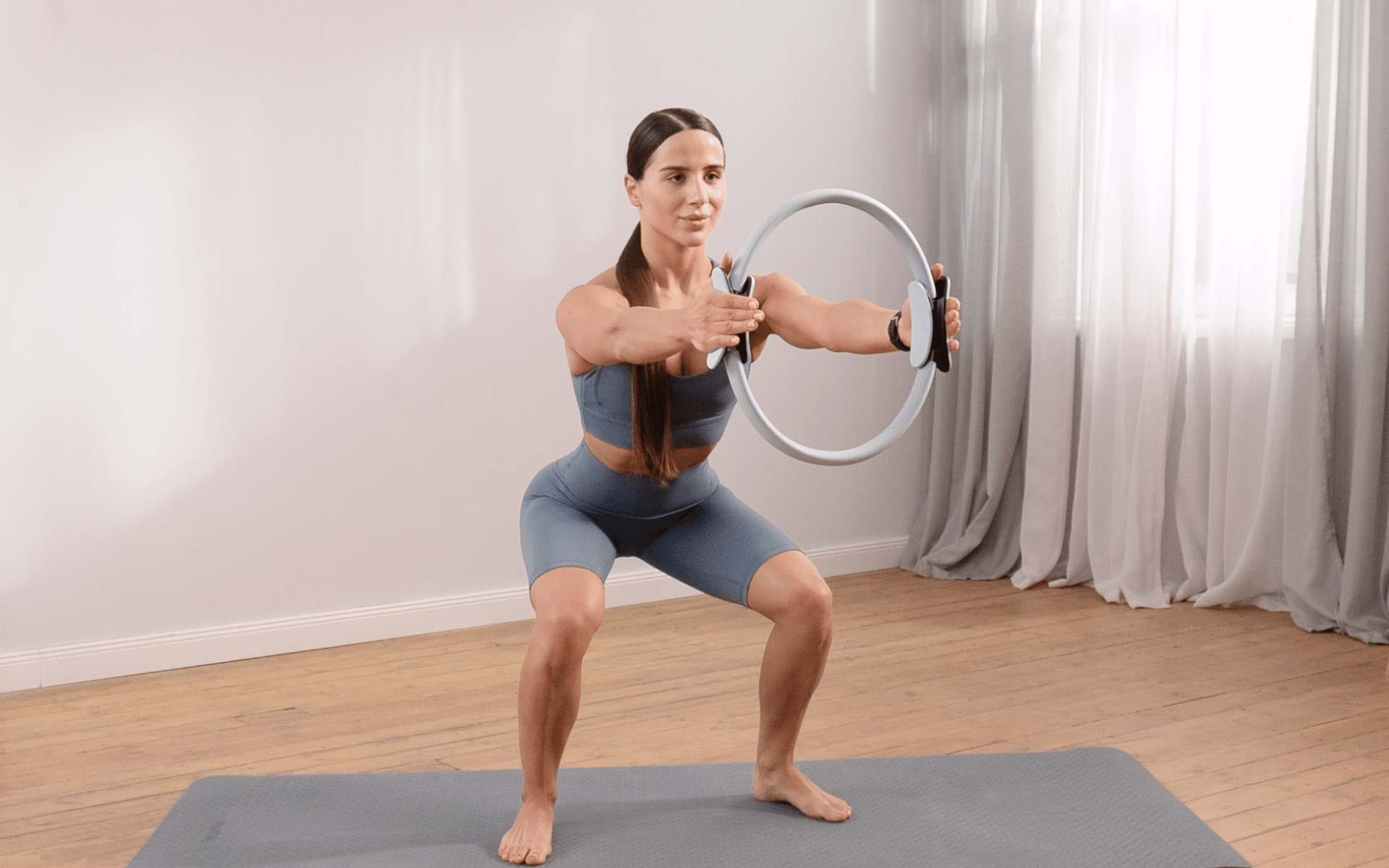
Learn the hand press while seated, with your feet supported and the ring in front of your chest. Start with little pressure. The task is controlling the squeeze and release.
- Sit with both feet supported.
- Hold the outer pads between your palms.
- Keep your elbows comfortably bent.
- Press your palms inward slightly.
- Release until the circle returns gradually.
- Lower your arms before resting.
Watch your shoulders during the press. If your shoulders rise, reduce the squeeze. If your wrists bend sharply, change hand placement or choose a different ring.
Use a short set while learning the equipment. For example, try 4 to 6 gentle presses, then rest. That amount is an editorial practice suggestion, rather than a studied training dose.
Practice with the ring at chest height before raising your arms. Holding the ring overhead introduces another movement task. You can keep chest-height pressure as your starting exercise.
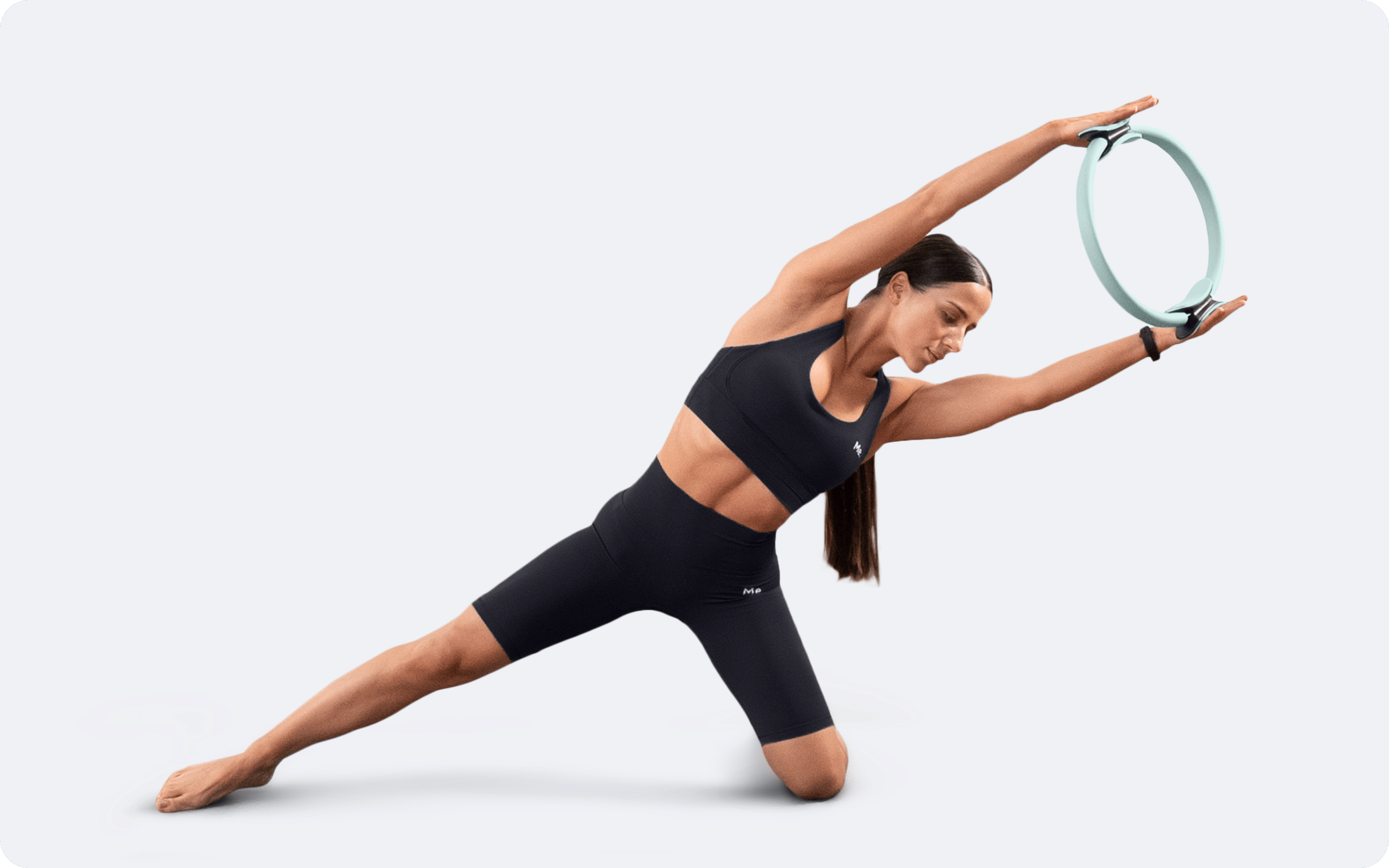
Get ready to circle your way to success! BetterMe’s Toning Pilates Ring brings the gym to your living room with a pop of padded perfection. Tone, tighten, and take your workout to the next level — one ring to rule them all!
How do you learn an inner-thigh press?
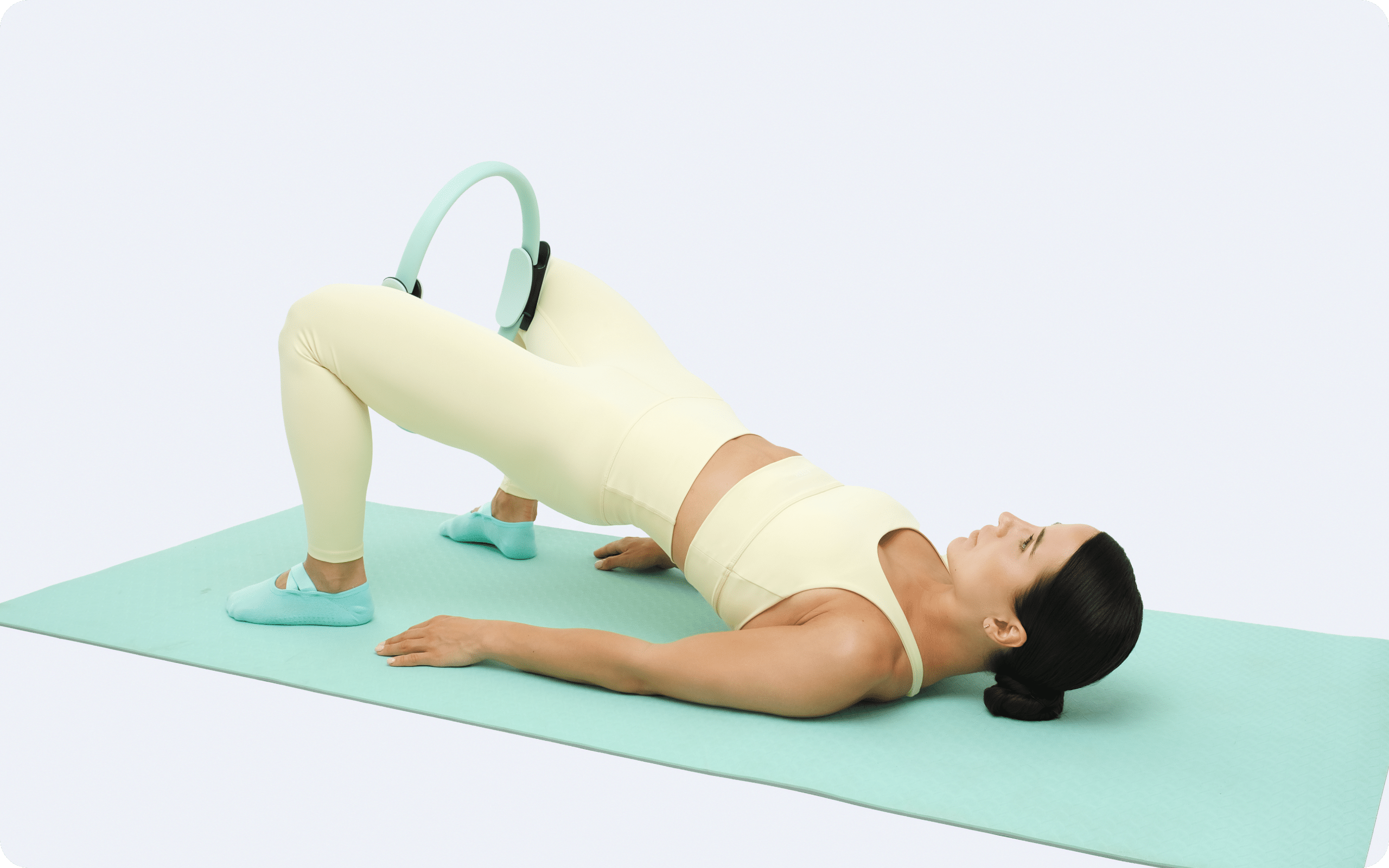
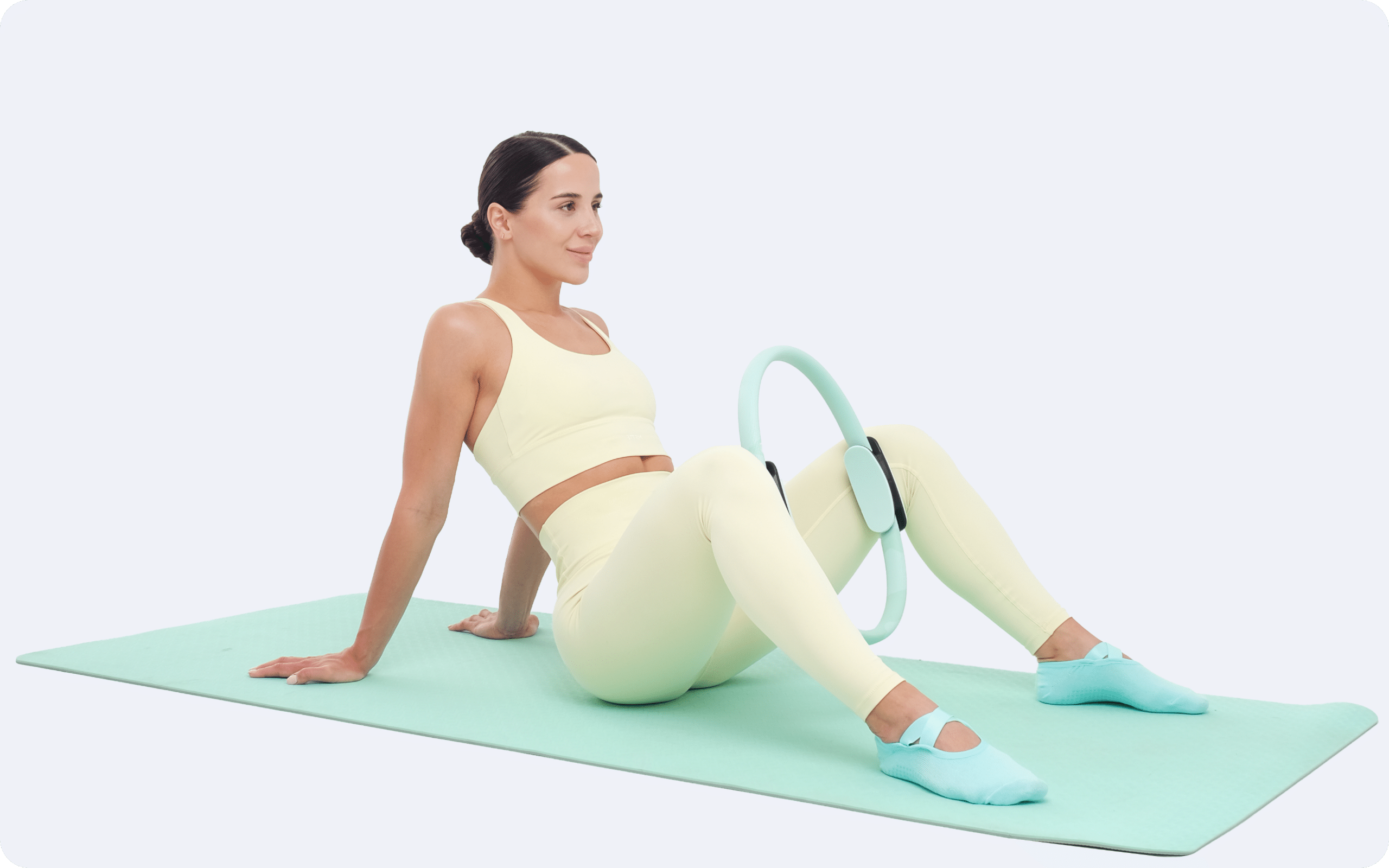
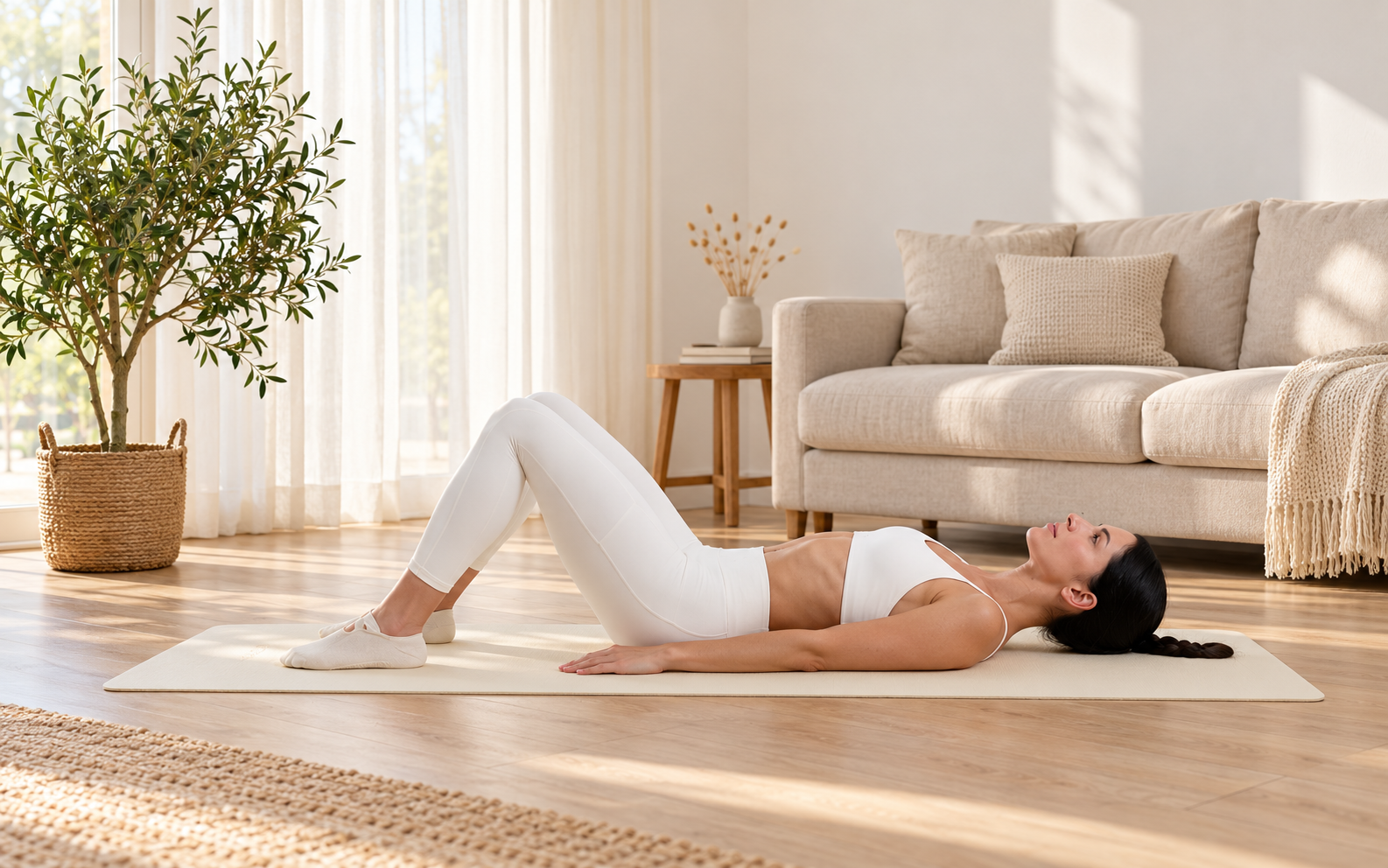
Learn an inner-thigh press lying on your back with both feet supported. Place the pads above your knees. Keep the circle away from the kneecaps.
- Lie on your back with both knees bent.
- Position the ring between your thighs above the knees.
- Press inward gently.
- Release the pressure slowly.
- Remove the ring before sitting up.
Keep the starting distance between your feet comfortable. Avoid moving your feet into an awkward stance simply to fit the circle. A different ring or an unweighted movement may suit you better.
The ring resists your inward pressure. A thigh squeeze does not automatically teach pelvic-floor technique or address a medical concern. Ask a qualified professional for guidance on those separate questions.
You can compare other placements in the ring workout. Begin with supported versions before trying a circle between raised legs or ankles.

Which movements can you add after the first presses?
Add one simple movement after you can hold the ring steadily and release pressure smoothly. Keep the unweighted version available. The options below retain the original article’s movement themes with simpler starting positions.
Bridge with light pressure
A bridge combines hip lifting with a gentle thigh squeeze. Learn the bridge on its own before adding the ring.
- Lie on your back with knees bent and feet flat.
- Place the ring above your knees.
- Lift your hips a comfortable distance.
- Maintain a gentle squeeze.
- Lower your hips gradually.
Avoid pressing so hard that your knees or feet shift. Your feet remain the support for the bridge. Remove the ring if keeping the circle secure becomes the main task.
Supported heel press alternative
A supported thigh press is easier to arrange than squeezing a ring between your ankles during a bridge. Keep both feet down. An ankle-level placement can wait for instructor guidance.
- Begin lying on your back with feet supported.
- Position the ring above your knees.
- Apply light inward thigh pressure.
- Release gradually.
The easier placement preserves an inward pressure task without adding unstable ankle contact. Avoid labeling the version as an identical exercise. Equipment position changes the movement demands.
Unweighted leg change
An unweighted leg change is a starting alternative to scissors with a ring between your ankles. Practice the leg movement separately.
- Lie on your back with knees bent.
- Slide one foot a short distance away.
- Return the foot to its starting position.
- Repeat with the other foot.
Keep your trunk position steady. Raised-leg scissors combine longer leg movement with additional control demands. A loose ring between separating ankles can make the original setup difficult to maintain.
Comfortable leg stretch
A comfortable unweighted leg stretch avoids pulling on a ring placed around your foot. Choose a position you can regulate.
- Lie on your back with one foot supported.
- Raise the other thigh to a comfortable position.
- Support the raised thigh with your hands.
- Straighten the knee only as far as comfortable.
- Lower the leg before changing sides.
Keep the stretch mild. A ring is not automatically an appropriate pulling strap. Follow the maker’s instructions if considering a foot-held placement.
Side-lying leg movement
A side-lying leg lift practices outward hip movement. Begin without a ring between your ankles.
- Lie on your side with your head supported.
- Keep your pelvis stacked.
- Lift the upper leg a small distance.
- Lower the leg gradually.
- Change sides after your set.
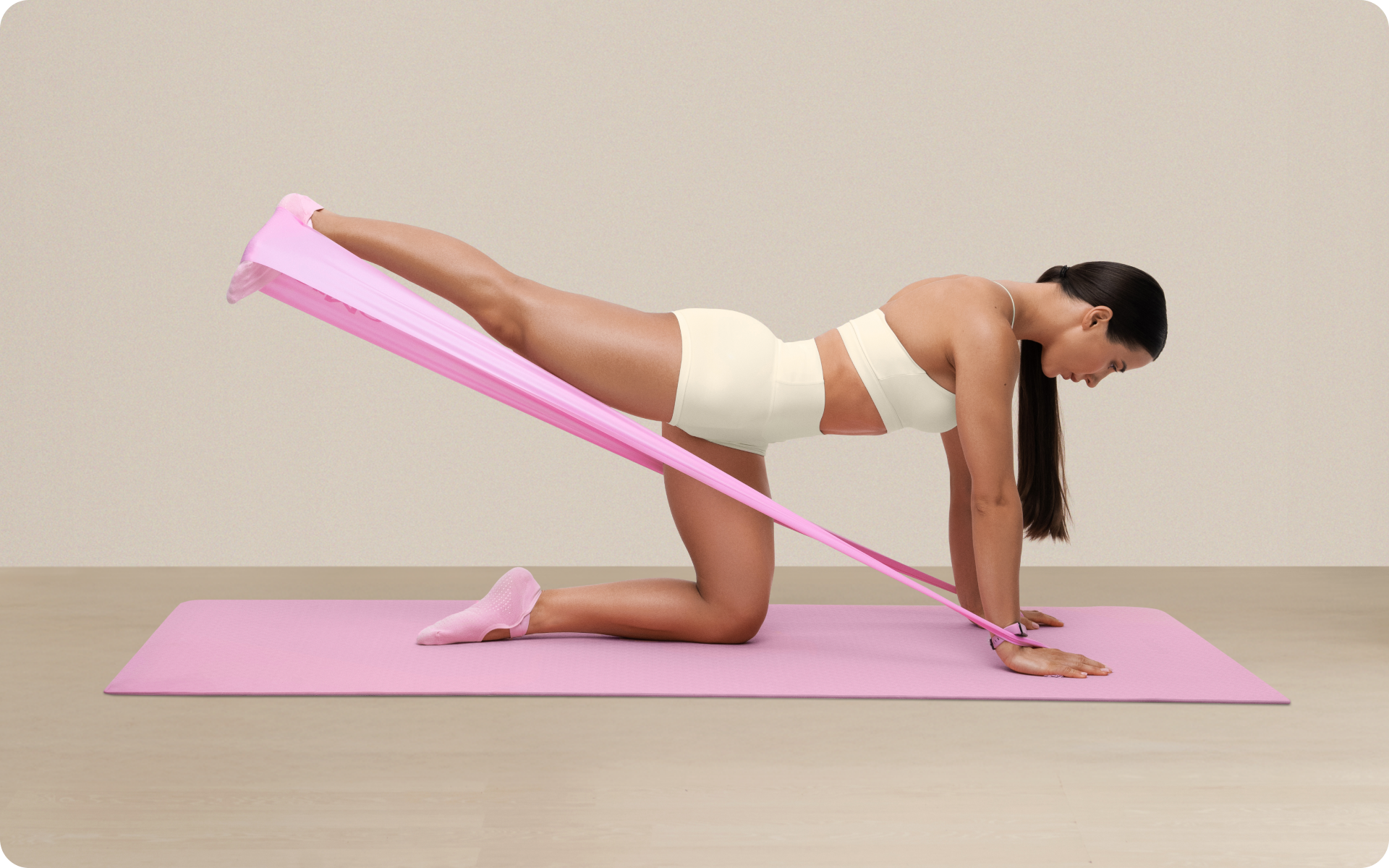
An inward ankle squeeze and an outward leg lift are different actions. Choose the movement first, then decide whether a prop fits. The band exercise guide covers outward leg movement with a loop.
Supported supine twist
A small bent-knee twist is a simpler starting option than rotating raised straight legs while holding a ring. Keep the prop aside.
- Lie on your back with both feet supported.
- Move your knees a small distance toward one side.
- Return the knees to the center.
- Repeat toward the other side.
Choose a range that remains comfortable. Avoid pressing the knees toward the floor. Seek instructor guidance if you want to add a ring or a longer leg position.
Supported step-back
A supported step-back simplifies the original back lunge with rotation. Learn the leg action before adding a trunk turn.
- Stand beside a fixed support.
- Step one foot a short distance backward.
- Bend your knees slightly if comfortable.
- Return the back foot to the starting position.
- Change sides.
Keep the circle aside while using the support. Combining a squeeze, lunge, and rotation adds several tasks. Introduce those tasks gradually with instructor feedback.
How much practice should a beginner do?
A beginner can start with a few supported movements and stop while technique remains controlled. The following plan is an editorial example. No exact elapsed duration or result is promised.
|
Stage |
Practice choice |
Optional starting amount |
|---|---|---|
|
Preparation |
Easy unweighted movement |
Comfortable warm-up |
|
Learn pressure |
Seated hand press |
4 to 6 presses |
|
Learn placement |
Supported thigh press |
4 to 6 presses |
|
Add movement |
Bridge or arm reach |
4 to 6 repetitions |
|
Finish |
Put equipment away and stand gradually |
Unhurried transition |
Rest between tasks and check your position before the next exercise. Record the ring model and selected movements. Repeating a manageable setup gives you a clearer comparison than trying every variation at once.
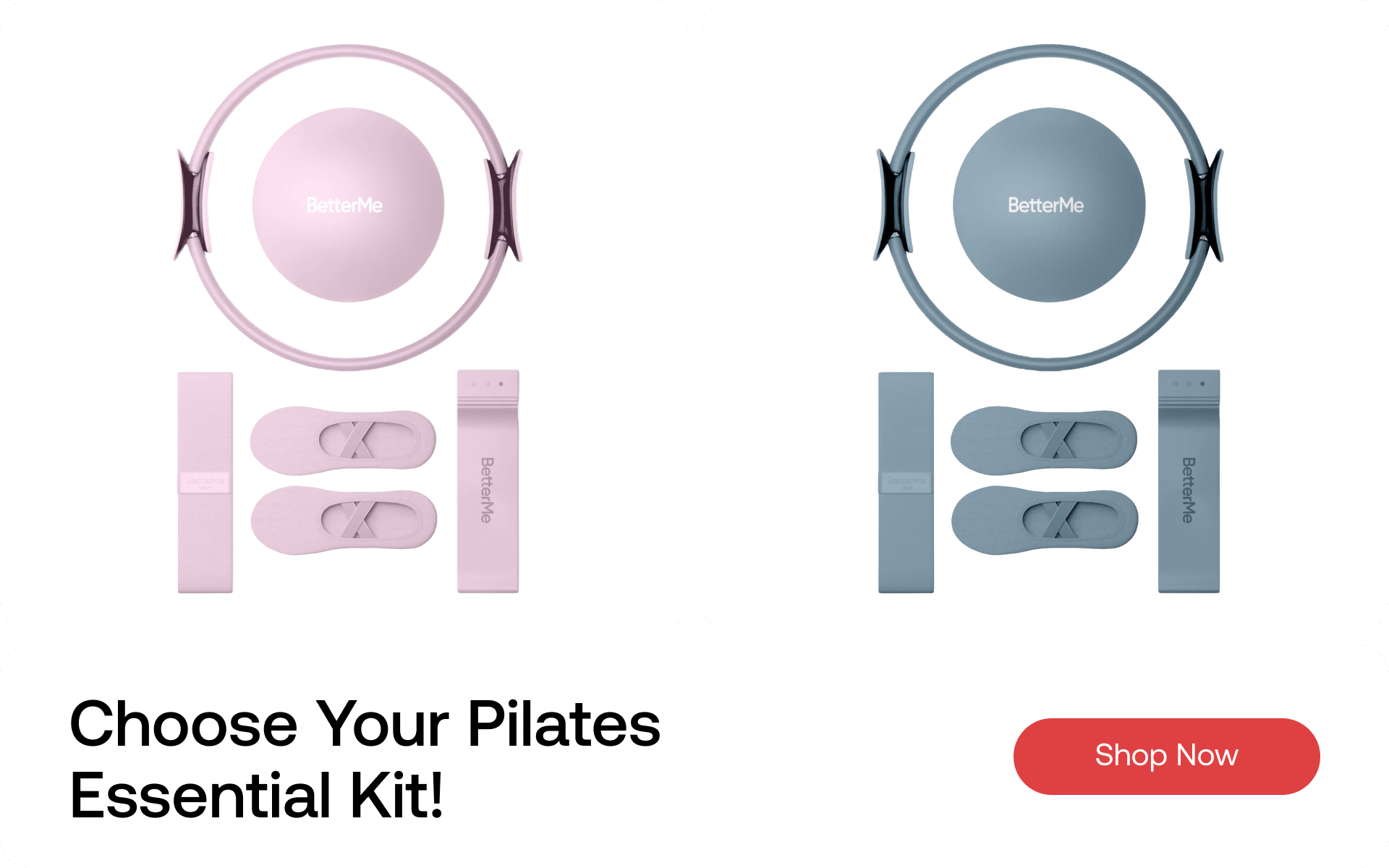
Who knew a ring could reshape your routine? With BetterMe’s Toning Pilates Ring, resistance meets comfort in every squeeze to snap you into shape. Ideal for any fitness level, this ring’s padded handles ensure your workout is a pleasure, not a chore. Add it to your routine and watch as it circles you closer to your sculpting goals.
What benefits are reasonable to expect?
Reasonable goals include learning prop control and adding a manageable resistance task. Progressive resistance training supports muscle function (3). The ring’s available resistance still limits how far you can increase loading.
Pilates studies have measured endurance, flexibility, static balance, and trunk-control changes across different programs (2, 4, 5). Those findings do not establish results from your first ring session. Avoid using soreness or ring compression as proof of progress.
General adult guidance includes aerobic activity and strengthening work for the major muscle groups (6). A brief ring practice covers selected tasks. The barre and Pilates comparison can help you consider other class formats.

FAQs
Can I use the ring as a push-up support?
No, use the floor or a suitable fixed support for push-ups. A flexible circle should not carry your bodyweight unless its maker specifically permits that use.
Should I buy the stiffest ring available?
No, choose resistance that allows a controlled press and release. A rigid ring can make first-use placement and technique harder to manage.
Can I practice seated if getting onto the floor is difficult?
Yes, a supported hand press can be practiced seated. Ask an instructor for suitable seated options rather than transferring floor instructions directly.
The bottom line
Start with equipment checks, a seated hand press, and a supported thigh press. Add one manageable movement when the squeeze and release feel controlled. Keep the simpler versions available, and use instructor guidance for raised-leg or combined movements.
DISCLAIMER:
This article is intended for general informational purposes only and does not serve to address individual circumstances. It is not a substitute for professional advice or help and should not be relied on for making any kind of decision-making. Any action taken as a direct or indirect result of the information in this article is entirely at your own risk and is your sole responsibility.
BetterMe, its content staff, and its medical advisors accept no responsibility for inaccuracies, errors, misstatements, inconsistencies, or omissions and specifically disclaim any liability, loss or risk, personal, professional or otherwise, which may be incurred as a consequence, directly or indirectly, of the use and/or application of any content.
You should always seek the advice of your physician or other qualified health provider with any questions you may have regarding a medical condition or your specific situation. Never disregard professional medical advice or delay seeking it because of BetterMe content. If you suspect or think you may have a medical emergency, call your doctor.
SOURCES:
- Ultra-Fit Circle (n.d., www.pilates.com)
- Pilates for improvement of muscle endurance, flexibility, balance, and posture (2010, pubmed.ncbi.nlm.nih.gov)
- American College of Sports Medicine Position Stand. Resistance Training Prescription for Muscle Function, Hypertrophy, and Physical Performance in Healthy Adults: An Overview of Reviews (2026, pmc.ncbi.nlm.nih.gov)
- Can a pilates exercise program be effective on balance, flexibility and muscle endurance? A randomized controlled trial (2016, pubmed.ncbi.nlm.nih.gov)
- Effects of Pilates Training on Lumbo-Pelvic Stability and Flexibility (2011, pmc.ncbi.nlm.nih.gov)
- Adult Activity: An Overview (2024, www.cdc.gov)
 Reviewed by
 Reviewed by