Types of crunches include floor, reverse, rotational, standing, and weighted variations. They differ in body position and resistance. Choose a movement you can control, and use the bodyweight crunch guide to review the basic floor version.
This guide compares the movements and gives illustrative starting options. Crunches can be part of a broader routine; no single variation needs to cover every core-training goal.
Key takeaways
- A basic floor crunch curls the upper torso while the lower back stays on the mat. (1)
- A small six-week trial found improved core endurance with both crunch and dead bug training compared with no training. (2)
- Rotational, reverse, standing, and weighted options use different movement setups.
- Mountain climbers are a related core alternative rather than a floor crunch.
- The progression and repetition tables are illustrative options, not universal prescriptions.
- General guidance covers all major muscle groups and does not set a daily crunch quota. (3)
What qualifies as a crunch exercise?
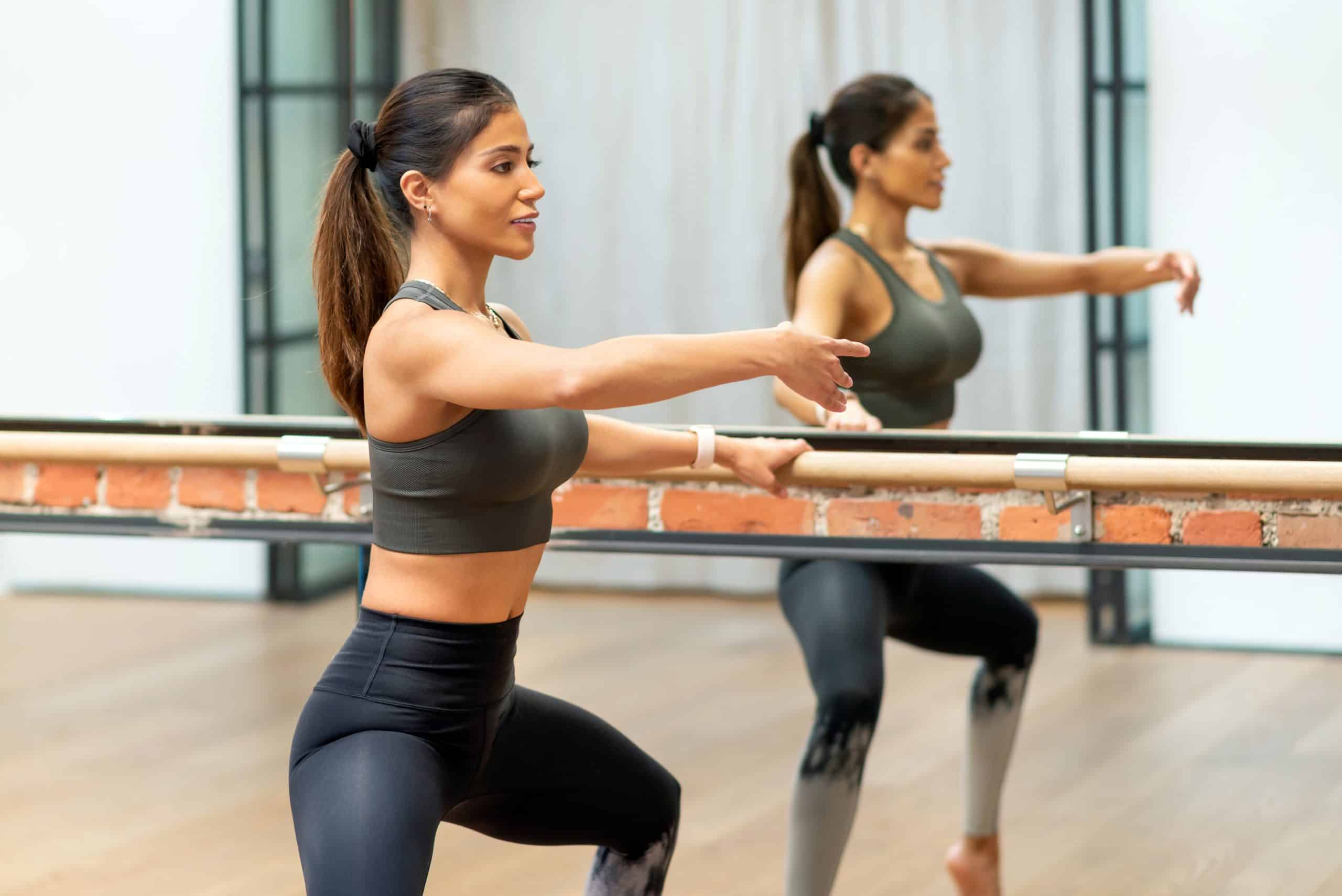
A basic floor crunch curls the upper torso toward the pelvis while the feet and lower back remain on the mat. The variations below change the setup or movement, and some standing options and mountain climbers are better described as related core exercises. (1)
For the basic floor version, use these cues:
- Curl the upper torso only as far as you can control.
- Keep your feet and lower back on the mat.
- Avoid pulling your head forward with your hands.
Keep the movement slow enough to avoid using momentum. Exhale as you curl upward and inhale as you lower. (1)
In a six-week study of 29 untrained young adults, both abdominal crunch and dead bug training improved core endurance compared with a control group. The dead bug group improved core strength more than the crunch group; the flexibility difference between those two exercise groups was not significant. (2)
Different movements place different demands on the trunk. Avoid treating “upper abs” and “lower abs” as completely separate muscles that each variation can isolate.
How are crunches different from sit-ups?
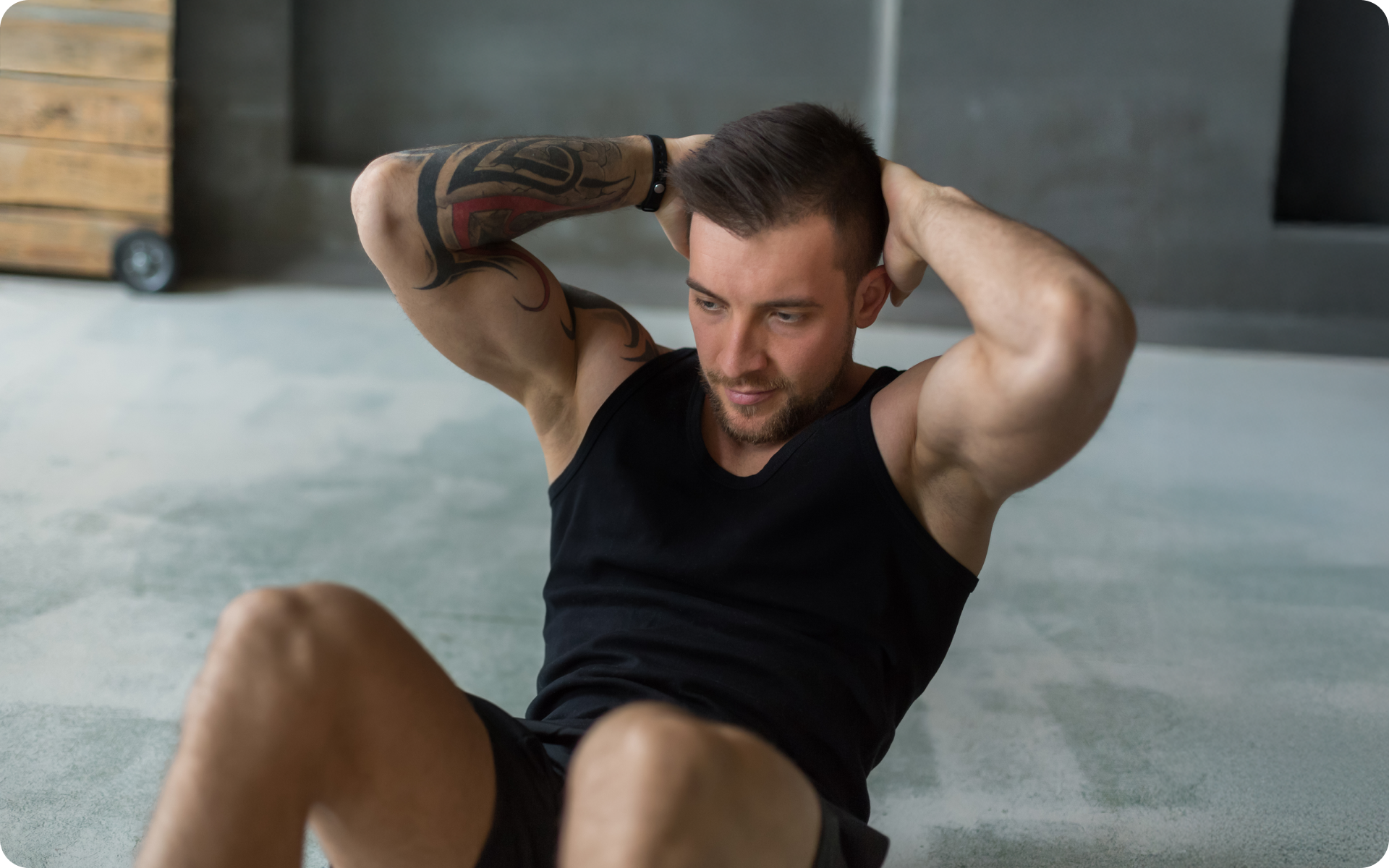
Crunches and sit-ups look similar as they both start with you lying on your back, but they involve different ranges of motion. A crunch lifts only your head, shoulders, and upper back from the floor, while a sit-up raises your torso much farther toward your knees.
Beginner crunches are generally easier to control, while sit-ups require greater involvement from the hip flexors and core.
| Feature | Crunches | Sit-ups |
|---|---|---|
| Range of motion | Shorter, lifting the upper back | Longer, lifting most of the torso |
| Main muscles | Primarily abdominal muscles | Abs, hip flexors, and other trunk muscles |
| Difficulty | Easier to modify and control | Generally more demanding |
| Useful for | Beginners and targeted ab training | Building sit-up-specific endurance |
Use a controlled range of motion. Keep these points in mind:
- Keep your neck relaxed: Avoid pulling your head forward with your hands.
- Engage your core: Contract your abs as you lift your shoulders and upper back.
- Use a controlled tempo: Avoid jerking or using momentum to complete each rep.
- Progress gradually: Move from beginner crunches to advanced crunch exercises as your core strength improves.
- Try crunch alternatives: Add exercises such as dead bugs, carries, anti-rotational work, and other core-stability movements to challenge your core in different ways.
Read more: Crunch Vs. Sit-Up: Which Is The Best Exercise To Work Your Core And Why?
Which crunch variations are suitable for beginners?
Start with a movement you can perform smoothly. The basic floor crunch is one option; a standing movement may suit someone who prefers to stay upright.
The mat exercises for abs guide offers further floor-based options.
Basic crunch
- Lie on your back with your knees bent and your feet flat on the floor.
- Place your hands lightly behind your head without pulling on your neck.
- Tighten your abs and lift your shoulders a few inches off the floor.
- Pause briefly, then slowly lower yourself back down.
Standing crunch
- Stand with your feet about hip-width apart and place your hands behind your head.
- Brace your core and bring one knee toward your chest.
- At the same time, lower your opposite elbow toward the raised knee.
- Return to the starting position and repeat on the other side.
Reverse crunch
- Lie on your back with your knees bent and your legs raised.
- Engage your abs and gently draw your knees toward your chest.
- Lift your hips slightly off the floor without swinging your legs.
- Lower your hips slowly and repeat.
As an illustrative starting option, try a short set and stop before your technique deteriorates. Increase the work only if the current amount remains manageable.
Which rotational crunches train the core differently?
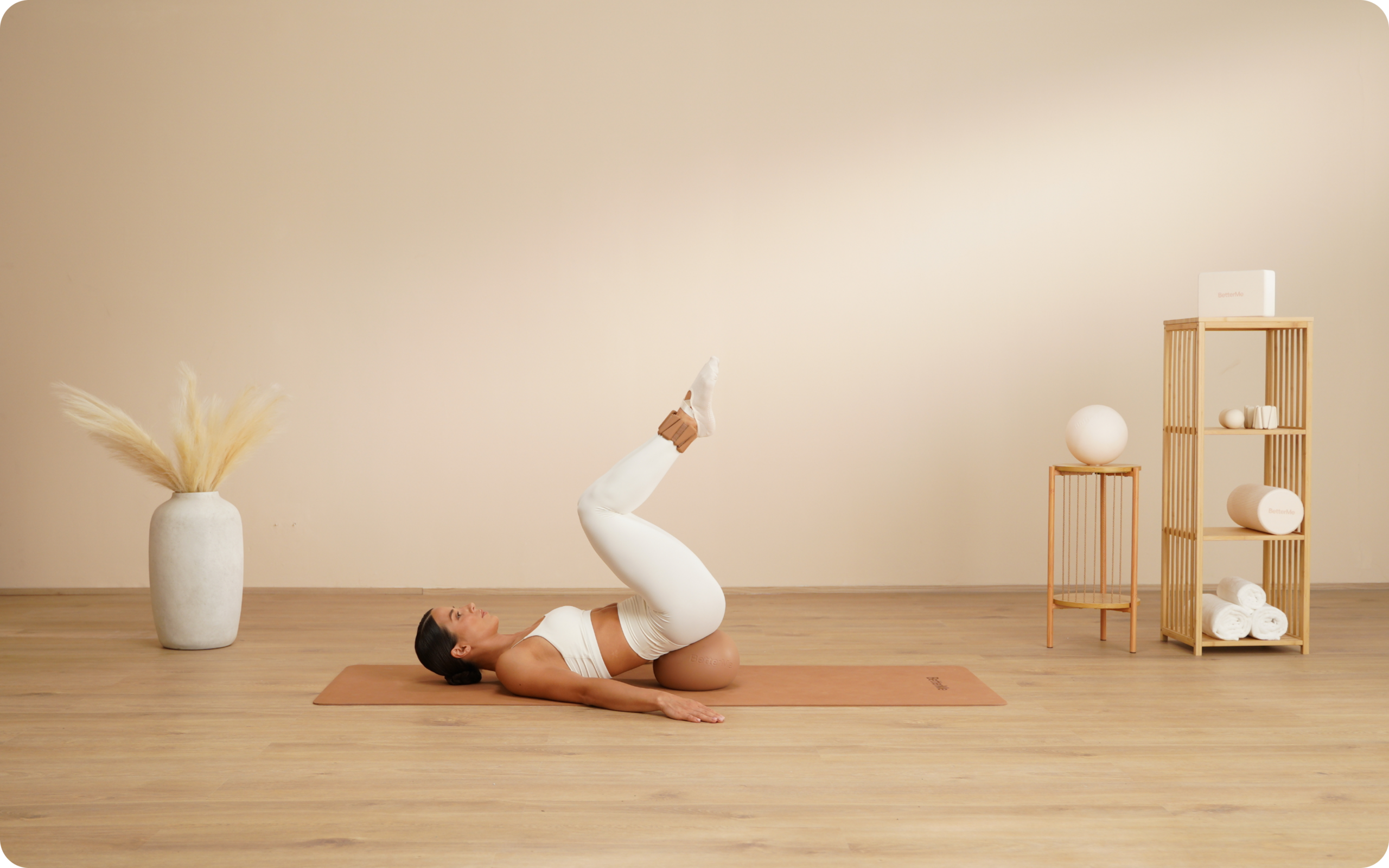
Rotational variations add a twisting or cross-body action. A four-week study in 73 participants examined a rotation exercise program and abdominal muscle thickness; it did not test every crunch variation listed here. (4)
Try these options:
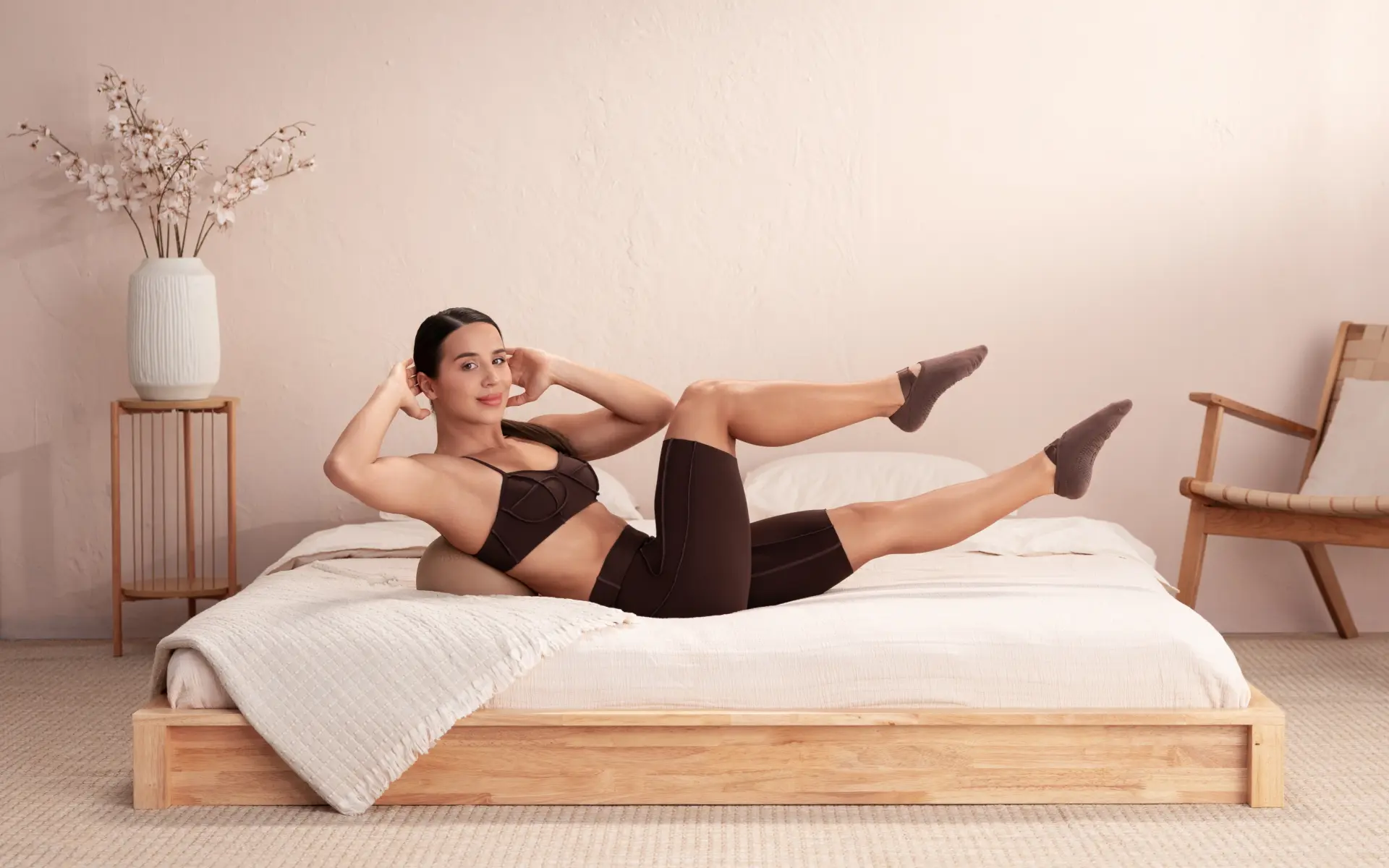
Bicycle crunch
- Lie on your back with your knees bent and your hands clasped lightly behind your head.
- Lift your shoulders and bring one knee toward your chest.
- Rotate your torso so the opposite elbow moves toward the raised knee.
- Switch sides in a controlled, continuous movement.
Cross-body crunch
- Lie on your back with your knees bent and your feet flat.
- Lift your right shoulder toward your left knee while keeping the movement controlled.
- Lower back down and repeat on the opposite side.
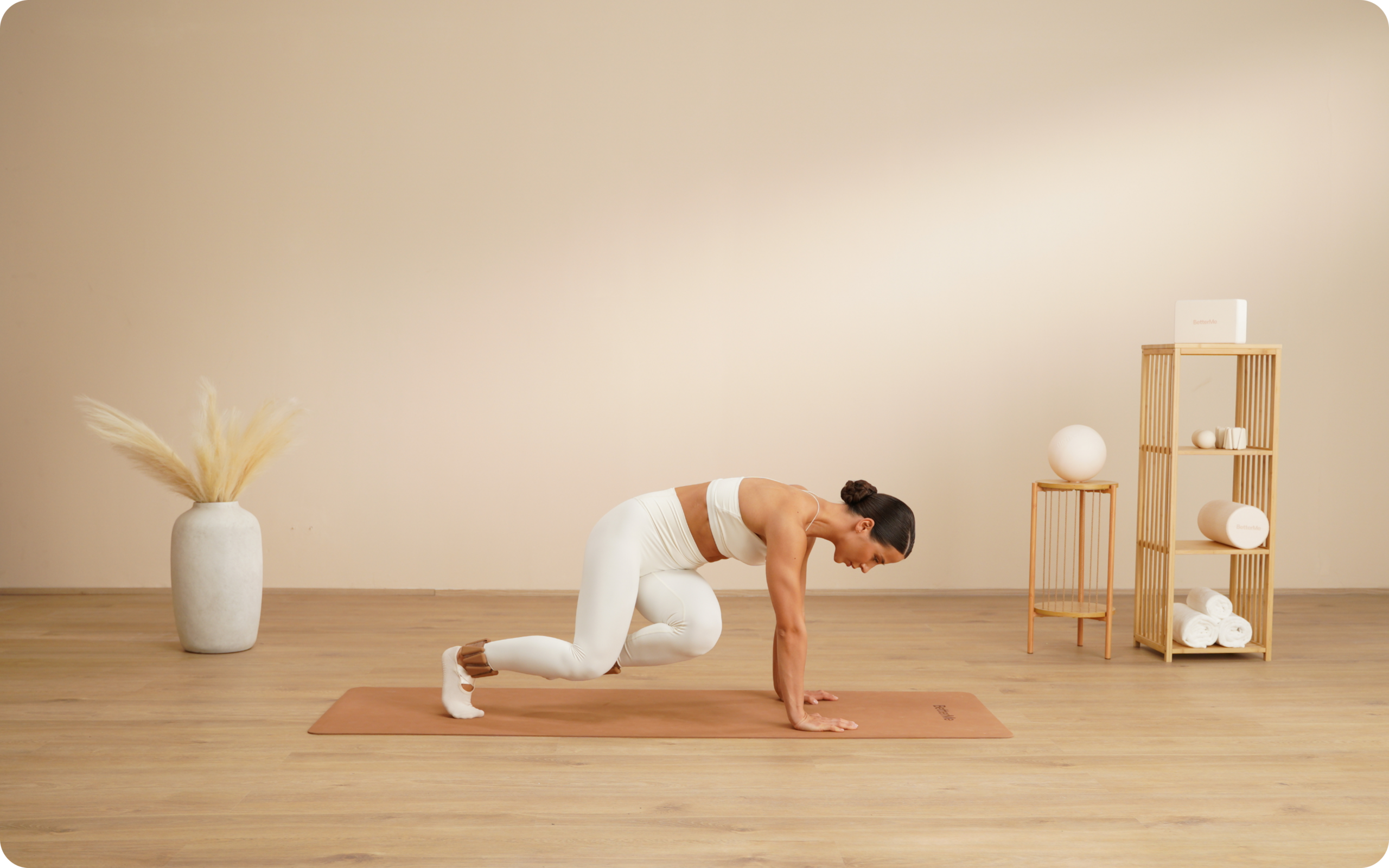
Cross-body mountain climbers
- Start in a high-plank position with your hands under your shoulders.
- Brace your core and keep your body in a straight line.
- Bring your right knee toward your left elbow.
- Return your leg to the starting position and repeat on the opposite side.
- Continue alternating sides while keeping your hips as stable as possible.
Cross-body mountain climbers are a plank-based core alternative, rather than a floor crunch. Choose them for the movement task they involve.
Add resistance only when you can control the bodyweight version.
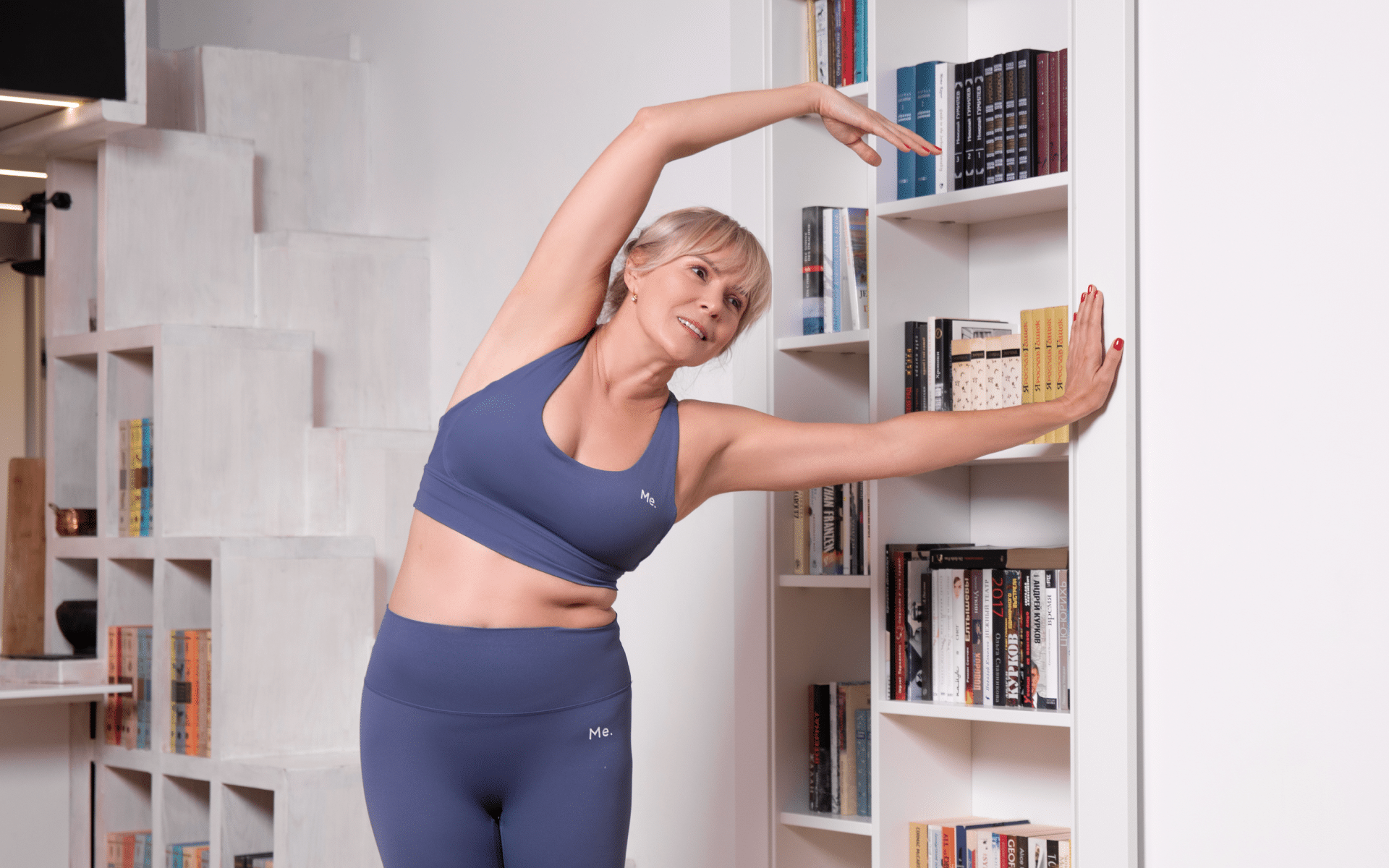
Which standing crunch variations can you try?
Standing options let you practice knee lifts, side bends, or rotation without getting on the floor. They still require balance and control.
Body position can change measured muscle activity. In a small study of 14 healthy participants, breathing pattern and supine versus elbow-toe positions affected abdominal activation. Standing crunches were not tested, so those results do not establish their effectiveness. (5)
Read more: HIIT For Beginners: Fast-Paced Routines For Maximum Fat Burn
Standing bicycle crunch
- Stand with your feet hip-width apart and place your hands behind your head.
- Lift your right knee while rotating your torso to bring your left elbow toward it.
- Return to the starting position and switch sides.
- Keep the movement controlled rather than rushing through the reps.
Standing oblique crunch
- Stand tall with your feet shoulder-width apart.
- Place your hands behind your head and lift your right knee toward your right elbow.
- Crunch your right side as the knee rises.
- Lower your leg and repeat on the opposite side.
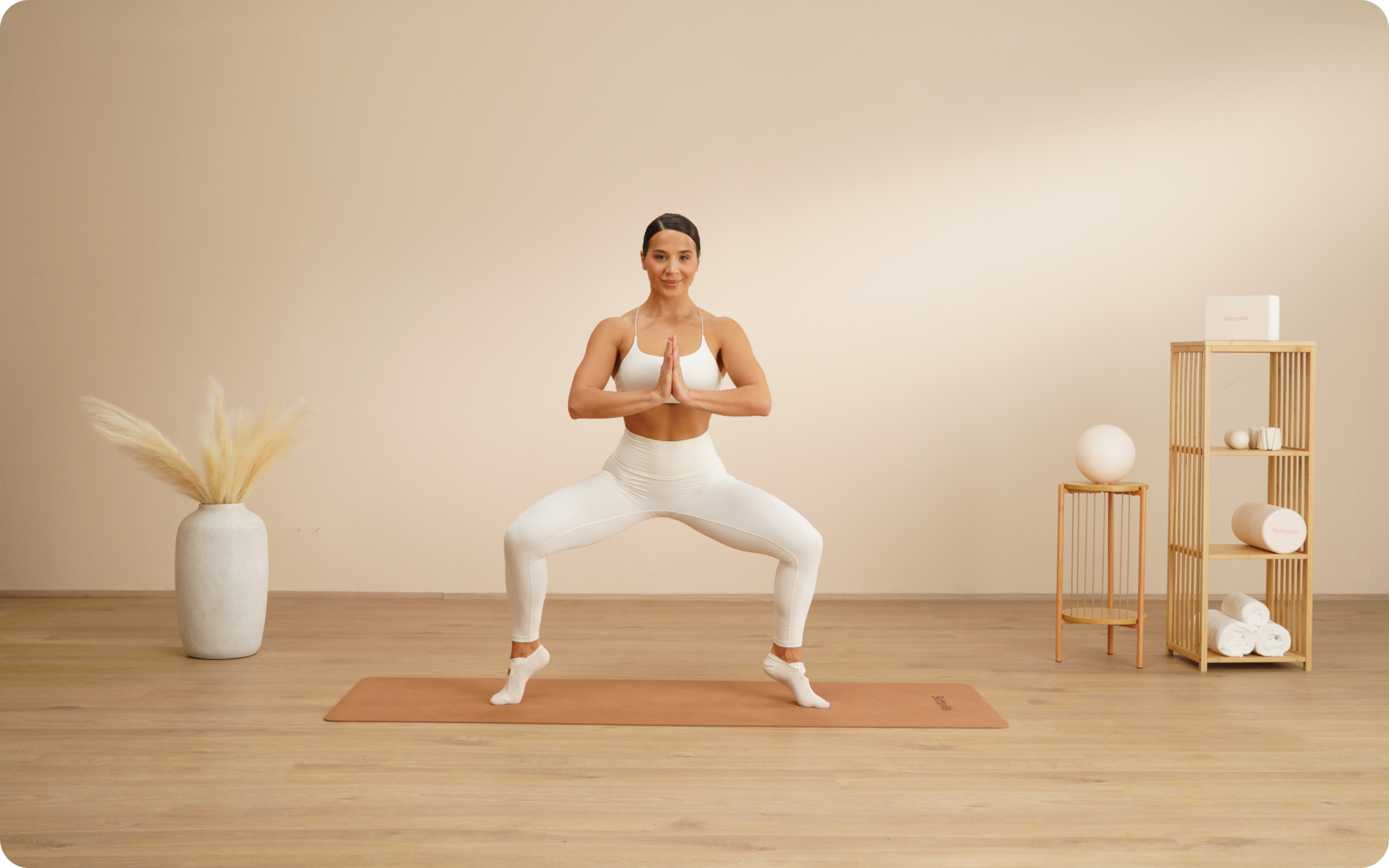
Wide-stance side crunch
- Adopt a wide stance and slightly bend your knees.
- Place your hands behind your head.
- Bend your torso toward one side while keeping your lower body stable.
- Return to center.
- Repeat on the other side, using a range you can control.
Workouts, weight management tools, and recipe ideas come together in the BetterMe: Health Coaching app, giving you practical support for building a more consistent wellness routine.
Which types of crunches use fitness equipment?
Equipment can change resistance or body position. Choose one change at a time so you can judge whether the movement remains controlled.
Some useful options include:
Weighted crunches
- Lie on your back with your knees bent and your feet flat on the floor.
- Hold a dumbbell or weight plate against your chest.
- Brace your core and lift your shoulders and upper back from the floor.
- Lower yourself slowly and repeat.
- Start with a light weight and increase resistance only when you can maintain proper form.
Cable crunches
- Kneel in front of a high cable pulley with a rope attachment.
- Hold the rope near the sides of your head.
- Contract your abs to curl your torso toward your thighs.
- Slowly return to the starting position while keeping tension on your core.
Stability ball crunches
- Sit on a stability ball with your feet firmly planted on the floor.
- Walk your feet forward and slowly lean back until your lower and mid-back are supported by the ball.
- Place your hands behind your head without pulling on your neck.
- Engage your abs and curl your upper body toward your hips.
- Pause briefly, then slowly lower yourself back onto the ball.
The unstable surface can make the movement more challenging by requiring additional balance and core control.
For an equipment-based routine, the ab day workout at the gym guide offers other movements to compare.
How can you choose a crunch variation for your current level?
Match the variation to what you can perform smoothly. Start with a controllable setup and adjust resistance, range, or coordination when appropriate.
The table below organizes options for comparison; it is not a tested ranking of exercise difficulty.
| Fitness level | Crunch variations to try | What to focus on |
|---|---|---|
| Beginner | Basic crunch, partial crunch, standing crunch | Form, breathing and controlled movement |
| Intermediate | Reverse crunch, bicycle crunch, oblique crunch | Greater range of motion and coordination |
| Advanced | Weighted crunch, decline crunch, advanced bicycle crunch | Increased resistance, control and muscular challenge |
Treat this table as general guidance, not a firm finding or universal progression. Your appropriate level depends on factors such as training experience and how well you can maintain technique. If a variation causes you to lose control or rely on momentum, step back to an easier version before progressing.
How many crunches should you include in a core workout?
Choose volume according to the exercise and the rest of your session. The table provides examples rather than targets everyone needs to reach.
| Training level | Suggested starting point | Focus |
|---|---|---|
| Beginner | 1-2 sets of 8-12 | Learn the right form |
| Intermediate | 2-3 sets of 10-15 | Try to build your strength |
| Advanced | 2-4 sets of 12-15 | Increase difficulty rather than simply adding reps |
These numbers are illustrative starting options. Reduce them if control deteriorates. General activity guidance recommends muscle-strengthening work across all major muscle groups on at least two days per week; it does not prescribe a daily crunch quota. (3)
When might crunches be an unsuitable exercise choice?
Crunches can be useful for strengthening the abs, but they aren’t the right fit for every person or every workout. Consider skipping or modifying them if:
- You have lower-back pain or discomfort that crunches aggravate.
- You have difficulty maintaining proper form or controlling the movement.
- You experience neck pain from straining or pulling your head forward.
- You’re looking for a full-body core exercise rather than primarily targeting the abdominal muscles.
- Crunches cause pain rather than normal muscular fatigue.
A strong core routine should challenge your muscles without causing pain or compromising your form. If crunches don’t feel right, there are plenty of effective alternatives to keep your core training moving forward. We’d also advise that you vary your core training and that you don’t focus solely on crunch exercises to train your core. Your core is involved in just about every movement your body makes, so make sure to train it in numerous ways.
BetterMe offers a variety of workouts, recipes, challenges, and support tools to help you stay more consistent with your wellness routine. Explore the app to find features that fit your goals, preferences, and schedule.

FAQs
Do crunches train the upper and lower abs separately?
They do not completely isolate separate upper and lower muscles. Use those labels as descriptions of emphasis, not as a promise that one exercise trains an independent abdominal section.
Why does my neck get tired during crunches?
Pulling on your head can contribute to neck discomfort, but fatigue can have other causes. Stop if the exercise causes pain and seek qualified advice if it persists.
Can you perform crunches every day?
Daily crunches are not required by general activity guidance. Consider the demands of your whole routine and allow time between demanding sessions. (3)
Are standing crunches still core exercises?
Yes, they are related core movements performed upright. Keep the range controlled and use a stable support if balance is difficult.
Can you perform crunches on a bed?
You can, but a firm, stable surface is preferable. A soft mattress can make it harder to maintain proper positioning and control, so the floor or a firm exercise mat is usually a better choice.
Are crunches and curl-ups the same exercise?
The names overlap and are not used consistently in every program. In this guide, a basic floor crunch means a controlled upper-torso curl with the lower back on the mat. (1)
Can you add crunches after a full-body workout?
Yes, as long as your core isn’t already exhausted. Adding a few controlled sets at the end can work well, but prioritize form and avoid excessive volume when you’re fatigued.
The bottom line
Choose a variation you can control and adjust it according to the rest of your training. Keep related core exercises available when a floor crunch does not fit your needs.
Record the movement and resistance you use so you can make deliberate changes over time.
DISCLAIMER:
This article is intended for general informational purposes only and does not serve to address individual circumstances. It is not a substitute for professional advice or help and should not be relied on for making any kind of decision-making. Any action taken as a direct or indirect result of the information in this article is entirely at your own risk and is your sole responsibility.
BetterMe, its content staff, and its medical advisors accept no responsibility for inaccuracies, errors, misstatements, inconsistencies, or omissions and specifically disclaim any liability, loss or risk, personal, professional or otherwise, which may be incurred as a consequence, directly or indirectly, of the use and/or application of any content.
You should always seek the advice of your physician or other qualified health provider with any questions you may have regarding a medical condition or your specific situation. Never disregard professional medical advice or delay seeking it because of BetterMe content. If you suspect or think you may have a medical emergency, call your doctor.
SOURCES:
- Crunch (n.d., acefitness.org)
- Comparative analysis of the effects of abdominal crunch exercise and dead bug exercise on core stability of young adults (2020, researchgate.net)
- Adult Activity: An Overview (2023, cdc.gov)
- The influence of rotational movement exercise on the abdominal muscle thickness and trunk mobility – Randomized control trial (2021, pubmed.ncbi.nlm.nih.gov)
- Interaction of breathing pattern and posture on abdominal muscle activation and intra-abdominal pressure in healthy individuals: a comparative cross-sectional study (2023, nature.com)
 Reviewed by
 Reviewed by