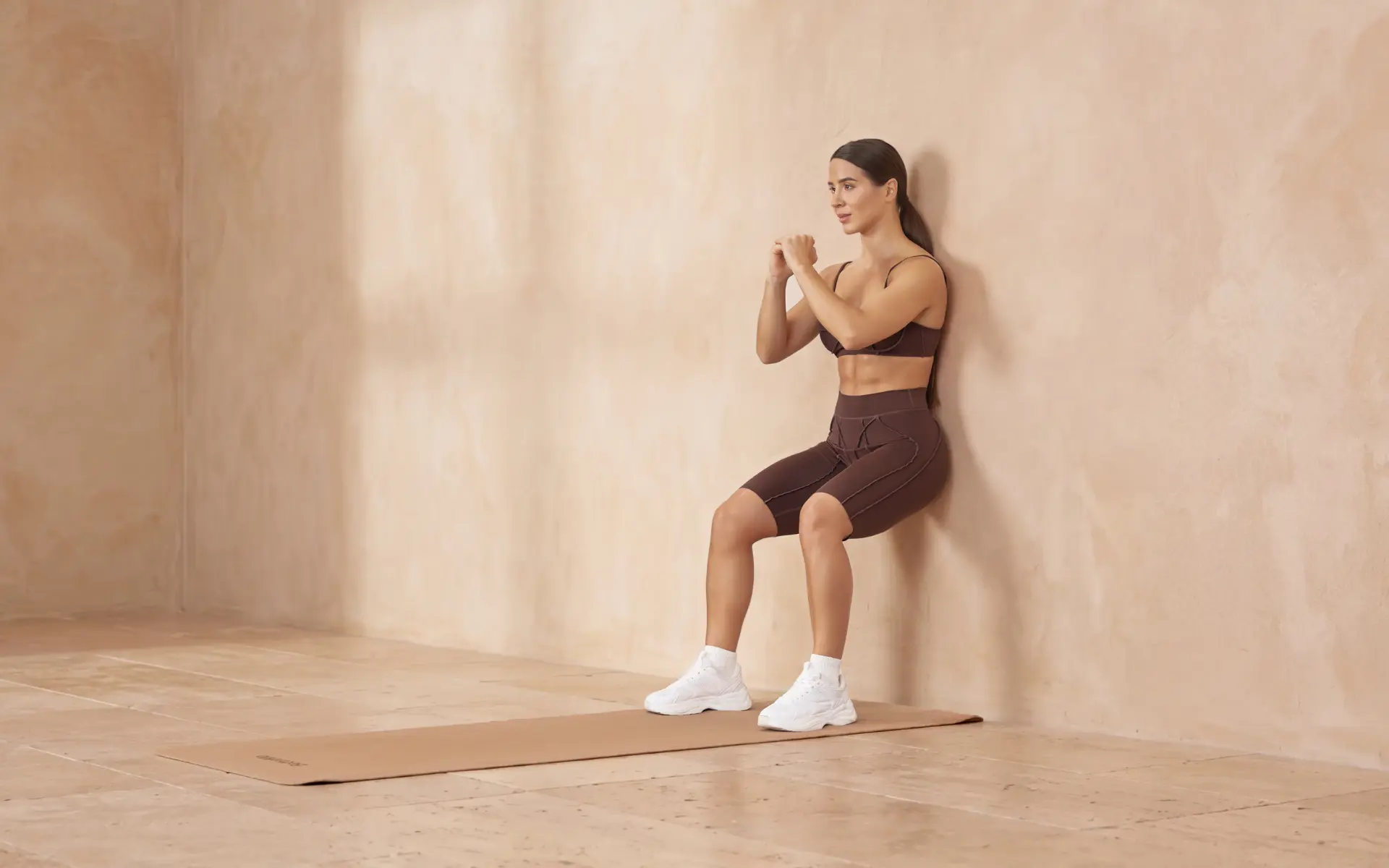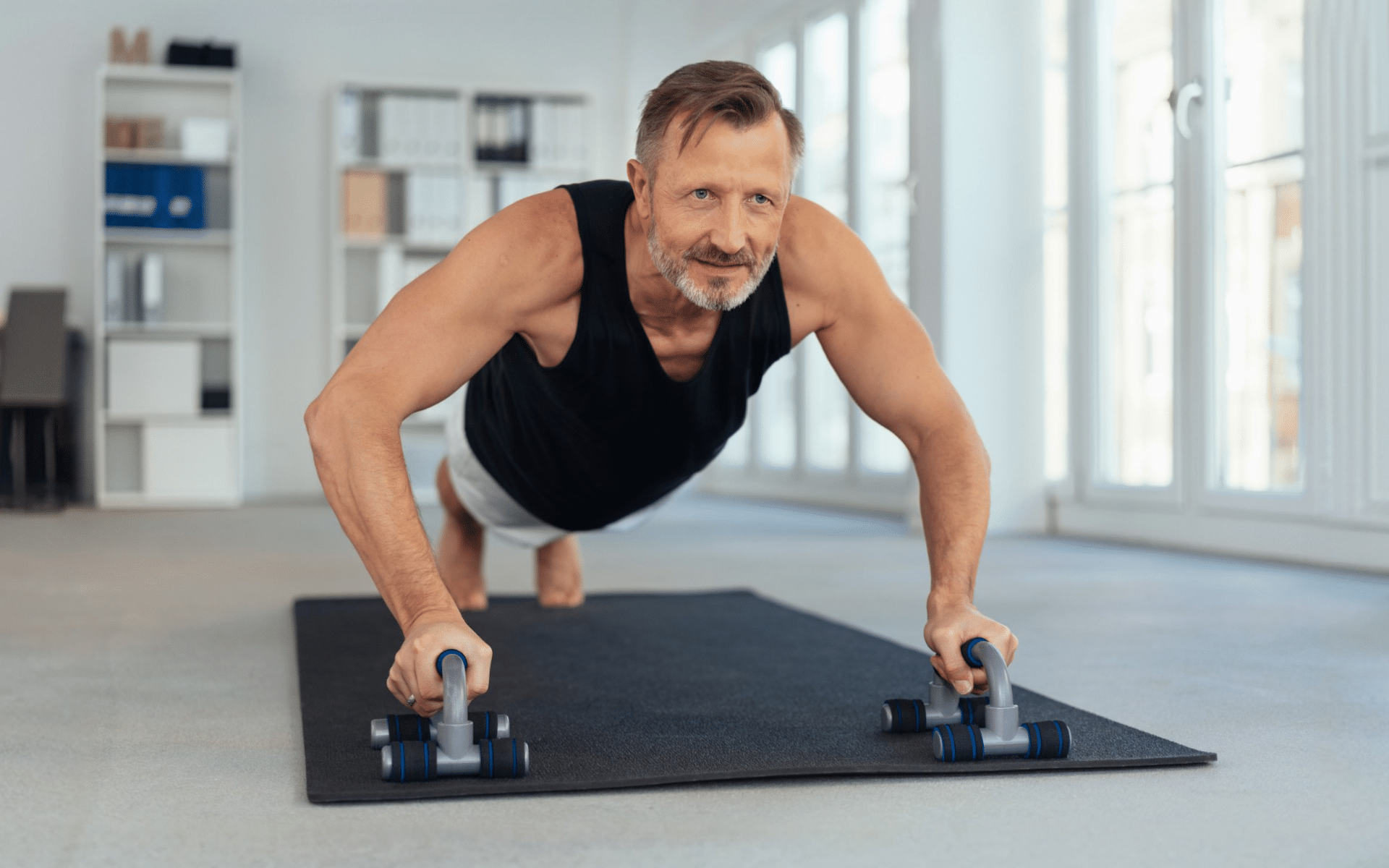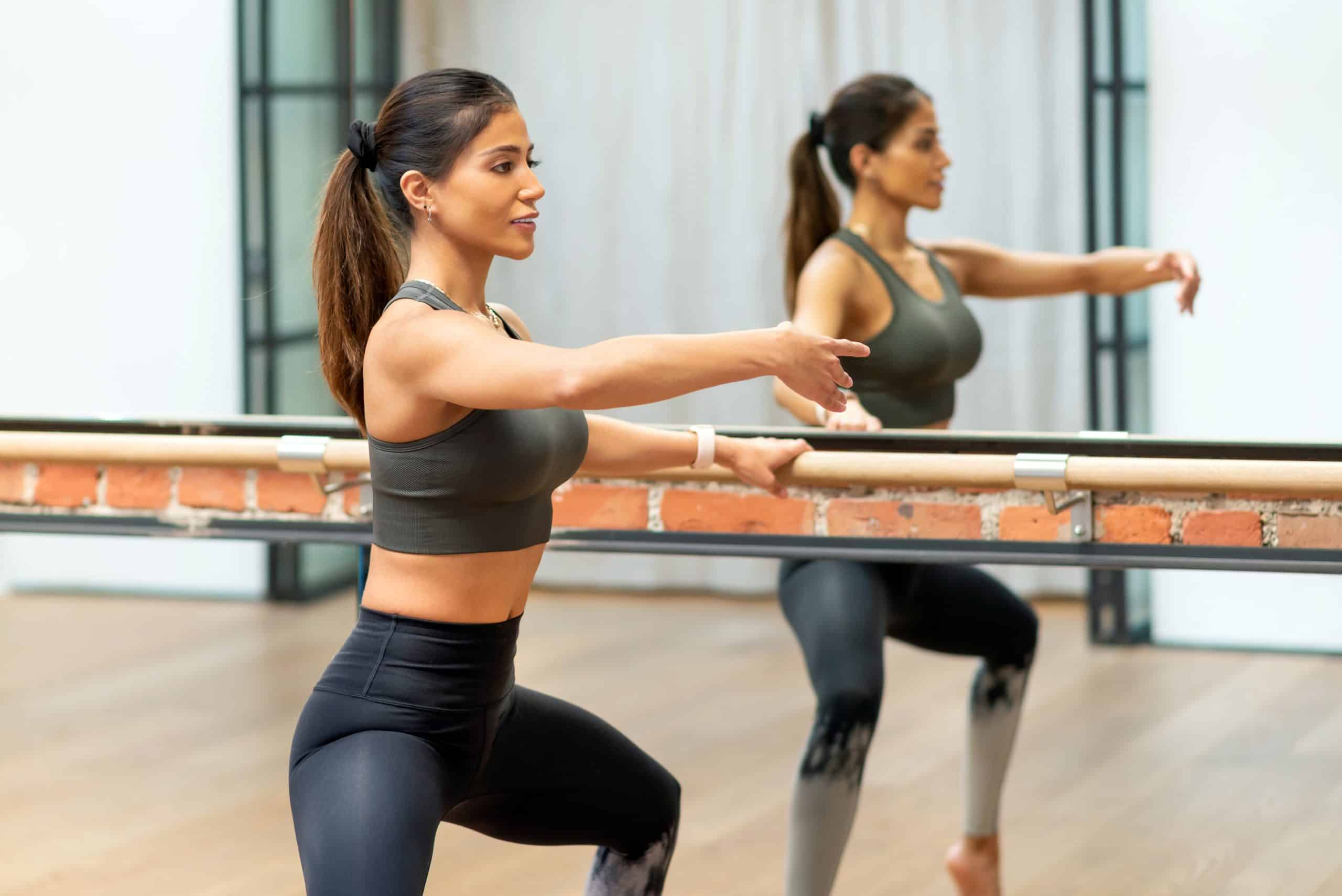
Barre workout benefits can include a practical way to challenge lower-body and trunk endurance. The outcome depends on the exercises, effort, and consistency. Claims about guaranteed fat loss, posture correction, or rapid body changes need caution. The at-home barre routine shows how to organize supported movements with rest.
Key takeaways
- One small barre trial measured strength and endurance improvements in sedentary female office workers (1).
- Class format determines which movements and muscle groups receive meaningful work.
- Low-impact describes the movement’s impact, rather than guaranteeing comfort or suitability.
- Aerobic effort must be assessed during the actual session, not inferred from the class name (2).
- Abdominal exercise alone did not reduce abdominal fat in one small trial (3).
- Use controlled repetitions and manageable progression as goals instead of promised transformation dates.
What benefits of barre have been studied directly?
Direct barre research provides some support for muscular improvements, but broad conclusions need care. A trial studied 30 sedentary female office workers for 8 weeks (1). The barre group improved lower-limb and trunk strength and endurance.
The participants trained three times weekly, while the comparison group maintained usual activity. The study concerns that group and program. The findings do not establish the same outcome for every home video or class.
Strength and endurance are separate training observations. Strength concerns producing force. Endurance concerns repeating or maintaining muscular work. A class with many pulses may emphasize repeated effort, depending on the exercise and load.
You can use those distinctions when setting a goal. Completing supported knee bends with steadier control is an observable task. Describing the same session as a guaranteed body transformation goes beyond what the exercise record shows.
How can barre challenge muscular endurance?
Barre can challenge muscular endurance through repeated knee bends, heel raises, hip movements, and holds. The muscles keep working across the set. The challenge depends on your position and available resistance.
Small movements can feel demanding when repeated without much rest. A hold can also become difficult as the set continues. Neither sensation determines whether the movement remains appropriate for you.
Keep the ability to pause. Stand upright between knee-bend sets and put both feet down between balance tasks. Resume only when you can repeat the movement with control.
Progressive resistance training supports muscle function across different exercise formats (4). Bodyweight and light equipment can contribute to training. More demanding strength goals may require a plan with greater available resistance.
The barre and Pilates comparison discusses the different class tasks. Use the comparison to identify your preferred practice rather than assume one format meets every goal.
Does barre improve posture or core control?
Barre gives you opportunities to practice trunk positioning while your arms or legs move. Posture correction is a stronger claim. Exercise cues do not establish a permanent change in how your body stands.
During a supported leg lift, notice whether your pelvis turns. During a knee bend, notice whether your trunk leans unexpectedly. Those checks describe the movement in front of you.
Avoid treating one rigid position as the posture you must maintain throughout the day. Different activities use different body positions. Seek individual guidance when discomfort or a specific concern affects movement.
One Pilates trial found endurance and flexibility improvements without better posture or balance (5). Pilates evidence cannot establish a barre-specific posture effect. That distinction matters when a class borrows movements from another practice.

Can barre improve flexibility and balance?
Barre can include flexibility and balance practice, with the result depending on the selected movements. Standing on one leg presents a balance task. A controlled stretch presents a flexibility task.
Use a fixed support while learning a standing movement. Support lets you regulate the challenge. Removing your hand early may turn a useful exercise into an unstable attempt.
Keep stretches within a comfortable range. Avoid pushing your knees farther outward to imitate a ballet stance. Turnout depends on your available hip movement.
Pilates and yoga also contain flexibility-related practice. Yoga guidance describes varied styles and the need for appropriate adaptations (6). The three-style comparison can help you compare those formats without assuming identical effects.
Does barre count as cardiovascular exercise?
Barre can contribute to cardiovascular activity when the relevant portion reaches and sustains sufficient effort. Moderate effort allows conversation but makes singing difficult (2). The class label alone does not identify your intensity.
Some routines alternate demanding sets with long setup periods. Others keep you moving continuously. A strong burning sensation in your thighs does not automatically mean the whole session counts as moderate aerobic activity.
Separate elapsed class time from active minutes. A session can include preparation, rest, equipment changes, and stretching. Record the portions that meet the effort you are tracking.
General adult guidance includes at least 150 minutes of moderate aerobic activity weekly and strengthening work on 2 days (7). Review your full week. Walking or cycling may cover aerobic work that your barre sessions leave incomplete.
BetterMe app will kick you out of the mental funk, shake off your extra weight, rid you off your energy-zapping habits, and help you sculpt the body of your dreams. Intrigued? Hurry up and change your life for the better!
Can barre support weight management?
Barre is physical activity and can contribute to a broader weight-management plan. The class name does not predict a calorie deficit or weight change. Food intake, total activity, and individual circumstances remain relevant.
Avoid using a generic calorie-burn estimate as a personal result. Session length, movement pace, body size, and rest all affect the activity. Two people attending the same class may complete different amounts of work.
Set an activity goal you can observe. You might attend a manageable class regularly or complete a supported routine. A weight-management goal can be discussed separately with a qualified professional when individual advice is needed.
No exercise format promises a particular body outline. Words such as toning often combine several different ideas about strength and appearance. Ask which actual change the claim describes before accepting a promised result.
Does barre target belly fat?
Barre exercises do not provide a reliable way to choose where body fat decreases. A small abdominal-exercise trial improved endurance without reducing abdominal fat (3). That distinction separates muscle work from local fat loss.
Standing knee lifts and supported planks can challenge trunk control. Those exercises do not establish a local fat-loss effect. A stronger abdominal exercise record can coexist with an unchanged waist measurement.
Keep exercise selection connected to the movement goal. Choose a supported plank because you want to practice maintaining trunk position. Avoid increasing discomfort or repetition counts to chase a smaller measurement.
For a movement-focused blend, the barre Pilates guide explains another class format. Its movements remain training options, with no promised reduction in a specific body area.
What should you know about bone-related claims?
Bone-related claims need a broader view of activity and individual circumstances. General guidance includes weight-bearing, resistance, and balance activities (8). That guidance does not establish that every light barre class increases bone density.
Standing movement places your bodyweight through your feet. External resistance can change the loading. The amount and type of load matter, so a class name alone is insufficient evidence.
Seek individual guidance when bone-related medical circumstances affect your exercise choices. A general article cannot determine appropriate loading or restrictions. Keep those decisions separate from a broad fitness comparison.
Lean and toned up body isn’t just a far-fetched fantasy. Check out the BetterMe app and watch it propel your weight loss journey into high gear!
How can you make barre practice more manageable?
Make barre practice manageable by choosing a stable setup, comfortable movement range, and available rest. A beginner class should provide usable alternatives. Watch how the instructor responds to different ability levels.
|
Goal |
Useful task |
Check during practice |
|---|---|---|
|
Learn standing control |
Supported knee bend |
Knees follow a comfortable foot direction |
|
Practice calf movement |
Supported heel raise |
Weight stays controlled across the feet |
|
Practice hip movement |
Low backward or side reach |
Trunk stays steady |
|
Add trunk work |
Wall or counter plank |
Breathing remains comfortable |
|
Practice balance |
Supported weight shift |
Support stays fixed |
|
Review endurance |
Repeat a manageable set |
Technique remains repeatable |
Begin with movements that have clear starting and finishing positions. Practice the full controlled repetition before adding pulses. Small movements are easier to understand when you know the larger action they come from.
Use an instructor who explains equipment, rest, and alternatives. An encouraging class still needs understandable directions. A demand to keep moving through discomfort is a reason to pause and reconsider the task.
How should you progress a barre routine?
Progress a barre routine by changing one manageable variable at a time. You can adjust repetitions, movement range, resistance, or support. Keep the other details steady so you can compare the sessions.
A practical record can include the exercise, support, amount completed, and any modification. Record both sides separately when the movement is unilateral. A side-to-side difference gives you something specific to discuss with an instructor.
|
Practice stage |
Example change |
Reason to hold the current level |
|---|---|---|
|
Learn the movement |
Repeat a comfortable range |
Setup still needs attention |
|
Repeat the task |
Add a few controlled repetitions |
Position changes near the end |
|
Increase challenge |
Add suitable light resistance |
Equipment alters the movement |
|
Review the week |
Adjust session placement |
Other demanding training overlaps |
These stages are editorial planning examples, with no fixed timetable. Avoid adding load, longer holds, and fewer rests together. A smaller change gives you clearer feedback.
Muscle shaking and next-day soreness are poor measures of how well the routine was organized. Use movement control and completed work instead. Seek qualified advice for persistent discomfort or medical questions.
Can the class setting make practice easier to repeat?
A class setting may make practice easier to organize when you prefer a scheduled session and clear instructions. Some people enjoy music and a shared routine. Others prefer a quieter home setting with time to pause.
Choose according to what helps you follow the movement. Music should not prevent you from hearing the instructions. A home video should show the starting position and explain the equipment.
After a trial, note whether the pace and available options suited you. Keep enjoyment separate from medical claims about mood or stress. A pleasant class experience is a practical reason to return without promising a particular psychological effect.

Frequently Asked Questions
Can I benefit from barre if I use parallel feet?
Yes, a parallel stance can still provide a manageable knee-bend or heel-raise task. Turnout is optional and should stay within your available range.
Should I skip rest to make barre more effective?
No, keep rest available so your technique remains controlled. Longer continuous effort changes the task and may reduce the quality of later repetitions.
Can I judge a class by how sore I feel afterward?
No, soreness does not establish the quality or completeness of the session. Record the movements and controlled work you completed instead.
The bottom line
Choose barre for the movement format you enjoy and the tasks you want to practice. Start with stable support and manageable sets. Track control and endurance, and review how the routine fits alongside aerobic and other strengthening activity.
DISCLAIMER:
This article is intended for general informational purposes only and does not serve to address individual circumstances. It is not a substitute for professional advice or help and should not be relied on for making any kind of decision-making. Any action taken as a direct or indirect result of the information in this article is entirely at your own risk and is your sole responsibility.
BetterMe, its content staff, and its medical advisors accept no responsibility for inaccuracies, errors, misstatements, inconsistencies, or omissions and specifically disclaim any liability, loss or risk, personal, professional or otherwise, which may be incurred as a consequence, directly or indirectly, of the use and/or application of any content.
You should always seek the advice of your physician or other qualified health provider with any questions you may have regarding a medical condition or your specific situation. Never disregard professional medical advice or delay seeking it because of BetterMe content. If you suspect or think you may have a medical emergency, call your doctor.
SOURCES:
- Effects of Barre Exercise Training on Lower Limbs and Core Muscle Endurance and Strength in Sedentary Female Office Workers (2024, he02.tci-thaijo.org)
- How to Measure Physical Activity Intensity (2025, www.cdc.gov)
- The effect of abdominal exercise on abdominal fat (2011, pubmed.ncbi.nlm.nih.gov)
- American College of Sports Medicine Position Stand. Resistance Training Prescription for Muscle Function, Hypertrophy, and Physical Performance in Healthy Adults: An Overview of Reviews (2026, pmc.ncbi.nlm.nih.gov)
- Pilates for improvement of muscle endurance, flexibility, balance, and posture (2010, pubmed.ncbi.nlm.nih.gov)
- Yoga: Effectiveness and Safety (n.d., www.nccih.nih.gov)
- Adult Activity: An Overview (2024, www.cdc.gov)
- Exercise for Your Bone Health (2023, www.niams.nih.gov)
 Medically reviewed by
 Reviewed by
 Reviewed by
 Reviewed by