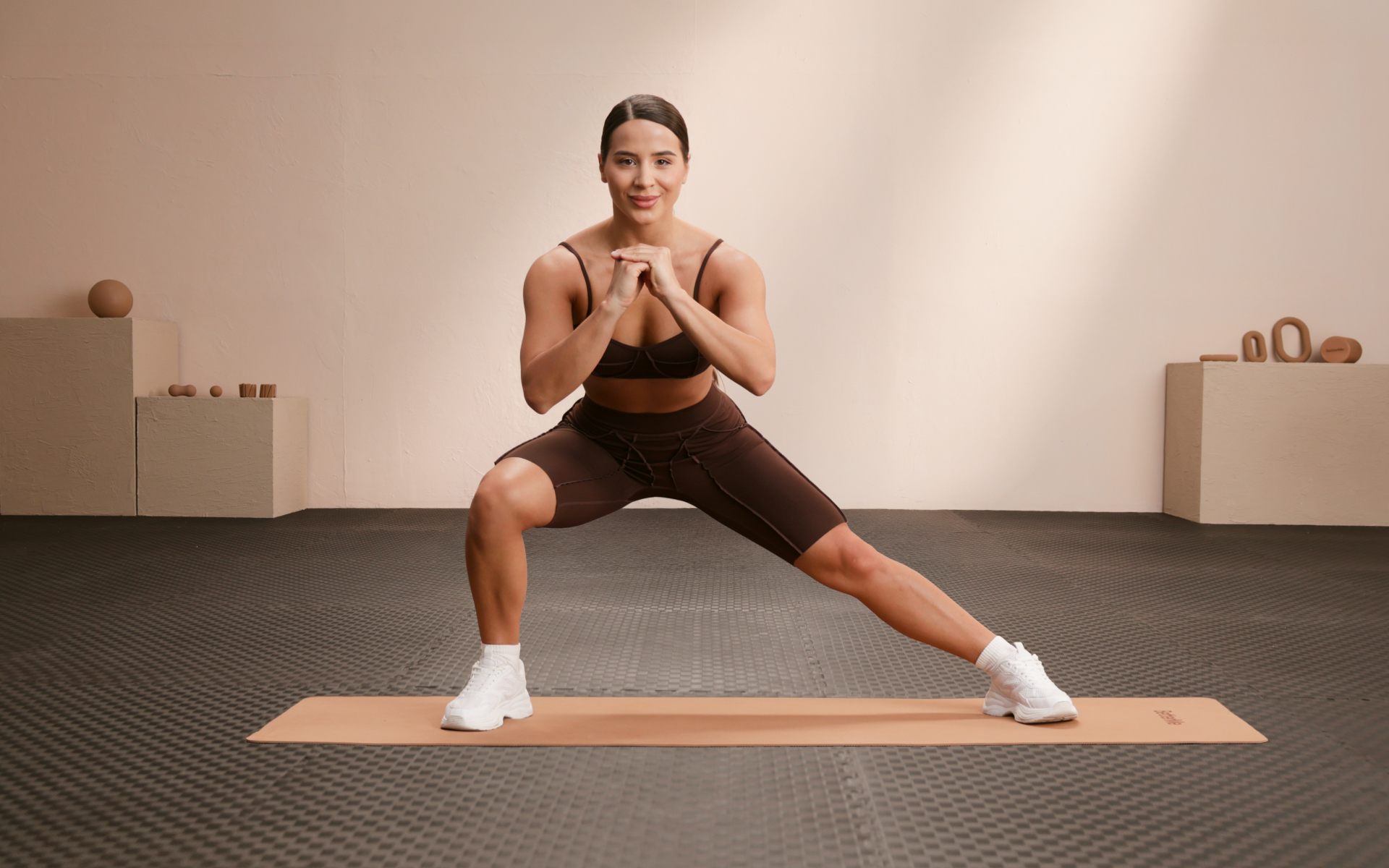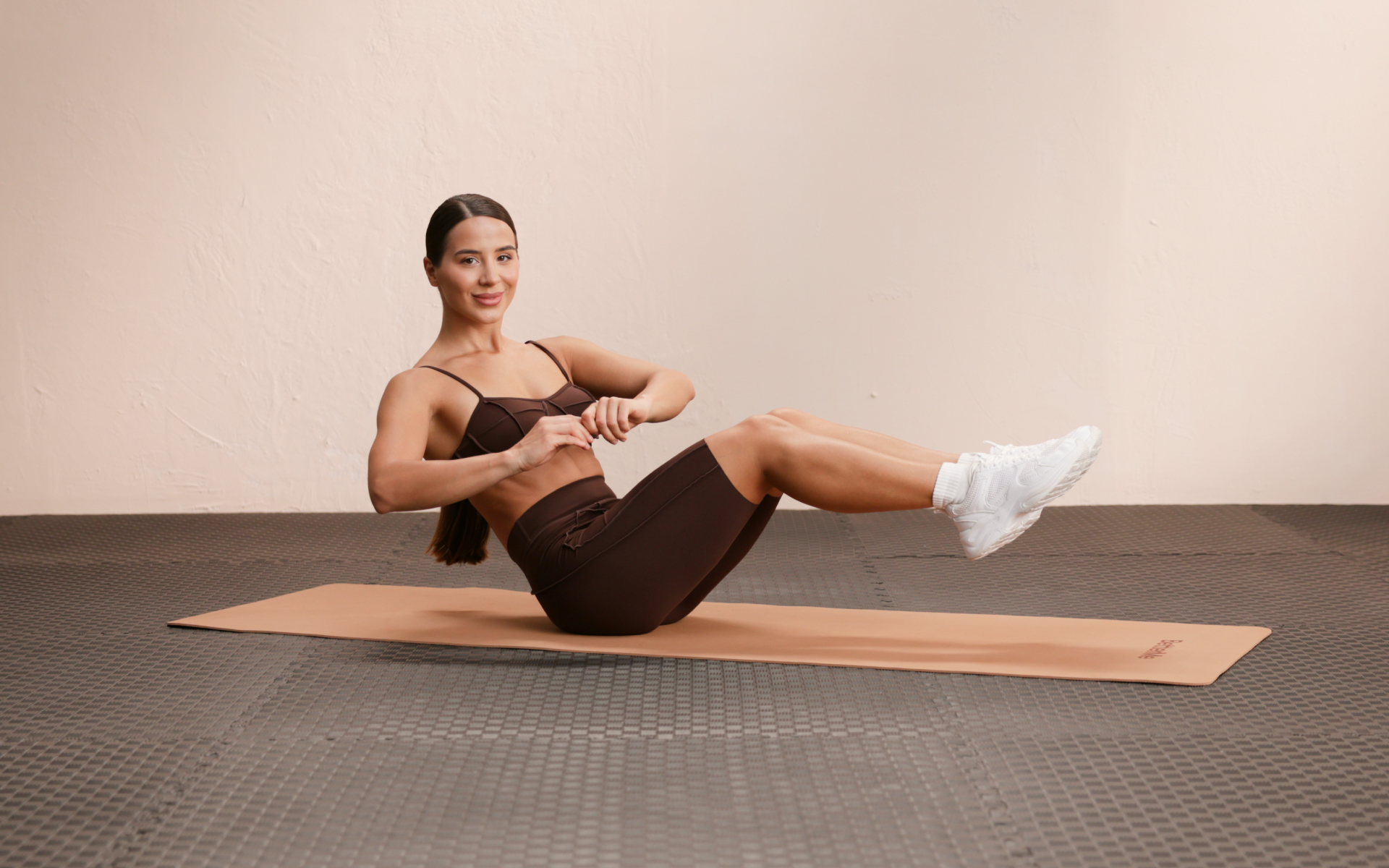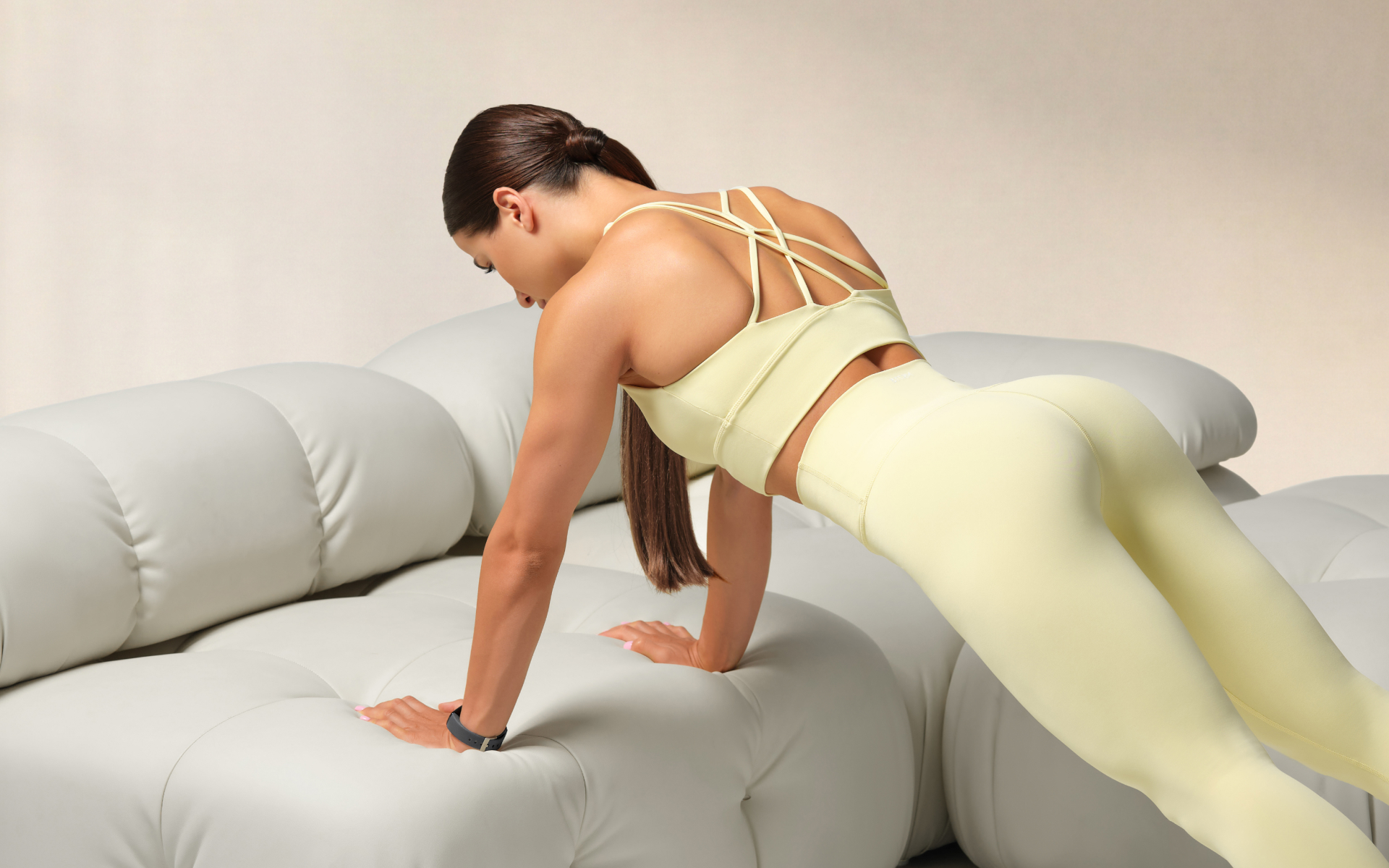
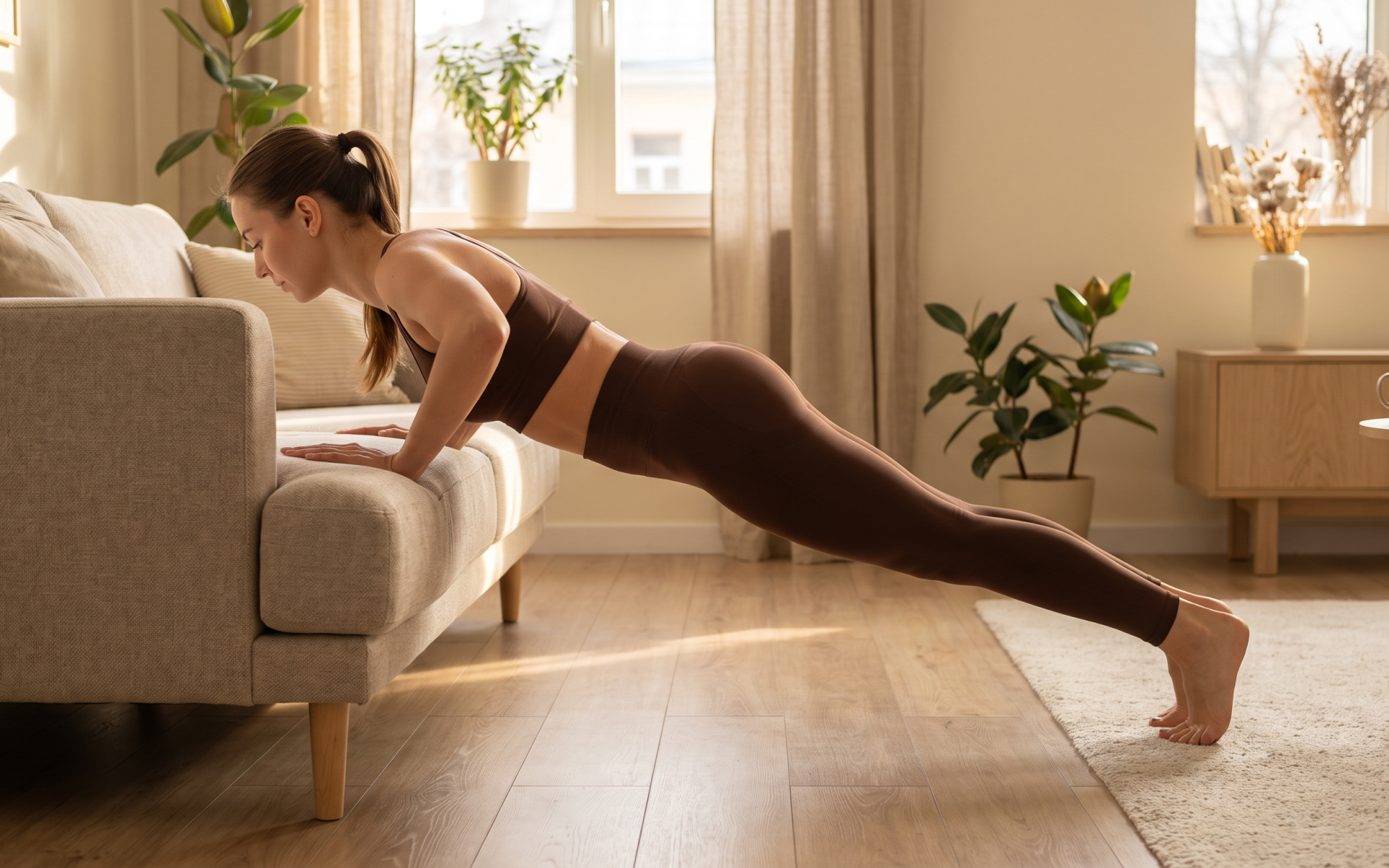
This sample 30-day calisthenics workout plan includes three strength sessions, two lighter mobility days, and two rest days weekly. Use bodyweight exercises and adjust the workload to your starting fitness level. Female beginners can begin with supported movements, fewer sets, and shorter holds. Repeat a phase or reduce the targets when needed.
Calisthenics uses body weight as resistance through movements such as push-ups, squats, and planks. This guide offers a sample month for people starting or returning to exercise. For a day-by-day schedule, explore our 30-day calisthenics challenge calendar.
You will find a weekly structure, exercise instructions, and options for changing the difficulty. The weekly increases are examples you can repeat, reduce, or postpone. This schedule is not a clinically tested program or a guarantee of results.
Key takeaways
- This BetterMe sample week contains 3 strength sessions, 2 optional mobility days, and 2 rest days.
- General adult guidance includes strengthening major muscle groups on at least 2 days weekly (1).
- Female beginners can choose wall push-ups, sit-to-stands, heel taps, and knee-supported side planks according to current ability.
- Start below the listed targets when needed; sets, repetitions, holds, and rest are adjustable examples.
- A gradual warm-up of 5-10 minutes can raise heart rate and breathing before harder movement (2).
- Load or repetition progression supported gains in one trial of previously untrained young adults, without validating this complete monthly plan (3).
- Progress is individual; completing the month does not establish a particular physique, strength level, or pull-up readiness.
How does the 30-day calisthenics plan work?
This sample week includes three strength days, two optional mobility days, and two rest days.
The sample structure uses full-body strength sessions on nonconsecutive days, with lighter activity and rest between them. General activity guidance includes strengthening major muscle groups at least twice weekly (1). Begin with less work if three sessions feel too demanding.
Key terms:
- Sets: A group of repetitions done back-to-back (for example, 10 push-ups in a row is one set).
- Reps: Short for repetitions, meaning one complete movement (one squat down and up).
- Volume: The total amount of work you do, usually sets multiplied by reps.
- Progression: Gradually making a workout harder over time, such as adding reps or changing the exercise.
- Rest days: Days with no structured training.
Weekly schedule:
| Day | Focus | Approximate time |
|---|---|---|
| Monday | Full-body strength | 20-30 minutes |
| Tuesday | Mobility and skill | 10-15 minutes |
| Wednesday | Full-body strength | 20-30 minutes |
| Thursday | Rest | Not scheduled |
| Friday | Full-body strength | 20-30 minutes |
| Saturday | Mobility and skill | 10-15 minutes |
| Sunday | Rest | Not scheduled |
The sample schedule provides around 60-90 minutes of weekly strength practice. This is an estimate. Changes within a month vary. Adjust session length and workload to your starting level.
Read more: Calisthenics Shoulder Exercises: Techniques and Workouts
What should you do before starting the plan?
Spend 5-10 minutes warming up before each session and check that you have enough open floor space.
A warm-up can gradually increase your heart rate and breathing before more demanding movement (2). It does not guarantee freedom from strain. Try gentle marching, arm circles, hip circles, and easier squat repetitions.
The floor-based exercises need little equipment. Pulling options require purpose-built equipment and a suitable anchor. Avoid relying on an ordinary door handle or furniture that has not been designed to support body weight.
A quick checklist before day one:
- Clear a space about the size of a yoga mat.
- Wear comfortable clothes.
- Keep water nearby.
- Set a repeating time slot that suits your schedule.
If you have any ongoing concerns about movement or discomfort, consider checking with a qualified professional first. If a position feels wrong, stop and adjust.
BetterMe can help you add more structure to your daily wellness routine with workouts, meal planning tools, and habit-building features. Explore the app and take a practical step toward a routine that feels more manageable for you.
How can female beginners choose a starting phase?
Female beginners can start in the foundation phase and use easier variations, without choosing a workload solely from sex or age.
Wall push-ups, sit-to-stands, heel taps, two-foot glute bridges, and knee-supported side planks are possible starting options. Begin with one set if the full circuit is too demanding. The same person may choose easier upper-body work and a more demanding leg variation.
A review found strength gains in healthy adult women. It did not establish a starting dose or test this plan (4). Use each phase to practice. You can repeat it instead of moving on after seven days.
| Phase | Main purpose | Starting approach | Move on only if |
|---|---|---|---|
| Week 1: foundation | Learn basic patterns | Easier variations and fewer sets if needed | The current session remains controlled |
| Week 2: repetition | Repeat a manageable circuit | Keep the same variations | An optional increase remains manageable |
| Week 3: difficulty review | Consider one variation change | Reduce reps when changing difficulty | Technique stays consistent |
| Week 4: consolidation | Repeat and compare | Keep or return to an earlier phase | You can choose a repeatable next month |
For a shorter progression guide with exercise doses grouped in one table, see our 28-day calisthenics workout challenge.
How do the weekly exercise targets compare?
The weekly targets show options for gradual progression. Increase one exercise at a time only when the current workload feels manageable.
These coaching examples have not been tested as a complete program. Keep the previous phase, reduce the repetitions, or omit a variation that does not suit you. Use 60-90 seconds of rest between exercises and rounds, or longer when needed.
| Movement | Week 1 example | Week 2 option | Week 3 option | Week 4 option |
|---|---|---|---|---|
| Push-up | Incline, 6-10 reps | Same variation, up to 10-12 reps | Try a lower incline or brief floor set | Repeat the manageable variation |
| Squat or lunge | Squat, 8-10 reps | Same squat, up to 10-12 reps | Try a supported reverse lunge, 5-8 per leg | Repeat squat or lunge |
| Dead bug | 5-8 reps per side | Repeat with control | Add a brief pause if ready | Repeat the controlled version |
| Glute hip-up | Two feet, 8-10 reps | Same variation, up to 10-12 reps | Try a few single-leg reps if ready | Repeat the manageable variation |
| Side plank | Knees supported, 10-20 secs per side | Repeat or extend a short hold | Try a brief full side plank if ready | Repeat the controlled version |
| Rounds | 1-2 | Repeat, or add a round only if ready | Keep manageable rounds | Repeat rather than force an increase |
Week 1: learn the basic movements
Week 1 focuses on learning the exercises. On strength days, try the selected circuit once or twice, with rest between exercises and rounds.
Move slowly this week and pause if your form slips. On mobility days, try comfortable arm circles, hip circles, and supported squats. Begin with a short session and stop if needed.
Week 2: repeat before adding work
Week 2 is an opportunity to repeat the same session. If the current targets remain controlled, consider a small repetition increase in one movement.
More repetitions do not need to come with an additional round. Keep the same rest and exercise setup while you assess the change.
Week 3: review exercise difficulty
Week 3 offers an optional change in difficulty, such as a lower push-up incline or a supported reverse lunge.
Reduce repetitions when trying a new variation. A single-leg glute hip-up or full side plank can be postponed without affecting whether you complete the month. Try an incline pike push-up later if it suits your current workload.
Week 4: consolidate a repeatable routine
Week 4 brings the month to a review point. Repeat a manageable circuit and compare the same exercise setup with your earlier notes.
Mountain climbers can be an optional alternative core movement if the plank position suits you. A timed finisher is not required. Avoid adding extra rounds just because it is the final week.
For optional pulling work, use a purpose-built suspension trainer or rowing bar with a suitable anchor. Try a workload you can control. Skip pulling exercises if the equipment is unavailable.
What should you do if an exercise is too difficult?
An easier variation, shorter comfortable range, or fewer repetitions can make a movement more manageable. You can also omit an exercise that does not suit you.
Bodyweight exercises can be adjusted by changing the angle, shortening the range, or reducing the rep count. Use the comparison table to choose an option rather than assume every variation suits every body.
| Exercise | Easier version | Another option | More demanding version |
|---|---|---|---|
| Push-up | Push-up against a wall | Incline push-up | Push-up on the floor |
| Squat | Sit-to-stand from a chair | Bodyweight squat | Supported reverse lunge |
| Side plank | Side plank on knees | Brief full side plank | Longer controlled hold |
| Glute hip-up | Both feet down, shorter range | Standard hip-up | Single-leg hip-up |
| Pike push-up | Higher fixed surface | Lower fixed surface | Floor pike push-up |
Adjusting an exercise keeps the session manageable. Count the rep you completed with good form.
How do you know when to progress?
Consider a harder version when you can complete your chosen workload with consistent form and some effort remaining.
Check whether your final set stays controlled with the same variation, repetitions, and rest. Use this as a coaching prompt.
One trial found that increasing repetitions or load could support strength and muscle-size gains in previously untrained young adults (3). The researchers did not test automatic weekly upgrades for this routine.
If you choose to progress, change one variable and check that control remains consistent. If a harder version changes your form, step back one level. Repeat the manageable version before making another adjustment.
Workouts, weight management tools, and recipe ideas come together in the BetterMe: Health Coaching app, giving you practical support for building a more consistent wellness routine.
What should you do after the 30 days?
After the month, choose a repeatable schedule and adjust the workload gradually.
Completing the month does not establish a particular level of strength. Repeat the routine or an earlier phase based on your current ability. Days 29 and 30 can continue your weekly rhythm or provide a controlled comparison and a rest day.
Record your variation, sets, repetitions, rest, and perceived effort. Compare the same setup each time so the notes remain useful.
Our 1-month calisthenics workout plan explains how to organize another cycle around two repeatable sessions.
How do you perform the exercises?
Use these short guides to perform each move in the plan with control and comfort. Stop an exercise that causes discomfort and adjust the variation.
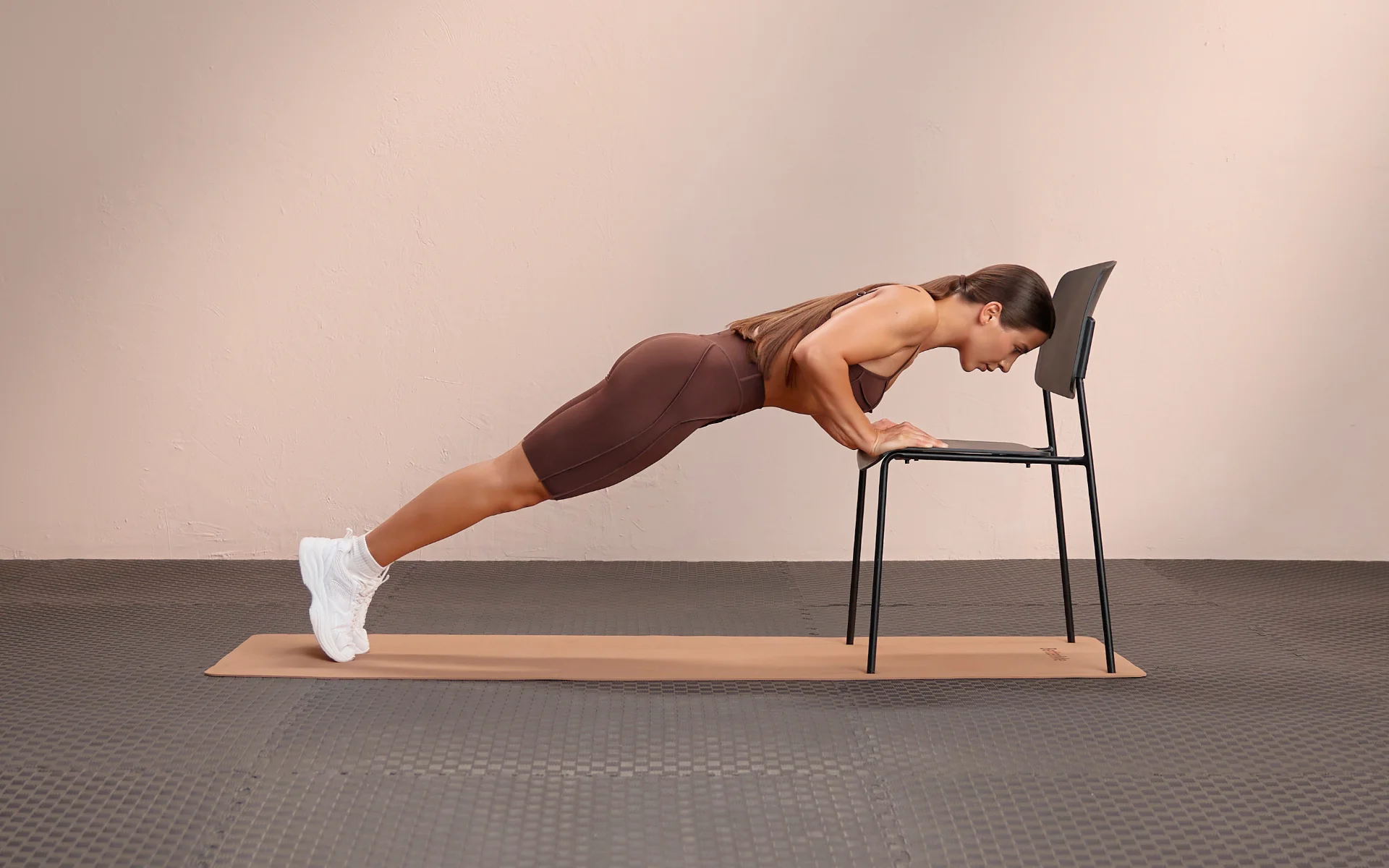
Incline push-ups
- Place your hands on a fixed, sturdy counter that will not slide or tip, slightly wider than shoulder-width apart.
- Step your feet back so your body forms a straight line.
- Lower your chest toward the surface by bending your elbows.
- Push back up until your arms are straight.
Push-ups
- Start in a plank with your hands under your shoulders.
- Lightly squeeze your glutes and midsection to keep a straight line.
- Lower your chest toward the floor, keeping your elbows at a middle angle.
- Press back up to the start.
Choose a knee-supported or incline variation if needed.
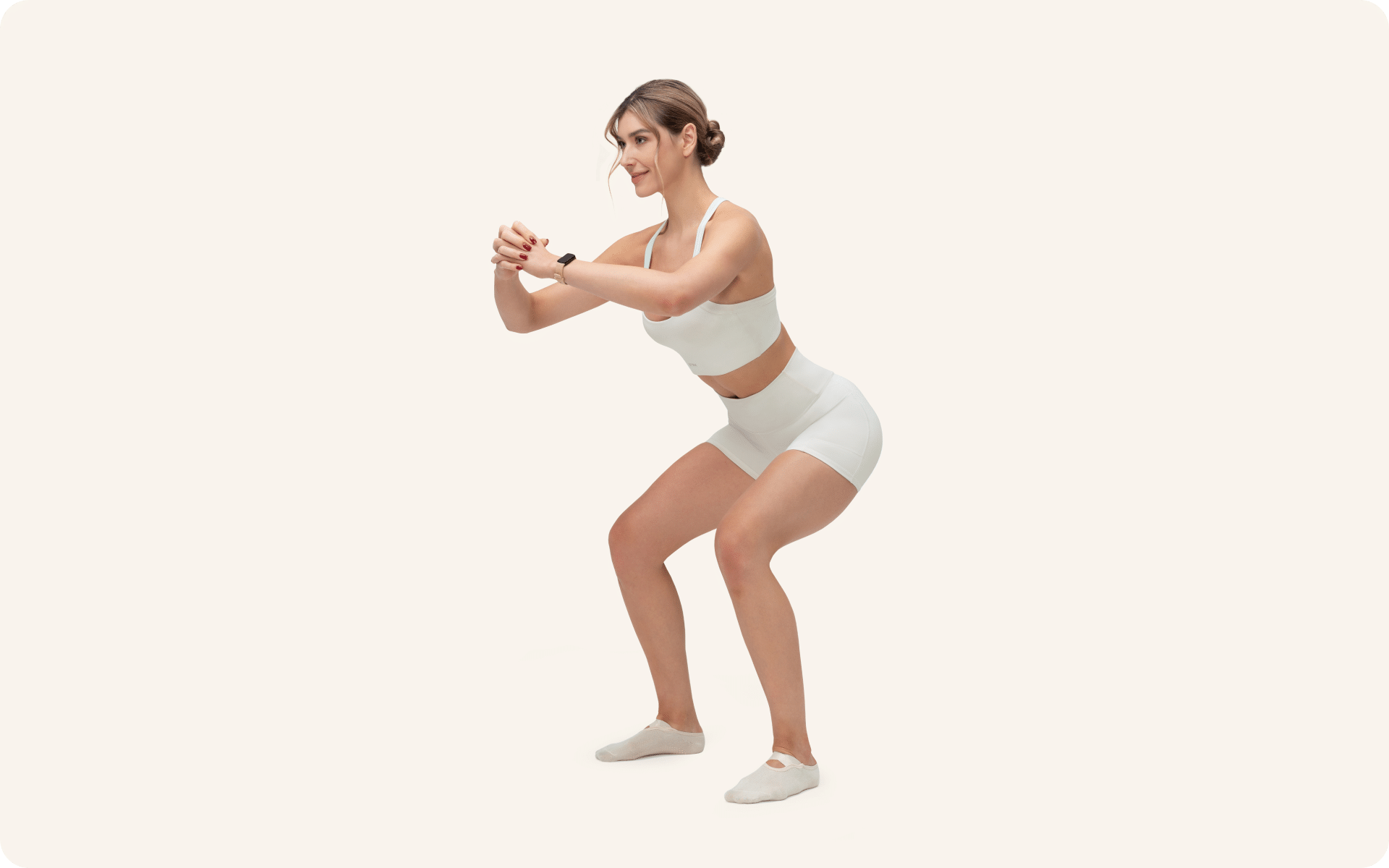
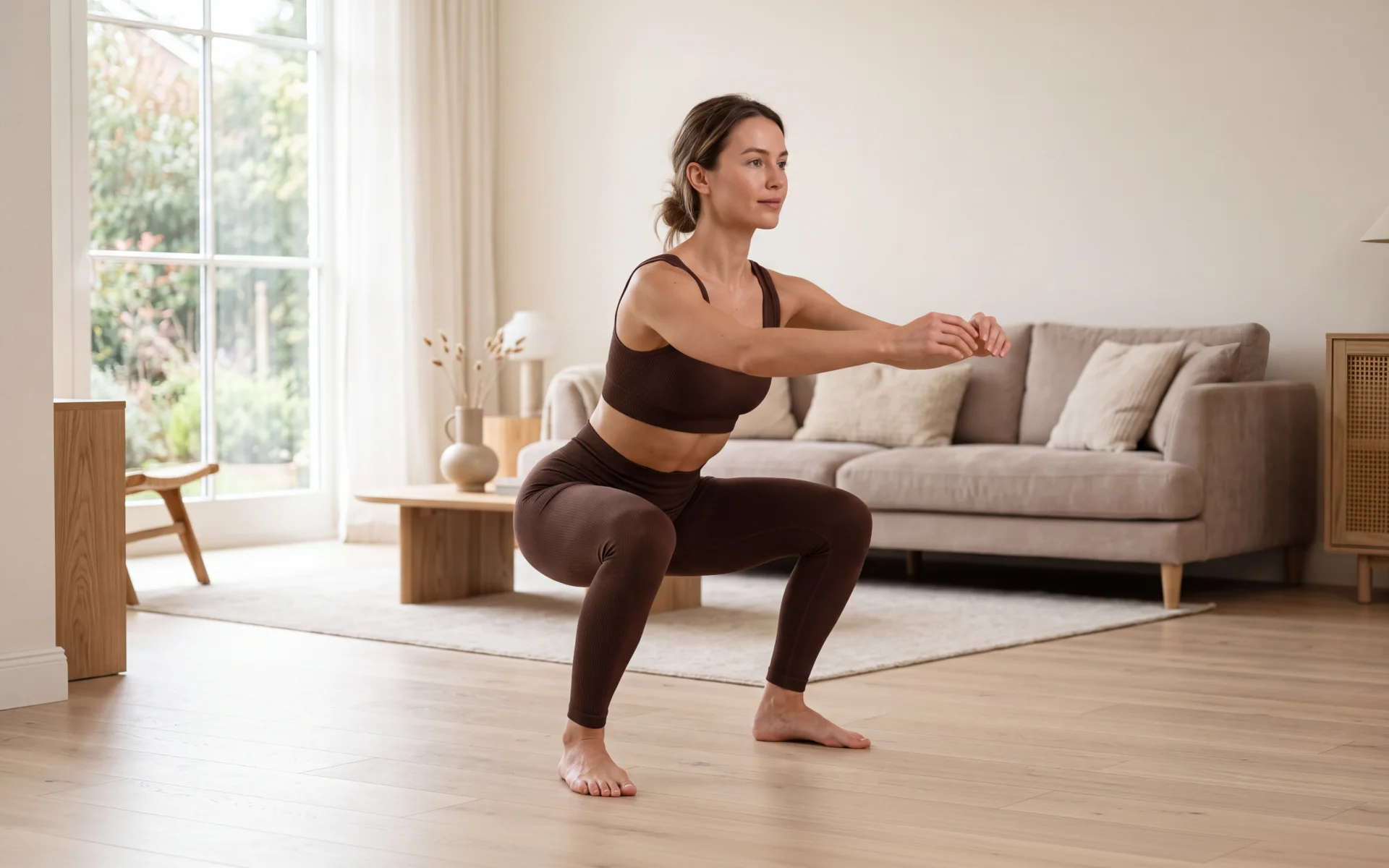
Bodyweight squats
- Stand with your feet shoulder-width apart, your toes pointing forward.
- Push your hips back and bend your knees within a comfortable range.
- Lower only as far as you can control comfortably. You do not need to reach knee height.
- Squeeze your glutes and stand back up.
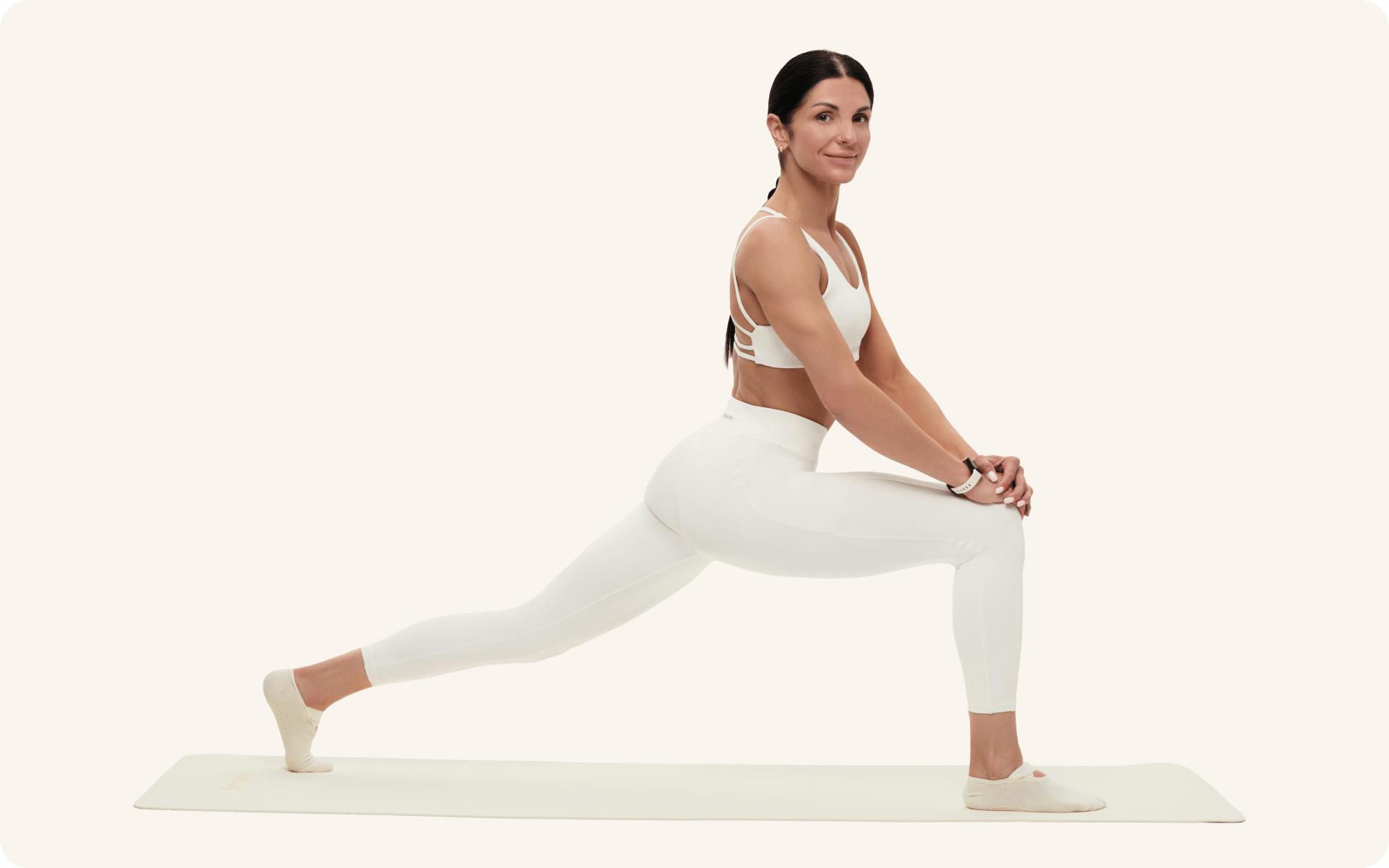
Back lunges
- Stand tall with your feet hip-width apart.
- Step one foot back and lower that knee toward the floor.
- Keep your front knee over your ankle.
- Push through your front foot to return to standing.
Dead bugs
- Lie on your back with your arms reaching toward the ceiling.
- Lift your knees to a 90-degree angle.
- Slowly lower one arm and the opposite leg toward the floor.
- Return to the start and switch sides.
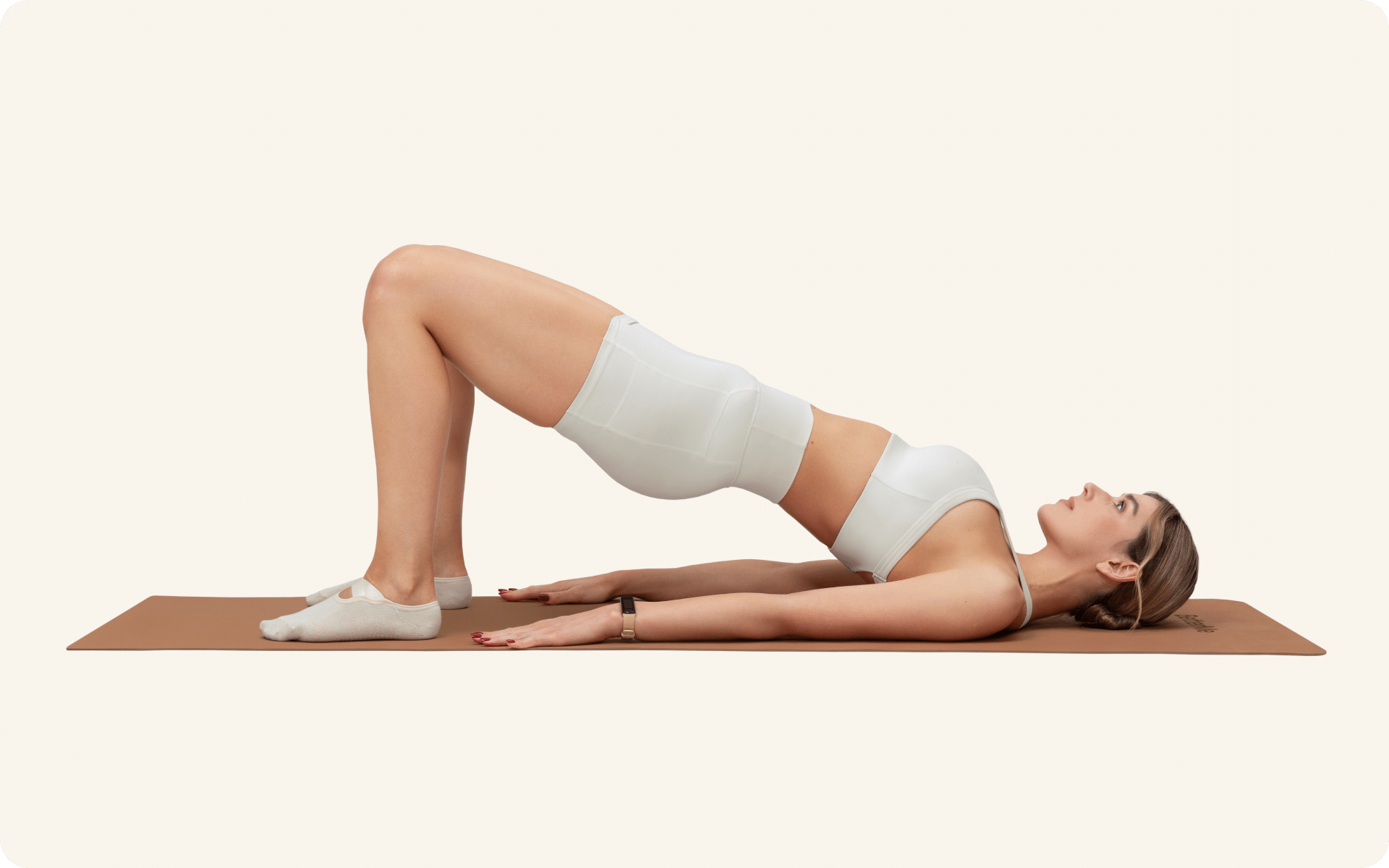
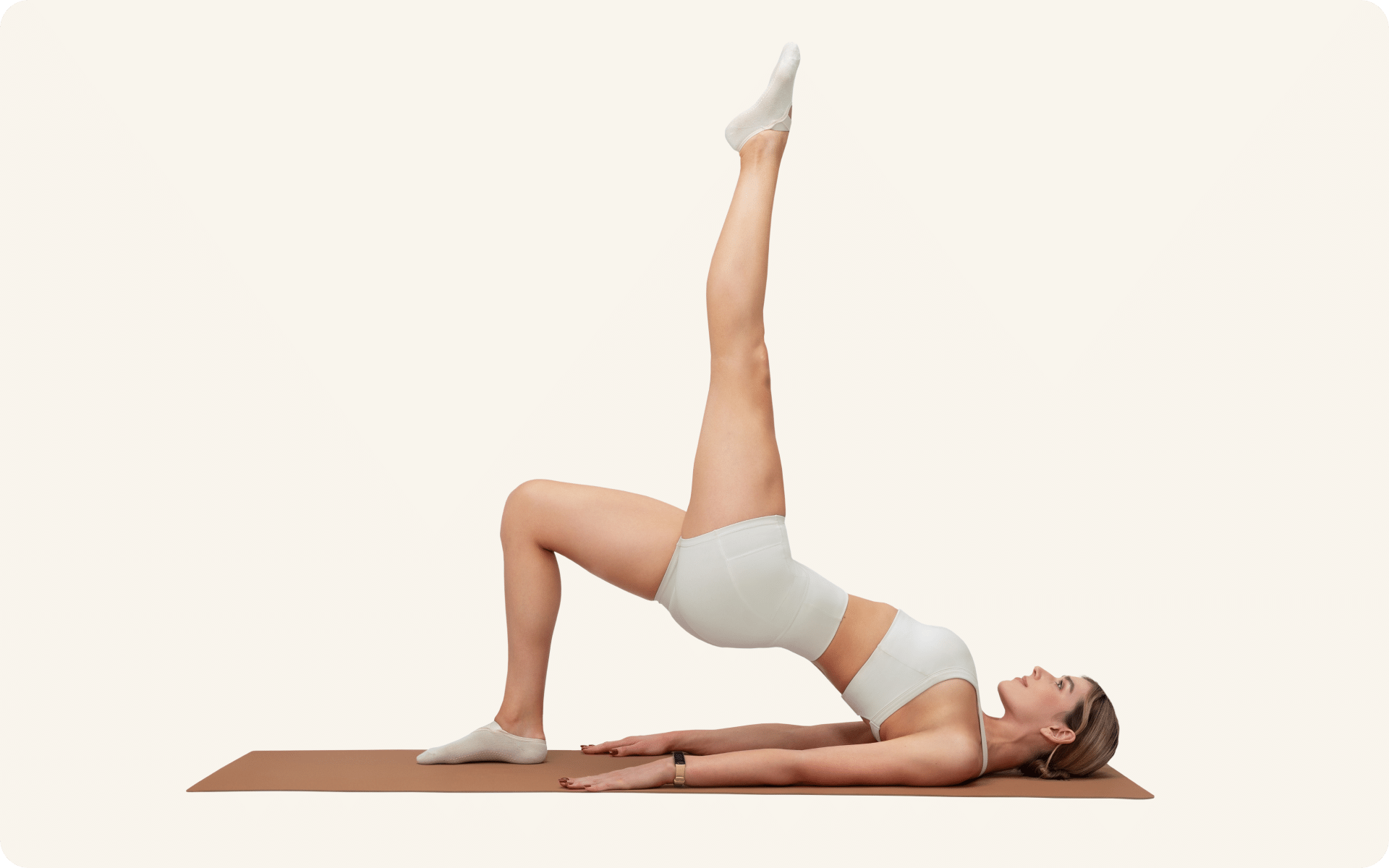
Glute hip-ups
- Lie on your back with your knees bent and your feet flat.
- Press through your heels to lift your hips.
- Squeeze your glutes at the top.
- Lower slowly.
For the single-leg version, extend one leg before beginning the bridge.
Mountain climbers
- Start in a straight-arm plank position.
- Keep your hips level and your core engaged.
- Drive one knee toward your chest.
- Switch legs in a controlled, running-style motion.
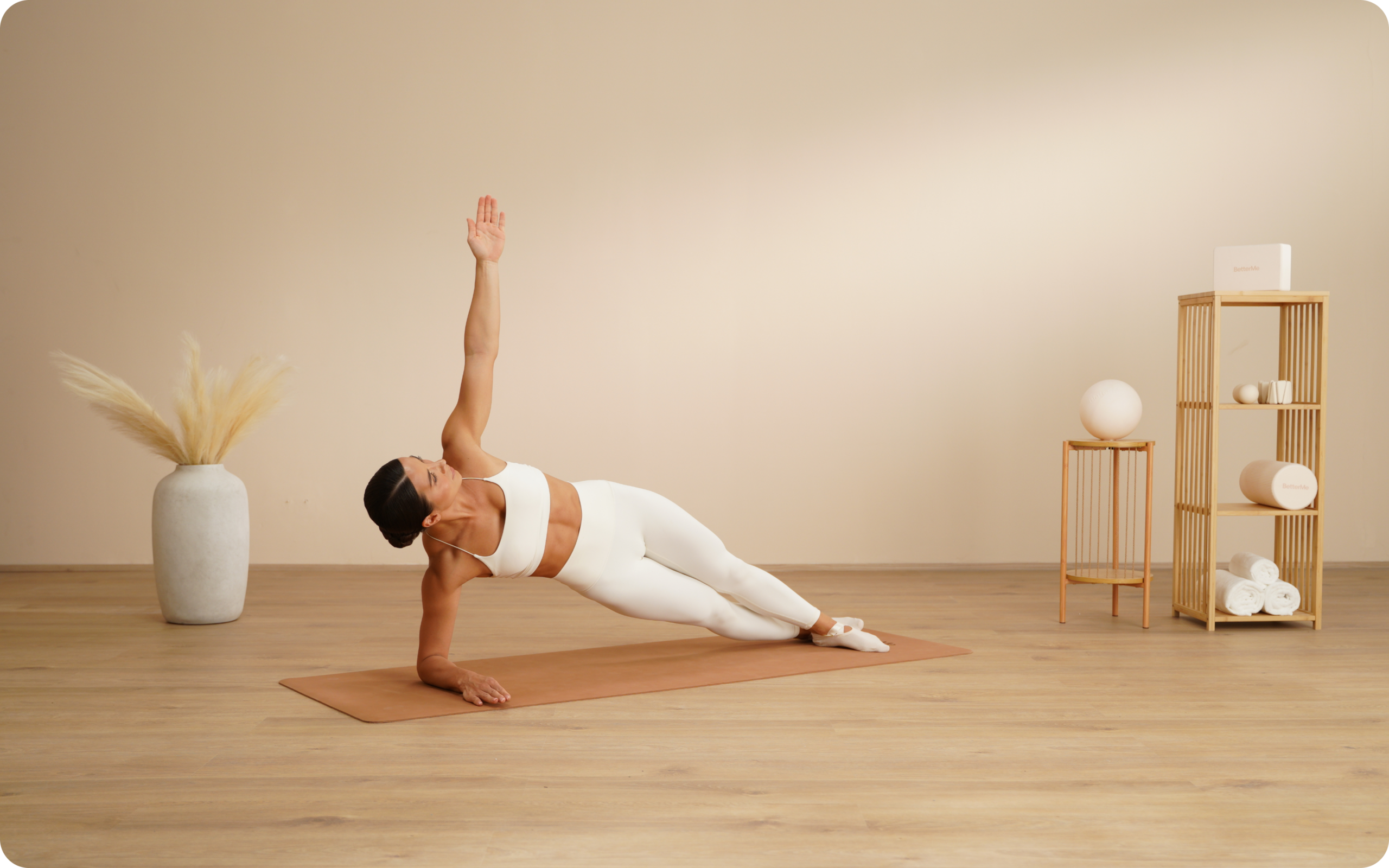
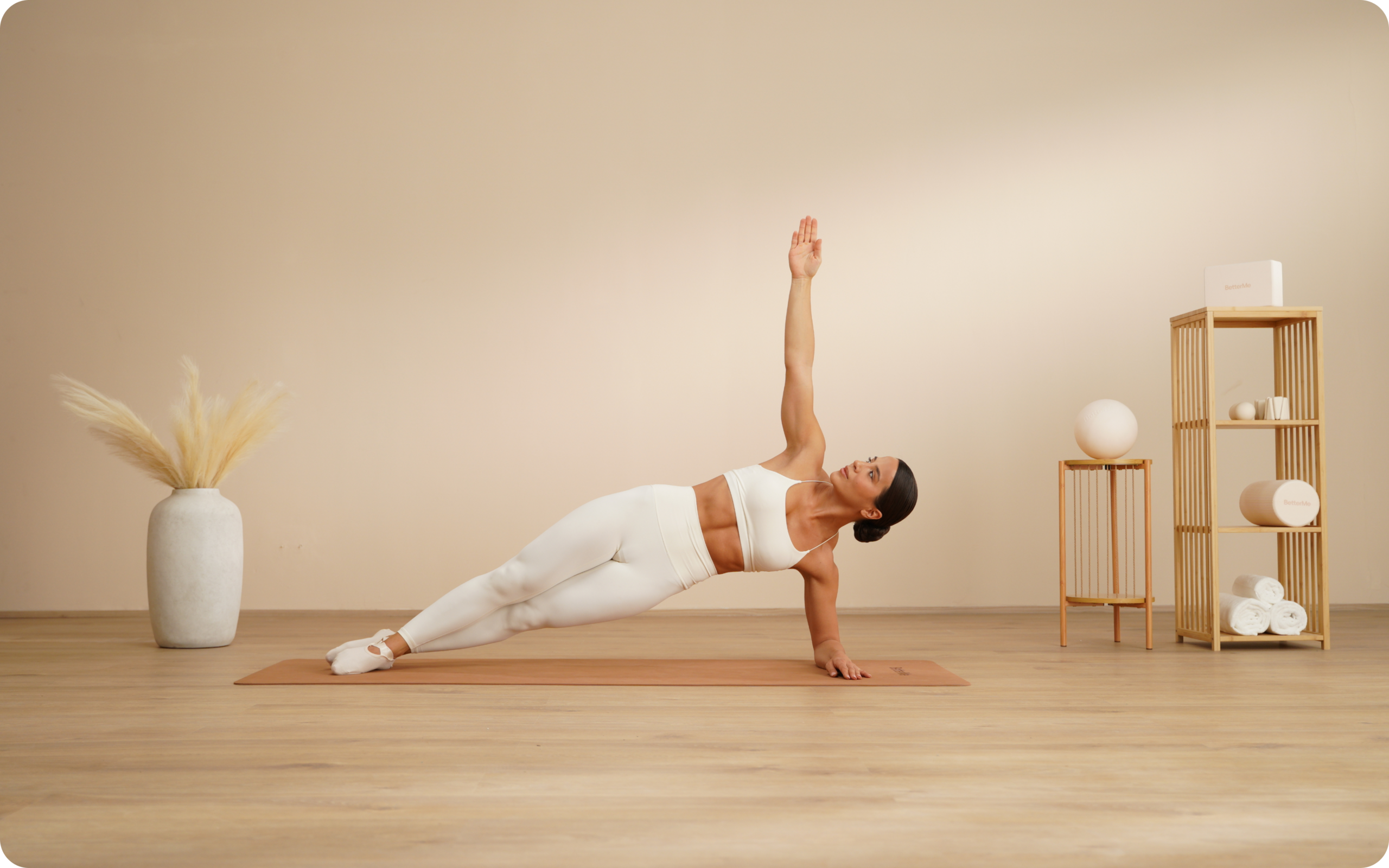
Side planks
- Lie on your side with your forearm under your shoulder.
- Stack your feet and lift your hips off the floor.
- Keep your body in a straight line.
- Hold while breathing steadily.
- Lower to rest.
- Repeat the side plank on the other side.
Drop to your knees to make it easier.
Incline pike push-up
- Place your hands on a fixed, sturdy elevated surface that will not slide or tip.
- Step your feet back and lift your hips, keeping your head between your upper arms.
- Bend your elbows and lower your head toward your hands within a comfortable range.
- Press through your hands to return to the starting position.
Supported rows with a suspension trainer
- Use a purpose-built suspension trainer attached according to its instructions to an anchor intended to support body weight.
- Check the straps and anchor before leaning back.
- Hold the handles and use a shallow, manageable body angle.
- Bend your elbows to bring your chest toward the handles while keeping your body controlled.
- Return slowly.
Skip the exercise if you cannot verify the equipment and anchor.
Read more: The Simplest Lower Back Calisthenics Guide for Beginners
Inverted rows with a rowing bar
- Use a purpose-built rowing bar and check that the equipment is secure before positioning yourself beneath it.
- Grip the bar and bend your knees to make the movement easier.
- Pull your chest toward the bar within a range you can control.
- Lower slowly. Avoid using ordinary household tables as a substitute.
Hip circles
- Start on all fours in a crawling position.
- Lift one knee slightly off the floor.
- Make small, comfortable circles with the raised knee.
- Complete your reps, then switch sides.
Deep squats
- Stand with your feet in a comfortable stance, using stable support if needed.
- Lower into a squat only as far as you can comfortably control, keeping your heels supported.
- Keep your knees moving in the direction of your toes without forcing them outward.
- Hold for a breath, then stand up.
How do food and other activity support the routine?
Regular meals and a manageable total activity schedule can support your training routine.
Include protein-containing foods you enjoy. A review found that protein supplementation could add to some resistance-training gains, but it does not establish a need for supplements for every beginner (5).
General adult guidance includes aerobic activity alongside muscle strengthening (1). Add walking or another activity gradually instead of treating every lighter day as an extra hard workout.
Weight management depends on activity and food intake together, and individual results vary (6). The calisthenics weight-management guide for women explains why this month cannot promise a particular scale change.
FAQs
Should beginners train to failure?
Beginners do not need to take every set to exhaustion for this sample routine. Stop before your technique deteriorates and use a manageable workload.
Can I combine the plan with running?
Running adds to your weekly workload, so account for its effort alongside strength sessions and rest. Start with a manageable combination rather than add demanding running to every lighter day.
The bottom line
Use the four phases to organize practice, with the option to repeat any phase. A manageable routine, clear exercise setup, and honest progress notes are more useful than forcing every weekly target.
Disclaimer
This article is intended for general informational purposes only and does not serve to address individual circumstances. It is not a substitute for professional advice or help and should not be relied on for making any kind of decision-making. Any action taken as a direct or indirect result of the information in this article is entirely at your own risk and is your sole responsibility.
BetterMe, its content staff, and its medical advisors accept no responsibility for inaccuracies, errors, misstatements, inconsistencies, or omissions and specifically disclaim any liability, loss or risk, personal, professional or otherwise, which may be incurred as a consequence, directly or indirectly, of the use and/or application of any content.
You should always seek the advice of your physician or other qualified health provider with any questions you may have regarding a medical condition or your specific situation. Never disregard professional medical advice or delay seeking it because of BetterMe content. If you suspect or think you may have a medical emergency, call your doctor.
Sources
- Adult Activity: An Overview (2023, cdc.gov).
- Warm Up, Cool Down (2024, heart.org).
- Effects of Resistance Training Overload Progression Protocols on Strength and Muscle Mass (2024, pubmed.ncbi.nlm.nih.gov).
- The Effect of Resistance Training in Women on Dynamic Strength and Muscular Hypertrophy: A Systematic Review with Meta-analysis (2020, pubmed.ncbi.nlm.nih.gov).
- A systematic review, meta-analysis and meta-regression of the effect of protein supplementation on resistance training-induced gains in muscle mass and strength in healthy adults (2018, pmc.ncbi.nlm.nih.gov).
- Physical Activity and Your Weight and Health (2026, cdc.gov).
 Reviewed by