A 28-day calisthenics workout challenge can organize four weeks of bodyweight practice with clear exercises, sets, repetitions, and rest. This sample begins with manageable variations and changes the workload only when you are ready. Female beginners can choose options by current ability rather than follow a routine prescribed solely by age.
For a day-by-day format, explore our 30-day calisthenics challenge calendar. This four-week guide focuses on how to perform a repeatable session and decide whether to repeat, reduce, or progress it.
Key takeaways
- This BetterMe example schedules 12 strength sessions across 4 weeks; two weekly sessions are an alternative.
- General adult activity guidance includes muscle strengthening on at least 2 days weekly, alongside aerobic activity (1).
- Each sample session contains a push-up variation, squat or lunge, glute bridge, and core exercise.
- Start with 1-2 sets and rest for 60-90 seconds or longer as needed; these are adjustable coaching targets.
- Age alone does not determine whether a wall push-up, incline push-up, or floor push-up suits you.
- A review of 24 studies found strength improvements in healthy adult women. It did not test this challenge or predict its outcomes (2).
- Week 4 is for reviewing manageable training. You can continue with a familiar variation.
What is the 28-day calisthenics challenge?
The 28-day calisthenics challenge is a four-week schedule for practicing bodyweight movements and adjusting their difficulty.
Calisthenics is a form of exercise that uses your body weight as resistance to build strength and endurance. Familiar movements include push-ups, squats, lunges, and planks. Bodyweight training can be done at home. Pulling movements usually need specialized equipment and a suitable anchor.
A challenge gives you a plan for practice. This schedule is an editorial example, and it has not been tested as a complete program or shown to guarantee fitness, muscle, or weight changes.
A set means a group of repetitions. A repetition means one complete movement. A timed plank is measured in seconds, and a target “per side” means completing the stated amount on each side.
BetterMe can help you add more structure to your daily wellness routine with workouts, meal planning tools, and habit-building features. Explore the app and take a practical step toward a routine that feels more manageable for you.
How should beginners organize the four weeks?
Organize the four weeks around nonconsecutive strength days, with lighter activity and rest between them.
The sample schedule uses Monday, Wednesday, and Friday for strength practice. If three sessions feel too demanding, train on Monday and Thursday instead and leave the other days for rest or comfortable activity. General guidance recommends strengthening the major muscle groups at least twice weekly. Beginners can build toward that target at a manageable pace (1).
| Day | Sample activity | Starting approach |
|---|---|---|
| Monday | Strength session | Use the weekly exercise table |
| Tuesday | Optional easy walk or mobility | Choose a brief, comfortable session |
| Wednesday | Strength session | Repeat the same variations |
| Thursday | Rest | No structured workout |
| Friday | Strength session | Keep or adjust the workload |
| Saturday | Optional easy walk or mobility | Keep effort comfortable |
| Sunday | Rest and review | Decide whether to repeat the week |
Allow roughly 20-35 minutes for a session, including preparation and rest. Use this as a planning estimate. A shorter session with one set is a valid starting point. You do not need to finish faster each week.
Warm up gradually for 5-10 minutes with gentle marching and easier versions of your planned movements. A gradual warm-up can raise heart rate and breathing before harder exercise (3). Finish at an easier pace instead of stopping abruptly after demanding activity.
Read more: How To Start Calisthenics At Home With Zero Experience
Which exercises, sets, and reps should you use?
Use a repeatable full-body session with adjustable sets and repetitions, keeping the same variations until they feel manageable.
The following table provides sample exercise targets. These doses are practical examples, not findings from a trial of this challenge. Stop a set when the final repetitions become rushed or difficult to control.
| Exercise | Week 1 | Week 2, if ready | Week 3, if ready | Week 4 review |
|---|---|---|---|---|
| Wall or incline push-up | 1-2 sets of 6-8 reps | Same sets, up to 8-10 reps | Repeat, or slightly lower the incline | Repeat a manageable target |
| Sit-to-stand or squat | 1-2 sets of 8 reps | Same sets, up to 10 reps | Repeat, or add a brief pause | Repeat a manageable target |
| Glute bridge | 1-2 sets of 8-10 reps | Same sets, up to 10-12 reps | Repeat, or pause briefly at the top | Repeat a manageable target |
| Supported split squat | 1 set of 5 reps per leg, optional | 1-2 sets of 5-6 reps per leg | Repeat, or try a reverse lunge | Repeat a manageable target |
| Dead bug or heel tap | 1-2 sets of 5 reps per side | Same sets, up to 6-8 reps per side | Repeat with a slower movement | Repeat a manageable target |
| Plank from knees | 1-2 holds of 10-15 secs | Same holds, up to 15-20 secs | Repeat, or try a brief full plank | Repeat a manageable target |
Rest for 60-90 seconds between sets or exercises, and take longer when needed. Changing a variation may mean reducing the repetitions again. You do not need to increase sets, repetitions, difficulty, and speed together.
The push-up and optional split squat can remain in their easier forms throughout the four weeks. Supported rows can add a pulling pattern if you have purpose-built equipment installed according to its instructions. Do not improvise suspended rows from an ordinary household table or door handle.
For a plan with detailed instructions for individual movements, read our 30-day calisthenics workout plan.
How do you choose an exercise variation?
Choose a variation that lets you move with control and finish before technique deteriorates.
A beginner can be younger or older, and someone returning to exercise may need a gentler starting point than their previous routine. A table of age brackets cannot establish an appropriate workload without considering actual ability and circumstances.
| Movement | More support | Another starting option | Optional later variation |
|---|---|---|---|
| Push-up | Wall push-up | Incline push-up | Floor push-up |
| Squat | Sit-to-stand from a stable chair | Bodyweight squat | Squat with a pause |
| Lunge | Supported split squat | Short reverse lunge | Deeper controlled reverse lunge |
| Core movement | Heel tap | Dead bug | Slower dead bug |
| Core hold | Plank from knees | Short forearm plank | Longer controlled hold |
Your choice can differ across movements. Being comfortable with a squat does not mean you need to start with floor push-ups. Likewise, choosing a wall push-up does not prevent you from using a more demanding leg exercise.
For movement concerns that continue despite adjustments, seek guidance from a qualified professional. Stop an exercise that causes discomfort instead of using the calendar as a reason to push through.
How do you perform the workout movements?
Perform the workout movements slowly enough to control your position, using support where needed.
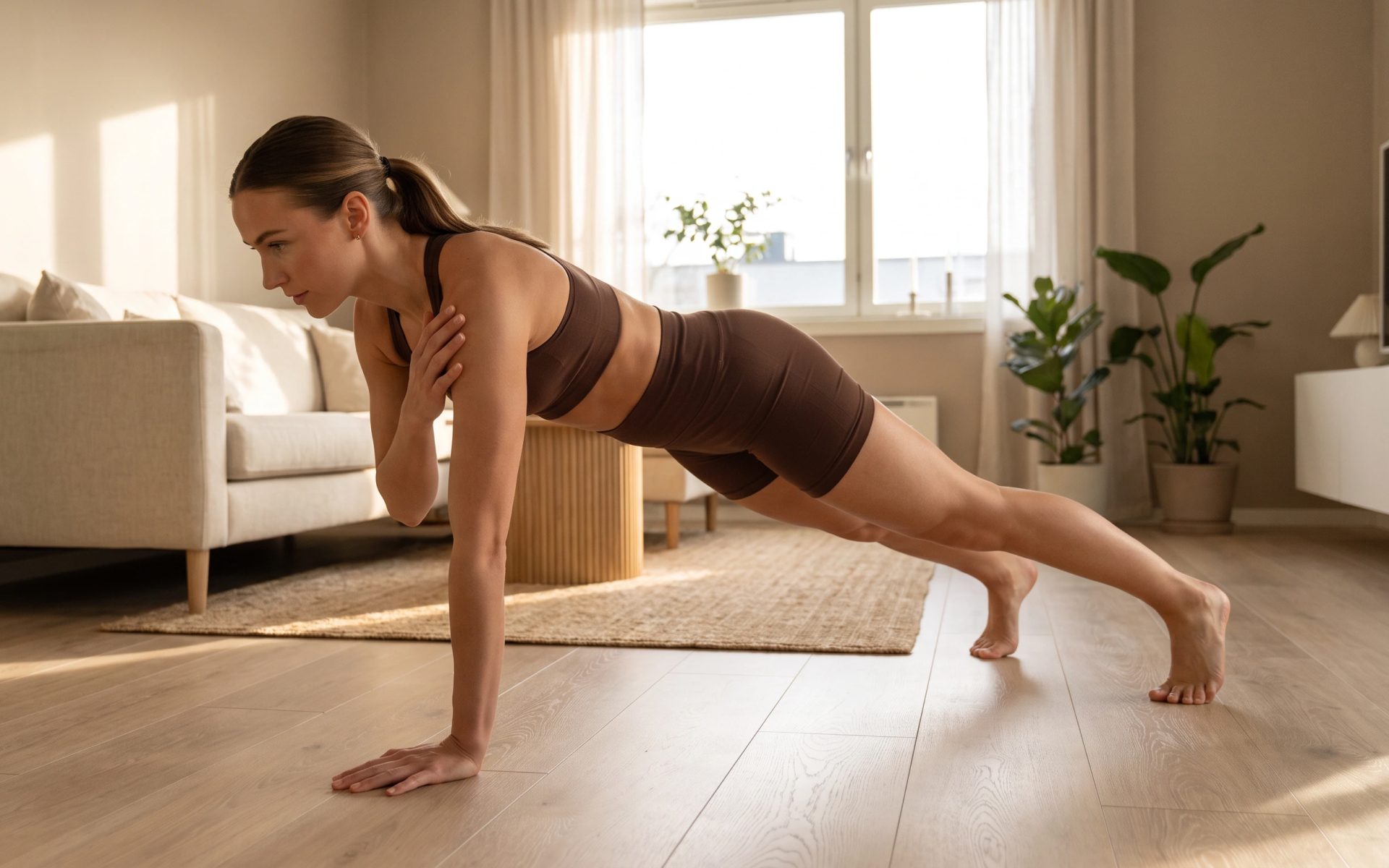
Wall push-up
- Place your hands on a wall at about shoulder height.
- Step your feet back to a manageable distance.
- Bend your elbows to bring your chest toward the wall.
- Press through your hands to return to the starting position.
Sit-to-stand
- Position a stable chair so it will not slide.
- Sit with both feet grounded.
- Stand up using your legs and stable support if needed.
- Sit down slowly with control.
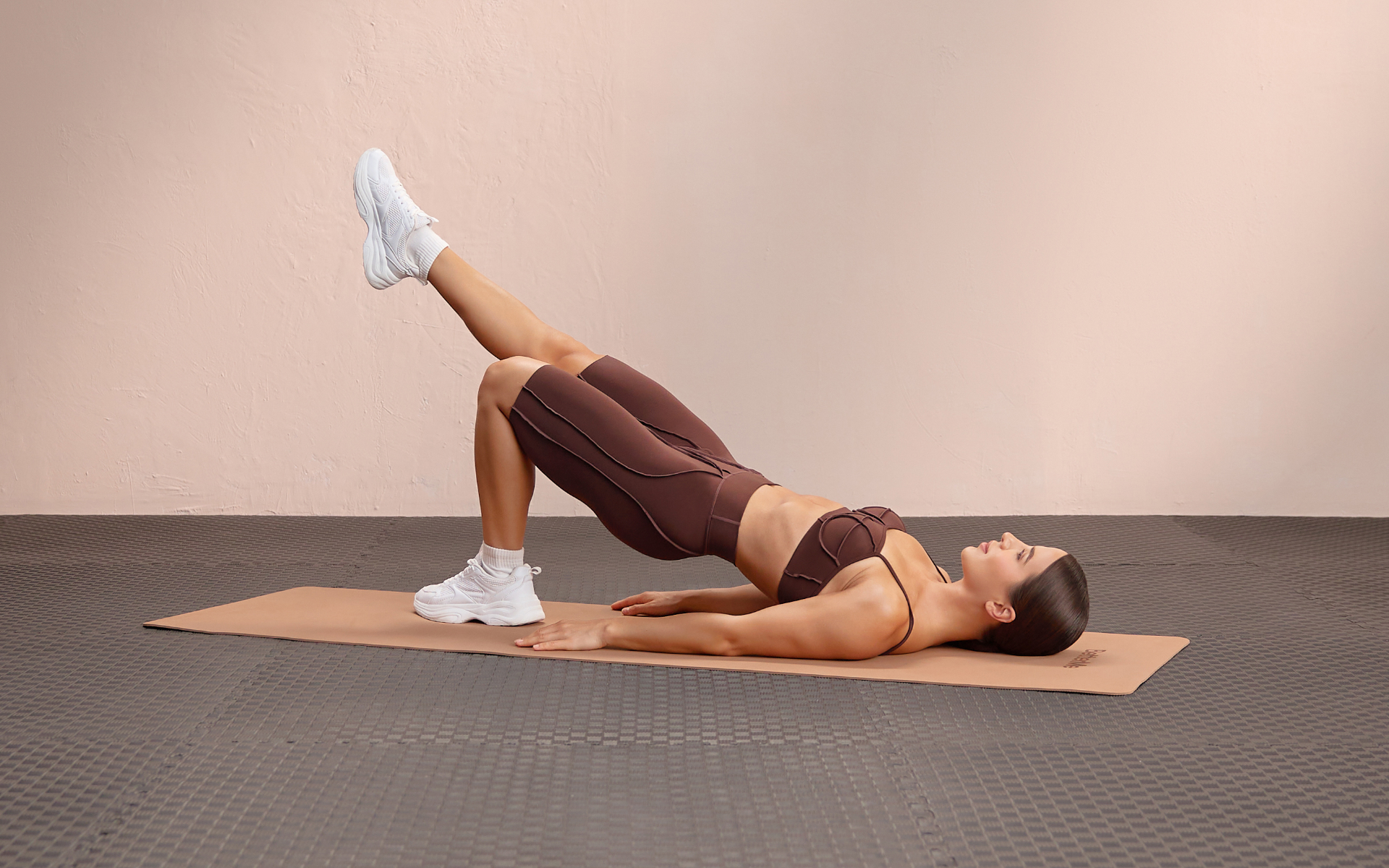
Glute bridge
- Lie on your back with your knees bent and your feet flat.
- Press through your feet to raise your hips.
- Pause without arching your back.
- Lower your hips slowly.
Supported split squat
- Stand in a split stance beside stable support.
- Bend your knees within a comfortable range.
- Return to the starting position.
- Complete the split squat on the other side.
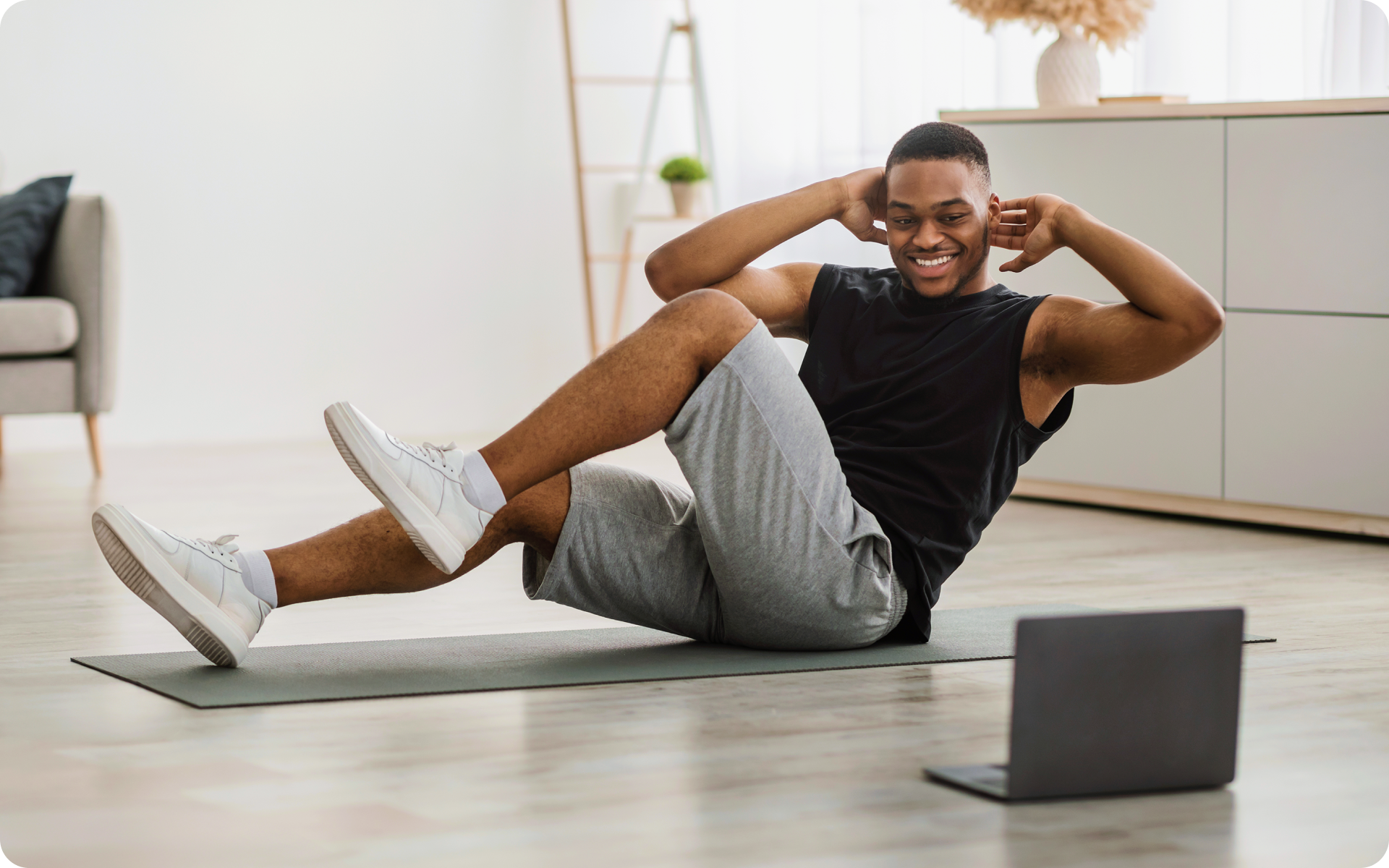
Heel tap
- Lie on your back with your knees lifted and bent.
- Lower one heel toward the floor.
- Return the leg to the starting position.
- Repeat the heel tap on the other side.
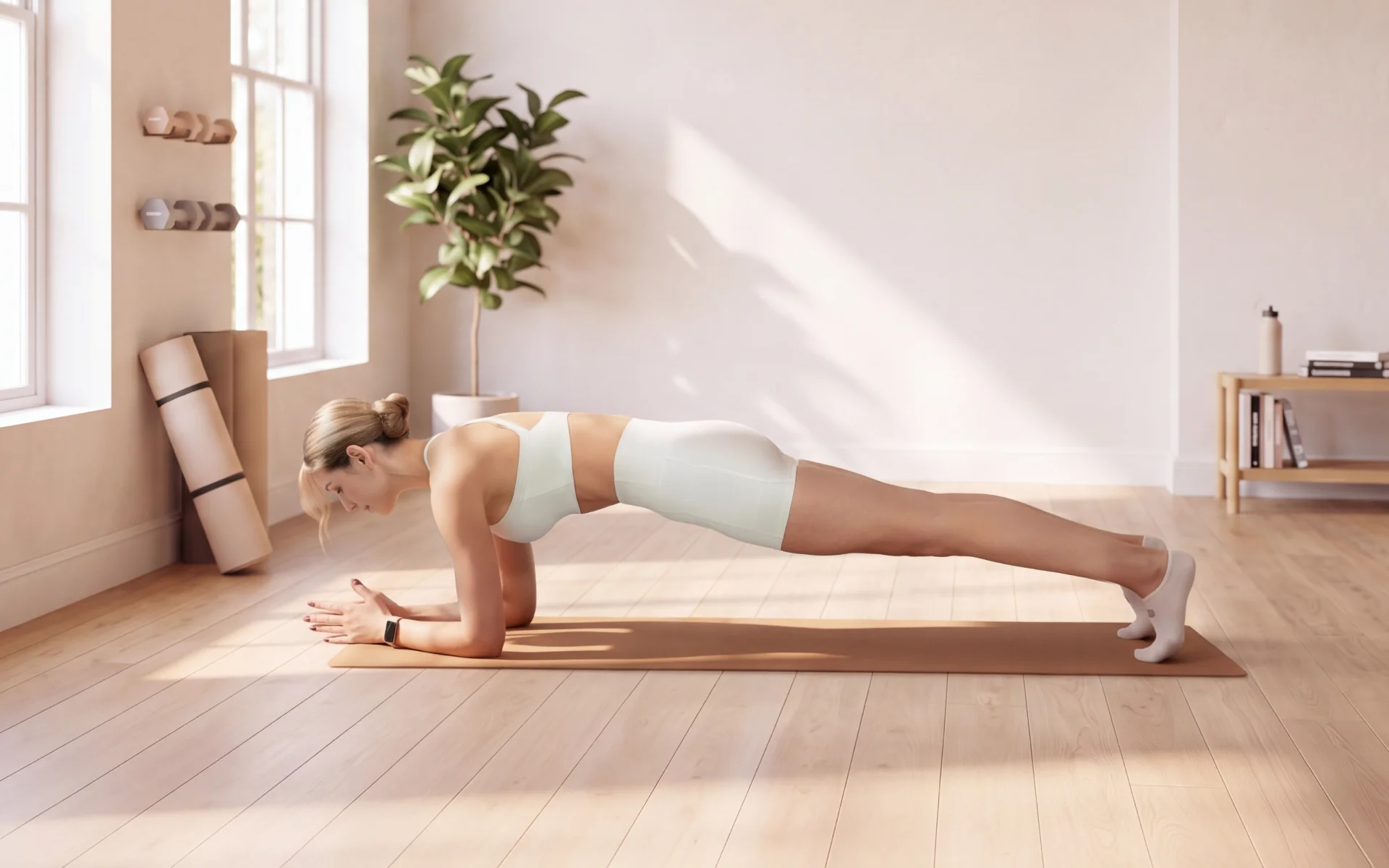
Plank from knees
- Place your forearms beneath your shoulders.
- Position your knees on the floor.
- Lift your hips to align your shoulders, hips, and knees.
- Hold while breathing steadily.
- Lower to rest before the position changes.
Read more: The Simplest Lower Back Calisthenics Guide for Beginners
When should you repeat or progress a week?
Repeat a week when the workload still feels demanding, and consider progressing only when your chosen targets remain controlled.
A practical check is whether you can complete the session at the same exercise angle without rushed repetitions, unwanted position changes, or an unusually demanding finish. Use these as coaching prompts.
One trial of previously untrained young adults found that progressing load or repetitions could support training-related strength and muscle-size gains (4). It does not mean this four-week routine needs a scheduled upgrade every seven days.
Change one variable at a time. You might add one repetition, use a slightly lower push-up incline, or add a set to one movement. Keep the other targets unchanged while you assess the new workload.
If you miss a session, resume after appropriate rest. Avoid doubling the next workout to catch up. Our 1-month calisthenics workout plan explains how to organize another cycle around the workload you can actually repeat.
What results can you expect in 28 days?
In 28 days, you may gain familiarity with the movements and establish a routine, while strength and appearance changes vary.
Research involving healthy adult women supports resistance training as a way to improve strength. However, the reviewed programs lasted from 4 weeks to 12 months and used different exercises and workloads, so their findings cannot promise a specific result from this challenge (2).
Record your exercise variation, completed repetitions, rest, and perceived effort. Compare the same setup at the start and end of the challenge. More controlled movement can be useful progress even without a change in body weight.
Food intake and total physical activity influence weight management. A four-week exercise routine does not automatically create a calorie deficit or establish how much weight someone will lose (5). Our calisthenics weight-management guide for women covers those expectations in more detail.
What should you eat while following the challenge?
Eat regular meals that provide enough energy for your routine and include protein-containing foods you enjoy.
Examples include yogurt with fruit, beans with rice, eggs with toast, or fish or tofu with vegetables and a grain. Adjust the foods to your preferences and circumstances rather than follow a universal calorie target.
A review of resistance-training studies found that protein supplementation could add to some gains in muscle and strength, but that does not establish a need for supplements for every beginner (6). Food-based protein options are a practical place to start.
Keep water nearby and drink according to your needs. If you need individual advice about food intake or exercise, consult a qualified professional.
BetterMe App helps you achieve your body goals with ease and efficiency by helping to choose proper meal plans and effective workouts. Start using our app and you will see good results in a short time.

FAQs
Can calisthenics change your physique in four weeks?
Four weeks does not establish a reliable deadline for a particular physique. Training, food intake, starting point, and other circumstances influence appearance, and individual results vary.
The bottom line
Use four weeks to learn a manageable session and understand how to adjust it. You can complete the challenge by establishing a routine you can repeat, even if you have not reached every target.
Disclaimer
This article is intended for general informational purposes only and does not serve to address individual circumstances. It is not a substitute for professional advice or help and should not be relied on for making any kind of decision-making. Any action taken as a direct or indirect result of the information in this article is entirely at your own risk and is your sole responsibility.
BetterMe, its content staff, and its medical advisors accept no responsibility for inaccuracies, errors, misstatements, inconsistencies, or omissions and specifically disclaim any liability, loss or risk, personal, professional or otherwise, which may be incurred as a consequence, directly or indirectly, of the use and/or application of any content.
You should always seek the advice of your physician or other qualified health provider with any questions you may have regarding a medical condition or your specific situation. Never disregard professional medical advice or delay seeking it because of BetterMe content. If you suspect or think you may have a medical emergency, call your doctor.
Sources
- Adult Activity: An Overview (2023, cdc.gov).
- The Effect of Resistance Training in Women on Dynamic Strength and Muscular Hypertrophy: A Systematic Review with Meta-analysis (2020, pubmed.ncbi.nlm.nih.gov).
- Warm Up, Cool Down (2024, heart.org).
- Effects of Resistance Training Overload Progression Protocols on Strength and Muscle Mass (2024, pubmed.ncbi.nlm.nih.gov).
- Physical Activity and Your Weight and Health (2026, cdc.gov).
- A systematic review, meta-analysis and meta-regression of the effect of protein supplementation on resistance training-induced gains in muscle mass and strength in healthy adults (2018, pmc.ncbi.nlm.nih.gov).
 By
By 
 Reviewed by
 Reviewed by