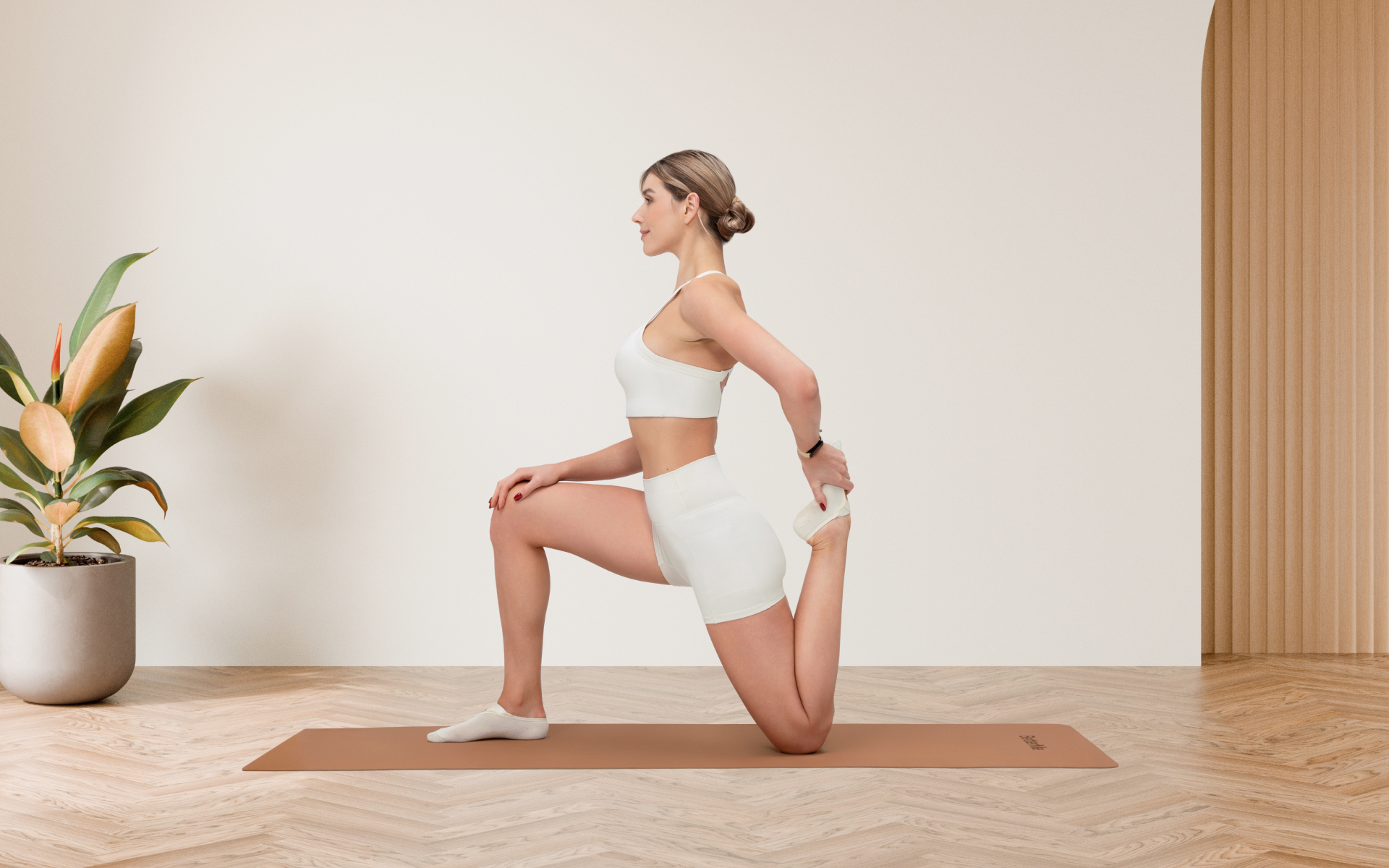
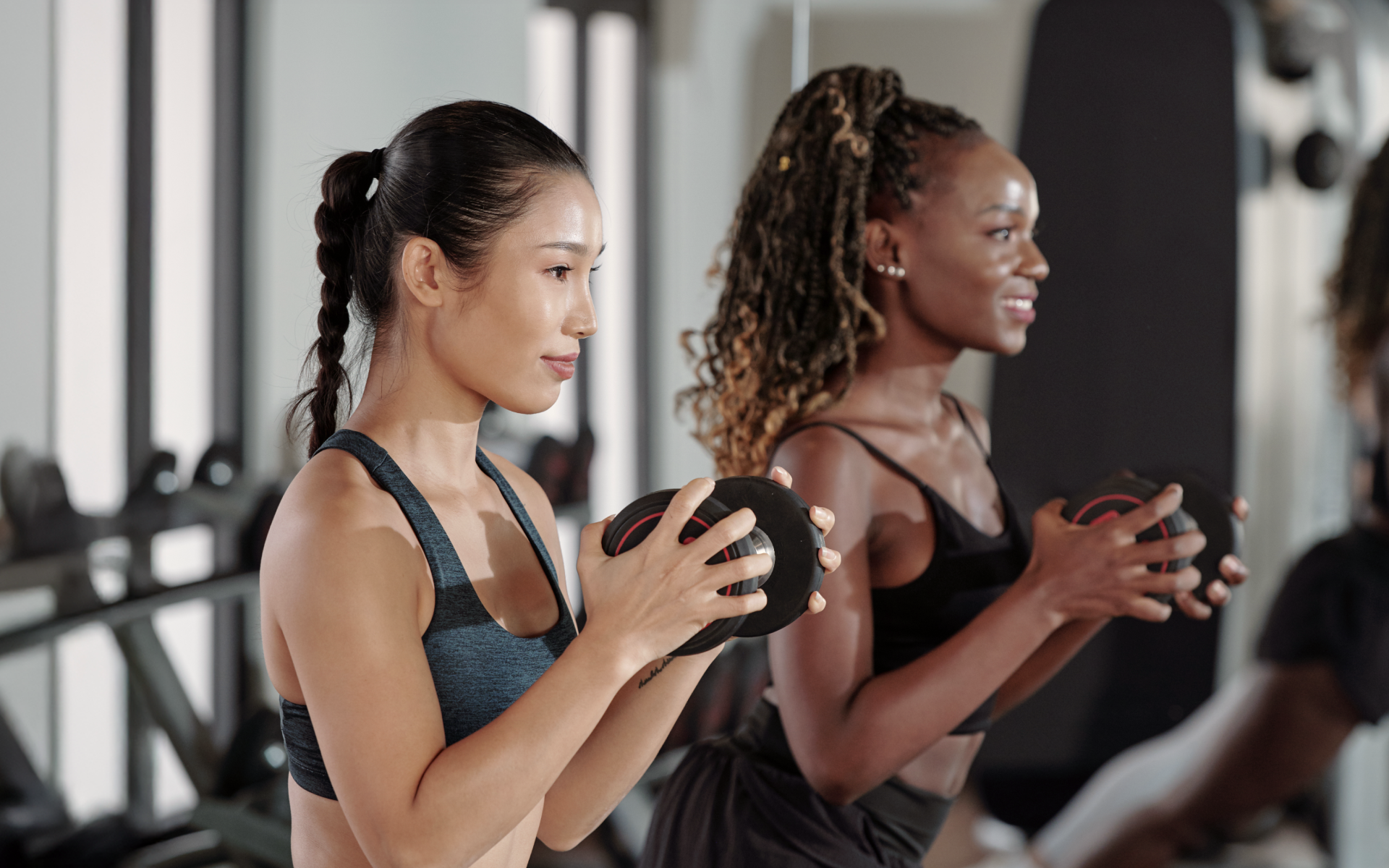
Starting a fitness journey can feel challenging to a total beginner who’s never had any experience with structured fitness programs. With so many different types of workouts for the body, it’s easy to feel overwhelmed.
However, understanding the fundamental workout categories is the first step toward building an effective and sustainable routine. A well-structured plan accelerates your progress and minimizes your risk of injury, ensuring you lay a strong foundation for long-term health.
This guide simplifies the process. We’ll explore the main types of gym workouts for total beginners, clarify the science behind them, and provide actionable programs to get you started.
What Are the Main Types of Gym Workouts for Total Beginners?
When you first step into a gym, you’ll see a wide array of activities. To simplify, we can categorize these into several core types, each of which serves a unique purpose. Understanding these categories will help you build a balanced routine that is aligned with your fitness goals.
1. Resistance Training
Resistance training involves exercising your muscles against an opposing force. This force can come from your body weight, free weights such as dumbbells, or specialized machines. The primary goal is to increase muscle strength, size (hypertrophy), and endurance (1).
The National Strength and Conditioning Association (NSCA) emphasizes that progressive overload – gradually increasing the stress placed on your muscles – is the key principle for continuous improvement (2).
- Free Weights (Barbells and Dumbbells): These require you to stabilize your body, engaging more muscle groups and improving coordination (3). They’re highly versatile for a range of strength-building exercises.
- Machine Weights: Machines guide your movement along a fixed path, which is excellent for isolating specific muscles and ensuring proper form, making them ideal for beginners (4).
- Bodyweight Training: Using your own body as resistance (e.g. push-ups, squats, planks) is a fundamental and accessible form of strength training. It’s perfect for building a solid base and can be done anywhere, which makes it one of the most practical types of gym workouts at home (5).
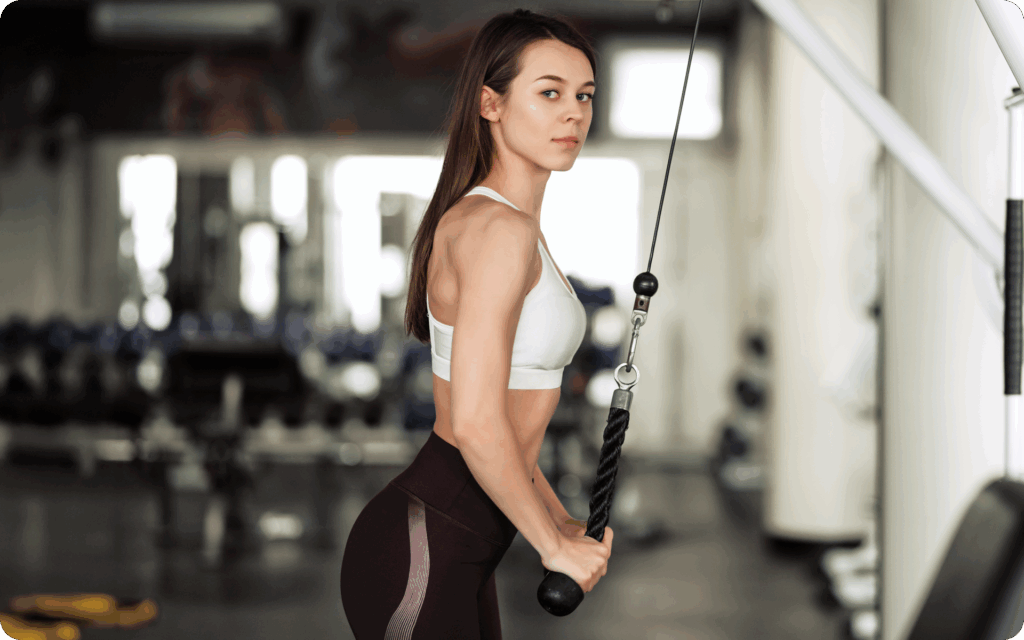
2. Cardiovascular Training (Cardio)
Cardiovascular exercise, or cardio, elevates your heart rate and improves the efficiency of your heart, lungs, and circulatory system. It’s essential for endurance, calorie expenditure, and overall heart health (6).
- Steady-State Cardio: This involves maintaining a consistent intensity for an extended period. Examples include jogging on a treadmill, using an elliptical machine, or cycling at a moderate pace. A moderate pace is typically defined as 60-70% of your maximum heart rate (7).
- High-Intensity Interval Training (HIIT): HIIT consists of short bursts of all-out effort followed by brief recovery periods. For example, sprinting for 30 seconds and then walking for 60 seconds. This method is highly efficient for improving cardiovascular fitness and burning calories in less time (8).
3. Flexibility and Mobility Training
This category focuses on improving the range of motion around your joints (9). While they’re often used interchangeably, they are distinct concepts.
- Flexibility is the ability of your muscles to lengthen passively, typically achieved through stretching (10).
- Mobility is the ability to actively move a joint through its full range of motion. It involves strength and motor control (11).
Common methods include static stretching (holding a stretch for 15-30 seconds), dynamic stretching (controlled movements through a range of motion), yoga, and Pilates.
BetterMe: Health Coaching app helps you achieve your body goals with ease and efficiency by helping to choose proper meal plans and effective workouts. Start using our app and you will see good results in a short time.
4. Functional Training
Functional training involves exercises that mimic movements you perform in daily life, such as lifting, bending, and twisting. The goal is to improve your strength and coordination for everyday tasks, making life easier and reducing injury risk (12). Examples include kettlebell swings, medicine ball throws, and farmer’s walks.
5. Mind-Body Workouts
These workouts integrate physical movement with mental focus, breathwork, and meditation.
- Yoga: Combines physical postures (asanas), breathing techniques, and meditation to enhance flexibility, strength, and mental clarity (13).
- Pilates: Focuses on controlled movements to improve core strength, posture, and body awareness (14).
- Tai Chi: A gentle martial art that involves slow, flowing movements that build balance and reduce stress (15).
6. Dance and Rhythm-Based Workouts
These workouts are a fun and engaging way to get your cardio in. They improve coordination, cardiovascular health, and mood (16).
- Zumba: A high-energy class featuring Latin-inspired dance moves.
- Dance Aerobics: Choreographed routines set to popular music.
7. Combat-Inspired Workouts
These high-intensity workouts blend martial arts techniques with cardiovascular conditioning. They’re excellent for building full-body strength, agility, and mental toughness (17, 18).
- Boxing/Kickboxing: Focuses on punches, kicks, and footwork, providing an intense cardio and strength workout.
- Taebo: A classic aerobic workout that fuses martial arts with high-energy music.
By understanding these different types of workouts for the body, you can create a well-rounded fitness plan that keeps you engaged and moving toward your goals.
Read more: Workouts for the Week: All Your Biggest Questions Answered
How Do Strength and Cardio Workouts Differ?
While both strength training and cardio are pillars of a healthy lifestyle, they stimulate different physiological adaptations in your body. Understanding these differences is the key to programming your workouts effectively to meet your specific goals.
What Is Strength Training?
Strength training, also known as resistance training, involves contracting your muscles against an external resistance. Its primary purpose is to increase muscle mass, strength, and endurance (1).
- The “How”: This type of training creates microscopic tears in your muscle fibers. During recovery, your body repairs these fibers, which makes them larger and stronger to better handle future stress. This adaptive process is known as hypertrophy. According to research published in Free Radical Biology and Medicine, this repeated exposure to mechanical stress is what underpins exercise’s protective nature (19).
- Energy System: Strength training primarily relies on the anaerobic energy system, specifically the phosphagen system, which provides immediate energy for short, intense bursts of effort that last up to about 30 seconds (20).
- Adaptations: Consistent strength training leads to neural adaptations (your brain gets better at recruiting muscle fibers) and muscular adaptations (your muscles grow larger and stronger (21). It also improves bone density, as the mechanical load stimulates bone growth (22).
What Is Cardiovascular Training?
Cardiovascular training, or “cardio”, is any activity that raises your heart rate for a sustained period. Its main purpose is to improve the efficiency of your cardiovascular system, which includes your heart, lungs, and blood vessels (6).
- The “How”: Cardio challenges your heart to pump blood more efficiently and enhances your lungs’ ability to take in oxygen. This leads to a lower resting heart rate and improved blood pressure (6).
- Energy System: Cardio primarily uses the aerobic energy system, which burns carbohydrates and fats in the presence of oxygen to produce energy for sustained activity (23).
- Adaptations: Regular cardio increases your VO2 max (the maximum amount of oxygen your body can use during exercise), improves endurance, and is highly effective for managing body weight (24).
| Feature | Strength training | Cardiovascular training |
|---|---|---|
| Primary goal | Increase muscle strength, size, and endurance | Improve heart and lung health and endurance |
| Primary energy system | Anaerobic (without oxygen) | Aerobic (with oxygen) |
| Key adaptations | Muscle hypertrophy, increased bone density, neural efficiency | Lower resting heart rate, improved VO2 max, fat loss |
| Typical duration | Shorter, intense bursts (e.g. sets of 8-12 reps) | Longer, sustained periods (e.g. 30-60 minutes) |
Neither is “better” than the other – they are two sides of the same coin. A comprehensive fitness program ideally includes both to achieve balanced, holistic health.
Read more: Great Full-Body Workouts: The Ultimate Guide for Beginners
How to Choose a Type of Gym Workout as a Beginner
Choosing the right workout as a beginner is essential for building momentum and staying committed. The best workout for you will depend on your goals, preferences, and current fitness level. Instead of chasing the “perfect” workout, focus on finding one that is sustainable and enjoyable.
Step 1: Define Your “Why” with S.M.A.R.T. Goals
Before you even think about exercises, clarify your motivation. Are you training for better health, to build muscle, to lose weight, or to improve your performance in a sport? According to the NSCA’s guidelines on program design, working with a professional to set S.M.A.R.T. goals is a foundational step (2).
S.M.A.R.T. stands for:
- Specific: Instead of “get fit”, aim for “jog for 30 minutes without stopping”.
- Measurable: Track your progress. For example, “lift 10 pounds more on the squat in four weeks”.
- Action-Oriented: Your goal should be based on an action, such as “attend three gym sessions per week”.
- Realistic: A goal of losing 20 pounds in one month isn’t realistic or healthy – aim for 1-2 pounds per week.
- Timely: Set a deadline, such as “run a 5k race in three months”.
Step 2: Consider Your Preferences
Adherence is the most important variable in any fitness program. If you hate a workout, you’re unlikely to stick with it.
- Do you enjoy social settings? Group fitness classes such as Zumba, spin, or bootcamp may be a great fit.
- Do you prefer solitude and focus? Traditional strength training or solo cardio sessions could be your best bet.
- Do you get bored easily? A program that mixes different workout types, such as circuit training, can keep things interesting.
Step 3: Assess Your Current Fitness Level and Limitations
Be honest about your starting point.
- Total Beginner: If you’re new to exercise, start with foundational movements. Full-body strength workouts 2-3 times per week, combined with low-impact cardio such as walking or cycling, is a proven approach. The NSCA recommends beginners train 2-3 days per week to allow for adequate recovery (25).
- Physical Limitations: If you have joint pain or a past injury, prioritize low-impact options. Swimming, elliptical training, and chair yoga are excellent choices. Always consult a healthcare professional before you start a new exercise program if you have pre-existing conditions.
Step 4: Start with the Basics
Don’t try to master everything at once. Focus on fundamental movement patterns. A great starting point for beginners combines strength and cardio.
Sample Beginner Weekly Schedule:
- Day 1: Full-body strength training
- Day 2: Moderate-intensity cardio (e.g. 30 minutes of brisk walking or cycling)
- Day 3: Rest or active recovery (e.g. stretching, light walking)
- Day 4: Full-body strength training
- Day 5: Moderate-intensity cardio
- Day 6: Rest or active recovery
- Day 7: Rest
This structure ensures you’re building strength while improving your cardiovascular health, with plenty of time for your body to recover and adapt.
For those who are just starting, finding a structured routine is key. Consider exploring a home gym workout plan to build confidence before you hit the gym floor.
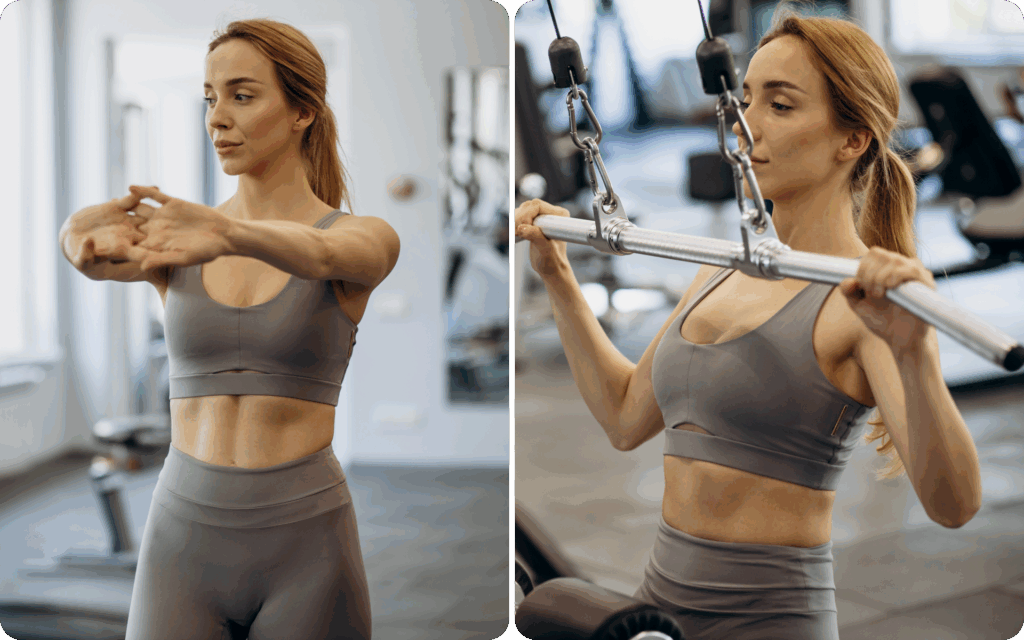
What Are the Benefits of Mixing Workout Types?
Relying on a single type of workout can lead to plateaus, boredom, and overuse injuries. Combining different training modalities, often called “cross-training”, offers a holistic approach to fitness that enhances performance and promotes long-term sustainability.
1. Reduced Risk of Injury
When you perform the same movements repeatedly, you place continuous stress on the same muscles, joints, and connective tissues. This can lead to overuse injuries such as tendonitis or stress fractures (27).
By mixing workout types, you distribute the stress across different parts of your body (28). For example, a runner who incorporates strength training builds stronger muscles and bones to support their joints, while adding yoga improves flexibility, potentially reducing muscle strain.
2. Overcoming Fitness Plateaus
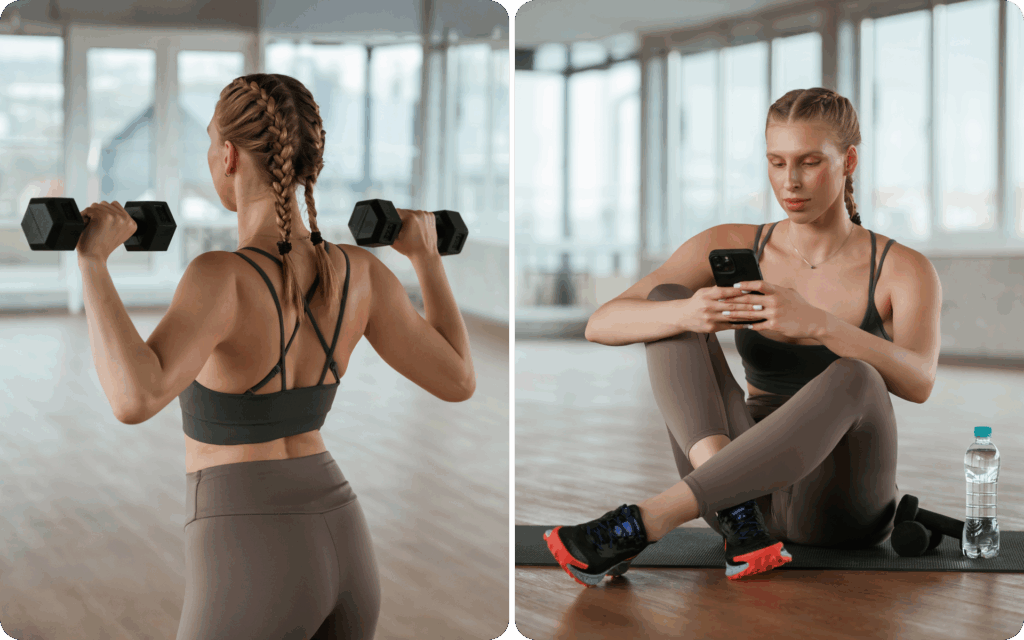
Your body is incredibly adaptive. If you do the same workout for months, your body becomes efficient at it, and you stop seeing improvements – a phenomenon that is known as a fitness plateau. Introducing new stimuli forces your body to adapt in new ways (29).
If your strength gains have stalled, adding HIIT can improve your work capacity, allowing you to push harder during your lifts.
3. Improved Overall Fitness
Different workouts target different components of fitness.
- Strength training builds muscle and bone density.
- Cardio improves heart health and endurance.
- Flexibility training enhances range of motion.
- Balance training improves stability and proprioception.
A program that includes a mix of these modalities creates a well-rounded athlete who is strong, agile, and resilient. For example, many types of workout at the gym for ladies are now hybrid classes that combine strength, cardio, and flexibility to deliver comprehensive results.
4. Enhanced Motivation and Adherence
Let’s be honest: doing the same thing every day can become monotonous. Variety keeps your routine fresh and engaging (29). Alternating between a focused lifting session, a high-energy dance class, and a calming yoga practice can prevent burnout and make you more likely to stick with your fitness journey in the long term.
5. More Efficient Fat Loss and Metabolism
Combining strength training and cardio is a powerful strategy for fat loss. Cardio burns calories during the workout, while strength training builds muscle mass (30). As muscle tissue is more metabolically active than fat, having more muscle increases your resting metabolic rate (RMR), which means you burn more calories, even at rest (31). HIIT, in particular, is known for its “afterburn” effect, or excess post-exercise oxygen consumption (EPOC), where your body continues to burn calories at an elevated rate for hours after the workout (32).
Mixing different types of gym workouts for beginners isn’t just beneficial, it’s essential for building a robust, injury-free, and sustainable fitness foundation.
What Is the Most Successful Workout Split?
A “workout split” is how you organize your training sessions throughout the week to target different muscle groups or movement patterns. There’s no single “best” split – the most successful one is the one that is aligned with your goals, recovery capacity, and schedule.
1. Full-Body Split
A full-body split involves training all major muscle groups in a single session. This is the most recommended split for beginners.
- Structure: 2-3 non-consecutive days per week (e.g. Monday, Wednesday, Friday).
- Why it works for beginners: It increases training frequency for each muscle group (2-3 times per week), which is optimal for learning movement patterns and driving initial strength gains (neural adaptations). The lower volume per session also allows for better recovery.
- When to use it: Ideal for your first 6-12 months of training or if you can only commit to 2-3 gym sessions per week.
2. Upper/Lower Split
This split divides your training into upper-body days and lower-body days.
- Structure: Typically 4 days per week (e.g. Monday: upper, Tuesday: lower, Thursday: upper, Friday: lower).
- Why it works: It allows for more volume and focus on each muscle group per session compared to a full-body routine. This can be beneficial for muscle growth (hypertrophy) once you’ve moved past the beginner phase.
- When to use it: An excellent choice for intermediate lifters or anyone who is training 4 days a week who wants to increase their training volume.
3. Push/Pull/Legs (PPL) Split
This popular split organizes workouts by movement pattern.
- Push Day: Exercises that involve pushing movements (e.g. bench press, shoulder press, triceps pushdowns). Targets the chest, shoulders, and triceps.
- Pull Day: Exercises that involve pulling movements (e.g. pull-ups, rows, bicep curls). Targets the back and biceps.
- Legs Day: Exercises for the lower body (e.g. squats, deadlifts, lunges).
- Structure: Can be done 3 days a week (P/P/L, then rest) or 6 days a week (P/P/L/P/P/L).
- Why it works: It allows for high volume and intensity for each muscle group while ensuring minimal overlap, which aids recovery. For example, your chest and shoulders are fresh for a push day after a leg day.
- When to use it: Best for intermediate to advanced lifters with good recovery capacity, particularly those who train 5-6 days a week.
Reasons why BetterMe is a safe bet: a wide range of calorie-blasting workouts, finger-licking recipes, 24/7 support, challenges that’ll keep you on your best game, and that just scratches the surface! Start using our app and watch the magic happen.
Beginner Full-Body Workout Program
This program is designed for beginners and should be performed three times a week on non-consecutive days.
Program Notes:
- Frequency: 3 times per week (e.g. Monday, Wednesday, Friday).
- Reps: The number of times you perform an exercise.
- Sets: A group of repetitions.
- Rest: Rest 60-90 seconds between sets.
- Intensity: Choose a weight that allows you to complete the target rep range while feeling challenged on the last 1-2 reps. This is often referred to as a rate of perceived exertion (RPE) of 8-9 out of 10.
| Exercise | Sets | Reps |
|---|---|---|
| Goblet squat | 3 | 8-12 |
| Push-ups (or knee push-ups) | 3 | As Many Reps As Possible (AMRAP) |
| Dumbbell row | 3 | 8-12 per arm |
| Dumbbell overhead press | 3 | 8-12 |
| Plank | 3 | 30-60 seconds hold |
| Romanian deadlift (RDL) with dumbbells | 3 | 10-15 |
Exercise Instructions
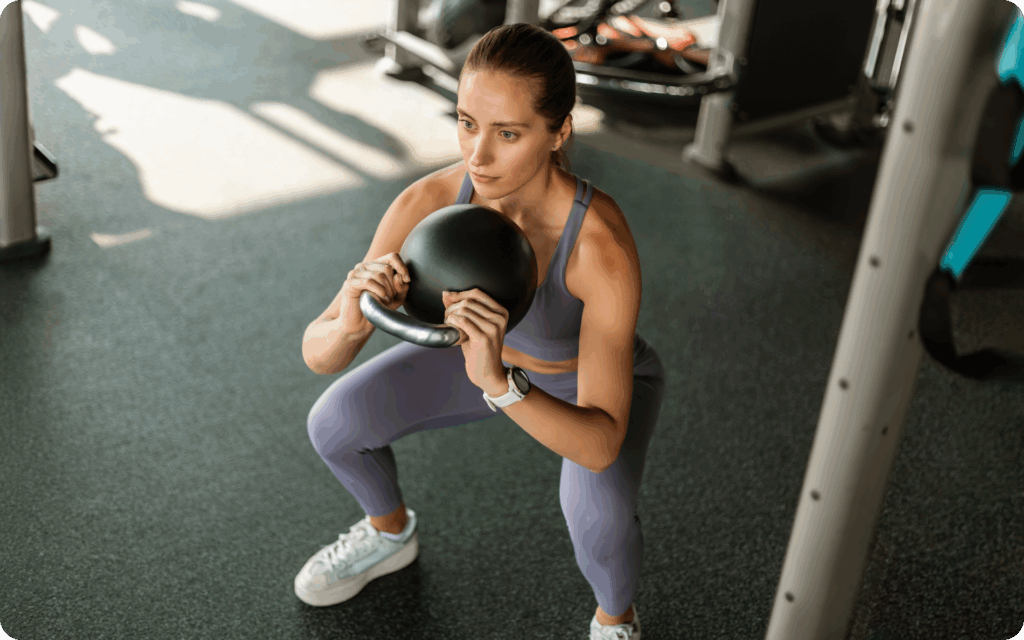
Goblet Squat
- Stand with your feet slightly wider than shoulder-width apart, with your toes pointed slightly out.
- Hold one dumbbell vertically against your chest with both hands.
- Keeping your chest up and your back straight, push your hips back and bend your knees as if you’re sitting in a chair.
- Lower yourself until your thighs are parallel to the floor, or as low as you can comfortably go.
- Push through your heels to return to the starting position.
Push-Ups
- Start in a high plank position with your hands directly under your shoulders and your body in a straight line from your head to your heels.
- Engage your core and glutes.
- Lower your body until your chest is a few inches from the floor, keeping your elbows at a 45-degree angle to your body.
- Push back up to the starting position. If this is too difficult, perform the exercise with your knees on the floor.
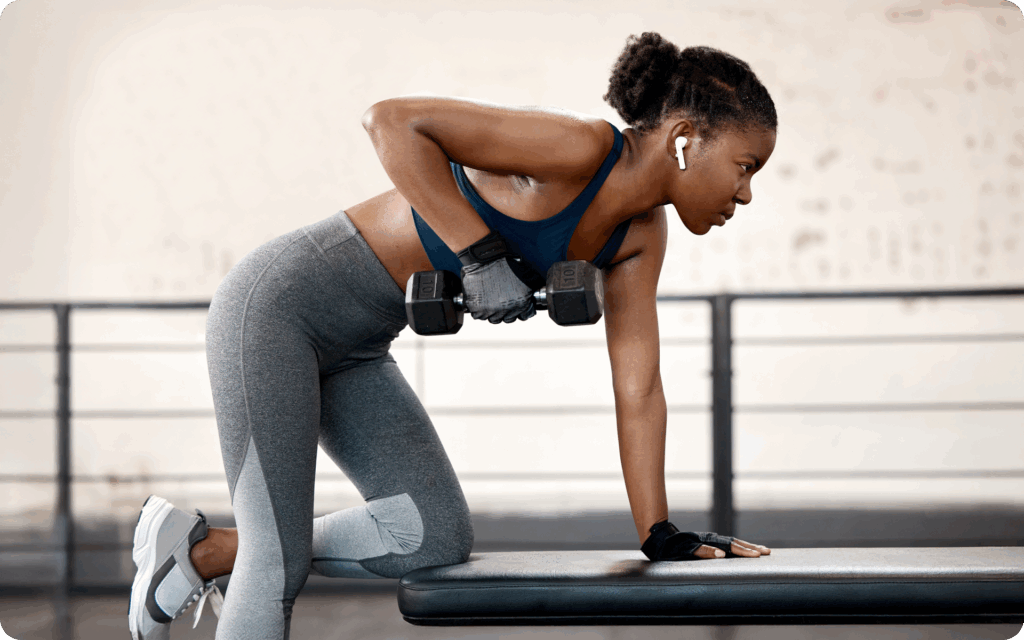
Dumbbell Row
- Place your left knee and left hand on a flat bench. Your back should be flat and parallel to the floor.
- Hold a dumbbell in your right hand with your arm extended toward the floor.
- Pull the dumbbell up toward your chest, squeezing your back muscles. Keep your elbow close to your body.
- Lower the dumbbell with control. Complete all reps on one side before switching to the other side.
Dumbbell Overhead Press
- Sit on a bench with back support or stand with your feet shoulder-width apart.
- Hold a dumbbell in each hand at shoulder height, with your palms facing forward and your elbows bent at a 90-degree angle.
- Press the dumbbells straight overhead until your arms are fully extended.
- Lower the dumbbells back to the starting position with control.
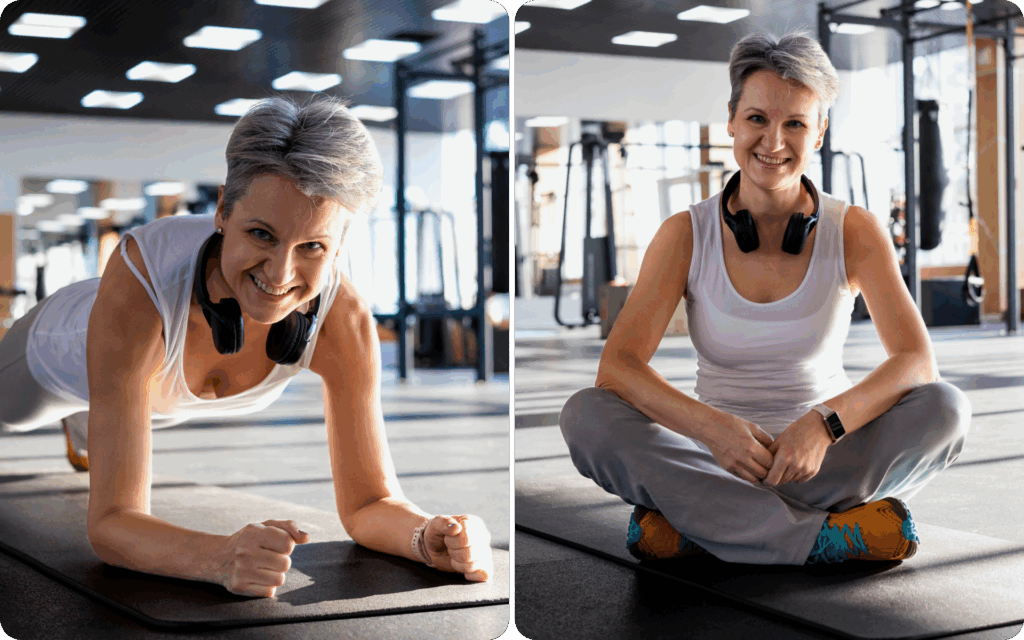
Plank
- Lie face down and place your forearms on the floor, with your elbows directly under your shoulders.
- Lift your hips off the floor so your body forms a straight line from your head to your heels.
- Engage your core and glutes to prevent your hips from sagging. Hold the position for the prescribed time.
Romanian Deadlift (RDL) with Dumbbells
- Stand with your feet hip-width apart, holding a dumbbell in each hand in front of your thighs, with your palms facing your body.
- Keeping your back straight and a slight bend in your knees, push your hips back and lower the dumbbells toward the floor.
- Lower the weights until you feel a stretch in your hamstrings, typically just below the knees.
- Squeeze your glutes and push your hips forward to return to the starting position.
For those who are looking to build a routine that is specifically designed for their needs, explore our guide to women’s gym workouts for beginners and our gym workout plan for beginners female.
The full-body split is best for beginners. Training all major muscle groups 2-3 times per week maximizes learning and stimulates growth without causing excessive soreness. This frequency is ideal for developing foundational strength and mastering exercise technique (2). No single workout split inherently burns more fat than another. Fat loss is primarily determined by a consistent calorie deficit, which is achieved through a combination of diet and exercise (33). However, a split that combines strength training and HIIT (such as an upper/lower split with 2 HIIT days) can be highly effective, as it builds calorie-burning muscle while maximizing calorie expenditure during and after workouts (29). Absolutely. You can gain a significant amount of muscle with full-body workouts, particularly as a beginner. By stimulating muscles multiple times per week, you provide a frequent signal for growth (33). As you become more advanced, you may need the higher volume of a split routine to continue making progress (20), but full-body workouts remain an effective tool for muscle maintenance and strength. Hydration needs vary, but a general guideline is to drink 7 to 10 ounces (approximately 200-300 ml) of water every 10 to 20 minutes during exercise (34). Listen to your body – thirst is a clear indicator that you need to drink. For intense workouts lasting over an hour, consider a sports drink to replenish electrolytes.Frequently Asked Questions
Which split is best for beginners?
What workout split burns the most fat?
Can you gain muscle with full-body workouts?
How much water should I drink during workouts?
The Bottom Line
Navigating the world of fitness starts with understanding the fundamentals. By selecting workouts that are aligned with your goals and learning the principles of effective programming, you set yourself up for a successful and rewarding journey. Remember that consistency is more important than intensity, particularly when you’re starting. Choose activities you enjoy, listen to your body, and celebrate your progress along the way. You have the tools to build a stronger, healthier you – one workout at a time.
DISCLAIMER:
This article is intended for general informational purposes only and does not serve to address individual circumstances. It is not a substitute for professional advice or help and should not be relied on for making any kind of decision-making. Any action taken as a direct or indirect result of the information in this article is entirely at your own risk and is your sole responsibility.
BetterMe, its content staff, and its medical advisors accept no responsibility for inaccuracies, errors, misstatements, inconsistencies, or omissions and specifically disclaim any liability, loss or risk, personal, professional or otherwise, which may be incurred as a consequence, directly or indirectly, of the use and/or application of any content.
You should always seek the advice of your physician or other qualified health provider with any questions you may have regarding a medical condition or your specific situation. Never disregard professional medical advice or delay seeking it because of BetterMe content. If you suspect or think you may have a medical emergency, call your doctor.
SOURCES:
- Resistance Training (2011, sciencedirect.com)
- FOUNDATIONS OF FITNESS PROGRAMMING (2015, nsca.com)
- Using Machines or Free Weights for Resistance Training in Novice Males? A Randomized Parallel Trial (2020, mdpi.com)
- 6 Benefits of Using Weightlifting Machines (2015, acefitness.org)
- Benefits of Bodyweight Training (2025, humankinetics.me)
- Cardiovascular exercise (2024, healthdirect.gov.au)
- WHAT IS STEADY-STATE CARDIO? (n.d., nasm.org)
- A Perspective on High-Intensity Interval Training for Performance and Health (2023, link.springer.com)
- The Importance of Flexibility and Mobility (n.d., sites.psu.edu)
- THE BENEFITS OF FLEXIBILITY: WHY YOU SHOULD STRETCH MORE! (n.d., blog.nasm.org)
- Mobility (2022, health.harvard.edu)
- Effects of functional training on physical and technical performance among the athletic population: a systematic review and narrative synthesis (2025, link.springer.com)
- Yoga: Effectiveness and Safety (2023, nccih.nih.gov)
- Pilates – health benefits (2022, betterhealth.vic.gov.au)
- The health benefits of tai chi (2022, health.harvard.edu)
- Dance – health benefit (2022, betterhealth.vic.gov.au)
- The caloric cost of combat sports and martial arts training in relation to health recommendations – initial research (2013, researchgate.net)
- The effects of martial arts participation on mental and psychosocial health outcomes: a randomised controlled trial of a secondary school-based mental health promotion program (2019, pubmed.ncbi.nlm.nih.gov)
- Anaerobic Exercise (2007, sciencedirect.com)
- Neuromuscular adaptations to resistance training in elite versus recreational athletes (2025, frontiersin.org)
- Effects of Resistance Exercise on Bone Health (2018, pmc.ncbi.nlm.nih.gov)
- THE AEROBIC ENERGY PATHWAYS EXPLAINED (n.d., blog.nasm.org)
- Aerobic Metabolic Adaptations in Endurance Eccentric Exercise and Training: From Whole Body to Mitochondria (2021, frontiersin.org)
- Aerobic Metabolic Adaptations in Endurance Eccentric Exercise and Training: From Whole Body to Mitochondria (2021, frontiersin.org)
- Determination of Resistance Training Frequency (2017, nsca.com)
- Understanding Overuse Injuries: Prevention and Recovery (2025, sierraneurosurgery.com)
- Adding Variety to Your Exercise Program (2020, uhhospitals.org)
- A Subject-Tailored Variability-Based Platform for Overcoming the Plateau Effect in Sports Training: A Narrative Review (2022, mdpi.com)
- The Effects of Combining Aerobic and Heavy Resistance Training on Body Composition, Muscle Hypertrophy, and Exercise Satisfaction in Physically Active Adults (2023, mdpi.com)
- Increasing muscle mass to improve metabolism (2013, pmc.ncbi.nlm.nih.gov)
- Speed- and Circuit-Based High-Intensity Interval Training on Recovery Oxygen Consumption (2017, pmc.ncbi.nlm.nih.gov)
- Fat Loss Depends on Energy Deficit Only, Independently of the Method for Weight Loss (2007, karger.com)
- 5 Benefits of Compound Exercises (2016, acefitness.org)
- National Athletic Trainers’ Association Position Statement: Fluid Replacement for Athletes (2000, nata.org)
 Reviewed by