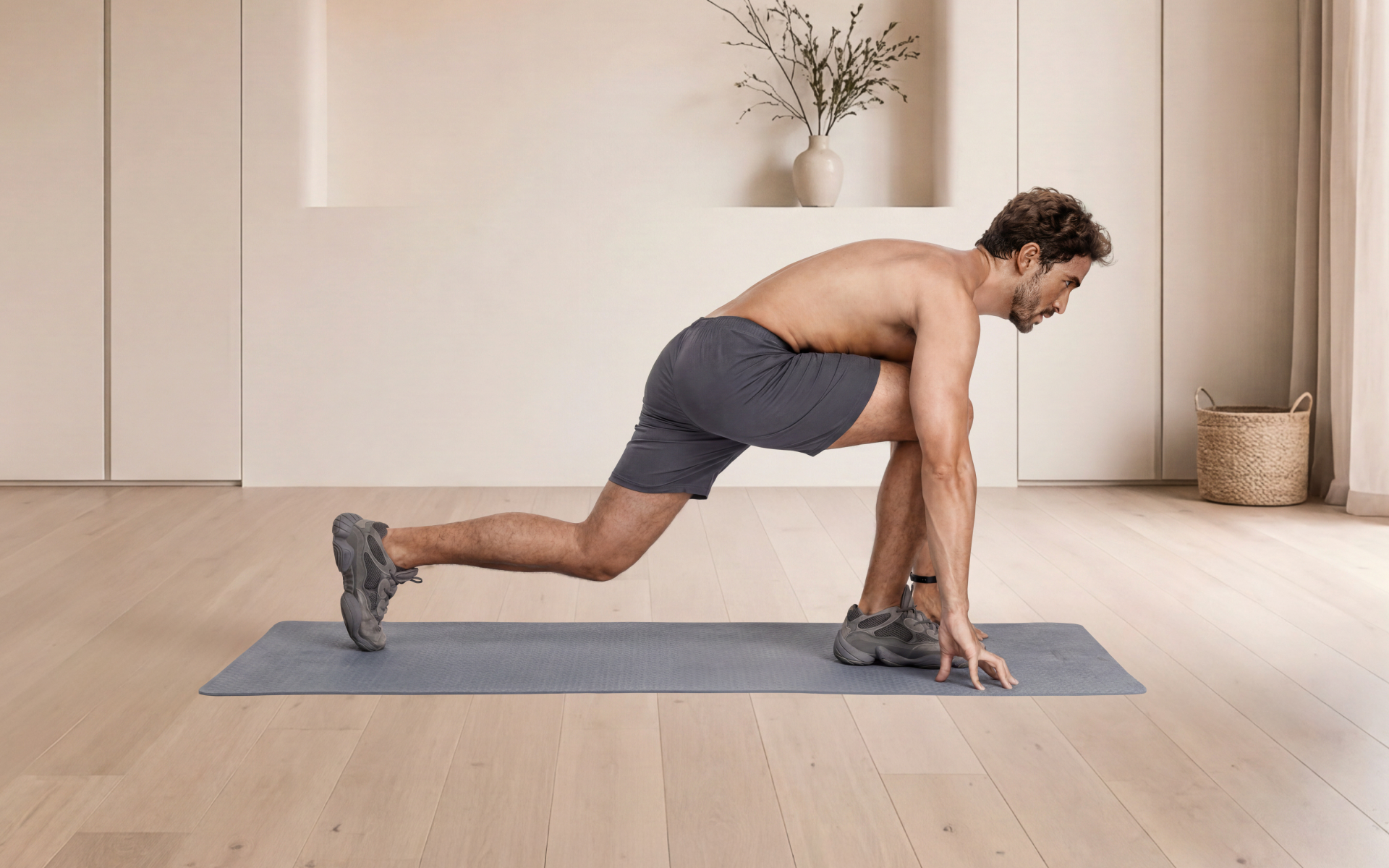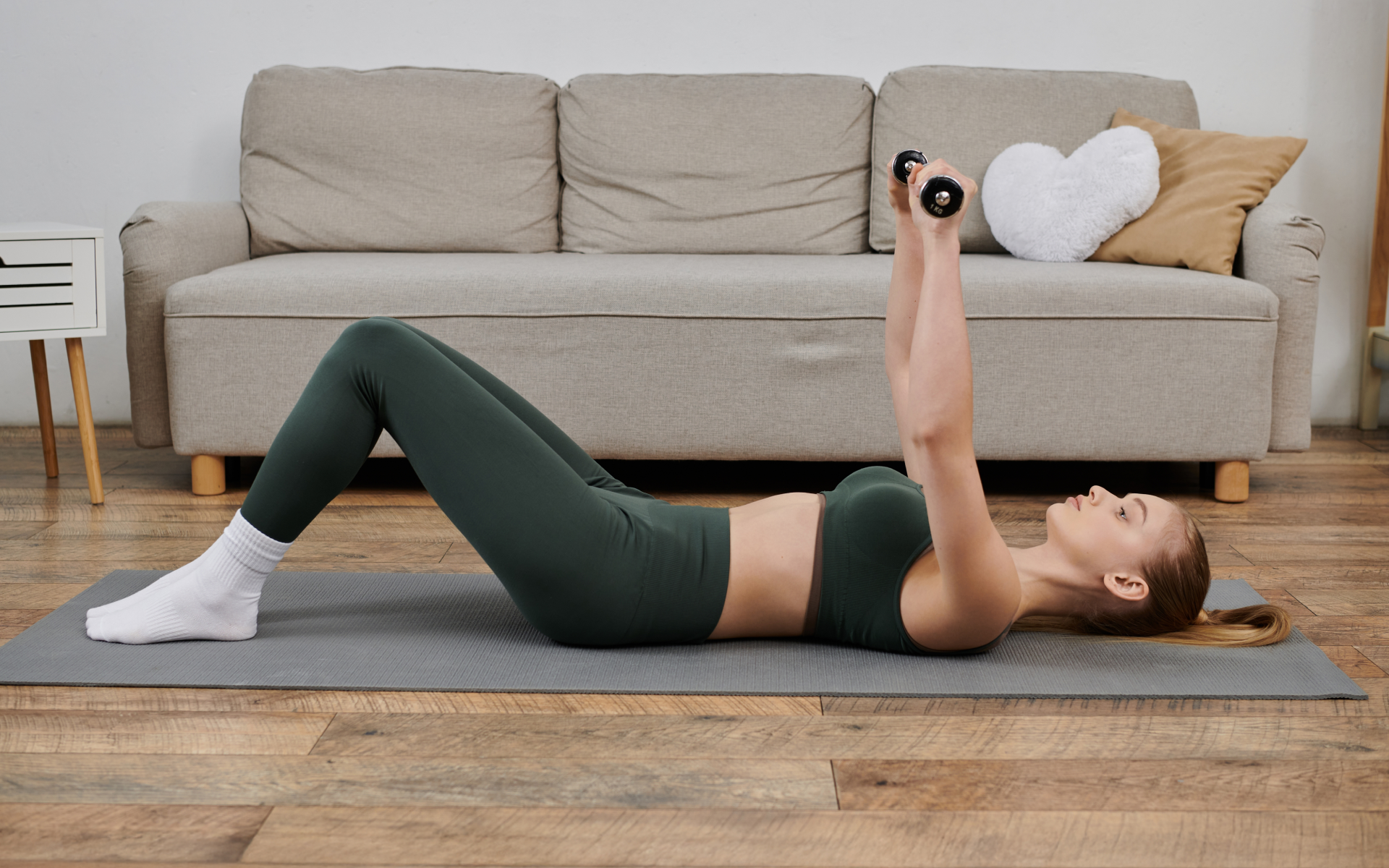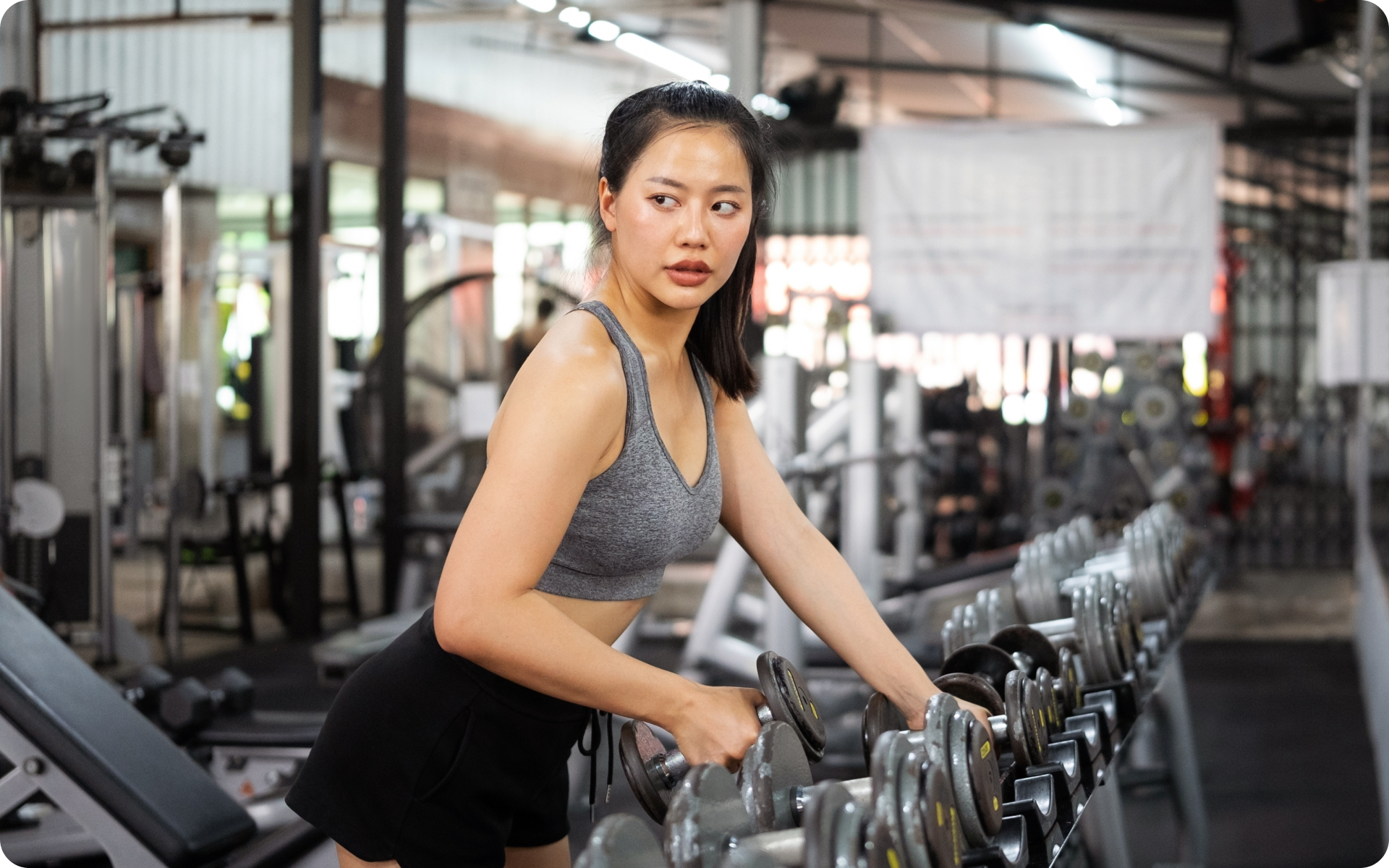

A gym workout plan for female beginners can use four weeks to practice basic lifts and establish a schedule. Combine strength sessions, manageable cardio, and rest. Increase repetitions or resistance when technique stays controlled. Repeat a week whenever the workload needs more practice.
For equipment demonstrations and first-visit preparation, start with our female beginner gym guide.
Key takeaways
- The adult aerobic guideline is separate from strength work (1).
- This BetterMe editorial example includes full-body, lower-body, and upper-body sessions across four program weeks.
- Gym and home substitutions are listed separately so equipment requirements are clear.
- Weeks three and four repeat the same movement patterns rather than requiring new exercises.
- Moderate aerobic effort usually allows talking but not singing (2).
- Repeating a week is an option when the planned workload isn’t yet manageable.
What does the four-week schedule look like?
The four-week schedule uses three strength days, two optional cardio days, and two rest days. It combines one full-body session with separate lower- and upper-body days. It is an editorial example, not a required amount or a fixed deadline.
|
Day |
Weeks 1 and 2 |
Weeks 3 and 4 |
|---|---|---|
|
Monday |
Full-body session; two sets per move |
Same session; add reps if ready |
|
Tuesday |
Optional manageable cardio; 10 to 20 minutes |
Keep duration or add a few minutes |
|
Wednesday |
Rest |
Rest |
|
Thursday |
Lower-body session; two sets per move |
Same session; consider a small load increase |
|
Friday |
Upper-body session; two sets per move |
Same session; add reps if ready |
|
Saturday |
Optional manageable cardio and mobility |
Keep duration or add a few minutes |
|
Sunday |
Rest |
Rest |
Start with two strength days if three feels like too much. Full-body Monday and Friday sessions can replace the split days in that case. Our three-day full-body routine offers a separate option.
If you wish to free yourself from all the extra pounds that have been weighing you down for way too long, start using the BetterMe Well-Being Coach app and overhaul your entire life!
Which exercises belong in the gym sessions?
Choose exercises that cover squatting, hinging, pushing, pulling, and trunk control. Use the same exercise order across the four weeks so your records are comparable.
|
Session |
Exercise |
Starting target |
|---|---|---|
|
Full body |
Goblet squat |
2 x 8 to 12 reps |
|
Full body |
Dumbbell bench press |
2 x 8 to 12 reps |
|
Full body |
Seated cable row |
2 x 8 to 12 reps |
|
Full body |
Dumbbell Romanian deadlift |
2 x 8 to 12 reps |
|
Full body |
Plank |
2 x 10 to 30 secs |
|
Lower body |
Leg press |
2 x 8 to 12 reps |
|
Lower body |
Glute bridge |
2 x 10 to 15 reps |
|
Lower body |
Supported reverse lunge |
2 x 6 to 10 per leg |
|
Lower body |
Calf raise |
2 x 10 to 15 reps |
|
Upper body |
Chest press machine |
2 x 8 to 12 reps |
|
Upper body |
Lat pulldown |
2 x 8 to 12 reps |
|
Upper body |
Seated cable row |
2 x 8 to 12 reps |
|
Upper body |
Seated shoulder press |
2 x 8 to 12 reps |
Rest approximately 60 to 120 seconds between sets in this example, or longer when needed. Leave about two or three controlled repetitions in reserve. Reduce repetitions, sets, or range if the session exceeds your current capacity.
What are the home alternatives?
Home alternatives use corresponding movement patterns, but their resistance may differ from gym machines. A stable chair and dumbbells or a resistance band can broaden your options. Use a band only with an appropriate, secure attachment.
|
Gym movement |
Home alternative |
Equipment |
|---|---|---|
|
Goblet squat or leg press |
Sit-to-stand or goblet squat |
Stable chair; optional dumbbell |
|
Bench or machine press |
Wall push-up or dumbbell floor press |
Clear wall; optional dumbbells |
|
Cable row |
Supported dumbbell row |
Dumbbell and stable support |
|
Romanian deadlift |
Light dumbbell hinge |
Optional dumbbells |
|
Glute bridge |
Bodyweight glute bridge |
Mat |
|
Shoulder press |
Light seated dumbbell press |
Chair and dumbbells |
Use the same session days and starting set targets as the gym schedule; choose a home version where listed. Keep the bodyweight reverse lunge, calf raise, and plank versions if manageable. The supported row replaces a cable row, not a vertical pulldown. Omit the gym pulldown at home unless you have suitable equipment and instruction. A sit-to-stand and a wall push-up are examples of equipment-light strength exercises (3).
Sit-to-stand
- Sit near the front of a stable chair for the sit-to-stand.
- Stand from the sit-to-stand with a controlled forward lean.
- Lower back to the chair during the sit-to-stand without dropping.
Wall push-up
- Place your hands on a clear wall for the wall push-up.
- Bend your elbows during the wall push-up while keeping your body aligned.
- Push away from the wall during the wall push-up with control.
Dumbbell hinge
- Hold light dumbbells near your thighs for the dumbbell hinge.
- Move your hips backward during the dumbbell hinge.
- Return to standing from the dumbbell hinge without swinging.
How do you prepare the gym and home versions before week one?
Choose where each planned session will happen, then check the equipment for that version. Gym and home options use different equipment. They are separate setups, so a home session should not depend on having a cable station or gym machine that is not actually available.
At the gym, learn how to adjust the machines and use the bench before selecting working loads. At home, clear the floor and use a stable chair without wheels for sit-to-stands. Ask for instruction if you are unfamiliar with a movement or uncertain about the equipment.
What can you keep consistent across both settings?
Keep the movement categories, a manageable number of sets, and space between demanding sessions. The resistance can differ. A wall push-up and machine press are both pushing choices in this plan, but their loads cannot be compared directly. Give each its own starting record.
The home row requires a suitable support and a dumbbell. Do not invent a substitute using a door handle or ordinary table edge. A band exercise requires the manufacturer’s approved setup. If appropriate equipment is unavailable, note the omitted movement and ask for a workable option.
Keep the floor exercises optional when getting down or standing up is difficult. A standing alternative may require instruction. The aim is to choose a session you can start, perform, and finish with control, including every transition.
How should you use the first two weeks?
Use the initial weeks to learn the settings and repeat the exercise order. Record the resistance and actual repetitions, including reduced sets. The table’s two-set targets are an editorial starting option, not a minimum you must reach on the first day.
Practice unfamiliar movements with a manageable version before increasing load. For example, learn the hinge position with lighter dumbbells or without added weight. Once you can repeat it, use the same position for working sets. A rushed repetition is not a reason to choose a heavier load.
Leave enough time for rests, setup, and a gradual finish. A session can take longer when you are learning the machines. If the allotted visit is too short, reduce the exercise selection instead of making every movement faster.
What if your schedule changes during the month?
Move a session when necessary while preserving gaps between demanding work for the same muscles. You can use the two-day full-body alternative stated in the plan. Fit a missed session into another day and keep one workout per day.
If you switch from gym to home for one week, establish the home versions separately. Return to your familiar gym settings later with a manageable load. Time away, different equipment, and interrupted sleep can all be reasons to review rather than automatically increase the workload.
What should stay outside the four-week deadline?
A fixed increase in every lift does not belong in the calendar’s completion criteria. The calendar primarily organizes practice. Judge whether it helped you learn and repeat the chosen exercises.
A useful month-end note might identify which settings are familiar, which movement still needs instruction, and which days are realistic. Use those observations to plan another month. Repeating the same targets is a valid choice when they still provide manageable practice.
Keep meals and rest in the same practical review. The workout list does not prescribe food amounts, special products, or a restrictive diet. Ask a registered dietitian if you want help with meals.
How should you progress in weeks three and four?
Progress only when your current sets feel repeatable and remain controlled. Choose one change: add a repetition within the range, make a small resistance increase, or add one set to a selected exercise. You don’t need all three changes in the same week.
|
What you notice |
Next session choice |
|---|---|
|
All sets at the top of the range with control |
Try the smallest practical load increase |
|
Last reps are rushed |
Keep or reduce the load |
|
Fatigue affects the next session |
Reduce sets or choose two weekly strength days |
|
Equipment is unavailable |
Use the matching substitute and record it |
|
A week was interrupted |
Repeat the week; don’t double sessions |
Our women’s strength-training plan explains how to keep load and repetitions in your training log.
How do cardio, food, and rest support the plan?
Manageable cardio, regular meals, and rest support a routine you can sustain. The adult aerobic guideline is separate from strength work, and a few short starter sessions may not yet meet it (1). At moderate effort, you can usually talk but not sing. Use the talk test to assess aerobic intensity (2).
Begin more demanding activity gradually and slow down at the end (4). On rest days, light seated movement and gentle flexibility work are options, not obligations (5, 6). You don’t need a supplement stack or a fixed calorie deficit to begin learning the gym exercises.
BetterMe is your fast-track ticket to long-lasting weight loss! Tailor your fitness journey and maximize your results with just a couple of swipes!
Does being over 40 change the plan?
Being over 40 doesn’t automatically require a different workout. Current capacity, exercise experience, preferences, and any clinician restrictions are more useful starting points than age alone. Adjust loads and range to your current capacity.
Yes, the home column gives alternatives for the main movement patterns. Equipment changes may alter difficulty, so choose resistance based on control and effort rather than copying gym loads. Muscle size changes depend on training, nutrition, genetics, and time, so this plan sets no appearance target. Individual results vary. Keep one manageable session as your minimum plan for busy weeks. Recording a completed workout and a useful technique cue can make progress easier to notice.Frequently Asked Questions
Can a female beginner work out at home instead?
Will lifting weights make women bulky?
How do you stay motivated as a beginner?
The bottom line
Use the four weeks to practice each lift at a steady pace. Keep gym and home equipment choices clear, track one progression variable, and repeat a week when needed. Our adjustable gym plan for women can help you choose a longer-term schedule.
DISCLAIMER:
This article is intended for general informational purposes only and does not serve to address individual circumstances. It is not a substitute for professional advice or help and should not be relied on for making any kind of decision-making. Any action taken as a direct or indirect result of the information in this article is entirely at your own risk and is your sole responsibility.
BetterMe, its content staff, and its medical advisors accept no responsibility for inaccuracies, errors, misstatements, inconsistencies, or omissions and specifically disclaim any liability, loss or risk, personal, professional or otherwise, which may be incurred as a consequence, directly or indirectly, of the use and/or application of any content.
You should always seek the advice of your physician or other qualified health provider with any questions you may have regarding a medical condition or your specific situation. Never disregard professional medical advice or delay seeking it because of BetterMe content. If you suspect or think you may have a medical emergency, call your doctor.
SOURCES:
- Adult Activity: An Overview (2023, cdc.gov)
- How to Measure Physical Activity Intensity (2025, cdc.gov)
- Strength exercises (2024, nhs.uk)
- Warm Up, Cool Down (2024, heart.org)
- Sitting exercises (2024, nhs.uk)
- Flexibility exercises (2023, nhs.uk)
 Reviewed by