We spend a lot of our time sitting – at work, in the car, on the couch. Somewhere between meetings, emails, and scrolling through social media, movement takes a back seat. And without even realizing it, our core muscles – the ones that hold us upright, stabilize our spine, and support everything we do – will start to lose their strength.
Now here’s the surprising part: you don’t need to leave your chair to get them stronger. This is where seated ab exercises come in. They’re not just a trendy workaround for a busy schedule, they’re a smart, realistic approach to building strength when standing workouts feel out of reach, or when motivation is low, or when life is just… life.
This isn’t about chasing six-packs or punishing your body into shape, it’s about reconnecting with it – gently, consistently, and with intention – because when your core is stronger, you feel it everywhere – in how you breathe, in how you stand, and even in how you handle stress.
For a generation that’s juggling too much and moving too little, seated ab movements offer something rare: progress that doesn’t ask for perfection – just a few minutes, some commitment, and a chair.
What Are Seated Ab Exercises?
At first glance, seated ab exercises may seem too simple to make a difference. You’re not jumping, you’re not on a mat, and you’re definitely not doing crunches in the traditional sense. But here’s what makes them so effective – they meet your body exactly where it is.
These are core-strengthening movements you perform while sitting, usually on a sturdy chair. That’s it! No machines, no gym mirrors, and no pressure to perform. And yet, when they’re done right, they challenge your abdominal muscles in a way that’s both accessible and surprisingly intense.
- Seated exercises have been found to be effective in improving physical function in the senior population (1).
- They don’t require you to get on the floor or stand for long.
- They’re ideal for small spaces, which makes them perfect for home or office routines.
- They’re easy to adapt, whether you’re a beginner or looking to level up.
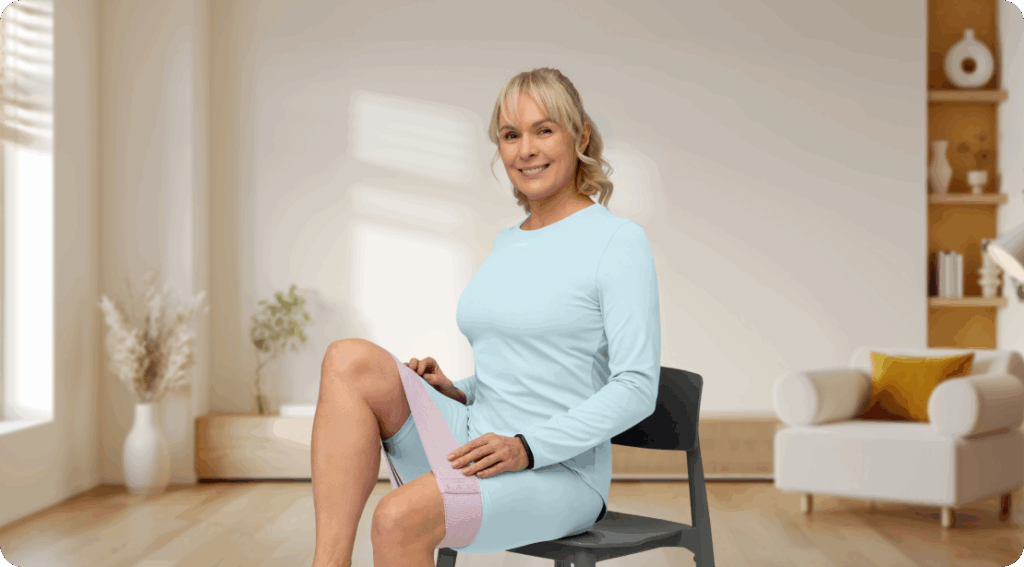
Most of us assume that you need to be lying down to target your abs, but that’s not true. When you sit upright, especially without leaning on the backrest, your core automatically switches on. Add intentional movements such as knee lifts, twists, or controlled leg extensions, and you’re building real strength, without ever getting on the floor.
- Simply sitting tall activates some of the stabilizer muscles in your midsection.
- Leg movements from a seated position add resistance
- Twisting or reaching lightly engages the obliques and may help tone the waistline.
It’s not just about working the visible muscles either. Seated ab workouts can target the deep stabilizers too, i.e. the ones that are responsible for posture, balance, and supporting your lower back. These often-neglected muscles can be one of the keys to reducing stiffness after long hours of sitting (2).
And the best part? These moves can be adapted for everyone, whether that’s seated ab exercises for beginners, older adults, or even people who are recovering from setbacks. The intensity is yours to control – let’s not underestimate what a chair can do!
BetterMe: Health Coaching app helps you achieve your body goals with ease and efficiency by helping to choose proper meal plans and effective workouts. Start using our app and you will see good results in a short time.
How to Get a Flat Stomach While Sitting
Let’s get one thing out of the way: no seated exercise, standing exercise, or magical hack will spot-reduce belly fat on its own. That’s just not how bodies work. However, you can work on sculpting the muscles underneath. You can activate your core, improve your posture, support your digestion, and create strength that shows up in how you carry yourself, even when just sitting.
Here’s what really helps when it comes to trimming the midsection while seated:
- Add movements, even small ones
Leg lifts, seated marches, slow twists, and controlled side leans – all while sitting – can target various parts of your core. When done consistently, they help tone and strengthen, and frequent gentle movements can help keep pain at bay. These movements activate many of the same core muscles that are targeted in traditional floor exercises, while placing less compressive load on the lower back (3, 4).
- Breathe with intention
Interspersing deep belly breathing while engaging your abs can double up as both a stress-reducing and a core-tightening technique (5, 6). Try exhaling slowly as you contract your abdominal muscles – it’s subtle but powerful.
- Stay consistent
There’s nothing wrong with starting small. A few minutes of focused seated ab movements daily can build up to real results, particularly when they’re paired with a balanced lifestyle. No extremes, just steady, realistic progress.
So yes, you can work toward a flatter, firmer core while seated. You just need smart movements, mindful posture, and a little bit of patience.
Read more: 9 Primarily Seated Lower-Back Exercises for Seniors
How to Lose Belly Fat While Seated
Let’s be honest, belly fat is one of the most frustrating things to deal with. It sticks around, shows up uninvited, and refuses to leave quietly. And while it’s tempting to believe that doing 100 seated crunches a day will make it vanish, the truth is more nuanced. But don’t lose hope – there is a path forward, even from a chair!
You absolutely can start to reshape your waistline from a seated position, especially when you focus on consistency, full-body health, and smarter movements.
Here’s how to approach it:
- Focus on full-body energy balance
You don’t need to run marathons or starve yourself to lose belly fat, but you do need to create a small, sustainable energy gap where you use slightly more energy than you consume. This is called a calorie deficit (7). Seated movement can help with that. When combined with mindful eating and hydration, these small daily movements start to matter.
- Incorporate variety
Alternate between high-rep light movements such as seated marches, and slower, resistance-based ones such as seated ab exercises with weights. Variation prevents boredom, challenges different muscles, and keeps your metabolism alert. Also work on short frequent movements during the day to break up sitting – your back will thank you.
- Make it a habit, not a phase
Results don’t come from occasional bursts of effort, they come from consistent, repeated action. Even 10 minutes a day of targeted seated ab exercises at home can spark change over time.
Belly fat responds to consistency. And when done with focus and intention, seated workouts can absolutely be part of a fat-loss strategy that fits real life.
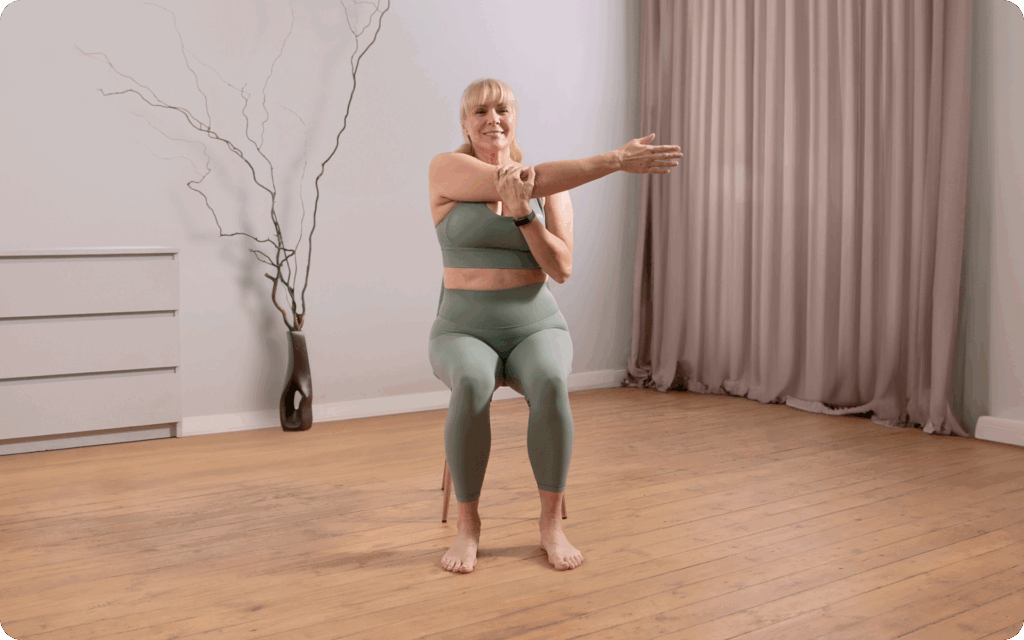
What Are Some Sculpting Seated Ab Exercises?
You don’t need to lie flat on a mat or twist yourself into complicated positions to tone your core. Sculpting your abs can happen right from a chair if you know what to do and how to do it with intention.
These chair ab exercises can be done just about anywhere: at your desk, in your living room, or even while waiting for the kettle to boil. They’re designed to engage different sections of your core such as the upper abs, lower abs, obliques, and those deep stabilizers. Let’s break them down:
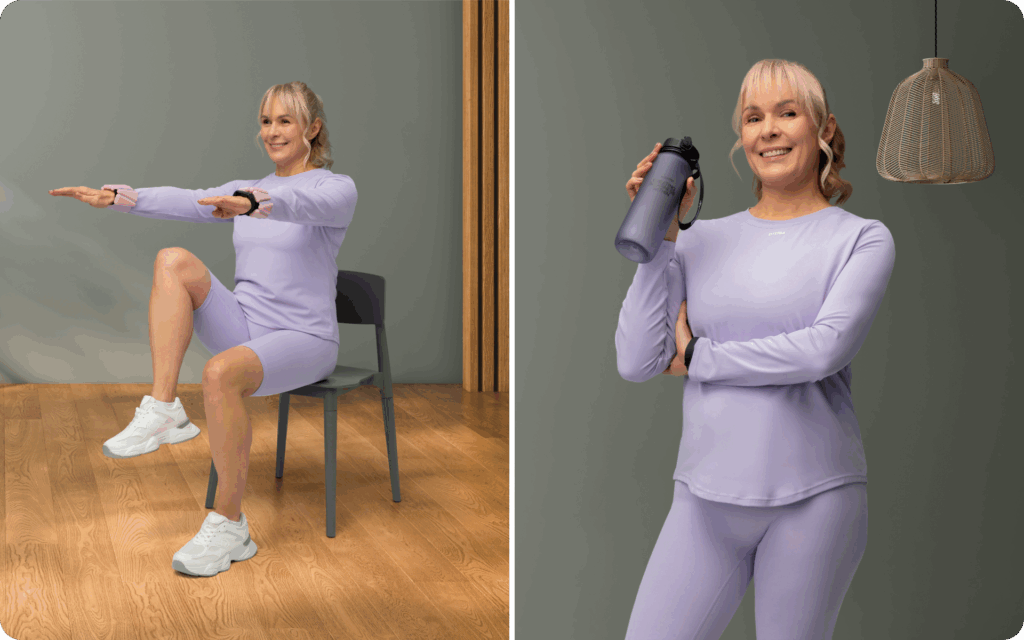
- Seated Knee Lifts
Sit tall with your hands resting lightly on the edge of your seat. Slowly lift one knee toward your chest, then lower it without letting your foot slam down. Alternate legs.
Targets: Lower abs, hip flexors.
Tip: Exhale as you lift to deepen the core engagement. - Seated Oblique Twists
Clasp your hands in front of you or hold a lightweight object (or water bottle). Twist your torso from side to side while keeping your hips square.
Targets: Obliques (waistline).
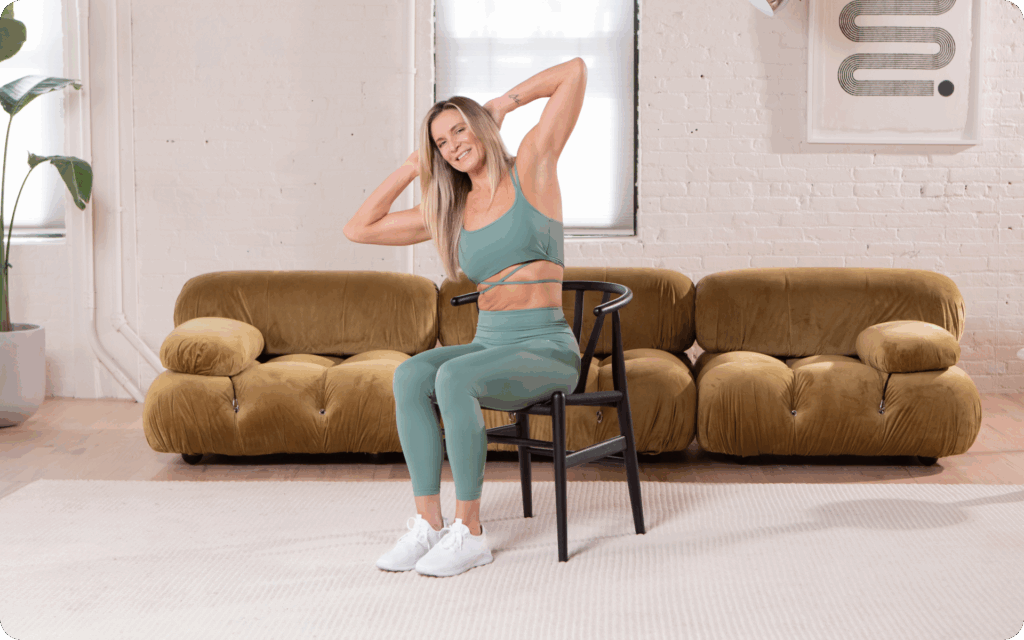
Tip: Go slow and controlled – don’t just swing your arms. - Chair Side Leans with Hold
Place your hands behind your head. Gently lean your upper body to one side, hold for a few seconds, then return to center and repeat on the other side.
Targets: Side abs and spinal stabilizers.
Tip: Keep your shoulders relaxed and spine long. - Seated Leg Extensions with Hold
Lift one leg off the floor and extend it forward, holding for a few seconds. Switch sides.
Targets: Lower abs, quads.
Tip: Press your lower back slightly into the chair to keep your core engaged. - Seated Crunch Pulses
With your feet flat and your hands crossed over your chest, hinge back slightly (without touching the backrest), then do small, controlled crunch pulses.
Targets: Upper abs.
Tip: Think of pulling your ribs toward your hips without collapsing your chest. - Seated Marches with Arm Raises
March your legs up and down while raising your opposite arms overhead. This is a coordination move, but it works.
Targets: Entire core.
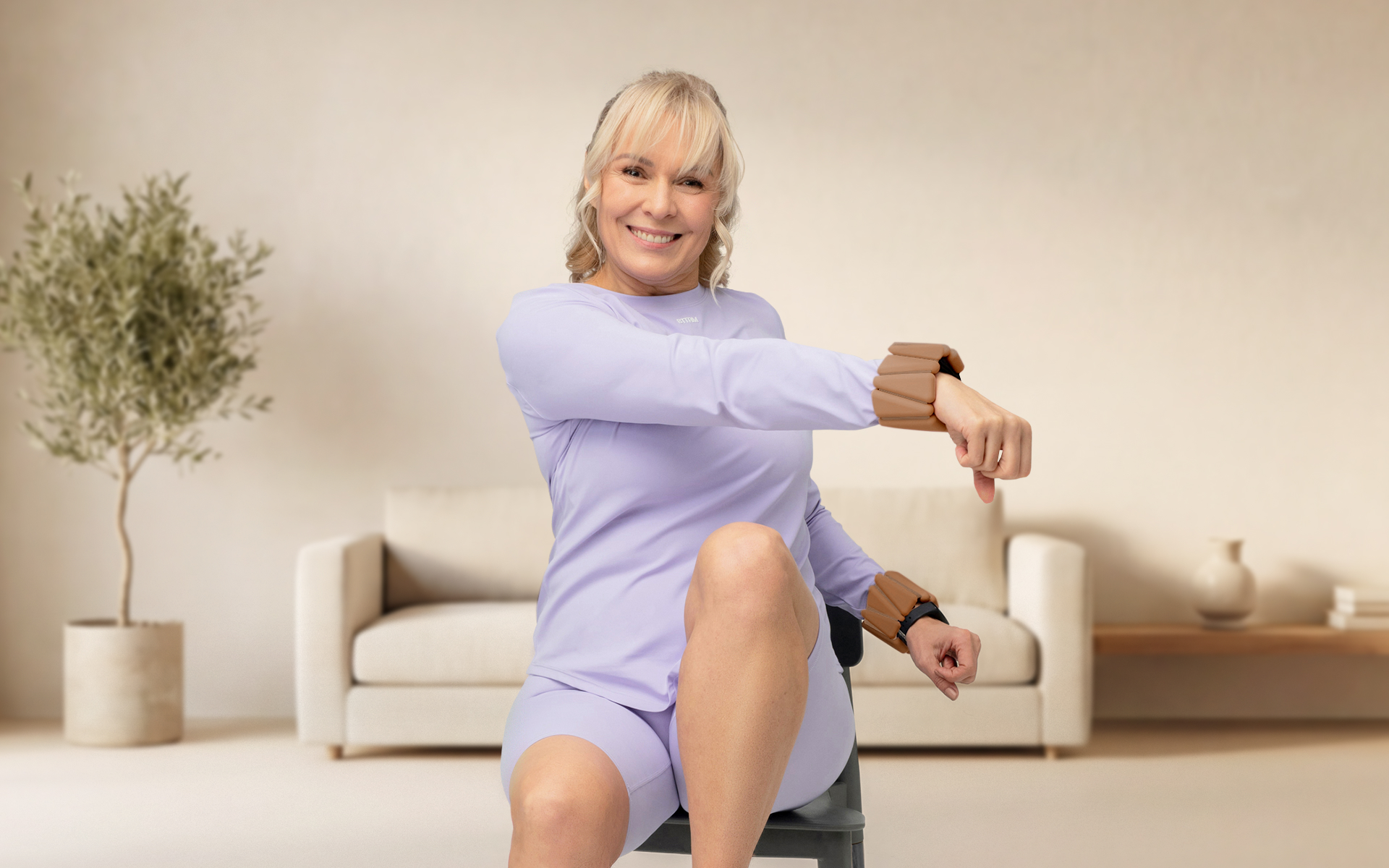
Tip: Keep your spine tall – this is where seated ab exercises for beginners often start. - Weighted Seated Twists (Optional)
Using a dumbbell, medicine ball, or a heavy book, perform slow, deliberate torso twists.
Targets: Obliques and transverse abdominis.
Tip: This is a great addition to your seated ab exercises with weights routine.
You don’t need to do them all at once. Just 2-3 of these exercises can form a solid chair ab workout. You can modify them for comfort, or even combine them for a quick 7 chair exercises for abs circuit.
Read more: Chair Stretches for Seniors: A Gentle Way to Improve Flexibility
How Many Reps of Chair Abs Exercises Should I Do?
You need to know that repetition without intention is just movement. But repetition with focus? That’s where change begins!
There’s no one-size-fits-all number when it comes to seated ab exercises. It will depend on your starting point, your comfort level, and what you’re aiming for – whether that’s toning, endurance, or building a daily movement habit.
Whether you’re a workout beast or just a beginner making your first foray into the world of fitness and dieting – BetterMe has a lot to offer to both newbies and experts! Install the app and experience the versatility first-hand!
However, here’s a helpful guide to get you going without overwhelming your body (8):
- If you’re a beginner: Start with 10-12 reps per exercise, or about 30 seconds of continuous movement if you’re doing time-based sets. Focus more on form than speed. One round of 3-4 exercises is a solid session.
- If you’re more experienced: Aim for 15-20 reps or 45-60 seconds per move, and consider doing 2-3 rounds of a seated circuit. Add variations such as pulses or holds at the end of each rep to intensify the burn.
- If you’re short on time: Choose 2 exercises and do a minute of each, followed by a short break. Even this small burst can activate your core and break the sitting slump.
- Listen to your body: If your form starts to break or your back takes over the movement, pause. It’s better to do 5 mindful reps than 20 rushed ones. Quality matters more than quantity.
Over time, as your core gets stronger, you’ll naturally be able to handle more reps or longer holds. You don’t have to push for exhaustion, just enough to feel your muscles switch on and work with you.
How Often Should I Do Seated Ab Exercises?
Consistency doesn’t mean doing the same thing every day. It means showing up in a way that works for you! For most people, at least twice a week is a realistic rhythm for seated ab workouts (9). This gives your muscles time to recover, rebuild, and get stronger.
If you’re new to movement or easing back into fitness, start with twice a week. Add a third session once your body starts feeling more stable and your posture improves. And remember: short bursts still count. Even five minutes of focused movement can create meaningful shifts when done regularly.
The goal isn’t perfection. The more often you train your core, the more your body responds – gently, gradually, powerfully!
They do, especially when you’re showing up consistently and focusing on form. You don’t need to stand or lie down to train your core effectively. Movement does. Even seated ones, such as leg lifts or twists, can gently raise your heart rate and support fat loss when combined with good nutrition and regular activity. No, not on their own. You could build some muscle underneath, but without reducing overall body fat, they’ll stay hidden. It doesn’t need to drag. 10-20 minutes of focused, intentional movement is enough to feel the burn and build strength. Realistically? Unlikely. You can absolutely build stronger core muscles in a month, but visible definition takes more than just time – it also takes consistency.Frequently Asked Questions
Do seated ab workouts work?
What burns fat while sitting?
Will 100 sit-ups a day give me abs?
How long should a chair workout last?
Can I get abs in 30 days?
The Bottom Line
You don’t need a gym, equipment, or even to stand up to strengthen your core. Seated ab exercises offer an inclusive, low-impact way to build strength, improve posture, and activate deep stabilizers that often lose their strength.
With consistent reps, intentional engagement, and just a few focused minutes a day, these movements can support fat loss, ease stiffness from sitting, and reshape how your body moves and feels.
Whether you’re using weights, starting out as a beginner, or exploring chair-based variations at home, this method fits into real life. Core work doesn’t need to be extreme – it just needs to be consistent, mindful, and something you can stick to, wherever you are.
DISCLAIMER:
This article is intended for general informational purposes only and does not serve to address individual circumstances. It is not a substitute for professional advice or help and should not be relied on for making any kind of decision-making. Any action taken as a direct or indirect result of the information in this article is entirely at your own risk and is your sole responsibility.
BetterMe, its content staff, and its medical advisors accept no responsibility for inaccuracies, errors, misstatements, inconsistencies, or omissions and specifically disclaim any liability, loss or risk, personal, professional or otherwise, which may be incurred as a consequence, directly or indirectly, of the use and/or application of any content.
You should always seek the advice of your physician or other qualified health provider with any questions you may have regarding a medical condition or your specific situation. Never disregard professional medical advice or delay seeking it because of BetterMe content. If you suspect or think you may have a medical emergency, call your doctor.
SOURCES:
- The Effect of Chair-Based Exercise on Physical Function in Older Adults: A Systematic Review and Meta-Analysis (2021, pmc.ncbi.nlm.nih.gov)
- On the Role of Core Exercises in Alleviating Muscular Fatigue Induced by Prolonged Sitting: A Scoping Review (2025, pmc.ncbi.nlm.nih.gov)
- Core Muscle Activity during Physical Fitness Exercises: A Systematic Review (2020, pmc.ncbi.nlm.nih.gov)
- Optimizing Performance by Improving Core Stability and Core Strength (2008, link.springer.com)
- Effect of breathwork on stress and mental health: A meta-analysis of randomised-controlled trials (2023, nature.com)
- Validation of breathing exercises and diaphragm manual therapy protocol in sports PLAYERS: A Delphi study (2025, sciencedirect.com)
- Optimal Diet Strategies for Weight Loss and Weight Loss Maintenance (2020, pmc.ncbi.nlm.nih.gov)
- Core stabilization exercises versus yoga on feedforward activation of core muscles in chronic mechanical low back pain: An experimental study (2024, sciencedirect.com)
- American Heart Association Recommendations for Physical Activity in Adults and Kids (2024, heart.org)
 Reviewed by
 Reviewed by
 Reviewed by