Stiff joints, unsteady balance, and limited mobility can make daily activities feel like uphill battles for seniors. These challenges often lead to frustration, fear of falling, and even avoiding movement altogether.
Staying active is the key to maintaining independence and comfort. This is where a carefully tailored Pilates routine for seniors can help.
Thoughtfully designed for aging bodies, Pilates focuses on gentle, controlled movements to improve flexibility, strengthen muscles, and enhance balance, all while designed with care (1).
This guide introduces eight specific Pilates exercises you can do with control and within a comfortable range of motion. Each movement is chosen to support strength, reduce discomfort, and help you move with greater ease.
Is Pilates Suitable for the Elderly?
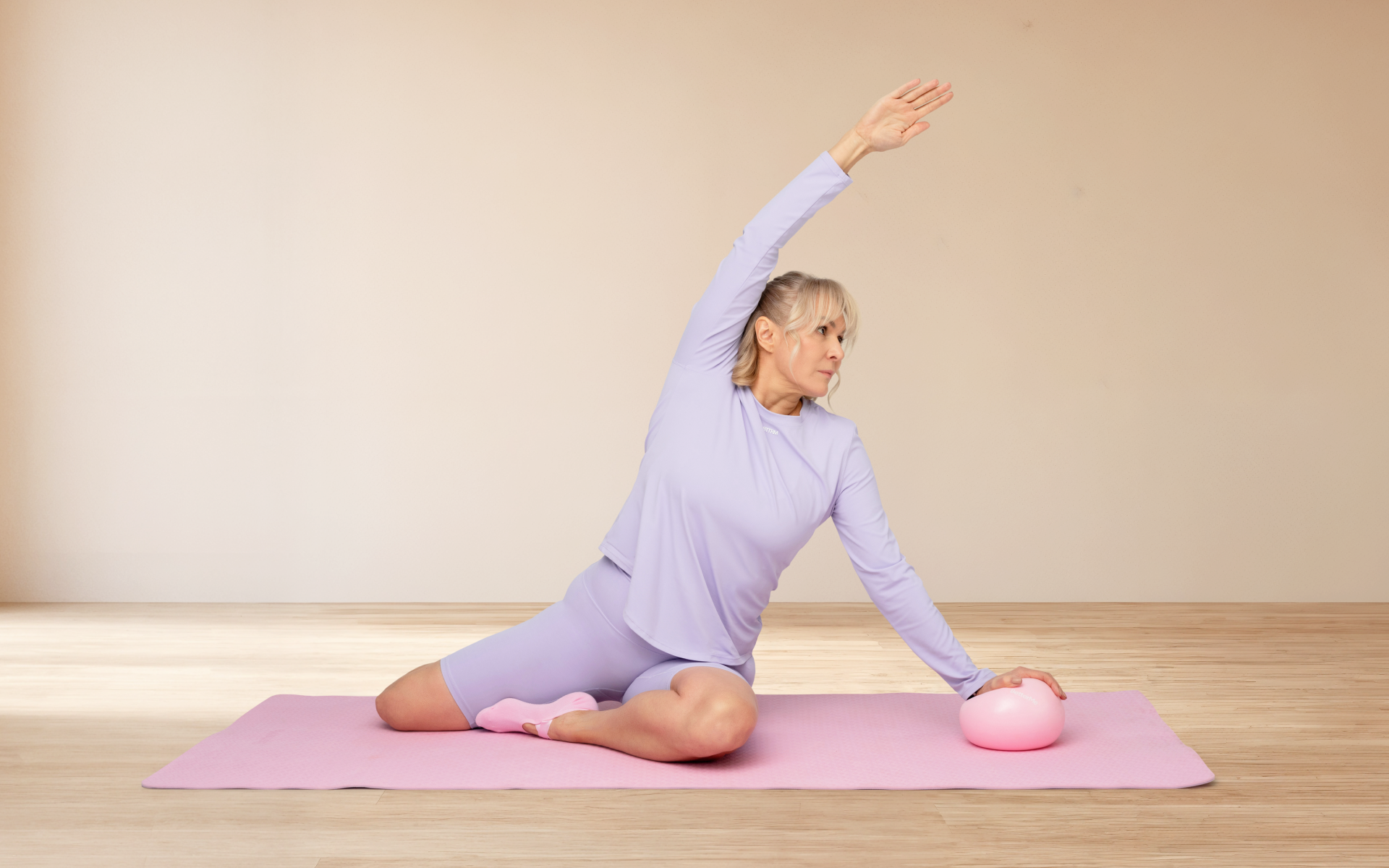
When modified to match physical limitations, Pilates can be gentle for seniors.
However, it’s always important to consult a healthcare professional before starting any exercise routine, particularly if you have pre-existing medical conditions or injuries.
Here are some reasons why this form of exercise is suitable for the elderly:
- Low-Impact Nature is Easy on Joints
One of the biggest advantages of Pilates is its low-impact nature. It avoids jarring, high-impact movements that can feel tough on older joints. When adapted to individual needs, it can be a gentle, accessible option for seniors, especially for those who prefer controlled, supported movement.
Exercises such as seated leg lifts or gentle spinal stretches minimize stress on the body while promoting mobility. However, modifications may be required. For example, seniors with severe joint pain may benefit from using a supportive prop such as a cushion to reduce pressure.
- Improves Core Stability
Pilates emphasizes building core strength, which refers to the muscles around your abdomen, back, and pelvis (1). A strong core helps stabilize the body, making tasks such as standing and walking easier (2). For seniors, this can mean fewer falls and better posture.
- Enhances Balance and Coordination
Falls are a major concern for the elderly and are often linked to reduced balance and coordination (3). Pilates incorporates movements that train not only strength but also proprioception (your body’s ability to sense its position and movement in space). Easy exercises, such as standing leg lifts with light support, can help you practice steadiness and coordination over time (4).
That being said, balance exercises for fragile individuals should always start with sturdy support, such as holding onto a chair or working on a mat. Confidence will gradually grow with consistent practice.
Reasons why BetterMe is a safe bet: a wide range of calorie-blasting workouts, finger-licking recipes, 24/7 support, challenges that’ll keep you on your best game, and that just scratches the surface! Start using our app and watch the magic happen.
- Encourages Flexibility Safely
Pilates incorporates controlled, gentle stretches that are focused on safe ranges of motion (5). For example, seated forward folds or side stretches encourage flexibility while protecting muscle and joint integrity.
- Promotes Mind-Body Connection
A key principle of Pilates is fostering a strong connection between the mind and body (6).
For seniors, this improves concentration and coordination through controlled, intentional movements (7). Mindful breathing, which is another core aspect, reduces tension and enhances the overall sense of well-being (8).
- Adaptability to Individual Needs
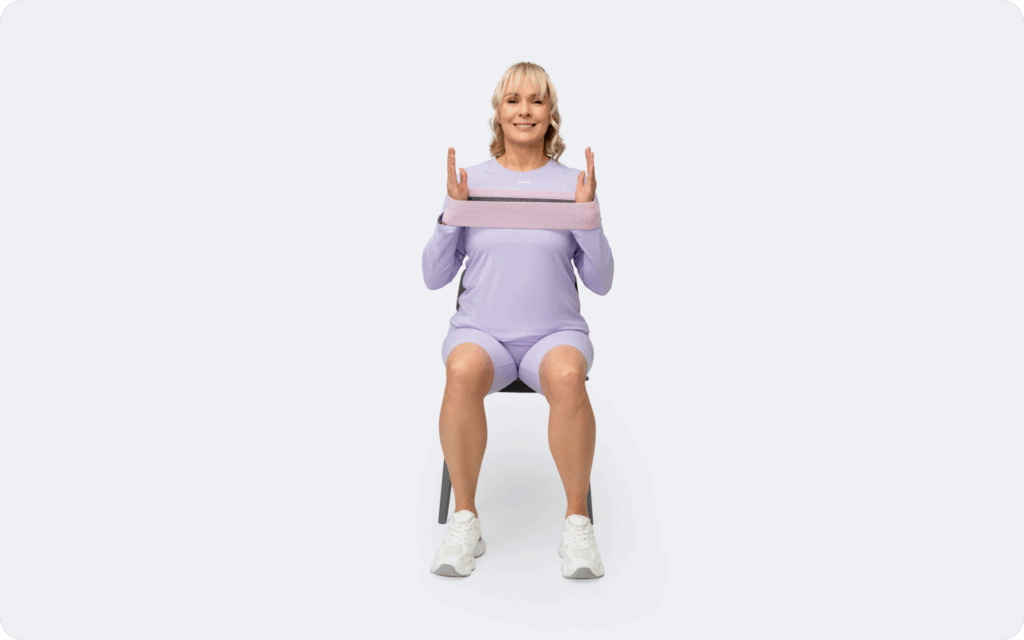
Perhaps one of the strongest features of Pilates is its adaptability. Whether someone is a seasoned mover or new to exercise, the method can be scaled for ability. Seniors can start with basic, chair-based exercises and later progress to mat work as their strength improves. Tools such as resistance bands or Pilates circles can provide more support or challenge as needed.
However, it’s essential that these adaptations are guided by an experienced trainer who understands senior-specific needs and limitations.
- Offers Progress Without Exhaustion
Unlike intense workout routines, Pilates encourages controlled, deliberate movements. This allows seniors to build strength and endurance without overtaxing their energy. For example, a short sequence of seated leg or arm movements can help develop muscle tone without leaving someone overly fatigued. Structured rest breaks and proper pacing are the key to keeping the practice sustainable.
Read more: Does Pilates Require Equipment? What to Know as a Beginner
What Are 8 Gentle Pilates Exercises for the Elderly?
These chair-based adaptations of classic mat exercises offer seniors a gentle way to enjoy the benefits of the method:
1. Seated Roll-Down
- Sit on a sturdy chair with your feet flat on the ground and your knees hip-width apart.
- Sit tall and place your hands gently on your thighs.
- Slowly exhale as you curl your spine, starting from your chin, rolling downward one vertebra at a time.
- Allow your hands to slide down toward your knees as you roll forward. Stop when you feel a comfortable stretch across your back.
- On an inhale, reverse the movement, stacking your spine back to an upright seated position.
- Repeat 6-8 times, moving with control.
2. Seated Spine Stretch Forward
- Sit tall with feet flat and slightly wider than hip-width apart.
- Extend your arms forward at shoulder height, parallel to the floor.
- While exhaling, imagine someone gently pulling your fingertips forward as you round your spine and reach forward.
- Keep your pelvis stable as you stretch, avoiding any slumping.
- On an inhale, return to the starting position, rolling up one vertebra at a time.
- Perform 5-7 gentle stretches.
3. Seated Arm Reaches
- Sit upright with your feet flat on the floor and your hands resting lightly on your knees.
- Extend both arms straight overhead as you inhale, stretching through your fingertips.
- Exhale as you open your arms wide to the sides, creating a gentle circle until your hands rest back on your knees.
- Repeat this slow, fluid movement 6-8 times, focusing on lengthening through your arms and controlled breathing.
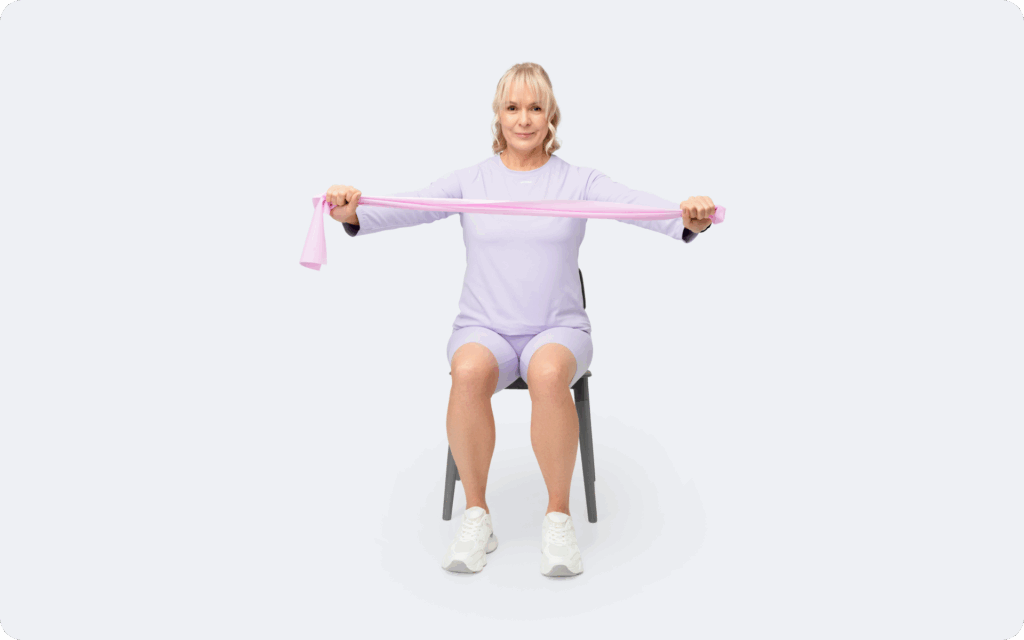
4. Seated Leg Press
- Sit tall with your hands holding the sides of the chair for stability.
- Exhale as you extend your right leg straight out in front of you, flexing or pointing your foot.
- Imagine pressing your right heel into an imaginary surface as you focus on engaging your thigh and core.
- Lower your leg slowly on your inhale, then switch to the left leg.
- Alternate legs for 8-10 repetitions per side.
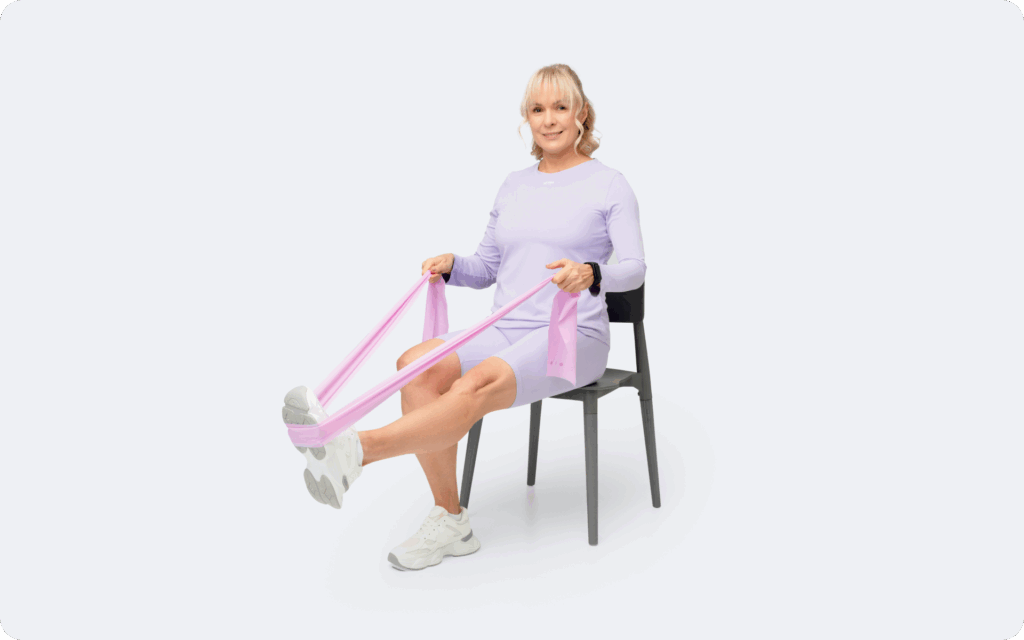
5. Seated Side Bend
- Sit with your feet flat on the floor and one hand resting on the chair seat for support.
- Extend your other arm overhead and inhale as you reach up and gently lean to the opposite side.
- Feel a stretch along the side of your torso, keeping your hips grounded on the chair.
- Exhale as you return to the starting position.
- Alternate sides, performing 4-5 stretches per side.
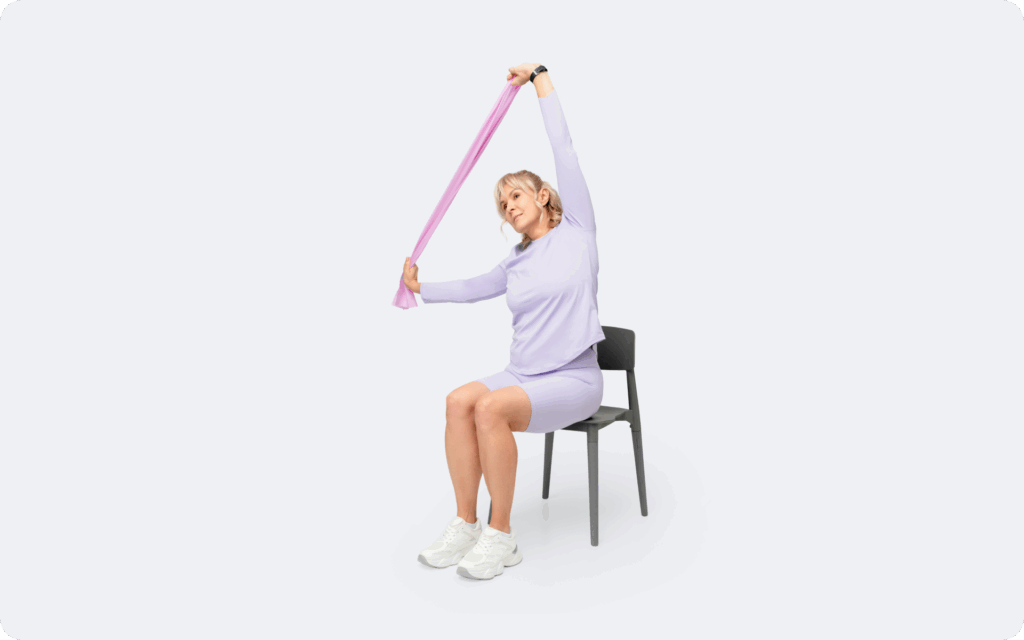
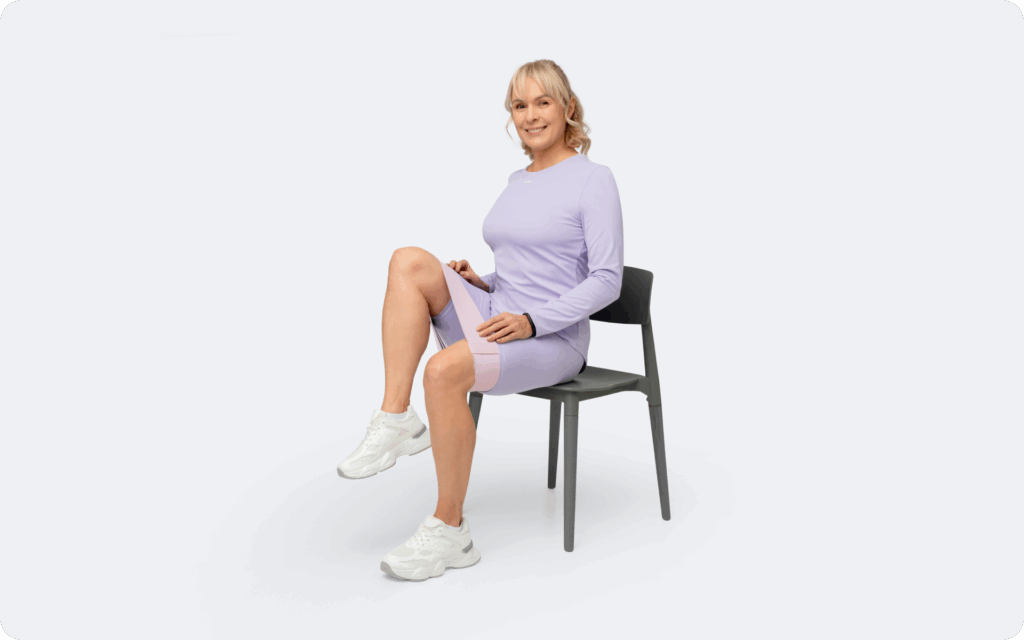
6. Seated Marching
- Sit upright with your feet flat on the floor and your hands resting on your thighs.
- Exhale as you lift your right leg off the ground, keeping your knee bent at a 90-degree angle.
- Lower your leg back to the floor with control, then repeat with your left leg.
- Alternate marching for 8-10 repetitions on each side, keeping a steady rhythm.
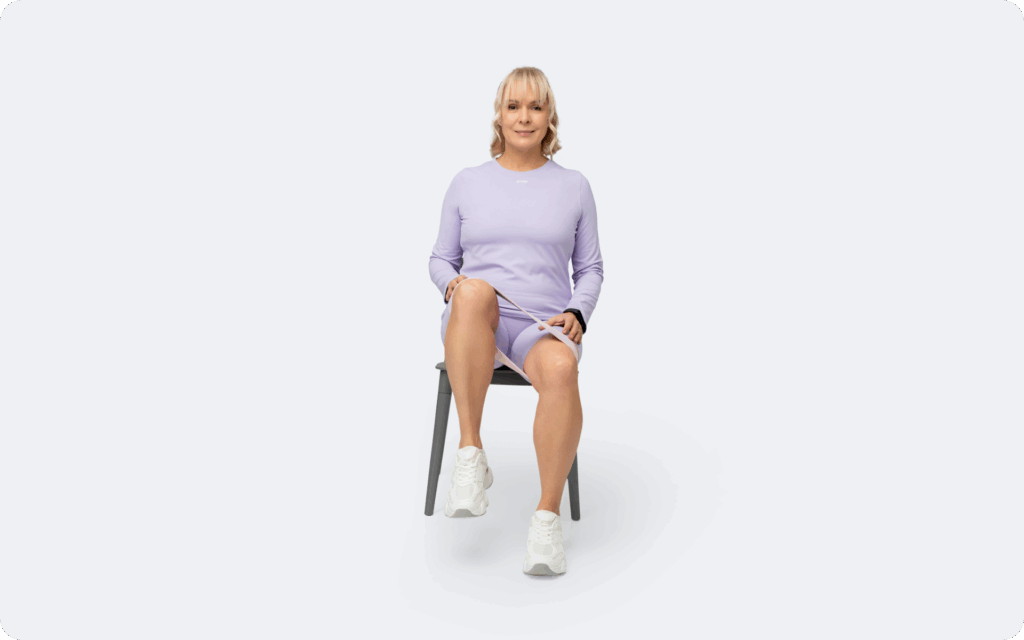
7. Seated Footwork
- Sit on the chair with your back straight and your hands resting on your thighs.
- Flex both feet, so only your heels are touching the floor.
- Exhale as you press your heels firmly into the ground and gently engage your thighs and glutes.
- On an inhale, relax your feet and bring them back to a neutral position.
- Repeat 10-12 times, focusing on controlled movements and muscle activation.
8. Seated Pelvic Curl
- Sit near the edge of the chair with your feet flat and your hands resting lightly on your thighs.
- Exhale as you gently tilt your pelvis backward, creating a small curve in your lower spine.
- Return to neutral on your inhale, then tilt your pelvis forward slightly to create an arch.
- Move slowly between these two positions for 6-8 repetitions, engaging your core muscles throughout.
Explore more exercises you can incorporate into your routine in our earlier blog post – Pilates for beginners over 60.
Best Workout Routine for Elderly Using Chair-Based Pilates
This routine balances flexibility, strength, and mindfulness, which makes it a joint-friendly and enjoyable workout for seniors. Adjust repetitions or duration based on comfort and ability.
Warm-Up (5-7 Minutes)
- Seated Breathing: Sit tall with your hands on your thighs. Take deep breaths in through the nose and out through the mouth, focusing on relaxing your shoulders. Repeat for 8-10 breaths.
- Gentle Seated Shoulder Rolls: Slowly roll your shoulders forward and backward 6-8 times each direction.
Main Workout
- Seated Roll-Down (6-8 repetitions)
- Seated Spine Stretch Forward (5-7 repetitions)
- Seated Arm Reaches (6-8 repetitions)
- Seated Leg Press (8-10 repetitions per leg)
- Seated Side Bend (4-5 repetitions per side)
- Seated Marching (8-10 repetitions per leg)
- Seated Footwork (10-12 repetitions)
- Seated Pelvic Curl (6-8 repetitions)
Cool-Down (5-7 Minutes)
- Gentle Seated Forward Fold: With your feet flat and your knees bent, slowly hinge forward, allowing your hands to rest on your legs. Hold for 3-4 deep breaths.
- Seated Side Stretches: Repeat each side stretch gently 2-3 times.
- Seated Breathing: Close your workout as you started with 6-8 deep, controlled breaths to relax.
Explore a more detailed chair Pilates for seniors routine in our previous guide.
Whether you’re a workout beast or just a beginner making your first foray into the world of fitness and dieting – BetterMe has a lot to offer to both newbies and experts! Install the app and experience the versatility first-hand!
How Many Times a Week Should the Elderly Do Pilates?
For optimal benefits, Pilates for elderly beginners should be two to three sessions per week, depending on their fitness level and recovery needs. This schedule allows for consistent practice while giving the body enough time to rest and recover between workouts.
For those with a stronger fitness foundation, adding a third session can help enhance flexibility, strength, and posture.
Seniors often need more time to recover, particularly if they’re dealing with joint issues. The low-impact nature of Pilates makes it ideal for gentle movement, but overdoing it can lead to fatigue. Always pay attention to how your body feels after each session.
Read more: At-Home Chair Pilates Workout Routines for Beginners
What Is Better for Seniors, Yoga or Pilates?
Yoga and Pilates each offer significant benefits for seniors, but your ideal choice will depend on your body’s needs, goals, and personal preferences. It’s worth trying both to see which resonates more with you. For the best results, you could even combine them, alternating sessions during the week to enjoy the unique advantages of each discipline.
Benefits of Yoga for Seniors
Yoga emphasizes flexibility, balance, and mindfulness. Most practices incorporate a mix of physical poses (asanas), breathing exercises (pranayama), and meditation. This combination can help (9):
- Support Mobility
Gentle yoga uses controlled stretching that can support comfort and range of motion for many people, especially when practiced within a comfortable, supported range. - Encourage Relaxation
With its focus on deep breathing and mindfulness, yoga is excellent for reducing stress and calming the mind (10). - Enhance Balance and Stability
Many yoga poses focus on standing postures, which can help seniors improve balance, lowering their risk of falls. - Adapt for All Levels
Yoga has varying styles, from restorative (gentle) to Vinyasa (more dynamic). This adaptability accommodates different fitness levels.
However, some yoga poses may require larger ranges of motion or put pressure on joints such as the knees or wrists. Seniors may benefit from using props, such as blocks or straps, to help with comfort and alignment.
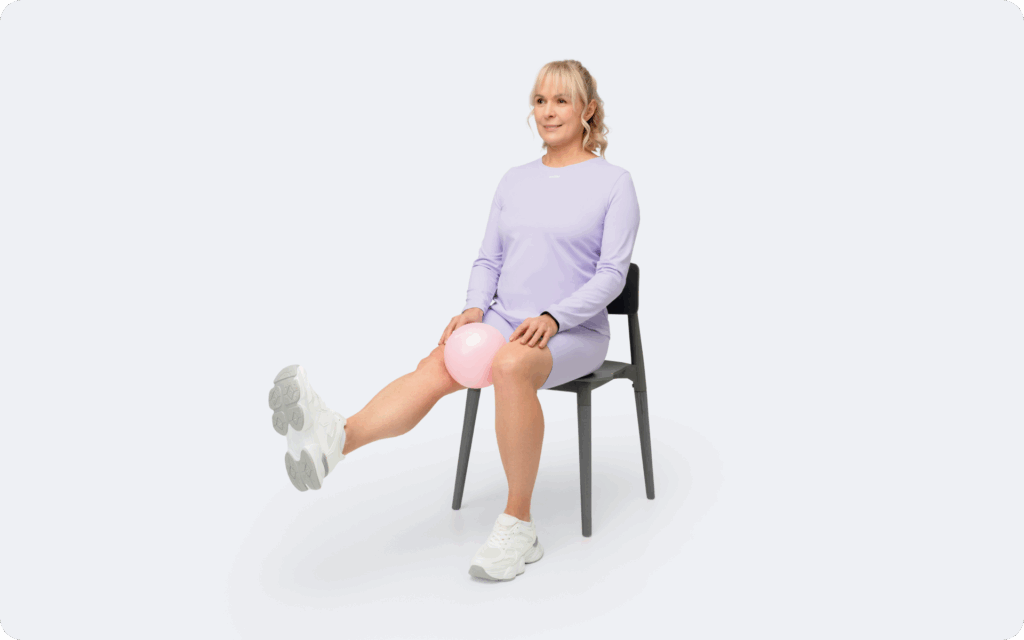
Benefits of Pilates for Seniors
On the other hand, Pilates focuses strongly on core strength, stability, and controlled movement. This can be particularly helpful for improving posture and overall body awareness. Key Pilates for elderly benefits include (1, 7):
- Core and Back Support
Pilates emphasizes strengthening the muscles around the abdomen and lower back. This can support posture and help some people feel more comfortable during everyday movement. - Low-Impact Movements
The exercises involve controlled, flowing motions that are gentle on joints, which makes Pilates suitable for seniors with arthritis or osteoporosis. - Building Functional Strength
Pilates can help seniors with movements they use in daily life, such as standing, sitting, and bending, by targeting strength and alignment. - Step-by-Step Progression
Pilates focuses on precision and control, often involving smaller movements. This gradual approach is less intimidating for beginners.
That being said, Pilates requires more concentrated muscle engagement and may not feel as relaxing as yoga. However, it builds a solid foundation for stability and ease of movement.
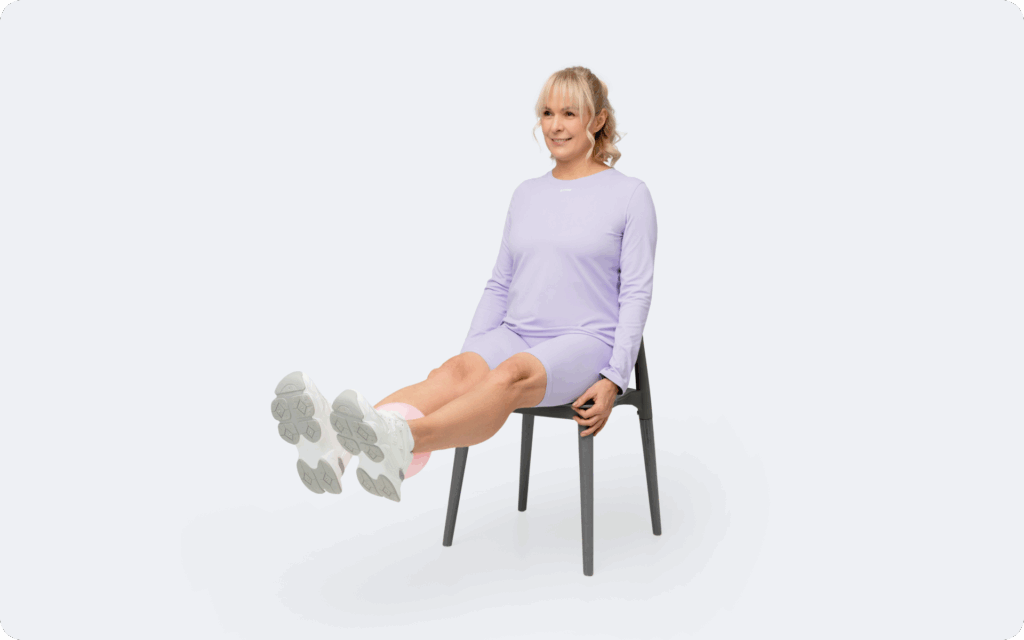
Key Differences to Consider
- Physical Demands
Yoga often involves holding poses, sometimes for extended periods, while Pilates involves continuous, flowing movements. For seniors with joint discomfort or limited endurance, Pilates may feel more manageable. - Focus Areas
Yoga leans towards full-body flexibility, balance, and mindfulness. Pilates targets core strength, posture, and stability, which are essential for back mobility. - Adaptability
Both practices can be tailored to different abilities. Chair yoga and chair-based Pilates are excellent options for seniors with limited mobility. - Mind-Body Connection
Yoga’s meditative approach may resonate with those looking for relaxation and emotional well-being. Pilates champions a more physical focus on alignment and muscle precision.
Which Should You Choose?
The choice will depend on what you’re looking for. If relaxation, reduced stress, and greater flexibility are your priorities, yoga may be ideal, but if you want to build strength, refine balance, and improve posture, Pilates could be your perfect fit.
Ultimately, some seniors enjoy combining the two, alternating practices to benefit from the strengths of each method. Just remember to listen to your body, start slow, and consult a qualified instructor to guide you safely through the practice of your choice.
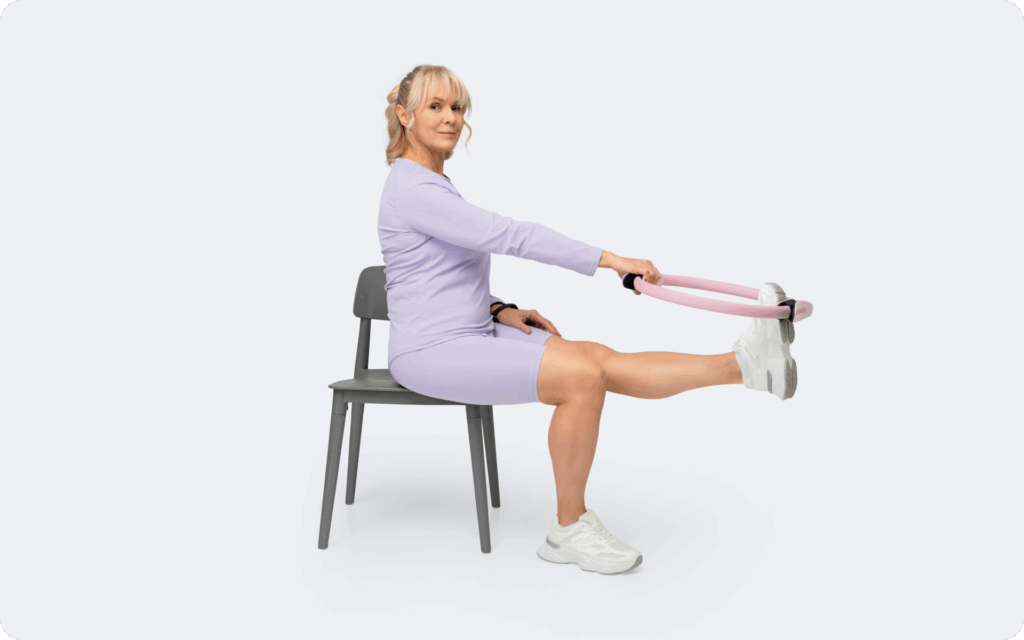
Yes, Pilates is excellent for a 70-year-old woman as it improves flexibility, core strength, balance, and posture, all while being low-impact and gentle on joints (7). It’s easily adaptable to different fitness levels and is safe when performed under proper guidance. We explore a female-tailored Pilates approach and discuss its benefits in our guide – Pilates for older women. The best time for Pilates depends on your personal preference and energy levels. Some people enjoy practicing in the morning to energize their day, while others prefer afternoons or evenings to unwind. Choose a time when you feel most comfortable and are able to focus. The breathing rule in Pilates involves inhaling through the nose and exhaling through the mouth, coordinating each breath with movement. Typically, you inhale during preparation or expansion and exhale during exertion or effort. Pilates can support healthy aging by helping maintain mobility, strength, and balance over time. Many people also find the breathing and focus elements calming, which can contribute to overall wellbeing.Frequently Asked Questions
Is Pilates good for a 70-year-old woman?
What time of day is best for Pilates?
What is the breathing rule for Pilates?
Is Pilates good for anti-aging?
The Bottom Line
Pilates for older adults can be a gentle way to support strength, flexibility, and balance with low-impact, controlled movement. Its gentle, low-impact nature makes it suitable for seniors of all fitness levels, offering both physical and mental benefits. Whether you’re looking to stay active, enhance your mobility, or find a mindful way to unwind, Pilates is worth exploring.
DISCLAIMER:
This article is intended for general informational purposes only and does not serve to address individual circumstances. It is not a substitute for professional advice or help and should not be relied on for making any kind of decision-making. Any action taken as a direct or indirect result of the information in this article is entirely at your own risk and is your sole responsibility.
BetterMe, its content staff, and its medical advisors accept no responsibility for inaccuracies, errors, misstatements, inconsistencies, or omissions and specifically disclaim any liability, loss or risk, personal, professional or otherwise, which may be incurred as a consequence, directly or indirectly, of the use and/or application of any content.
You should always seek the advice of your physician or other qualified health provider with any questions you may have regarding a medical condition or your specific situation. Never disregard professional medical advice or delay seeking it because of BetterMe content. If you suspect or think you may have a medical emergency, call your doctor.
SOURCES:
- Pilates: how does it work and who needs it? (2011, ncbi.nlm.nih.gov)
- Core strengthening (2004, archives-pmr.org)
- Falls in Older Adults are Serious (2020, ncbi.nlm.nih.gov)
- Pilates improves physical performance and decreases risk of falls in older adults: a systematic review and meta-analysis (2021, sciencedirect.com)
- Effects of Pilates Training on Lumbo-Pelvic Stability and Flexibility (2011, ncbi.nlm.nih.gov)
- Pilates, Mindfulness and Somatic Education (2013, ncbi.nlm.nih.gov)
- Benefits of Pilates in the Elderly Population: A Systematic Review and Meta-Analysis (2022, ncbi.nlm.nih.gov)
- Brief structured respiration practices enhance mood and reduce physiological arousal (2023, sciencedirect.com)
- Exploring the therapeutic effects of yoga and its ability to increase quality of life (2011, ncbi.nlm.nih.gov)
- Reducing Stress with Yoga: A Systematic Review Based on Multimodal Biosignals (2024, ncbi.nlm.nih.gov)
 Reviewed by
 Reviewed by