Chair Pilates adapts traditional Pilates movements to a seated or chair-supported format. It’s a practical option for beginners, people with limited mobility, and anyone who wants a structured routine that doesn’t require floor work. This guide covers a complete beginner routine — warm-up, main workout, and cool-down — plus guidance on building your own routine, session length, frequency, and best stretches to include.
Who Is Chair Pilates Suitable For?
Chair Pilates works well for:
- Beginners building strength and coordination before progressing to mat-based Pilates
- People with limited mobility or balance concerns — the chair provides a stable base of support
- Anyone looking for a low-impact routine that still challenges posture, core, and flexibility
- Those with limited time — sessions can be effective in 20–30 minutes
What Is a Good Chair Pilates Workout Routine?
A well-structured routine includes a warm-up, a main workout targeting legs and core, and a cool-down with stretching. Here’s a complete beginner-friendly session.
Here’s a sample Pilates-inspired routine:
Warm-Up
Shoulder Rolls
- Stand behind the chair with feet hip-width apart.
- Release your hands from the chair and roll your shoulders backward in circles.
- Progress to placing hands on your shoulders and making larger circles with your elbows.
- Breathe steadily throughout, exhaling as you open your shoulders.
Arm Circles
- Extend your arms out to the sides and make wide, circular motions.
- Inhale as you lift your arms, exhale as they come down.
- Keep your posture upright to open your shoulders and improve mobility.
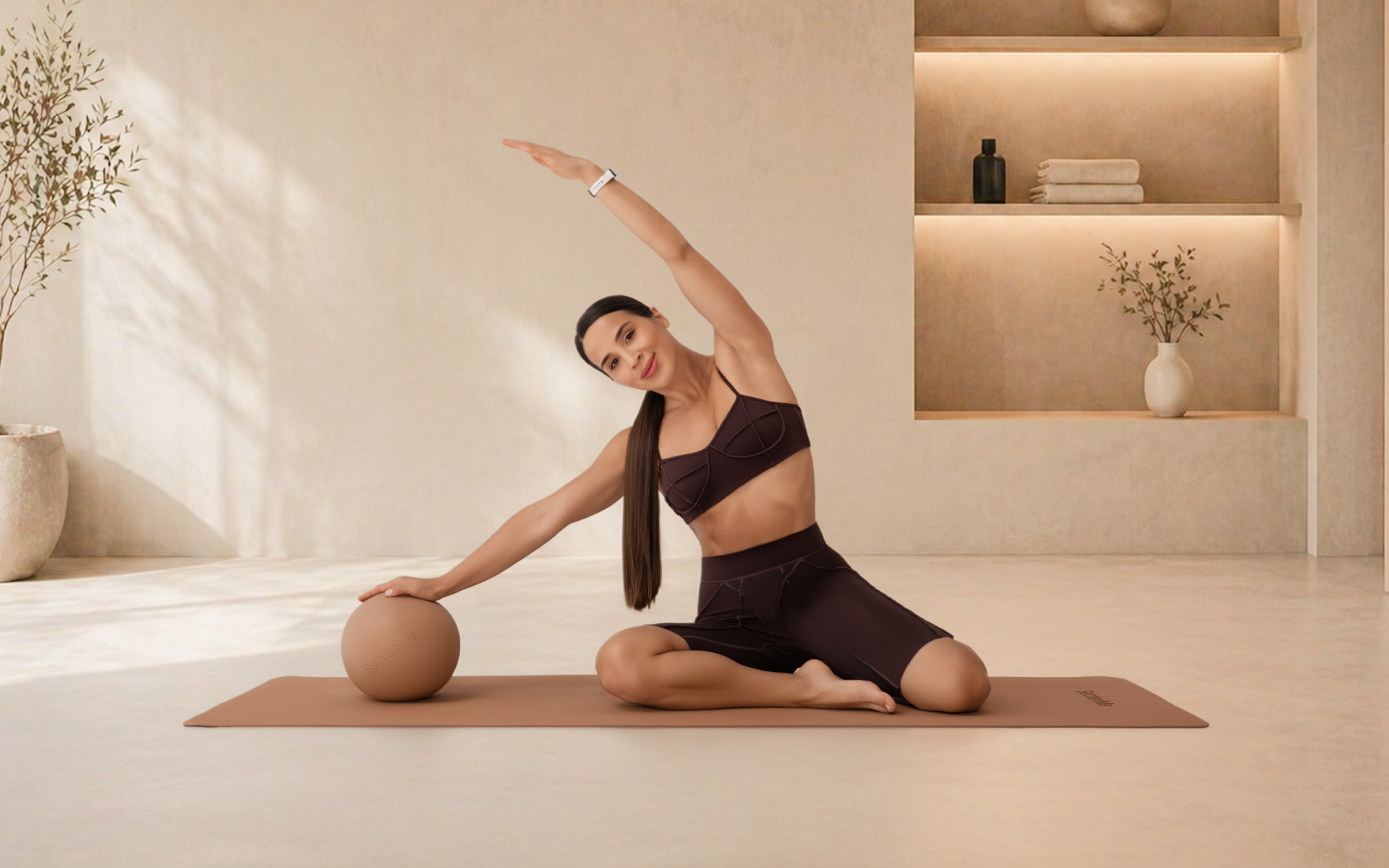
Side Bend Stretch
- Stand tall with one hand resting on the chair for balance.
- On an inhale, raise the other arm to the ceiling.
- Exhale as you bend sideways, opening your rib cage and stretching your side body.
- Return to standing and repeat on the opposite side.
Crossed-Elbow Shoulder Stretch
- Cross your elbows in front of you, placing one hand in each elbow crease.
- Lift your arms overhead, breathing deeply to stretch between your shoulder blades.
- Circle your arms downward and cross them the other way to stretch the opposite side.
Whether you’re a workout beast or just a beginner making your first foray into the world of fitness and dieting – BetterMe has a lot to offer to both newbies and experts! Install the app and experience the versatility first-hand!
Main Workout — Standing Leg Exercises
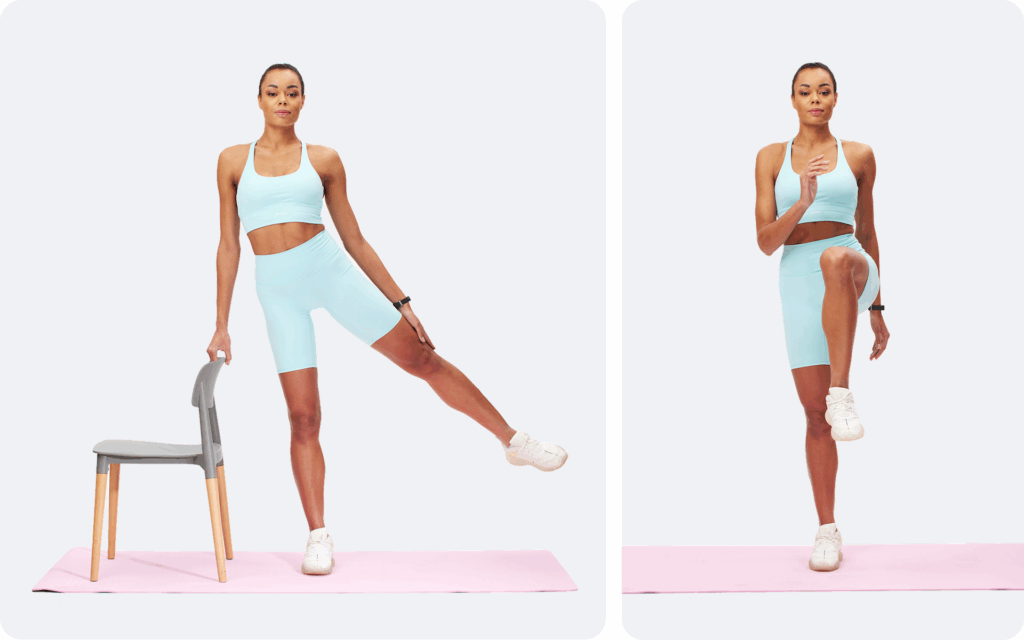
Calf Raises
- Stand with feet hip-width apart, toes pointing forward.
- Hold the back of the chair lightly for support — or try without hands for more challenge.
- Rise onto your tiptoes as you exhale, keeping the movement controlled.
- Lower back down as you inhale.
- Do 10 reps.
Ballerina Toe Raises
- Stand with your heels together and toes turned slightly outward in a V-shape.
- Push your pelvis slightly forward and engage your glutes.
- Lift onto your tiptoes as you exhale, then lower back down with control.
- Do 8 reps, using the chair for support as needed.
Wide-Leg Pelvic Tilts
- Step feet wider than hip-width apart with toes turned slightly outward.
- Bend your knees gently, engaging your thigh muscles.
- Tuck your pelvis under (as if tilting your tailbone toward the floor), then release to a neutral position.
- Repeat 8 times, keeping shoulders relaxed and chest lifted.
Chair-Assisted Squats
- Stand with feet parallel and slightly wider than hip-width apart.
- Hold the chair for balance and slowly bend your knees, pushing your hips back as if sitting down.
- Keep your back straight and knees behind your toes.
- Exhale as you return to standing.
- Do 6–8 reps.
Hamstring Stretch
- Step one foot forward while keeping the other leg back.
- Push your pelvis backward and lean slightly forward with a straight back.
- Rest your hands on your front thigh for stability and breathe deeply.
- Hold for a few seconds, then switch sides.
If you’re curious about Pilates stretches, check out our earlier article.
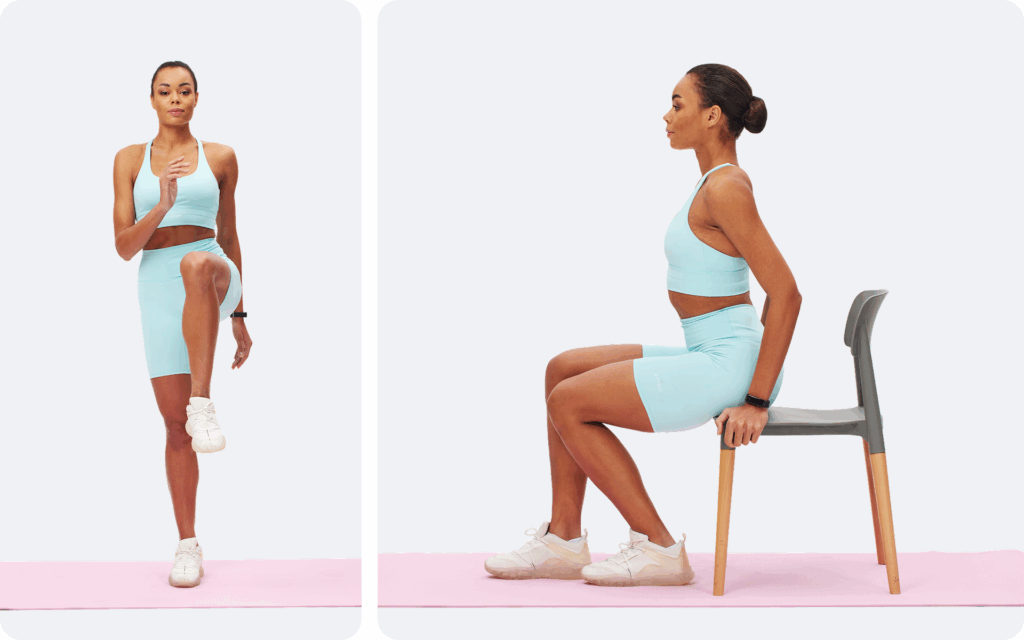
Main Workout — Seated Core and Glute Exercises
Seated Glute Lifts
- Sit near the edge of the chair with feet flat on the floor.
- Hold the armrests or seat edges for support and engage your glutes by squeezing them.
- Using your arms and glutes, lift your pelvis slightly off the chair, then lower without collapsing.
- Do 6 reps.
Glute Lifts with Leg Raise
- From the seated glute lift position, lift one foot off the floor to a tabletop position (knee bent, shin parallel to the ground).
- Lower your foot, repeat on the opposite leg, then lower your pelvis back to the chair.
- Do 5 reps for each leg with control.
Seated Spine Stretch
- Sit near the edge of the chair with feet wide apart.
- Place your hands on your knees and hinge forward from the hips with a straight spine.
- Drop your head and shoulders, rounding your back, then roll back up to a seated position.
- Repeat 3–5 times, coordinating movement with your breath.
Seated Spine Twist
- Sit tall with feet flat on the floor and arms extended at shoulder height, palms facing down.
- Rotate your upper body to one side, twisting through the spine while keeping hips squared forward.
- Add two small pulses at the end, then return to center.
- Do 4 reps per side.
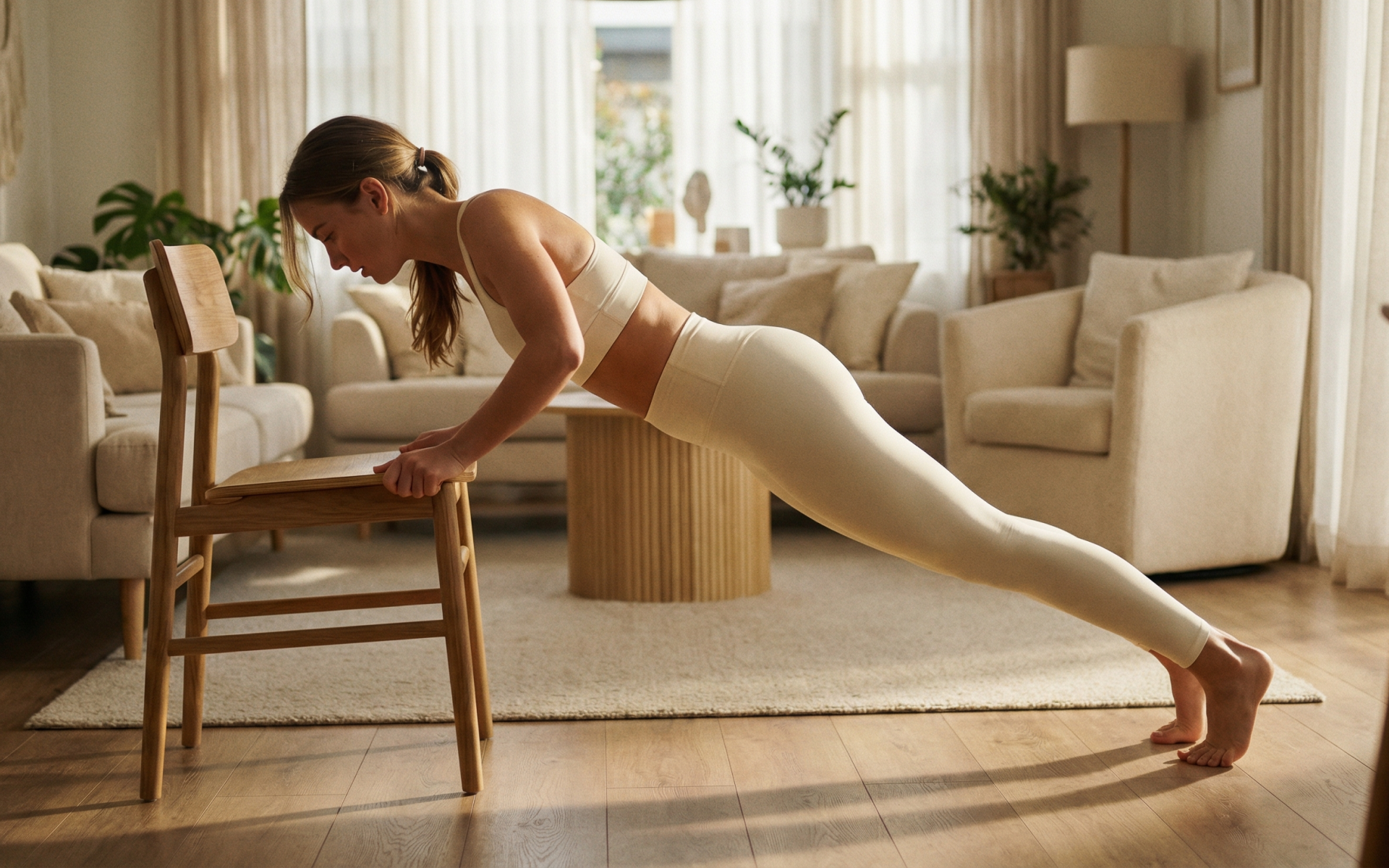
Chair Push-Ups
- Face the chair and hold it with straight arms, hands shoulder-width apart.
- Walk your feet back until your body forms a straight diagonal line from head to heels.
- Slowly bend your elbows to lower your chest toward the chair.
- Exhale as you push back up.
- Do 6–8 reps with controlled movement.
Cool Down
Ankle-on-Knee Stretch
- While seated, cross one ankle over your opposite knee.
- Press gently on the lifted knee with one hand while holding the ankle with the other.
- Lean forward to deepen the stretch in your glute and hip.
- Hold for a few breaths, then switch sides.
Neck Stretches
- Sit tall with arms resting at your sides.
- Tilt your head so your ear moves toward your shoulder.
- Rotate your head to look downward toward your armpit, then turn to look upward over the same shoulder.
- Repeat on both sides, holding for several breaths.
Wrist and Arm Stretch
- Stretch one arm out to the side with your thumb tucked into your palm.
- Wrap your fingers around your thumb and gently flex your wrist backward.
- Rotate your arm slightly outward for a deeper stretch, and look to the opposite side.
- Repeat on the other hand, then shake your wrists out.
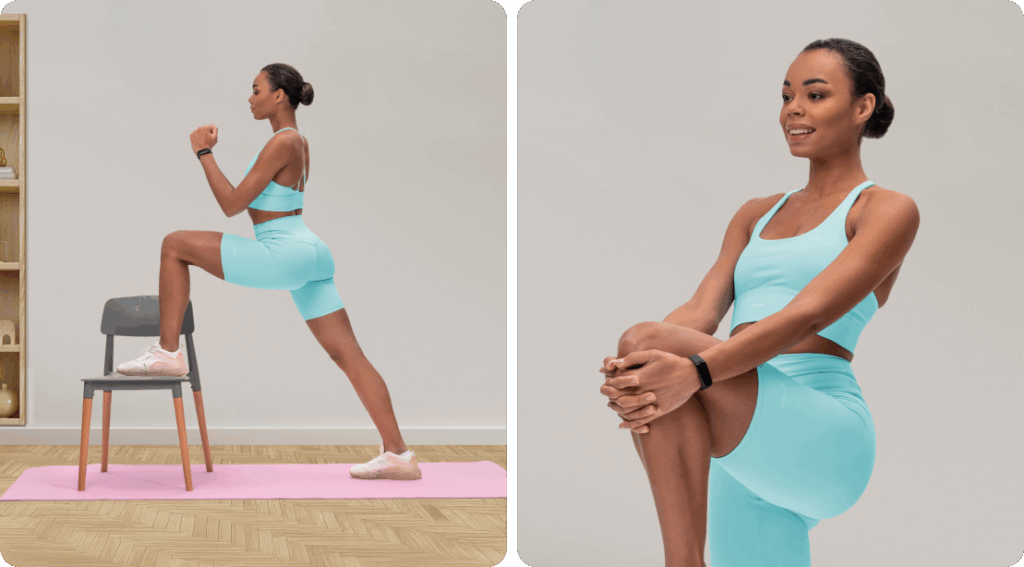
Full-Body Stretch
- Stand behind the chair and place one foot against the seat for a hamstring stretch, pushing your hips backward and leaning slightly forward.
- Switch legs, then slowly roll up to standing.
- Inhale as you lift your arms overhead, and exhale as you lower them.
How Do You Build a Chair Pilates Routine?
A consistent routine is more effective than occasional intense sessions. Here are the key principles:
- Start with a warm-up. Begin every session with gentle movement to prepare your muscles and joints — shoulder rolls, arm circles, and light cardio such as marching in place.
- Focus on form first. Proper alignment is more important than reps or intensity. Learn each movement correctly before adding resistance.
- Include variety. Mix standing leg work, seated core exercises, and stretching across your sessions to engage different muscle groups.
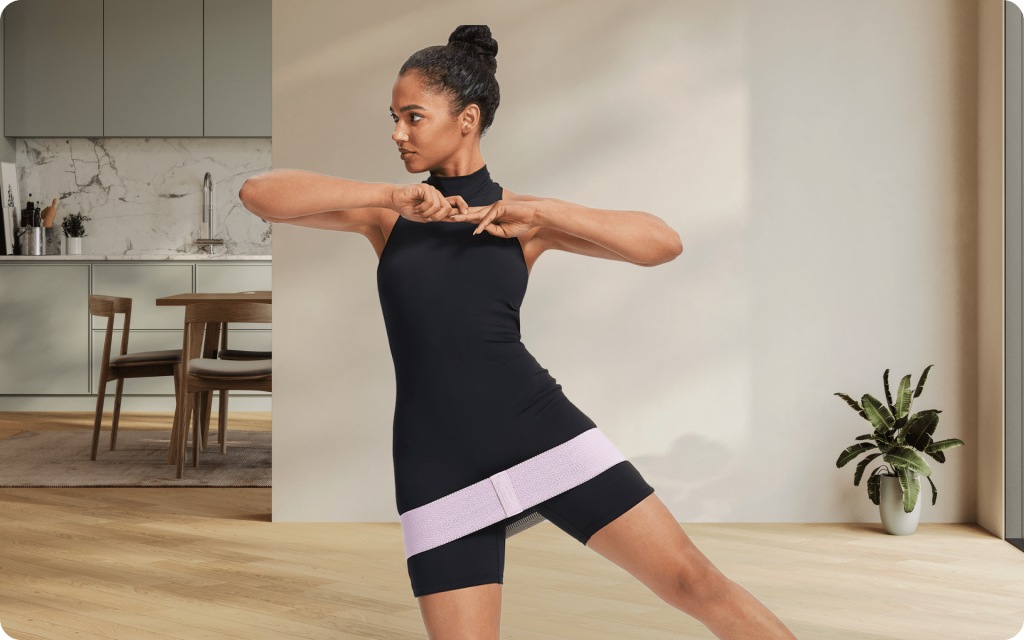
- Progress gradually. As exercises become easier, you can add light resistance (springs or bands) or increase reps. Start lighter and build over time.
- Integrate breathing. Breathing is central to Pilates. Inhale to prepare; exhale during the effort of each movement.
- Modify when needed. Listen to your body. If an exercise causes discomfort, reduce the range of motion or try a lighter variation.
- Finish with a cool-down. Stretching after each session helps maintain the range of motion you’ve worked through.
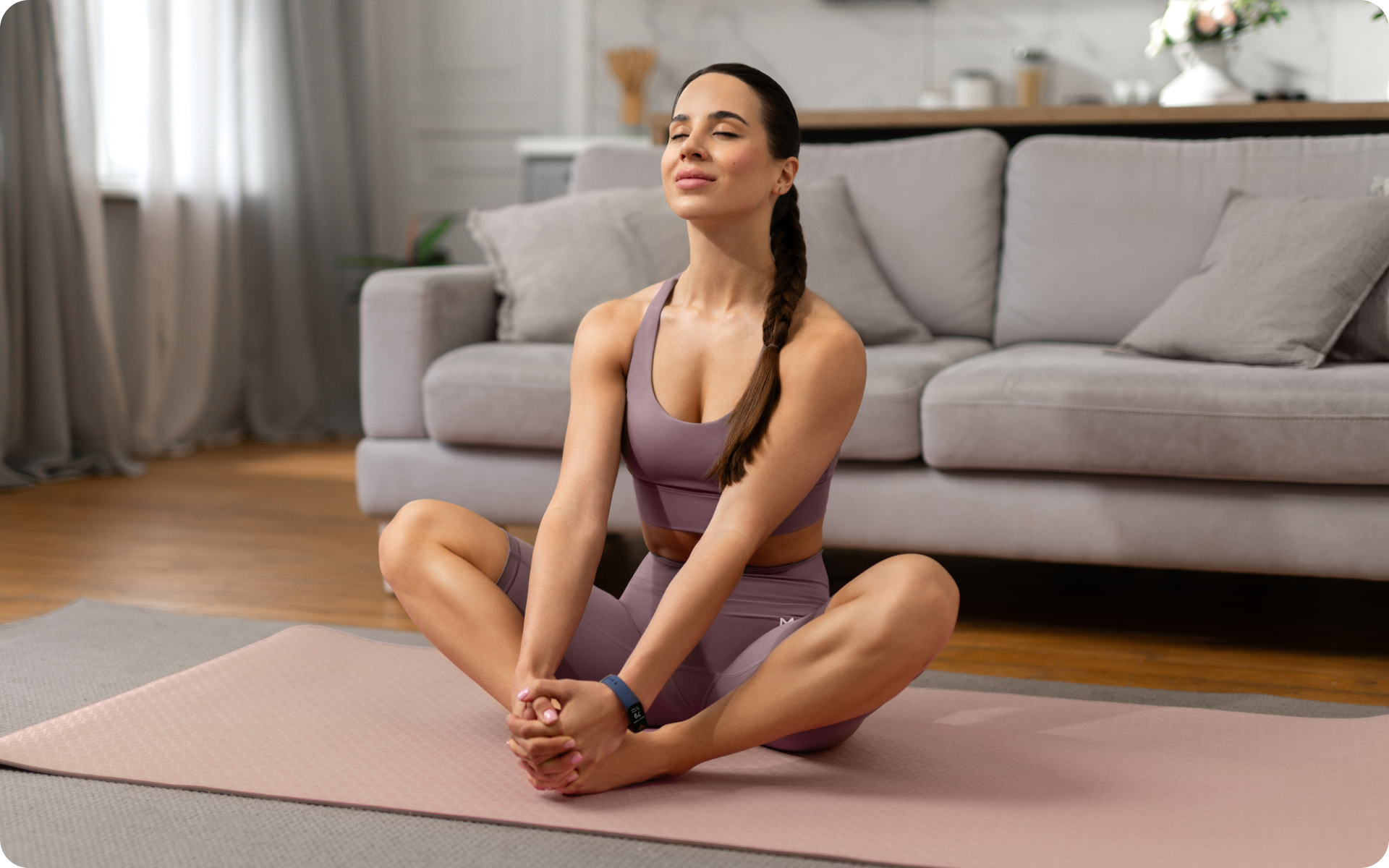
What Chair Should You Use?
Many chair Pilates routines are designed for the Wunda Chair — a Pilates apparatus with a padded seat and spring-loaded pedal that offers adjustable resistance. The Wunda Chair was originally created by Joseph Pilates and remains a staple in professional studios for its versatility in small spaces.
However, you don’t need specialist equipment to follow this routine. A standard chair with a firm, flat seat and stable back works well. Armrests are useful but not required. The chair should be stable, without wheels, and placed in a clear space with enough room to extend your arms and legs.
Browse Pilates equipment at BetterMe Store.
Read more: Pilates vs Somatic Pilates: What’s the Difference?
Can Chair Pilates Be Done Every Day?
Generally yes, when sessions are appropriately varied. You might focus on gentle stretching and mobility work on some days and strength-based movements on others. This prevents overworking the same muscle groups without adequate rest.
Regular physical activity supports circulation, joint mobility, and muscular recovery (1). If sessions include higher-intensity or resistance-focused exercises, incorporating rest days or alternating the muscle groups you focus on gives your body time to adapt.
If you experience persistent fatigue, discomfort, or reduced performance, consider reducing frequency or intensity. Daily movement is well-tolerated by most people when balanced with attention to how your body responds.
Reasons why BetterMe is a safe bet: a wide range of calorie-blasting workouts, finger-licking recipes, 24/7 support, challenges that’ll keep you on your best game, and that just scratches the surface! Start using our app and watch the magic happen.
How Long Should a Chair Pilates Workout Last?
Session length depends on your fitness level and goals.
For beginners or those with limited time, 20–30 minutes can support improved flexibility, posture, and muscle engagement. Shorter sessions also help build consistency, which matters more than occasional long workouts.
Those looking to build more strength and endurance may benefit from 40–60-minute sessions that incorporate a warm-up, core and leg work, and a proper cool-down.
Shorter focused sessions can also complement other forms of movement. Whatever the length, maintaining good form throughout is important — fatigue tends to compromise alignment and reduce the quality of muscle engagement (2).
To learn more about the wall Pilates routine, check out our in-depth article on the topic.
Is Chair Pilates Good for Seniors?
Chair Pilates is well-suited to many older adults because the chair provides a stable base that reduces fall risk and supports balance during movement. Research confirms that Pilates training programs can produce meaningful improvements in balance in older adults (3).
Age-related changes in muscle mass, joint mobility, and posture are natural, but regular low-impact movement can help counteract some of these effects (2). Pilates specifically has been shown to support functional strength, flexibility, and coordination, alongside improvements in balance and wellbeing, in older populations (4).
It’s always worth consulting a healthcare provider before starting a new exercise program, particularly when managing an existing health condition or returning to movement after a period of inactivity.
Read more: Pilates Transformation: Here’s What to Expect
What Are the Best Stretches to Include in a Chair Pilates Routine?
A well-rounded Chair Pilates routine should incorporate stretches that target key muscle groups that contribute to mobility and posture.
Spine and lower-back stretches
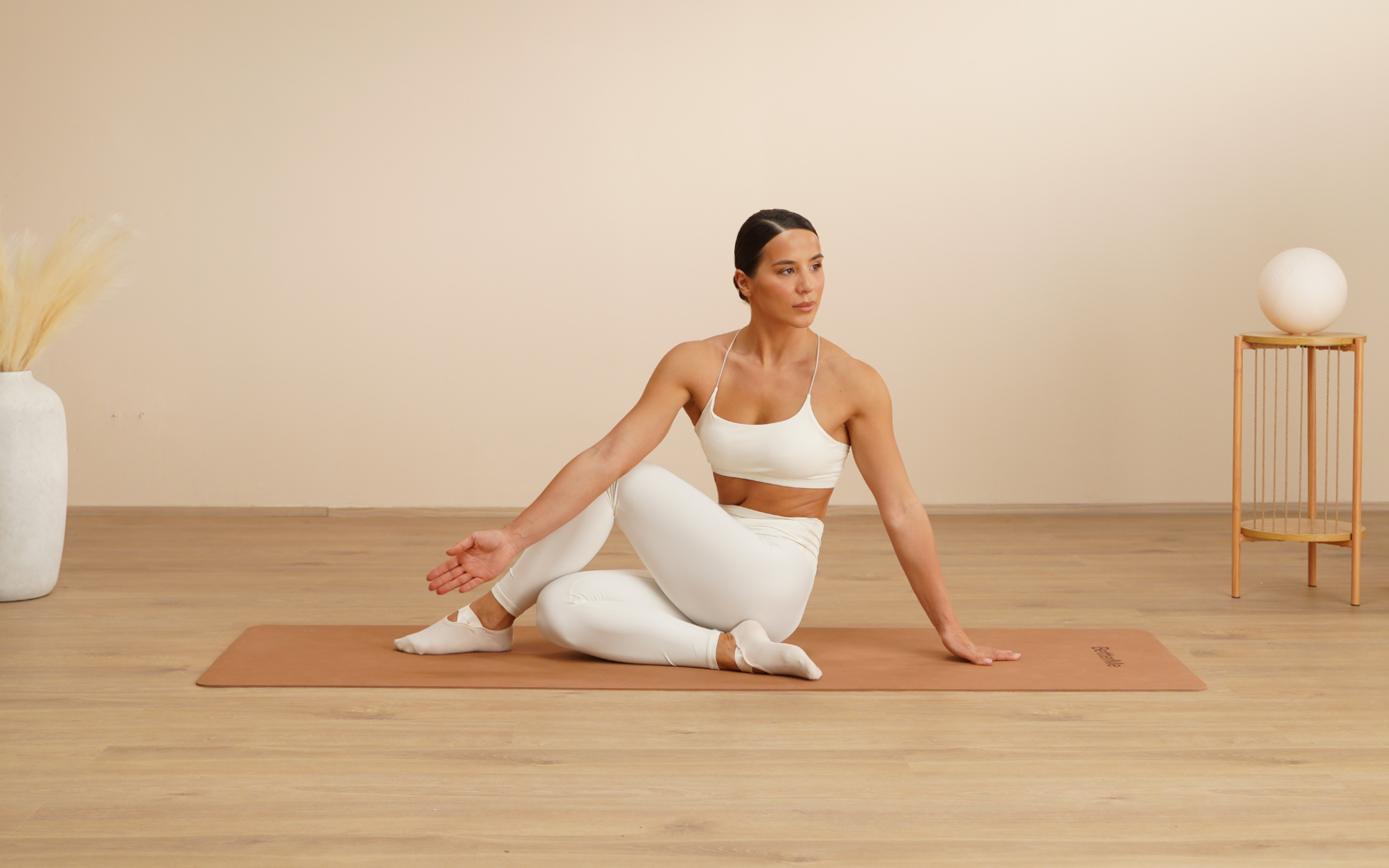
Seated spinal twists improve rotation and spinal mobility. Sitting tall, gently twist your upper body to one side with the opposite hand resting on your outer thigh for support.
Chair-adapted cat-cow stretches are also effective. Alternate between arching and rounding your back, allowing the spine to move through its full range of motion.
Shoulder and upper-body stretches
Shoulder rolls release tension in the shoulders and neck. Roll slowly forward and backward in circular motions.
Arm-across-chest stretches release tightness in the shoulder joint. Reach one arm across your chest and gently draw it closer with the opposite hand.
Hip and lower-body stretches
Seated figure-four stretches target the hips and glutes. Cross one ankle over the opposite thigh and lean forward slightly from an upright seated position.
Hamstring stretches can be done by extending one leg forward with the heel on the floor and hinging gently from the hips.
Calf and ankle stretches
Seated ankle dorsiflexion — pointing and flexing the feet — improves foot and ankle mobility, which may support balance and circulation, particularly for those who spend a lot of time seated.

Yes, chair Pilates is an excellent option for beginners. It simplifies traditional Pilates movements by offering seated or supported exercises, which reduces the risk of injury and makes it more accessible for those with limited mobility or no prior experience. It allows individuals to focus on mastering proper form and alignment before they progress to more advanced routines. Chair Pilates can contribute to weight loss as part of a comprehensive fitness plan. It enhances muscle tone and increases physical activity levels, which support calorie burning (6). However, as it’s typically a low-intensity exercise, its direct impact on weight loss may be less significant than higher-intensity cardio workouts. Combining it with a balanced diet and other forms of exercise will optimize the results. Yes, chair Pilates improves flexibility by incorporating controlled stretches and movements that lengthen muscles and enhance range of motion. (1) Exercises that target areas such as the spine, shoulders, hips, and legs are particularly effective for reducing stiffness and promoting joint mobility over time. Chair Pilates can build strength, particularly in the core, back, and stabilizing muscles (1). While the resistance and intensity may be lower than traditional strength-training methods, it promotes functional strength by improving muscle activation and stability. It’s particularly beneficial for individuals who are recovering from injuries or those who are looking for low-impact strength work.Frequently Asked Questions
Is chair Pilates good for beginners?
Can chair Pilates help with weight loss?
Does chair Pilates improve flexibility?
Can chair Pilates build strength?
The Bottom Line
Chair Pilates routines offer a practical, low-impact way to work on strength, flexibility, and balance — without requiring floor work or specialist equipment. The routine above covers a complete beginner session from warm-up to cool-down. Start with shorter sessions, focus on form, and progress gradually. Consistency over time produces the most meaningful results.
DISCLAIMER:
This article is intended for general informational purposes only and does not serve to address individual circumstances. It is not a substitute for professional advice or help and should not be relied on for making any kind of decision-making. Any action taken as a direct or indirect result of the information in this article is entirely at your own risk and is your sole responsibility.
BetterMe, its content staff, and its medical advisors accept no responsibility for inaccuracies, errors, misstatements, inconsistencies, or omissions and specifically disclaim any liability, loss or risk, personal, professional or otherwise, which may be incurred as a consequence, directly or indirectly, of the use and/or application of any content.
You should always seek the advice of your physician or other qualified health provider with any questions you may have regarding a medical condition or your specific situation. Never disregard professional medical advice or delay seeking it because of BetterMe content. If you suspect or think you may have a medical emergency, call your doctor.
SOURCES:
- Pilates – health benefits (2022, betterhealth.vic.gov.au)
- Exercise Physiology (n.d., physio-pedia.com)
- Interaction among Skeletal Muscle Metabolic Energy Systems during Intense Exercise (2010, pmc.ncbi.nlm.nih.gov)
- Benefits of Pilates in the Elderly Population: A Systematic Review and Meta-Analysis (2022, mdpi.com)
- Comparison of the effectiveness of pilates exercises, aerobic exercises, and pilates with aerobic exercises in patients with rheumatoid arthritis (2021, pubmed.ncbi.nlm.nih.gov)
- Increasing muscle mass to improve metabolism (2013, pmc.ncbi.nlm.nih.gov)
 By
By 
 Reviewed by
 By
By