
According to the American College of Sports Medicine (ACSM), a well-rounded fitness program should include cardiorespiratory exercise, resistance exercise, flexibility, and neuromotor exercise (1).
However, many fitness enthusiasts find themselves stuck in a mono-modal rut – either strictly pounding the pavement as runners or exclusively dedicating themselves to the reformer. By isolating these modalities, you may be missing out on the comprehensive benefits that come from a diversified training stimulus.
If you’ve been wondering how to bridge the gap between heart-pumping endurance work and core-centric precision training, you’re in the right place. This guide dissects the physiological interplay between Pilates and cardiovascular training, offering you a structured, evidence-based roadmap to combining them effectively.
We’ll move beyond vague advice and provide you with actionable programming, quantified intensity metrics, and clear anatomical reasoning.
What Is the Connection Between Pilates and Cardio?
At first glance, Pilates and cardio seem to occupy opposite ends of the fitness spectrum. Cardio – short for cardiorespiratory training – is primarily aerobic, relying on oxygen to fuel sustained muscle contractions over time. Conversely, Pilates is largely anaerobic and focuses on muscular endurance, stability, and motor control.
However, the connection lies in the neuromuscular foundation.
Cardiovascular efficiency isn’t just about heart and lung capacity, it’s also about how effectively your muscles can utilize oxygen and how efficiently your body moves (2). This is where Pilates enters the equation.
Pilates improves “movement economy” – the amount of energy required to maintain a certain speed or power output. By strengthening the deep stabilizing muscles of the core (specifically the transverse abdominis and multifidus) (3), Pilates reduces energy leaks in the kinetic chain (4, 5).
When your core is stable, your limbs can generate force more efficiently during cardio activities such as running or cycling (6). Think of it this way: a runner with a weak core wastes energy stabilizing their torso with every stride. A runner with a Pilates-strengthened core directs that energy straight into forward propulsion (5).
Therefore, while they tax different energy systems, they support the same goal: an efficient, high-performing body.
Can You Do Pilates and Cardio?
The short answer is yes. In fact, research suggests that concurrent training – training different energy systems within the same program – can yield superior overall fitness results compared to single-mode training (7), as long as recovery is managed correctly.
Physiologically, Pilates emphasizes muscular endurance through sustained, controlled contractions of stabilizing muscles (5, 8), adaptations that are largely supported by fatigue-resistant Type I (slow-twitch) muscle fibers (9). Traditional steady-state cardio also utilizes Type I fibers, but in a more dynamic, repetitive fashion (9). High-intensity cardio (HIIT) preferentially recruits Type II (fast-twitch) muscle fibers due to its reliance on repeated, high-force, explosive efforts (9).
By combining Pilates and cardio exercises, you ensure comprehensive fiber recruitment. You build the structural integrity needed to withstand the repetitive impact of cardio, particularly in the joints. For example, the pelvic stability gained from Pilates protects the knees and hips during the high-impact loading of running (10).
Physiologically, these modalities challenge the heart in different ways. Cardio improves stroke volume (the amount of blood pumped per beat) and cardiac output (11). While not typically raising the heart rate to aerobic zones (60-80% of max heart rate) for sustained periods, Pilates can improve vascular function through dynamic muscle contractions that aid venous return (blood flow back to the heart) (12, 13).
From a periodization standpoint, Pilates serves as “active recovery” or “low-intensity steady state” (LISS) strength work. It allows you to maintain training volume without adding excessive fatigue (14). This balance is essential for preventing overtraining syndrome, a state where performance declines due to an imbalance between training stress and recovery.
How to Balance Pilates and Cardio
Balancing these two modalities requires a strategic approach to scheduling. You cannot simply pile volume on top of volume without risking burnout. Here are the three primary methods for structuring your routine.
Method 1: The Alternating Day Split
This is often the most sustainable approach for beginners or those with high-stress lifestyles. You dedicate specific days to specific physiological adaptations.
- Day 1: Cardio (e.g. running, cycling)
- Day 2: Pilates (reformer or mat)
- Day 3: Cardio
- Day 4: Pilates
Why it works: This allows for 24-48 hours of recovery for specific muscle groups and energy systems. If you do a heavy leg-dominant run on Monday, a core and upper-body focused Pilates session on Tuesday allows your legs to recover while you still train.
Whether you’re a workout beast or just a beginner making your first foray into the world of fitness and dieting – BetterMe has a lot to offer to both newbies and experts! Install the app and experience the versatility first-hand!
Method 2: The Same-Day “Brick” Session
This involves performing both workouts in a single training session. The order here is crucial and depends on your primary goal (discussed in detail in a later section).
- Session Structure: 30 minutes of moderate-intensity cardio followed immediately by 30 minutes of Pilates.
Why it works: This is time-efficient and builds significant endurance. It teaches your body to maintain stabilizing form even when fatigued from the cardio component. This is excellent for endurance athletes who need to maintain their form late in a race.
Method 3: Integrated Hybrid Classes
Some fitness programming specifically blends these modalities, such as “cardio Pilates” or “Pilates HIIT” classes. These sessions typically use jump boards on reformers or integrate burpees and mountain climbers between Pilates sets.
- Structure: Intervals of high heart rate activity (Zone 4: 80-90% max HR) interspersed with active recovery utilizing Pilates principles.
Why it works: This provides a potent metabolic stimulus. It increases excess post-exercise oxygen consumption (EPOC), which means that you continue to burn calories at a higher rate after the workout is finished (15).
Read more: At-Home Chair Pilates Workout Routines for Beginners
What Is a Fat-Burning Pilates and Cardio Workout Plan?
To maximize fat oxidation while building lean muscle, we’ll utilize a blend of high-intensity interval training (HIIT), low-intensity steady state (LISS) cardio, and reformer Pilates.
Program Notes:
- Intensity: HIIT sessions should reach 85-95% of your max heart rate during work intervals. LISS should stay between 60-70%.
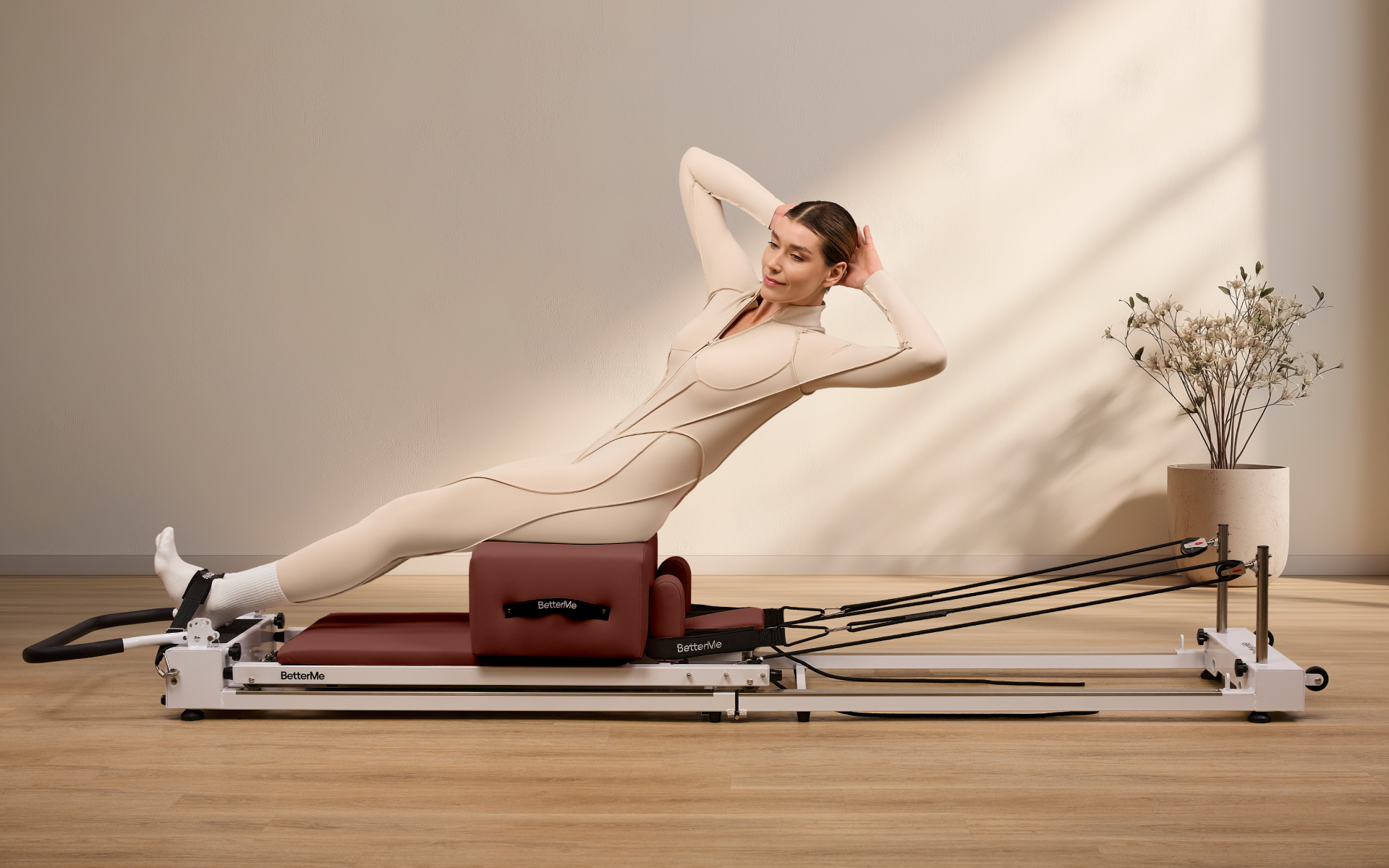
- Reformer Pilates: If you don’t have access to a reformer, these movements can be modified for the mat using sliders or resistance bands.
- Progression: Aim to increase the duration of cardio intervals or the resistance on the reformer by 5-10% every 2-3 weeks.
Weekly Schedule Table
| Day | Workout type | Focus | Duration |
|---|---|---|---|
| Monday | HIIT cardio | Metabolic conditioning | 25 minutes |
| Tuesday | Reformer Pilates | Lower body and core stability | 45-50 minutes |
| Wednesday | LISS cardio | Active recovery/aerobic base | 45-60 minutes |
| Thursday | Reformer Pilates | Upper body and posture | 45-60 minutes |
| Friday | HIIT cardio | Power and speed | 25 minutes |
| Saturday | Active rest | Mobility/light walking | 30 minutes |
| Sunday | Total rest | Neural recovery | 0 minutes |
Detailed Workout Breakdown
Monday: HIIT Cardio Sprint
- Warm-up: 5 minutes brisk walking.
- The Workout:
- 30 seconds sprint (RPE 9/10)
- 90 seconds walk/jog (RPE 3/10)
- Repeat 8 times.
- Cool-down: 5 minutes slow walking.
Tuesday: Reformer Pilates (Lower Body Focus)
- Footwork Series
- Setup: 3 red springs (heavy). Lie supine, your toes on the footbar and your heels lifted.
- Execution:
- Inhale to prepare, exhale to press the carriage out, fully extending your legs without locking your knees.
- Inhale to control the carriage return.
- Perform 3 sets of 12 reps (toes, arches, heels).
- Tip: Keep your pelvis neutral – imagine a cup of water balanced on your lower abs.
- Feet in Straps (Leg Circles)
- Setup: 2 red springs (medium-heavy). Loops on your feet.
- Execution:
- Extend your legs to 45 degrees.
- Open your legs wide, then circle down and around, bringing your heels together.
- Reverse the direction.
- Perform 10 circles in each direction.
- Tip: Stabilize your hips – only your legs should move within the hip socket.
- The Elephant
- Setup: 1 blue, 1 red (medium). Stand on the carriage, your hands on the footbar.
- Execution:
- Round your spine into a C-curve.
- Press the carriage out using only your glutes and hamstrings.
- Pull the carriage in using your deep abdominals.
- Perform 12 reps.
- Tip: Keep your heels down to get a hamstring stretch.
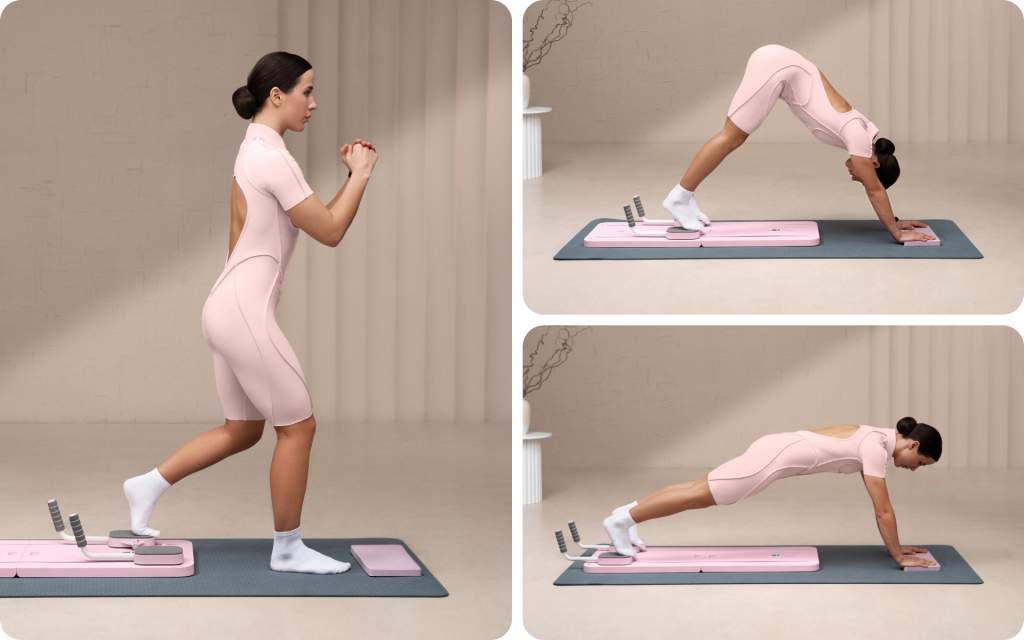
Thursday: Reformer Pilates (Upper-Body Focus)
- Hundred
- Setup: 2 red springs. Lie supine, your legs in tabletop and straps in your hands.
- Execution:
- Curl your head, neck, and shoulders up.
- Pump your arms vigorously by your sides while inhaling for 5 counts and exhaling for 5 counts.
- Repeat for 10 cycles (100 pumps).
- Tip: Look at your navel to reduce neck strain.
- Rowing Back Series
- Setup: 1 red spring. Sit facing the back, your legs through the shoulder blocks.
- Execution:
- Hold the straps, your knuckles touching at chest height.
- Roll halfway back (posterior tilt).
- Open your arms to the side, then press your arms back.
- Dive forward over your legs, circling your arms around to your toes.
- Perform 8 reps.
- Tip: Articulate your spine vertebrae by vertebrae.
- Long Box Pulling Straps
- Setup: 1 blue spring (light-medium). Lie prone on the long box, facing the risers.
- Execution:
- Hold the ropes near the hardware.
- Pull your arms back toward your hips while extending your upper back (thoracic extension).
- Return to start with control.
- Perform 10 reps.
- Tip: Keep your glutes engaged to protect your lower back.
For further inspiration on structuring your training, explore our Pilates weekly workout plan that’s designed to help you stay consistent and motivated.
What Cardio Complements Pilates Best?
Is there a single “best” form of cardio to pair with Pilates? A nuanced look at the options reveals that the “best” choice depends entirely on your specific goals and physical limitations.
Swimming
Swimming is perhaps the most synergistic partner for Pilates (16). Both emphasize:
- Elongation of the spine.
- Rhythmic breathing patterns.
- Core-initiated movement.
- Low impact on joints.
If you’re recovering from injury or looking for Pilates and cardio for beginners, swimming combined with Pilates offers a high-reward, low-risk environment. The buoyancy of water supports the body, which allows you to reinforce Pilates alignment principles without fighting gravity.
Reasons why BetterMe is a safe bet: a wide range of calorie-blasting workouts, finger-licking recipes, 24/7 support, challenges that’ll keep you on your best game, and that just scratches the surface! Start using our app and watch the magic happen.
Walking (LISS)
Walking is the most accessible form of cardio. When it’s performed with intention – focusing on gait, pelvic rotation, and posture – it becomes a functional extension of Pilates. It’s ideal for stress reduction (cortisol management) and building a foundational aerobic base without taxing the recovery reserves needed for intense Pilates strength work (17).
Cycling
Cycling is excellent for cardiovascular health, but it often encourages a hunched posture (thoracic kyphosis) and tight hip flexors (18). Pilates serves as the perfect antidote here. A Pilates routine emphasizing thoracic extension and hip flexor lengthening (such as the Eve’s lunge on the reformer) counteracts the negative postural adaptations of cycling (19).
Read more: Is Mat Pilates Effective? A Complete Guide to This Exercise
Is Pilates and Running a Good Combination?
Running is a high-impact, repetitive motion sport that occurs primarily in the sagittal plane (forward movement). Pilates creates a 3-dimensional athlete by training rotation and lateral movement. This combination is arguably one of the most effective for injury prevention in runners.
Benefits of the Combination
- Breathwork Efficiency: Pilates teaches “lateral thoracic breathing” – expanding the ribcage sideways rather than shallow chest breathing (20). This technique allows runners to maximize their oxygen intake without elevating their shoulders and creating tension in their neck and traps.
- Pelvic Stability: A common issue in runners is the “hip drop” (Trendelenburg gait), which is caused by weak glute medius muscles (21). Pilates exercises such as side-lying leg series target this exact weakness, which keeps the pelvis level upon foot strike and reduces strain on the IT band and knee (22).
- Mobility: Running tightens the hamstrings and calves (23). Reformer Pilates and cardio routines that incorporate dynamic stretching help maintain muscle length, which prevents the shortening that leads to strains.
How to Combine Pilates and Running
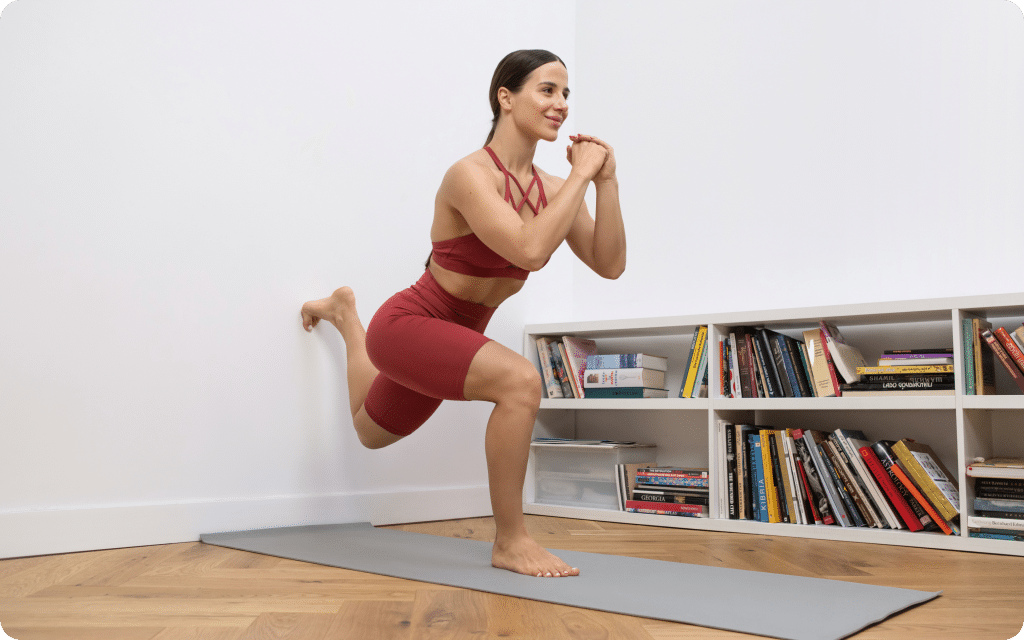
If you’re a runner, don’t view Pilates simply as “stretching” – treat it as strength training. Prioritize closed-kinetic chain exercises (where the foot is fixed, such as on the footbar) to simulate the ground contact forces of running. Aim for 2 sessions per week, focusing specifically on single-leg stability to mimic the single-leg nature of running.
Is It Better to Run or Do Pilates First?
The sequencing of your workouts dictates the adaptation your body prioritizes. This is known as the “interference effect,” though for the general population, it is less important than for elite athletes. However, optimizing your order can make your workout feel better and reduce the risk of injury.
- The Case for Separation
Ideally, you should perform these on separate days. This allows you to give 100% intensity to your run and 100% focus to your Pilates form. Fatigue compromises technique, and poor technique in Pilates renders it ineffective.
- Same-Day Sequencing Table
If you must combine them on the same day, here is how to decide:
| Priority | Order recommendation | Rationale |
|---|---|---|
| Fat loss | Cardio first → Pilates | Depleting glycogen stores with cardio may increase fat oxidation during the subsequent resistance work, although total daily calorie deficit matters most. |
| Performance run | Run first → Pilates | You want fresh legs for speed work or long runs to hit your split times and maintain safety. Pilates acts as a cool-down. |
| Injury reha/core | Pilates first → Run | Activating the deep stabilizers (transverse abdominis) before running ensures your core is "turned on" to support your spine during the run. |
| General fitness | Preference-based | Choose the one you’re least motivated to do and do it first to ensure it gets done. |
Generally, for Pilates and cardio exercises done together, we recommend a short, moderate run (20-30 mins) followed by Pilates. Running with fatigued core muscles can lead to poor posture and back pain, while doing Pilates with fatigued legs is manageable if you modify the spring tension.
If you’re interested in progressing your skills outside of the studio, exploring a Pilates at home challenge can offer structured steps to keep you consistent and motivated.
Yes, you can combine HIIT and Pilates, and it’s an efficient way to improve both anaerobic power and muscular endurance. However, as both are demanding on the body, you should limit combined sessions to 2-3 times per week to allow for recovery. No. Generally, traditional cardio burns more calories minute per minute than Pilates due to the continuous, higher demand that’s placed on the heart and lungs. However, Pilates and cardio for weight loss work best as a pair – Pilates builds lean muscle mass, which can slightly increase your resting metabolic rate over time. Yes, this practice is called “two-a-day” and is effective for athletes with high fitness levels. Make sure you have adequate nutrition and hydration between sessions to replenish your glycogen stores. You should consume a meal containing 20-30 grams of high-quality protein and a moderate amount of complex carbohydrates within 60-90 minutes post-workout. This supports muscle protein synthesis and replenishes energy – examples include a chicken breast with quinoa or a Greek yogurt smoothie. There are no specific exercises you should avoid after Pilates in a cross-training routine, as long as you pay attention to intensity and how your body feels. If you’ve just finished a demanding Pilates session, it’s wise to keep any subsequent workout at a manageable effort to prevent excessive fatigue or loss of form. Adjust your training to ensure you recover well and sustain good movement quality. For readers interested in targeted strategies, our in-depth guide to wall Pilates weight loss highlights how wall-based exercises can play a key role in your weight management plan.Frequently Asked Questions
Can I combine HIIT and Pilates?
Does Pilates burn more fat than cardio?
Can I do Pilates in the morning and cardio at night?
What’s the best thing to eat after Pilates?
What should I not do after Pilates?
The Bottom Line
Pairing Pilates and cardio isn’t about finding a magic formula – it’s an exploration of what your body needs to stay resilient, strong, and adaptable. Whether your focus is mobility, stamina, or injury prevention, cross-training these methods allows you to deliberately shape your fitness journey. Adjust routines to match your goals, stay attentive to recovery, and use each session as a chance to learn how you move, not just how much you can do.
DISCLAIMER:
This article is intended for general informational purposes only and does not serve to address individual circumstances. It is not a substitute for professional advice or help and should not be relied on for making any kind of decision-making. Any action taken as a direct or indirect result of the information in this article is entirely at your own risk and is your sole responsibility.
BetterMe, its content staff, and its medical advisors accept no responsibility for inaccuracies, errors, misstatements, inconsistencies, or omissions and specifically disclaim any liability, loss or risk, personal, professional or otherwise, which may be incurred as a consequence, directly or indirectly, of the use and/or application of any content.
You should always seek the advice of your physician or other qualified health provider with any questions you may have regarding a medical condition or your specific situation. Never disregard professional medical advice or delay seeking it because of BetterMe content. If you suspect or think you may have a medical emergency, call your doctor.
SOURCES:
- American College of Sports Medicine position stand. Quantity and quality of exercise for developing and maintaining cardiorespiratory, musculoskeletal, and neuromotor fitness in apparently healthy adults: guidance for prescribing exercise (2011, pubmed.ncbi.nlm.nih.gov)
- The mysteries of cardiac efficiency: a detailed analysis (2024, journals.physiology.org)
- The Relationship of Trunk Muscle Activation and Core Stability: A Biomechanical Analysis of Pilates-Based Stabilization Exercise (2021, pubmed.ncbi.nlm.nih.gov)
- Pilates Method Improves Cardiorespiratory Fitness: A Systematic Review and Meta-Analysis (2019, mdpi.com)
- Effects of Core Stability Training on Deep Stabilizing Muscle Function and Neuromuscular Control (2025, mdpi.com)
- Exploring the role of the core in sports performance: a systematic review of the effects of core muscle training (2025, frontiersin.org)
- Impact of concurrent training versus aerobic or resistance training on cardiorespiratory fitness and muscular strength in middle-aged to older adults: A systematic review and meta-analysis (2022, pubmed.ncbi.nlm.nih.gov)
- Pilates for improvement of muscle endurance, flexibility, balance, and posture (2010, pubmed.ncbi.nlm.nih.gov)
- Muscle Fiber Type Transitions with Exercise Training: Shifting Perspectives (2021, mdpi.com)
- Impact of Pilates mat-based exercises on knee kinematics during running (2024, pmc.ncbi.nlm.nih.gov)
- The effects of long-term aerobic exercise on cardiac structure, stroke volume of the left ventricle, and cardiac output (2016, pmc.ncbi.nlm.nih.gov)
- Effect of 60-Min Single Bout of Resistance Exercise, Reformer Pilates, on Vascular Function Parameters in Older Adults: A Randomized Crossover Study (2024, pubmed.ncbi.nlm.nih.gov)
- Effects of an Acute Pilates Program under Hypoxic Conditions on Vascular Endothelial Function in Pilates Participants: A Randomized Crossover Trial (2024, pubmed.ncbi.nlm.nih.gov)
- A pilates-based physiological recovery strategy to enhance post-exercise recovery after high-intensity interval exercise (2025, researchgate.net)
- Multifactorial Influences on Oxygen Consumption Recovery Post-High-Intensity Exercise in Adults: A Case-Control Study (2025, mdpi.com)
- Pilates and Swimming – Made for Each Other (n.d., recwell.berkeley.edu)
- Why Is Walking the Most Popular Form of Exercise? (2024, heart.org)
- Effects of cycling on the morphology and spinal posture in professional and recreational cyclists: a systematic review (2022, tandfonline.com)
- The impact of pilates exercises on the postural alignment of healthy adults (2016, researchgate.net)
- Effects of Pilates Training on Cardiorespiratory Functions in Medical Conditions – Comprehensive Approach: A Narrative Review (2024, pmc.ncbi.nlm.nih.gov)
- Trendelenburg Gait (2024, ncbi.nlm.nih.gov)
- Lower extremity muscular flexibility in long distance runners (1993, pubmed.ncbi.nlm.nih.gov)
- Effects of pilates training on lumbo-pelvic stability and flexibility (2011, pubmed.ncbi.nlm.nih.gov)
 Reviewed by
 Reviewed by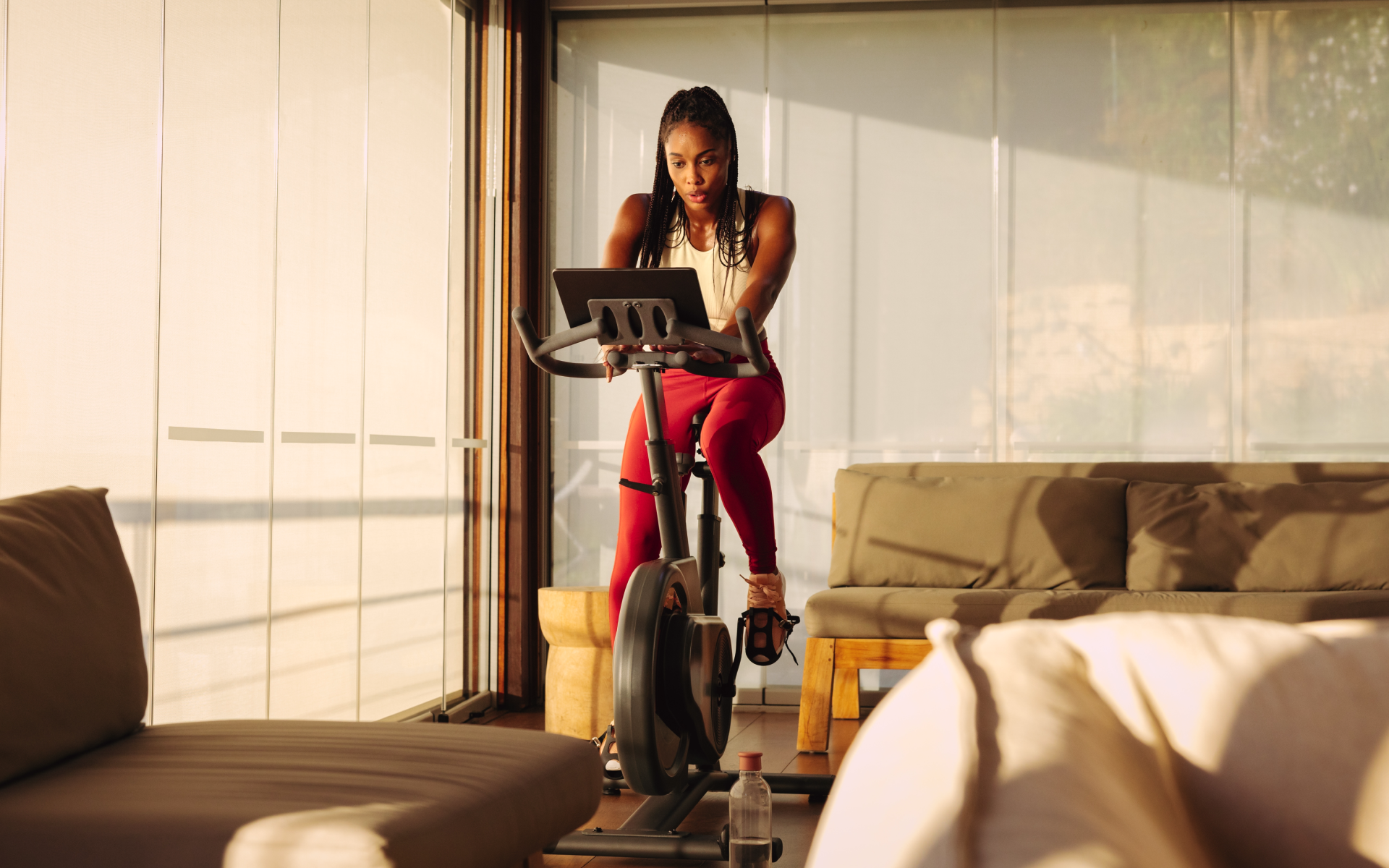
 Reviewed by