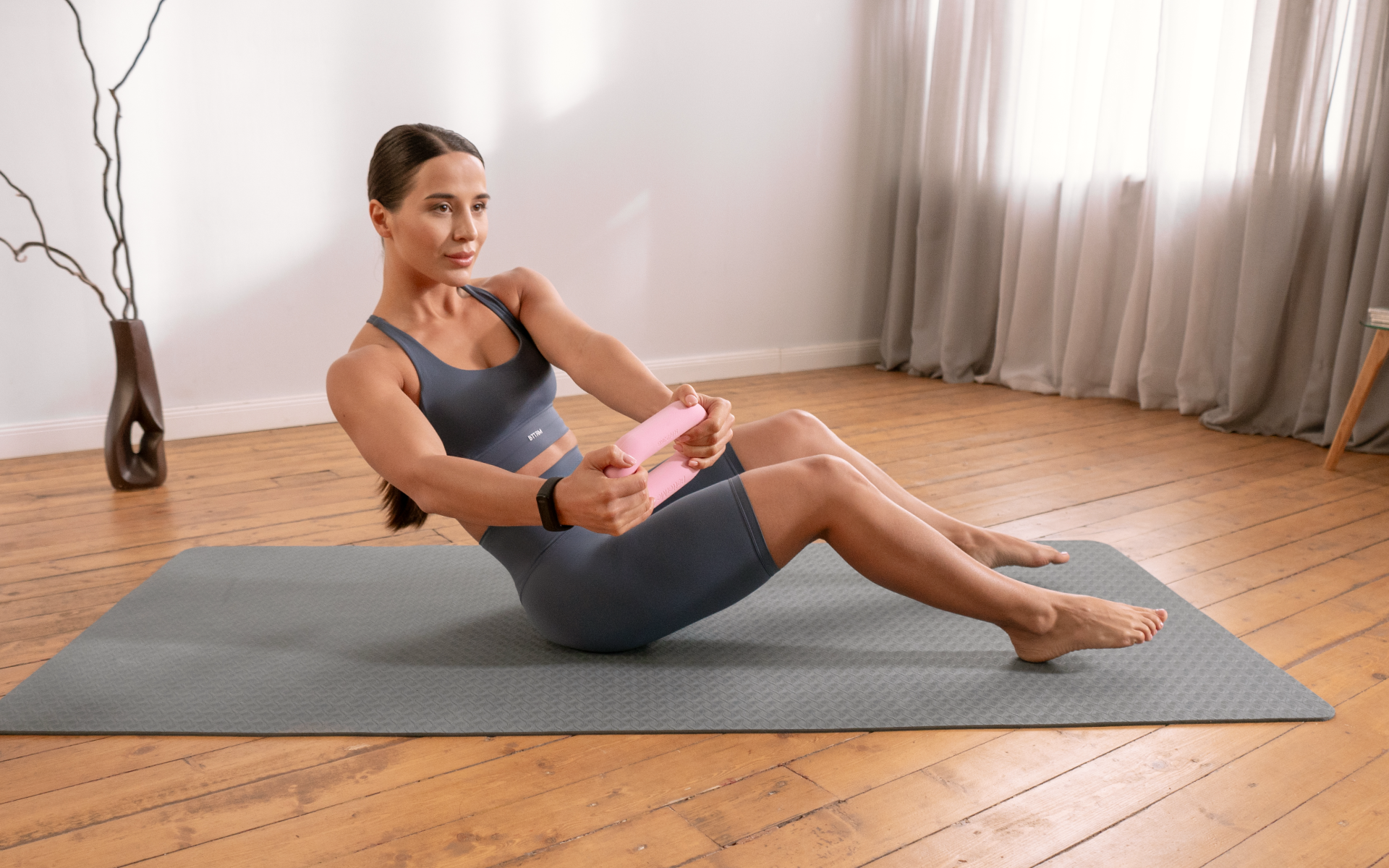
If you’ve ever tried to specifically target that stubborn pouch at the bottom of your stomach, you’ve likely realized that it’s the most challenging area to define. While many fitness enthusiasts chase the elusive “lower abs”, there’s a lot of confusion about how to actually train this region effectively.
Anatomy tells us that the rectus abdominis is one long muscle sheet, but neuromuscular research suggests that we can preferentially activate the lower fibers with specific movements. So, if you’re tired of doing hundreds of crunches with little to show for it, it’s time to pivot to a strategy that’s rooted in biomechanics.
In this guide, we’ll break down exactly how to train your lower abs, the truth about “spot reduction”, and a structured program to help you build core strength and definition.
What Are Effective Lower Ab Workouts?
Effective lower ab workouts are training sessions designed to prioritize the lower fibers of the rectus abdominis through posterior pelvic tilt and hip flexion control (1). Unlike standard crunches that curl the upper torso down, lower ab exercises typically involve bringing the pelvis toward the ribcage or controlling the weight of the legs.
To be truly effective, a workout must do three things:
- Create Mechanical Tension: You need to apply enough resistance to stimulate muscle fibers (2).
- Ensure Progressive Overload: You must gradually increase the difficulty, volume, or intensity over time (2).
- Maintain Pelvic Control: You must prevent the lower back from arching, which shifts tension from the abs to the hip flexors and lumbar spine.
A 2011 study published in the Journal of Strength and Conditioning Research highlighted that while you cannot spot-reduce fat, you can “spot-enhance” muscle activation (3). This means selecting the best lower ab workouts involves choosing movements where the lower torso initiates the movement against gravity or resistance.
How to Activate the Lower Abs
Activating the lower abs requires a strong mind-muscle connection and specific biomechanical cues. Many people struggle to feel their lower abs working as their hip flexors (the muscles at the top of the thighs) take over during leg-raising movements.
To isolate the lower abs, you must master the posterior pelvic tilt (PPT). This is the act of rotating your hips upward and flattening your lower back against the floor or a bench.
Steps to Master Activation:
- Lie on your back: Keep your knees bent and your feet flat on the floor.
- Flatten your spine: Exhale deeply and press your lower back into the ground until there’s no gap.
- Tilt the pelvis: Imagine pulling your pubic bone toward your belly button without lifting your hips off the ground.
- Hold tension: Sustain this position for 10-15 seconds while breathing shallowly.
Once you can maintain this PPT during dynamic movements, you’ll significantly increase the recruitment of the lower abdominal fibers.
BetterMe: Health Coaching app helps you achieve your body goals with ease and efficiency by helping to choose proper meal plans and effective workouts. Start using our app and you will see good results in a short time.
Are Lower Abs Harder to Get?
Yes, achieving visible definition in the lower abdominal region is generally harder than in the upper region for two primary physiological reasons: fat storage patterns and connective tissue structure.
- Fat Storage Patterns
The lower abdomen is a primary storage site for visceral and subcutaneous fat, which is influenced heavily by cortisol and insulin receptors (4). For many individuals, this is the “last place on, last place off” for body fat.
You might have visible upper abs at 12-15% body fat, but the lower abs often require dropping to 10% or lower for men, and roughly 18-20% for women, to become distinct (5).
- Tendinous Intersections
The rectus abdominis is divided by connective tissue bands. The number and depth of these bands are genetic (6). Often, the bands are less pronounced in the lower region compared to the upper region, which means there’s less structural “separation” to create that blocky look, even when the muscle is developed.
Therefore, while a lower ab workout for men and women can strengthen the muscle, it requires a dedicated approach to nutrition and overall body composition management.
Read more: 7 Standing Ab Exercises to Improve Core Strength
Can You Actually Target Your Lower Abs?
The short answer is yes, but with a nuance. The rectus abdominis is a single muscle, meaning you cannot contract the bottom half exclusively without the top half firing. However, electromyography (EMG) studies have shown that different exercises place greater emphasis on different regions (7).
This concept is known as regional hypertrophy (8).
- Upper Ab Bias: Occurs when the pelvis is fixed and the ribcage moves toward the hips (e.g. crunches).
- Lower Ab Bias: Occurs when the ribcage is fixed, and the pelvis moves toward the ribcage (e.g. hanging leg raises, reverse crunches).
So, while you cannot purely isolate the lower abs, you can bias the mechanical tension to that area. This makes selecting specific movements crucial for balanced core development. For those who are looking for the best ab workouts for women, ensuring this regional balance is the key to a functional and aesthetic core.
What Is a Fat-Burning Lower Ab Workout?
It’s important to clarify a major misconception: There’s no such thing as a workout that burns fat specifically from the lower abs.
Training the abdominal muscles doesn’t directly oxidize the fat covering them. This was confirmed by a landmark study in 2011 involving abdominal training, which found there to be no significant difference in fat loss between the control group and the group performing abdominal exercises (3)
However, a “fat-burning” workout in this context refers to a session with high metabolic demand that contributes to a total daily caloric deficit. This usually involves:
- Compound movements: Squats, deadlifts, and overhead presses that require massive core stabilization.
- High-Intensity Intervals: Short rest periods (30-60 seconds) to keep the heart rate elevated.
- Full-body engagement: Integrating ab work into a circuit rather than doing it in isolation.
To truly reveal the muscle you are building, you must prioritize nutrition to lower your overall body fat percentage. If you’re looking for a structured plan to help with this consistency, you might want to explore a 28-day abs challenge.
Which Exercise Is Best for Lower Abs?
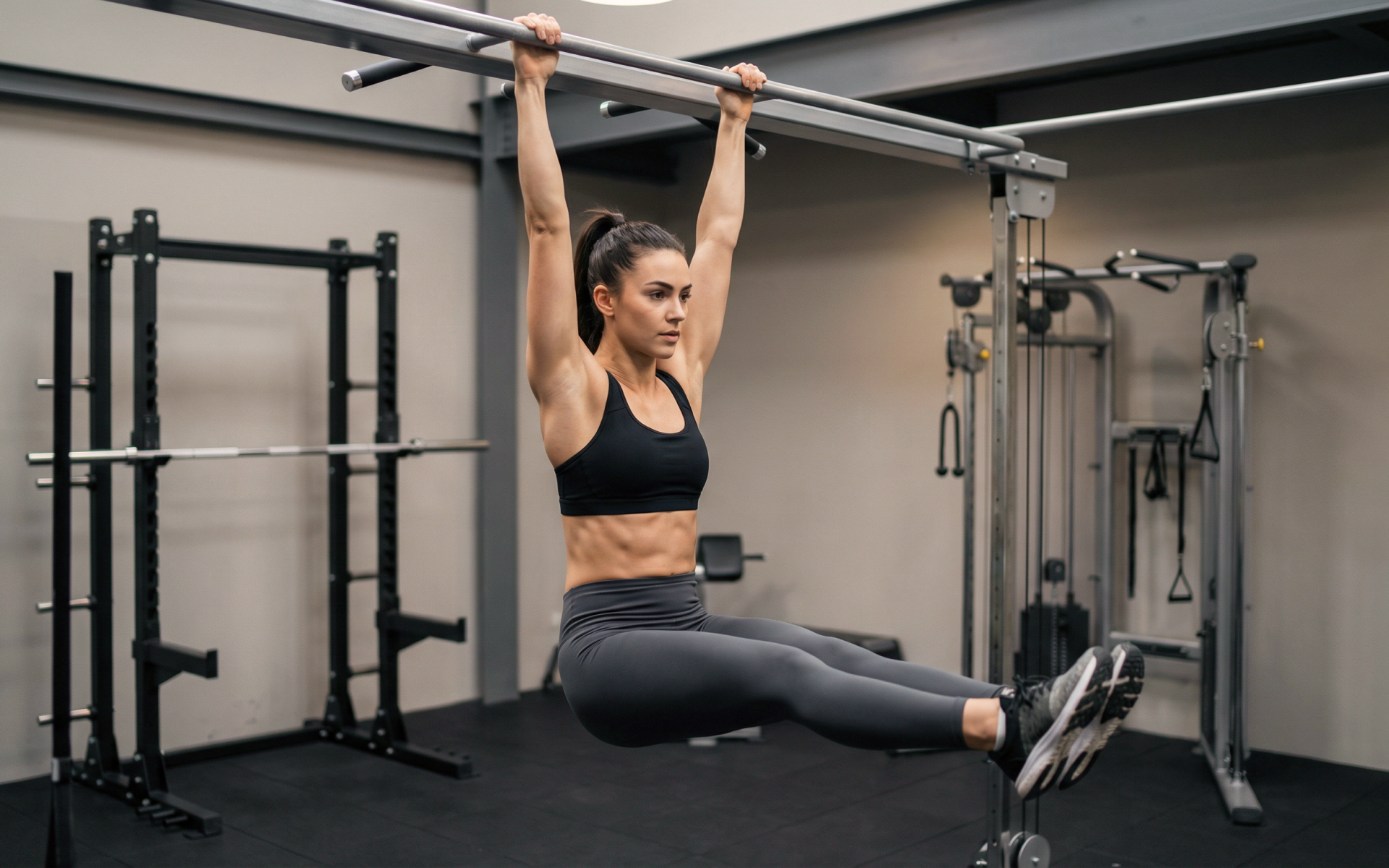
If we look at EMG data regarding muscle activation, the hanging leg raise consistently ranks as one of the most effective exercises for lower abdominal recruitment (9).
Why is it superior?
- Range of Motion: It allows the pelvis to rotate fully, maximizing the contraction of the lower fibers.
- Load: The weight of the entire lower body provides significant resistance – much more than a standard crunch.
- Stability Requirement: It forces the core to stabilize against swinging, recruiting deep stabilizers such as the transverse abdominis.
However, it’s an advanced move. For beginners or those who are doing lower ab workouts at home, the reverse crunch is the biomechanical equivalent performed on the floor. It offers high activation with more stability and less grip strength requirement.
Is It Okay to Only Train Lower Abs?
Training only one region of a muscle group is generally not recommended for long-term structural balance. While the lower abs are often the weak link and deserve prioritization, neglecting the upper abs, obliques, and lower back can lead to muscle imbalances and potential injury.
However, as the lower abs are often underdeveloped compared to the upper abs (which get worked heavily in daily life and general fitness), it’s acceptable to start your workout with lower ab movements.
This principle is called “priority training”. By hitting the weak point when your energy levels are highest, you ensure maximal neural drive and mechanical tension before fatigue sets in.
A balanced core routine should include:
- Anti-Extension (lower ab focus): Dead bug, hollow hold, RKC plank, ab wheel rollout, body saw
- Anti-Rotation (oblique focus): Pallof press, Pallof press walkout, suitcase carry, renegade row, bird dog
- Flexion (upper ab focus): Crunch, cable crunch, reverse crunch, hanging knee raise, V-up
- Extension (lower-back focus): Back extension, reverse hyper, good morning, superman hold, prone Y-T-W raises
Including a variety of movements ensures you aren’t just doing the top 5 abs exercises repeatedly, but also building a functional torso.
Read more: Cardio and Abs Workout Gym Edition: A ‘How to’ Guide
The Core Precision Program
The following program is designed to bias the lower abdominal region while maintaining overall core stability. This routine can be performed 2-3 times per week.
Program Notes:
- Tempo: 2-1-2 (2 seconds lowering, 1 second hold, 2 seconds lifting).
- Rest: 60-90 seconds between sets.
- Focus: Quality of movement over quantity of reps. If your lower back arches, stop the set.
| Exercise | Sets | Reps | Intensity (RPE) | Rest |
|---|---|---|---|---|
| 1. Hanging leg raise | 3 | 8-12 | 8/10 | 90 secs |
| 2. Reverse crunch | 3 | 12-15 | 8/10 | 60 secs |
| 3. Lying leg lower (candlestick) | 3 | 10-12 | 7/10 | 60 secs |
| 4. Mountain climbers (slow tempo) | 3 | 15/side | 7/10 | 45 secs |
| 5. Dead bug | 3 | 10/side | 6/10 | 45 secs |
Hanging Leg Raise
This is the gold standard for lower ab workouts with no equipment required other than a bar. It challenges the abs through a large range of motion against the weight of your legs (10).
Execution Steps:
- Hang from a pull-up bar with an overhand grip, your hands shoulder-width apart.
- Engage your scapula by pulling your shoulders down away from your ears.
- Exhale forcefully and lift your knees toward your chest.
- Crucial step: As your knees rise, tilt your pelvis upward so your tailbone points forward. Don’t just lift your legs – curl your hips.
- Pause at the top for 1 second.
- Slowly lower your legs back to the starting position over 2-3 seconds. Avoid swinging.
Reverse Crunch
The reverse crunch is a foundational movement for most effective lower ab exercises. It mimics the hanging leg raise, but provides more stability, which makes it ideal for all levels.
Execution Steps:
- Lie flat on your back with your arms by your sides, your palms pressing into the floor for stability.
- Lift your legs so your thighs are perpendicular to the floor and your knees are bent at 90 degrees.
- Exhale and contract your abs to curl your hips off the floor, bringing your knees toward your forehead.
- Focus on lifting your tailbone off the ground using your abs, not momentum.
- Inhale as you slowly lower your hips back to the mat, ensuring your lower back stays pressed down.
Reasons why BetterMe is a safe bet: a wide range of calorie-blasting workouts, finger-licking recipes, 24/7 support, challenges that’ll keep you on your best game, and that just scratches the surface! Start using our app and watch the magic happen.
Lying Leg Lower (Candlestick)
This is an eccentric-focused exercise, which means that it emphasizes the lowering phase where muscle damage and strengthening often occur. It’s a staple in lower ab workouts for women and men alike due to its scalability.
Execution Steps:
- Lie on your back with your legs extended straight up toward the ceiling.
- Press your lower back firmly into the floor. If this is difficult, place your hands under your glutes for support.
- Inhale and slowly lower your legs toward the ground, keeping them straight.
- Go only as low as you can while keeping your lower back glued to the floor. If your back arches, you have gone too far.
- Exhale and pull your legs back to the vertical starting position.
Mountain Climbers (Slow Tempo)
Often performed fast for cardio, slowing this movement down turns it into a powerful dynamic plank that targets the lower abs and hip flexors.
Execution Steps:
- Start in a high plank position with your hands directly under your shoulders and your body in a straight line.
- Exhale and drive your right knee toward your chest.
- Focus on pulling the knee in using your abdominal muscles, maintaining a slight posterior pelvic tilt.
- Hold the knee in for 1 second.
- Step back to the plank position and repeat with your left leg. Keep your hips level – don’t let them pike up or sag down.
Dead Bug
The dead bug is the ultimate teacher of pelvic control. It trains the core to remain stable while the extremities move, which is the primary function of the core in sports and daily life.
Execution Steps:
- Lie on your back with your arms extended toward the ceiling and your legs in a tabletop position (knees bent at 90 degrees).
- Flatten your lower back completely against the floor.
- Exhale and slowly lower your right arm behind your head and extend your left leg straight out.
- Keep your lower back pressed down – don’t let your ribs flare up.
- Inhale and return your arm and leg to the starting position. Repeat on the opposite side.
What Are Some Common Mistakes with Lower Ab Exercises?
Even with the most effective lower ab exercises, poor technique can render a workout useless or even injurious. Here are some pitfalls to avoid.
1. Utilizing Hip Momentum
This is the most common error. Swinging your legs up uses inertia rather than muscle tension.
- The Fix: Perform every rep with a distinct pause at the bottom. Eliminate the bounce.
2. Arching the Lower Back (Anterior Pelvic Tilt)
As fatigue sets in, your core often gives out, which causes your pelvis to tip forward and your lower back to arch off the floor. This shifts the load entirely to your lumbar spine and hip flexors.
- The Fix: Reduce the range of motion. Only lower your legs as far as you can while keeping your back flat.
3. Relying on Hip Flexors
The hip flexors are powerful muscles that aid in leg lifting. If you feel the burn primarily in the front of your hips rather than your stomach, your abs aren’t doing the work.
- The Fix: Focus on the pelvic tilt. If your hips don’t curl toward your ribs, your abs aren’t fully shortening.
4. Ignoring Breathing
Holding your breath increases intra-abdominal pressure, but can hinder deep contraction.
- The Fix: Exhale forcefully on the exertion (lifting phase). This exhalation naturally contracts your transverse abdominis, pulling your waist tight.
Yes, abs need rest days, just like any other muscle group. Although they are postural muscles with a higher composition of slow-twitch fibers, they still suffer micro-tears during training and require 24-48 hours to repair and grow stronger (11). Lower belly fat is primarily caused by a caloric surplus, where energy intake exceeds energy expenditure. Secondary factors include genetics, which dictate fat distribution, and hormonal influences such as cortisol and insulin, which can promote storage in the abdominal region (12). While the specific percentage has been debated, the visible appearance of abs is predominantly determined by body fat levels, which are controlled by diet. You can build strong abdominal muscles through training, but they will remain covered by subcutaneous fat without a nutritional deficit. Being “skinny” doesn’t guarantee visible abs if you lack sufficient muscle mass in the abdominal region. You likely have low body fat but underdeveloped rectus abdominis muscles, which means you need to utilize hypertrophy training (resistance and progressive overload) to build the muscle “blocks”. Doing 100 crunches a day will improve muscular endurance, but it isn’t an inefficient way to build muscle or burn fat. To develop the abs effectively, you need progressive overload (adding weight or difficulty) and lower repetition ranges (8-15), rather than incredibly high-repetition endurance work.Frequently Asked Questions
Do abs need rest days?
What causes lower belly fat?
Are abs 80% diet?
Why am I skinny but have no abs?
Will 100 crunches a day do anything?
The Bottom Line
Building a defined, strong lower midsection isn’t about performing endless reps or finding a magic exercise. It requires a strategic approach that combines mechanical tension, strict pelvic control, and a commitment to overall body composition.
By integrating these science-backed movements into your routine and focusing on the quality of every contraction, you stop training your hip flexors and start building the core you want. Stop guessing, apply these principles, and take control of your training outcomes.
DISCLAIMER:
This article is intended for general informational purposes only and does not serve to address individual circumstances. It is not a substitute for professional advice or help and should not be relied on for making any kind of decision-making. Any action taken as a direct or indirect result of the information in this article is entirely at your own risk and is your sole responsibility.
BetterMe, its content staff, and its medical advisors accept no responsibility for inaccuracies, errors, misstatements, inconsistencies, or omissions and specifically disclaim any liability, loss or risk, personal, professional or otherwise, which may be incurred as a consequence, directly or indirectly, of the use and/or application of any content.
You should always seek the advice of your physician or other qualified health provider with any questions you may have regarding a medical condition or your specific situation. Never disregard professional medical advice or delay seeking it because of BetterMe content. If you suspect or think you may have a medical emergency, call your doctor.
SOURCES:
- Core Muscle Activity during Physical Fitness Exercises: A Systematic Review (2020, pmc.ncbi.nlm.nih.gov)
- Anabolic signals and muscle hypertrophy – Significance for strength training in sports medicine (2025, sciencedirect.com)
- The Effect of Abdominal Exercise on Abdominal Fat (2011, journals.lww.com)
- Subcutaneous adipose tissue & visceral adipose tissue (2019, pmc.ncbi.nlm.nih.gov)
- Normal ranges of body weight and body fat (2016, us.humankinetics.com)
- Rectus abdominis muscle (2023, kenhub.com)
- Electromyographic analysis of core muscle activity during variations of abdominal exercises (2025, efsupit.ro)
- The role of exercise selection in regional Muscle Hypertrophy: A randomized controlled trial (2021, pubmed.ncbi.nlm.nih.gov)
- Muscle activity and spine load during anterior chain whole body linkage exercises: the body saw, hanging leg raise and walkout from a push-up (2015, pubmed.ncbi.nlm.nih.gov)
- Electromyographic Analysis of Traditional and Nontraditional Abdominal Exercises: Implications for Rehabilitation and Training (2006, academic.oup.com)
- WHY REST DAYS ARE IMPORTANT FOR MUSCLE BUILDING (2024, nasm.org)
- A Comprehensive Systematic Review of Belly Fats: Pathophysiology, Clinical Implications, and Intervention Strategies (2025, rsisinternational.org)

 Reviewed by

 Reviewed by
 Reviewed by