
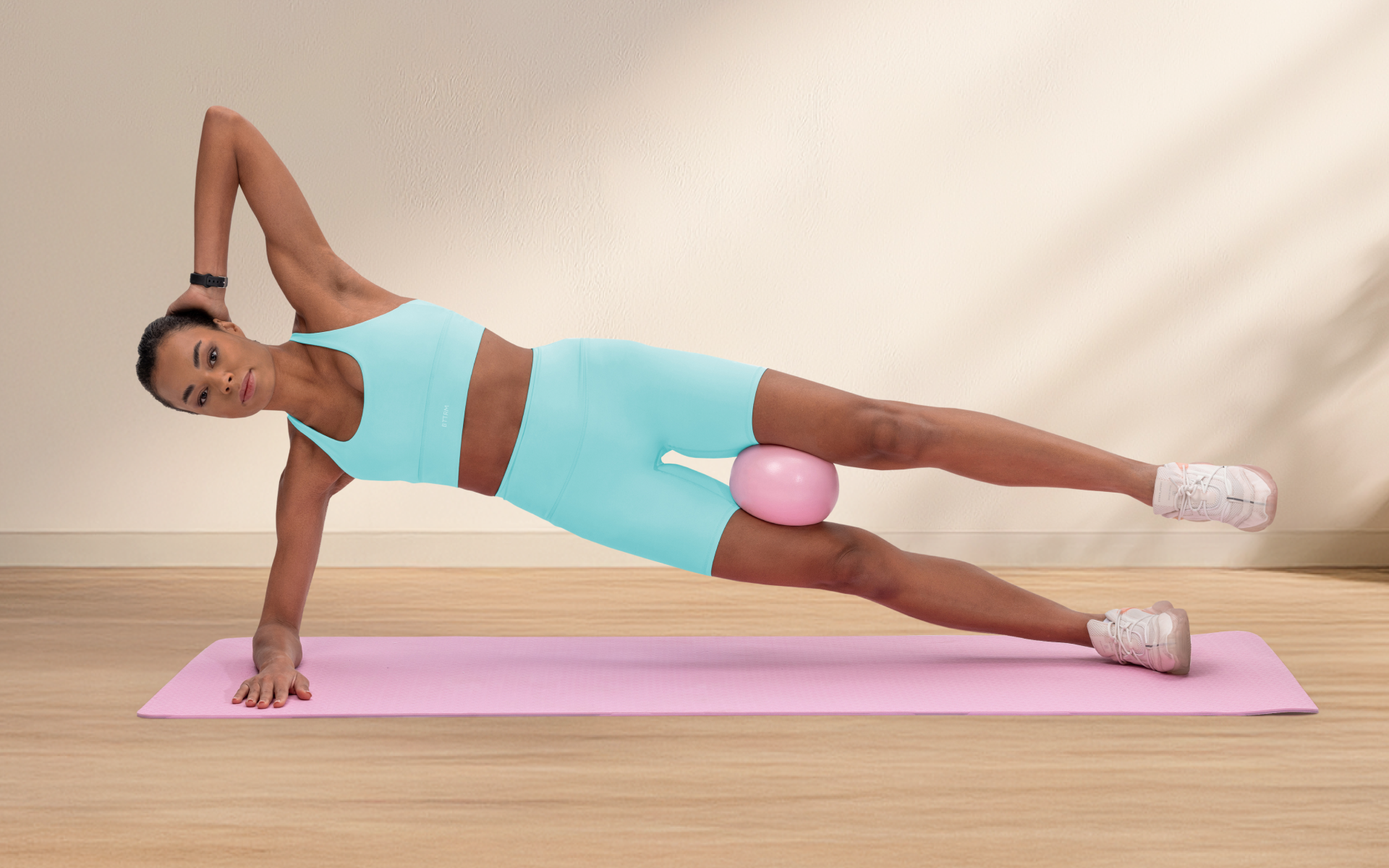
A strong core supports everything you do. It helps you stand tall, lift safely, and feel more confident in your body. However, many people feel stuck when it comes to ab workouts. Endless crunches, daily challenges, and so-called “quick fixes” often fail to deliver real results.
A full ab workout isn’t about feeling the burn and staying sore – it’s about training your core muscles, but in a balanced and realistic way that builds strength, stability, and definition over time.
Our guide explains what a full ab workout routine includes and how to train your abs safely and effectively. It also shows what actually influences visible ab development – from exercise selection to recovery, nutrition, and lifestyle habits.
Why a Full Ab Workout Matters
You can do more with your abs than create a six-pack. A full ab workout helps stabilize the spine, protect your lower back, and help transfer weight between your upper and lower body with ease(1). A weak or poorly trained ab workout only makes posture problems, back pain, and inefficient movement patterns worse.
A well-designed full ab workout:
- Improves balance and coordination
- Supports safer lifting and daily movement
- Enhances athletic performance
- Helps prevent injury
- Builds confidence and body awareness
Structured training removes the guesswork. You won’t find yourself jumping between random exercises. Instead, you’ll follow a plan that supports long-term progress. This approach allows consistency to deliver results instead of frustration.
What Is a Full Ab Workout Routine?
Your full ab workout routine should target all major abdominal muscles. It shouldn’t only work the ones you see in the mirror.
Your core includes:
- Rectus abdominis: the visible “six-pack” muscles
- Transverse abdominis: stabilizes your spine like a corset
- Internal and external obliques: responsible for rotation and side bending
- Deep stabilizing muscles: support posture and movement control
BetterMe: Health Coaching app helps you achieve your body goals with ease and efficiency by helping to choose proper meal plans and effective workouts. Start using our app and you will see good results in a short time.
A good full ab workout is a combination of different movement patterns:
- Controlled flexion
- Rotation and anti-rotation
- Stability and bracing
- Lower-ab and pelvic control
A structure like this works if you prefer a full ab workout at home, a full ab workout with no equipment, or a full ab workout at the gym.
The Foundation of an Effective Full Ab Workout
Control takes priority in a full ab workout. Intensity comes later.
Core Engagement and Breathing
Learning how to properly engage your core is when effective ab training starts. Taking deep breaths while bracing your midsection helps activate the transverse abdominis, which is necessary to support all the other ab movements.
By practicing controlled breathing with gentle bracing, you’ll see an improvement in posture, less lower-back strain, and set the stage for stronger ab contractions.
Posture and Alignment
Maintaining good posture works the abs throughout the day. When you slouch and arch too much, you work away from engaging the core muscles and instead increase strain elsewhere. Having simple posture awareness improves ab activation, even outside of working out.
Read more: A Quick Guide To Simple Pilates Posture Exercises For Better Alignment
Gradual Progression Matters
The abs respond best to progressive overload instead of constant max effort. If you jump into advanced workouts too soon (2), this can lead to overcompensation, poor form, and discomfort.
Instead, try to progress gradually by:
- Increasing time under tension
- Adding resistance or instability slowly
- Improving control before increasing reps
Remember, the goal isn’t exhaustion – it’s steady, sustainable improvement.
What to Include in a Full Ab Workout
A balanced full ab workout routine includes:
- Stability exercises (planks, dead bugs)
- Controlled flexion (reverse crunches)
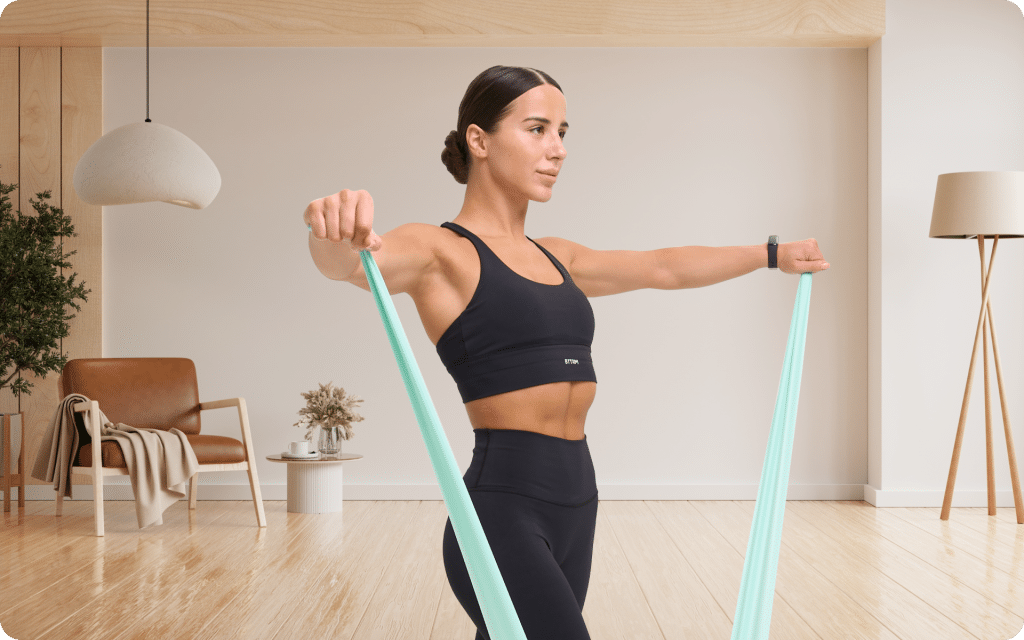
- Rotation and anti-rotation (woodchops, Pallof presses)
- Lower-ab focused movements
- Rest days for recovery
All of these work together to support strength, endurance, and muscle definition without overloading the spine.
How to Get a 6-Pack Fast
“Fast” is subjective and depends on your starting point. Ab visibility is influenced by many factors, such as:
- Body fat levels
- Genetics
- Training consistency
- Nutrition
- Sleep and stress
A targeted ab workout builds muscle, but fat loss reveals it (3). Training your abs two to three times per week, using full-body movements, and supporting recovery leads to better results than daily strenuous ab sessions (4). The best results come from consistency, not exhaustion, which is why the best 6-pack ab workout balances strength, recovery, and nutrition.
Are 3 Exercises Enough for Abs?
Yes, they can be, but you must choose wisely.
Three exercises can fully train your abs if you target different functions. An example would be:
- A stability movement
- A lower-ab or flexion exercise
- A rotational or anti-rotation exercise
This approach can work for busy schedules and fits easily into a 20-minute ab workout male or even shorter sessions for women.

What Is the Best Focused Full Ab Workout?
The best focused routine can be performed consistently with proper form.
Top 5 Abs Exercise Options
- Plank variations
- Reverse crunches
- Hanging or supported leg raises
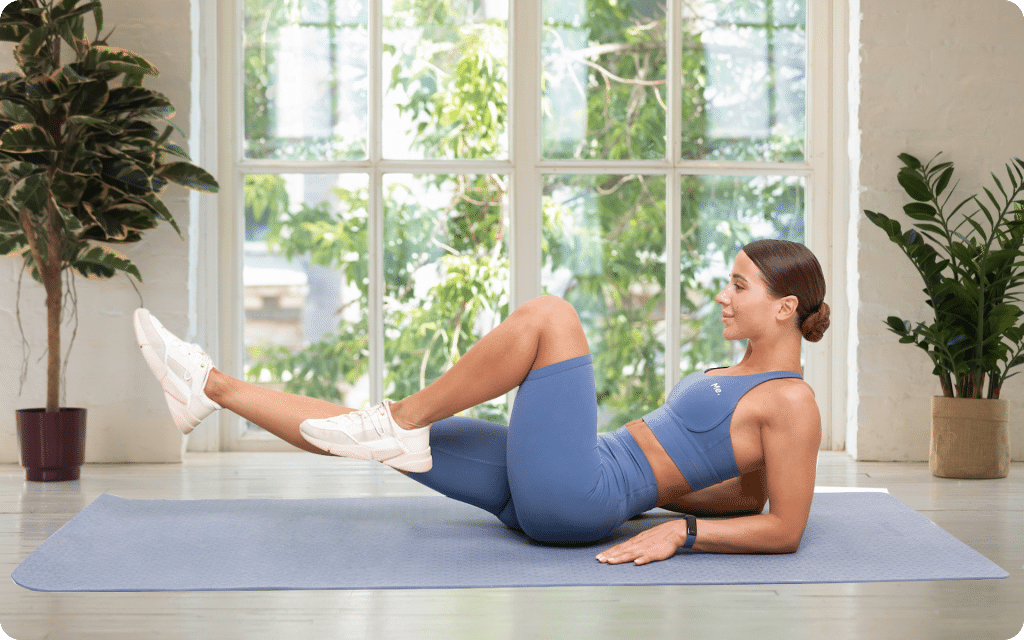
- Bicycle crunches
- Cable or resistance band rotations
For more details about the top 5 abs exercise, take a look at our prior publication.
Whether you’re a workout beast or just a beginner making your first foray into the world of fitness and dieting – BetterMe has a lot to offer to both newbies and experts! Install the app and experience the versatility first-hand!
Sample Full Ab Workout (No Equipment)
- Plank: 30-60 seconds
- Bicycle crunches: 12-15 per side
- Reverse crunches: 12-15 reps
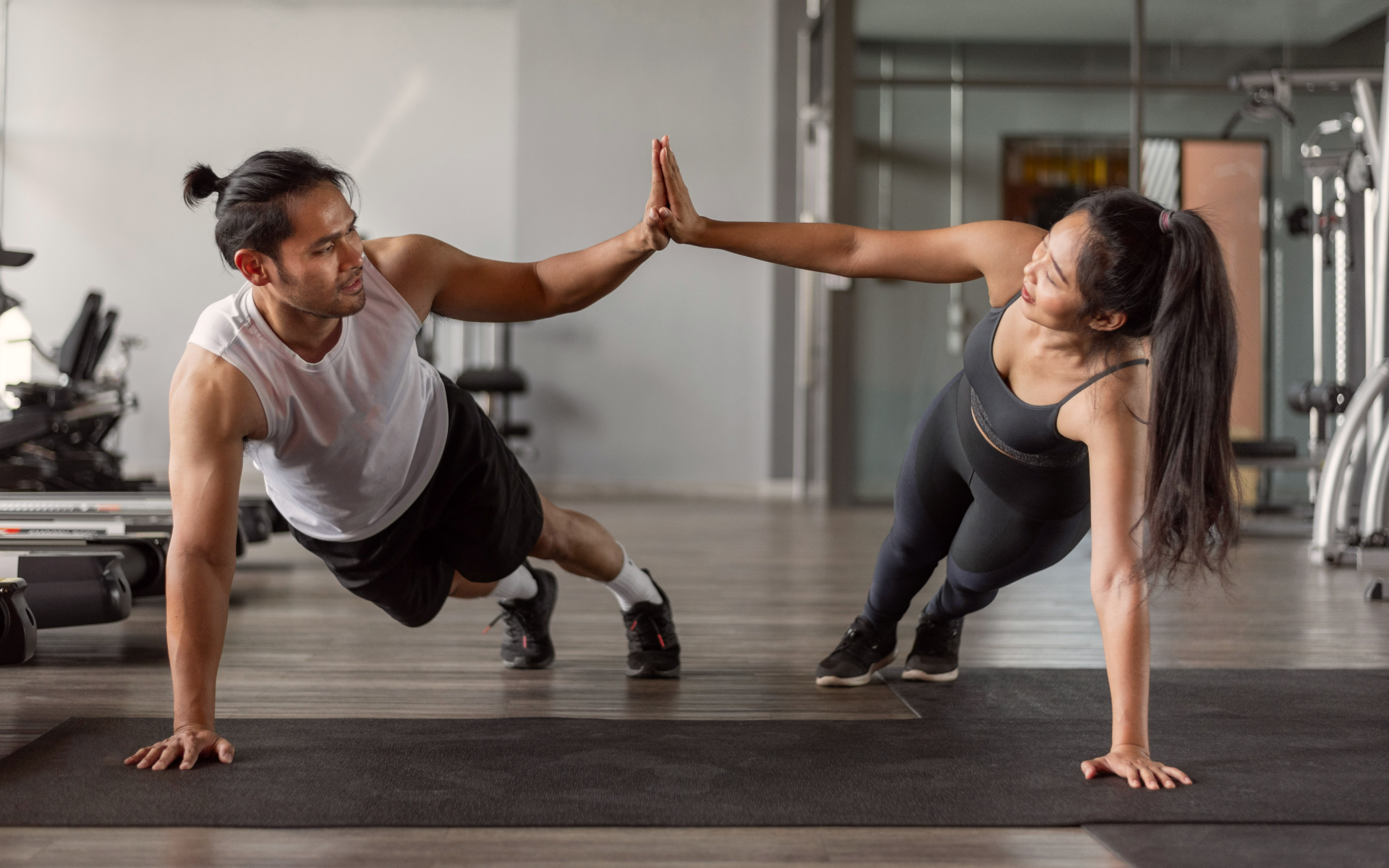
- Side plank: 20-40 seconds per side
Repeat each for 2-3 rounds. The routine suits both full ab workout female and full ab workout for men programs.
Is It Okay to Train Your Abs Every Day?
As with all muscles, ab muscles need recovery.
Daily ab work is okay as long as the intensity is low and focused on activation. Most people can benefit from training abs every other day or 2-4 times per week.
What Are Some Signs of Overtraining Your Abs?
Overtraining hinders progress and leads to discomfort.
Look out for (5):
- Persistent soreness
- Tight hips or lower-back pain
- Reduced performance
- Poor posture or core fatigue
These symptoms may signal overtraining. Reducing the volume and prioritizing rest can help prevent setbacks.
How Long Does It Realistically Take to Get Visible Abs?
Results vary by the person. But general timelines include (6):
- Early firmness: 4-8 weeks
- Noticeable definition: 8-16 weeks
- Full six-pack development: several months
A consistent workout routine is always better than one that relies on short bursts of intensity.
What Is the Best Diet for Faster Ab Development?
A well-balanced diet supports recovery and fat loss.
Focus on:
- Adequate protein
- High-fiber carbohydrates
- Healthy fats
- Steady hydration
Restricting your diet may lead to stress hormone release and can delay visible results (7).
Read more: Nutrition and Workout Plan for Strength and Balanced Wellness
Daily Lifestyle Habits That Support Ab Development
Your abs don’t switch off when your workout ends. What you do outside of the gym affects how your abs respond to training. Postures, daily movements, stress levels, and recovery habits all influence core strength and definition.
- Posture Throughout the Day
Living with poor posture reduces natural core engagement. Slouching while sitting or standing shifts work away from your abs and causes strain on the lower back. Try sitting tall with your rib cage over your pelvis. Also, try to gently brace your core to help reinforce the same muscles you train during workouts.
Do posture check-ins with yourself while working, driving, or standing in line to keep your abs active without extra effort.
- Movement Outside of Workouts
Simple movements can support circulation and recovery. Walking, stretching, or light mobility work help reduce stiffness and improve how your muscles respond. The small movements also boost blood flow to your core and support muscle repair between workouts.
Even some light activity on your rest days prevents soreness and keeps your abs engaged.
- Stress Management and Core Tension
Chronic stress can cause excessive muscle tension, particularly in the core. When stress hormones remain elevated, fat loss may slow and recovery can suffer. Gentle breathing exercises, stretching, and mindfulness breaks help relax the nervous system and improve your core function.
Reducing stress doesn’t just help you feel better and your abs look better – it also helps them work better.
- Hydration and Muscle Performance
Staying hydrated is important for ab development. Dehydration can decrease muscle endurance and increase fatigue with workouts (8). Drinking water throughout the day supports recovery, muscle contractions, and digestion. Proper hydration also lessens bloating.
Aim to sip water regularly instead of waiting until you feel thirsty.
Full Ab Workouts at Home vs. the Gym
Home and gym environments are equally effective. The best option will depend on consistency, comfort, and personal preference.
Full Ab Workout at Home
At-home workouts remove barriers such as long commutes and pricey gym memberships. Bodyweight exercises such as planks, leg raises, and controlled crunches allow enough resistance to make a difference when performed with proper form.
Home routines are quite effective for beginners and those who are focusing on control and endurance.
Full Ab Workout at the Gym
Gym-based workouts allow you to add resistance easily and gain variety. A full ab workout gym routine allows you to increase resistance using cables, machines, and stability tools. These tools also help build thicker ab muscles when used correctly.
Both options work. The most effective routine is the one you can stick with.
Sample Weekly Full Ab Workout No Equipment Plan
This full ab workout no equipment routine uses bodyweight exercises to build strength at home.
- Monday: Core stability (planks, dead bugs)
- Tuesday: Full-body workout
- Wednesday: Ab focus (reverse crunches, rotations)
- Thursday: Light cardio or mobility
- Friday: Mixed core and strength
- Saturday: Optional light ab session
- Sunday: Rest and recovery
A balanced full ab workout plan like this supports progress without burnout. If you’re curious about the best 6 pack ab workout, check out our earlier article.
Full Ab Workout for Men and Women: Is There a Difference?
Men and women have the same ab muscles, but their goals and preferences may differ.
Men have a tendency to focus on building thicker ab muscles for definition, while women often prioritize core stability and posture. Both benefit from the same foundational movements:
- Stability
- Rotation
- Controlled flexion
The volume, resistance, and rest levels are based on fitness level, not gender.
Understanding Different Types of Abs
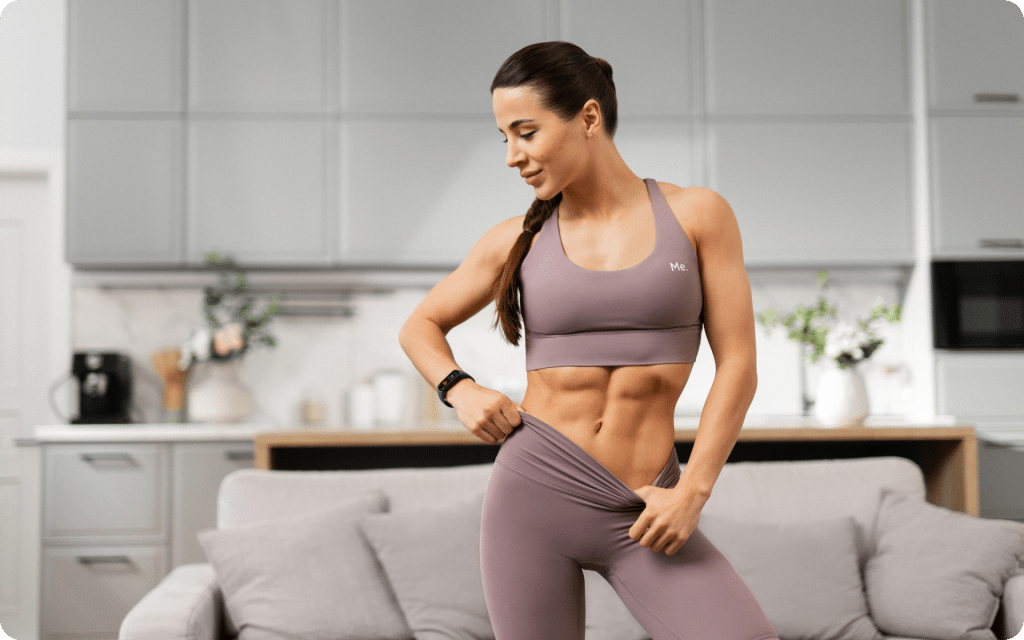
Not everyone’s abs look the same. A person’s genetic makeup can influence (9):
- Muscle shape
- Tendon spacing
- Number of visible segments
Two people with similar body fat levels can still have very different-looking abs. It’s not a good idea to compare yourself to others as this can lead to unrealistic expectations. Instead, focus on strength, function, and steady improvement. Our previous post goes into great detail about the different types of abs.
Why Consistency Beats Intensity
Short bursts of extreme training rarely produce lasting results and aren’t sustainable in the long term. Consistent, moderate-intensity ab workouts completed week after week lead to stronger muscles with better definition.
Overloading your abs or skipping rest days increases the risk of injury and slows progress. Steady effort allows your body to adapt safely and efficiently.
Building a Sustainable Ab Routine
The best ab workout is one that fits into your life without creating more stress or burnout. Flexibility is key. Some weeks, you may train more intensely, while others you may focus more on maintenance and recovery.
Progress doesn’t require perfection – it requires persistence.
Safety and When to Stop
If you experience any of the following symptoms, it’s best to stop exercising and seek medical advice immediately:
- Sharp pain
- Persistent back discomfort
- Dizziness or fatigue
- Worsening posture or strain
Listening to your body will prevent injury and setbacks.
For most people, yes. Please keep in mind that quality matters more than duration. An effective 10-30 minute workout is usually all you need to get results. Three weeks is enough time to feel stronger and less bloated, but visible abs will likely take longer. Sleep is essential. Poor sleep interferes with fat loss and muscle recovery (10). Abs aren’t hard to build, but they’re often the hardest to see. Both serve a different purpose and work different ab muscles, and both belong in a balanced ab workout routine. Frequently Asked Questions
Is 1 hour of abs too much?
Can I get abs in 3 weeks?
How important is sleep for abs?
Are abs the hardest muscle to build?
Are planks better than crunches?
The Bottom Line
A full ab workout isn’t about perfection or punishment. Focus on building up strength gradually, supporting recovery, and remaining consistent.
When you train smart, get good nutrition, and allow time for progress, results will follow. It’s not just in how your abs look, but in how strong and capable you feel every day.
DISCLAIMER:
This article is intended for general informational purposes only and does not serve to address individual circumstances. It is not a substitute for professional advice or help and should not be relied on for making any kind of decision-making. Any action taken as a direct or indirect result of the information in this article is entirely at your own risk and is your sole responsibility.
BetterMe, its content staff, and its medical advisors accept no responsibility for inaccuracies, errors, misstatements, inconsistencies, or omissions and specifically disclaim any liability, loss or risk, personal, professional or otherwise, which may be incurred as a consequence, directly or indirectly, of the use and/or application of any content.
You should always seek the advice of your physician or other qualified health provider with any questions you may have regarding a medical condition or your specific situation. Never disregard professional medical advice or delay seeking it because of BetterMe content. If you suspect or think you may have a medical emergency, call your doctor.
SOURCES:
- Your Core is the Key to Feeling and Moving Better (2026, unchealthcare.org)
- Exercise Progression and Regressions in Sports Training and Rehabilitation (2024, sciencedirect.com)
- Abdominal Aerobic Endurance Exercise Reveals Spot Reduction Exists: A Randomized Controlled Trial (2023, pmc.ncbi.nlm.nih.gov)
- Effects of 8-Week Core Training on Core Endurance and Running Economy (2019, pmc.ncbi.nlm.nih.gov)
- Overtraining Syndrome (2024, my.clevelandclinic.org)
- Visible Abs Timeline: Diet, Training, and Progress Guide (2025, bodyspec.com)
- Chronic Stress Puts Your Health At Risk (2023, mayoclinic.org)
- Acute Dehydration Impairs Endurance Without Modulating Neuromuscular Function (2018, pmc.ncbi.nlm.nih.gov)
- Genetics of Muscle Stiffness, Muscle Elasticity, and Explosive Strength (2020, pmc.ncbi.nlm.nih.gov)
- Sleep Deprivation: Effects on Weight Loss and Weight Loss Maintenance (2022, pmc.ncbi.nlm.nih.gov)

 Reviewed by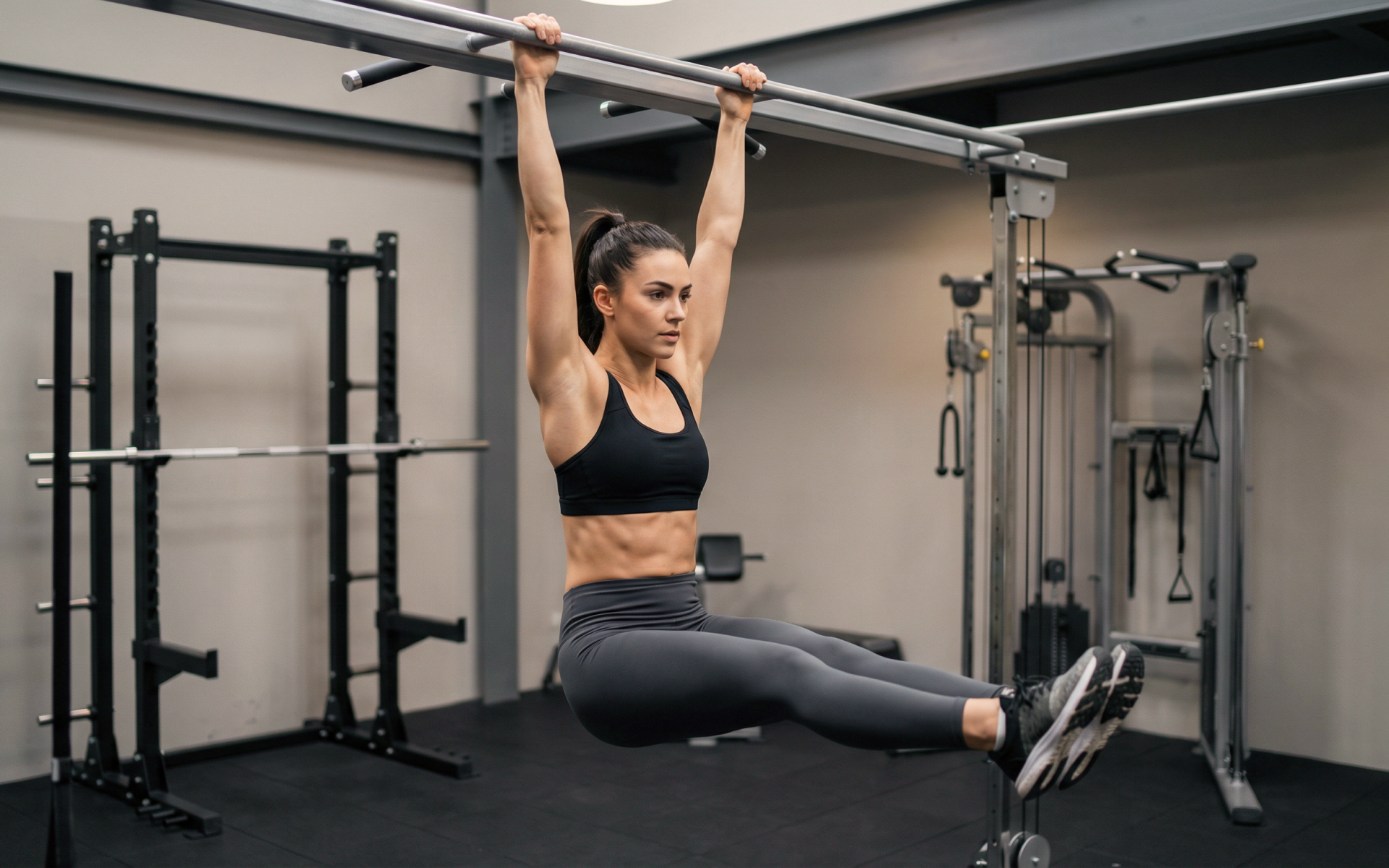
 Reviewed by
 Reviewed by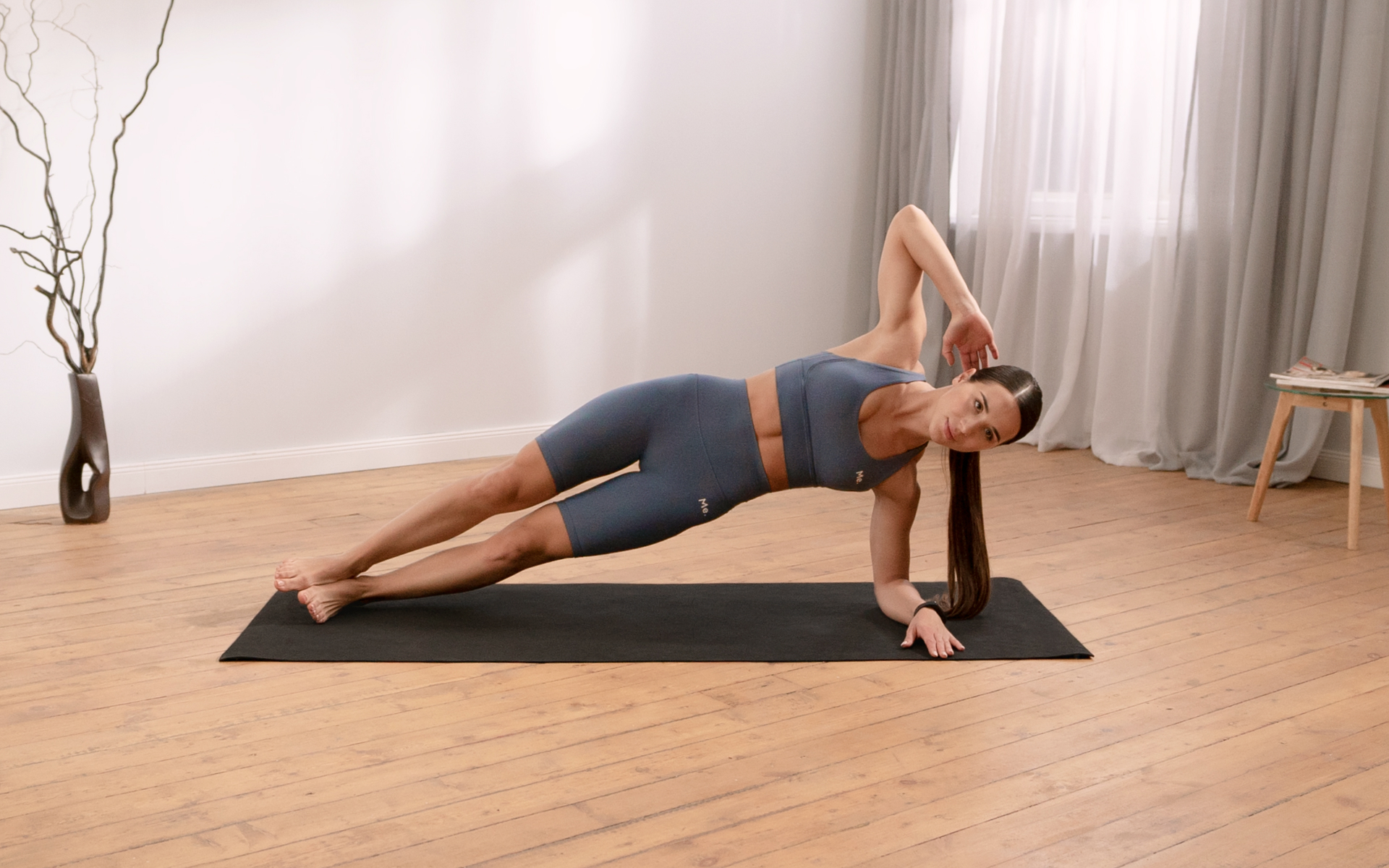
 Reviewed by