Embarking on a calisthenics journey promises incredible rewards: functional strength, impressive skills, and a lean, athletic physique. But what kind of progress can you realistically expect in the first three months?
While social media is full of dramatic before-and-after photos, true progress is a blend of science, consistency, and individual biology. This guide will walk you through the realities of a three-month calisthenics transformation, grounded in exercise physiology, to help you set achievable goals and lay a solid foundation for long-term success.
You’ll learn what changes to expect, how to structure your training for optimal results, and how factors like genetics and lifestyle influence your journey. We’ll also provide a practical workout plan to get you started on the right foot.
Is a 3-Month Calisthenics Body Transformation Possible?
Yes, a significant body transformation is absolutely possible in three months with calisthenics, but it’s crucial to define what “transformation” means. You can achieve noticeable improvements in strength, muscle definition, and body composition. However, progress is highly individual and will depend on your starting point, training consistency, nutrition, sleep, and genetics.
The most dramatic changes in the first 12 weeks are often neurological. Your brain becomes much more efficient at activating the muscles you already have. This leads to rapid strength gains as your coordination and movement patterns improve (1). While visible muscle growth starts happening, it follows a slightly slower timeline than these initial strength improvements.
For more details about a female calisthenics body, take a look at our prior publication.
When you’re considering your calisthenics 3-month transformation, keep these principles in mind:
- Specificity rules: You get better at what you practice. Skill-heavy moves (muscle-ups, handstands) progress differently from strength-endurance (push-up volume).
- Dose-response: Volume, intensity, and frequency drive adaptation, but recovery caps returns. Most people progress best with 2-4 sessions/week per muscle group (2).
- Recovery capacity varies: Sleep, hydration, energy availability, and nutrition affect how fast you adapt and how much volume you can tolerate (3).
- Early gains are neural: The first 4-8 weeks are mostly nervous system improvements – better motor unit recruitment, coordination, intermuscular efficiency (4, 5) – not big muscle growth yet.
- Hypertrophy is slower: Visible changes in muscle size accelerate after 8-12 weeks if your protein and total calories are adequate (6).
Read more: Calisthenics Workout Routine: A Science-Backed Program
What Does a Realistic Calisthenics 3-Month Transformation Look Like?
A realistic transformation after three months of consistent training is less about looking like a completely different person and more about building a powerful foundation. Here’s what you can genuinely expect.
Strength and Skill Improvements:
- Neural Adaptations: This is where you’ll see the biggest wins. Movements that felt awkward or impossible will become smoother and stronger. Your body learns to recruit more muscle fibers for each exercise.
- Push-Up Progression: A beginner who can manage 5-10 strict push-ups may progress to performing 15-25 clean reps.
- Pulling Strength: Many trainees will achieve their first unassisted pull-up or chin-up. If you start with a few reps, you could be aiming for a set of 5-8.
- Core Control: You will feel a significant improvement in your ability to hold a hollow body position and maintain a stable core during exercises such as planks and hanging knee raises.
Muscle and Body Composition Changes:
- Muscle Growth (Hypertrophy): Visible muscle growth starts to accelerate after the 8-week mark. With adequate protein intake (1.4-2.2 grams per kilogram of body weight) and sufficient calories, you can build lean muscle mass (7). You’ll likely notice more definition in your shoulders, back, and triceps.
- Fat Loss: If you combine your training with a slight calorie deficit, losing 1-2 pounds of body weight a week is a realistic goal (8). This will further enhance muscle definition.
BetterMe: Health Coaching app helps you achieve your body goals with ease and efficiency by helping to choose proper meal plans and effective workouts. Start using our app and you will see good results in a short time.
If you’re curious about a calisthenics body type, check out our earlier article.
How Long Does It Take to Start Seeing Results from Calisthenics?
You’ll feel results much faster than you’ll see them.
In the first 4-8 weeks, the primary driver of progress is neural adaptation (5). You’ll become stronger and more coordinated each week. You may not see major changes in the mirror yet, but you’ll be lifting your body with greater ease. This is the most crucial phase for building good habits and mastering form.
After 8-12 weeks, meaningful hypertrophy (muscle growth) and connective tissue remodeling kick in. The strength foundation you built allows you to create enough mechanical tension to stimulate visible muscle gains. Changes in your physique become more apparent from this point forward.
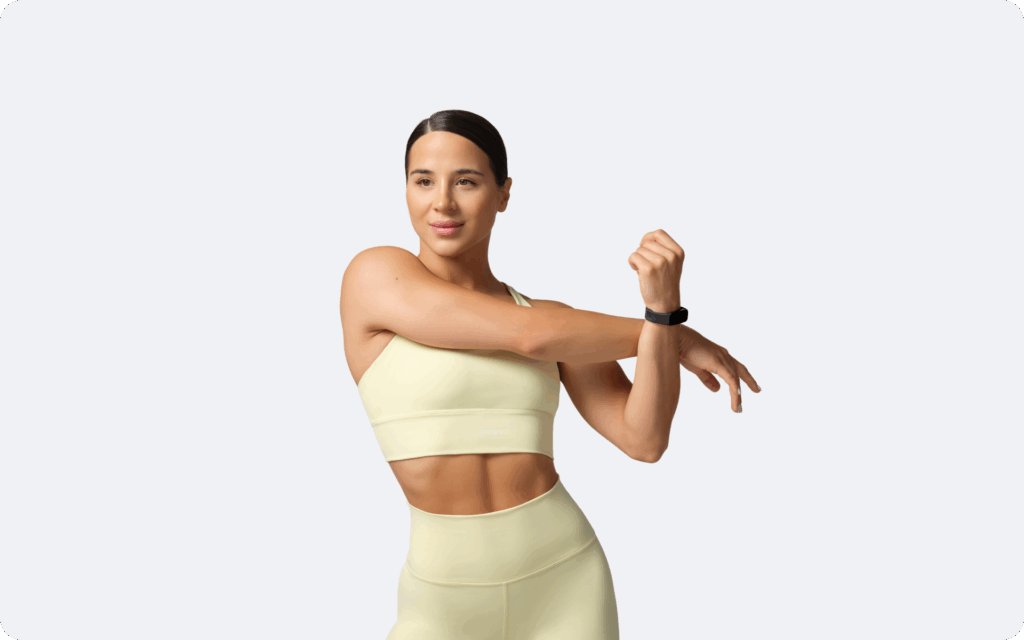
It should be noted that progress isn’t the same for everyone. Individual differences can shape progress:
- Genetics
Fiber type distribution, tendon insertion angles, limb lengths, and androgen receptor sensitivity affect strength and hypertrophy rates. Longer arms/forearms can make levers and planche harder, while shorter humeri often press better.
- Sex
Similar relative strength gains (9); men may have more muscle due to higher testosterone (10). Women frequently excel in strength-endurance and skill consistency, while pull-up progress may require more focused frequency/volume initially.
- Age
Neural gains are robust at any age (11). Connective tissue adaptation remains possible>35, though stiffness increases in old age (12). Prioritize gradual progressions, longer warm-ups, and pain-free ranges.
- Training Age/History
Athletes with prior strength training adapt faster, while true novices need more motor learning and tissue conditioning time (13).
- Recovery Factors
Sleep (7-9h), stress management, protein, and energy availability strongly predict outcomes. Under-eating stalls performance and connective tissue health (14, 15, 16).
What Are Realistic Goals for a Calisthenics 3-Month Transformation?
Setting specific, measurable goals is the key to staying motivated. Here are some realistic benchmarks to aim for in your first three months.
- For Beginners:
- Push-ups: Achieve 15-25 consecutive strict push-ups.
- Pull-ups: Progress from band-assisted or negative pull-ups to achieving 1-3 unassisted pull-ups.
- Dips: Perform 3-8 full-range-of-motion dips on parallel bars (possibly assisted).
- Core: Hold a 30-60 second plank and a 20-30 second hollow body hold with good form.
- For Intermediates (already have a strength base):
- Push-ups: Progress from 20 reps to 35-40, or start working on harder variations such as diamond or archer push-ups.
- Pull-ups: Increase from 3-5 reps to 6-10 strict reps.
- Dips: Achieve 8-12 strict bar dips and start practicing ring dips.
- Skills: Hold a 5-10 second tuck front lever or achieve stable 2-5 second freestanding handstand attempts if practiced consistently.
BetterMe will shake off your mental funk, rid you of your energy-zapping habits, and help you sculpt the body of your dreams. Intrigued? Hurry up and change your life for the better!
Is Calisthenics 3 Times a Week Enough for a Transformation?
Yes, three well-structured sessions per week are highly effective for driving a transformation, particularly for beginners and intermediates. The key is quality over quantity. An intense, focused workout provides the necessary stimulus for muscle growth, and the rest days give your body crucial time to recover and adapt.
Research has shown that training a muscle group twice per week is often optimal for growth (17). A 3-day full-body routine naturally accomplishes this. As you become more advanced, you may benefit from increasing your frequency, but three days is an excellent and sustainable starting point.
Our previous post goes into great detail about the 1-year calisthenics transformation.
Is It Better to Do Full-Body Workouts or Split Calisthenics?
For the first 3-6 months, full-body workouts are generally superior.
Training your entire body three times a week maximizes the frequency at which you stimulate each muscle group. This is ideal for motor learning and developing a strong neurological foundation, leading to faster strength gains in the beginning. It’s also highly efficient and ensures that you don’t neglect any part of your body (18).
Splits become more useful when you are more advanced. Once you can handle a higher volume of work for each muscle group, splitting your workouts allows you to dedicate more sets and intensity to specific areas without your sessions becoming excessively long or fatiguing (18).
Start with a full-body plan. Once you plateau or feel you need more volume to keep progressing, consider moving to a split.
That said, with proper guidance and planning, full-body workouts can be just as effective as splits for building muscle and strength. It ultimately comes down to personal preference and finding what works best for your body and goals.
Read more: Home Calisthenics Workout Plan: A Clear, Beginner-Focused Guide with Pro Tips
What Is a Solid Calisthenics 3-Month Transformation Workout Plan?
This plan focuses on a 3-day full-body routine, prioritizing compound movements. Rest at least one day between workouts (e.g. Mon/Wed/Fri).
Guiding Principles:
- Sets and Reps: Aim for 3-4 sets per exercise.
- Intensity (RIR): Train with 1-3 reps in reserve (RIR). This means you finish each set feeling like you could have done 1-3 more perfect reps. This ensures you’re training hard enough without going to failure on every set, which helps with recovery.
- Progressive Overload: Each week, try to add one more rep to your sets or move to a slightly harder exercise variation.
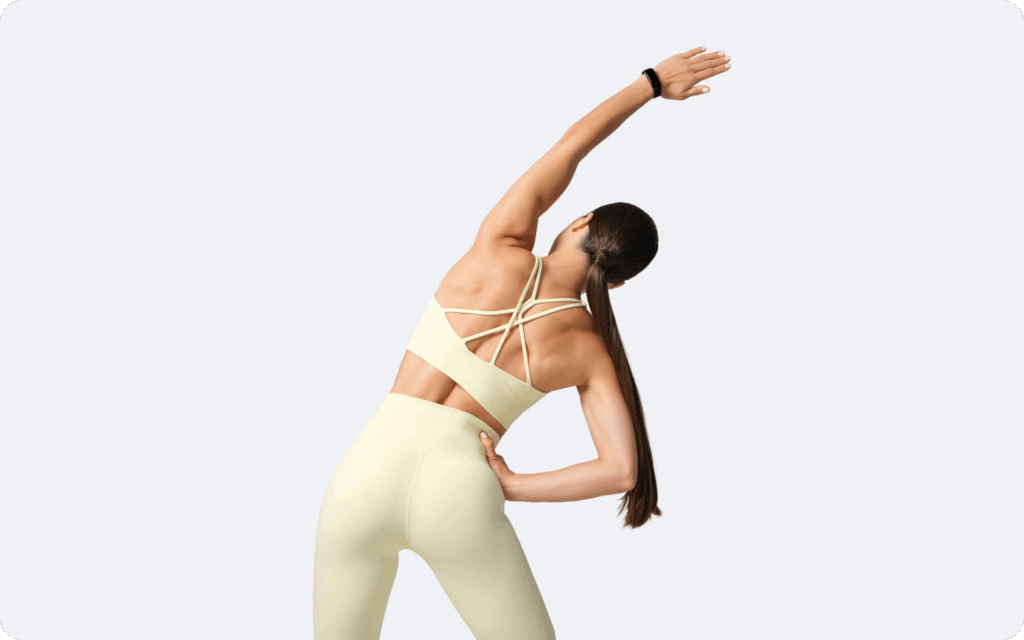
- Warm-up: Always start with 5-10 minutes of light cardio and dynamic stretches (e.g. arm circles, leg swings, cat-cow).
The 3-Day Full-Body Workout Plan:
- Workout A:
- Pulling: pull-ups or negative pull-ups (3 sets of 3-8 reps)
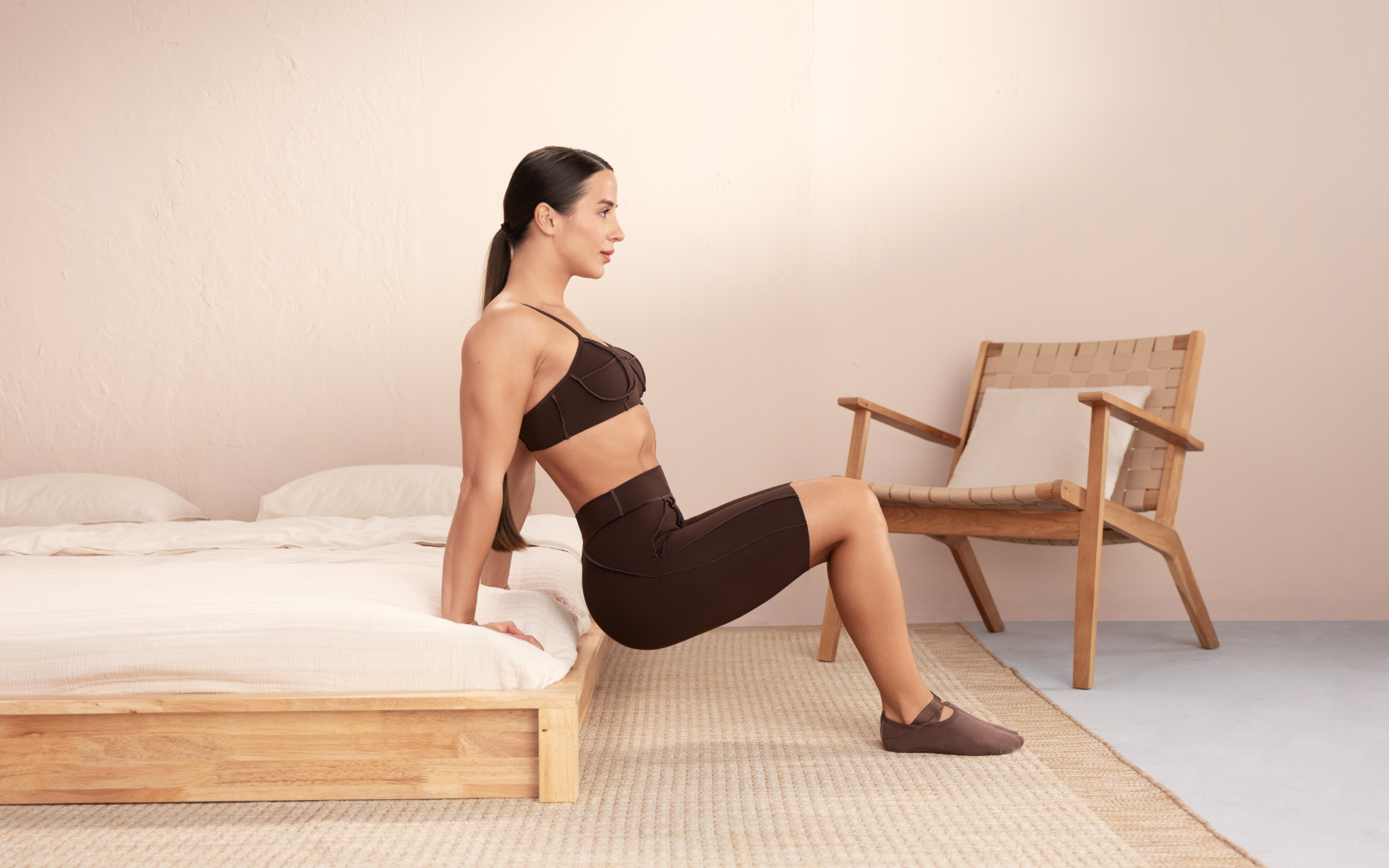
- Pushing: dips or bench dips (3 sets of 5-10 reps)
- Horizontal Pulling: inverted rows (3 sets of 8-15 reps)
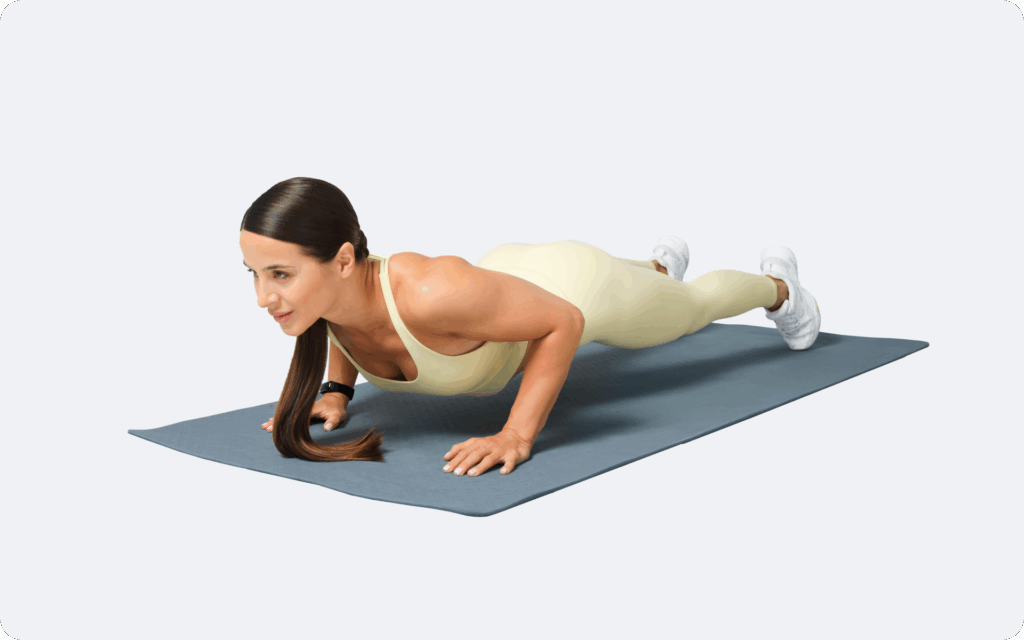
- Horizontal Pushing: push-ups or incline push-ups (3 sets of 8-20 reps)
- Legs: bodyweight squats or pistol squat regressions (3 sets of 10-20 reps)
- Core: hanging knee raises or lying leg raises (3 sets of 10-15 reps)
- Workout B:
- Pulling: chin-ups (palms facing you) or band-assisted chin-ups (3 sets of 3-8 reps)
- Pushing: pike push-ups or feet-elevated push-ups (3 sets of 5-12 reps)
- Horizontal Pulling: inverted rows with varied grip (3 sets of 8-15 reps)
- Horizontal Pushing: diamond push-ups or regular push-ups (3 sets of 8-15 reps)
- Legs: lunges or Nordic hamstring curl regressions (3 sets of 10-15 reps per leg)
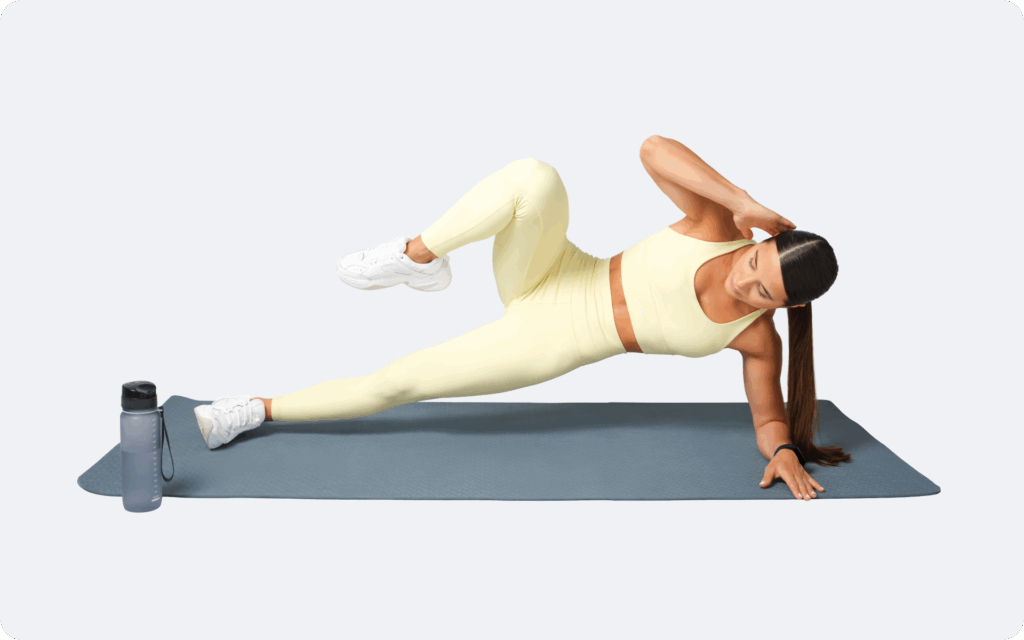
- Core: planks (3 sets, hold for 30-60 seconds)
Alternate between Workout A and Workout B. For example:
- Week 1: A, B, A
- Week 2: B, A, B
Recovery: Remember to deload every 4-6 weeks by reducing your workout volume by about 25-50% for one week. This allows your joints and nervous system to fully recover and prevents burnout (19).
Does Calisthenics Build Muscle Faster Than Weightlifting?
Neither calisthenics nor weightlifting is inherently “faster” for building muscle. Muscle hypertrophy is primarily driven by creating sufficient mechanical tension and training close to muscular failure (20), regardless of the tool you use.
- Weightlifting: Progression is straightforward – you just add more weight to the bar. This makes it very easy to apply progressive overload (21).
- Calisthenics: Progression requires manipulating leverage (22). To make a push-up harder, you elevate your feet, move to archer push-ups, or work toward a one-arm push-up. This requires more skill but builds incredible relative strength and control.
For beginners, both methods produce similar rates of muscle growth. The best modality is the one you enjoy and can perform consistently and with proper intensity. Many advanced athletes combine both for a well-rounded physique.
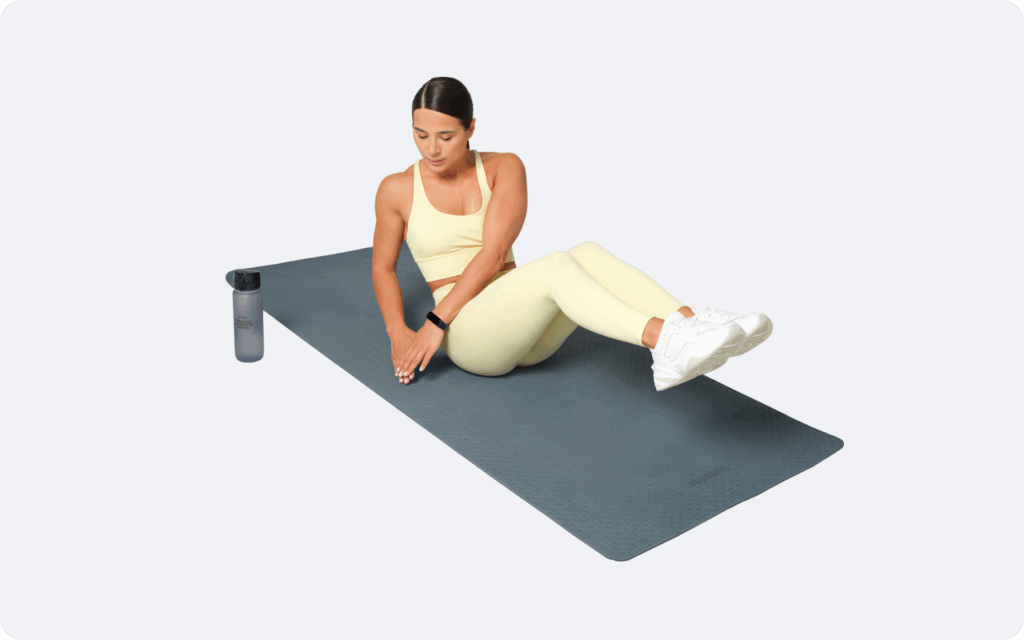
Training calisthenics every day can be counterproductive for muscle growth and increases the risk of overuse injuries, especially in the elbows and shoulders (23). Muscles grow during recovery, not during the workout (24). Without rest days, you deny your body the chance to repair and rebuild stronger. However, you can practice low-intensity skills such as handstand balancing or mobility drills daily, as they are less taxing on your system. For a new trainee focusing on good nutrition (especially protein) and consistent training, gaining 0.25-0.75 kg of lean muscle per month is a realistic rate. Progress slows as you become more advanced. Genetics, age, and lifestyle factors play a significant role in this rate (25). Visible changes typically become noticeable after about two to three months of dedicated effort. Absolutely. “Getting ripped” means achieving low body fat levels to reveal muscle definition. Calisthenics is excellent for building the muscle mass required. The other half of the equation is nutrition. By combining a consistent calisthenics routine with a diet that creates a slight calorie deficit, you can effectively lower your body fat and achieve a ripped, athletic physique. Yes, three months is a fantastic amount of time to get in significantly better shape. In this period, you can build a solid strength foundation, improve your cardiovascular endurance, gain some muscle, and lose fat. You will feel stronger, have more energy, and notice positive changes in your body. It’s the perfect timeframe to build sustainable habits that will set you up for a lifetime of fitness.Frequently Asked Questions
What happens if you train calisthenics every day?
How fast can you build muscle with calisthenics?
Can you get ripped just doing calisthenics?
Is 3 months enough to get in shape?
The Bottom Line
Getting in shape is a process that takes time, dedication, and hard work. Three months may seem like a short amount of time, but with the right mindset and approach, it can be enough to make significant progress toward your fitness goals.
Remember to focus on creating sustainable habits, rather than chasing quick fixes or drastic results. Stay consistent with your workouts and nutrition, listen to your body, and don’t be afraid to seek guidance from professionals if needed.
With determination and patience, you can achieve your desired level of fitness within three months and maintain it for many years to come.
DISCLAIMER:
This article is intended for general informational purposes only and does not serve to address individual circumstances. It is not a substitute for professional advice or help and should not be relied on for making any kind of decision-making. Any action taken as a direct or indirect result of the information in this article is entirely at your own risk and is your sole responsibility.
BetterMe, its content staff, and its medical advisors accept no responsibility for inaccuracies, errors, misstatements, inconsistencies, or omissions and specifically disclaim any liability, loss or risk, personal, professional or otherwise, which may be incurred as a consequence, directly or indirectly, of the use and/or application of any content.
You should always seek the advice of your physician or other qualified health provider with any questions you may have regarding a medical condition or your specific situation. Never disregard professional medical advice or delay seeking it because of BetterMe content. If you suspect or think you may have a medical emergency, call your doctor.
SOURCES:
- Strength gains after 12 weeks of resistance training correlate with neurochemical markers of brain health in older adults: a randomized control 1H-MRS study (2023, pmc.ncbi.nlm.nih.gov)
- No Time to Lift? Designing Time-Efficient Training Programs for Strength and Hypertrophy: A Narrative Review (2021, link.springer.com)
- Recovery after exercise: what is the current state of play? (2019, web.archive.org)
- The increase in muscle force after 4 weeks of strength training is mediated by adaptations in motor unit recruitment and rate coding (2019, physoc.onlinelibrary.wiley.com)
- Specificity of early motor unit adaptations with resistive exercise training (2024, physoc.onlinelibrary.wiley.com)
- Loading Recommendations for Muscle Strength, Hypertrophy, and Local Endurance: A Re-Examination of the Repetition Continuum (2021, pmc.ncbi.nlm.nih.gov)
- International Society of Sports Nutrition Position Stand: protein and exercise (2017, jissn.biomedcentral.com)
- Steps for Losing Weight | Healthy Weight and Growth (2025, cdc.gov)
- Comparison of upper body strength gains between men and women after 10 weeks of resistance training (2010, pmc.ncbi.nlm.nih.gov)
- Testosterone levels positively linked to muscle mass but not strength in adult males aged 20–59 years: a cross-sectional study (2025, frontiersin.org)
- Neural adaptations to resistive exercise: mechanisms and recommendations for training practices (2006, pubmed.ncbi.nlm.nih.gov)
- Functional Adaptation of Connective Tissue by Training (2019, germanjournalsportsmedicine.com)
- Long-Term Strength Adaptation: A 15-Year Analysis of Powerlifting Athletes (2021, journals.lww.com)
- Effect of changes in sleeping behavior on skeletal muscle and fat mass: a retrospective cohort study (2023, bmcpublichealth.biomedcentral.com)
- Acute daily psychological stress causes increased atrophic gene expression and myostatin-dependent muscle atrophy (2015, journals.physiology.org)
- Systematic review and meta‐analysis of protein intake to support muscle mass and function in healthy adults (2022, pmc.ncbi.nlm.nih.gov)
- Effects of Resistance Training Frequency on Measures of Muscle Hypertrophy: A Systematic Review and Meta-Analysis (2016, pubmed.ncbi.nlm.nih.gov)
- Progression Models in Resistance Training for Healthy Adults (2019, journals.lww.com)
- “You can’t shoot another bullet until you’ve reloaded the gun”: Coaches’ perceptions, practices and experiences of deloading in strength and physique sports (2022, frontiersin.org)
- Similar muscle hypertrophy following eight weeks of resistance training to momentary muscular failure or with repetitions-in-reserve in resistance-trained individuals (2024, tandfonline.com)
- Progressive Overload Explained: Grow Muscle & Strength Today (n.d., blog.nasm.org)
- Bodyweight Training: A Return To Basics (2010, journals.lww.com)
- Calisthenics: Epidemiology of Injury Patterns and Their Risk Factors (2023, pmc.ncbi.nlm.nih.gov)
- Why Rest Days Are Important for Muscle Building (n.d., blog.nasm.org)
- How Muscle Grows (2017, acefitness.org)

 Reviewed by