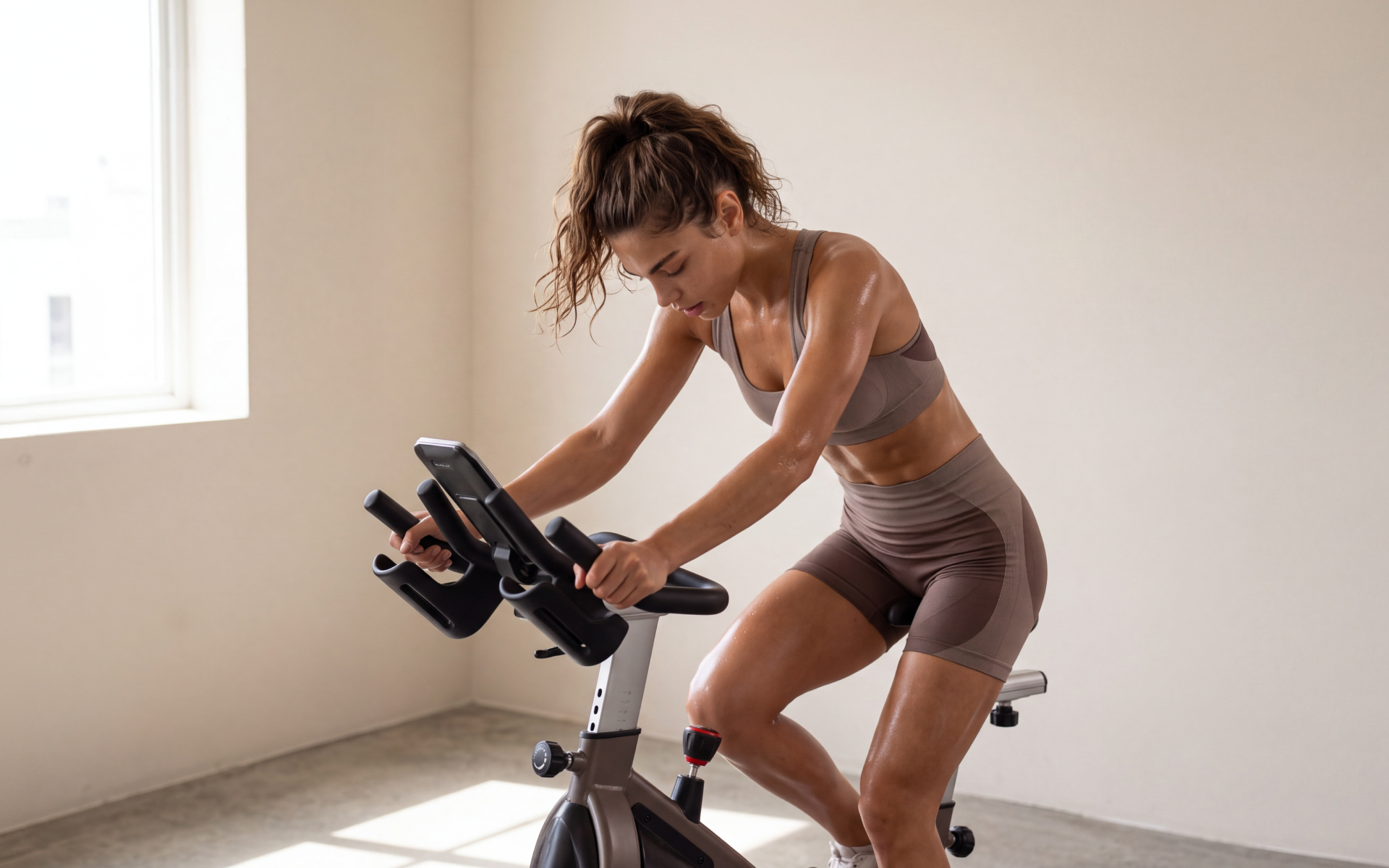
A 30 minute cycling workout can use a five-minute warm-up, 20 minutes of steady riding or intervals, and a five-minute cooldown. On a stationary bike, choose resistance and pedal speed you can control. Beginners can shorten the session. Count only the appropriate-effort minutes toward weekly moderate activity.
Our indoor cycling workout plan describes ways to organize rides across the week.
Key takeaways
These points cover the session structure, weekly activity guidance, and how to set effort on a stationary bike.
- Adult guidance includes 150 moderate aerobic minutes weekly and muscle strengthening on two days. Cycling can contribute aerobic minutes (1).
- Moderate effort is about 5 to 6 on a 0 to 10 scale, with enough breath to talk but not sing (2).
- Cycling research links participation with favorable health outcomes, but does not establish results from this specific 30-minute plan (3).
- The sample interval session includes ten moderate minutes, ten easy minutes, and ten minutes for warm-up and cooldown.
- Choose a comfortable pedal speed instead of forcing a universal cadence target.
- Increase the workload gradually, and stop if you feel discomfort or unwell.
What is a cycling workout?
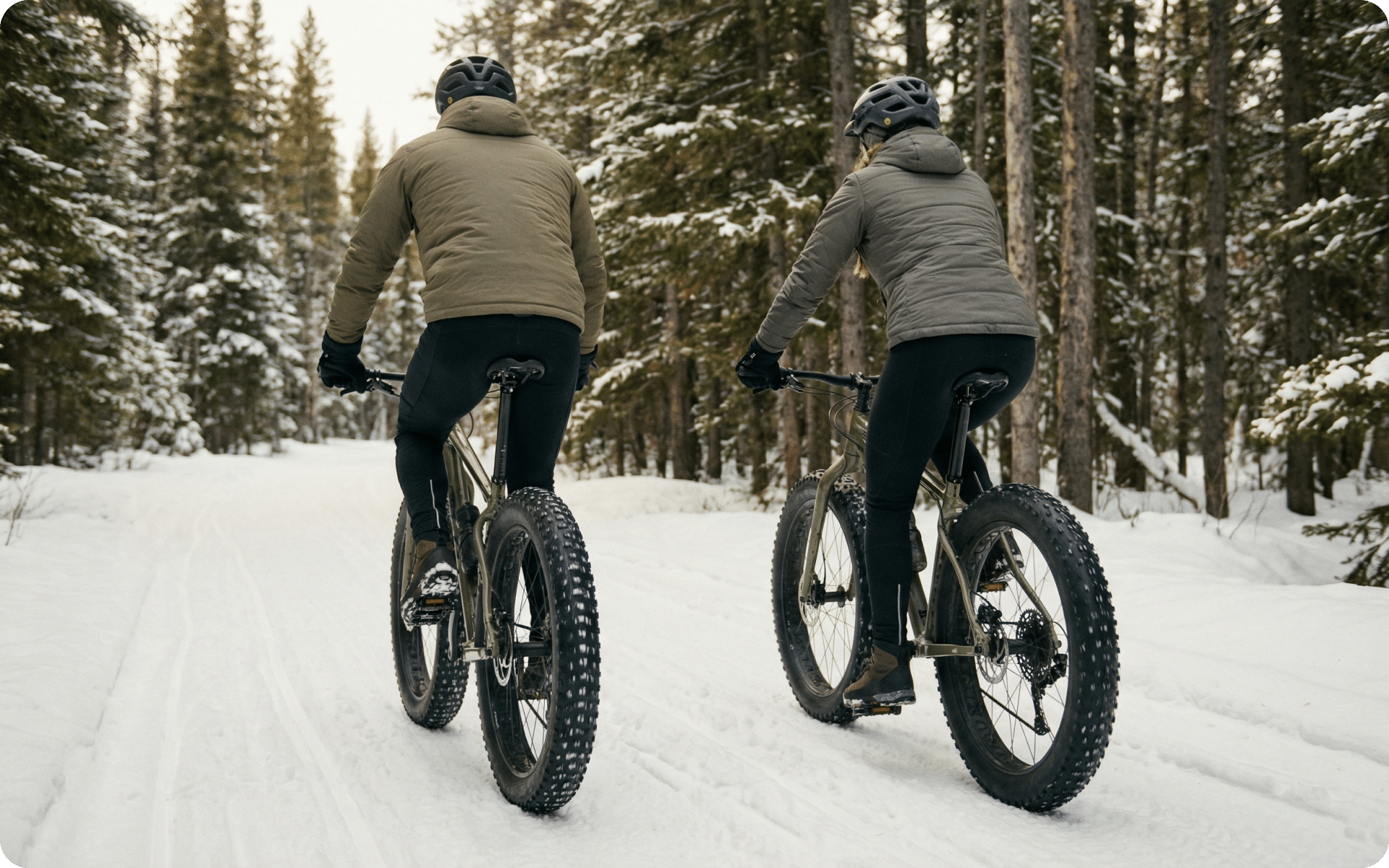
A cycling workout uses a stationary or outdoor bicycle for planned activity. You control the session through duration, resistance, and pedal speed. Outdoors, terrain, traffic, and weather also influence the ride.
Common session formats include:
- Steady riding: Maintain a fairly consistent effort. Moderate intensity generally allows talking but not singing (2).
- Intervals: Alternate more demanding periods with easier pedaling. Intervals need not be all-out sprints or high-intensity training.
- Hill simulation: Use additional resistance on a stationary bike, with a load you can pedal smoothly.
- Fartlek training: vary faster and slower riding periods according to how you feel, rather than following fixed intervals.
Choose a format that fits your experience and purpose. Short workouts can help you establish a manageable riding routine before considering a longer training session. Record duration and effort instead of judging the ride only by exhaustion.
Read more: Indoor Cycling Workout Plan – A Dynamic Program for Every Rider
What are the benefits of cycling for 30 minutes a day?
Cycling can contribute to aerobic fitness and lower-body activity. Riding for 30 minutes a day does not guarantee a particular result. A weekly plan should also include strength training for major muscle groups (1). Adjust frequency to recovery and experience.
Consider the different demands of your routine:
Cardiovascular activity
A 2024 systematic review combined 76 studies across recreational sports. Cycling participation was associated with favorable long-term health outcomes (3). The evidence did not test this particular workout or prove that everyone will obtain the same benefit.
Results from trained cyclists should not be treated as predictions for someone beginning a stationary bike routine.
Muscle strength and endurance
Pedaling challenges muscles in your legs, including the quadriceps and hamstrings. Resistance and your training history affect how demanding each bike ride feels.
- Muscular endurance means sustaining repeated muscular work. Longer rides and harder resistance are different demands; they should not be increased automatically together.
- A 2015 review found that cycle training can increase lower-limb muscle size or strength in some circumstances (4). That does not establish that every 30-minute ride produces muscle growth or replaces a strengthening program.
Body composition
Cycling uses energy, but a calorie display is an estimate. It cannot establish your personal energy balance or predict a change in body weight.
Weight management involves eating patterns, activity, and individual circumstances (5). Use a ride log to track activity rather than promising yourself a fixed weight change.
Low-impact movement
Cycling avoids the repeated landing impacts of running. Low impact does not mean injury-free or suitable for every condition. If you are returning after injury, seek guidance about bike setup, effort, and duration.
A stable setup matters before you add resistance. Ask gym staff to explain the bike’s adjustment points and stopping mechanism.
Is 30 minutes of cycling a good workout and enough exercise?
Thirty minutes can be a useful session. Adult guidance includes at least 150 minutes of moderate aerobic activity weekly, plus strengthening on two days (1). Count the minutes spent at the relevant intensity.
Five rides containing 30 moderate minutes would total 150. Five 30-minute sessions containing easy recovery periods may total much less moderate activity.
The interval plan below contains only ten moderate minutes. Its other 20 minutes are easier activity, including warm-up and cooldown.
- Do not make every ride harder simply to reach a weekly target. Build from your current activity level and include other suitable aerobic movement.
- Muscle strengthening is a separate part of the weekly guidance (1). Resistance from pedaling does not automatically train all major muscle groups.
For example, combine manageable rides with a strengthening routine you can perform with controlled technique. Your schedule can include rest.
Our guide to the benefits of indoor cycling discusses the activity in more detail.
How should you structure a 30-minute indoor cycling workout?
Divide the session into preparation, a main set, and an easier finish. The timings below are sample choices, not a tested prescription.
Use a rating of perceived exertion (RPE) scale of 0 to 10. Zero means rest and 10 is an all-out effort. Moderate aerobic effort is around 5 to 6 (2). This beginner training session does not require maximum effort.
Your effort rating can change with fatigue or familiarity. Adjust the bike to the effort you intend rather than copying another rider’s settings.
RPM means revolutions per minute: how quickly you pedal. Use a comfortable, controlled cadence. No single RPM target suits every bike and rider.
The table gives examples of effort, not exact duration limits. Only the moderate and vigorous categories reflect the intensity guidance (2).
| RPE | What you say or feel | Effort description | Example cue |
|---|---|---|---|
| At rest | Complete rest | No exercise effort. | |
| 2 | Very easy pedaling | Very light activity | Comfortable breathing; reduce further if needed. |
| 3 | Easy pedaling | Light exertion | Able to talk comfortably. |
| 4 | A little more effort | Mild effort | Check how you feel before adding resistance. |
| 5 | Moderate effort | Steady, moderate pace | Can talk, but not sing. |
| 6 | Moderate effort | Moderate activity | Can talk, but not sing. |
| 7 | Vigorous effort | Vigorous activity | Only a few words before pausing for breath. |
| 8 | Hard effort | High intensity | Not needed for the beginner example. |
| 9 | Very hard effort | Near maximal exertion | Not needed for the beginner example. |
| 10 | Maximal effort | Maximal effort | Not prescribed in this guide. |
BetterMe offers a variety of workouts, recipes, challenges, and support tools to help you stay more consistent with your wellness routine. Explore the app to find features that fit your goals, preferences, and schedule.

Warm-up: five minutes
Begin with easy pedaling and learn how the controls respond. The warm-up is also a chance to check comfort before the main set.
- Minutes 0 to 3: Start with easy pedaling at a light resistance. Your rate of perceived exertion (RPE) should be around 2 to 3 out of 10.
- Minutes 3 to 5: Increase effort slightly only if comfortable. Keep this part easier than the main set.
Main set: steady riding or intervals in a 30-minute cycling workout
Choose one of the three 20-minute main sets below. Each uses a different pattern of effort or resistance. Complete only one within the 30-minute session.
Option 1: Steady moderate riding
Maintain a steady, moderate pace.
- Intensity: Use roughly RPE 5 to 6, with enough breath to talk but not sing (2). Reduce effort if that is too demanding.
- Cadence: Pedal smoothly at a speed you can control without bouncing on the saddle.
Option 2: Moderate intervals
Alternate moderate effort with easy pedaling. High-intensity interval training (HIIT) uses harder work periods; these moderate intervals are a gentler alternative. A HIIT label does not establish that a workout suits your experience.
- Structure: Use two moderate minutes followed by two easy minutes.
- Example:
- Pedal for two minutes at approximately RPE 5 to 6.
- Pedal easily for two minutes at approximately RPE 2 to 3.
- Repeat the four-minute pair five times, or stop earlier if needed.
Option 3: Gentle resistance changes
Stay seated and use small resistance changes. A challenging resistance should still let you pedal smoothly; reduce the load if your upper body rocks or you need to pull hard on the handlebars.
- Structure: Alternate controlled resistance with easier pedaling.
- Example:
- Pedal for two minutes with slightly more resistance, keeping effort no higher than moderate.
- Reduce resistance for two minutes of easy pedaling.
- Repeat this four-minute pair five times if comfortable.
Read more: Is Cycling Better Than Running? The Answer Depends On A Few Factors
Cooldown: five minutes
Finish with easier pedaling. A review found that active cooldowns generally do not prevent delayed muscle soreness or injury (6). Treat this as a gradual finish, not a guarantee of recovery.
- Minutes 25 to 28: Reduce to easy pedaling at light resistance.
- Minutes 28 to 30: Ease down further while retaining control of the pedals.
- Follow the bike’s stopping instructions before dismounting. Some indoor bikes have a flywheel that continues to move the pedals.
Shorten any stage if the planned session exceeds your current tolerance. Stop rather than pushing through symptoms to complete 30 minutes.
Can beginners do this 30 minute indoor cycling workout?
Yes, some beginners can use this 30-minute indoor cycling workout after learning the controls. Start with fewer intervals if needed. The sample alternates two moderate minutes with two easy minutes, five times. The intervals in this workout are adjustable; completing half an hour is optional.
Program notes
- Equipment: A stationary bike (upright, recumbent, or indoor cycling bike).
- Terms:
- RPM (Revolutions Per Minute): The speed at which you pedal. Many stationary bikes display this metric.
- RPE: perceived effort from 0 at rest to 10 at maximal effort. A heart rate monitor is optional; use perceived effort and the talk test in this sample.
- Resistance: The difficulty level set on the bike.
- Frequency: Try two or three sessions across the week initially if suitable. Adjust according to recovery and your other activity.
Sample workout: 30 min including warm-up and cooldown
| Minutes | Phase | RPE (0 to 10) | Cadence | Resistance | Instructions |
|---|---|---|---|---|---|
| 0 to 5 | Warm-up | 2 to 4 | Own pace | Light | Gradually increase your effort. |
| 5 to 7 | Moderate | 5 to 6 | Own pace | Moderate | You should feel challenged but controlled. |
| 7 to 9 | Recovery | 3 | Own pace | Light | Bring your breathing back under control. |
| 9 to 11 | Moderate | 5 to 6 | Own pace | Moderate | Focus on maintaining a smooth pedal stroke. |
| 11 to 13 | Recovery | 3 | Own pace | Light | |
| 13 to 15 | Moderate | 5 to 6 | Own pace | Moderate | |
| 15 to 17 | Recovery | 3 | Own pace | Light | Halfway there! |
| 17 to 19 | Moderate | 5 to 6 | Own pace | Moderate | |
| 19 to 21 | Recovery | 3 | Own pace | Light | |
| 21 to 23 | Moderate | 5 to 6 | Own pace | Moderate | Keep the same effort; no final sprint. |
| 23 to 25 | Recovery | 3 | Own pace | Light | |
| 25 to 30 | Cool-down | 3 to 1 | Own pace | Very light | Let your heart rate come down slowly. |
Repeat these 30-minute workouts before increasing them. If the current session feels manageable, change one element at a time, such as slightly longer moderate periods. Keep enough easy time between them and stay within the effort range indicated in the table.
Our stationary bike workout plan offers more examples to compare with your available time and experience.
Is 30 minutes on a stationary bike the same as walking?
The same duration does not make two sessions equivalent. A slow ride and a brisk walk can have different effort levels. Compare the activity you actually perform.
Intensity and calorie estimates
Both activities can contribute moderate aerobic minutes when effort is sufficient (2). Bike resistance and walking pace or incline change the demands. Neither activity automatically burns more energy in every comparison.
Avoid treating calorie estimates as precise measurements. Device settings, body size, movement economy, and the session itself affect the estimate.
Muscle demands
Walking and cycling use overlapping lower-body muscles in different movement patterns. The cycle-training review does not prove that every ride builds more muscle than every walk (4).
Comfort and loading
Walking involves supporting your body while taking steps. Cycling supports you on a saddle, but still places demands on muscles and joints.
Comfort depends on the person and setup. Seek advice if either activity causes persistent pain or you need a plan after an injury.
Is cycling better than walking?
Choose according to your goals, access, comfort, and enjoyment. You can include both instead of ranking one as universally superior.
These practical differences may help you choose:
For weight management
Neither activity guarantees weight loss. Eating patterns and overall activity matter (5). A session you can repeat is more useful than choosing from an assumed calorie advantage.
For strengthening
Cycling can challenge the legs, but dedicated resistance exercises make it easier to train other major muscle groups (1). Do not judge a complete strengthening plan by how tired your legs feel.
What are the benefits of cycling at the gym?
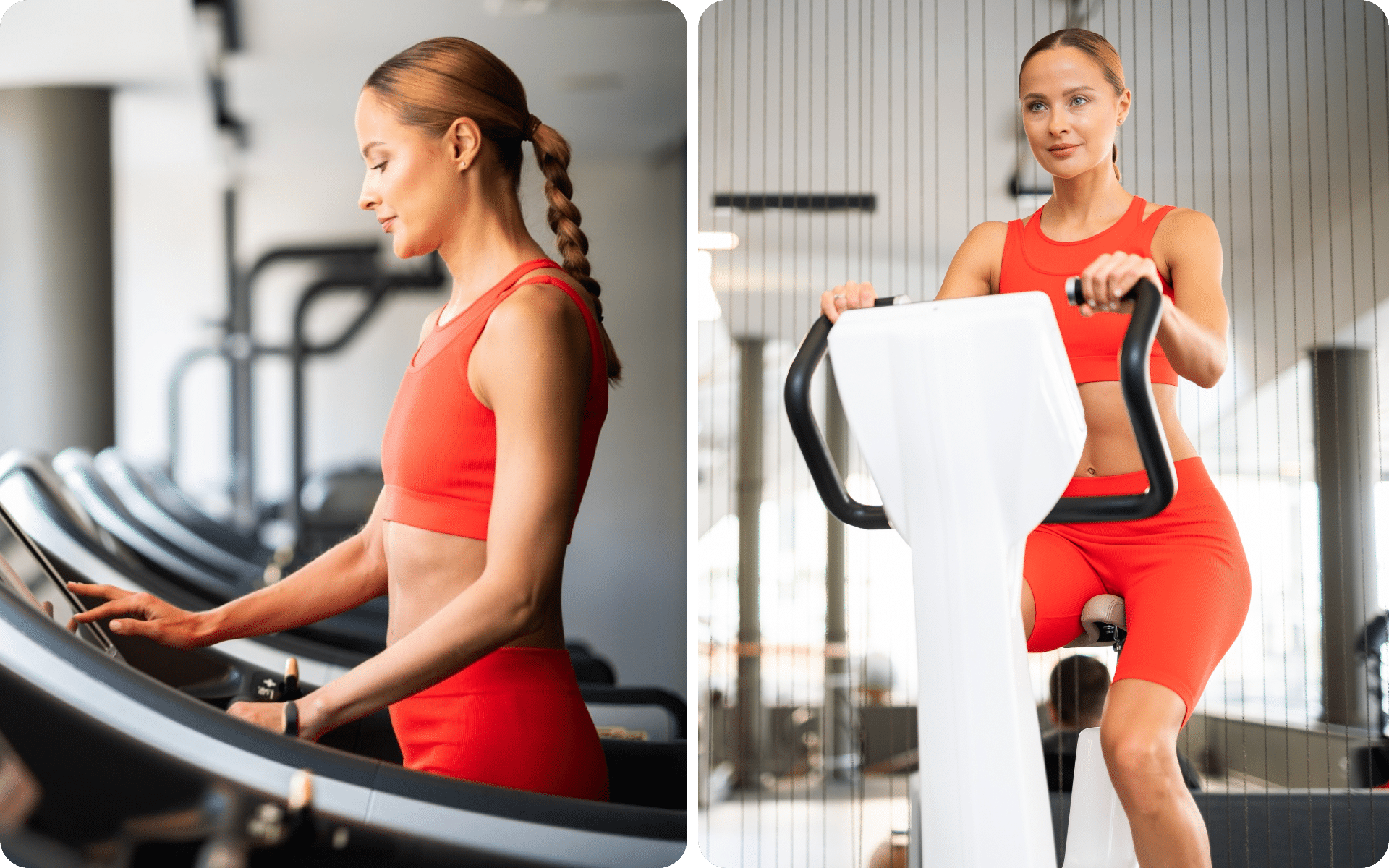
Gym cycling gives access to stationary equipment and a weather-independent place to ride. An indoor cycling class may also provide live setup instructions. Ask staff to check your saddle and handlebar position, and keep the bike set to a load you can control.
For joint concerns
There is no universal winner for people with joint symptoms. Discuss suitable movement and setup with a qualified professional.
For a weekly routine
Review the whole schedule: aerobic minutes, strengthening, and recovery. Add the activity you can do at an appropriate effort without crowding out rest.
Whether you want to refresh your fitness routine, explore lower-calorie recipe ideas, or bring more structure to your wellness habits, BetterMe: Health Coaching app offers tools that can support your next step. Explore the app and find an approach that works for your lifestyle.
FAQs
Does cycling build more muscle than walking?
Not necessarily. Cycling research describes potential lower-limb adaptations under specific training conditions (4). It does not justify a blanket comparison with walking. Include targeted strengthening if muscle strength is a priority.
How much cycling equals 10,000 steps?
There is no universal physiological conversion. Track cycling by duration and effort instead of converting it into a step target. A device’s estimated steps should not be treated as actual walking.
Can cycling flatten your tummy?
A cycling workout cannot promise a particular abdominal appearance. It contributes physical activity, while changes in body weight depend on more than one exercise session (5).
Choose a manageable routine and eating pattern. Avoid escalating intensity to chase a specific body shape or deadline.
Which is better, gym or cycling?
The choice depends on what you want to train and which equipment you can access.
- A gym can provide free weights and machines for different muscle groups, alongside stationary bikes and other cardio equipment. Ask for instruction before using unfamiliar equipment.
- Cycling provides a way to organize aerobic activity. Indoor and outdoor settings have different practical demands.
A combination can cover more goals, but you do not need to add everything at once. Start with a schedule you can manage.
The bottom line
Build a 30 minute cycling workout around a manageable main set, with easier pedaling before and afterward. Count moderate minutes accurately. Adjust the plan as you learn the bike, and use additional strengthening work to cover the wider week.
DISCLAIMER:
This article is intended for general informational purposes only and does not serve to address individual circumstances. It is not a substitute for professional advice or help and should not be relied on for making any kind of decision-making. Any action taken as a direct or indirect result of the information in this article is entirely at your own risk and is your sole responsibility.
BetterMe, its content staff, and its medical advisors accept no responsibility for inaccuracies, errors, misstatements, inconsistencies, or omissions and specifically disclaim any liability, loss or risk, personal, professional or otherwise, which may be incurred as a consequence, directly or indirectly, of the use and/or application of any content.
You should always seek the advice of your physician or other qualified health provider with any questions you may have regarding a medical condition or your specific situation. Never disregard professional medical advice or delay seeking it because of BetterMe content. If you suspect or think you may have a medical emergency, call your doctor.
SOURCES:
The list covers adult activity and intensity guidance, a sports and health meta-analysis, a cycle-training review, weight-management guidance, and a cooldown review.
- Adult Activity: An Overview (2023, cdc.gov)
- How to Measure Physical Activity Intensity (2025, cdc.gov)
- Health Benefits of Different Sports: a Systematic Review and Meta-Analysis of Longitudinal and Intervention Studies Including 2.6 Million Adult Participants (2024, pubmed.ncbi.nlm.nih.gov)
- Cycle training induces muscle hypertrophy and strength gain: strategies and mechanisms (Review) (2015, pubmed.ncbi.nlm.nih.gov)
- Keep Active & Eat Healthy to Improve Well-being & Feel Great (2018, niddk.nih.gov)
- Do We Need a Cool-Down After Exercise? A Narrative Review of the Psychophysiological Effects and the Effects on Performance, Injuries and the Long-Term Adaptive Response (2018, link.springer.com)
 Reviewed by
 Reviewed by